Can Household Gas Lines Freeze? Essential Winter Safety Tips
Home Improvement Plumbing

Can Household Gas Lines Freeze? Essential Winter Safety Tips

waking up on a frigid January morning. You can see your breath in the bedroom air, and the floor feels like an ice rink. You stumble over to the thermostat, only to find it’s set to 72 degrees, yet the house is barely hitting 50. You head to the kitchen to make some coffee, but the gas stove won’t click on. You might start to wonder, “Can gas lines freeze in a house?”

It is a terrifying thought, mainly when you rely on that gas for heating, cooking, and hot water. While we often worry about water pipes bursting, gas lines are frequently overlooked until something goes wrong. The short answer is yes, they can—but probably not for the reasons you think. While the natural gas itself isn’t turning into a block of ice, moisture trapped inside the pipes certainly can.

Can Gas Lines Freeze? Understanding the Science

Can Household Gas Lines Freeze? Essential Winter Safety Tips

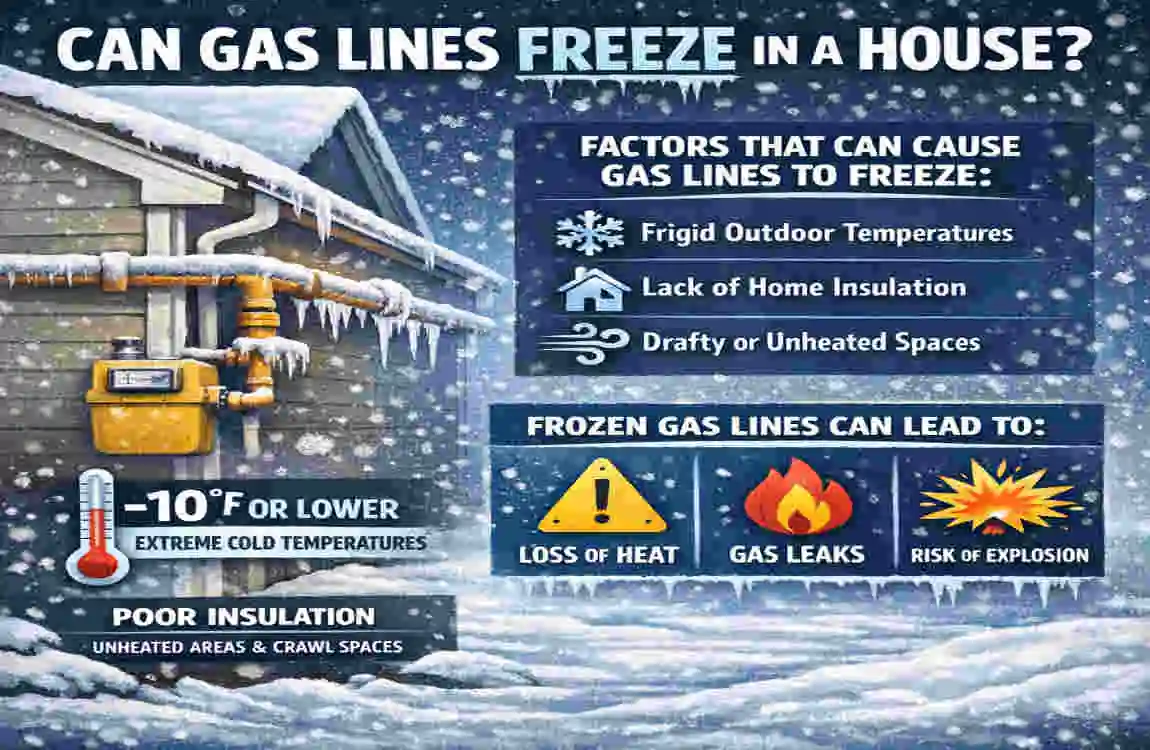
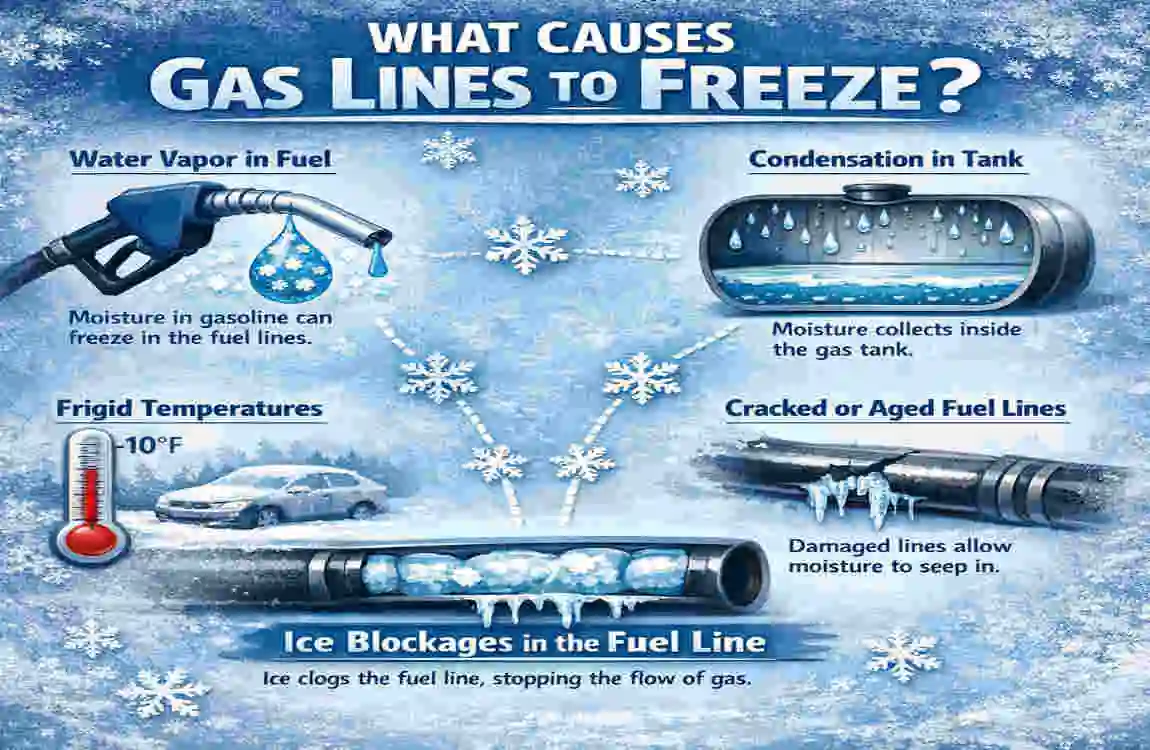
When people ask whether gas lines can freeze, they usually picture the gas itself turning into a solid. In reality, natural gas (methane) has a freezing point of about -296°F. Unless you are living on another planet, your pipes will never get that cold. However, household gas lines can indeed “freeze” in the sense that they become blocked by ice when temperatures drop below 32°F The Role of Moisture and Condensation The real culprit isn’t the gas; it’s the water vapor or condensation that finds its way into the system. Natural gas is supposed to be “dry,” but moisture can enter the lines through tiny leaks, poor installation, or even during the utility company’s distribution process

When the temperature outside plummets, any humidity or water droplets inside the metal pipes begin to freeze. These ice crystals latch onto the inner walls of the pipe, slowly building up until they create a physical plug that stops the flow of gas to your furnace or water heater Gas Lines vs. Water Pipes You might be used to worrying about your water pipes because water expands when it freezes, often leading to dramatic bursts. Gas lines are different. They are typically made of heavy-duty steel or copper, and because they carry a gas rather than a liquid, they don’t “burst” in the same way from internal pressure

However, they are still vulnerable. Gas lines running through unheated areas like crawlspaces, attics, or along exterior walls are at the highest risk While outages due to frozen gas lines were once considered rare, the increasing frequency of extreme “polar vortex” events has made this a rising concern for homeowners in northern climates.

Myths vs. Facts About Frozen Gas Lines

To help you better understand the risks, let’s clear up some common misconceptions.

Myth Fact

Natural gas freezes into a solid block at 0°F. Only the moisture inside the line freezes to block the flow

Only outdoor pipes are at risk of freezing. Indoor pipes in uninsulated areas like basements can also freeze

Frozen gas lines are standard in mild winters. This usually only happens during extreme cold combined with poor insulation

Common Causes of Frozen Gas Lines

Can Household Gas Lines Freeze? Essential Winter Safety Tips

Understanding why your gas lines are freezing is the first step toward preventing a cold-weather catastrophe. It’s rarely just one thing; usually, it’s a combination of environmental factors and the physical state of your plumbing.

Extreme Low Temperatures and Condensation

The most apparent cause is extreme cold. When the metal of the pipe becomes significantly colder than the gas flowing through it, condensation forms—much like the dew on a cold soda can in the summer In sub-zero temperatures, this condensation freezes instantly, creating layers of ice that eventually choke off the gas supply 2. Poor Insulation in Vulnerable Areas If your gas lines run through a drafty attic, a damp crawlspace, or an unheated garage, they are sitting ducks. Without a protective barrier, these pipes lose heat rapidly. Poor insulation is one of the leading reasons why indoor gas lines fail during a freeze 3. Installation Flaws and External Leaks: Sometimes, the problem starts with how the pipes were installed. If there are tiny cracks or loose fittings, they can act as entry points for rainwater or humid air Once that moisture is inside the “sealed” system, it has nowhere to go but onto the pipe walls, where it will eventually freeze.

High Humidity Levels

In some regions, the air is naturally more humid. If the gas being delivered to your home hasn’t been properly “scrubbed” of moisture by the utility provider, or if your home has high internal humidity that seeps into the lines through minor imperfections, you are at a higher risk for ice blockages 5. Propane Tank Specifics If you use propane instead of natural gas, you have an extra layer of concern. As a propane tank gets low, the pressure inside drops. This pressure drop can make it harder for the remaining liquid propane to vaporize, especially in cold weather. This can lead to a “freeze-up” at the regulator, effectively cutting off your fuel supply even if the tank isn’t empty Signs Your Gas Line is Freezing

You don’t want to wait until your house is a refrigerator to realize there is a problem. Early detection is key to preventing a total system shutdown. Keep an eye (and an ear) out for these symptoms.

No Heat or Hot Water

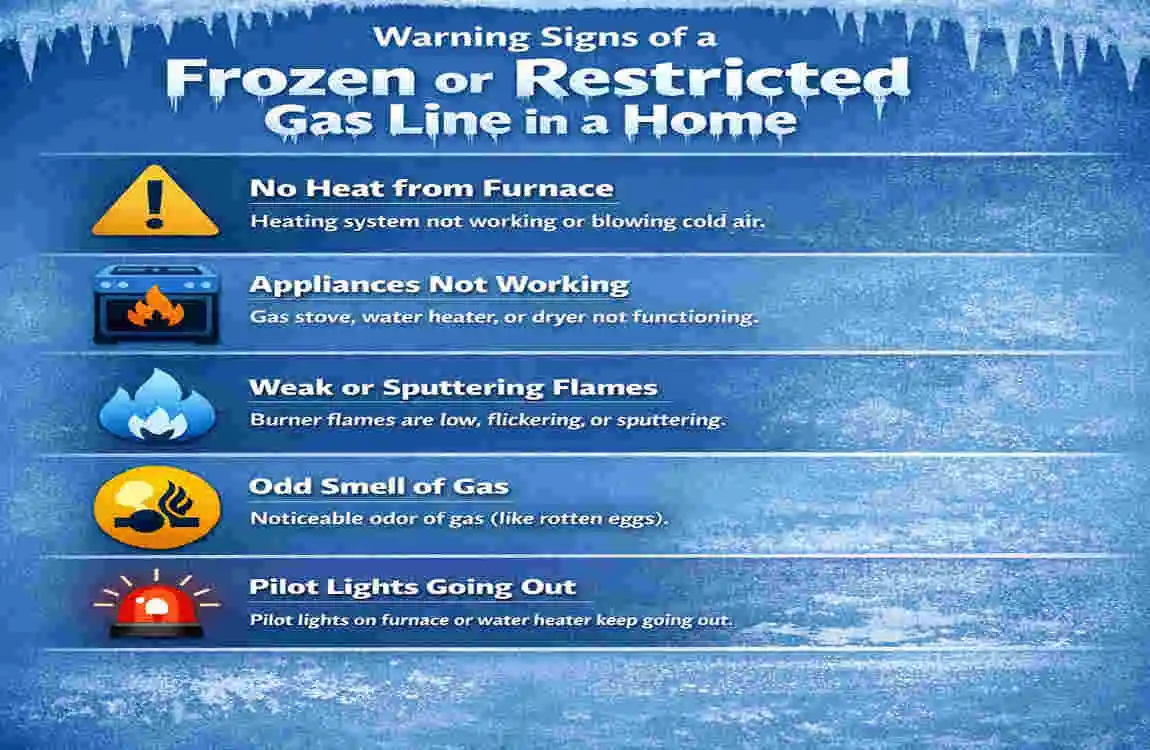
The most common sign is that your appliances stop working. You might notice that your pilot light is still on, but the furnace won’t kick in, or the water in the shower never gets past lukewarm This happens because the ice blockage is restricting the volume of gas reaching the burner.

Flickering or Weak Flames

Check your gas stove or fireplace. Are the flames looking “lazy” or flickering? If the flames are yellow instead of a crisp blue, or if they seem much smaller than usual, it’s a sign of low gas pressure. This is often the first warning that ice is beginning to build up somewhere in the line.

Hissing Sounds and Visible Frost

If you suspect a problem, take a flashlight and inspect your visible gas lines. Do you see a layer of white frost on the outside of the pipe or the regulator? This is a major red flag Additionally, listen for any strange hissing sounds. While a hiss can indicate a leak, it can also be the sound of gas struggling to squeeze past a narrow ice blockage The “Rotten Egg” Smell Natural gas is odorless. Still, utilities add a chemical called mercaptan to give it a sulfur or rotten-egg smell. If you smell this, it could mean that the freezing process has caused a pipe to crack or a fitting to loosen, leading to a dangerous leak If you smell gas, leave the house immediately and call for help.

The Dangers of Frozen Gas Lines

Can Household Gas Lines Freeze? Essential Winter Safety Tips

A frozen gas line is more than just an inconvenience; it is a legitimate safety hazard. Ignoring the signs can lead to expensive repairs or even life-threatening situations.

Complete Gas Cutoff

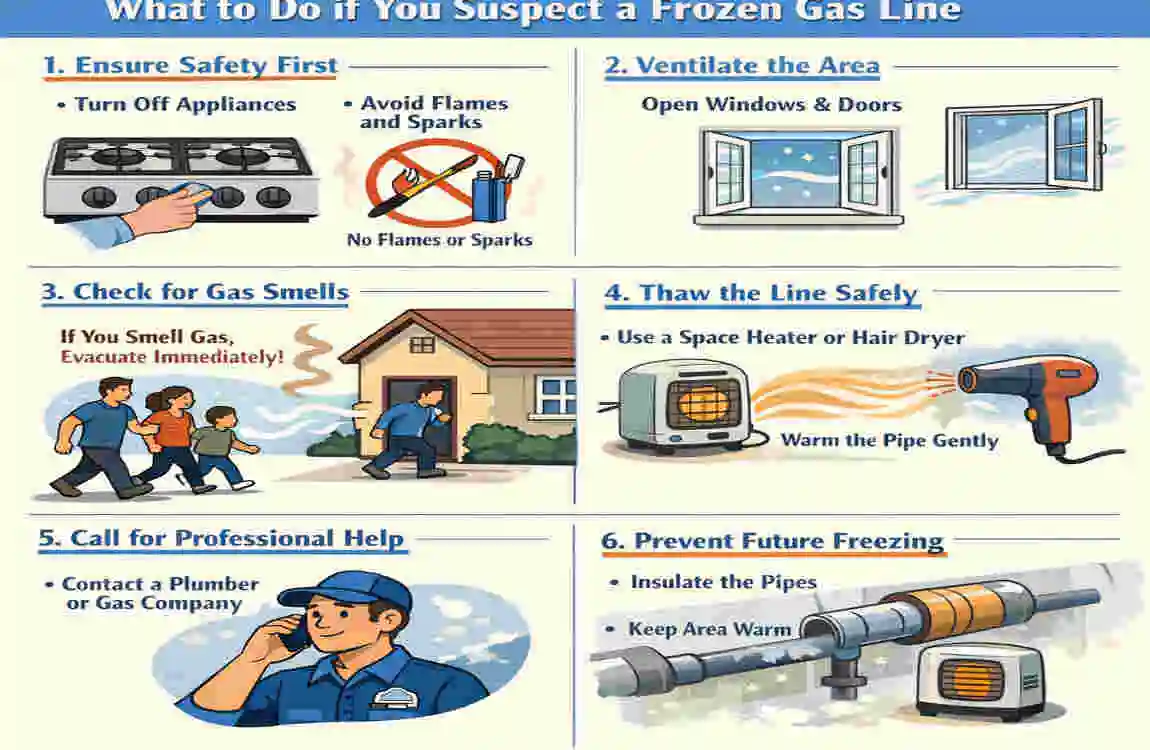
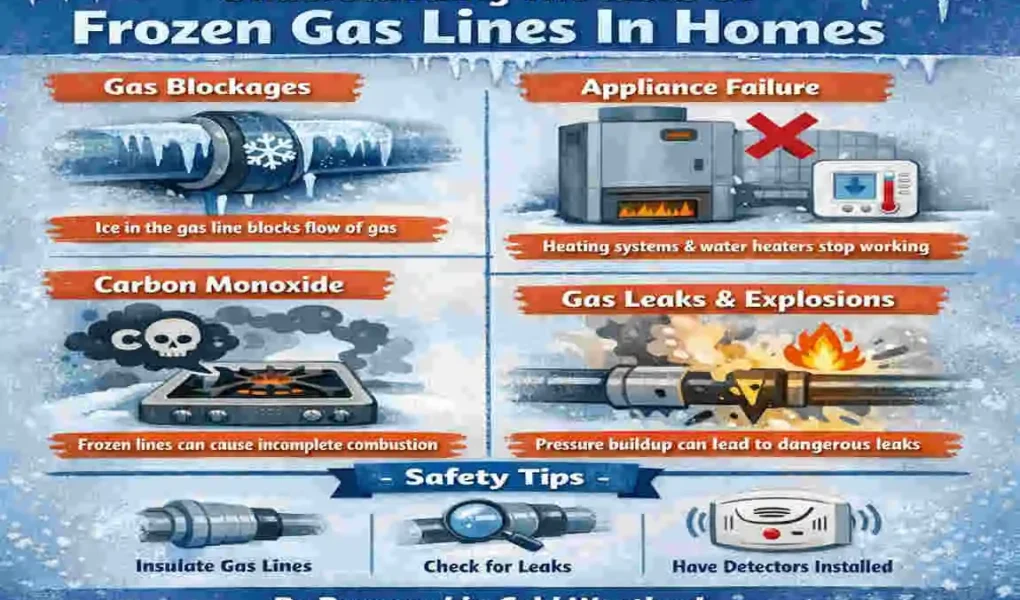
The most immediate danger is heat loss. In extreme winter weather, a house can lose heat rapidly, leading to secondary problems like frozen water pipes that can burst and cause thousands of dollars in water damage. Pipe Damage and Cracks While gas pipes are strong, ice is mighty. As moisture freezes and expands in tight spaces—like around a valve or a joint—it can exert enough pressure to crack the metal Once the ice thaws, you are left with a gas leak that could lead to a fire or explosion Risks of DIY Thawing Many homeowners make the mistake of trying to thaw their own gas lines using blowtorches, space heaters, or hair dryers. This is incredibly dangerous. Applying direct heat to a pressurized gas line can cause the metal to weaken or the gas inside to expand too rapidly, leading to a catastrophic failure Carbon Monoxide Buildup If a gas line is partially blocked, your appliances might not burn the fuel completely. This “incomplete combustion” can produce carbon monoxide (CO), a colorless, odorless gas that is deadly If your gas flow is compromised, your risk of CO poisoning increases significantly.

Risk Potential Outcome

Ice Blockage Total appliance shutdown and loss of heat

Pressure Drop Incomplete combustion and CO risks

Pipe Bursts Major gas leaks and potential explosions

DIY Thawing Fire hazards and structural damage.

Prevention Tips for Winter

Can Household Gas Lines Freeze? Essential Winter Safety Tips

The best way to deal with a frozen gas line is to prevent it from happening in the first place. A bit of preparation in the autumn can save you a lot of stress in the winter.

Insulate Your Exposed Lines

This is the single most effective thing you can do. Use foam pipe sleeves or fiberglass wrap on any gas lines that run through unheated areas For extra protection in frigid climates, you can use heat tape or heat trace cables, which provide a small amount of electrical warmth to keep the pipe above freezing.

Schedule a Pre-Winter Inspection

Don’t wait for the first snow to call a professional. A licensed plumber or gas technician can inspect your lines for tiny leaks or “low spots” where moisture might collect They can also ensure your regulators are functioning correctly and are protected from the elements.

Keep Your Home Warm

It might be tempting to turn the heat way down when you leave for work to save money, but keeping your home at a consistent temperature (at least 55°F) helps keep the internal wall cavities warm This prevents the gas lines hidden behind your drywall from reaching the freezing point.

Clear Snow and Ice from Vents

After a heavy snowfall, go outside and check your gas meter and any exhaust vents. Snow buildup can block the “breather hole” on your gas regulator, causing it to malfunction or freeze up Use a broom to gently clear snow away—never use a shovel, as you might strike and damage the pipe.

Maintain Your Propane Levels

If you use propane, try to keep your tank at least 30% full during the winter. A higher volume means higher pressure, which helps the gas stay in a vapor state and move through the lines more effectively, even when it’s freezing outside.

Can Gas Lines Freeze in a House? FAQ

When the temperature drops, many homeowners worry about their pipes. While we usually think of water, gas lines can also face issues in extreme cold. Here is a quick guide to help you understand the risks and how to stay safe.

Can natural gas actually turn into ice?

No, the natural gas itself does not freeze or turn into a solid under normal winter conditions . Natural gas is delivered as a vapor and does not liquefy in typical cold weather . However, the moisture or water vapor trapped inside the pipes can freeze, which creates a hard icy blockage that stops the flow of gas .

Why do gas lines freeze up?

The most common reason is moisture buildup within the system . This often happens if the gas lines are not properly insulated or are directly exposed to the elements . Additionally, if a gas system is older, damaged, or not built to code, it is much more likely to develop leaks that allow moisture to enter and freeze .

Is it common for household gas lines to freeze?

Fortunately, it is relatively rare for natural gas lines to freeze . Utility companies usually remove moisture from the gas during the distribution process to prevent this exact problem . However, even a day or two of sub-freezing temperatures can be enough to cause damage to a vulnerable system .

What are the signs of a frozen gas line?

If your gas line is obstructed by ice, you might notice:

  • Gas appliances (like your stove or furnace) failing to start or flickering .
  • A complete loss of heat in the house despite having a supply of gas.
  • Issues with pipeline valves or tiny fuel lines that control your heating system, as these are highly sensitive to freezing .

How can I prevent my gas lines from freezing?

The best defense is proper insulation . Ensure that any pipes running through unheated areas, like crawlspaces or attics, are well-protected. Keeping your system well-maintained and addressing any leaks immediately will also prevent moisture from getting inside where it can harden into an obstruction .

You may also like...

Leave a Reply

Your email address will not be published. Required fields are marked *