So you want to build a home that looks stunning, lasts a lifetime, and doesn’t drain your bank account? You’re not alone. Modern metal building homes cut construction costs by up to 30% while offering customizable, durable designs that rival luxury stick-built houses. That’s not a typo — thirty percent savings with zero compromise on style.
Gone are the days when metal buildings meant cold, industrial warehouses or basic storage sheds. Today’s modern metal building homes feature sleek exteriors, open floor plans, floor-to-ceiling windows, and interiors that would make any interior designer proud. They’re popping up everywhere from rural Texas ranches to trendy urban neighborhoods, and for very good reasons.
So what exactly are modern metal building homes? In simple terms, they are residential structures built on prefabricated steel frames but designed with contemporary aesthetics in mind. Think of them as the perfect marriage between industrial strength and modern beauty. They come with all the benefits you’d expect — affordability, energy efficiency, quick build times of just 4 to 6 months, and incredible versatility for both urban and rural sites.
Why Choose Modern Metal Building Homes? Key Advantages
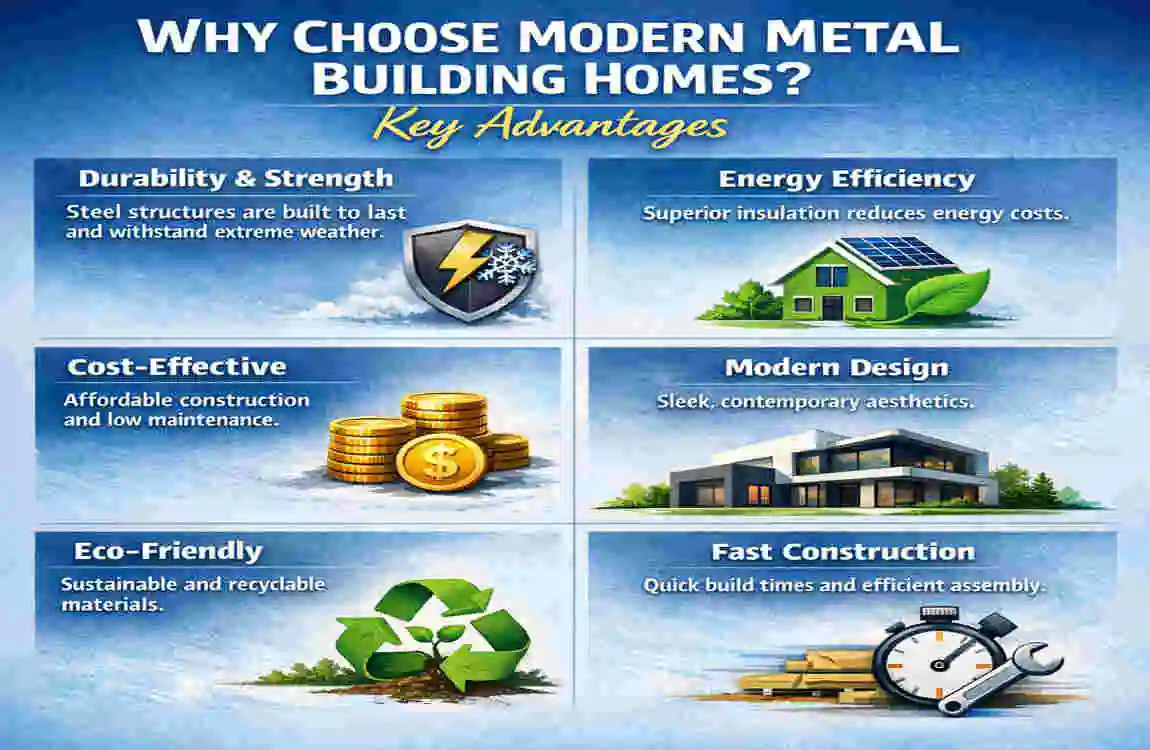
The popularity of modern metal homes has exploded since 2020. The prefab building boom, combined with rising lumber prices and growing interest in sustainable construction, has pushed more homeowners toward steel-framed alternatives. And once you understand the advantages, it’s easy to see why.
Durability and Longevity
Steel is simply one of the toughest building materials on the planet. Modern metal building homes resist fire, pests, rot, and even earthquakes. Termites can’t eat steel. Mold doesn’t grow on metal framing. And when severe weather hits, a properly engineered steel structure stands strong where wood-framed homes might suffer serious damage.
Most metal building homes have a lifespan of 50 years or more and require minimal maintenance. Compare that to traditional wood-framed homes that often need significant repairs within 20 to 30 years. You’re essentially building something your grandchildren could inherit without worrying about structural issues.
Cost Savings That Actually Matter
Here’s where things get really interesting for your wallet. The average cost of a modern metal building home ranges from $100 to $150 per square foot, compared to $200 or more for traditional stick-built construction. That difference adds up fast when you’re building a 2,000 or 3,000-square-foot home.
But the savings don’t stop at construction. Because metal building kits are prefabricated in factories, there are fewer delays on-site. No waiting weeks for lumber deliveries. No weather-related setbacks are holding up framing. Your build timeline shrinks dramatically, which means less money spent on temporary housing and construction loans.
Sustainability You Can Feel Good About
If you care about the environment — and you should — modern metal homes are a fantastic choice. Steel is 90% recyclable, meaning your home’s primary structural material can be repurposed at the end of its life. Construction waste is minimal because components are precision-cut in factories rather than trimmed on-site.
Many metal building home manufacturers now use recycled steel in their products, further reducing the environmental footprint. When you combine this with energy-efficient design features like solar-ready roofs and superior insulation, you get a home that’s genuinely kind to the planet.
Aesthetic Flexibility
This is where modern metal building homes truly shine. You’re not limited to one look. Want a minimalist industrial vibe with exposed steel and concrete floors? Done. Prefer a cozy modern farmhouse with wood accents and warm interiors? Absolutely possible. Dream of a sleek contemporary box with black siding and massive windows? Steel makes it happen.
The structural capabilities of steel — specifically its ability to span large distances without interior support columns — give architects and designers incredible freedom. You get open, airy spaces that aren’t possible with traditional wood framing without expensive engineering workarounds.
Metal vs. Wood vs. Concrete Homes: A Quick Comparison
FeatureMetal Building HomesWood-Framed HomesConcrete Homes
Cost per Sq Ft $100–$150 $200–$350 $180–$300
Build Time 4–6 months 8–12 months 10–14 months
Lifespan 50+ years 30–50 years 75+ years
Maintenance Low Medium-High Low
Fire Resistance Excellent Poor Excellent
Pest Resistance Excellent Poor Good
Recyclability 90%+ Moderate Low
Design Flexibility High High Moderate
As you can see, modern metal building homes offer the best balance of cost, durability, and flexibility. Concrete may last longer, but it costs more and offers less design freedom. Wood offers flexibility but requires higher maintenance and is vulnerable to pests and fire.
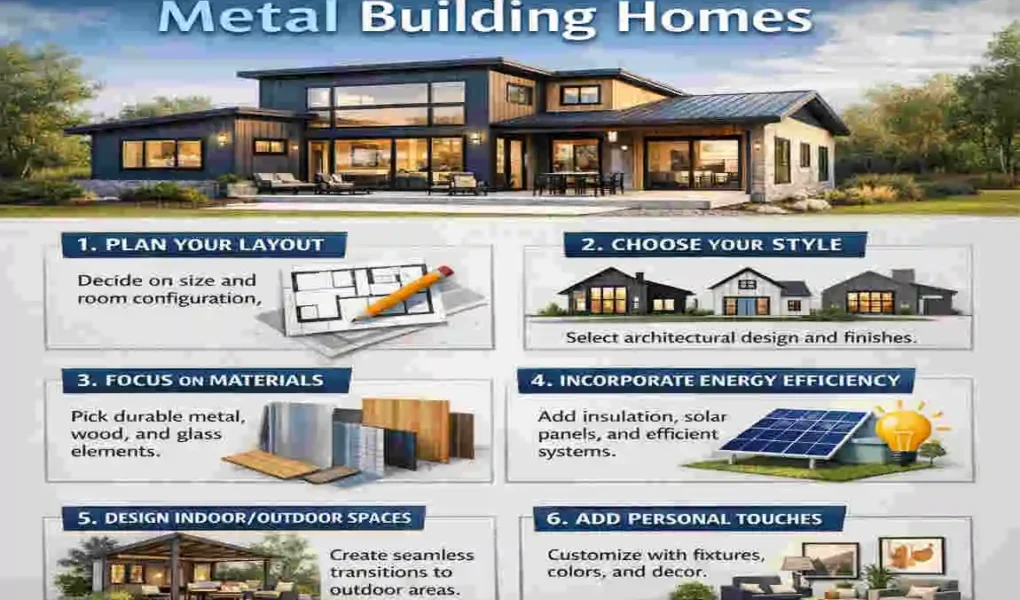
Step-by-Step Planning for Your Modern Metal Building Home
Before you pick out countertops or debate paint colors, you need a solid plan. The planning phase is where successful metal building home projects are born — and where poorly planned ones fall apart. Let’s break it down into manageable steps.
Assess Your Needs
Start with the basics. How many people will live in this home? Do you need a home office? Guest rooms? A workshop or oversized garage? Think about your lifestyle now and in five to ten years.
Consider your lot size and location carefully. A rural 10-acre property gives you the freedom to build wide and expansive. An urban infill lot might require a more compact, multi-story design. Both work beautifully with metal construction, but they require different approaches.
Set a realistic budget range. For a well-finished modern metal building home of around 2,000 square feet, expect to spend between $150,000 and $500,000, depending on your location, finishes, and complexity. That’s a wide range, but it reflects the incredible customization options available.
Select Your Building Kit Type
Not all metal building kits are created equal. The two main structural types you’ll encounter are clear-span and rigid frame designs.
Clear-span structures have no interior columns, providing a completely open interior for work. This is ideal for those gorgeous open floor plans with great rooms that flow seamlessly into kitchens and dining areas. If you want that modern loft feel, clear-span is your friend.
Rigid frame structures use interior columns for additional support, allowing for wider buildings. They’re great for larger homes or those with attached garages and workshops. The columns can be incorporated into the design as architectural features rather than obstacles.
Handle Zoning and Permits
This step trips up more people than you’d expect. Not every municipality treats metal buildings the same way. Some areas have specific codes regarding metal structures in residential zones. Others may have aesthetic requirements or setback rules that affect your design.
Call your local building department early in the process. Ask specifically about metal-framed residential construction. Find out what permits you’ll need, what inspections are required, and whether there are any homeowner association restrictions on your property. Doing this homework upfront saves you headaches and money down the road.
Hire the Right Professionals
You need a team. Even if you’re handy and plan to DIY portions of your build, certain aspects require professional expertise.
- An architect or designer experienced with metal building homes
- A reputable metal building supplier with residential experience
- A general contractor familiar with steel construction
- An engineer to handle foundation and structural calculations
Don’t skimp here. The difference between a metal building that feels like a home and one that feels like a warehouse often comes down to the quality of your design and construction team.
Budgeting Tips for Modern Metal Building Homes
Let’s talk money in more detail because this is where dreams meet reality. A typical budget breakdown for modern metal building homes looks something like this:
- Building kit and steel structure: 40% of the total budget
- Foundation and site prep: 20% of total budget
- Interior finishes and systems: 30% of total budget
- Exterior finishes and landscaping: 10% of total budget
Here’s what catches people off guard — the hidden costs. Insulation is a big one. A basic metal building kit doesn’t include the high-performance insulation you need for comfortable living. Budget for spray foam or rigid board insulation separately. HVAC systems sized for metal buildings also cost more than standard residential units because of the unique thermal properties of steel structures.
Other commonly overlooked expenses include utility connections, driveway construction, septic systems for rural properties, and interior partition walls. Add a 15% contingency buffer to your budget for surprises. Trust me, there will be surprises.
Essential Design Principles for Modern Metal Building Homes
Now we’re getting to the fun part — actually designing your home. Modern metal building home design follows several core principles that maximize both the aesthetic appeal and functional advantages of steel construction.
Open Floor Plans That Breathe
This is arguably the biggest design advantage of steel construction. Because metal frames can span 60 feet or more without interior load-bearing walls, you have incredible freedom to create open, flowing spaces. Your great room, kitchen, and dining area can be one magnificent, connected space without columns or walls breaking the flow.
Think about how you actually live. Most families spend their time together in shared spaces. An open floor plan lets the cook stay connected to family in the living room. It lets parents keep an eye on kids playing while working at the kitchen island. And it makes even modest square footage feel spacious and luxurious.
Natural Light Integration
Steel construction makes it easy to incorporate massive windows and glass walls because the frame carries the structural load, not the walls. This means you can cut huge openings without compromising structural integrity.
Floor-to-ceiling windows are practically a signature feature of modern metal building homes. They flood interiors with natural light, reduce the need for artificial lighting during the day, and create stunning visual connections to the outdoors. Skylights are another excellent option, especially in central areas of the home that might otherwise feel dark.
Consider the orientation of your home on the lot. Position living spaces to face south for maximum winter sun exposure. Use overhangs or awnings to control summer heat gain. Smart window placement isn’t just beautiful — it’s a key energy efficiency strategy.
Minimalist Exteriors That Make a Statement
The most striking modern metal homes embrace clean lines and bold simplicity. Think flat or low-slope rooflines, monochromatic color schemes, and materials that celebrate rather than hide the industrial heritage of steel construction.
Corten steel — that beautiful weathering steel with a rich rust-colored patina — has become incredibly popular for accent walls and exterior features. Matte black metal siding creates a dramatic contrast against the natural surroundings. And mixing materials like metal panels with warm wood accents prevents the exterior from feeling too cold or industrial.
Indoor-Outdoor Flow
Modern living blurs the line between inside and outside, and metal building homes do this exceptionally well. Sliding glass walls, covered patios, and outdoor living rooms extend your usable space and connect you to nature.
Consider designing a covered porch or breezeway that transitions seamlessly from your interior living space. Use the same flooring material inside and out to create visual continuity. Install large sliding or folding glass doors that open completely to merge your great room with an outdoor entertaining area.
Real-World Inspiration
Let me paint a picture with three quick examples of stunning modern metal building homes:
The Texas Barndominium: A 3,500 square foot home built from a 60×80 metal building kit. The exterior features black standing seam metal with natural cedar accents. Inside, soaring 16-foot ceilings, exposed steel trusses, polished concrete floors, and a chef’s kitchen with a 12-foot island. Total cost: $380,000.
The Urban Loft Conversion: A compact 1,800 square foot two-story metal home on a narrow city lot. The design uses a flat roof, full-height glass on the front facade, and a rooftop deck. Interior features include a floating steel staircase, open-plan living on the main floor, and two bedrooms plus a home office upstairs—total cost: $295,000.
The Mountain Modern Retreat: A 2,400 square foot single-story home designed for a sloped lot. The structure uses a combination of metal framing and stone base walls. Large windows frame mountain views from every room. A wrap-around covered deck adds 800 square feet of outdoor living space—total cost: $420,000.
Exterior Design Ideas for Modern Metal Homes
First impressions matter, and the exterior of your modern metal building home is what the world sees first. Let’s explore how to create serious curb appeal with steel.
Roofing Options
The roof is one of the most visible elements of any home, and metal roofing options are both beautiful and functional. Standing seam metal roofing is the gold standard for modern metal homes. It’s clean, and vertical lines complement the contemporary aesthetic perfectly.
Popular color choices include matte black, charcoal gray, deep forest green, and weathered bronze. Some homeowners opt for a contrasting roof color to create visual interest — like a white-bodied home with a black roof. Others go monochromatic for a sleek, unified look.
Beyond aesthetics, metal roofing is incredibly practical. It lasts 50 to 70 years, reflects solar heat to reduce cooling costs, and handles snow and rain beautifully. Plus, it’s the perfect substrate for mounting solar panels.
Siding and Cladding
Here’s where you can really get creative. Modern metal building homes rarely use just one exterior material. The most visually striking designs combine metal panels with complementary materials to add warmth and texture.
Consider combining corrugated metal siding with horizontal wood planks. Or pair smooth metal panels with a stone veneer base. Fiber cement board in a contrasting color works beautifully as an accent material, too. The key is balance — enough metal to celebrate the building’s identity, enough warmth to make it feel like a home rather than a commercial building.
Entryways and Doors
Your front entry sets the tone for the entire home. Oversized pivoting doors have become a signature feature of modern metal homes. These dramatic entries — often 4 feet wide and 10 feet tall — make a bold statement and provide a sense of arrival that standard doors can’t match.
Integrated garages with full-height metal doors that match the exterior siding create a seamless look. Some designs hide the garage entirely behind the main facade for a cleaner street presence. Others celebrate it as part of the overall composition.
Landscaping for Metal Homes
The landscape around your modern metal building home should complement rather than compete with the architecture. Low-maintenance landscaping complements the clean lines of metal construction.
Think gravel paths, native grasses, sculptural plantings, and simple geometric garden beds. Concrete or steel planters echo the home’s industrial materials. Ornamental grasses soften hard edges without requiring constant maintenance. And strategic tree placement provides shade while framing views of the home from the street.
Interior Layouts and Finishes for Modern Metal Building Homes
The exterior gets people’s attention, but the interior is where you actually live. Let’s make your modern metal building home feel warm, functional, and beautiful on the inside.
Kitchen Design
The kitchen is the heart of any home, and in a modern metal building home, it deserves special attention. Island-focused layouts work perfectly with the open floor plans enabled by steel construction. A large kitchen island serves as cooking prep space, casual dining area, homework station, and social gathering point all in one.
Popular finish choices include quartz or concrete countertops, flat-panel cabinetry in white or natural wood tones, and industrial-style pendant lighting over the island. Stainless steel appliances feel right at home in a metal building — they echo the structural materials without feeling cold.
Open shelving made from reclaimed wood or steel pipe adds character and keeps everyday items within easy reach. A large pantry — walk-in if space allows — keeps the visible kitchen clutter-free and maintains that clean, modern aesthetic.
Bedrooms and Bathrooms
Lofted bedrooms are a popular choice in modern metal building homes, especially those with high ceilings. A mezzanine-level main suite overlooking the main living space below creates drama and makes efficient use of vertical space.
For bathrooms, think spa-like retreats. Large-format tile, frameless glass shower enclosures, floating vanities, and freestanding soaking tubs all complement the modern aesthetic. Heated floors are particularly appreciated in metal buildings because the concrete slab foundation can feel cold without them.
Signature Interior Finishes
The best modern metal building homes embrace certain finishes that celebrate the building’s structural character while adding warmth and livability:
- Exposed steel beams and trusses painted matte black or left natural
- Polished concrete floors with radiant heating beneath
- Shiplap or reclaimed wood accent walls for warmth and texture
- Industrial-style lighting with Edison bulbs and metal fixtures
- Large-format windows left uncovered or with simple roller shades
- Metal stair railings with cable or glass infill panels
- Barn doors on sliding tracks for bedrooms and bathrooms
7 Must-Have Features for Modern Metal Building Homes
- Smart home integration — automated lighting, climate control, and security systems
- Radiant floor heating — essential for comfort on concrete slab foundations
- High-performance insulation — spray foam for R-30 or better wall values
- Oversized sliding doors — connecting indoor and outdoor living spaces
- Dedicated mechanical room — housing HVAC, water heater, and electrical panels
- Pre-wired media systems — built-in speakers, network cabling, and charging stations
- Flexible bonus spaces — rooms that can adapt as your needs change over time
Customizing Spaces: Kitchens, Living Areas, and More
One of the greatest advantages of modern metal building homes is the ability to reconfigure spaces without structural limitations. Because interior walls are non-load-bearing, you can move them, add them, or remove them as your life changes.
Many prefab metal home manufacturers now offer modular interior systems that make customization even easier. These include pre-built bathroom pods, kitchen modules, and closet systems that install quickly and can be upgraded or replaced without major renovation work.
Think about your home as a long-term investment in flexibility. That home office might become a nursery in a few years. The playroom might become a teenager’s hangout space. The beauty of metal building design is that these transitions require minimal construction work.
Energy Efficiency and Sustainability in Metal Building Home Design
If you’re building a new home in 2026, energy efficiency isn’t optional — it’s essential. The good news is that modern metal building homes can be incredibly efficient when designed correctly.
Insulation Strategies That Work
The biggest energy challenge with metal buildings is thermal bridging — heat transferring through the steel frame. The solution? Closed-cell spray foam insulation is applied directly to the interior of the metal panels. This creates a continuous thermal barrier that eliminates bridging and provides both insulation and air sealing in one application.
For even better performance, add a reflective radiant barrier on the exterior side of the insulation. This reflects summer heat before it even reaches your insulation layer, dramatically reducing cooling loads in hot climates.
Target R-30 for walls and R-49 for roofs as minimum values. In extreme climates, go higher. The upfront cost of Premium insulation pays for itself within 3 to 5 years through reduced energy bills.
Solar and Renewable Energy Integration
Metal roofs are ideal for solar panel installation. The standing seam design allows panels to be clipped directly to the seams without penetrating the roof surface. This means no leak risk and easy removal for roof maintenance or panel replacement.
Many modern metal building homes are designed as “solar-ready” from the start, with electrical conduit and panel space pre-installed for future solar addition. Geothermal HVAC systems pair beautifully with metal homes, too, using the earth’s constant temperature to heat and cool efficiently.
Green Building Certifications
Yes, metal building homes can achieve LEED certification and other green building standards. The recyclable steel structure, energy-efficient design, and low construction waste all contribute to certification points. Some homeowners pursue ENERGY STAR certification as a more accessible alternative, which focuses specifically on energy performance.
The numbers speak for themselves: a well-designed modern metal building home can save 40% or more on energy bills compared to a standard code-built home. Over a 30-year mortgage, that adds up to tens of thousands of dollars in savings.
Common Challenges and Solutions in Designing Modern Metal Building Homes
Let’s be honest — building with metal isn’t without its challenges. But every challenge has a proven solution. Here’s what to watch for and how to handle it.
Heat Retention and Temperature Swings
The Challenge: Metal conducts heat efficiently, which means your building can get very hot in summer and cold in winter if not properly addressed.
The Solution: Comprehensive insulation combined with proper HVAC sizing and ventilation systems. Ridge vents, soffit vents, and powered exhaust fans keep air moving in unconditioned spaces, such as attics. A well-designed HVAC system sized specifically for your building’s thermal characteristics keeps interior temperatures comfortable year-round.
Condensation and Moisture
The Challenge: When warm interior air meets cold metal surfaces, condensation forms. This can lead to moisture problems, corrosion, and even mold growth on interior finishes.
The Solution: Vapor barriers installed on the warm side of your insulation prevent moisture-laden air from reaching cold metal surfaces. Proper ventilation removes excess humidity. And maintaining consistent interior temperatures prevents the temperature differentials that cause condensation in the first place.
Financing Difficulties
The Challenge: Some traditional mortgage lenders are unfamiliar with metal building homes and may hesitate to finance them. Appraisals can be tricky when comparable sales are limited in your area.
The Solution: Seek out lenders experienced with construction loans for prefab and metal building homes. Credit unions and agricultural lenders in rural areas often have more experience with these structures. Some metal building manufacturers have financing partnerships that streamline the process. Getting a pre-construction appraisal based on your plans and specifications can also help.
Acoustic Performance
The Challenge: Metal surfaces can reflect sound, creating echo and noise issues in large open spaces.
The Solution: Soft furnishings, area rugs on concrete floors, acoustic ceiling panels, and insulation all absorb sound. Designing some enclosed rooms — like bedrooms and offices — provides quiet retreats within the larger open plan.
Resale Concerns
The Challenge: Some buyers and real estate agents still associate metal buildings with agricultural or commercial use, which can affect resale value.
The Solution: Design your metal building home to look and feel residential from the outside. Quality finishes, proper landscaping, and professional photography for listings help buyers see the home rather than the building method. As metal homes become more common, this concern is rapidly diminishing.
Cost Breakdown and ROI for Modern Metal Building Homes
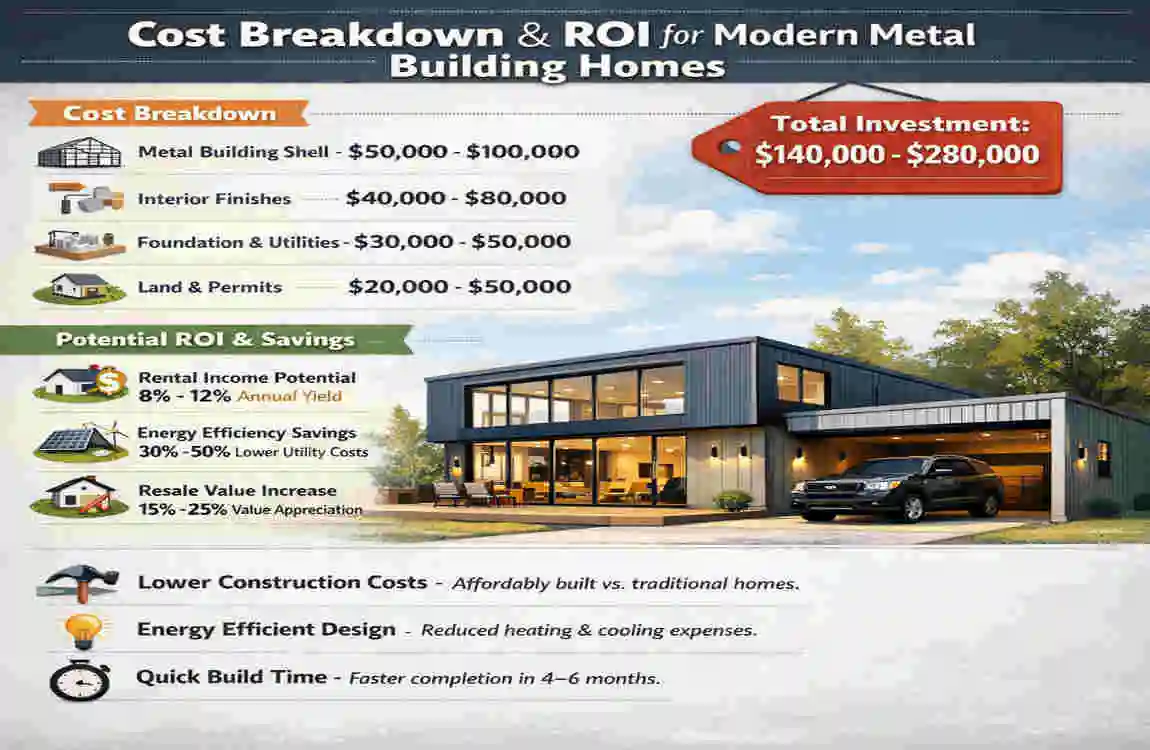
Let’s put real numbers on the table so you can plan with confidence.
Total Cost Estimates by Size
For a well-finished modern metal building home with quality interiors:
- 1,500 square feet: $150,000 to $225,000
- 2,000 square feet: $200,000 to $300,000
- 2,500 square feet: $275,000 to $375,000
- 3,000 square feet: $350,000 to $450,000
These ranges reflect finishes ranging from moderate to high-end. Basic builds can come in lower, and luxury finishes can push costs higher.
Cost Breakdown by Phase
Construction Phase Percentage of Budget Cost for 2,000 Sq Ft Home
Metal building kit and erection 25% $50,000–$75,000
Foundation and site work 15% $30,000–$45,000
Insulation and weatherproofing 10% $20,000–$30,000
Electrical and plumbing 15% $30,000–$45,000
HVAC systems 8% $16,000–$24,000
Interior finishes 20% $40,000–$60,000
Exterior finishes and landscaping 7% $14,000–$21,000
Return on Investment
Modern metal building homes are appreciating well in most markets. In rural and suburban areas, homeowners are seeing 15 to 20% appreciation within the first few years, especially as demand for affordable, durable housing continues to grow.
The combination of lower construction costs and competitive resale values means your equity position is strong from day one. You’re building a home for less than market value, which is essentially instant equity.
FAQs: Designing Modern Metal Building Homes
How much does a modern metal building home cost?
The total cost ranges from $100 to $200 per square foot, depending on your location, finishes, and complexity. A typical 2,000-square-foot modern metal building home costs between $200,000 and $300,000, fully finished. This includes the metal building kit, foundation, insulation, all mechanical systems, and interior finishes. Premium finishes and custom features can push costs higher, while simpler designs in affordable markets can come in lower.
Are modern metal homes energy efficient?
Absolutely — when properly insulated and designed. A well-built modern metal building home with spray foam insulation, energy-efficient windows, and a properly sized HVAC system can save 40% or more on energy bills compared to a standard construction home. The key is to address thermal bridging in the steel frame through continuous insulation and to incorporate passive design strategies, such as strategic window placement and natural ventilation.
Can I DIY parts of a metal building home design?
Yes, many homeowners handle portions of their metal building home project themselves. Common DIY tasks include interior painting, trim installation, landscaping, and basic finish work. Some experienced builders tackle insulation, drywall, and even flooring. However, structural erection, electrical, plumbing, and HVAC work should always be handled by licensed professionals for safety and code compliance.
What’s the build timeline for prefab metal homes?
Most modern metal building homes can be completed in 4 to 6 months from foundation pour to move-in day. The metal building kit itself typically goes up in just 1 to 2 weeks. The remaining time is spent on foundation work, insulation, mechanical systems, and interior finishes. Compare this to 8 to 12 months for traditional stick-built construction, and you’ll appreciate the time savings.
What are the best suppliers for modern metal building home kits?
Look for suppliers with specific residential experience, not just commercial or agricultural building manufacturers. Request references from past residential clients and, if possible, visit completed homes. The best suppliers offer design assistance, engineering stamps for your local jurisdiction, and clear documentation for your contractor. Get quotes from at least three suppliers and compare not just price but also steel gauge, warranty terms, and included accessories.
Designing your modern metal building home is an exciting journey. With the right planning, team, and design principles, you’ll create a home that’s not only beautiful and functional but also built to stand the test of time. The future of residential construction is steel — and that future is available to you right now.
| Step | Key Actions | Tips for Success | Approx. Cost/Sq Ft |
|---|---|---|---|
| 1. Planning | Assess needs, budget, site; get permits | Use online calculators; hire architect | $5-10 |
| 2. Select Kit | Choose steel frame (clear-span for open plans) | Focus on modern metal building homes kits from reputable suppliers | $40-60 |
| 3. Exterior Design | Siding, roofing, windows for sleek look | Black metal panels + wood accents; add garage | $20-30 |
| 4. Interior Layout | Open floors, kitchens, finishes | Exposed beams, spray foam insulation | $30-50 |
| 5. Sustainability | Solar, efficient HVAC, insulation | Aim for LEED; cut energy bills 40% | $10-15 |
| 6. Build & Finish | Foundation, assembly, custom touches | 4-6 month timeline; total savings 30% vs. traditional | $100-150 total |