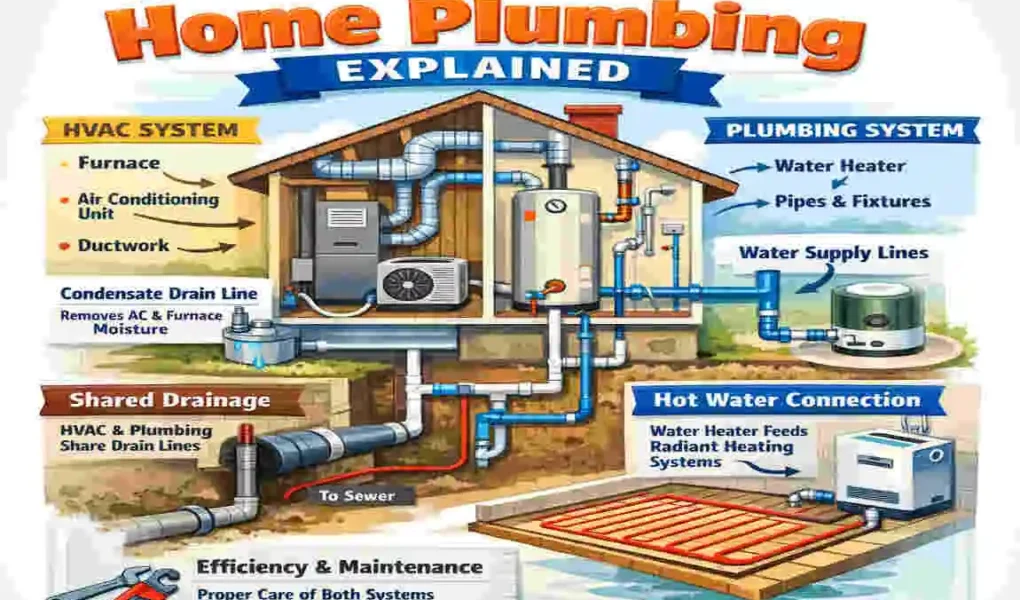
Most homeowners think of heating‑ventilation‑air‑conditioning (HVAC) and plumbing as completely separate systems. In reality, they share a few key connections—especially when it comes to water that HVAC equipment creates, moves, or needs. Uanderstanding those links helps you spot leaks early, keep both systems running smoothly, and avoid costly repairs.
| HVAC Component | Plumbing Connection | Main Purpose |
|---|---|---|
| Central AC | Condensate drain | Removes moisture from the air |
| HVAC Drain Pan | Drain line | Collects and drains condensation |
| Whole-House Humidifier | Water supply | Adds moisture to indoor air |
| Boiler | Water pipes | Provides hot water for heating |
| Hydronic Heating | Water circulation pipes | Transfers heat through the home |
| Condensate Pump | Drain system | Moves HVAC condensation to a suitable drain |
| Standard Furnace | Usually none | Heats air without using household water |
Is HVAC Connected to House Plumbing?
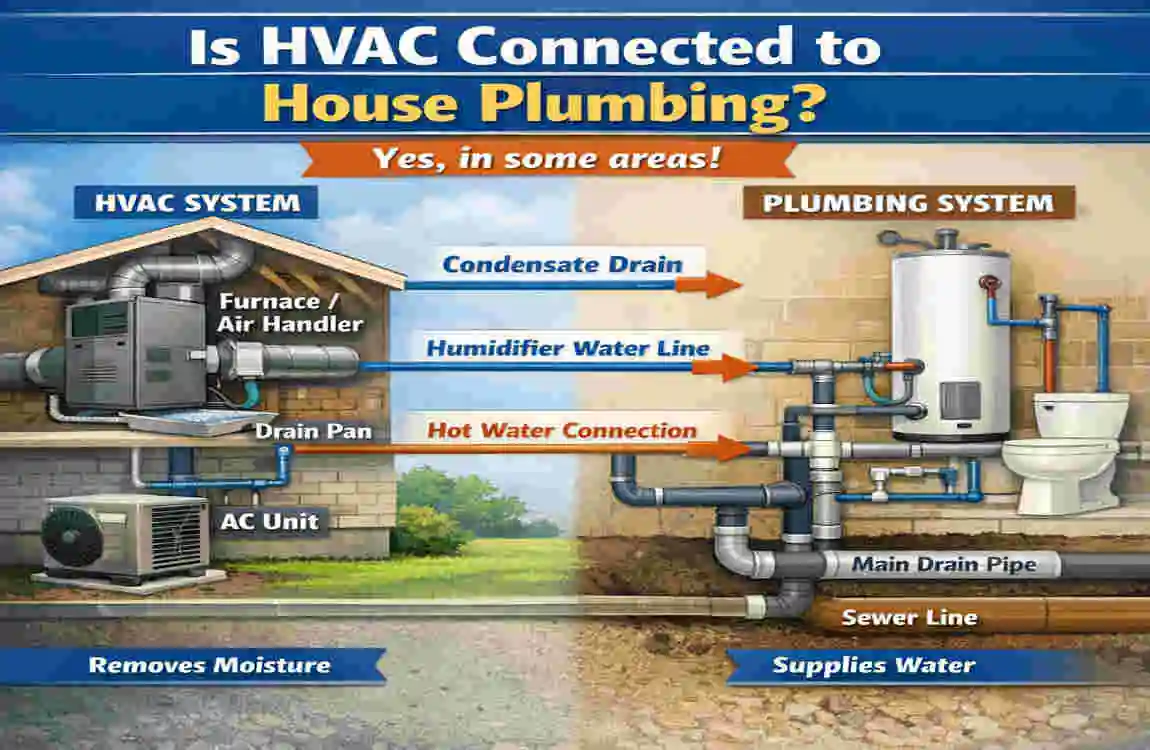
In general, the main heating and cooling units do not use the home’s regular water supply. However, several HVAC components either produce water that must be drained or require a direct water hookup. Those points of contact are where the two systems intersect.
HVAC Components That May Use Plumbing
- Condensate drain lines – carry the water that forms on cooling coils.
- Whole‑house humidifiers – draw water from the household supply to add moisture to the air.
- Hydronic heating systems – circulate hot water through radiators, baseboards, or radiant floors.
- Boilers – heat water for domestic hot‑water tanks or for a hydronic loop.
- Certain cooling equipment – such as evaporative coolers, which use a water‑supply reservoir.
HVAC vs Plumbing Systems
System Primary Purpose Typical Connection
HVAC Control temperature and indoor air quality May tap into drainage or water lines for condensate, humidification, or hydronic loops
Plumbing Deliver fresh water and remove waste water Supplies water to fixtures, appliances, and sometimes to HVAC devices like boilers or humidifiers.
While both move fluids, HVAC usually deals with air and a small amount of water, whereas plumbing handles large volumes of fresh and waste water.
How Air Conditioning Connects to Home Plumbing
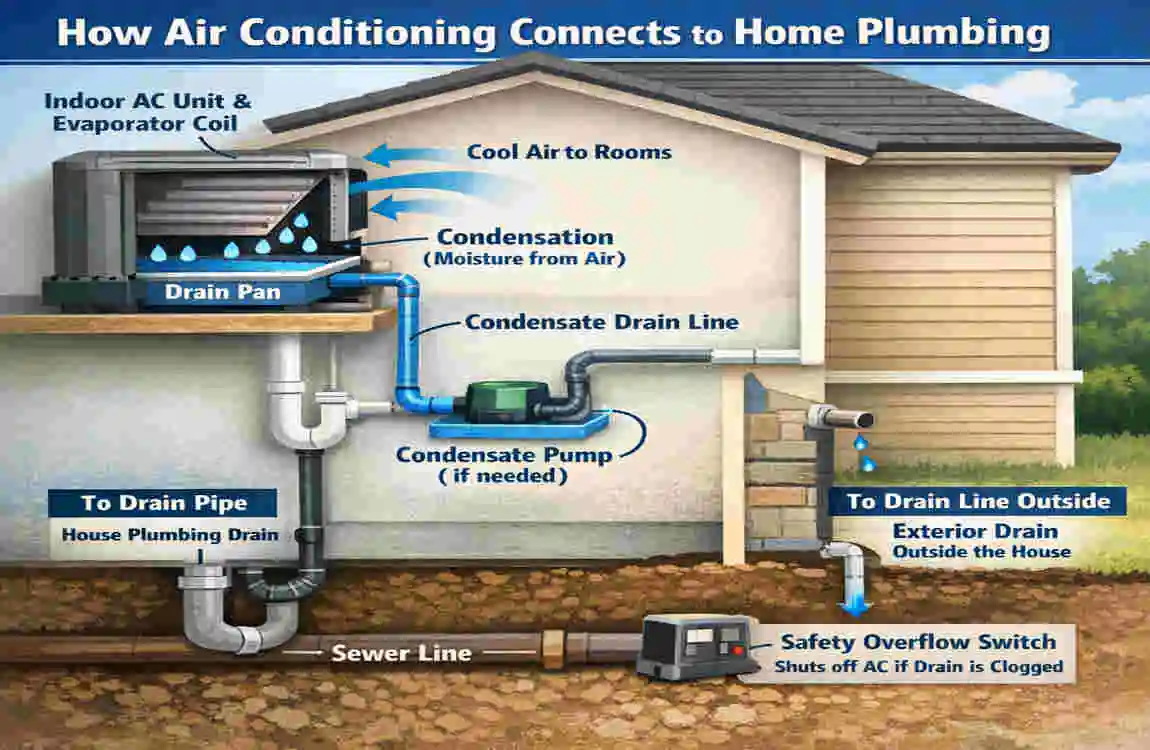
When an air conditioner cools indoor air, excess moisture condenses on the cooling coils—just like water droplets on a cold glass. That condensation must go somewhere: a condensate drain line.
Condensate Drain Lines
- The drain line runs from the indoor unit’s drain pan to a suitable exit point (often a floor drain, utility sink, or dedicated PVC pipe).
- Water is typically gravity‑fed, so the pipe must slope downward about ¼ inch per foot.
What Happens When the Drain Gets Clogged?
- Water leaks around the indoor unit or on the ceiling below.
- The drain pan overflows, which can trigger a safety switch that shuts off the AC.
- Moisture‑related damage such as mould growth or wood rot.
If you notice any of these signs, clear the blockage (a common method is a cup of distilled white vinegar poured into the line) or call a professional.
HVAC Systems That Directly Use Water
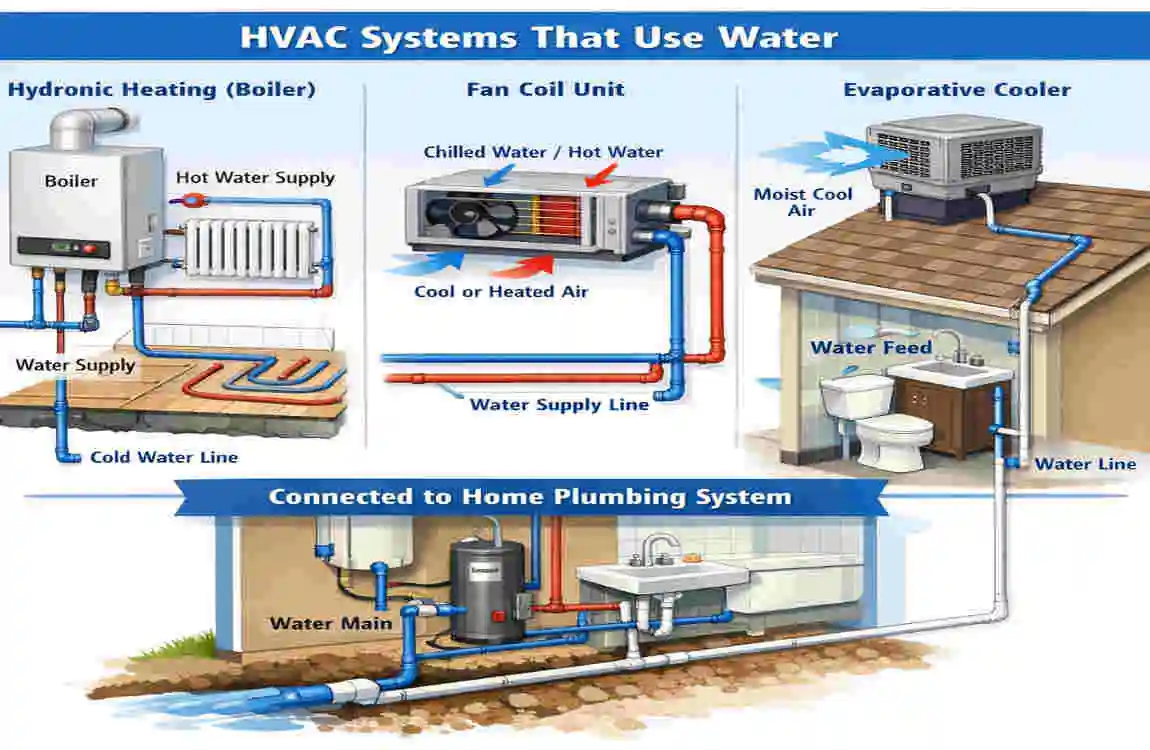
Not all HVAC gear relies on condensation alone. Some systems actually require a water supply to operate.
Boilers and Hydronic Heating
- A boiler heats water and pumps it through a closed‑loop network of radiators, baseboards, or radiant‑floor tubing.
- The system needs a fill valve, a pressure relief valve, and a drain port—all part of the home’s plumbing.
Whole‑House Humidifiers
- These devices sit on the furnace’s supply plenum and connect to a cold‑water line.
- A small pump or the furnace’s fan pushes water onto a humidifier pad, releasing vapour into the airflow.
Evaporative and Water‑Based Cooling
- Evaporative coolers (sometimes called “swamp coolers”) draw water from a reservoir, spread it over wet pads, and use a fan to cool the air.
- You must refill the reservoir regularly, either manually or via a plumbed water line.
Common Plumbing and HVAC Problems Homeowners Should Know
Because of the shared pathways, a problem in one system can affect the other. Typical crossover issues include:
- Condensate leaks that soak walls or flooring.
- Blocked drains that cause water to back up into the HVAC pan.
- Frozen AC coils when insufficient condensate drainage causes excess moisture to freeze on the evaporator.
- Pressure fluctuations in a boiler that may indicate a plumbing blockage or leak.
Signs of an HVAC Plumbing Connection Problem
- Water pooling near the furnace or air handler.
- A constantly running or overflowing condensate pan.
- Unusual humidity spikes in the home.
- Persistent drip sounds behind walls.
- Low boiler pressure or visible leaks from the boiler’s pipes.
If you feel comfortable, you can clear a clogged drain or replace a simple filter. For anything involving pressurised water, gas, or extensive pipework, call a licensed professional.
How to Maintain HVAC and Plumbing Connections
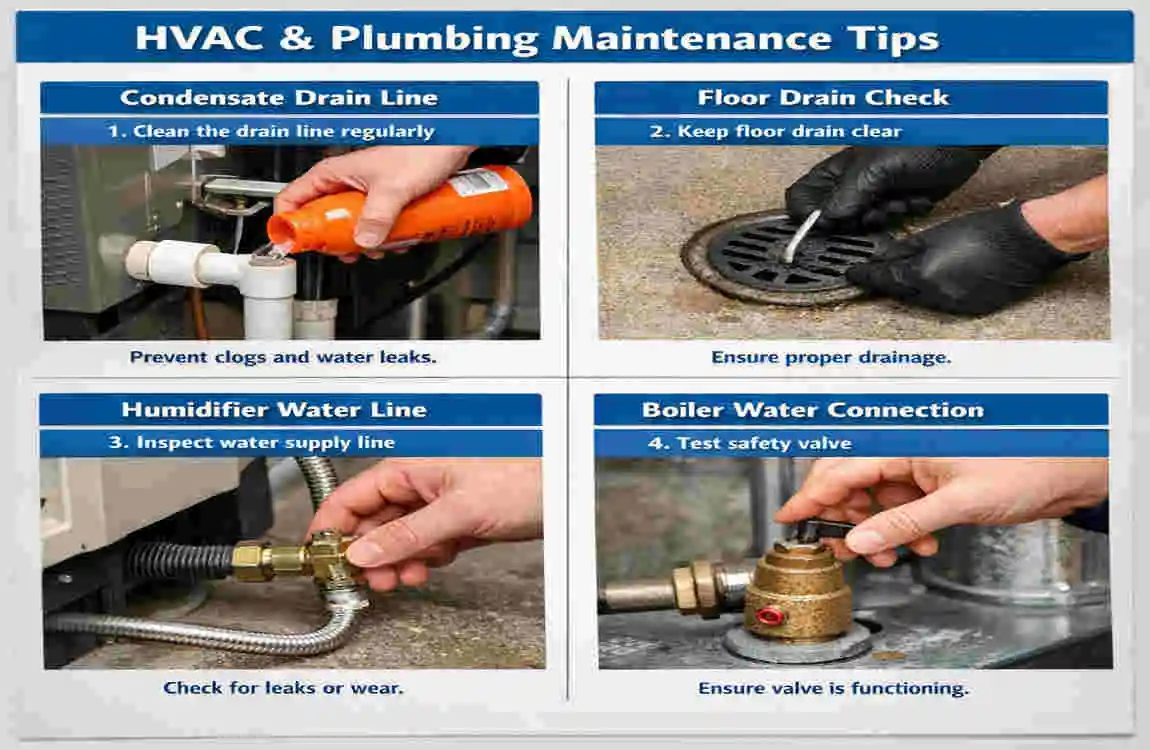
Regular, simple tasks can keep both systems happy:**
- Check the condensate drain line every few months; pour a little vinegar through to prevent slime buildup.
- Inspect the drain pan for rust or cracks and replace it if needed.
- Replace HVAC filters as recommended—usually every 1–3 months.
- Look at water‑supply connections on humidifiers and boilers for signs of corrosion or leaks.
- Schedule annual professional service for both your furnace/air‑conditioner and your boiler.
When to Call an HVAC or Plumber
- HVAC tech: Condensate line cleaning, AC refrigerant issues, furnace blower problems, boiler diagnostics.
- Plumber: Leaking supply lines, main‑drain blockage, water‑pressure concerns, pipe repairs around the boiler or humidifier.
FAQ About HVAC and House Plumbing
Is HVAC connected to house plumbing?
It depends on the equipment. Standard central air conditioners only need a condensate drain, while boilers, hydronic heating, and whole‑house humidifiers have direct water‑supply connections.
Does central AC use house water?
No. A typical central air conditioner does not draw water from the home’s supply. It creates water as condensation, which must be drained away.
Where does HVAC condensate water go?
Most often, it travels through a PVC condensate drain pipe to a floor drain, utility sink, or a dedicated plumbing vent. Local codes dictate the exact routing.
Can a clogged HVAC drain cause a plumbing problem?
A blockage can cause water to overflow the indoor unit, leading to localised water damage and possible mould growth. It doesn’t usually affect the main household drain, but it can create a plumbing‑like leak inside walls.
Do boilers connect to plumbing?
Yes. Boilers heat water for radiant heating or domestic hot‑water supply, so they require fill valves, pressure relief valves, and drain lines—all part of the home’s plumbing network.