what is a curb stop in house plumbing
Plumbing

What Is a Curb Stop in House Plumbing? Key Facts Explained
when you suddenly hear the terrifying sound of rushing water. You rush down to your basement only to discover a massive pipe has burst, and water is rapidly flooding the floor. Panic sets in. You try to turn off the main water valve inside your home, but it is rusted shut and will not budge. As the water level rises, so does your anxiety. If you cannot stop the flow from inside, how do you save your home?

This is an incredibly common and devastating plumbing emergency scenario where knowing exactly how to cut off your water from the outside can save you thousands of dollars in property damage. According to recent plumbing industry reports, over one million homes in the United States face severe water damage every single year simply due to undetected leaks or sudden pipe bursts. When internal shutoffs fail, your home’s outdoor water service shutoff becomes your ultimate line of defense.

Term / Feature What it means
What it is Underground shut‑off valve between the city water main and your home’s water service line.
Location (typical) Near the curb, sidewalk, or property line, inside a small metal “curb stop box” or sleeve at ground level.
Main purpose Emergency or main shut‑off for the water entering your house; used when the indoor valve fails or when work is needed on the service line.
Who owns it Usually owned and operated by the city or water utility, not the homeowner.
How it’s operated Turned on/off with a special long wrench or “curb stop key” that fits down the access pipe to turn the buried valve.
Material / construction Commonly brass or bronze valve body, in a cast‑iron or metal housing that protects the pipe and stem.
Why it matters Lets crews quickly stop water in emergencies (burst pipe, leaks, electrical hazard) without digging up the street.

Core Definition: Understanding the Basics

what is a curb stop in house plumbing

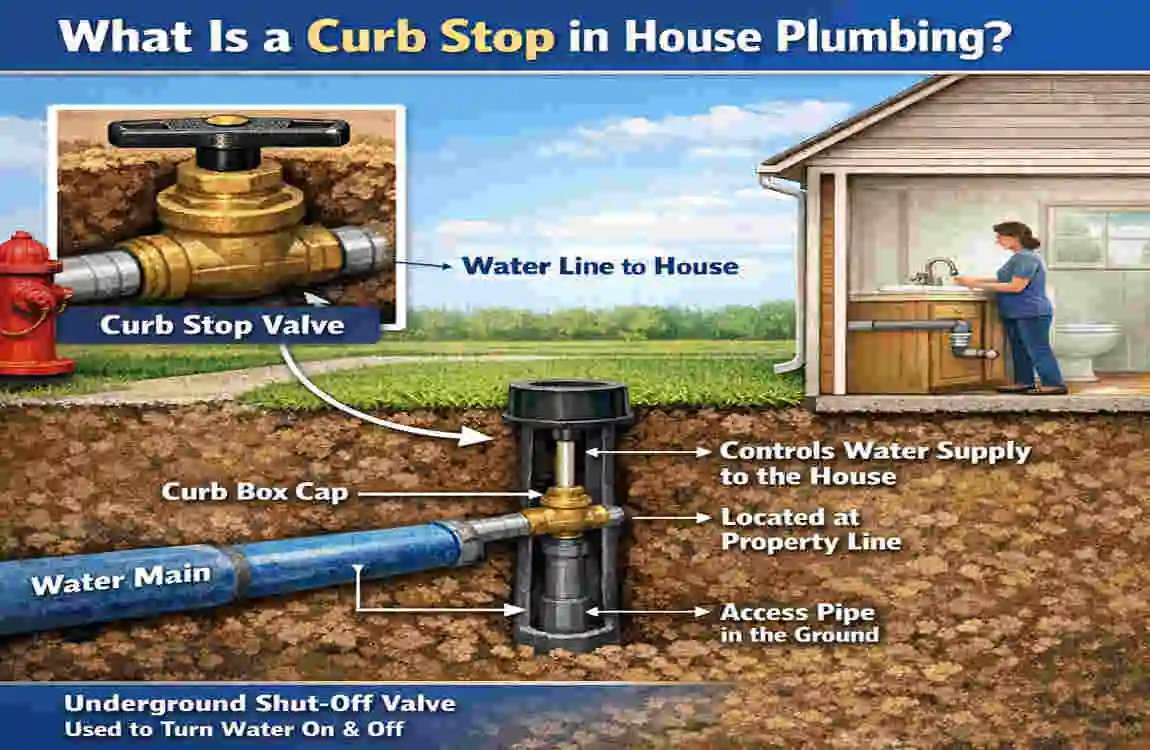
To truly grasp what is a curb stop in house plumbing, we need to break it down into simple, everyday language. A curb stop—often referred to by plumbers as a curb stop valve or a water service shutoff—is a heavy-duty valve buried underground, usually located near the edge of your street or sidewalk.

Think of your home’s water system like a branching tree. The city’s main water line is the massive trunk running straight down the middle of your street. From that trunk, smaller branches (called service lines) split off to feed individual houses. The curb stop is the gatekeeper that sits exactly at the point where the city’s branch hands the water over to your specific property.

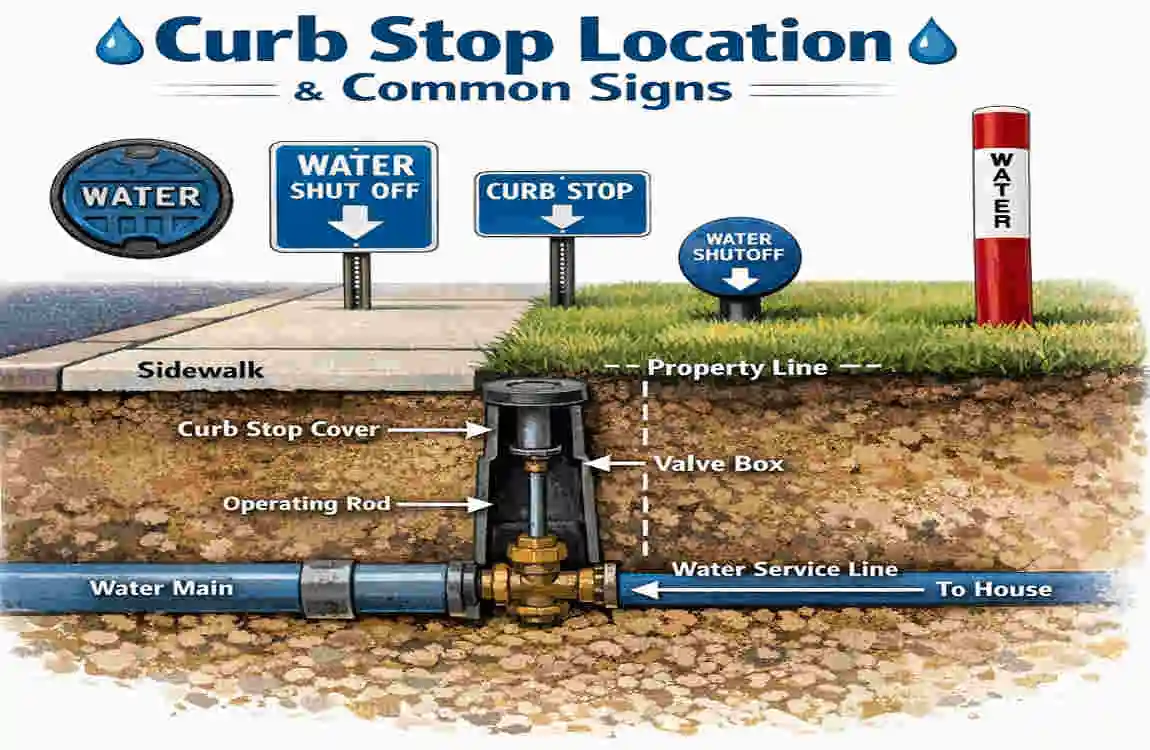
These valves are typically crafted from durable brass or bronze. For the average residential home, they measure about 3/4 of an inch to 1 inch in diameter. Depending on the climate in your region, this valve is buried anywhere from 1 to 6 feet deep in the ground. It is housed inside a protective cylinder—often called a curb box or valve box—which keeps the dirt out and allows a clear path from the surface of the grass down to the valve itself.

How It Connects to Your Home

This valve is almost always installed by your local municipal utility company right at the property line. It is incredibly important to understand that this valve is distinct from the indoor shutoff valves you might find next to your water heater or under your kitchen sink.

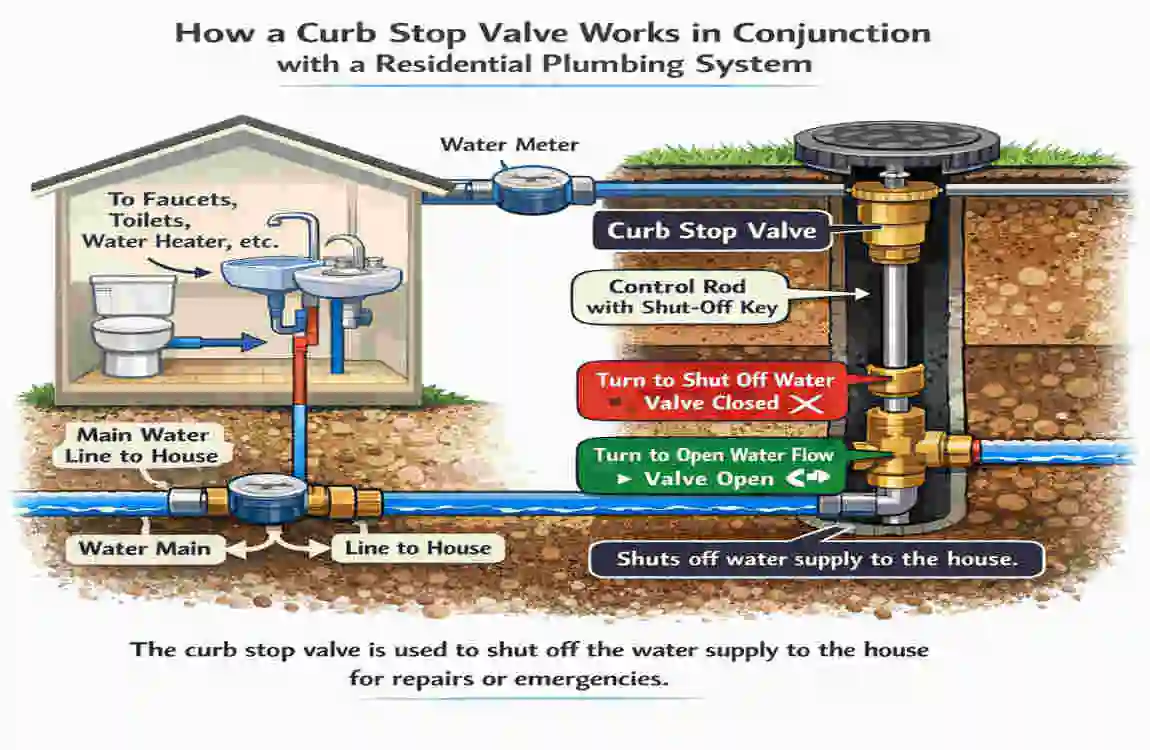
When a utility worker or a certified plumber needs to stop the water, they insert a specialized, long-handled tool called a curb key down into the valve box.

  • To close the valve (stop the water): They turn the tool clockwise. This completely blocks the flow of water before it ever reaches your home’s water meter.
  • To open the valve (start the water): They turn the tool counterclockwise, allowing the city water to flow freely into your plumbing system.

Modern Safety Standards

If you are researching what is a curb stop in house plumbing, you should also know about the materials used today. Following the rigorous updates to the Safe Drinking Water Act in 2014, all new curb stops must be strictly compliant with lead-free standards. This ensures that the water passing through the valve and into your drinking glass remains completely safe and uncontaminated.

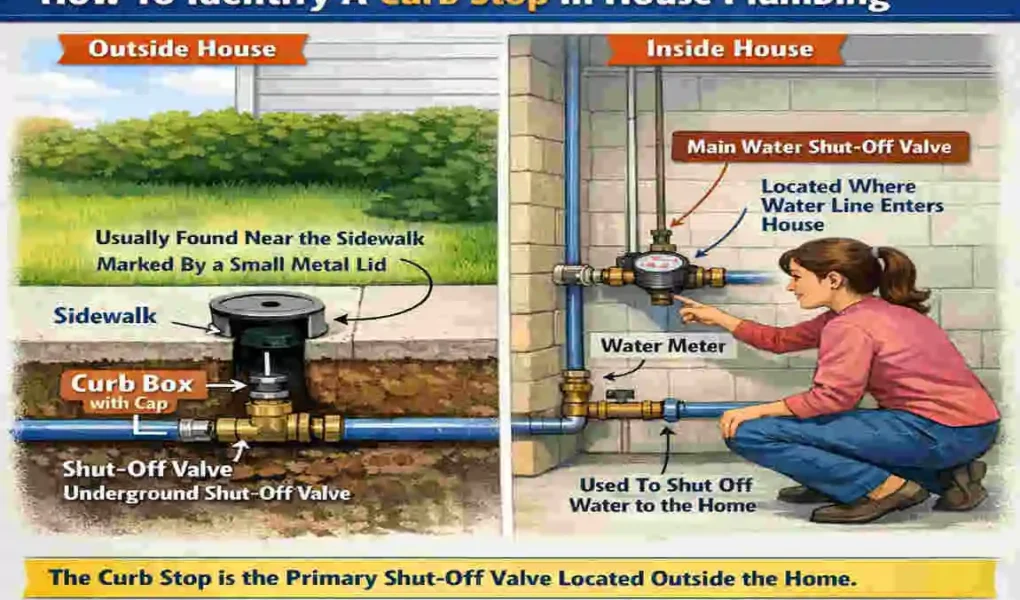
If you were to look at a cross-section of your front yard, you would see the municipal water main deep underground. Connected to it is a small pipe running toward your house. Interrupting that pipe is the brass curb stop valve. Extending upward from that valve, all the way to the surface of your lawn, is a cast-iron or heavy-duty plastic pipe that acts as an access tunnel. At the very top, flush with your grass or concrete, is a small, round metal lid.

It is a remarkably simple but effective system. In fact, industry statistics show that these specific underground water valves are used in over 90% of all municipal-connected homes across the country.

Historical Role: How We Got Here

To appreciate the modern plumbing emergency shutoff, it is helpful to take a quick step back in time. The concept of the curb stop did not just appear overnight; it evolved out of absolute necessity during the 19th century.

During the 1800s, rapidly growing cities faced massive public health crises. Cholera, typhoid, and other waterborne diseases spread like wildfire through early, poorly managed urban water systems. As city engineers began laying down the first organized cast-iron water mains to supply clean water to dense neighborhoods, they realized they had a massive logistical problem. If one home’s pipe broke, or if a specific building’s water became contaminated, the city had no way to isolate that single property. They had to shut down the water for the entire street or even the entire neighborhood to fix one leak!

The Birth of the Isolation Valve

To solve this, engineers introduced the concept of the isolation valve—the earliest iteration of the modern curb stop. By placing a specialized shutoff valve at the property line of every single building, city workers could safely disconnect a single infected or leaking property without disrupting the daily lives of everyone else on the block.

Today, these underground water valves are not just a good idea; they are a strict legal requirement. They are heavily standardized in modern building regulations, such as the International Plumbing Code (IPC) and the Uniform Plumbing Code (UPC).

The Evolution of Materials

Over the decades, the materials used to manufacture these valves have changed drastically. Early versions were made of crude iron, which rusted away quickly in damp soil. Later, lead was heavily used because it was soft, easy to mold, and resisted corrosion well. However, as medical science discovered the severe health impacts of lead consumption, the plumbing industry pivoted.

Today, asking what is a curb stop in house plumbing means looking at highly engineered, lead-free brass and bronze alloys. These modern materials are incredibly strong, perfectly safe for drinking water, and designed to sit buried in wet, acidic soil for decades without ever degrading.

Location Guide: Finding Your Underground Valve

what is a curb stop in house plumbing

Knowing exactly what this valve does is only half the battle. If a pipe violently bursts in your home, you need to know exactly where to run to shut the water off. Finding an underground valve can feel like a stressful treasure hunt if you do not know what you are looking for. Let’s break down exactly how you can locate your water service shutoff.

Typical Spots to Look

In the vast majority of residential neighborhoods, your curb stop will be located 2 to 6 feet away from the street curb. It is usually positioned in the sidewalk, in the grassy strip between the sidewalk and the street (often called the boulevard), or just at the very edge of your front lawn.

The depth of the valve depends entirely on your local climate.

  • In warm southern states: The valve might only be 1 to 3 feet deep because the ground never freezes.
  • In freezing northern states: Plumbers must bury the valve 4 to 6 feet deep, safely below the frost line, to prevent the water inside from turning to solid ice and cracking the brass during winter.

It is important to note that this valve is almost always located on the public right-of-way. It is intentionally placed slightly off your private, legally owned property line. Why? Because the city utility company needs guaranteed, 24/7 access to this valve. If you stop paying your water bill, or if there is a massive city leak, utility workers need to be able to access the valve without legally trespassing on your private land.

There are, of course, a few exceptions. If there are massive, old oak trees with sprawling roots near the street, or large concrete obstacles, the city might shift the installation slightly left or right to accommodate the environment.

How to Find Your Valve Step-by-Step

If you want to map out your property’s plumbing defenses today, follow these simple steps:

  1. Check near the street meter: If your city utilizes outdoor, underground water meters, your curb stop is almost certainly located in the exact same hole, or within a few inches of the meter box.
  2. Look for the visual cues: Walk slowly along the edge of your property line where your yard meets the street. You are looking for a round or square valve box cover sitting flush with the ground. These are usually made of heavy metal and are about 4 to 6 inches across. Sometimes they are painted blue or green, but often they are just a rusty iron color. They frequently have the word “WATER” stamped right into the metal.
  3. Use locator tools or call for help: Over the years, grass, dirt, and landscaping mulch can completely bury these covers. If you cannot find yours visually, you can use a basic metal detector. Even better, you can dial 811, the national utility locate service. They will send a professional out to your house for free to mark exactly where your underground water, gas, and electrical lines are buried.

Quick Reference Location Guide

Common Locations Typical Depth Range Visual Cue to Look For

Curb or Sidewalk 1 to 3 feet Small, round metal cover flush with concrete.

Grassy Boulevard 3 to 6 feet Plastic or iron box hidden in the grass.

Deep Frost Zones 6+ feet deep Extended metal rod and a heavy iron lid.

Types of Curb Stops: Design and Materials

Not all underground water valves are created equal. When exploring what is a curb stop in house plumbing, you will quickly discover that different eras of construction and varying local water pressures dictate different types of valve designs. Plumbers generally categorize these valves by their internal mechanical design and the materials used to build them.

Categorizing by Design

There are three primary styles of valves you will find buried in residential yards today:

  • Ball Valves: This is the absolute gold standard for modern plumbing. Inside a ball valve sits a perfectly round metal sphere with a hole drilled straight through the middle of it. When the valve is “open,” the hole lines up with the pipe, and water flows through. When you turn the curb key just a quarter of a turn (90 degrees), the solid side of the sphere blocks the pipe entirely. These are incredibly popular because they offer a quick shutoff and are extremely durable against high municipal water pressure.
  • Gate Valves: If you live in an older home, you likely have a gate valve. This design acts like a medieval portcullis or a guillotine. When you turn the key, it slowly lowers a solid brass “gate” down into the path of the water. Unlike the quick quarter-turn of a ball valve, a gate valve is a multi-turn mechanism. It might take five or six full rotations of the key to lower the gate and stop the water completely.
  • Compression vs. Mueller Styles: These refer to how the valve physically attaches to the pipes on either side of it. Compression styles use a tightening nut that squeezes a rubber or copper ring against the pipe to create a watertight seal. Mueller-style threads are specific, proprietary connection types used by major utility companies. Regardless of connection style, residential curb stops typically range from 3/4″ to 2″ in diameter.

Categorizing by Materials

When it comes to materials, durability is everything. You are taking a mechanical component, burying it in wet dirt, and expecting it to work flawlessly twenty years later.

As mentioned, lead-free brass and bronze are the champions of the industry. They naturally resist corrosion, they do not rust like iron, and they are strong enough to withstand ground shifts. You want to avoid plastic valves for primary municipal shutoffs strictly. While plastic is cheap and great for irrigation sprinklers, it easily cracks under shifting soil and varying temperatures, making it a terrible choice for a main house valve.

Comparing Valve Types

Valve Type Main Pros Main Cons Best Suited For

Ball Valve Very quick shutoff, highly durable, rarely gets stuck. Slightly more expensive to manufacture. Modern homes, new installations, high-pressure lines.

Gate Valve Generally more affordable, slow closure prevents water hammer. Slower to shut off, internal tracks can corrode and get stuck—older systems, budget-friendly utility replacements.

Ultimately, understanding these variations is crucial because different curb stop types suit various house plumbing needs. A rural property with massive water pressure needs a different setup than a small urban townhouse.

Functions & Importance: Why You Need This Valve

what is a curb stop in house plumbing

Now that you know how to find it and what it looks like, we must answer a critical question: why does this valve matter so much? It is easy to ignore something buried in the dirt, but the functions of this valve are absolutely vital to both you as a homeowner and the city as a water provider.

The Ultimate Emergency Shutoff

The most critical function of your curb stop is acting as an emergency shutoff that isolates your specific property. Let’s return to our flooded basement scenario. If your indoor main water valve fails, snaps off, or is completely seized by rust, the water from the city will keep violently pouring into your home.

By running out to the yard and turning off the curb stop, you instantly kill the water pressure at the property line. The incredible beauty of this system is that it isolates your disaster without causing a neighborhood impact. Your house stops flooding, but your next-door neighbors can continue taking their showers and washing their dishes completely uninterrupted.

Essential Maintenance Access

Aside from terrifying emergencies, this valve is used daily by utility workers for routine maintenance. When your home’s water meter reaches the end of its lifespan and needs to be swapped out for a new digital smart meter, the utility worker must turn off the water to safely remove the old equipment.

Interestingly, a seized or broken curb stop is a massive headache for the city. According to utility data, seized curb stops cause a staggering 20% of all water meter replacement delays. If the worker cannot turn the water off at the street, they cannot safely swap your meter, leading to costly rescheduling and street excavations.

Utility Control and Ownership

One of the most important concepts to grasp when learning what is a curb stop in house plumbing is the idea of ownership. Even though this valve connects to your house, it is owned, operated, and maintained by the city utility company, not you, the homeowner.

This gives the city ultimate control. If a property is abandoned, the city can turn off the water at the curb to prevent squatter usage. If there is a massive drought and severe water rationing is ignored, the city has physical access to limit supply.

A Quick List of Everyday Benefits

While you don’t own it, having a functioning curb stop offers you several massive benefits:

  • Prevents catastrophic flooding: It acts as the final failsafe against burst pipes and internal valve failures.
  • Enables major renovations: If you are gutting your entire home and replacing all internal plumbing, shutting the water off at the street ensures the house is totally dry and safe to work on.
  • Saves on water bills during vacancies: If you are leaving your winter home vacant for six months, having the city shut the water off at the curb guarantees zero phantom leaks will run up your water bill while you are away.

How It Works: The Mechanics of Water Flow

To truly appreciate this underground workhorse, it helps to visualize the mechanics of how it controls such immense pressure. The water rushing through your city’s main line is highly pressurized—often ranging between 150 to 300 PSI (Pounds per Square Inch) in the main street pipe. By the time it hits your service line, pressure-reducing valves usually bring it down, but the curb stop must still be built to withstand incredible force.

The Anatomy of the Turn

The physical operation is wonderfully simple. When a plumber removes the cast-iron lid from the ground, they look down a long, narrow tube. At the bottom sits the top of the valve, which features a brass “stem nut.”

The plumber takes a “curb key“—which looks like a heavy steel T-bar, sometimes up to six feet long. The bottom of this T-bar has a slotted socket that perfectly fits over the stem nut.

  1. The plumber slides the key down the dark tube until it locks onto the nut.
  2. Using the leverage of the wide T-handle at the top, they physically rotate the internal stem.
  3. As the stem turns, it directly rotates the internal ball or lowers the internal gate, smoothly cutting off the high-pressure water flow.

The Journey of the Water

If we were to draw a diagram of how water travels into your home, it would look like this step-by-step journey:

  1. The Water Main: Massive volume of water travels down your street.
  2. The Curb Stop: The water branches off, hitting this first, city-owned gatekeeper.
  3. The Service Line: Once past the stop, water flows through your privately owned underground pipe toward your house.
  4. The Meter Valve: Right before the water meter, there is often a secondary valve.
  5. The Water Meter: The device that tracks your usage for billing.
  6. The House Main Shutoff: The valve inside your basement or garage that you use for everyday plumbing repairs.

Understanding this sequence is the core of understanding what is a curb stop in house plumbing. It is step two in a six-step journey, standing as the very first line of defense against the immense power of municipal water pressure.

Maintenance Tips: Care and Caution

Because this valve sits buried in the soil, completely out of sight, it is incredibly easy to forget about it until disaster strikes. While the city owns the valve, as a homeowner, there are several crucial maintenance tips and warnings you must observe to keep your home safe.

Homeowner Duties: Look, But Do Not Touch

Your primary responsibility as a homeowner is simple: know where it is and keep it clear. We recommend you locate your curb stop annually, perhaps every spring when you clean up your yard. Make sure the metal lid is clearly visible. Clear away any overgrown grass, built-up lawn thatch, or landscaping mulch that might have buried it. If a pipe bursts in the dead of winter, you do not want to waste twenty minutes digging through frozen dirt trying to find the lid.

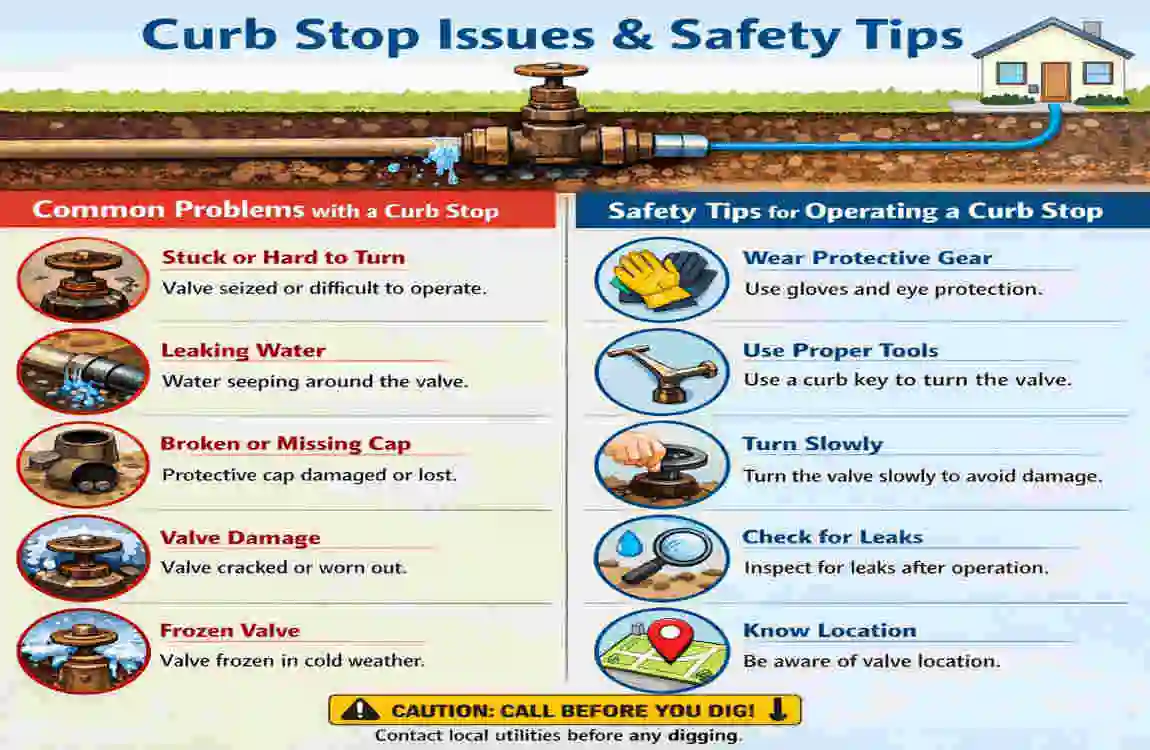
However, we must issue a very stern warning: Do not operate this valve yourself unless you are formally trained. Because these valves age in wet soil, they can become incredibly fragile. If you try to force a stuck valve with a makeshift tool, you can easily snap the brass stem completely off. If you break it, the water will run wild, and the city will hold you fully financially responsible for an emergency street excavation. Always call a professional plumber or your local utility company to turn it on or off.

Recognizing Signs of Failure

Even though you should not turn it, you should keep an eye out for signs that the valve is failing.

  • Unexplained Puddles: If you notice a perpetually muddy, soggy patch of grass right around the valve box, even when it hasn’t rained, the underground valve is likely leaking.
  • Stiff Key Turn: If a plumber comes out to do work and mentions the valve was incredibly difficult to turn, it is a sign of internal corrosion.

Professional Servicing

While you shouldn’t touch it, utility companies and professional plumbers have maintenance protocols. Ideally, a pro service should inspect and exercise (turn off and on) the valve every 5 to 10 years. This simple action breaks up internal calcium deposits and provides necessary lubrication to ensure it works smoothly during a real emergency.

Finally, be aware of the law. Tampering with a city-owned curb stop is explicitly illegal in many municipalities. Cities view unauthorized use as potential water theft or tampering with public infrastructure, and heavy fines can apply. When in doubt, call the pros!

Common Issues & Repairs: When Things Go Wrong

Despite being made of heavy-duty brass, these valves live in a harsh underground environment. Over decades of exposure to the elements, things are bound to go wrong. Knowing the common issues can help you identify a problem before it turns into a total washout.

The Enemies of the Valve

  • Freezing and Cracking: In cold, northern climates, the frost line can plunge several feet deep during severe winters. If a valve was not buried deep enough, or if a prolonged deep freeze occurs, the water trapped inside the brass housing can turn to ice. Because water expands as it freezes, it can easily shatter a thick brass valve, causing a massive underground leak once the ice thaws.
  • Soil Corrosion: Even high-quality brass is not entirely immune to nature. Highly acidic soil, stray electrical currents in the ground, and decades of moisture can cause the metal to corrode slowly, pitting the brass and degrading the internal seals.

The Cost of Repairs

If your valve breaks, the good news is that because it is a city-owned asset, the utility company is almost always responsible for replacing it. However, the repair process is intense. It requires bringing a backhoe to your front yard, excavating a massive hole, bringing in trench-safety equipment, and cutting out the old plumbing. Because it is utility-exclusive work, the actual cost of this job runs anywhere from $200 to over $1000, depending on how deep the pipe is and whether concrete sidewalks need to be smashed and repoured.

Quick Troubleshooting Guide

Here is a quick table to help you understand the symptoms and solutions for common issues:

Common Issue Noticeable Symptom Professional Fix / Solution

Stuck or Seized Valve The key absolutely will not turn. Utility workers apply specialized lube or carefully rock the valve to break scale.

Leaking Valve Body Unexplained puddles or sinkholes in your yard. Utility must excavate the yard and completely replace the valve.

Buried Valve Box You cannot find the metal lid. Use a metal detector or call 811 to locate and raise the box level.

Frequently Asked Questions (FAQ)

What is a curb stop in house plumbing?

Simply put, a curb stop is a heavy-duty, underground water valve located near your property line (often by the street curb). It acts as the primary, master shutoff switch connecting the city’s municipal water supply to your private home plumbing system.

Who can operate a curb stop valve?

Generally, only utility workers, city employees, or licensed plumbers should operate this valve. Because the valve is legally owned by the city, unauthorized tampering by a homeowner can result in severe fines or liability if you accidentally break the aging valve.

How deep is a curb stop typically buried?

The depth varies wildly based on your local climate. In warm weather states, they may only be 1 to 3 feet deep. In cold, northern climates where the ground freezes solid in the winter, they are typically buried 4 to 6 feet deep to keep the water safely below the frost line.

Can I personally repair or replace my curb stop?

No, you cannot. Because this valve sits on the public right-of-way and acts as the utility company’s gatekeeper to your property, it is utility-owned infrastructure. If it is leaking or broken, you must call your local water authority to perform the excavation and replacement.

What’s the main difference between a curb stop and a main house valve?

Location and ownership. Your main house valve is located inside your house (like in a basement or garage) and is fully owned and maintained by you. The curb stop is located outside near the street and is owned and controlled by the city.

Can an underground curb stop freeze in the winter?

Yes, it is definitely possible. If an unusually harsh winter pushes the frost line deeper than normal, the water inside the valve can freeze, expand, and crack the brass body. In extreme cold areas, utilities sometimes add specialized insulation inside the vertical valve box to help prevent freezing.

You may also like...

Leave a Reply

Your email address will not be published. Required fields are marked *