Have you ever noticed unpleasant odours wafting from your sinks or experienced the frustration of water backing up in your shower? These are common signs of clogged drain pipes, a problem that can escalate quickly if left unchecked. Over time, grease, soap scum, hair, and debris accumulate in your drains, creating stubborn blockages that can disrupt your daily life.
Regularly cleaning your drain pipes isn’t just about avoiding these inconveniences. It’s a preventive measure that saves you money on costly repairs, keeps your home smelling fresh, and ensures a healthier living environment.
Understanding Your Drain System
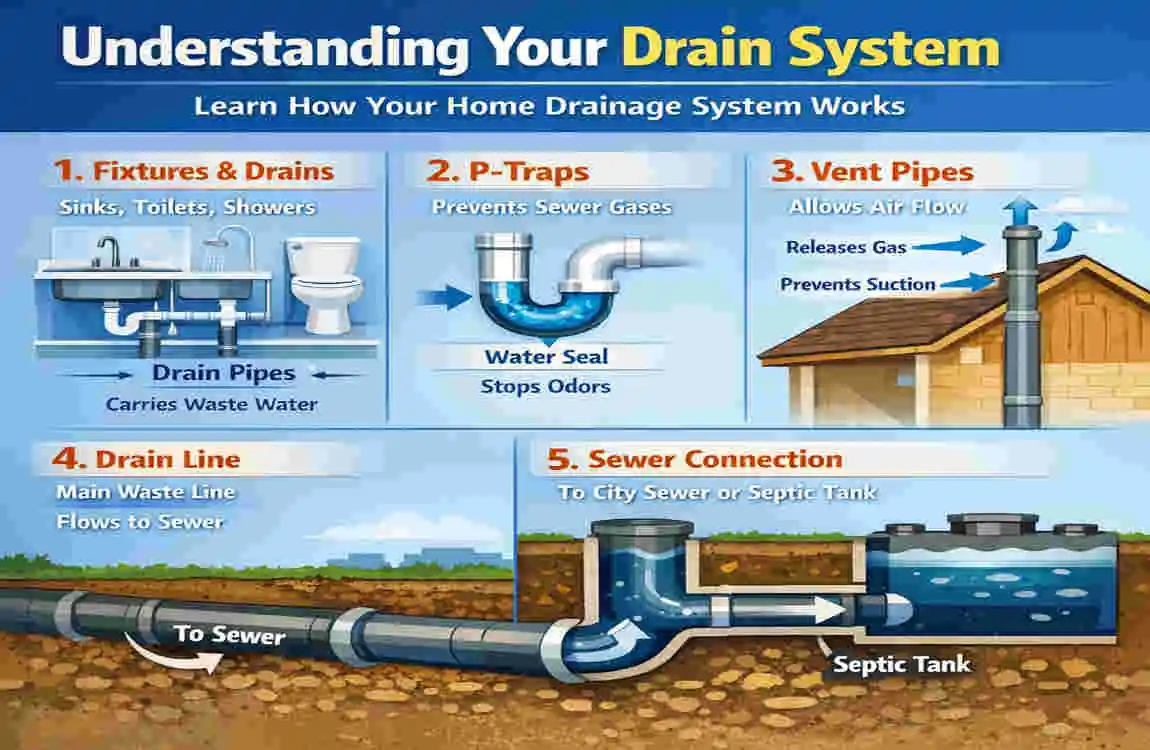
Overview of a Typical Home Drainage System
Your home’s drain system is more complex than it seems. It consists of several components, including:
- Sinks and Showers: These are common sources of clogs due to soap residue, hair, and food particles.
- Toilets: They often get clogged by non-flushable items like wipes or excessive toilet paper.
- Main Sewer Line: This is the backbone of your drainage system, connecting all the smaller pipes to your city’s sewer or septic tank.
Clogs form when materials like grease, hair, and debris build up over time, narrowing the passage for water flow. Eventually, this buildup can lead to complete blockages.
Why Does Drain Cleaning Matter?
Neglecting routine drain cleaning can lead to:
- Costly Repairs: Severe blockages may damage pipes or require expensive plumbing services.
- Health Risks: Stagnant water and foul odours can harbour harmful bacteria.
Common Signs of a Clogged Drain
- Slow-draining water in sinks, tubs, or showers.
- Gurgling noises coming from pipes.
- Persistent foul odours near drains.
Recognising these signs early can save you time and money in the long run.
Tools and Materials You’ll Need
Basic Tools for DIY Cleaning
To get started, you’ll need:
- Plunger: Ideal for clearing minor clogs.
- Drain Snake or Auger: A handy tool for removing deeper blockages.
- Baking Soda and Vinegar: Natural ingredients for eco-friendly cleaning.
- Bucket and Gloves: To keep the area clean and protect your hands.
Optional Tools for Tough Clogs
For more stubborn clogs, consider:
- Wet/Dry Vacuum: Effective for sucking out debris.
- Chemical Drain Cleaners: Use sparingly and with caution.
- Hydro-Jetting Tools: Best for experienced users handling severe clogs.
Preparation Tips
- Always wear protective gloves and goggles to avoid exposure to harmful substances.
- Familiarise yourself with the materials in your pipe to ensure your cleaning methods won’t cause damage.
Step-by-Step Guide: How to Clean Out Drain Pipes in the House
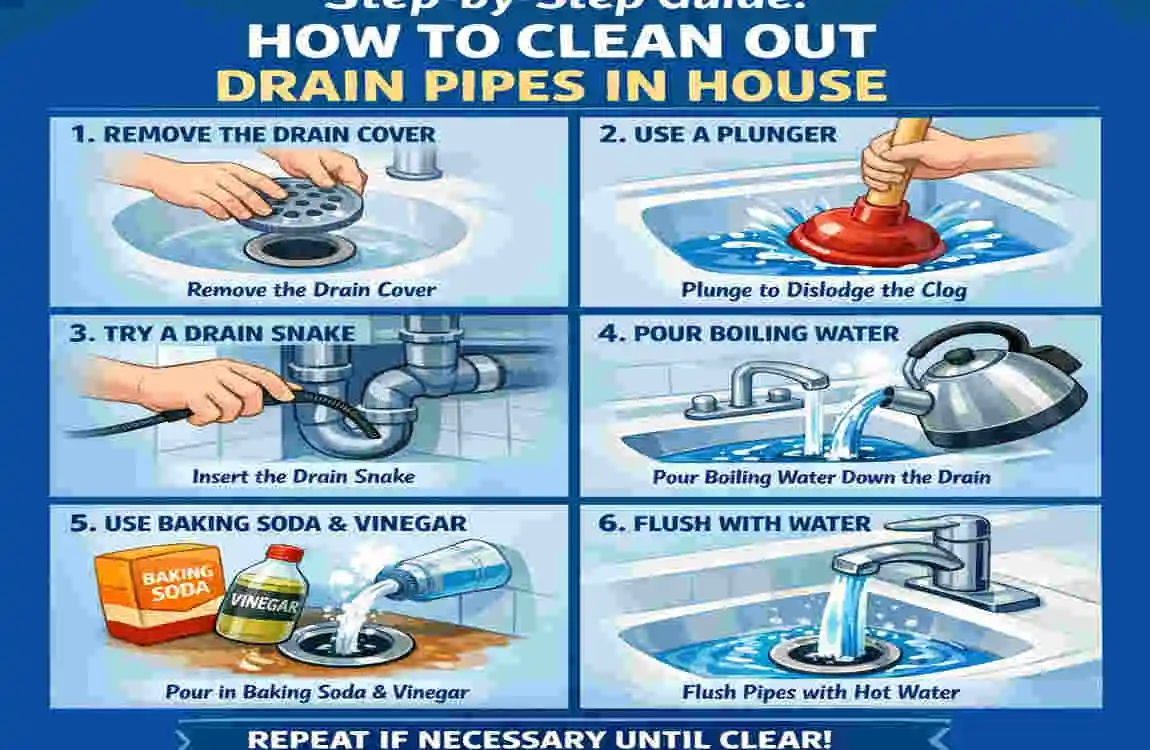
Using Natural Ingredients (Eco-Friendly Approach)
One of the safest and most affordable ways to clean your drains is by using baking soda and vinegar. Here’s how:
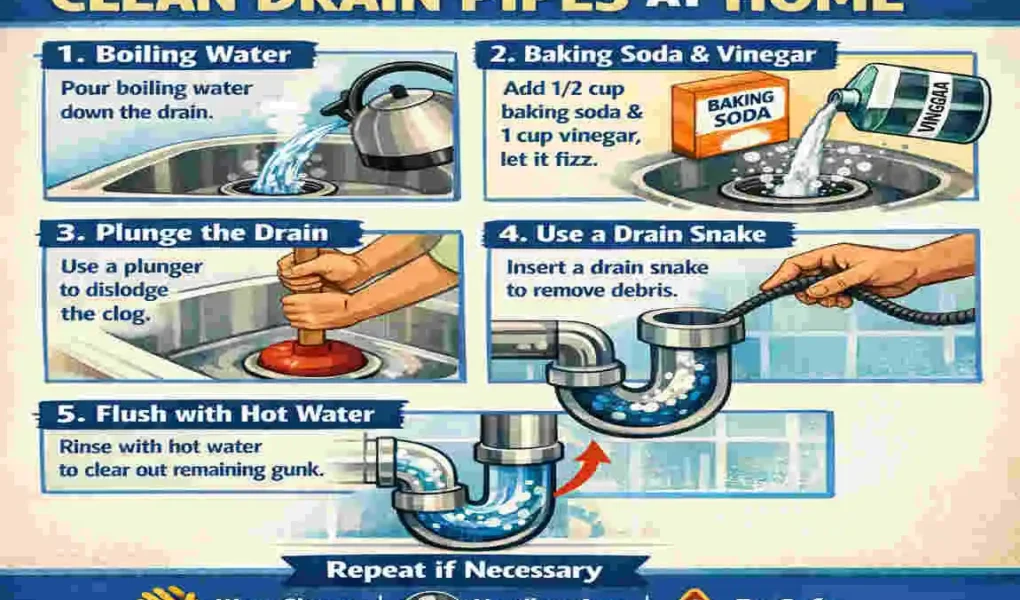
- Pour boiling water into the drain to loosen grime.
- Add 1 cup of baking soda into the drain.
- Slowly pour 1 cup of vinegar, causing a fizzing reaction.
- Cover the drain and let it sit for 15-20 minutes.
- Flush the drain with more boiling water to clear any remaining residue.
Why Choose This Method?
- It’s safe for your pipes and the environment.
- It’s cost-effective and easy to perform with household items.
Using a Plunger
Plungers are a classic tool for clearing clogs in sinks and toilets. Follow these steps:
- Fill the sink or basin with enough water to cover the plunger’s rim.
- Position the plunger over the drain and press down firmly.
- Apply repeated pressure to create a seal and loosen the clog.
Using a Drain Snake/Auger
For deeper blockages, a drain snake (or auger) is your best bet:
- Insert the snake into the drain until you feel resistance.
- Rotate the snake to break up the clog.
- Pull out the debris and repeat until the drain is clear.
This method is especially useful for clogs caused by hair or other dense materials.
Using a Wet/Dry Vacuum
If you have a wet/dry vacuum, you can use it to suck out debris:
- Create a tight seal around the drain using the vacuum hose.
- Set the vacuum to reverse Mode and turn it on.
This method is effective but may require some trial and error to perfect.
When to Use Chemical Drain Cleaners
Chemical cleaners should be a last resort due to their potential to damage pipes and harm the environment. If you decide to use them:
- Follow the instructions on the label carefully.
- Ensure proper ventilation to avoid inhaling fumes.
Preventive Measures to Avoid Clogged Drains
Daily Habits to Maintain Clean Drains
- Avoid pouring grease, coffee grounds, or food scraps down the sink.
- Use drain strainers to catch hair and debris.
- Run hot water after each use to clear out residue.
Monthly Maintenance Tips
- Use baking soda and vinegar regularly to prevent buildup.
- Inspect your drains for early signs of slow drainage or odours.
DIY vs Hiring a Professional Plumber
Scenario: DIY Approach, Call a Professional
Mild clogs , cost-effective, and easy to handle . Not necessary
Persistent/recurring clogs may not resolve the issue entirely . Strongly recommended
Pipe damage or strange noises . Not advisable . Requires expert evaluation
Eco-Friendly and Long-Term Solutions
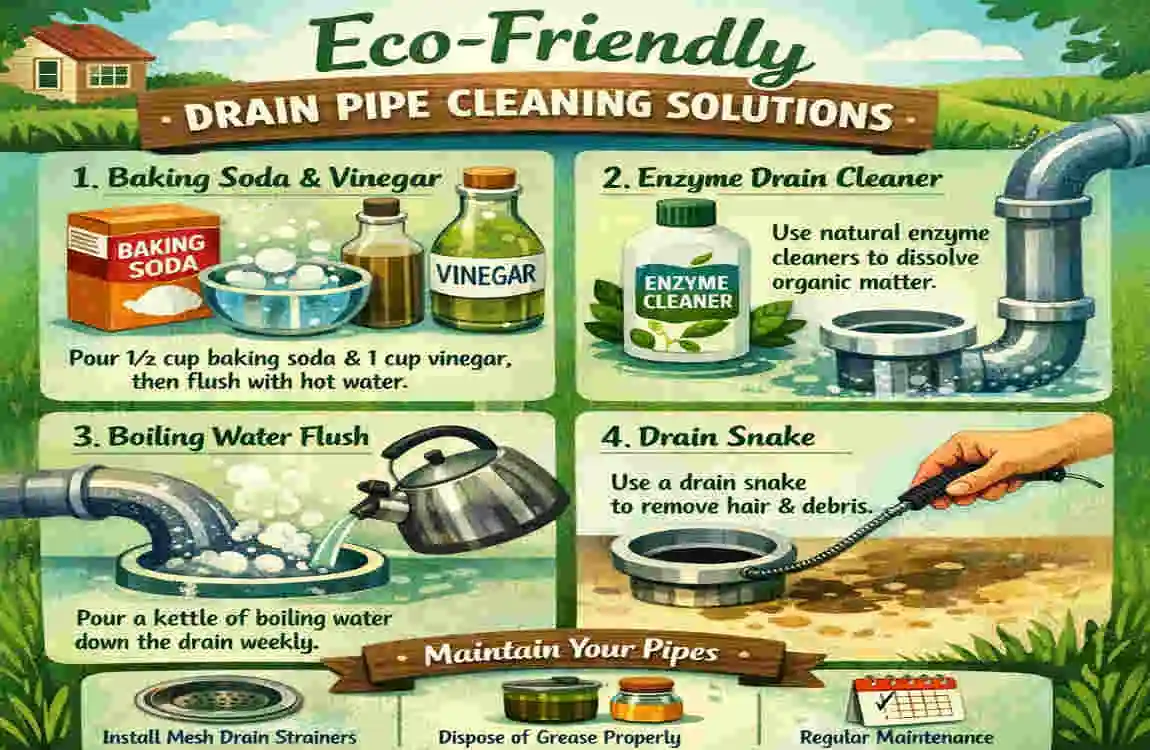
Switch to Eco-Friendly Cleaning Products
Choose biodegradable and non-toxic options to protect the environment and your pipes.
Invest in Long-Term Solutions
Consider hydro-jetting for deep cleaning and schedule regular professional inspections to keep your pipes in top condition.
Common Mistakes to Avoid When Cleaning Drains
- Overusing Chemical Cleaners: This can corrode pipes and pollute water systems.
- Forcing Tools into Pipes: Aggressive actions risk causing damage.
- Ignoring Early Signs: Procrastinating can lead to expensive repairs.
FAQs About Cleaning Drain Pipes
Can I use boiling water for all types of pipes?
No, avoid using boiling water on PVC or older pipes, as it may cause warping or damage.
How often should I clean my drain pipes?
Routine maintenance every 1-2 months is ideal.
Are homemade solutions as effective as store-bought cleaners?
Yes, natural solutions like baking soda and vinegar are often just as effective for mild clogs.
| Step | Method/Tool | Key Action | Tips |
|---|---|---|---|
| Boiling Water Flush | Boiling Water | Pour slowly down the drain to loosen grease | Use cautiously on PVC pipes |
| Natural Cleaner | Baking Soda & Vinegar | Pour baking soda, then vinegar; wait 15-20 mins | Follow with hot water flush |
| Plunging | Plunger | Create seal, plunge vigorously | Fill basin with water for better suction |
| Drain Snake/Auger | Drain Snake | Insert and rotate to dislodge clog | Use gently to avoid pipe damage |
| Wet/Dry Vacuum | Wet/Dry Vacuum | Use vacuum to suck out debris | Seal drain opening for better suction |