Draining a home’s plumbing may sound like a big job, but it becomes much easier when you understand the process. If you are preparing for cold weather, leaving a house empty, or doing repairs, learning how to drain water system in house can help you avoid costly damage. It also gives you more control over your home plumbing system and helps protect pipes from freezing.
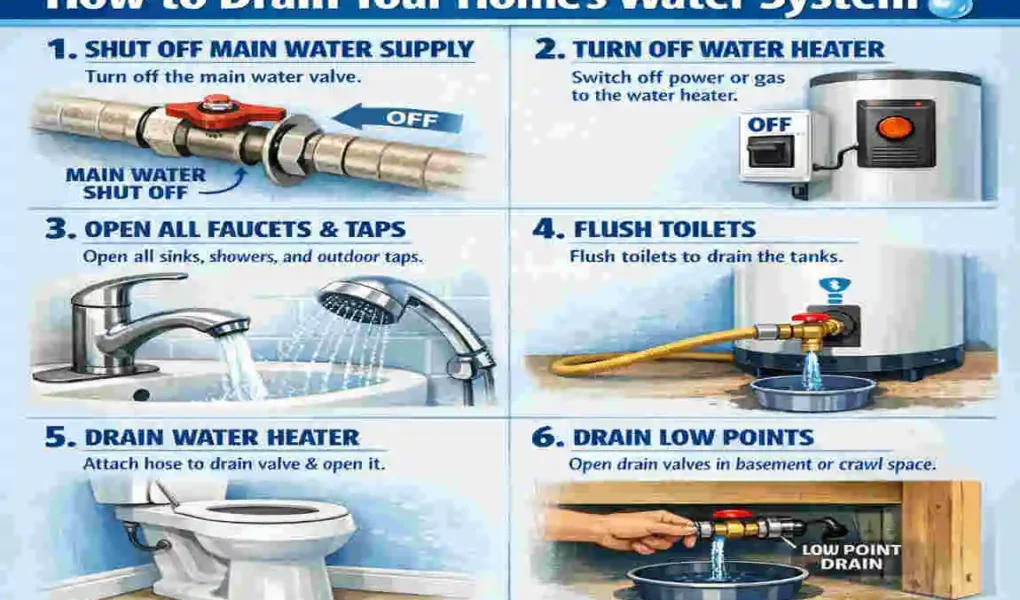
| Step | Action |
|---|---|
| 1 | Shut off the main water supply – Turn the main valve clockwise (usually near the water meter or where the line enters the house) |
| 2 | Open all faucets – Start at the highest floor (sinks, showers, tubs), then open lower-level and outdoor faucets to let gravity drain the pipes |
| 3 | Flush all toilets – Flush multiple times to empty tanks and bowls; sponge out remaining water if needed |
| 4 | Drain the water heater (if winterizing/repairing) – Turn off power/gas, connect a hose to the drain valve, and empty the tank outside or into a drain |
| 5 | Blow out lines (optional, for winterization) – Use an air compressor at 40–50 PSI on an outdoor bib to push remaining water out of pipes |
| 6 | Leave one faucet open – Keep one faucet open to release residual pressure; close all others and the water heater drain valve |
A lot of homeowners only think about draining plumbing when something goes wrong. In reality, it is a useful part of regular plumbing maintenance tips. It can help when you need to winterize home plumbing, replace fixtures, service a water heater, or shut a house down for a while. When done correctly, draining a home’s water system can reduce leaks, lower the risk of frozen pipes, and protect appliances.
Why Would You Need to Drain Your Home’s Water System?
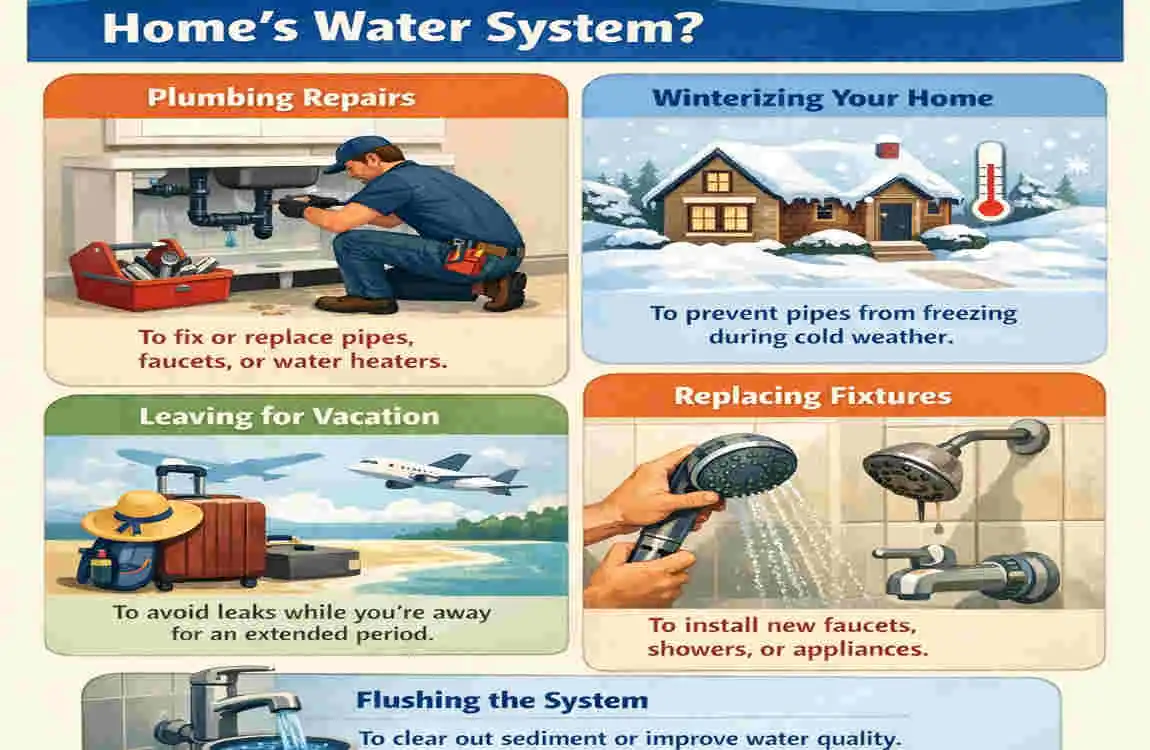
There are several instances when it makes sense to drain the house plumbing system. Some situations are planned, while others happen during emergencies. Knowing when to drain the system can help you act quickly and protect your home.
Preparing for Winterization
Cold weather is one of the most common reasons to drain water pipes in house. When water freezes, it expands. That expansion can crack pipes, break fittings, and damage walls or floors. If you live in a place with harsh winters, winterizing home plumbing is a smart move.
This matters even more for vacation homes or seasonal properties. If a home will sit empty during freezing weather, draining the water system is one of the best ways to protect it.
Plumbing Repairs and Renovations
If you are replacing a pipe, changing a faucet, or installing new fixtures, you often need to drain the line first. A dry system is easier and safer to work on. It also helps keep water from spilling into cabinets, floors, or walls during the repair.
For bigger renovation projects, shutting down and draining the home plumbing system can make the work smoother. It gives plumbers or homeowners a clean start.
Long-Term Vacancies
If you are leaving a house unoccupied for weeks or months, it is wise to drain the system. Even a small leak can cause serious damage if no one notices it. Draining the system adds a layer of safety and helps prevent hidden water issues.
Emergency Situations
Sometimes you do not have a choice. A burst pipe, a broken fitting, or a major plumbing failure may force you to shut off and drain the water system fast. In these cases, acting quickly can reduce water damage and make repairs easier.
Understanding How Your Home’s Water System Works
Before you start draining a house water system, it helps to understand the basic setup. When you know where water enters, how it moves, and where it can leave, the process makes much more sense.
Main Water Supply Line
Your main water supply line brings water into the home from the city, well, or another source. This line is controlled by the water shut off valve. Once you close it, water stops entering the house.
This is the first and most important step in draining the system. If water keeps coming in, you will not be able to fully empty the pipes.
Hot and Cold Water Lines
After water enters the home, it splits into hot and cold lines. Cold water goes directly to sinks, toilets, showers, appliances, and outdoor faucets. Hot water travels through the water heater before reaching fixtures that need warm water.
Both lines need attention when you drain plumbing. If you forget one side, water may remain trapped.
Water Heater’s Role
The water heater stores and warms water for the home. It is one of the most important parts of the system to drain. If you skip it, sediment and water may stay inside the tank.
Draining the heater is also important because it can be damaged if it is left on while empty or if freezing temperatures affect the tank or connected lines.
Drain Valves and Faucets
Water exits the system through drain valves, open faucets, and low-point drains. These points help gravity pull water out of the pipes. Opening them also allows air into the system, which helps water flow out faster.
This is why the draining process often includes opening faucets on upper and lower floors.
Tools and Supplies Needed Before Draining the Water System
You do not need a large toolbox to drain water system in house lines, but a few basic items will make the job easier and cleaner.
Essential Equipment
You will want these items ready before you begin:
- Garden hose
- Bucket
- Adjustable wrench
- Towels or rags
A garden hose is especially useful for draining the water heater and any low drains. Towels help soak up spills and protect floors.
Safety Equipment
Wear work gloves to protect your hands from sharp edges, hot surfaces, or dirty water. Eye protection is also a smart idea, especially if you are working near valves or using compressed air.
Optional Plumbing Tools
Some homes may need extra tools.
- Air compressor: Useful for pushing leftover water out of pipes
- Wet/dry vacuum: Helpful for removing water from shallow areas, floor drains, or appliance trays
These tools are not always required, but they can be useful when you want to drain house water pipes more completely.
Safety Precautions Before You Begin
Before you start opening valves or draining fixtures, take a few safety steps. These small actions can prevent accidents and make the process smoother.
Turn Off Electrical Power
If you have an electric water heater or a pump connected to the water system, turn off the electrical power first. This helps prevent damage to the equipment and lowers the risk of shock.
Never run an empty electric water heater. That can damage the heating elements very quickly.
Shut Off Gas Supply if Necessary
If your water heater runs on gas, turn off the gas supply if needed. Follow the heater’s instructions and use care. If you are unsure, ask a professional.
This step matters because you do not want the burner operating while the tank is empty or during draining.
Locate the Main Water Shut-Off Valve
Find the water shut off valve before you begin. Common locations include:
- Near the water meter
- In the basement
- In a utility room
- Near the foundation wall
- Outside in a covered box
It is much easier to drain a house plumbing system when you know exactly where this valve is located.
Protect Flooring and Belongings
Place towels, buckets, or a drop cloth near areas where water may spill. If you are working indoors, protect hardwood floors, carpets, and nearby furniture.
Even a small amount of leftover water can make a mess, so preparation matters.
Step-by-Step Guide: How to Drain Water System in House
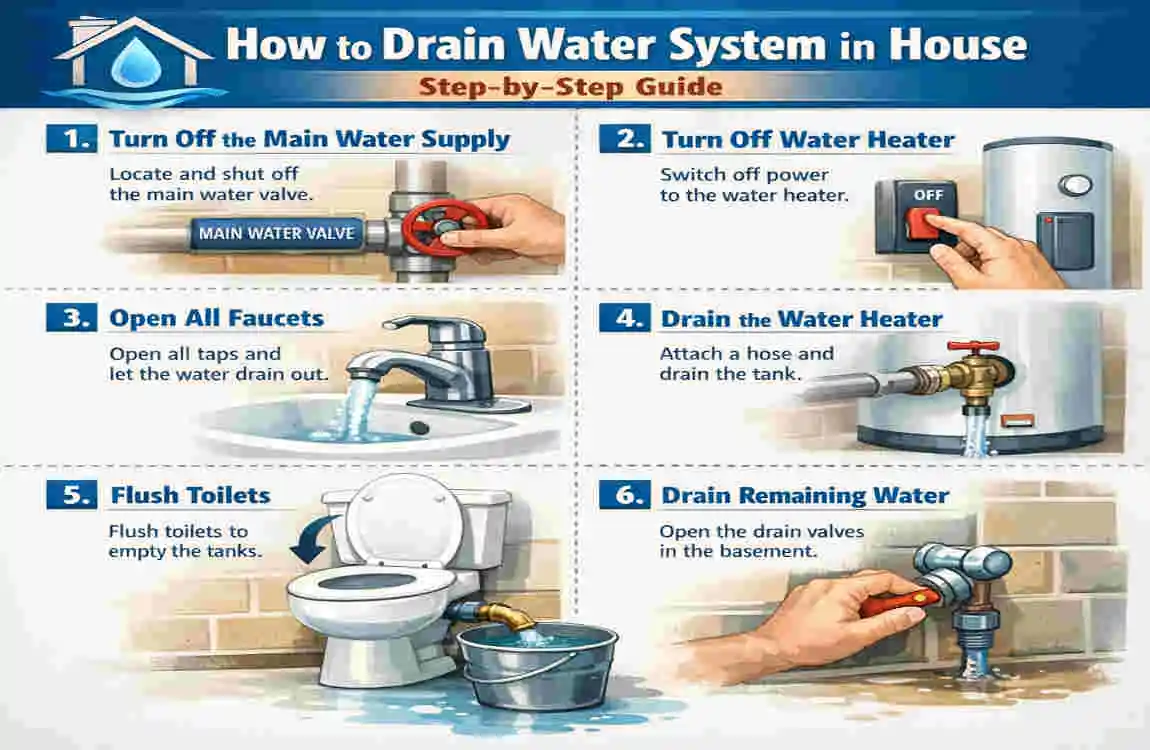
Now, let’s walk through the process in a clear, simple way. These steps explain how to drain the water system in a house without rushing or missing important details.
Turn Off the Main Water Supply
Start by turning off the main water supply to the home. This stops new water from entering the plumbing lines.
Turn the valve clockwise until it is fully closed. If the valve is stiff, use gentle pressure. Do not force it too hard, because old valves can break.
After closing it, open a faucet in the home and check that the water slows and stops. This helps confirm that the supply is really off.
If you skip this step or do it halfway, the system may refill while you are draining it.
Shut Down the Water Heater
Next, turn off the water heater. This is an important part of draining a home’s water system.
If you have an electric water heater, switch off the power at the breaker box. If you have a gas water heater, set it to the pilot or off position as directed by the manufacturer.
Do not let the heater run while the tank is empty. That can damage the unit. Turning it off first keeps the equipment safe while you drain water heater contents later.
Open All Faucets
Once the water is off, open all faucets in the house. Start on the upper floors and work your way down. This helps air enter the system and lets gravity pull water out.
Open:
- Bathroom sinks
- Kitchen sinks
- Tub and shower faucets
- Utility sinks
- Outdoor spigots if they are connected
Leave the faucets open while the system drains. This helps prevent vacuum pressure from trapping water inside.
Flush All Toilets
Flush each toilet to empty the tank and bowl as much as possible. After flushing, use a sponge, small cup, or towel to remove any standing water left in the tank or bowl.
Toilets can hold more water than people expect. If water remains inside during freezing weather, it can cause damage. This step is especially important when you winterize home plumbing.
Drain the Water Heater Tank
Now move to the water heater. Attach a garden hose to the drain valve at the bottom of the tank. Run the hose to a safe drain area, such as a floor drain, a utility sink, or an outside area where hot water will not cause damage.
Open the drain valve slowly. Water may flow out quickly, so stay alert. If the water flows slowly, opening a hot water faucet somewhere in the house can help air enter the tank.
Keep an eye on the process until the tank is mostly empty. Some sediment may come out with the water. That is normal, especially in older heaters.
This step matters because a water heater is one of the biggest storage areas in the home plumbing system. If you forget it, you have not fully drained the house plumbing system.
Open Low-Level Drain Valves
Some homes have low-point drains in the basement, crawl space, or utility room. These drains help remove water from the lowest parts of the system.
Open any drain valves you can find. Water usually moves downward naturally, so these points can help remove the last bit of water from the pipes.
If the home has a basement, this step is especially useful. Lower areas often hold water longer than upper floors.
Empty Appliances Connected to Water
Do not forget appliances that use water. They can still hold liquid after the main lines are drained.
Check:
- Washing machines
- Dishwashers
- Refrigerators with water dispensers or ice makers
For a washing machine, run a drain cycle if possible, then disconnect hoses and let them empty fully. For dishwashers, check the drain line and follow the manufacturer’s steps if needed. For refrigerators, shut off the supply line and, if possible, remove any water from trays or internal lines.
This part is often overlooked, but it is important if you want to fully drain house water pipes.
Remove Remaining Water from Pipes
Even after opening faucets and drains, small amounts of water may remain in pipe sections. That leftover water can be a problem in freezing weather.
There are two common ways to handle this:
Using Gravity
Let the system sit for a while after the main lines are opened. Gravity will help water flow down to the lowest points. Sometimes just waiting is enough for a basic drainage job.
Compressed Air Method
For a more complete result, some people use compressed air to push water out of the pipes. This method is often used when winterizing home plumbing in colder areas.
If you use air, keep the pressure low and steady. Too much pressure can damage pipes or fittings. If you are not comfortable with this step, a plumber can do it safely.
Check for Residual Water
After the system appears empty, inspect the home carefully. Look at sinks, tubs, toilets, outdoor faucets, and appliance lines. Check for drips, trapped water, or slow leaks.
It is also a good idea to return to the water heater, drain valves, and low spots in the system. Sometimes water settles after the first drain and needs a second check.
This final inspection helps confirm that you truly completed the process of draining a home’s water system.
How to Drain Water Pipes for Winter Protection
If your main reason for draining is cold weather, you need to think beyond just emptying visible water. Winter protection requires a little more care.
Why Winterization Matters
Frozen pipes are one of the biggest risks in winter. When water freezes, it expands and can split the pipe. Even a tiny crack may lead to major leaks when the weather warms up.
That is why many people choose to winterize home plumbing before the first deep freeze. It is much easier to prepare early than to repair burst pipes later.
Using Compressed Air
Some homeowners and professionals use compressed air to clear out hidden water. This method forces remaining droplets through the pipe system and out of the open faucets or drains.
It works well, but it must be done carefully. Too much air pressure can damage the plumbing. If you are unsure, ask a plumber to handle this part.
Adding Antifreeze to Drains
In some situations, people add plumbing antifreeze to drains, traps, or toilet bowls. This is not the same as car antifreeze. You should only use products made for plumbing systems.
Use it in places like:
- Toilet bowls and tanks
- Sink traps
- Shower drains
- Floor drains
Never use the wrong product. The goal is to protect pipes from freezing, not create a new safety problem.
Common Mistakes to Avoid When Draining a House Water System
Even a simple project can go wrong if you miss a step. Here are some common mistakes to avoid when draining a house water system.
Forgetting the Water Heater
One of the biggest mistakes is leaving the water heater full. If you drain everything else but forget the tank, you may still have water sitting in the system. That can cause freezing or make repairs harder.
Leaving Water in Appliances
Washing machines, dishwashers, and refrigerators can trap water in hoses and lines. If you overlook them, you may still have frozen water inside the home.
Not Opening All Faucets
If you keep faucets closed, air cannot move through the lines properly. Water may stay trapped in the pipes. Always open all faucets to help the system drain fully.
Ignoring Outdoor Plumbing
Outdoor spigots, hose bibs, and irrigation lines are easy to forget. These areas are often exposed to cold air, so they should be checked carefully.
Skipping Safety Procedures
Never skip power shutoff steps or rush around the water heater. Safety should always come first. A few extra minutes of preparation can prevent injuries or equipment damage.
How to Restore Water Service After Draining the System
Once the work is done, you will need to turn the water back on carefully. Restoring service the right way is just as important as draining it.
Inspect the Plumbing First
Before turning anything back on, look over the pipes, valves, fixtures, and appliances. Check for cracks, loose fittings, or signs of damage. If something looks wrong, fix it before refilling.
Close All Faucets and Drain Valves
Make sure all faucets are closed before you restore water. Also close any drain valves that were opened during the process. This step helps the system refill normally.
Slowly Turn the Water Back On
Open the main water valve slowly. Do not rush this part. A slow start helps prevent pressure surges and water hammer, which can damage pipes.
As water enters the system, listen for unusual sounds. If you hear banging, hissing, or rushing water, pause and check for problems.
Refill and Restart the Water Heater
After the system begins filling, make sure the water heater is full before turning power or gas back on. Never restart an empty heater.
Open a hot-water faucet in the house and let air escape until the water flows steadily. That tells you the tank is likely full.
Only then should you restore power to an electric heater or relight a gas model if needed.
Check Water Pressure
Once water is back on, test the pressure at a few fixtures. Water should flow normally without strong surges or weak output.
If pressure seems strange, there may still be air in the lines or a valve may not be fully open.
Test Fixtures and Appliances
Turn on sinks, flush toilets, and run appliances briefly. Check for leaks under sinks, around the heater, and near hose connections.
This final testing helps confirm that your home plumbing system is working properly after draining.
When Should You Call a Professional Plumber?
Many homeowners can handle basic draining tasks, but some situations are better left to a professional.
Complex Plumbing Systems
If your house has a large, old, or complicated plumbing setup, a plumber can drain it more safely and efficiently.
Persistent Water Drainage Problems
If water does not drain fully, or if you keep finding trapped water in the pipes, a plumber can identify the cause.
Water Heater Concerns
Water heater issues are not to be ignored. If the tank is old, leaking, or hard to drain, a professional can help you avoid damage.
Frozen or Damaged Pipes
If pipes are already frozen, cracked, or leaking, do not force the system. Get help before the problem gets worse.
Frequently Asked Questions About How to Drain Water System in House
Here are some common questions homeowners ask when learning how to drain water system in house.
How long does it take to drain a house water system?
It depends on the home’s size and plumbing layout. A simple system may take less than an hour, while a larger house or one with a water heater and appliances may take longer. If you use compressed air, the process may take longer but can be more thorough.
Can I drain my home’s plumbing system myself?
Yes, many homeowners can do it themselves if they follow the steps carefully. The key is to turn off the main water, shut down the heater, open all faucets, and check appliances. If the system is complex or you feel unsure, call a plumber.
Do I need to drain the water heater too?
Yes, in most cases you should. If you want to fully drain house plumbing system lines, the water heater should be emptied too. Leaving it full can create freezing risks and may leave sediment inside the tank.
How do I completely remove water from pipes?
You can use gravity, open faucets, low drains, and in some cases compressed air. Some people also use plumbing antifreeze in drains and traps. Still, no method is perfect in every home, so a careful final check is important.
Is draining the water system necessary before winter?
If your home may face freezing temperatures, then yes, it is strongly recommended. Draining is one of the best ways to protect pipes from freezing and reduce the chance of burst lines.
What happens if water remains in the pipes?
If water stays in the pipes and freezes, the pipe can expand and crack. Even if the pipe does not freeze, leftover water can lead to leaks when the system is turned back on. That is why complete drainage matters.
How often should a home’s water system be drained?
There is no single answer for every home. Seasonal homes may be drained every year before winter. Homes under renovation or vacant for long periods may need to be drained as needed. For normal occupied homes, it is usually done only during repairs or special situations.