Secret rooms have always captured people’s imagination. We see them in movies, read about them in books, and hear stories about homes with hidden doors and tucked-away spaces. Something is exciting about having a room that looks ordinary from the outside but opens into something private, surprising, or useful.
| Step | What to Do | Key Tips |
|---|---|---|
| 1. Choose location | Pick under stairs, behind closets, behind bookshelves, or in attics/lofts | Ensure space is structurally sound and has room for wiring/ventilation |
| 2. Design hidden entrance | Use bookshelf doors, mirror panels, sliding wall panels, or wardrobe doors | Match door style/color to surroundings; use piano hinges or sliding mechanisms |
| 3. Build the room frame | Install 2×4 studs, drywall/plywood, flooring, and paint | Leave space for door frame, electrical boxes, and air vents |
| 4. Add utilities | Install lighting, outlets, and ventilation (hire electrician/HVAC pro if needed) | Use recessed lights and hidden vents to maintain secrecy |
| 5. Soundproof & insulate | Add acoustic panels, foam insulation, or thick curtains | Critical if used as office/entertainment space for privacy |
Today, many homeowners want a secret room for privacy, safety, storage, luxury, or fun. Some want a quiet retreat for reading or working. Others want a hidden storage space for valuables or seasonal items. A few want a cool home feature that feels unique and memorable.
What Is a Secret Room?
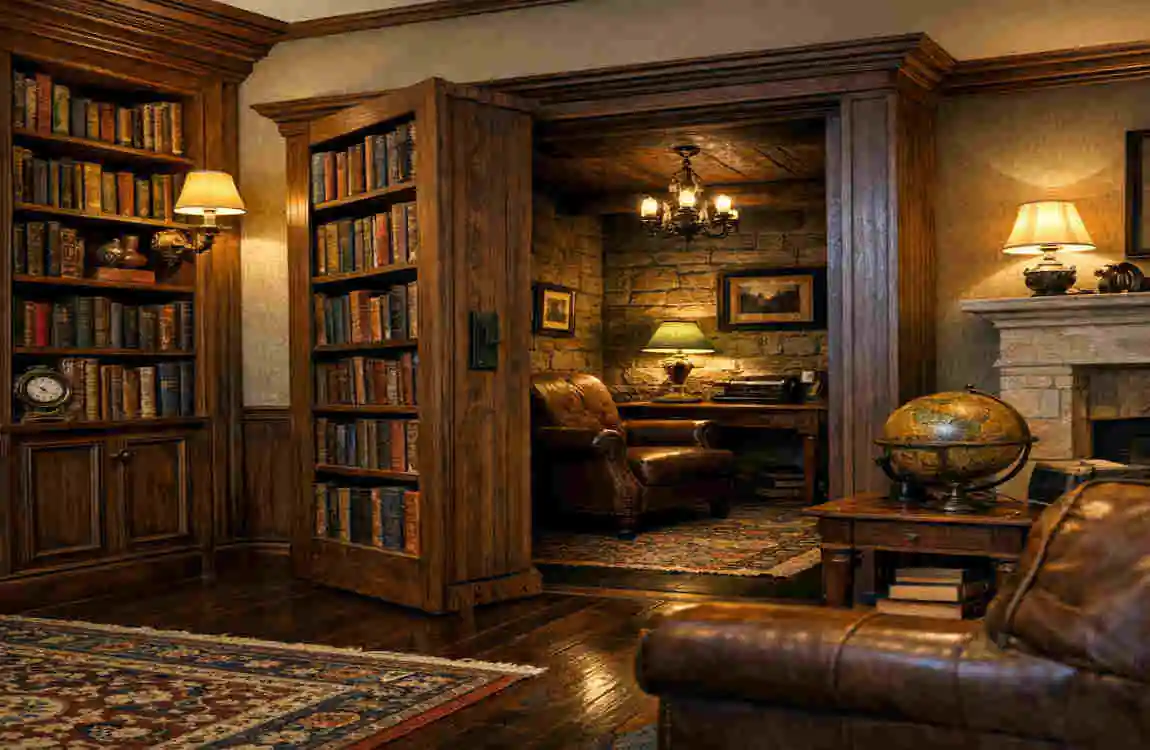
A secret room is a space hidden behind a seemingly ordinary feature, such as a wall, shelf, wardrobe, or panel. From the outside, it blends into the house. Inside, it can be used for storage, relaxation, security, or a personal hobby.
Hidden Rooms vs. Panic Rooms vs. Storage Spaces
These terms often sound alike, but they are not the same.
- Hidden room: A concealed space used for privacy, fun, or design.
- Panic room: A reinforced room made for protection during emergencies.
- Storage concealment space: A hidden area used mainly to store items out of sight.
A secret room can overlap with any of these, but the purpose should always guide the design.
Why People Build Them
People create hidden rooms for many reasons. Some want a quiet office away from noise. Some want a secure place for important items. Others want a stylish home feature that feels custom and special. Modern home design also makes hidden spaces more popular, as people prefer smart, clean layouts that still feel personal.
Planning Your Secret Room
Before you start cutting walls or buying materials, you need a clear plan. A secret room works best when it matches your home, your needs, and your budget.
Decide the Purpose
Ask yourself what the room is for. Do you want:
- Extra storage
- A private reading nook
- A safe room
- A gaming space
- A hobby room
The purpose affects the size, location, and hidden entry style.
Choose the Location
Some of the best spots include:
- Under stairs
- Behind a wardrobe
- In a basement
- In an attic
- Behind a false wall
Each location has pros and cons. For example, under-stair rooms are small but easy to hide. Basements offer more space but often need more work.
Check the Space
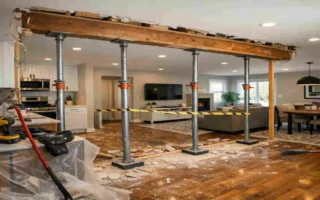
Measure the area carefully. Look at wall thickness, ceiling height, and available floor space. Also check whether the wall is load-bearing. If it is, do not remove or alter it without professional guidance.
Set a Budget
A hidden room can be affordable or expensive depending on the design. A simple DIY space may cost far less than a luxury room with custom doors, lighting, and security features. Also remember hidden costs like ventilation, wiring, paint, and finishing.
Legal and Safety Considerations
A secret room should look hidden, but it must still follow the rules.
Building Codes Matter
Most places have building regulations for doors, electrical work, ventilation, and emergency access. Even if the room is hidden, it still needs to be safe and legal.
Fire and Air Safety
Your room should have proper airflow and a safe way out in an emergency. A hidden room that traps heat or has no air circulation can become dangerous quickly.
When to Get Help
Call a structural engineer or contractor if you are changing walls, moving wiring, or working around plumbing. This is especially important if the room will be used often or if you want it to function as a safe room.
Types of Secret Rooms You Can Build
There are many styles of hidden rooms, and each one fits a different home.
Hidden Door Closet Room
This is one of the easiest ideas. A wardrobe or tall shelving unit can hide the entrance. It works well for small storage, a private office, or a quiet retreat.
Under-Stair Hidden Room
This is a smart homes with unused stair space. It is ideal for small storage, a compact reading nook, or a play area.
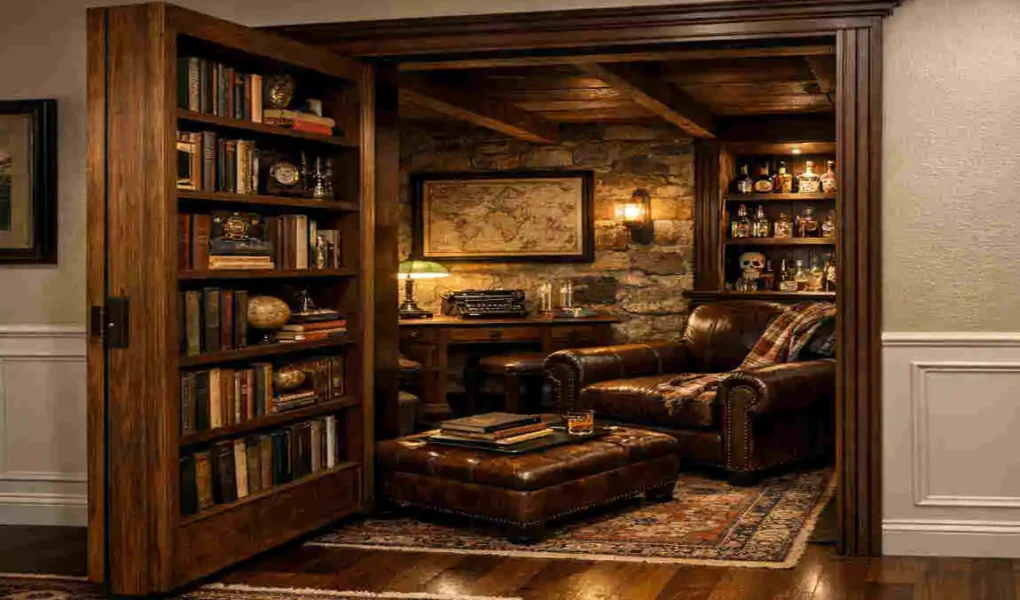
Bookcase Hidden Door Room
This is the classic “spy movie” style. A bookcase acts as the door and swings open to reveal the room behind it. It looks great and feels dramatic.
Basement Secret Room
A basement room gives you more space and flexibility. You can turn it into a lounge, storage area, wine room, or even a hobby workshop.
Mirror or Wall Panel Entry Room
This style uses a mirrored panel or wall section that blends into the room design. It feels modern and clean.
Panic Room
This is the most security-focused option. It should have reinforced walls, a strong door, and reliable communication access. It is built for safety first, not decoration.
Design Ideas for Secret Rooms
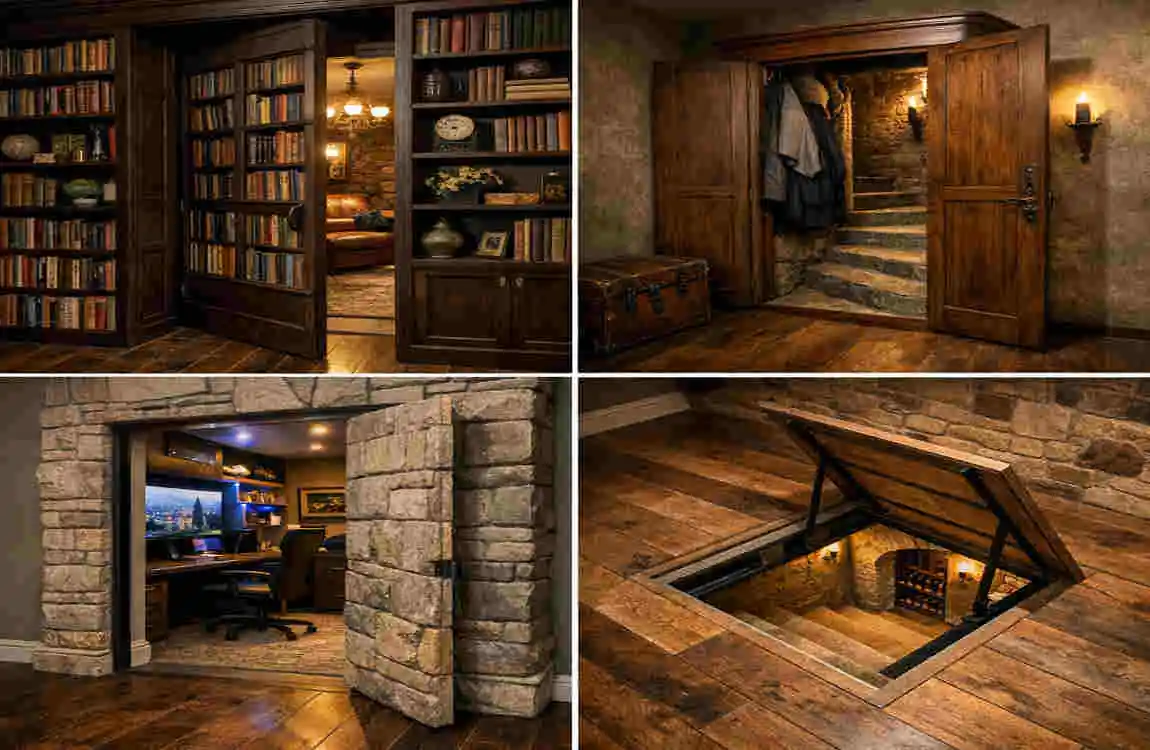
If you want the room to feel useful as well as hidden, here are a few strong ideas:
- Minimalist hidden office
- Home theater
- Luxury reading lounge
- Gaming hideaway
- Kids’ secret playroom
- Wine storage space
Smart home features can also enhance the room. Hidden locks, keypad access, or biometric entry can add convenience and security.
Step-by-Step Guide: How to Build a Secret Room in a House
Select the Location
Start by picking a space that makes sense. Check the structure, wall type, and available room. Make sure the area can handle the changes you want to make.
Design the Layout
Draw a simple floor plan. Mark where the entrance will go, how the door will open, and what the room will be used for. Keep the design simple if this is your first project.
Build or Modify the Walls
If needed, create a false wall or a frame that hides the entrance. Use solid framing to make the wall look natural and feel stable.
install the Hidden Door System
Choose the style that fits your room best:
- Bookcase door
- Sliding panel
- Concealed hinged door
The door should open smoothly and blend into the room’s design. A hidden room fails fast if the door looks awkward or sticks out.
Add Electrical and Ventilation
Every secret room needs light and air. Add hidden lighting if needed, and ensure the room has adequate airflow. If you plan to use electronics, plan the wiring carefully and safely.
Finish the Interior
Paint the room, install flooring, and add décor that aligns with the room’s purpose. A hidden room should feel comfortable, not unfinished. Good finishing also helps the secret entry stay unnoticed.
Add security Features
If the room will store valuables or act as a safe room, add extra protection. You can use:
- Strong locks
- Magnetic latches
- Smart access systems
Keep security simple and reliable.
Materials and Tools You May Need
Here is a quick look at the basics:
Materials Tools
Wood panels Drill
Drywall Saw
Framing lumber Measuring tape
Hinges and concealed hardware Level
Screws and brackets Screwdriver
Paint and finish supplies Stud finder
You can find many of these items at home improvement stores like The Home Depot or Lowe’s.
Cost Breakdown
The cost depends on size, finish, and complexity.
- Low-budget DIY: Basic hidden storage or small secret room
- Mid-range build: Better materials, custom door, and lighting
- High-end luxury room: Professional design, security features, and Premium finish
Hidden costs often include labor, electrical work, ventilation, and custom hardware. To save money, keep the design simple and use standard materials where possible.
DIY vs Hiring a Professional
DIY Approach
DIY works well for small, simple rooms. It can save money and give you full control over the design. But it also requires time, patience, and some building skills.
Hiring a Professional
A professional is the better choice if you are changing structural walls, adding wiring, or building a secure room. Builders, carpenters, and architects can help you avoid mistakes.
Best Middle Ground
A hybrid approach also works well. You can plan the design yourself and hire a pro for the hard parts. This often gives you the best balance of cost and safety.
Common Mistakes to Avoid
A hidden room can go wrong if you rush the process. Watch out for these mistakes:
- Poor ventilation
- Weak hidden door construction
- Ignoring building rules
- Overcomplicated entry systems
- No emergency access
Keep the design practical. A simple hidden room is often better than a fancy one that is hard to use.
Safety and security Tips
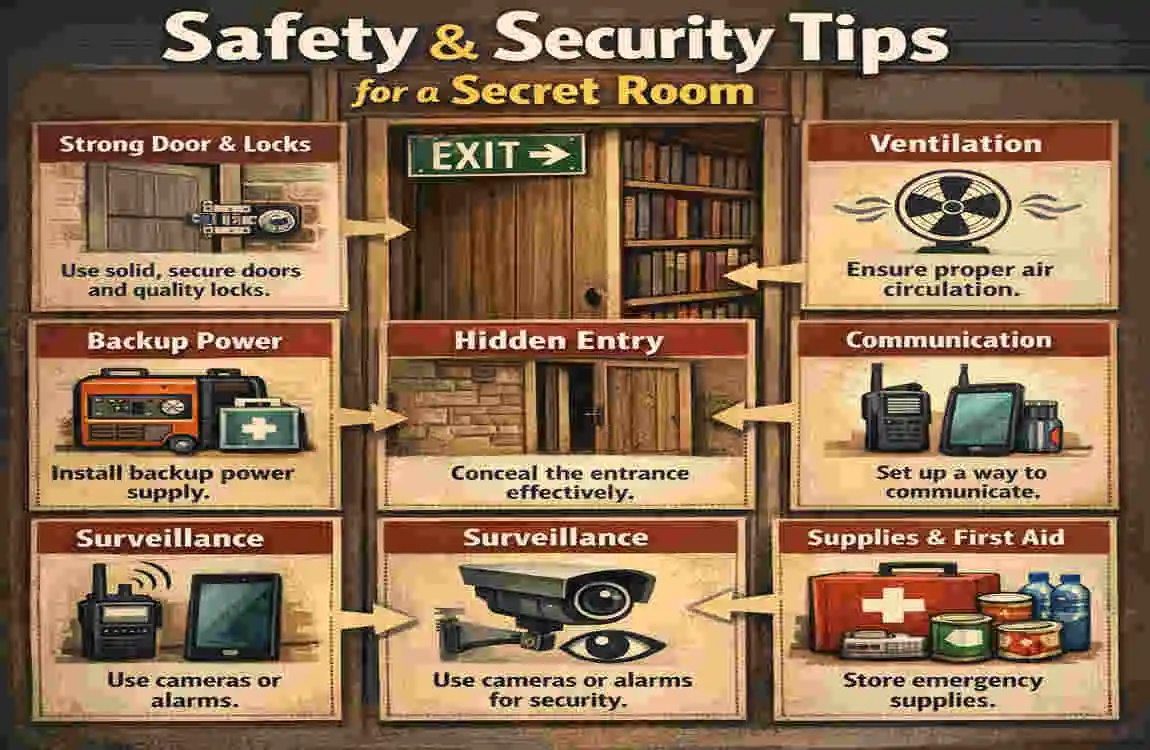
A secret room should be hidden, but never unsafe. Make sure there is a fire escape plan and enough air circulation. If the room is for security, use a reinforced door and reliable locks.
If children will use the room, keep safety in mind. Avoid sharp edges, heavy doors that could close too fast, and any locking system that could trap someone inside.
Frequently Asked Questions
Can I legally build a secret room in my house?
Yes, in many cases you can. But you must follow local building codes, fire safety rules, and electrical standards. If you are changing the home’s structure, get professional advice.
How much does it cost?
It depends on the size and finish. A simple hidden room may be affordable, while a luxury or secure room can cost much more. Custom doors and electrical work usually raise the price.
What is the easiest secret room to build?
A hidden closet room or under-stair room is usually the easiest. These spaces already exist in many homes, so you do not have to start from scratch.
Do secret rooms need ventilation?
Yes. Ventilation is important for comfort and safety. Even a small hidden space should have airflow.
Can I build one in an apartment?
Sometimes, yes, but it depends on the building rules and what changes are allowed. In apartments, hidden furniture or concealed storage is often easier than major construction.