If you are planning to build, buy, or compare homes, the height of a home matters more than many people think. It can affect building permits, roof design, the look of your property, and even how much natural light your home gets.
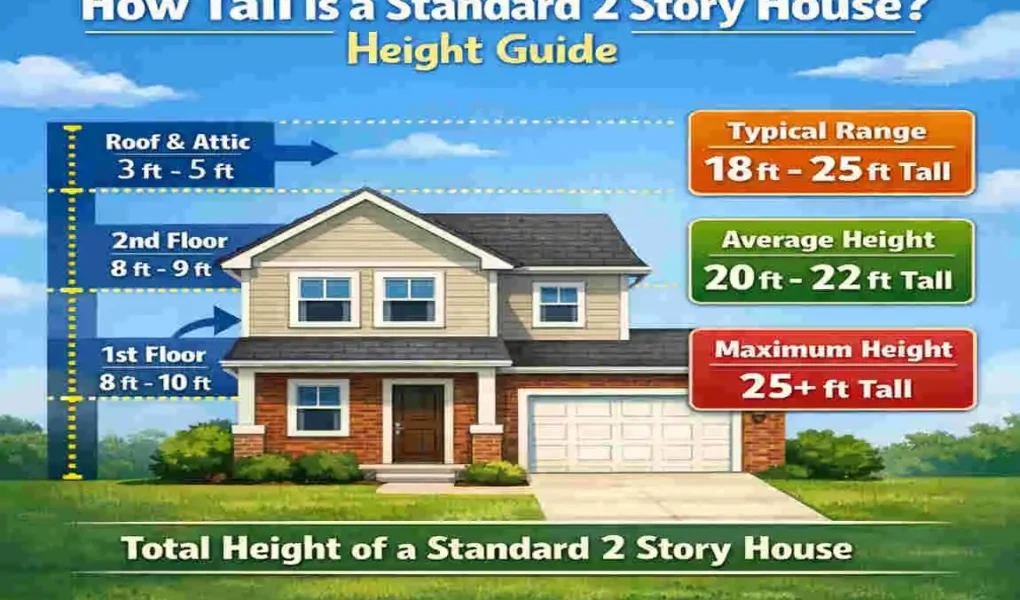
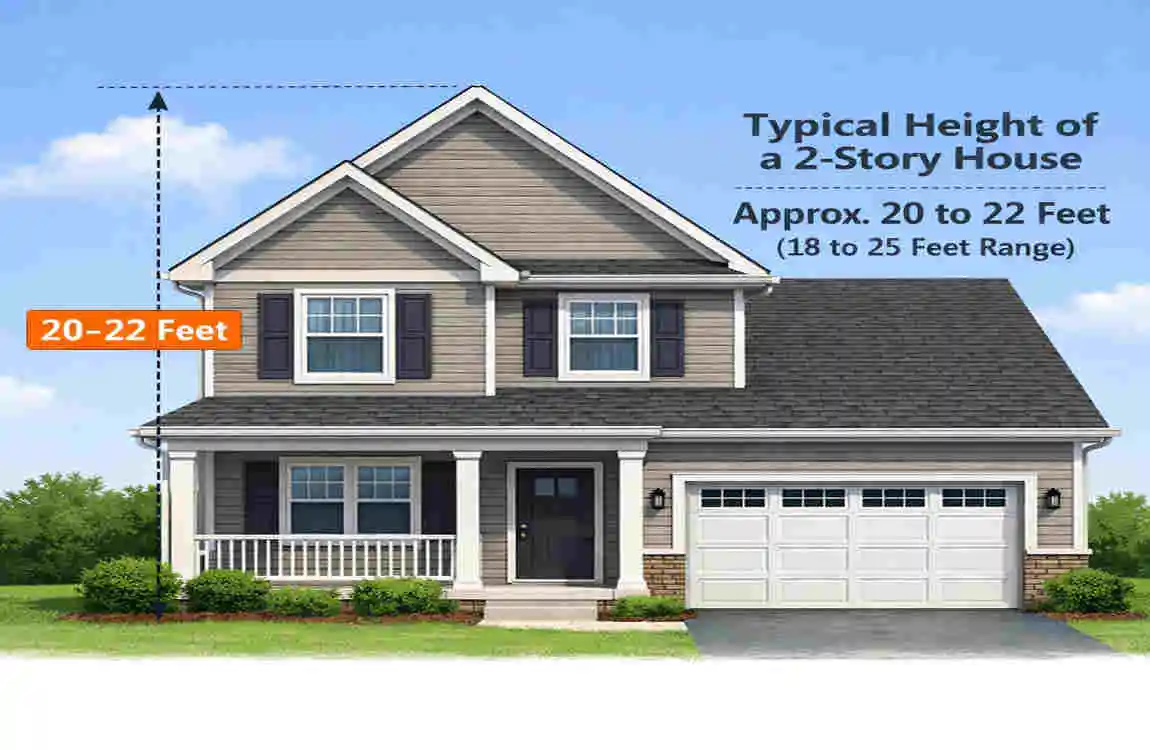
A standard 2-story house is usually about 18 to 25 feet tall. In metric units, that is about 5.5 to 7.6 meters.
How Tall Is a Standard 2 Story House?
Average Height in Feet
Most two-story homes fall in the range of 18 to 25 feet. This is the common height for a normal residential home with standard ceilings and a regular roof.
A house can be shorter or taller depending on the design. For example, a home with 8-foot ceilings and a simple roof may stay closer to the lower end. A home with high ceilings or a steep roof may reach the upper end or go beyond it.
Average Height in Meters
In metric terms, a standard 2-story house is usually around 5.5 to 7.6 meters tall.
This is a helpful comparison if you are looking at international building plans or working with metric measurements. The number may vary, but this range is a good starting point.
Quick Height Overview
House Type Average Height
Two-story house 18–25 ft (5.5–7.6 m)
With steep roof 25–30 ft
Flat roof design 18–22 ft
What Determines the Height of a 2 Story House?
Ceiling Height
Ceiling height makes a big difference. A home with 8-foot ceilings is very common and keeps the house within the average range.
Some homes use 9-foot ceilings for a more open feel. Luxury homes may even feature 10-foot ceilings, which can add considerable height.
Floor Structure Thickness
Each floor is not just the room height. There is also space for:
- Joists
- Subfloor
- Insulation
- Ceiling materials
These parts may add several extra inches to each level. When you add them together, the full house is taller than the room height alone would suggest.
Roof Style
The roof can change the total height more than people expect. A flat roof keeps the house lower, while a steep gable roof adds more height.
Other roof styles, such as hip, gambrel, and mansard roofs, also affect the final measurement. So the roof is one of the biggest factors in the total height.
Foundation Height
The foundation also affects the total size of the house. A home built on a slab foundation usually sits lower.
A house with a crawl space or basement may stand higher overall, especially when measured from the ground to the roof peak.
Standard Dimensions of Each Floor
First Floor Height
The first floor usually includes the room height plus the thickness of the floor above it. In many homes, this level is around 9 to 10 feet total when measured from floor to ceiling structure.
Second Floor Height
The second floor is often similar to the first floor. If the home has standard ceilings, this level may also measure around 9 to 10 feet, including the floor structure and ceiling space.
Roof Height
The roof can add anywhere from 2 to 10 feet or more, depending on the style. A simple roof adds less height, while a steep roof adds more.
This is why two homes with the same number of floors can look very different in height.
Height Comparison with Other Homes
Home Type Average Height
Single-story 10–15 ft
Two-story 18–25 ft
Three-story 30–40 ft
Townhouse 25–35 ft
A two-story house is clearly taller than a single-story home, but usually shorter than a three-story home. Townhouses can vary widely depending on design and local regulations.
Why House Height Matters
Building Permits
Many cities and towns have rules about how tall a home can be. If your house is too tall, you may need special approval before building.
Local Zoning Laws
Zoning rules can control height, roof shape, and even the number of floors. These rules help keep neighborhoods organized and consistent.
Property Value
A taller home may look more impressive, but height alone does not raise value. What matters more is design, space, and quality.
Energy Efficiency
House height can affect heating and cooling. Higher ceilings may feel nicer, but they can also take more energy to cool in summer and heat in winter.
Exterior Appearance
Height changes the look of a home from the street. A well-balanced roof and ceiling height can make a house feel more attractive and comfortable.
Different Roof Types and Their Impact on House Height
Flat Roof
A flat roof keeps the total height lower. It is a good choice if you want a modern look and a shorter overall profile.
Gable Roof
A gable roof is one of the most common roof styles. It adds noticeable height and gives the home a classic shape.
Hip Roof
A hip roof slopes on all sides. It usually adds less height than a gable roof but still affects the final measurement.
Gambrel Roof
A gambrel roof has two slopes on each side. It often creates more usable attic space and makes the home appear taller.
Mansard Roof
A mansard roof is tall and stylish. It can make the house look much bigger and may add substantial height to the overall structure.
How to Measure the Height of a Two-Story House
Measuring from Ground Level
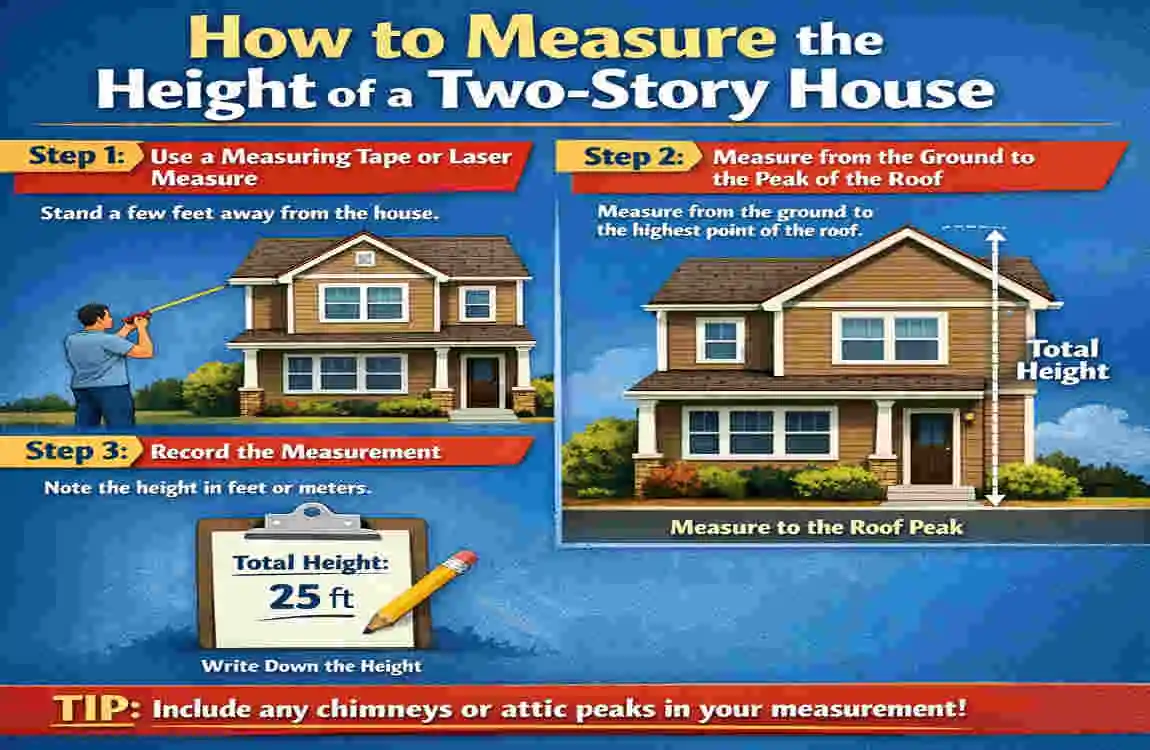
The simplest way is to measure from the ground to the highest point of the roof. This gives you the full exterior height.
Using Construction Plans
If you have blueprints, check the listed wall and ceiling heights and the roof slope. This is often the most accurate method before the home is built.
Laser Measuring Tools
Laser tools are useful for quick and accurate measurements. They work well when you want a fast estimate without climbing ladders.
Professional Survey Methods
For official numbers, a builder or surveyor can properly measure the house. This is helpful if you need the height for permit applications or legal purposes.
Tips Before Building a Two-Story Home

- Check local building rules before you start.
- Choose the right ceiling height for your needs.
- Pick a roof style that fits your design and height limits.
- Consider future changes, such as attic use or extra insulation.
- Work with experienced professionals to avoid costly mistakes.
Common Myths About Two-Story House Height
Every Two-Story House Is 20 Feet Tall
This is not true. Some are lower, and some are much taller. Roof type and ceiling height make a big difference.
Taller Homes Are Always Better
Not always. A taller home may look impressive, but it can also cost more to build, heat, and cool.
Roof Height Doesn’t Matter
Roof height matters a lot. In many homes, the roof is one of the biggest factors that affect the final height.
Frequently Asked Questions
What is the average height of a standard 2-story house?
A standard 2-story house is usually 18 to 25 feet tall.
How tall is a two-story house with 8-foot ceilings?
It is often around 18 to 20 feet, depending on the roof and foundation.
How tall is a two-story house with a gable roof?
A two-story house with a gable roof is often around 20 to 25 feet, but it can be taller.
Does roof style affect the total height?
Yes, roof style has a big impact on total house height.
Is a two-story house always 20 feet tall?
No. Some are shorter, and some are much taller.
How do I measure the height of my house?
Measure from the ground to the top of the roof, or use construction plans or a laser tool.
What is the height of a two-story house in meters?
It is usually about 5.5 to 7.6 meters.
| Feature | Details |
|---|---|
| Average Height | 18–25 feet (5.5–7.6 meters) from ground to roof peak. |
| Height to Roof Eaves | Typically 16–20 feet (4.9–6.1 meters). |
| Ceiling Height Per Floor | Usually 8–10 feet (2.4–3 meters). |
| Floor Structure Thickness | Around 1–2 feet (0.3–0.6 meters) between stories. |
| Roof Height | Adds approximately 3–6 feet (0.9–1.8 meters) depending on roof style. |
| With Flat Roof | Usually 18–20 feet (5.5–6.1 meters) tall. |
| With Pitched Roof | Usually 20–25 feet (6.1–7.6 meters) tall. |
| Luxury or Custom Homes | Can exceed 25–30 feet (7.6–9.1 meters) due to higher ceilings and steeper roofs. |
| Factors Affecting Height | Ceiling height, roof design, foundation, local building codes, and architectural style. |
| Best For | Home planning, construction estimates, remodeling, and zoning compliance. |