Smart homes are becoming a normal part of modern living. More homeowners now want devices that save time, reduce effort, and make daily routines easier. That is why smart home appliances are gaining so much attention.
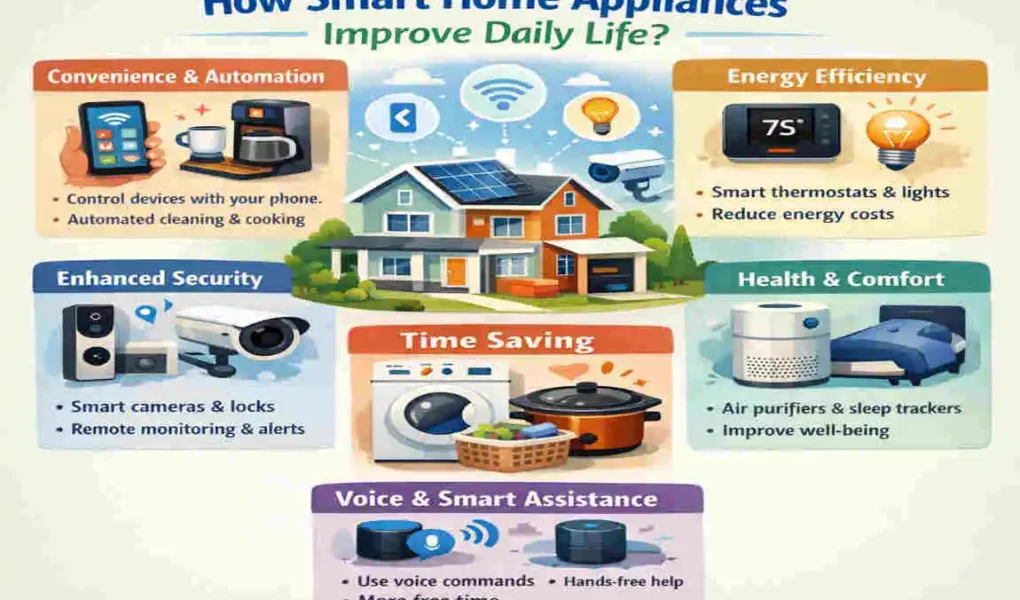
| Benefit | What it does | Everyday example |
|---|---|---|
| Convenience | Automates routine tasks and centralizes control. | Voice-start a robot vacuum or preheat the oven from your phone. |
| Time savings | Reduces manual chores and speeds tasks. | Smart dishwasher runs on schedule; laundry cycles finish when energy is cheapest. |
| Energy efficiency | Optimizes usage and reduces waste through scheduling and sensors. | Smart thermostat learns schedules and cuts heating/cooling when nobody’s home. |
| Cost savings | Lowers utility bills and prevents costly issues. | Leak-detecting sensors stop water flow and alert you before major damage. |
| Safety & security | Monitors and alerts for risks; enables remote response. | Smart locks, cameras, and smoke detectors send instant alerts to your phone. |
| Comfort & personalization | Adapts environment to preferences automatically. | Lights, blinds, and speakers adjust for morning routines or movie nights. |
| Accessibility & independence | Makes tasks easier for elderly or disabled users. | Voice control and routines let someone control lights, locks, and appliances hands-free. |
These tools are not just about looking modern. They help people control lights, temperature, security, and even kitchen tasks with less stress. With simple apps and voice commands, smart home technology makes everyday life feel smoother and more organized.
What Are Smart Home Appliances?
Definition of Smart Home Appliances
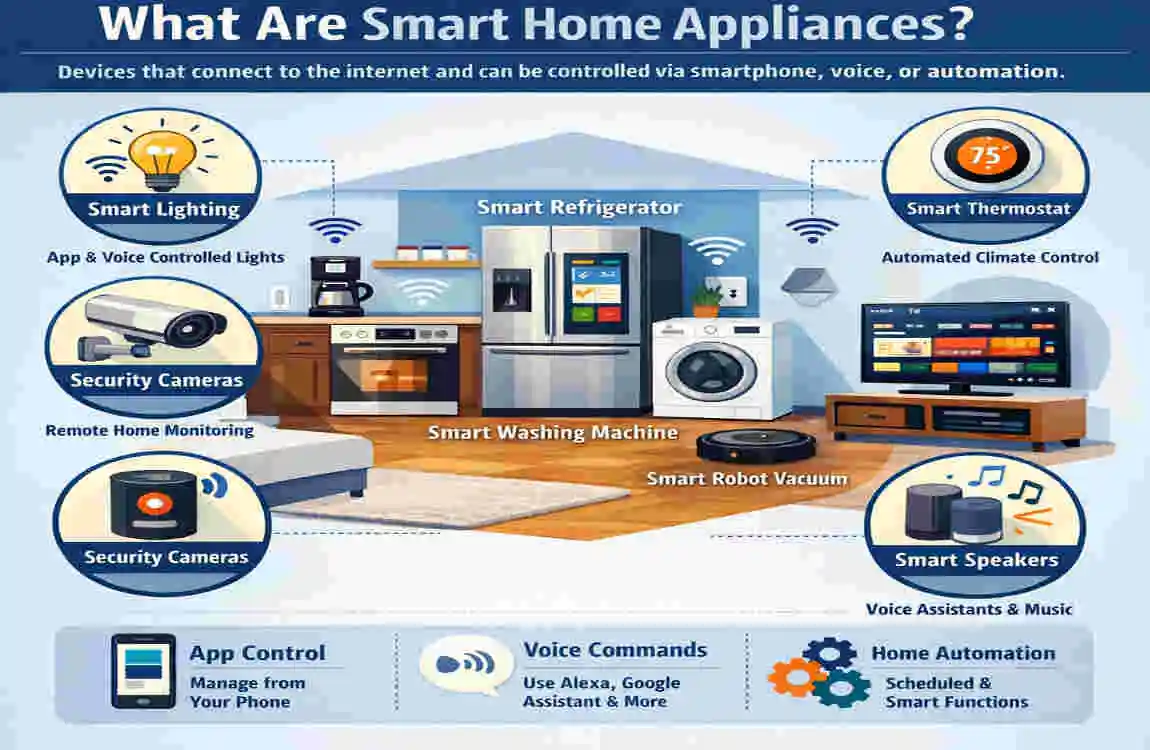
Smart home appliances are devices that connect to the internet and can be controlled remotely. This means you can turn them on or off, or adjust settings, without being in the same room.
How Smart Home Technology Works
Most smart home technology works through Wi-Fi, mobile apps, and voice assistants. You can use your phone to manage devices or give a simple voice command to control them. This makes home automation very easy to use.
Common Categories of Smart Appliances
Smart devices are used in many parts of the home, including:
- Lighting systems
- Kitchen appliances
- Security devices
- Climate control systems
- Entertainment equipment
Why Smart Home Technology Is Becoming Essential
Rise of Connected Living
People now expect their devices to work together. With internet access available in most homes, connected living is becoming more common every year.
Consumer Demand for Convenience
Busy schedules leave little time for repeated tasks. Smart home gadgets help automate everyday tasks, such as turning off lights or adjusting the thermostat.
Enhanced Home Management
Smart home automation gives you more control. You can check your home in real time, make changes from a distance, and stay informed without constant effort.
Major Benefits of the Best Smart Home Devices and Appliances
Improved Convenience
One of the biggest benefits of smart home devices is the convenience they offer. You can control appliances from anywhere, set schedules, and use voice commands instead of doing everything manually.
This helps when your hands are full or when you are away from home. For many families, this alone makes smart living solutions worth it.
Better Energy Efficiency
Energy-efficient smart appliances help lower waste. For example, smart thermostats can learn your routine and automatically adjust heating or cooling. Smart lighting can turn off when rooms are empty.
Over time, this can reduce electricity use and support lower utility bills.
Increased Home Security
Smart home security devices give peace of mind. Cameras, motion sensors, and video doorbells let you check what is happening around your home. Many devices also send instant alerts to your phone.
This is useful if someone comes to the door, if movement is detected, or if you want to monitor your home while you are away.
Greater Comfort and Personalization
Smart home technology can match your habits. You can create custom lighting, set temperature preferences, and build routines that fit your day.
This kind of personalisation makes your home feel more comfortable and better suited to your lifestyle.
Time Savings for Busy Families
Smart appliances save time by automating small but repetitive tasks. Robot vacuums, smart kitchen devices, and remote appliance controls can reduce daily stress.
When routine work becomes easier, you have more time for family, work, and rest.
Best Smart Home Devices and Appliances for Everyday Living
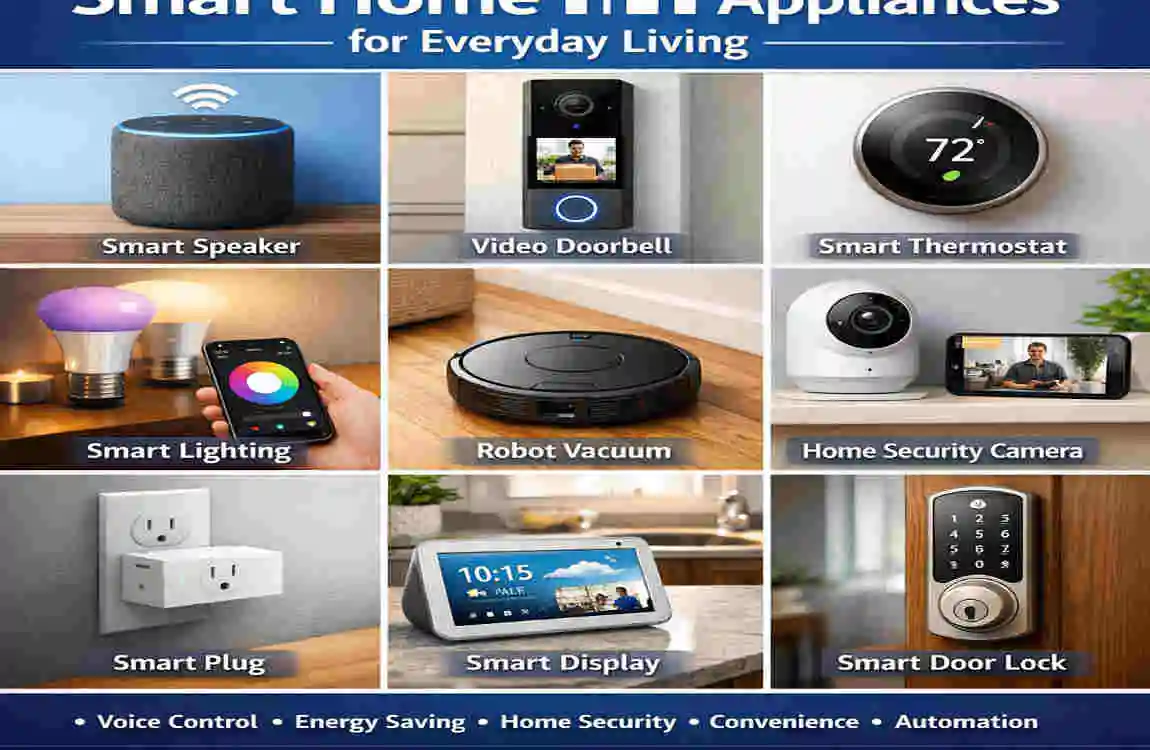
Device Main Benefit Best Use
Smart Thermostat Controls temperature efficiently Saving energy and improving comfort
Smart Lighting Remote and automated control Daily lighting and mood settings
Smart Security Camera Live monitoring and alerts Home safety and visitor checks
Smart Lock Keyless entry Easy and secure access
Smart Refrigerator Tracks food and freshness Kitchen organization
Robot Vacuum Automatic cleaning Hands-free floor care
Smart Thermostats
Smart thermostats are one of the most useful home automation devices. They learn your habits, manage heating and cooling, and help keep energy use under control.
Smart Lighting Systems
Smart lighting lets you control brightness and color with your phone or voice. You can also create schedules, which is helpful for mornings, evenings, or travel.
Smart Security Cameras and Doorbells
These devices help you see who is at your door and watch over your property. They are simple, effective tools for everyday security.
Smart Locks
Smart locks remove the need for physical keys in many cases. You can unlock doors remotely and give temporary access to guests or service workers.
Smart Refrigerators
A smart refrigerator can help track food, monitor temperature, and even remind you of items that need to be used soon. This makes kitchen planning easier.
Smart Washing Machines and Dryers
These appliances allow remote control, energy-saving cycles, and maintenance alerts. They are especially helpful for busy households.
Robot Vacuum Cleaners
Robot vacuums clean floors automatically on a set schedule. They are one of the easiest smart gadgets to use and can keep your home tidier with less effort.
How Smart Kitchen Appliances Simplify Daily Tasks
Smart Ovens and Microwaves
Smart ovens and microwaves can be controlled remotely and often include automatic cooking settings. This makes meal prep easier and more flexible.
Smart Coffee Makers
A smart coffee maker can brew coffee on a schedule, so your morning drink is ready when you wake up.
Smart Dishwashers
Smart dishwashers often include energy-saving modes and remote monitoring. They help reduce waste while making cleanup simpler.
Smart Refrigeration Technology
Modern smart refrigerators can track freshness and storage. This helps families plan meals and reduce food waste.
Smart Home Security and Peace of Mind
Real-Time Monitoring
Smart security systems let you view live video and receive alerts in real time. That means you can react faster if something unusual happens.
Intrusion Detection Systems
Motion sensors, door sensors, and window sensors help detect unwanted entry. These features make your home feel safer day and night.
Emergency Response Features
Many smart home devices also help address safety issues such as smoke, water leaks, and carbon monoxide. These alerts can protect both people and property.
Benefits for Travelers and Remote Workers
If you travel often or work from home, smart security tools are especially helpful. You can monitor access, check activity, and stay connected to your home at all times.
How Smart Appliances Help Reduce Utility Bills
Energy Consumption Tracking
Many smart devices show how much energy they use. This helps you spot waste and make better choices.
Automated Energy Management
Smart scheduling lets devices run only when needed. This avoids unnecessary use during peak hours and supports better efficiency.
Water Conservation Features
Some smart systems also help reduce water use. Leak detectors and smart irrigation tools can prevent waste and lower costs.
Long-Term Financial Savings
Although smart appliances may cost more at first, they can save money over time through lower bills and better performance.
Things to Consider Before Buying Smart Home Appliances
Compatibility with Existing Devices
Before buying, check whether the appliance works with your current smart home setup. Compatibility makes everything easier to manage.
Internet Connectivity Requirements
Smart devices depend on stable Wi-Fi. A weak connection can affect performance, so network quality matters.
Privacy and Data Security
Use strong passwords and keep software up to date. This helps protect your smart home from unwanted access.
Budget and Installation Costs
Some smart appliances are affordable, while others are premium options. Think about your budget and the value you expect over time.
Ease of Use
Choose devices with simple apps and clear controls. The best smart home devices and appliances should make life easier, not more complicated.
Future Trends in Smart Home Appliances
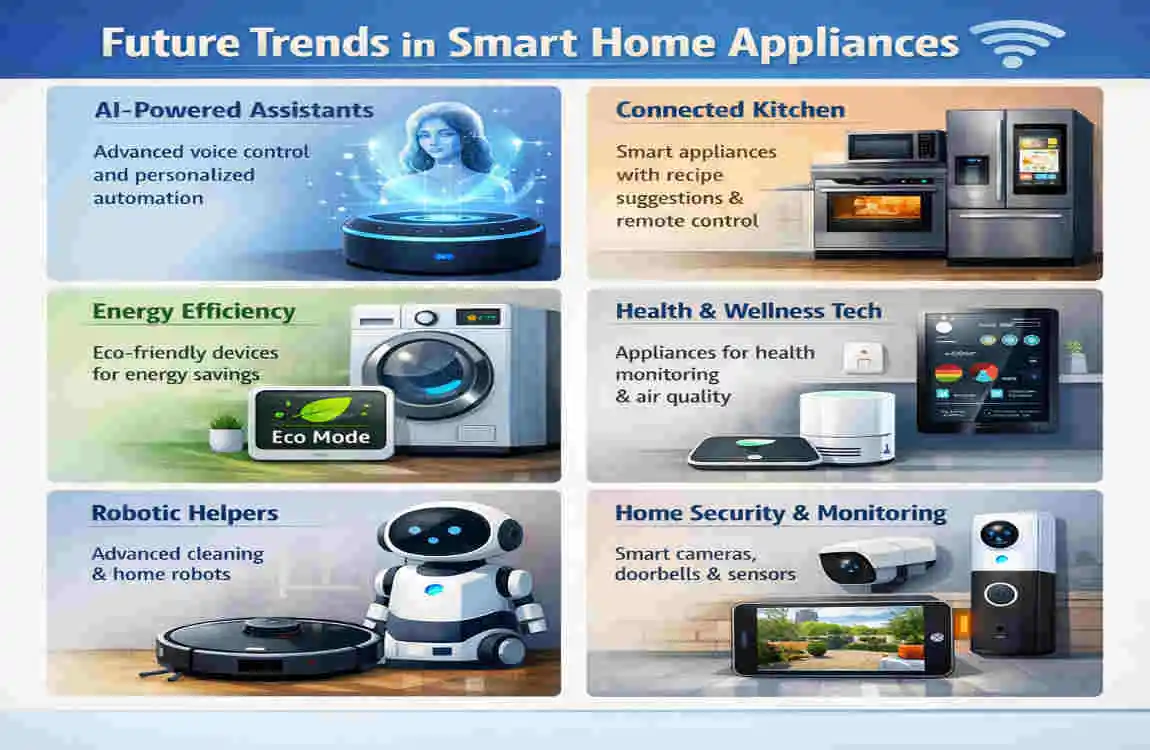
Artificial Intelligence Integration
AI is making smart home technology more helpful. Devices can learn patterns and make better decisions over time.
Advanced Voice Control
Voice control is becoming more natural and accurate. This makes everyday use feel faster and more comfortable.
Increased Energy Optimization
Future smart appliances will likely become even better at saving power and reducing waste.
Sustainable Smart Homes
More brands are focusing on eco-friendly design and green technology. This supports smarter and more responsible living.
Fully Connected Home Ecosystems
Soon, more devices may work together without extra effort. That means smoother automation and better control across the entire home.
Frequently Asked Questions
What are the best smart home devices and appliances for beginners?
A smart thermostat, smart lighting, and a smart speaker are great starting points. They are simple, practical, and easy to use.
Do smart home appliances save money?
Yes, many can lower energy use and reduce waste. Over time, this may lead to smaller utility bills.
Are smart home devices secure?
They can be secure if you use strong passwords, keep software up to date, and stick with trusted brands. Security depends on both the device and how you use it.
Can smart appliances work without internet access?
Some may still work locally, but many features need internet access. Remote control usually depends on Wi-Fi.
Which smart home appliance offers the highest convenience?
That depends on your needs, but smart lighting and smart thermostats are often the most convenient for daily use.
Is a smart home worth the investment?
For many people, yes. The mix of comfort, safety, time savings, and energy efficiency makes it a strong long-term choice.