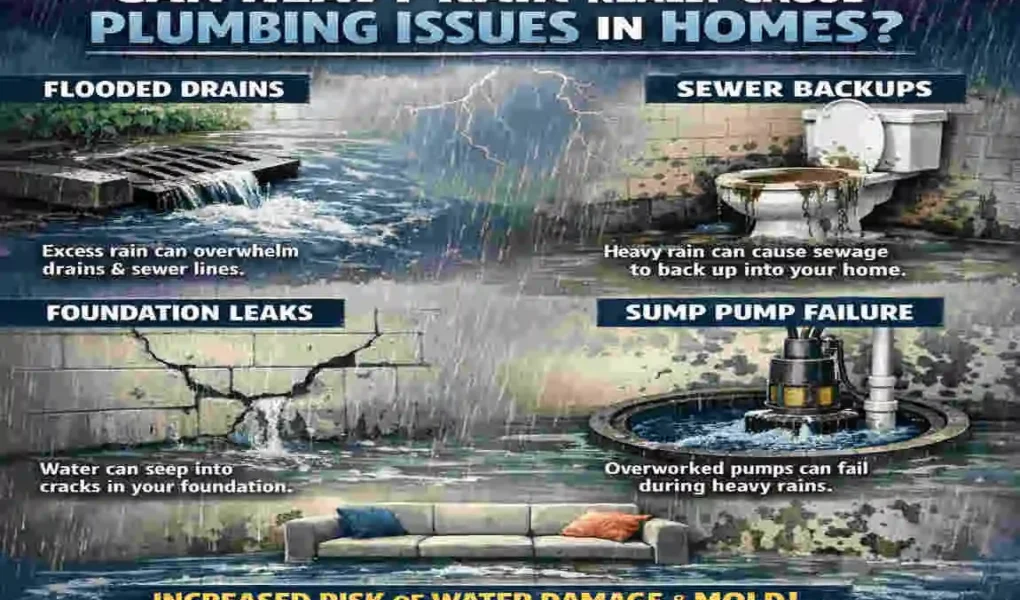
Yes, heavy rain can cause plumbing issues in your home. When a storm brings a lot of water in a short time, it can put stress on drainage systems, sewer lines, basement drains, and even the ground around your home. That extra water has to go somewhere, and sometimes it moves in the wrong direction.
| Plumbing Issue | How Heavy Rain Can Contribute | Common Warning Signs | Recommended Action |
|---|---|---|---|
| Sewer Backup | Excess rainwater can overwhelm sewer systems | Foul odors, wastewater backing up, slow drains | Contact a professional plumber |
| Clogged Drains | Storm debris and excess water can affect drainage | Slow-draining sinks, showers, or floor drains | Inspect and clear drains |
| Gurgling Toilets | Pressure changes in drainage or sewer lines | Gurgling sounds after rainfall | Have the drain or sewer line inspected |
| Basement Water | Saturated soil can allow water to enter around foundations | Damp walls, puddles, musty odors | Check drainage and waterproofing |
| Blocked Yard Drains | Leaves, mud, and debris can restrict water flow | Standing water around the property | Clean outdoor drains and grates |
You may notice problems during the storm or shortly after it ends. A sink may drain slowly, a toilet may gurgle, or water may back up in a floor drain.
How Heavy Rain Can Cause Home Plumbing Issues
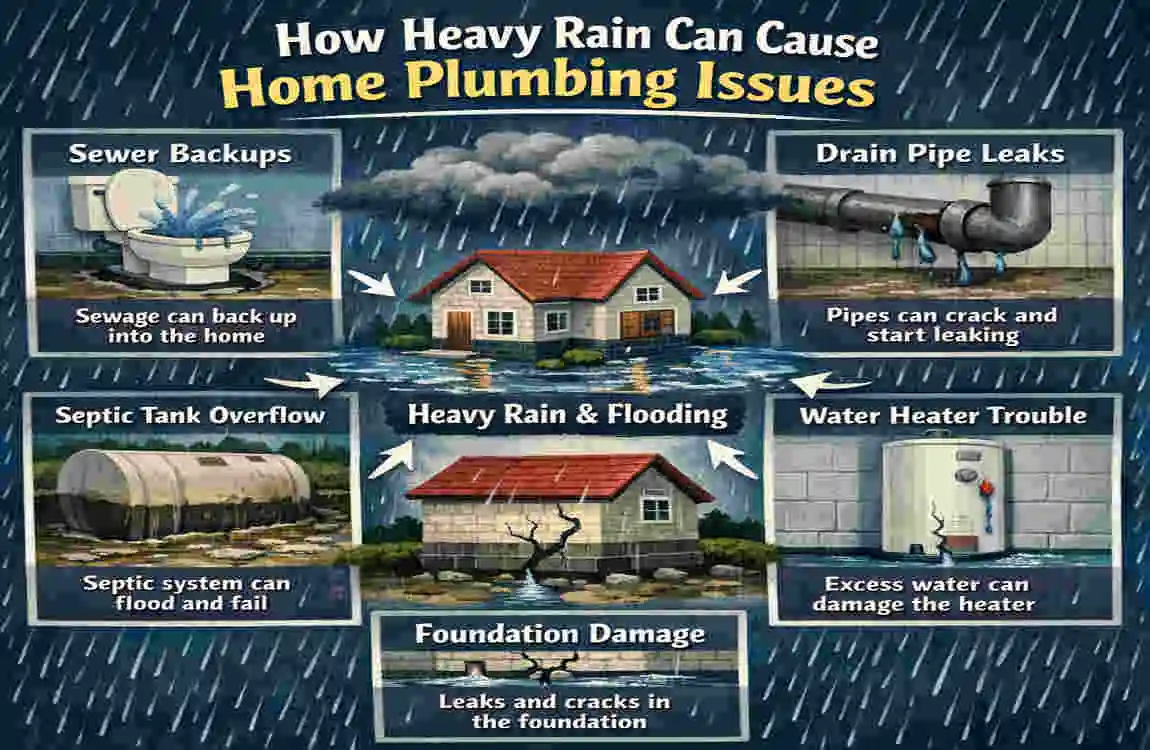
Increased Pressure on Drainage Systems
When rain falls fast and hard, storm drains and local drainage networks can become overwhelmed. If water cannot move away quickly enough, it may collect near your property and create pressure on nearby drains.
This can lead to slow drainage, standing water, or water pushing back toward low areas around the home. Even if the plumbing inside the house works well, outside drainage problems can still cause trouble inside.
Sewer Line Backups
Heavy rain can also overload municipal sewer systems. In some areas, stormwater and wastewater may share the same system, and that can create a real problem during major rainstorms.
If the sewer system gets too full, wastewater may back up through household drains. This can affect toilets, tubs, sinks, and floor drains. A backup is not just inconvenient. It can also create health risks, so you should never ignore it.
Groundwater and Foundation Problems
After long periods of rain, soil around a home can become fully soaked. When that happens, water may press against the foundation and underground pipes.
This extra moisture can expose weak spots in older pipes or joints. In some homes, it may also worsen tiny cracks. If water starts moving around the foundation, it can find its way into normally dry areas.
Problems With Yard and Exterior Drains
Yard drains, gutters, and downspouts play a big role in keeping rainwater away from the house. If leaves, dirt, or debris clog them, water may pool near the foundation instead of flowing away.
That standing water can lead to several issues. It can increase moisture around the basement, slow drainage, and put stress on exterior plumbing systems. In many cases, the problem starts outside before it shows up inside.
Common Plumbing Problems After Heavy Rain
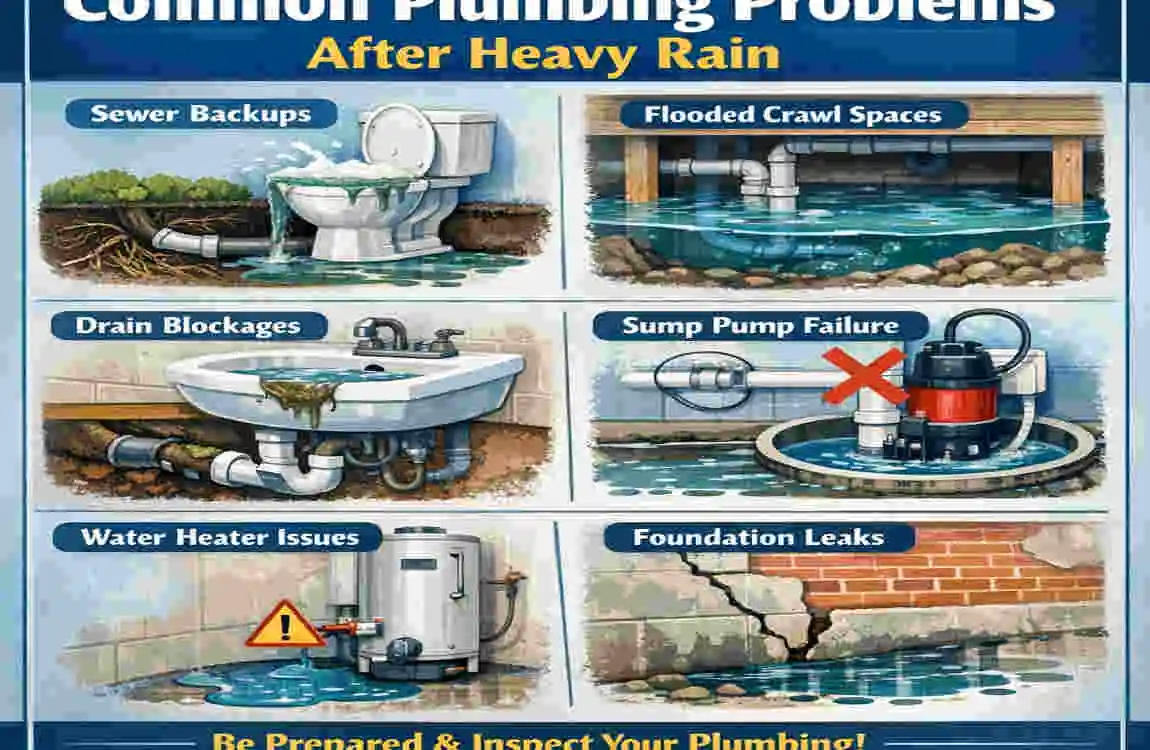
After a major storm, watch for warning signs. Some problems show up right away. Others appear after the ground stays wet for a while.
Warning Sign: What It May Mean
Slow-draining sinks or showers Drain or sewer strain
Gurgling toilets or drains Air trapped from a blockage or backup
Water backing up through floor drains Possible sewer or drainage overload
Sewage odors Wastewater may not be moving properly
Wet spots or pooling water in the yard Poor outdoor drainage
Moisture near basement or foundation areas Water may be moving toward the home
If you notice more than one of these signs at the same time, the problem may be more serious than it first looks.
Which Parts of a Home’s Plumbing Are Most at Risk?
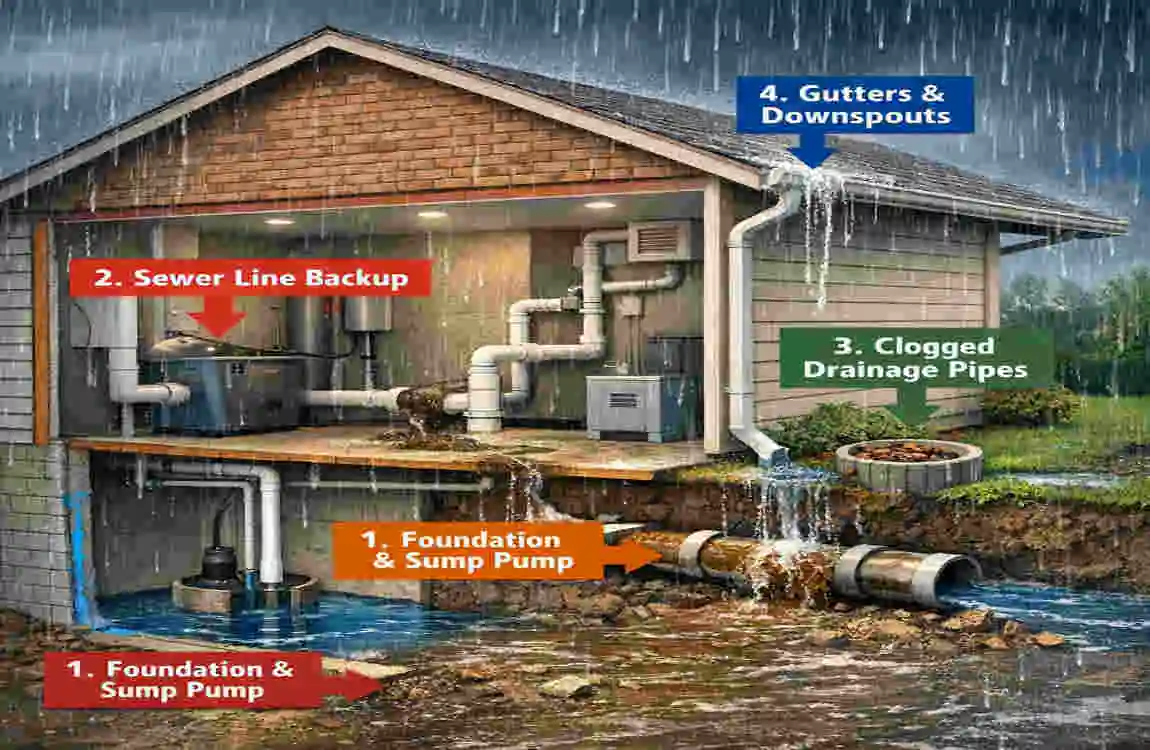
Sewer and Main Drain Lines
The main sewer line carries wastewater away from your home. When heavy rain overloads the surrounding drainage system, this line can face extra pressure.
If the line already has a blockage, crack, or weak spot, rain-related stress can worsen the issue. That is why underground drain lines often show problems after storms.
Basement and Floor Drains
Basement and floor drains sit at a lower level, so they are often the first places where backup shows up. If water pressure rises in the sewer system, it may back up through these drains before it shows up anywhere else.
That is why you should never ignore a floor drain that suddenly starts backing up after rain.
Outdoor Plumbing and Drainage
Outdoor systems are built to move water away from the house, but they only work well when they are clear and in good shape. This includes downspouts, French drains, yard drains, and sump pumps.
If these systems fail, rainwater can collect close to the foundation. That can lead to damp walls, basement moisture, or even water entering the home.
Older or Damaged Pipes
Older pipes often have more wear and tear. Cracks, loose joints, and poor connections can become weak points during heavy rainfall.
When the soil becomes saturated, those weak points may shift or leak. So if your home has older plumbing, storms can expose problems that were already there.
How Homeowners Can Prevent Rain-Related Plumbing Problems
Keep Gutters and Drains Clear
One of the easiest ways to protect your home is to keep gutters and drains clean. Remove leaves, dirt, and other debris before rainy weather arrives.
Clear gutters help water flow away from the roof and walls. Clear drains help keep water from pooling near the home. Simple upkeep can prevent bigger issues later.
Check Sewer and Drain Lines
If your home has a history of slow drains or backups, it may be time for a professional inspection. A plumber can check for clogs, damage, or aging pipes that may be more likely to fail during heavy rain.
This is especially useful for older homes or homes that sit in low-lying areas.
Improve Yard Drainage
Your yard should guide water away from the home, not toward it. Small changes can make a big difference.
You may need to improve grading, extend downspouts, or add drainage channels. The goal is simple: keep rainwater moving away from the foundation as quickly as possible.
Maintain the Sump Pump
If you have a basement, your sump pump is an important line of defense. Test it before storm season and make sure it turns on properly.
If your area gets frequent heavy rain, it is smart to have a backup plan in case of power loss or pump failure. A working sump pump can help prevent major water damage.
When to Call a Professional Plumber After Heavy Rain
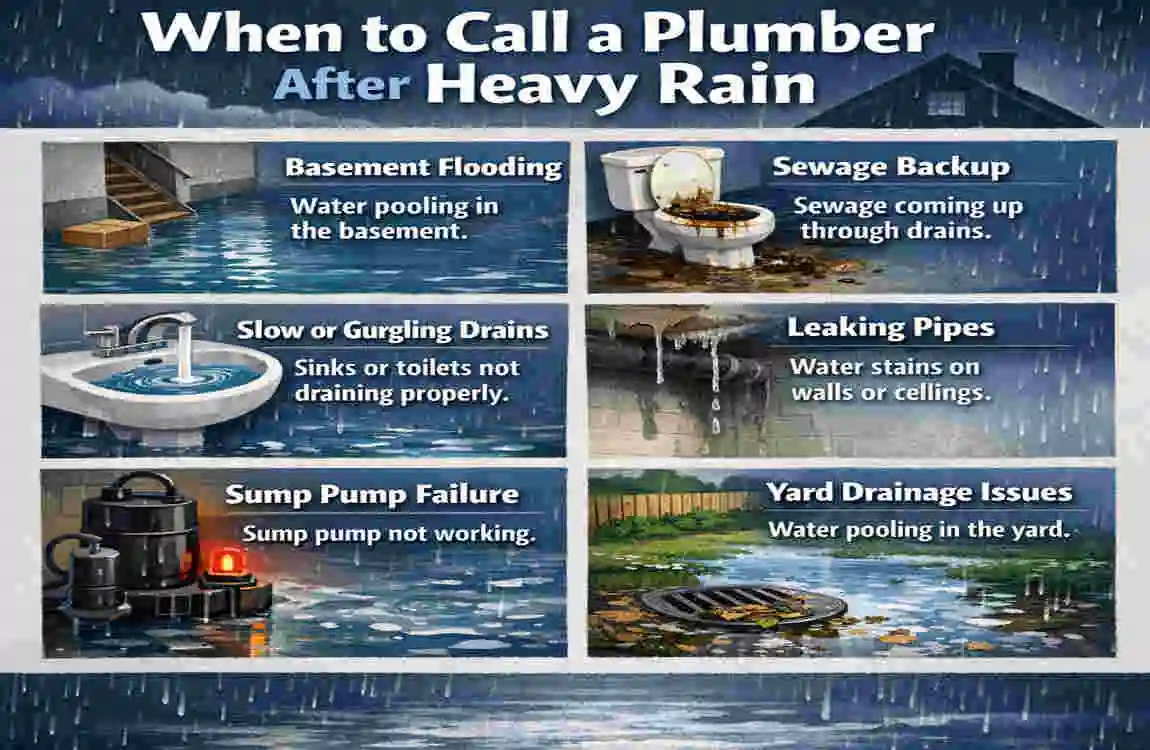
Some problems are too serious for a quick fix. If you have repeated sewer backups, strong sewage smells, standing wastewater, or water entering the home, call a professional plumber.
It is also important to understand the difference between rainwater drainage problems and plumbing problems. Rainwater issues often involve gutters, yard drains, grading, or sump pumps. Plumbing problems usually involve sewer lines, drain lines, or fixtures inside the house.
The two systems can affect each other, but they are not always the same. A plumber can help find the real source of the issue and prevent it from returning.
FAQ: Heavy Rain and Home Plumbing
Can heavy rain cause home plumbing issues?
Yes. Heavy rain can lead to drainage problems, sewer backups, and pressure around underground pipes.
Can heavy rain cause a sewer backup?
Yes. In some areas, intense rainfall can overload sewer systems and cause backups into the home.
Why does my toilet gurgle after heavy rain?
A gurgling toilet often points to a drainage or sewer-line issue. If other drains are slow too, the problem may be deeper in the system.
Can rain cause water to come up through a floor drain?
Yes. Floor drains can back up when drainage or sewer systems become overwhelmed.
How can I protect my plumbing during heavy rain?
Keep gutters and drains clear, direct downspouts away from the foundation, maintain drainage systems, and fix damaged pipes quickly.
Should I call a plumber after a sewer backup?
Yes, especially if wastewater is coming into the home or the problem keeps happening. A plumber can inspect the line and help prevent future damage.