If you are planning a winter trip, one of the first things to consider is your thermostat. The question of what temperature to leave the house at in winter when away matters because the wrong setting can lead to frozen pipes, mold, or a heating bill much higher than it should be.
| Situation | Suggested thermostat setting |
|---|---|
| Home occupied | 68°F |
| Away for the day | 55–58°F |
| Away on vacation | 50–55°F |
| Pipe-protection minimum | 55°F |
The good news is that you do not need to keep your home as warm as you would when you are inside it every day. You need a safe setting that protects the house while still saving energy. That balance is the key.
What Temperature Should You Leave Your House in Winter When Away?
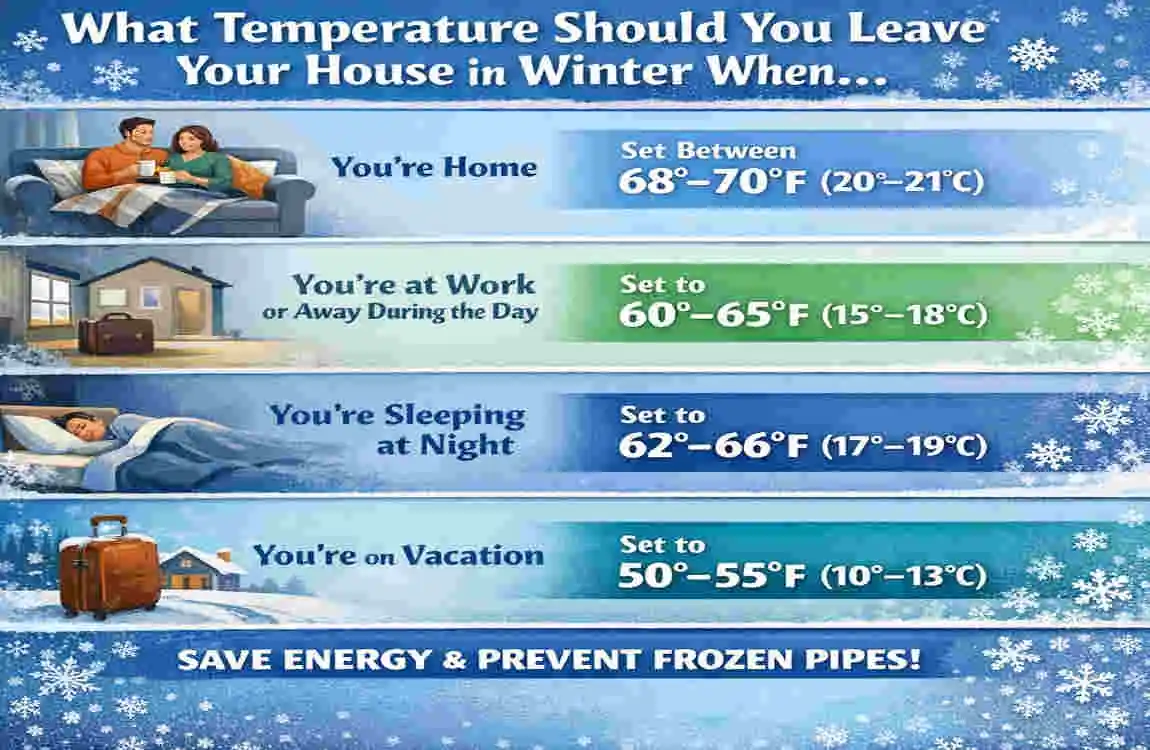
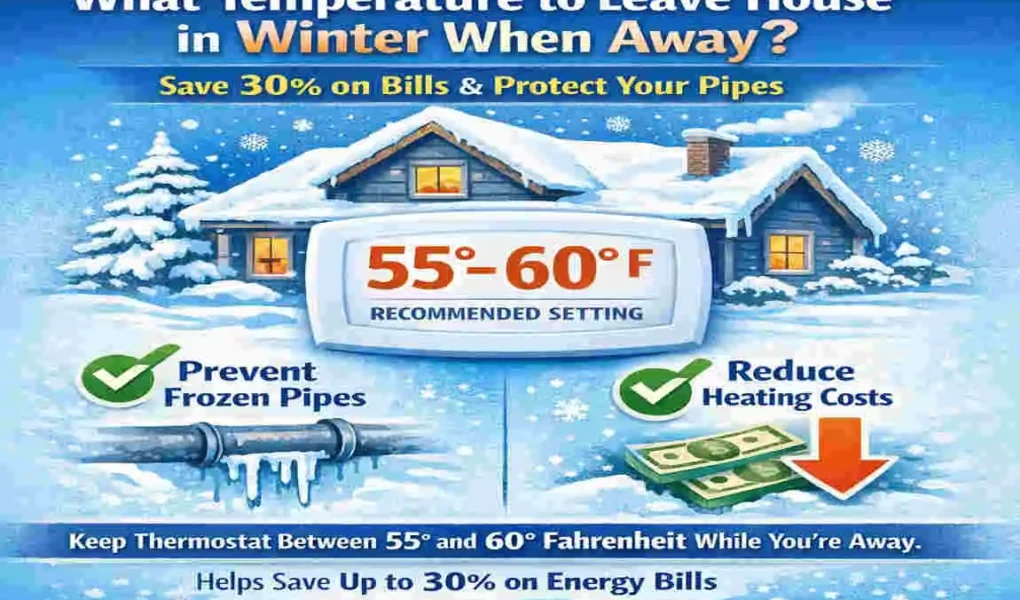
For most modern homes, the best thermostat setting when away in winter is 55°F to 60°F. This range is usually warm enough to help prevent frozen pipes, but low enough to save money on heating.
A quick answer: do not let the temperature drop below 55°F unless you have very good insulation and a safe backup plan. In colder areas, even 55°F may not be enough if the home is drafty or the plumbing runs through cold spaces.
For a short trip, you can usually stay closer to 58°F to 62°F. For a longer vacation, it is safer to keep the temperature between 55°F and 60°F and make sure the plumbing is protected, as well.
Why Setting the Right Winter Temperature Matters
Preventing Frozen Pipes
One of the biggest risks in winter is frozen pipes. When water freezes, it expands, and that can crack or burst pipes. This often happens in places that get colder faster, such as:
- Basements
- Attics
- Exterior walls
- Garages
If a pipe bursts, the damage can be expensive and stressful. That is why the safe house temperature in winter should never be too low.
Avoiding Expensive Water Damage
A small frozen pipe can turn into a big repair job. Water from a burst pipe can damage floors, walls, furniture, and even the home’s structure. It can also create conditions for mold, which is harder and costlier to deal with later.
Lowering Winter Energy Bills
Turning the heat down while you are away is one of the easiest ways to save heating bills in winter. Even a small drop in temperature can reduce heating use. That means you can save money without putting your home at risk.
Protecting HVAC Systems
Shutting the heat off completely is risky. Your furnace and plumbing are designed to work within a safe temperature range. If the home gets too cold, you may end up with a bigger problem than the money you saved.
Best Temperature Settings Based on Trip Length
Leaving for a Weekend
If you are only leaving for a couple of days, 58°F to 62°F is usually a comfortable and safe choice. The home will not cool down too much, and the risk of freezing is low in most mild conditions.
Leaving for One Week
For a week away, 55°F to 60°F is the better range. This gives you a safe buffer while still helping you save energy. Always check the weather forecast before you leave, especially if a cold snap is expected.
Leaving for Several Weeks
If you will be gone for a long time, think beyond the thermostat. Use vacation thermostat settings if your system has them, and make sure your home is ready for extended cold weather.
Snowbird & Seasonal Homes
If your home sits empty for a whole season, extra care is important. Consider a smart thermostat, pipe insulation, and water shutoff options. It is also smart to ask a neighbor or property manager to check on the house.
How Climate Affects the Ideal Thermostat Setting
Mild Winter Regions
In places with milder winters, you may be able to leave the heat a little lower. Still, you should stay close to the safe range so the home does not cool too much overnight.
Extremely Cold Climates
In very cold areas, the ideal setting may need to be 60°F or a bit higher. Wind chill, poor insulation, and long, cold spells can all increase the risk of freezing. If your home is in a northern climate, do not push the temperature too low.
Older Homes vs Modern Homes
Older homes often lose heat faster because they are more drafty. Newer homes usually hold heat better, so they may be safer at the lower end of the range. The better your insulation, the more control you have over the setting.
How to Prevent Pipes from Freezing While Away
If you want to prevent frozen pipes while away, the thermostat is only one part of the plan. A few simple steps can make a big difference.
- Insulate exposed pipes with foam sleeves or pipe wrap.
- Open cabinet doors under sinks so warm air can reach the pipes.
- Keep interior doors open to help heat move through the home.
- Drain outdoor faucets and sprinklers before you leave.
- Shut off the main water valve if you will be gone for a long time and do not need water running.
- Install freeze sensors if you want alerts when the temperature drops too low.
A slow faucet drip can also help in some homes during very cold weather. It keeps water moving, reducing the likelihood of freezing.
How Much Money Can You Save by Lowering the Thermostat?
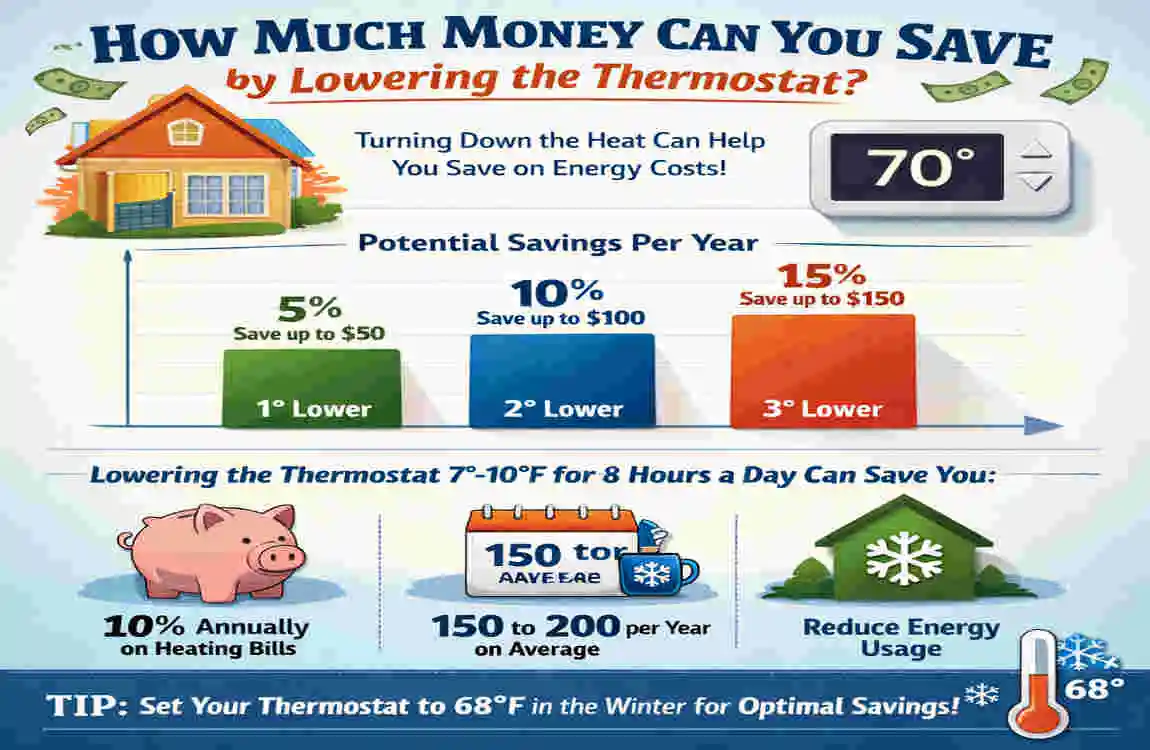
Lowering the thermostat while you are away can create real savings. In many dream homes, each degree lower can reduce heating costs a little more. Over time, that adds up.
Thermostat Setting, Estimated Monthly SavingsFreeze Risk
68°F Low savings Very low
62°F Moderate savings Low
58°F High savings Moderate
55°F Maximum safe savings Slightly higher
Your actual savings depend on insulation, furnace efficiency, utility rates, and how cold it gets outside. Still, a smart winter thermostat setting for vacation can make a noticeable difference.
Smart Thermostats: A Helpful Option for Travel
A smart thermostat can make winter travel much easier. You can check and adjust the temperature on your phone, giving you more control while you are away.
Why They Help
- Remote monitoring
- Freeze alerts
- Energy reports
- Vacation Mode
What to Watch Out For
Do not set the temperature too low just because you can monitor it remotely. Also, check the battery and app alerts before you leave. A smart device is helpful only if it stays powered and connected.
Common Mistakes Homeowners Make
Some winter travel mistakes are easy to avoid:
- Turning the heat completely off
- Forgetting drafty windows and doors
- Ignoring basements, attics, and garages
- Not checking the weather forecast
- Leaving before testing the heating system
A short prep check can save you from a costly return home.
Winter Home Preparation Checklist Before Leaving
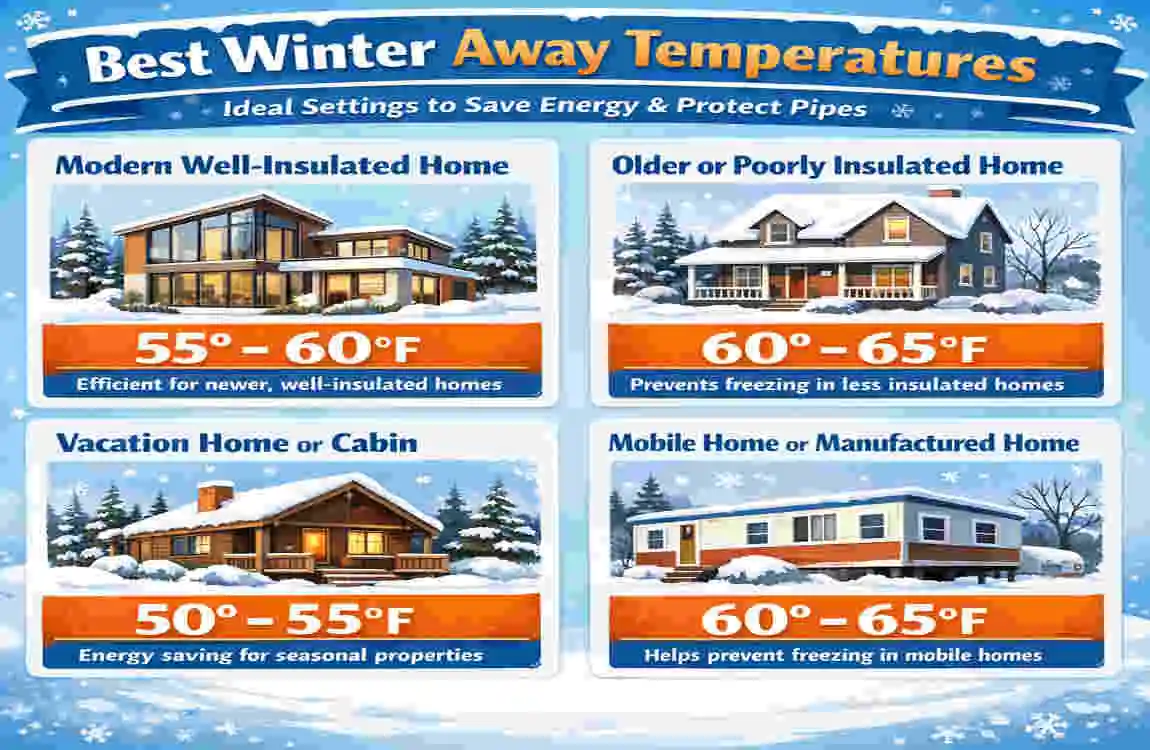
Here is a simple list to follow before you go:
- Set the thermostat to 55°F to 60°F
- Replace thermostat batteries if needed
- Insulate exposed pipes
- Shut off outdoor faucets
- Check smoke and carbon monoxide detectors
- Tell a trusted neighbor you will be away
Frequently Asked Questions
Is 50°F too cold for a house in winter?
Yes, for most homes, 50°F is too low. It may save a little more money, but it also raises the chance of frozen pipes.
Can pipes freeze at 55°F?
Usually, 55°F is the safest minimum for many homes. But if your home is drafty or has exposed plumbing, the risk can still be higher.
Should I shut off the water when on vacation in winter?
If you will be gone for a long time, shutting off the water can be a smart move. It depends on your plumbing setup and whether anyone will be checking the house.
What temperature should I set my thermostat to if I have pets?
If pets stay home, keep the house warmer than you would in a vacant home. Many people choose a range closer to 60°F to 65°F, depending on the pet and the home.
Does turning the heat down save money?
Yes. Lowering the thermostat while away can help reduce heating bills, especially during longer trips.