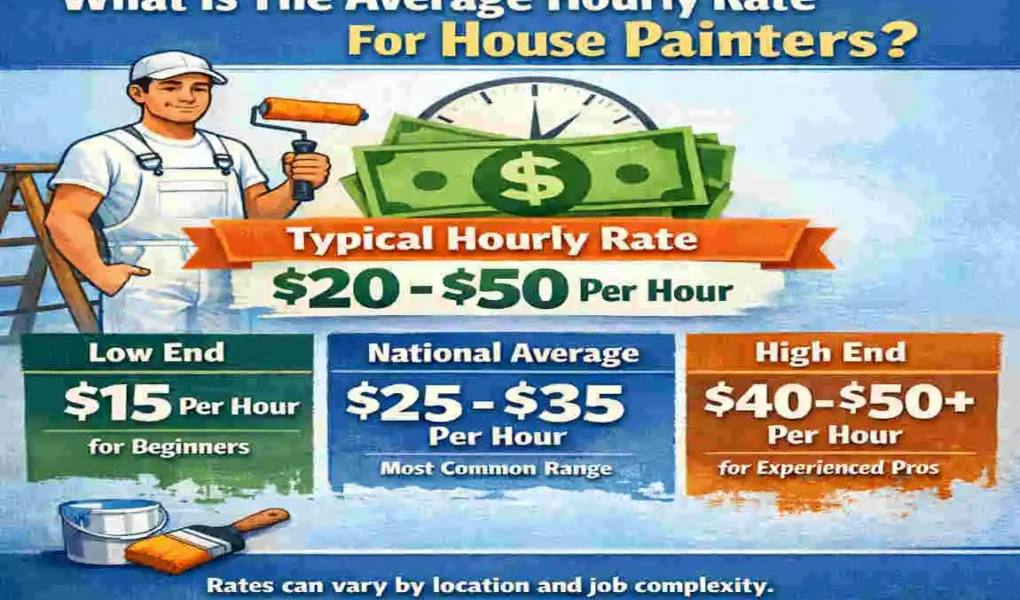
House painters are usually paid in a few common ways. Some earn an hourly wage, while others are paid per job or at a contract rate. Pay can vary by location, experience, project type, and skill level. That is why the answer to how much a house painter makes permakes per hour isn’t the same everywhere.
| Factor | Typical Hourly Rate / Range | What It Means |
|---|---|---|
| Entry-level house painter | $15–$20/hour | Usually less experienced and may work under supervision |
| Experienced house painter | $20–$30/hour | Handles common interior and exterior painting jobs |
| Highly skilled painter | $30–$40+ /hour | May have advanced skills, specialty finishes, or extensive experience |
| Independent painter | $25–$50+ /hour | Sets their own rates but covers business expenses |
| Painting contractor charge | $40–$80+ /hour | Customer-facing rate that can include overhead, insurance, equipment, and profit |
| Interior painting | Varies by project | Depends on rooms, preparation, coats, trim, and surface condition |
| Exterior painting | Varies by project | Weather, height, surface preparation, and accessibility can increase labor costs |
| Specialty painting | Often higher | Decorative finishes and other specialized work may require additional skill |
| Main factors affecting pay | — | Experience, location, demand, project complexity, and employment type |
Average Hourly Rate for House Painters
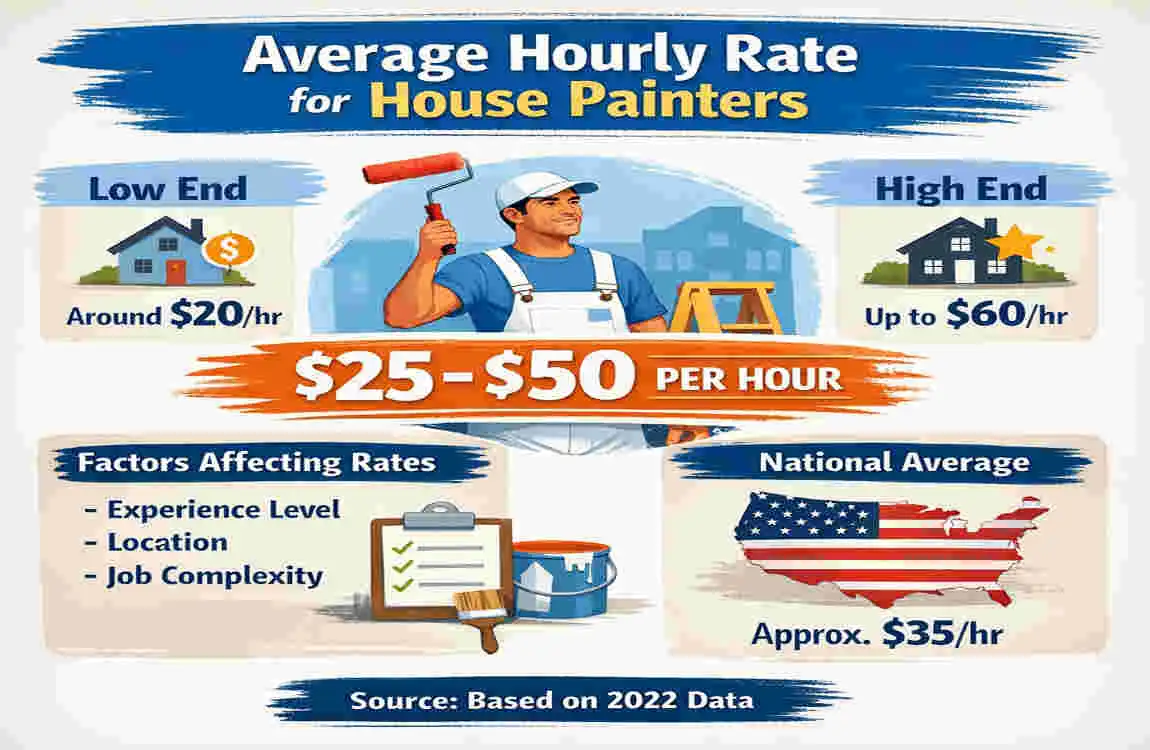
Typical hourly pay for a professional house painter varies widely, but most fall within a moderate range. What a painter earns personally is often different from what a customer is charged for the work. That difference matters because a painting business has extra costs built into the price.
Typical Hourly Pay
Entry-Level Painters
Entry-level painters usually earn less because they are still learning the job, building speed, and improving their technique. Their pay is often on the lower end of the range.
Experienced and Skilled Painters
More experienced painters can earn more per hour. If they prep surfaces well, create smooth finishes, and handle tricky jobs, their value goes up.
Painter vs. Painting Contractor Rates
A customer may pay much more per hour than the painter actually takes home. That is because the contractor has to cover insurance, equipment, transportation, supplies, marketing, and overhead. So the labor cost on a quote is not the same as a painter’s wage.
Type What It Means
Employee painter wage What the painter personally earns
Contractor labor rate What the homeowner may be billed for the work
Factors That Affect a House Painter’s Hourly Pay
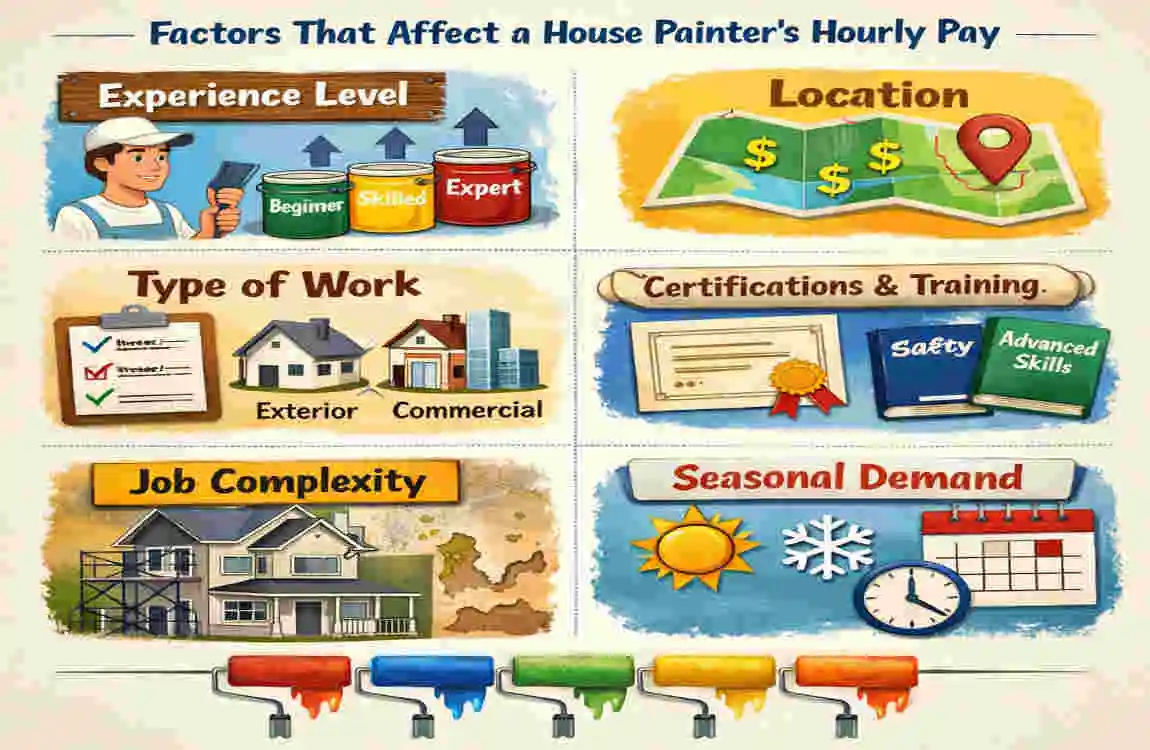
Many things shape a painter’s earnings. Some jobs are simple and fast, while others need more care and time. The more complex the work, the higher the rate may be.
Experience and Skill
Experience makes a big difference. A painter who can do careful prep work, clean edges, and detailed finishing usually earns more. Special knowledge also helps, especially with textures, trim, or specialty coatings.
Location and Demand
Where the painter works matters too; areas with a higher cost of living often pay more. Local housing demand and how busy the painting market is can also push wages up.
Type of Painting Work
Different jobs can pay different rates.
- Interior painting is often steady work with normal labor rates.
- Exterior painting may pay more because of weather, ladders, and more prep.
- Commercial work can have different pricing based on scale and schedule.
- Specialty finishes often pay more because they require more skill.
How Much Does a House Painter Make an Hour?
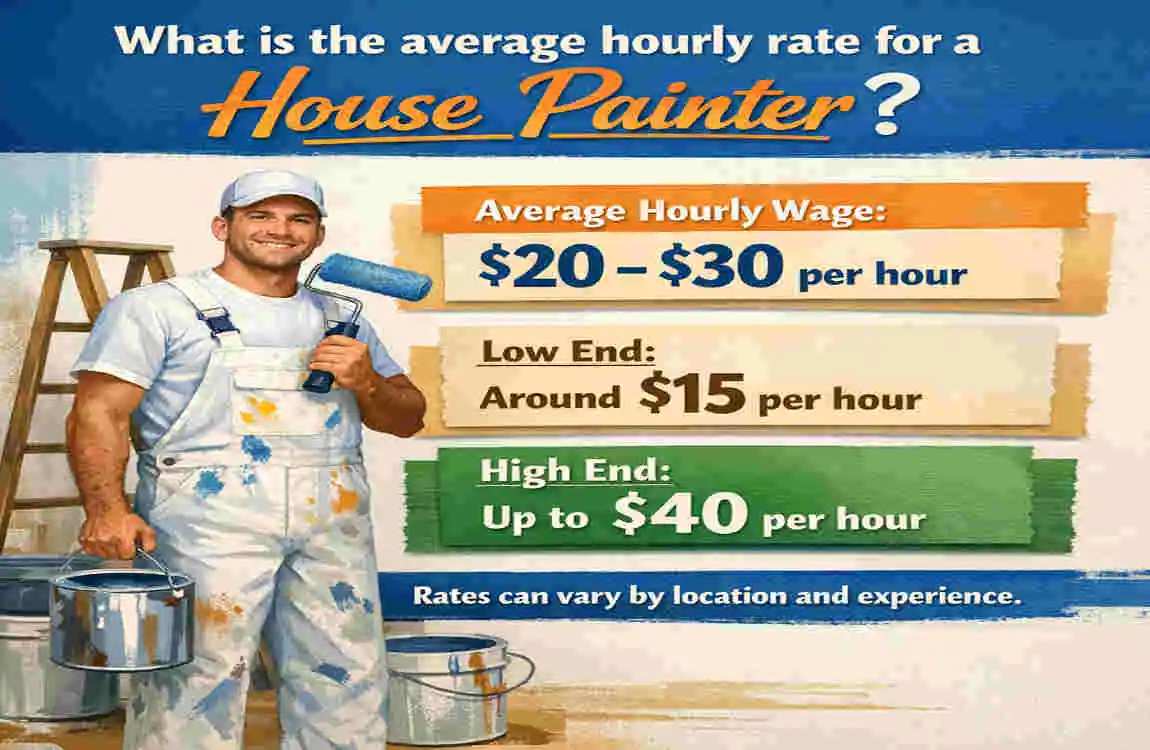
The direct answer is simple: there is no single hourly rate for every house painter. Pay depends on whether the painter is an employee, an independent worker, or a contractor. It also depends on the job itself and where the work is done.
Employee Painters
Painters who work for a company usually earn an hourly wage or a salary. Their pay is more stable, and they don’t have to cover the full cost of running a business.
Independent Painters
Self-employed painters may charge more per billed hour. However, they also pay for tools, travel, insurance, and other business costs. They also spend unpaid time on estimates, calls, and scheduling.
Seasonal and Overtime Work
Painting work can change with the season. Busy months may bring more hours and more income. Overtime and tight project schedules can also raise total earnings.
House Painter Hourly Rate vs. Cost of Hiring a Painter
What a painter makes and what a homeowner pays are not the same thing. Customers pay for the full service, not just the painter’s time.
Labor Costs
Labor estimates often include more than brushing paint onto walls. They can include setup, prep, repairs, cleanup, and supervision. All of that adds to the final price.
Materials and Equipment
Paint, brushes, rollers, tape, ladders, drop cloths, and other supplies all affect the cost. Even if labor is the main focus, materials can raise the total project price.
Preparation and Cleanup
Prep work takes time. Cleaning surfaces, filling holes, masking areas, priming, and cleaning up afterward can take just as long as the painting itself. That is why simple-looking projects are often more involved than they seem.
How to Estimate House Painting Labor Costs
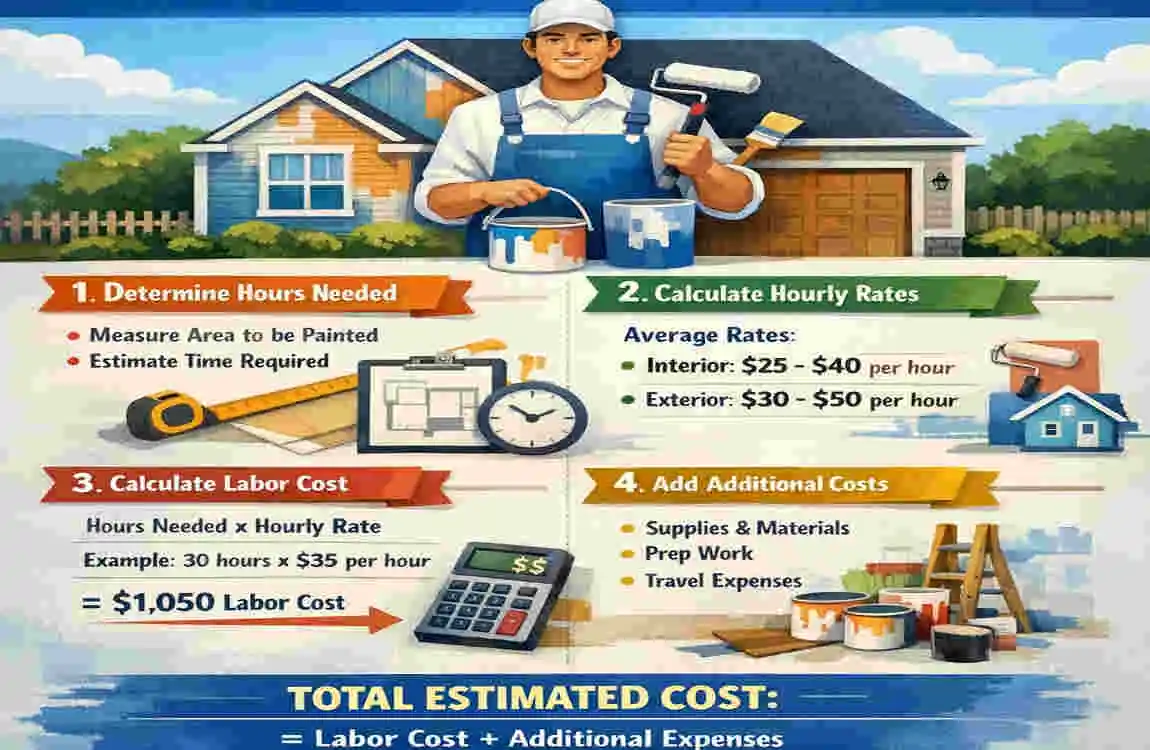
A basic estimate starts with the space size and the work needed. Homeowners and painters both need to think about how long the job will really take, not just how much paint will be used.
Hourly vs. Project-Based Pricing
Some painters charge by the hour, while others charge a flat project rate. Hourly pricing works well for smaller or uncertain jobs. Flat pricing is often used when the scope is clear.
Estimating Time
Several details affect labor time:
- Room size and wall height
- Number of coats needed
- Surface condition
- Trim, ceilings, and corners
- Hard-to-reach areas
Getting Accurate Estimates
Comparing detailed estimates side by side helps. Look for clear breakdowns of labor, materials, prep work, and extra services. That makes it easier to understand the real value of each quote.
FAQ About House Painter Hourly Rates
How much does a house painter make an hour?
It depends on experience, location, work type, and whether the painter is employed or self-employed. Some earn modest wages, while skilled painters and contractors can earn more.
Do house painters charge by the hour or by the job?
Both are common. Hourly pricing is often used for smaller or uncertain projects. In contrast, job pricing is used when the full scope is easier to define.
Is an independent house painter more expensive?
Often yes, but that higher rate includes business costs. It is not all personal income.
What affects a painter’s hourly rate the most?
The biggest factors are experience, location, project complexity, and business expenses.
Do exterior painters make more than interior painters?
Not always. Pay depends more on the market, the employer, and the job’s difficulty than on whether the work is inside or outside.
How can homeowners compare house painting estimates?
Compare more than just the hourly rate. Look at labor, materials, preparation, number of coats, timeline, and included services.