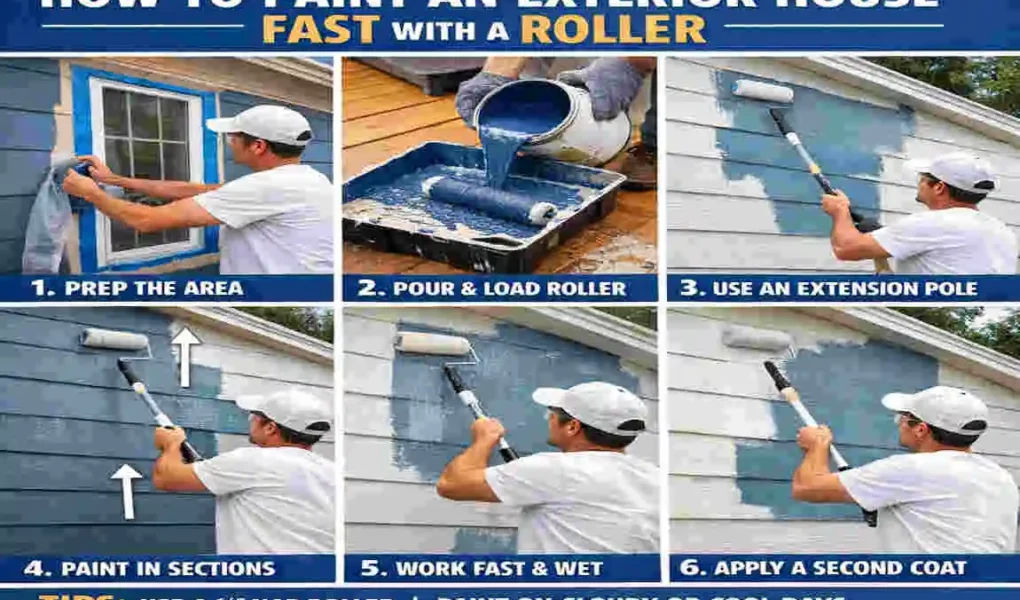
If you want to refresh your home’s outside look, a roller can be a smart and time-saving choice. Many homeowners prefer it because it covers large walls faster than a brush and produces a more even finish when used properly.
That is why so many people search for how to paint a house’s exterior with a roller. The method is simple in theory, but the result depends on good preparation, the right tools, and steady technique.
Why Use a Roller for Exterior House Painting?
Faster coverage
A roller covers more area in less time. That makes it a practical choice for big exterior walls, especially when compared with a brush.
More even paint application
When you roll paint properly, it spreads in a smooth and consistent layer. This helps reduce streaks and patchy spots.
Less strain than brushing
Brushing every large wall by hand can take a lot of time and effort. A roller is easier on your arms and helps you move more quickly.
Best surfaces for roller painting
Rollers work well on many exterior surfaces, including:
- Wood siding
- Stucco walls
- Brick surfaces
- Concrete walls
- Fiber cement siding
If your home has large flat areas, rolling is often the easiest method.
Tools and Materials Needed to Paint an Exterior House with a Roller
Essential painting tools
Before you begin, gather everything you need. This saves time and keeps the project moving.
You will likely need:
- Exterior paint
- High-quality paint roller
- Roller extension pole
- Paint tray
- Paint brushes for edges
- Painter’s tape
- Drop cloths
- Ladder or scaffolding
- Sandpaper and scraper
Using the right tools makes painting the exterior of a house with a roller much easier from start to finish.
Choosing the right roller for exterior walls
The roller nap matters a lot. The nap is the fuzzy part of the roller that holds the paint.
Use this simple guide:
- 1/4 inch nap for smooth surfaces
- 3/8 inch nap for semi-smooth surfaces
- 1/2 inch or more for rough surfaces
A thicker nap works better on rough walls because it reaches into small grooves and texture. A cheap roller can leave lint, streaks, or uneven coverage, so quality matters.
How to Prepare Your Exterior House Before Painting
Clean the exterior surface.
Clean walls help paint stick better. Remove dirt, dust, mold, and mildew before you start.
You can use a pressure washer carefully, but do not soak the siding too much. After washing, let the surface dry completely.
Repair damaged areas
Before painting, fix small problems first.
Look for:
- Cracks
- Holes
- Loose siding
- Rough spots
Use filler where needed, replace damaged sections, and sand rough areas smooth. A clean surface gives you a better final finish.
Protect doors, windows, and landscaping.
Take time to cover areas you do not want painted.
Use:
- Painter’s tape around trim
- Drop cloths on walkways
- Covers for plants and outdoor furniture
This small step saves a lot of cleanup later.
Step-by-Step Guide: How to Paint Exterior House with Roller
Check weather conditions
Weather makes a big difference. Mild, dry conditions are usually best.
Avoid painting when:
- It is raining
- The heat is extreme
- Humidity is very high
- Strong wind could blow dust into wet paint
The ideal temperature is usually between 50°F and 85°F.
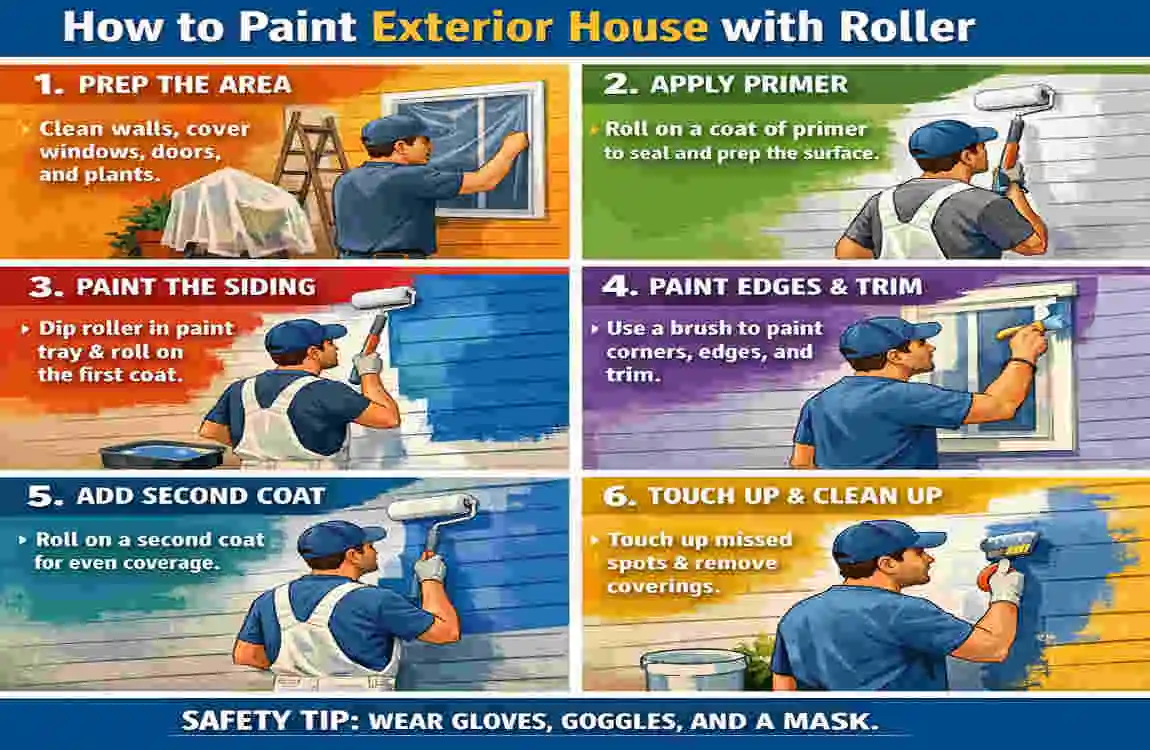
Apply primer when needed.
Primer helps paint stick better and provides a stronger base for the finish.
It can help with:
- Better paint adhesion
- Longer-lasting results
- Improved color coverage
If you are painting bare wood, repaired spots, or a surface with stains, primer is often a smart step.
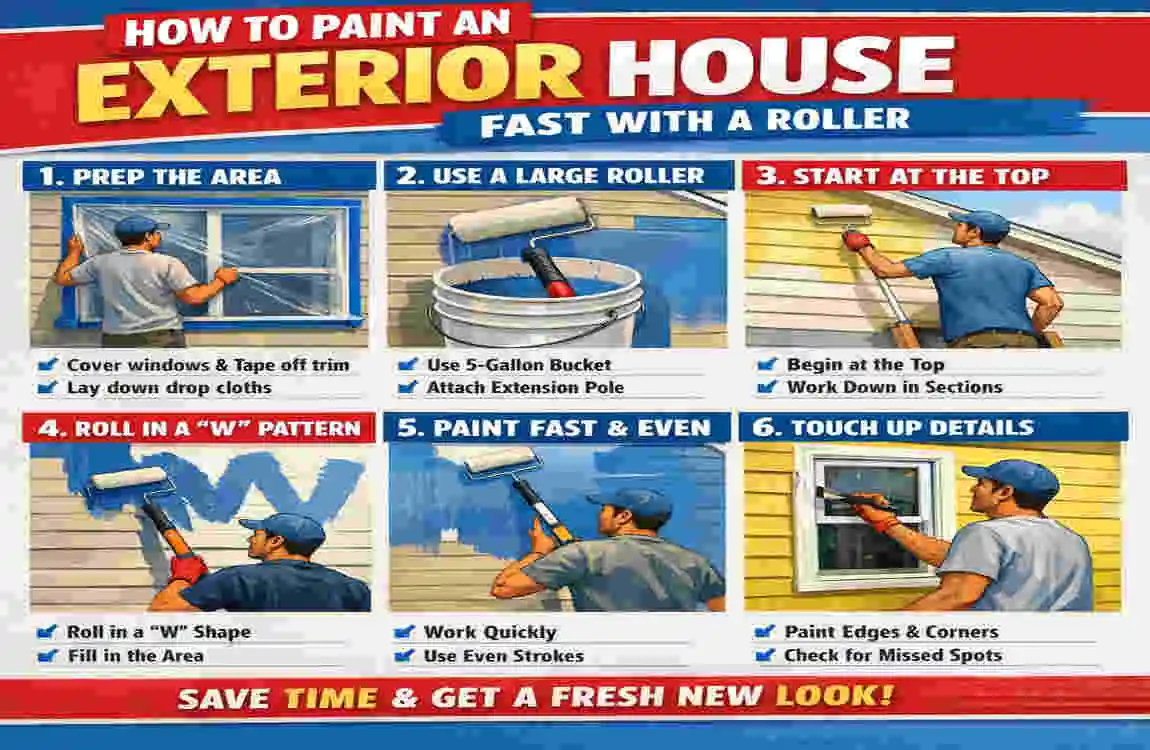
Start painting from the top.
Always work from top to bottom. This helps you manage drips and keeps the finish cleaner.
Paint one section at a time so the paint stays wet while you work. That helps avoid lap marks and uneven texture.
Use proper roller technique.
This is one of the most important parts of how to paint the exterior of a house with a roller.
Try these simple tips:
- Load the roller evenly
- Do not overload it with paint
- Use a W or M pattern
- Keep a wet edge so sections blend smoothly
A wet edge means you overlap while the paint is still fresh. That helps prevent visible lines.
Apply additional coats
Most homes need two coats for better coverage and durability.
Let the first coat dry fully before adding the second. Rushing this step can ruin the finish and cause peeling later.
Tips to Paint an Exterior House Faster with a Roller
Work in small sections
Break the house into manageable areas. This helps you stay organized and prevents paint from drying too quickly on one section.
Use an extension pole.
An extension pole helps you reach high areas faster and reduces the need to move a ladder constantly.
That means:
- Faster painting
- Better safety
- Less stopping and starting
Use quality paint
Good exterior paint often covers better and lasts longer. That can save time because you may need fewer coats.
Paint with a team
If possible, work with another person.
A simple split can help:
- One person cuts in edges
- One person rolls the walls
This teamwork can speed up the job a lot.
Common Mistakes When Painting an Exterior House with a Roller
Skipping surface preparation
This is one of the biggest mistakes. Paint will not stick well to dirty or damaged surfaces.
Using the wrong roller nap
A roller that is too thin may not reach rough surfaces. A roller that is too thick may leave an uneven finish on smooth walls.
Painting in poor weather
Heat, rain, and humidity can all affect drying and finish quality.
Applying too much paint
Too much paint can cause:
- Drips
- Heavy texture
- Slow drying
- Uneven results
A light, even coat usually works best.
How Long Does It Take to Paint an Exterior House with a Roller?
The time depends on house size, surface condition, number of coats, and how many people are helping.
House Size Estimated Time
Small house 1–3 days
Medium house 3–5 days
Large house 5–7+ days
What affects painting speed?
Several things can slow or speed up the job:
- House size
- Number of coats
- Surface condition
- Number of workers
- Weather conditions
If your home needs repairs first, the project will take longer.
How Much Paint Do You Need for Exterior Roller Painting?
Factors that affect paint quantity
The amount of paint you need depends on:
- Total wall area
- Surface texture
- Number of coats
- Paint coverage rate
General estimate
One gallon of exterior paint usually covers about 250 to 400 square feet, depending on the surface.
Rough surfaces use more paint than smooth surfaces, so always plan for a little extra.
Roller vs Sprayer: Which Is Better for Exterior House Painting?
Both tools can work well, but they are not the same.
FeatureRollerSprayer
Speed Fast Very fast
Control Excellent Requires skill
Paint waste Low Higher
Finish Smooth Even with experience
Best for Most homeowners Large professional jobs
For most homeowners, a roller is easier to control and less messy. A sprayer is faster, but it needs more skill and prep.
How to Maintain Your Exterior Paint After Application
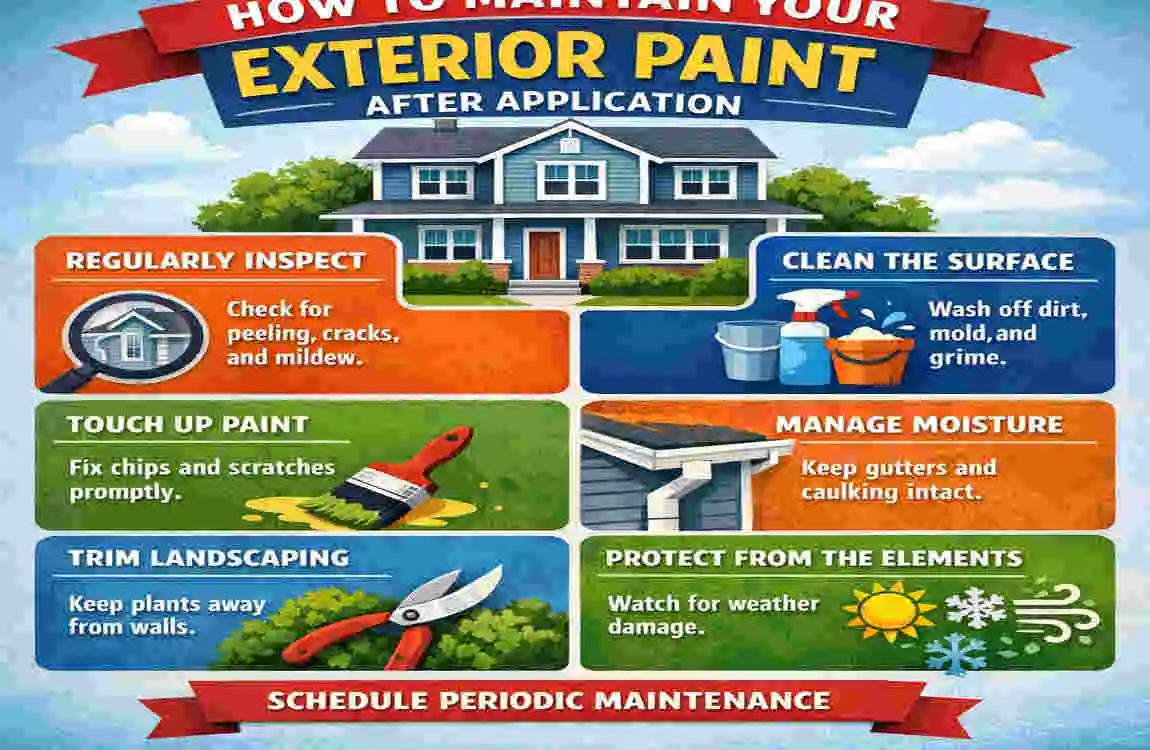
Regular cleaning
Gently wash off dirt and buildup so the paint stays looking fresh.
Inspect for damage
Check for peeling, cracks, or chipped areas. Fix small problems early before they spread.
Repaint when needed
Exterior paint does not last forever. When you notice fading or peeling, it may be time to repaint.
Good care helps your paint job last longer and keeps your home looking neat.
Frequently Asked Questions
Can you paint the exterior of a house with a roller?
Yes, a roller is very effective for exterior walls, especially large flat surfaces like siding, stucco, and concrete.
What size roller is best for exterior house paint?
A 3/8-inch to 1/2-inch nap works well for most surfaces. Rough walls may need a thicker nap.
How can I paint my house exterior faster?
Use a quality roller, extension pole, proper prep, and work in small sections with a helper if possible.
Is it better to roll or spray exterior house paint?
Spraying is faster, but rolling usually gives better control and is easier for homeowners.
How many coats of exterior paint should a house have?
Most homes need two coats for better coverage and durability.
What is the best weather for exterior house painting?
Mild, dry weather between 50°F and 85°F is usually ideal.
| Step | What to Do | Key Tips |
|---|---|---|
| Prepare the Surface | Clean walls, remove dirt, repair cracks, and scrape loose paint. | A clean surface helps paint stick better and last longer. |
| Gather Tools | Use an exterior paint roller, extension pole, paint tray, brushes, and painter’s tape. | Choose a roller with the right nap for your wall texture. |
| Protect Areas | Cover windows, doors, plants, and outdoor furniture. | Use plastic sheets and drop cloths to avoid paint splashes. |
| Apply Primer (If Needed) | Prime bare wood, repaired areas, or stained surfaces. | Primer improves coverage and prevents peeling. |
| Start Rolling Paint | Work in small sections from top to bottom. | Keep a wet edge to avoid visible roller marks. |
| Use Proper Roller Technique | Roll in a “W” or “M” pattern, then smooth evenly. | Avoid pressing too hard, which causes uneven coverage. |
| Paint Edges First | Use a brush around corners, windows, and trim. | This makes roller work faster and cleaner. |