An exterior house plant can do much more than fill an empty corner. It can make your home feel warm, fresh, and welcoming right from the street. When you choose the right plants and place them well, they can improve curb appeal, soften hard edges, and create a more comfortable outdoor space.
| Tip | What to Do | Why It Helps |
|---|---|---|
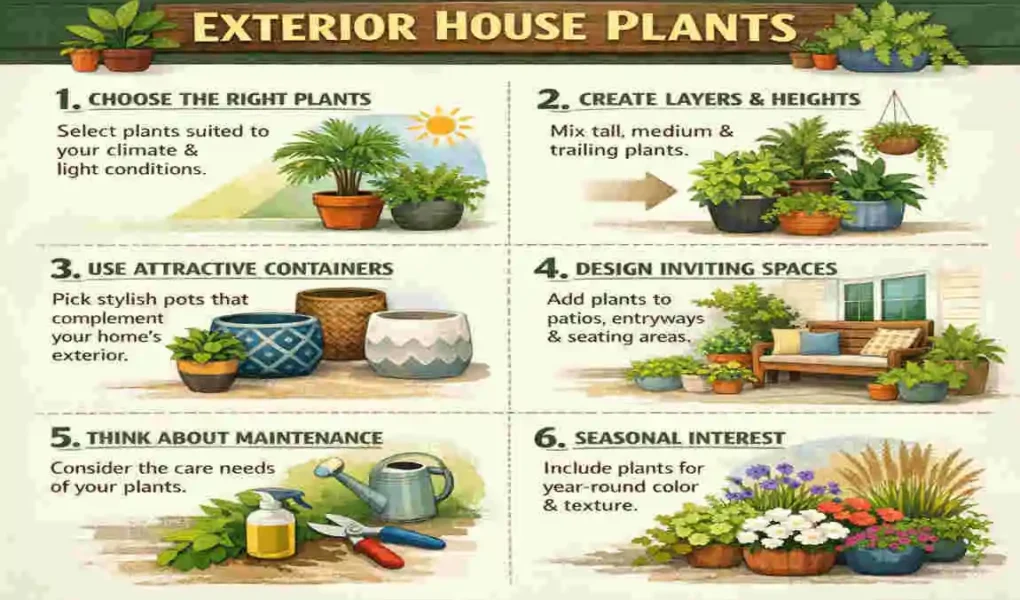
| Use focal-point plants | Place 1–2 bold, larger pots (like tropicals or shrubs) near the entrance or seating. | Creates a strong visual anchor and sets the “mood” of the exterior space. |
| Mind scale and proportion | Match plant and pot size to the space; avoid pots that are too tiny or overpowering. | Keeps the façade and patio looking balanced and not cluttered. |
| Layer heights and textures | Combine tall, medium, and trailing plants with mixed leaf shapes and colors. | Adds depth and interest instead of a flat, boring row of plants. |
| Frame views and pathways | Flank doors, stairs, and paths with matching or coordinated planters. | Guides movement, highlights entrances, and feels welcoming. |
| Consider sun and climate | Choose plants suited to your sun exposure, wind, and local temperatures. | Plants stay healthier and require less maintenance and replacement. |
| Add fragrance and color | Include flowering or scented plants near seating and doorways. | Makes outdoor areas more inviting for you and guests. |
Plants also help your home feel more balanced. A plain wall can look more alive with greenery. A front walkway can feel more inviting with potted plants on both sides. Even a small porch can look stylish with the right mix of color, height, and texture.
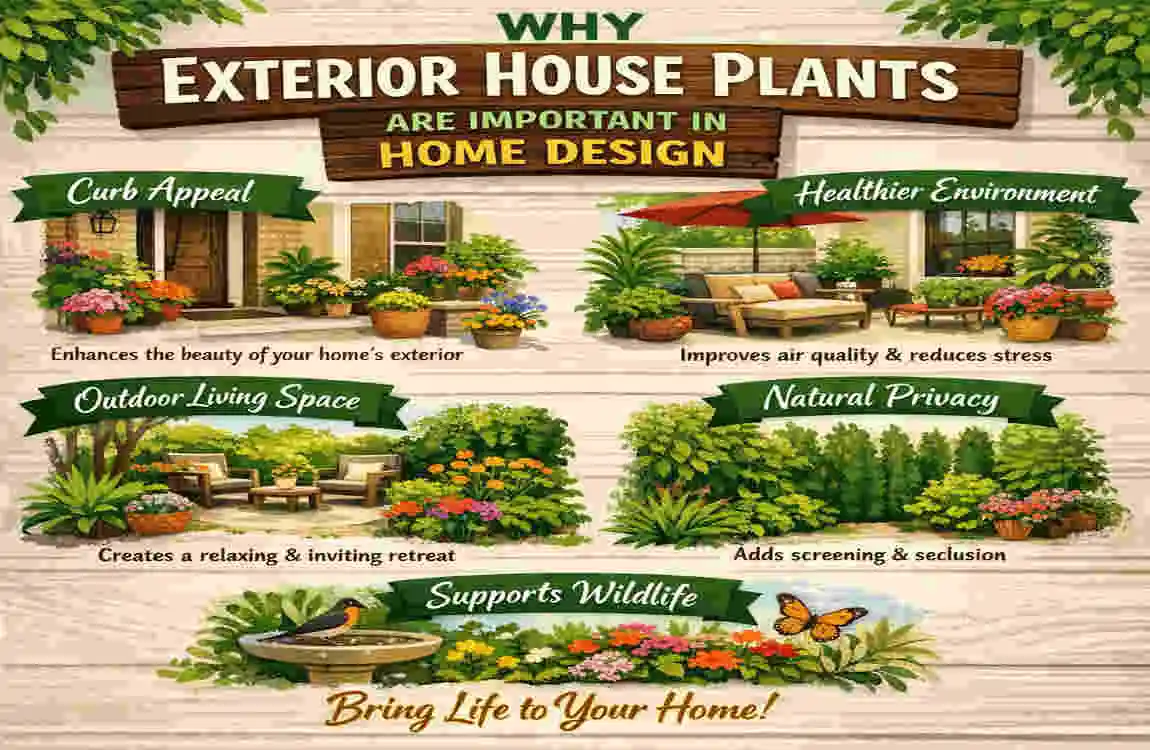
Why Exterior House Plants Are Important in Home Design
Improve Curb Appeal
The outside of your home is the first thing people notice. A few well-placed plants can instantly make it look more polished and cared for. Greenery adds life, while flowers add color and charm.
Boost Property Value
Good landscaping often makes a home feel more valuable. Buyers usually notice homes that look neat, welcoming, and well maintained. Even simple exterior home landscaping plants can make a strong visual difference.
Environmental Benefits
Plants can help reduce heat, improve air quality, and even reduce dust around your home. Trees and shrubs can also provide shade, which helps outdoor spaces feel cooler in warm weather.
Better Outdoor Living Experience
A well-designed plant layout can turn a plain outdoor area into a relaxing place to sit, talk, or spend time with family. The right greenery helps your home feel peaceful and inviting.
Choosing the Right Exterior House Plant for Your Climate
Consider Local Weather Conditions
Not every plant grows well everywhere. A plant that thrives in a hot, dry area may struggle in a cold or humid place. Before buying, consider your local climate and choose plants that can withstand it.
Sunlight Requirements
Some plants need full sun, while others prefer shade. This is one of the most important things to check before planting.
- Full sun plants work well in open front yards or bright patios.
- Partial shade plants fit porches or areas near walls.
- Shade-loving plants are better suited to covered spaces or the north-facing side of the home.
Soil Type and Drainage
Plants also depend on the soil. Some grow well in sandy soil, while others need richer or moister soil. Good drainage is important because standing water can damage roots.
Maintenance Level
If you have a busy schedule, choose low-care plants. If you enjoy gardening, you can try plants that need more pruning, watering, or shaping. The best plants for the house exterior are the ones that fit your time and space.
Best Types of Exterior House Plants for Different Areas of the Home
Front Entrance Plants
The front entrance should feel balanced and welcoming. Good choices include:
- Potted palms for a tall, elegant look
- Boxwood shrubs for a neat and classic shape
- Lavender for color and a pleasant scent
Porch and Patio Plants
These spaces should feel calm and comfortable. Try:
- Ferns for soft, full greenery
- Snake plants for structure and easy care
- Succulents for a clean, modern look
Balcony Exterior Plants
If you have limited space, use plants that grow upward or hang down gently.
- Hanging ivy
- Geraniums
- Petunias
Garden Border Plants
Border plants help define space and create a finished look.
- Ornamental grasses
- Roses
- Hydrangeas
Wall-Climbing Plants
These plants can add beauty to plain walls or fences.
- Jasmine
- Ivy
- Bougainvillea
Design Principles for Styling Exterior House Plants
Use Height Layers
A strong plant design usually includes tall, medium, and low plants. This creates depth and keeps the area from looking flat. For example, you can place tall pots near an entry, medium shrubs beside them, and ground-cover plants near the base.
Focus on Color Harmony
Choose plant colors that complement your home’s exterior. White flowers may suit a dark wall, while bright flowers can stand out against neutral siding. You can also plan seasonal color to keep the area looking fresh year-round.
Create Symmetry
Symmetry is easy to use near doors and entryways. Two matching pots on each side of the front door can make the home feel neat and balanced.
Use Texture Contrast
Mix broad leaves with thin, soft foliage. This adds interest without making the space feel busy. A little contrast can make your front house plant ideas look more thoughtful and stylish.
Leave Enough Walking Space
Plants should improve the space, not block it. Make sure walkways, doors, and windows stay open and easy to use.
Quick styling tips
- Repeat plant shapes for a cleaner look
- Use similar pots for a unified design
- Keep crowded areas simple
Front Yard Design Ideas Using Exterior House Plants
Minimalist Green Entrance
This style uses a few simple plants with clean lines. Small shrubs, neat pots, and limited color choices can make the front yard look modern and tidy.
Tropical Look
Use bold leaves, palm-like plants, and rich green tones. This works well if you want your home to feel lush and relaxed.
Cottage Garden Style
Mix flowers, vines, and soft shapes for a natural, cozy feel. This style looks full of charm and works well for traditional homes.
Modern Landscape Design
For a modern look, use geometric pots, gravel, and shaped plants. Keep the layout clean and simple. This style works best when you want your exterior home greenery to feel sharp and organized.
Exterior House Plant Ideas for Small Spaces
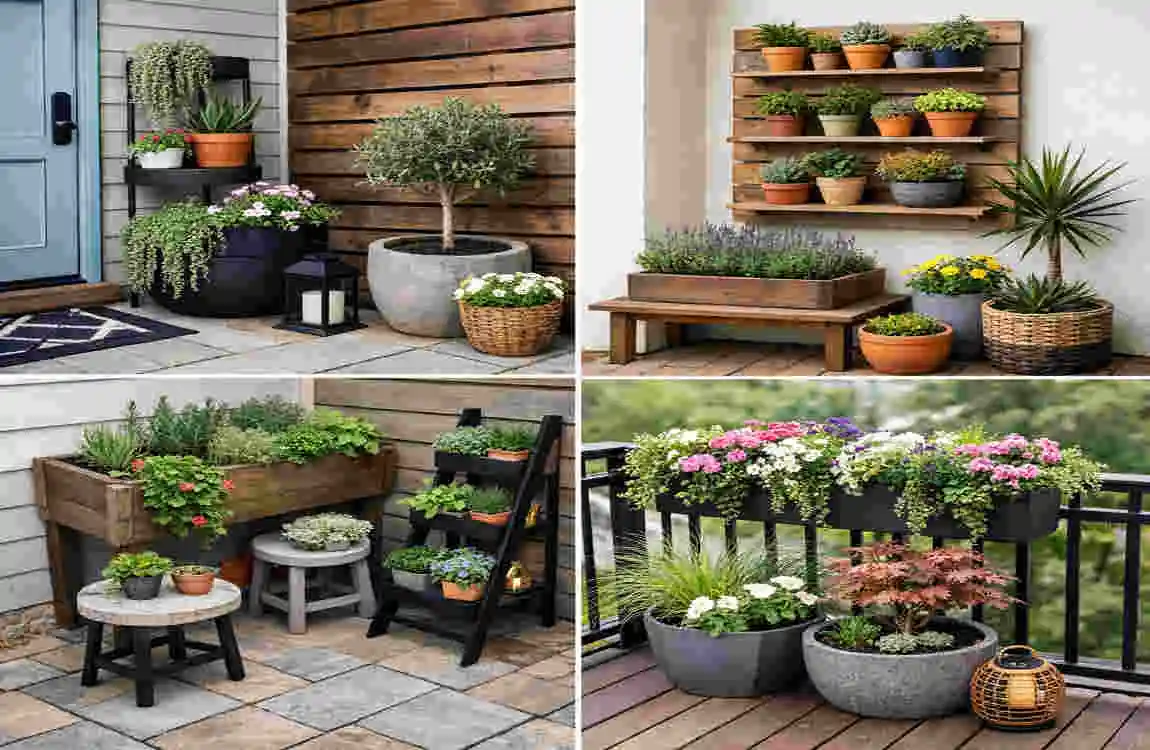
Vertical Gardening
If space is tight, grow plants upward instead of outward. Wall planters and vertical racks help you add greenery without taking up much room.
Hanging Baskets
Hanging baskets are perfect for balconies, porches, and patios. They add color and height while keeping floor space open.
Compact Pots
Small pots work well for herbs, mini shrubs, and small flowering plants. They are easy to move and rearrange.
Corner Green Styling
Empty corners often get ignored. A tall plant or a group of small pots can turn that unused spot into a strong design feature.
Matching Exterior Plants with Home Architecture Style
Modern Homes
Modern homes usually look best with structured plants, clean lines, and simple colors. Think boxwood, ornamental grasses, and shaped pots.
Traditional Homes
Traditional homes often suit flowering bushes and balanced landscaping. Soft shapes and classic greenery help keep the look timeless.
Rustic Homes
Rustic homes pair well with natural textures and relaxed plant choices. Wildflowers and leafy plants can fit this style nicely.
Mediterranean Homes
Mediterranean homes often look great with olive trees, lavender, and terracotta pots. These plants feel warm and natural.
Common Mistakes to Avoid When Designing with Exterior House Plants
Overcrowding Plants
Too many plants can make your space feel messy. It can also block doors, windows, and walkways.
Ignoring Plant Growth Size
A small plant may look perfect now, but it may grow much larger later. Always think ahead before planting.
Poor Drainage Planning
If water stays around the roots, the plant can suffer. Make sure pots and soil allow water to move away properly.
Choosing Plants Only for Looks
A pretty plant is not always the right one. It should also fit your climate, sunlight, and maintenance needs.
Inconsistent Maintenance
Even the best design will look weak if you do not water, trim, and clean the plants regularly.
Seasonal Care Tips for Exterior House Plants
Spring Care
Spring is a good time to prune, fertilize, and refresh the soil. This helps plants grow strong before summer.
Summer Protection
Plants need more water in hot weather. Try watering early in the day and protecting sensitive plants from excessive heat.
Fall Preparation
Clean up dead leaves, check soil health, and prepare plants for cooler weather. This helps them stay healthy as temperatures drop.
Winter Safety
If frost is common in your area, move potted plants to safer spots. You can also use covers to protect them from cold damage.
Low-Maintenance Exterior House Plants for Busy Homeowners
Some plants are easier to care for than others. These are good choices if you want beauty without too much work:
- Succulents
- Aloe vera
- Boxwood
- Agave
- Snake plant
- Ornamental grasses
These plants usually need less water and less attention. They are great for patios, entryways, and sunny areas where you want simple, lasting style.
Budget-Friendly Ways to Design with Exterior House Plants
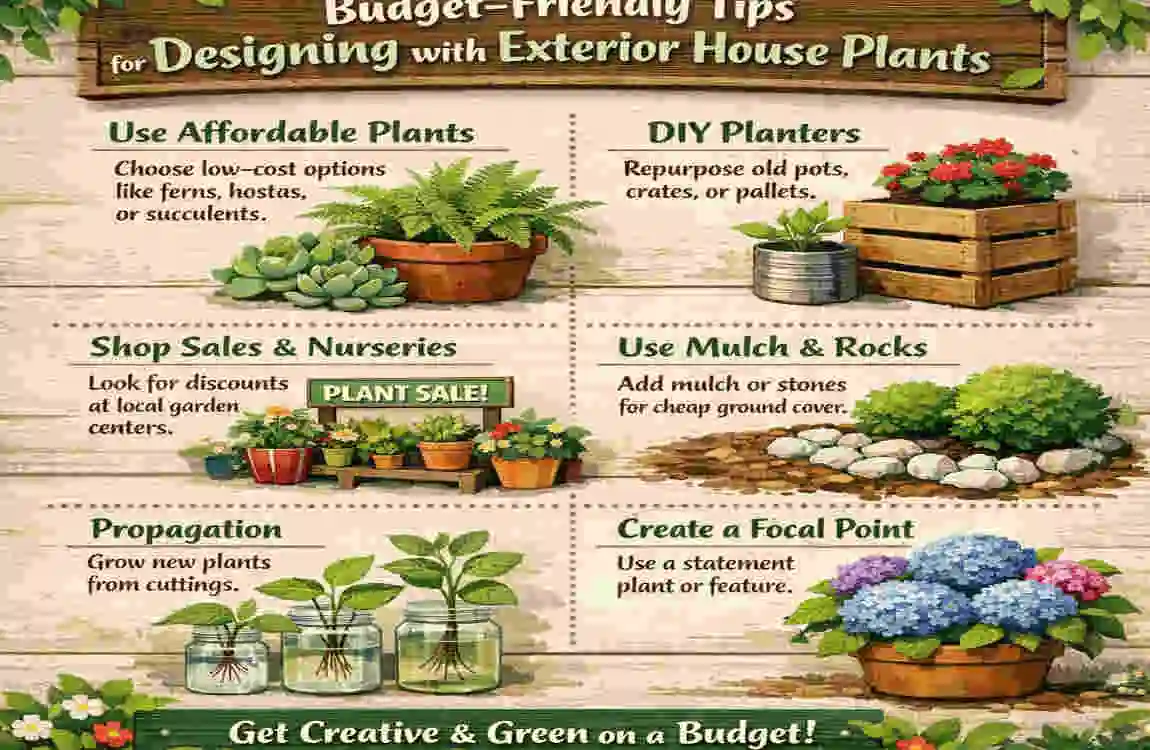
Start with Small Plants
You do not need large plants right away. Small plants cost less and can still make a big visual impact.
Use Recycled Pots
Old containers, buckets, or planters can be reused with a little care. This saves money and adds personality.
Propagate Existing Plants
If you already have healthy plants, you may be able to grow new ones from them. This is a low-cost way to expand your design.
Buy Native Plants
Native plants often grow better in your local area and need less care. That makes them a smart plant and affordable choice.
Mix Decorative Stones with Greenery
Stones can make plant areas look neat and finished. They also help reduce bare spots and improve visual balance.
Frequently Asked Questions About Exterior House Plants
What is the best exterior house plant for beginners?
Easy plants like snake plant, succulents, and boxwood are great for beginners because they are simple to care for and grow well in many spaces.
Which plants survive in direct sunlight?
Plants like lavender, succulents, agave, and some ornamental grasses can handle strong sun well.
How do I make my home exterior look greener?
Use a mix of pots, shrubs, hanging plants, and border plants. Repeating green tones in different parts of the space also helps.
Can potted plants stay outdoors year-round?
Some can, but it depends on your climate and the plant type. In colder areas, many potted plants need protection during winter.
What are the easiest low-maintenance outdoor plants?
Succulents, snake plants, boxwood, agave, and ornamental grasses are some of the easiest options for busy homeowners.