Choosing the right exterior color for your home is more than just a style decision. In Florida, it can shape how your home looks, how comfortable it feels, and even how well it withstands the climate. A fresh coat of paint can make a house feel newer, brighter, and more welcoming, while the wrong shade can feel out of place or fade too quickly in the sun.
If you’ve ever wondered which color is best for the exterior of a house in Florida, you’re not alone. Many homeowners want a color that looks beautiful, fits the neighborhood, and withstands the state’s strong sunlight, heat, humidity, and coastal weather.
Exterior color also plays a big role in curb appeal. It helps create a strong first impression and can add value to your home. In Florida, this choice matters even more because the environment is tough on paint. Bright sun, salty air, heavy rain, and moisture can all affect how long a color stays fresh.
Why Exterior Color Choice Matters in Florida
Impact on Aesthetic Appeal
The exterior color is one of the first things people notice about a home. A well-chosen color can make your house look clean, polished, and inviting. It can also highlight the best features of your home, such as trim, windows, roof shape, or front porch details.
In Florida, where many homes share similar styles, the right color can help your house stand out tastefully. It does not need to be loud or flashy. Often, the best choice is the one that feels balanced, fresh, and connected to the surroundings.
Climate Considerations in Florida
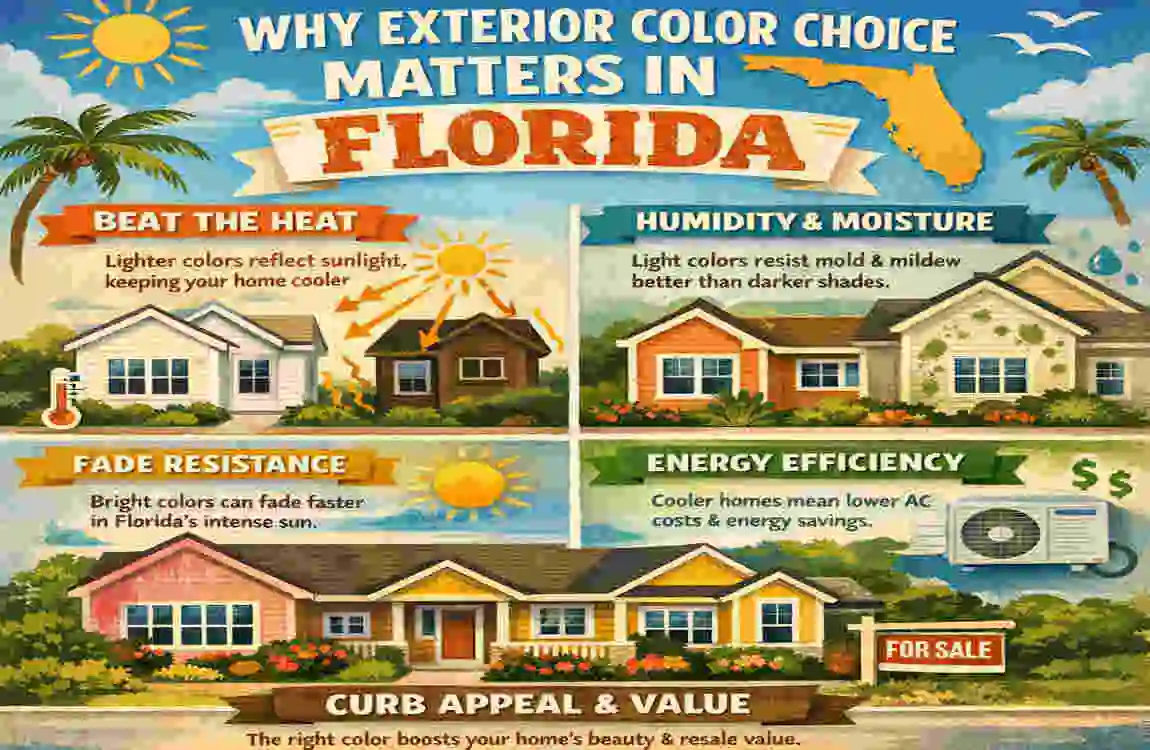
Florida weather can be hard on exterior paint. Strong sunlight can cause fading. Humidity can lead to mildew. Rain and salt air can wear paint down faster than in drier places.
That is why color choice and paint quality go hand in hand. Lighter colors often last better in hot weather because they reflect more sunlight. They also help keep the home cooler. This does not mean dark colors should never be used, but they usually need more care and better paint products to perform well.
HOA and Community Regulations
Many Florida neighborhoods have homeowners’ association rules that control exterior colors. Some HOAs only allow certain shades. Others require approval before you paint.
Before making a final choice, check your community rules. This simple step can save you time, money, and frustration. It also helps you avoid repainting later if the color does not meet local guidelines.
Factors to Consider When Choosing Exterior Colors for Florida Homes
Sunlight and Heat Reflection
Florida gets a lot of sun, so lighter shades are often a smart choice. White, cream, soft beige, pale gray, and light sand tones reflect more sunlight than dark colors. That can help reduce heat absorption and may make your home feel cooler.
This is where solar reflectance matters. In simple terms, colors that bounce sunlight away from the surface can help your exterior stay cooler and resist heat damage longer. This is especially useful for homes with little shade.
Still, lighter colors should not feel boring. You can make them more interesting with contrast. A white home with navy shutters or a soft beige house with dark trim can look both elegant and practical.
Coastal Influence
If your home is near the coast, your color choice should fit the setting. Florida’s coastal areas often look best with shades inspired by the beach and sea. Think of soft blues, warm whites, sandy taupes, seafoam green, and gentle grays.
These colors feel natural in a beachside environment. They also blend well with palm trees, dunes, and water views. A home in a coastal area should feel calm and relaxed, not heavy or overly dramatic.
Coastal homes also deal with salt in the air. Because of that, durability matters even more. The right paint and finish can help protect your exterior while keeping the color looking fresh.
Neighborhood Style and Trends
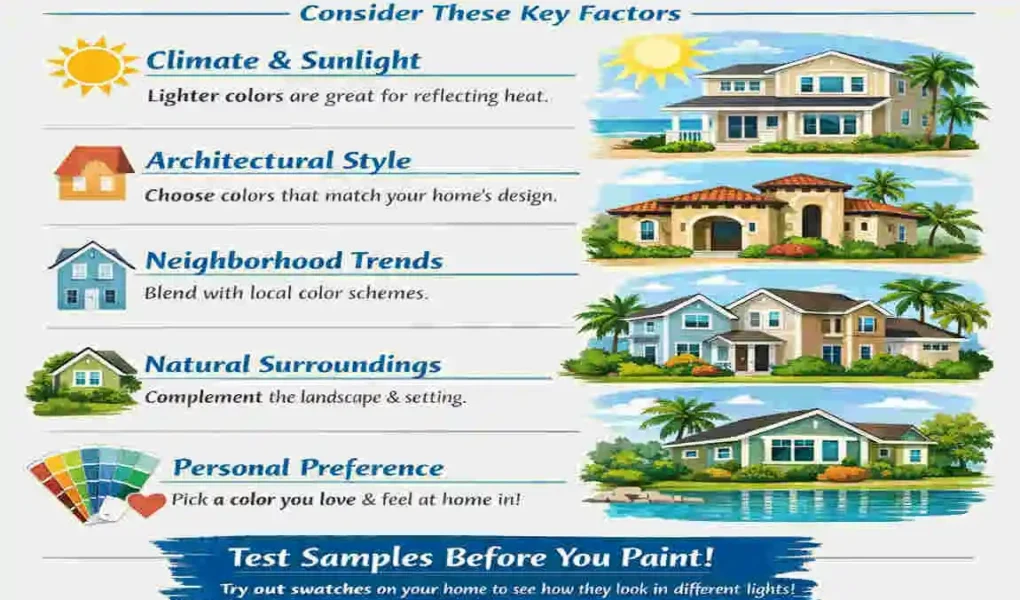
Your home should feel like it belongs in its neighborhood. That does not mean it has to match every house nearby, but it should work with the overall style around it. A bright tropical shade may look perfect in one area and out of place in another.
Look at the architectural style of your street. Are most homes modern, Mediterranean, coastal, or traditional? Matching the tone of the area helps your home feel harmonious and well planned.
Trends can be helpful too, but they should not be the only factor. A trendy color may look great now, but feel dated later. A more timeless shade often gives better long-term value.
Durability and Paint Quality
The color matters, but the paint quality matters just as much. Florida homes need exterior paint that can handle UV rays, humidity, mildew, and rain. A beautiful color will not stay beautiful for long if the paint is weak.
Look for paints labeled as UV-resistant and mildew-resistant. These features help the finish last longer and look better over time. A higher-quality paint may cost more upfront, but it usually saves money in the long run because you repaint less often.
Psychological Impact of Colors
Colors affect how people feel. Soft blues can feel calm and clean. Beige and cream can feel warm and welcoming. Gray can feel modern and steady. Green can feel fresh and natural.
This matters because your modern home is not just a building. It is a place where you live, relax, and welcome others. The color you choose should match the mood you want to create.
Quick Color Guide for Florida Exteriors
Color Type, Look and Feel, Best For
White / Cream Clean, bright, timeless Hot climates, classic homes
Beige / Sand Warm, natural, soft Coastal and traditional homes
Light Gray Modern, calm, versatile , Contemporary or updated homes
Blue / Seafoam Fresh, beachy, relaxed Coastal or nautical styles
Terracotta / Coral Warm, bold, tropical Homes with a sunny, lively feel
Navy / Charcoal Strong, modern, dramatic Accent areas or newer designs
Popular Exterior Color Trends in Florida
Timeless Neutrals
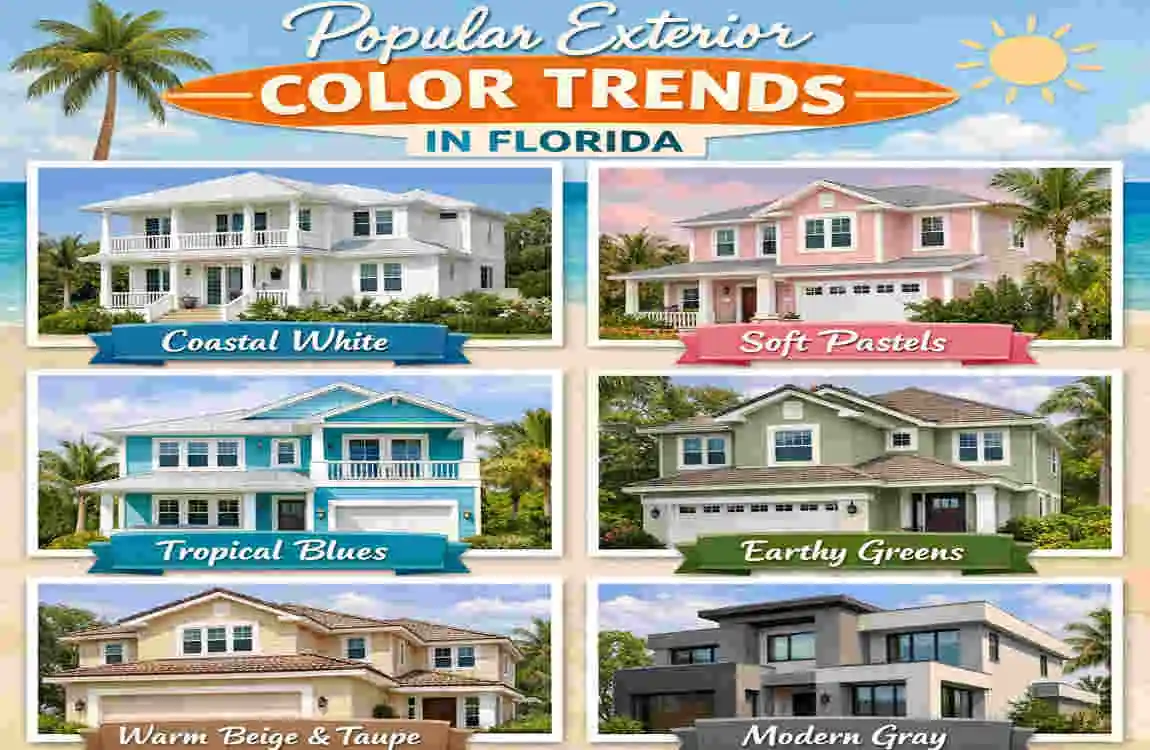
Neutrals remain some of the most popular exterior colors in Florida for a simple reason: they work. White, beige, and gray are classic choices that feel clean and flexible.
White homes look bright and crisp, especially under Florida sunlight. They create a fresh, polished look and pair well with almost any trim color. Beige and soft sand tones feel warmer and more relaxed. Gray is a good middle ground because it can look both modern and calm.
These shades also make it easier to update accents later. If you want to change your front door, shutters, or trim, a neutral exterior gives you more freedom.
Coastal-Inspired Shades
Florida is closely connected to the ocean, so it makes sense that coastal colors remain popular. Soft blues, pale aquas, seafoam greens, and sandy shades all create a light, easy feeling.
These colors work especially well for homes near the water, but they also suit inland homes that want a more relaxed look. A soft blue exterior can feel peaceful. A pale green can feel refreshing. A sand-colored home can blend beautifully with palm trees and outdoor landscaping.
The best part is that these shades feel inviting without being too strong. They give your home personality while still keeping it elegant.
Earthy and Tropical Shades
Florida also has a rich natural landscape, and some homeowners want their exterior color to reflect that. Terracotta, coral, olive green, and warm clay tones can bring a tropical, earthy feel to a home.
These colors work well when used thoughtfully. A full terracotta exterior can be bold, but a lighter version may feel warm and natural. Coral can add energy and charm. Tropical greens can connect beautifully with lush landscaping.
If you love color, these shades can help your home feel unique. The key is balance. Strong colors often work best when paired with neutral trim or softer accents.
Bold and Modern Options
Some Florida homeowners want a more modern look. In that case, darker colors like navy, charcoal, deep slate, or even black accents can create a strong and stylish appearance.
These shades can look very polished, especially on newer homes or homes with clean lines. They give a home a sleek and contemporary edge. Still, dark colors absorb more heat, so they are usually best used in moderation or in areas with good shade and high-quality paint.
A full dark exterior is not the right fit for every Florida home. However, used wisely, these colors can feel rich and sophisticated.
Accent Colors
Accent colors are where you can add personality without overdoing it. Front doors, shutters, railings, and trim are perfect places for bolder choices.
A white home with a navy door can look elegant. A beige exterior with dark bronze shutters can feel grounded. A soft gray house with a coral front door can feel cheerful and welcoming.
Accent colors are a smart way to bring life to your exterior while keeping the overall design balanced. They also let you show some style without making the home feel too busy.
Mistakes to Avoid When Choosing Exterior Colors
Common Errors Homeowners Make
Here are a few mistakes that often lead to regret:
- Ignoring the climate and choosing colors that do not hold up in strong sun or humidity.
- Picking shades that fade too quickly under Florida’s bright light.
- Using too many colors can make the home look messy rather than polished.
- Forgetting the HOA rules and painting a color that is not approved.
- Skipping paint samples and choosing a color without testing it first.
Why These Mistakes Matter
These mistakes may seem small at first, but they can create big problems later. A color that looks great in a store may look completely different outside. A bold shade might fade faster than expected. A complicated palette can distract from the home’s best features.
Taking time to avoid these issues will help you choose a color you can live with for years. A little planning now can save a lot of stress later.
Step-by-Step Guide: Choosing the Best Exterior Color for Your Florida Home
Evaluate Your Home’s Architectural Style
The style of your house should guide your color choice. A Mediterranean-style home may look best in warm earth tones, soft creams, or terracotta shades. A coastal cottage may suit pale blues or white with pastel accents. A modern home may look sharper in gray, charcoal, or crisp white.
Think about the shape of the house, the roof color, the trim, and the overall design. The goal is not to fight the home’s style. The goal is to support it.
Consider the Surroundings
Look around your home before making a final choice. Consider your landscaping, nearby homes, driveway color, roof material, and natural views. If you have many palm trees and tropical plants, a warm or coastal shade may fit beautifully.
Also, notice how your home sits in the sunlight. A color that looks soft in shade may feel much brighter in full sun. Florida light is intense, so always think about how the exterior will look during the day.
Use Paint Samples and Test Patches
This step is very important. Never choose a color only from a small sample card. Paint can look very different once it is on a large wall outside.
Test a few shades on different sides of the home. Watch them in morning light, midday sun, and evening shade. This will help you see how the color changes throughout the day.
A sample patch can save you from making an expensive mistake. It is one of the simplest and smartest steps in the whole process.
Consult a Professional or Color Expert
If you feel unsure, ask for help. A professional painter or color expert can guide you toward shades that fit your home, neighborhood, and climate.
This is especially helpful if your home has unusual architecture, strict HOA rules, or a color combination you are not sure how to balance. An expert can help you avoid common mistakes and choose a color with confidence.
Sometimes an outside opinion makes the decision much easier. You may already have a favorite, but a professional can help you fine-tune it so the final result looks even better.
Choose High-Quality Exterior Paint
Once you choose the color, do not forget the paint itself. Florida homes need a product that can handle tough weather. A Premium exterior paint will usually resist fading, cracking, mildew, and peeling better than a cheaper option.
Look for strong coverage, weather resistance, and a long-lasting finish. A better paint helps the color stay true and protects the surface beneath it. That means your home keeps its fresh look longer.
Simple Decision Checklist
- Match the color to your home style
- Check HOA rules before deciding
- Test sample patches in real sunlight
- Choose a shade that works with Florida weather
- Use high-quality exterior paint for better durability
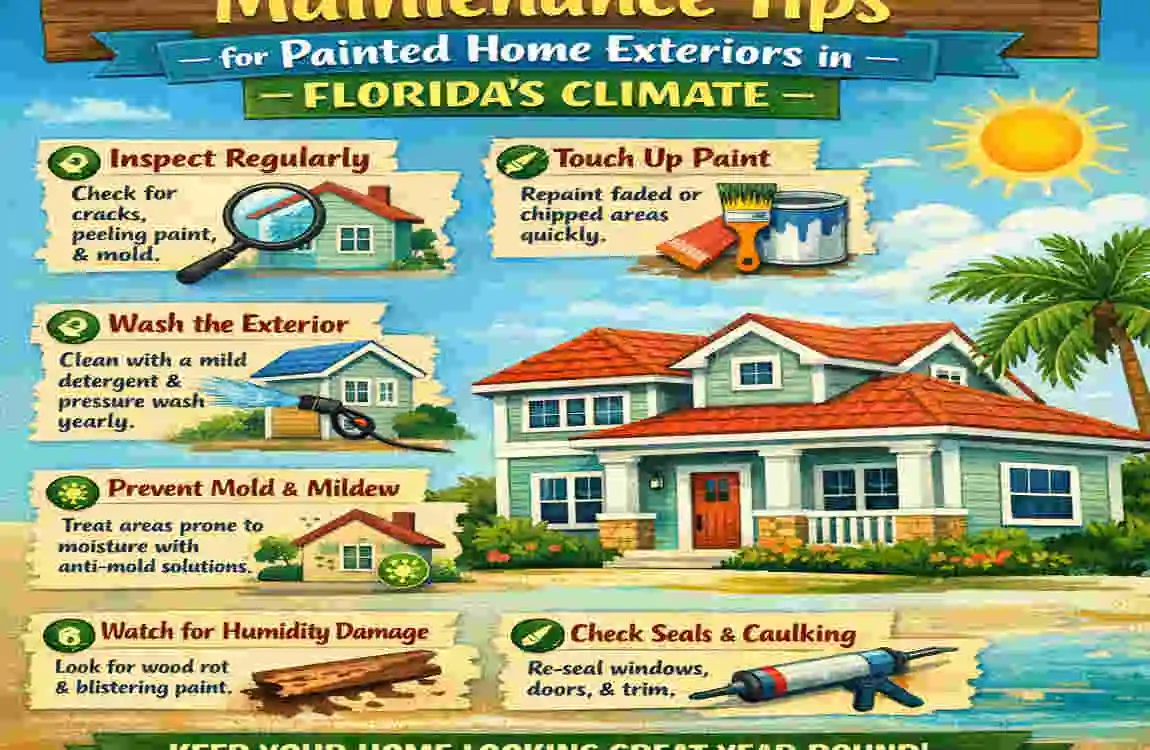
Maintenance Tips for Painted Exteriors in Florida
Regular Cleaning
Florida humidity can lead to mildew, dirt buildup, and stains on exterior walls. A gentle cleaning routine can help your paint stay brighter for longer.
Wash the surface periodically to remove dust, pollen, and mildew spots. This does not need to be complicated. Even light maintenance can make a big difference in how fresh your home looks.
Repainting Frequency
In Florida, exterior paint may need refreshing sooner than in cooler, drier states. Sun, heat, rain, and salt air all shorten paint’s lifespan over time.
How often you repaint depends on paint quality, home exposure, and color choice—lighter, high-quality paints often last longer. Homes near the coast may need more attention because salt can speed up wear.
Weather-Resistant Paints
Using weather-resistant paint is one of the best ways to protect your investment. These products are made to handle Florida’s tough conditions better than standard paint.
They can help reduce fading, peeling, and mildew growth. That means your home stays attractive and protected for longer. It also helps the color you chose look closer to what you first imagined.
Repair Chips and Cracks Promptly
Small damage can turn into bigger problems if ignored. A tiny crack or chip can let moisture in, which may lead to more peeling or surface damage.
Check your exterior regularly and fix issues promptly. This simple habit helps preserve both the paint and the structure underneath it.
FAQ: How to Choose the Best Exterior
Q: Which colour is best for the exterior of a house in Florida?
A: Light neutrals like white, cream, beige, and soft gray are often the best choices because they reflect heat and work well in Florida’s bright sun.
Q: Should I choose a light or dark exterior color in Florida?
A: In most cases, light colors are better for Florida homes. They help keep the house cooler and usually fade less noticeably than dark shades.
Q: What colors look best near the Florida coast?
A: Soft blues, seafoam greens, sandy beige, and crisp white are popular coastal choices because they match the relaxed beach style.
Q: Do HOA rules affect my exterior color choice?
A: Yes, many neighborhoods have HOA guidelines for approved colors. Always check before painting.
Q: How do I test a paint color before deciding?
A: Paint small sample patches on different sides of your home and see how they look in morning sun, afternoon light, and shade.
Q: How often should I repaint my Florida home?
A: Many Florida homes need repainting every 5 to 10 years, depending on paint quality, weather exposure, and maintenance.
Q: What paint type works best in Florida?
A: Choose UV-resistant and mildew-resistant exterior paint for better durability in heat, humidity, and rain.
| Step | Key Considerations | Tips |
|---|---|---|
| Assess Climate Impact | Choose colors that reflect heat and resist fading | Opt for lighter shades with UV-resistant paint |
| Match Architectural Style | Complement your home’s design | Research popular color palettes for your home style |
| Consider Neighborhood & HOA | Ensure harmony with surroundings and regulations | Check local HOA color rules before deciding |
| Test Paint Samples | Test colors in different lighting and weather | Paint small patches to see actual effect before full application |
| Choose Durable Paint | Use mildew- and weather-resistant exterior paint | Invest in high-quality paints designed for Florida’s climate |
| Add Accent Colors | Highlight trims, doors, and shutters | Use bold accents to add personality without overwhelming |
| Plan for Maintenance | Regular cleaning and timely touch-ups | Maintain color vibrancy and protect your investment |