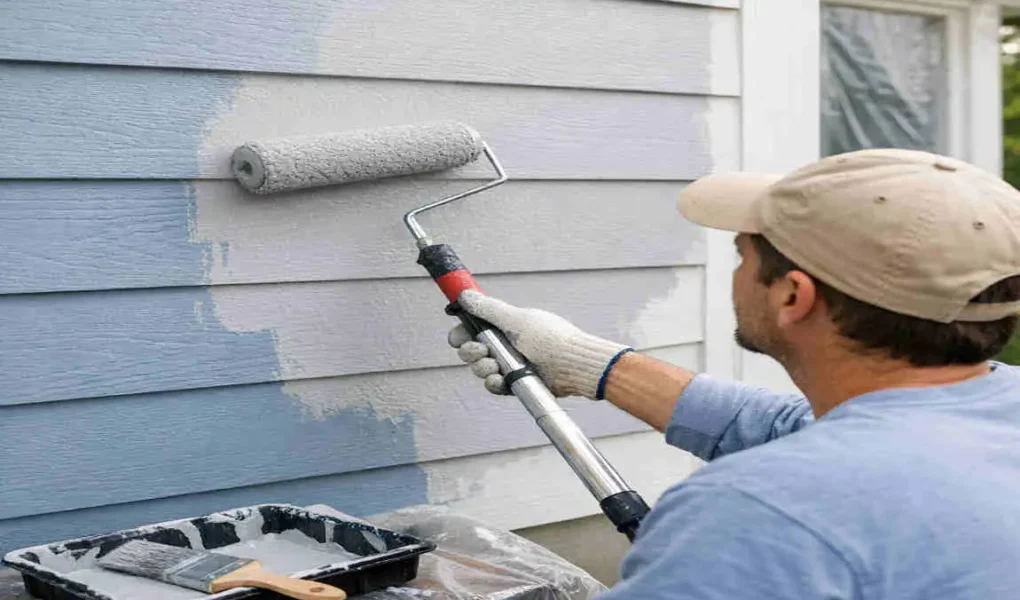
Painting the outside of your home can make a huge difference. It freshens up the look, protects the surface, and can even improve your home’s value. If you are looking for a simple way to do it yourself, learning how to paint the exterior of your house with a roller is a great place to start.
Many homeowners choose a roller because it is easy to control, affordable, and gives a smooth finish on many exterior surfaces. You do not need fancy equipment to get good results. You need the right tools, some patience, and a clear step-by-step plan.
Why Use a Roller for Exterior House Painting?
Advantages of Painting with a Roller
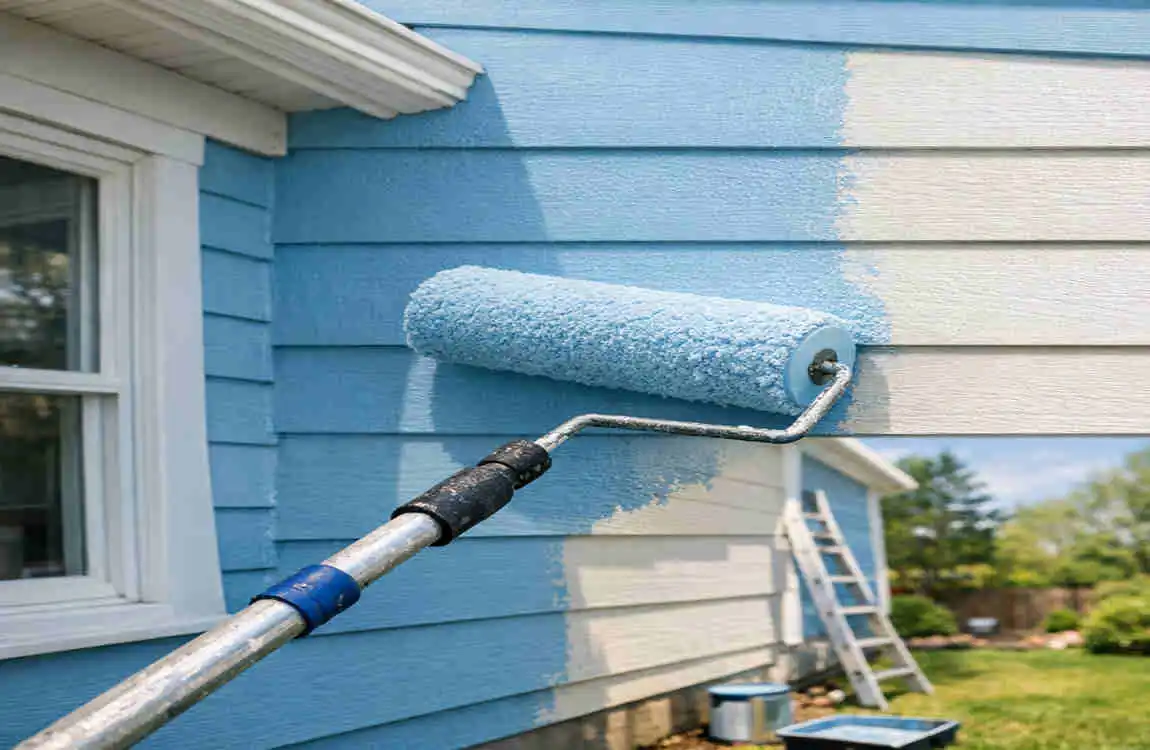
A roller is one of the easiest tools for exterior painting. It covers a large area quickly, which saves time on big walls and siding.
It also gives more even coverage than brushing alone. That means fewer streaks and a more polished finish. For many DIY projects, it is also easier on your budget than using a spray system.
Roller vs Brush vs Paint Sprayer
Each tool has its place.
- Brushes work well for trim, corners, and small details.
- Rollers are best for broad flat or lightly textured surfaces.
- Sprayers can cover fast, but they often need more prep and masking.
If you are a beginner, a roller is usually the most forgiving option. It gives you more control and helps you avoid overspray problems.
Tools and Materials You’ll Need
Essential Painting Supplies
Before you begin, gather everything you need, so the project goes smoothly.
- Exterior paint
- Paint rollers
- Roller frames
- Extension poles
- Paint trays
- Painter’s tape
- Drop cloths
- Ladder
- Safety gear
Having the right supplies ready will save time and reduce stress once you start painting.
Choosing the Right Roller Nap
The roller nap is the thickness of the fuzzy part of the roller. The right one depends on your wall texture.
- Smooth surfaces: 3/8-inch to 1/2-inch nap
- Medium textures: 1/2-inch to 3/4-inch nap
- Rough surfaces: 3/4-inch to 1-inch nap
If you use the wrong nap, the paint may look uneven or may not reach into the texture properly.
How to Prepare Your Home Exterior
Clean the Surface Properly
Preparation matters just as much as painting. Start by cleaning the surface well.
A pressure washer can remove dirt, dust, mildew, and loose debris. If you skip this step, the new paint may not stick well and could peel later.
Repair Surface Damage
Look closely at the outside walls before you paint. Fill cracks, replace damaged siding, and sand rough spots.
If you paint over damaged areas, those flaws will still show through. A smooth surface helps the final result look clean and professional.
Protect Surrounding Areas
Use painter’s tape and drop cloths to protect nearby areas.
Cover windows, doors, plants, walkways, and anything else you do not want painted. A little prep now can save a lot of cleanup later.
Choosing the Best Exterior Paint
Acrylic vs Latex Paint
Most exterior paints are either acrylic or latex-based. Both are popular, but acrylic paint often performs better outdoors because it handles weather changes well and lasts longer.
Latex paint is also a common choice and works well for many homes. The best option depends on your surface, climate, and budget.
Selecting the Right Finish
Paint finish affects both the look and the durability.
- Flat: Hides small flaws but can be harder to clean
- Satin: A good balance of soft shine and durability
- Semi-gloss: Easier to clean and often used for trim
For most exterior walls, satin is a very practical choice.
Choosing Exterior Paint Colours
Pick a colour that fits your home’s style and neighbourhood. Lighter colours can help a home feel brighter, while darker colours may create a more dramatic look.
Always test a small area first. Paint can look different outside than it does on a sample card.
How to Paint Exterior House with Roller
Prime the Surface
Primer helps paint stick better and gives you a more even finish. It is especially important for bare surfaces, repairs, stains, or major colour changes.
Load the Roller Correctly
Dip the roller into the paint tray and roll it back and forth until it is evenly coated. Do not overload it.
Too much paint can drip, making the finish messy. A lightly loaded roller is easier to control.
Start from the Top
Always begin near the top of the wall and work your way down. This helps you catch drips as you go.
Working from the top also gives the best visual flow and helps keep the finish smooth.
Paint in Small Sections
Do not try to cover a whole wall at once. Work in smaller sections so the paint stays wet and blends properly.
This makes it easier to avoid lap marks and uneven patches.
Maintain a Wet Edge
A wet edge means overlapping fresh paint before the previous section dries.
This is one of the most important tricks when learning how to paint an exterior house with a roller. It helps the finish look smooth instead of patchy.
Apply a Second Coat
Most exterior surfaces need two coats for full coverage and long-lasting protection.
The first coat builds the base. The second coat improves colour depth and gives better durability.
Allow Proper Drying Time
Do not rush the process. Let each coat dry fully before adding the next one.
Good drying time helps prevent bubbling, peeling, and streaking.
Best Painting Techniques for Smooth Results
Rolling in a “W” Pattern
A common roller technique is the W pattern. Roll the paint on in a loose W shape, then fill in the gaps.
This helps spread the paint evenly and reduces roller lines.
Avoiding Roller Marks
To keep the finish even, use steady pressure and do not press too hard.
If you overload the roller or roll too quickly, you may leave visible marks.
Applying Even Pressure
Keep your pressure light and consistent. Let the roller do the work.
Too much pressure can cause paint to be squeezed out unevenly and create streaks.
Working Around Trim and Corners
Use a brush for tight corners, edges, and trim areas. Then use the roller for the larger wall sections.
This combination usually gives the best overall result.
Common Exterior Painting Mistakes to Avoid
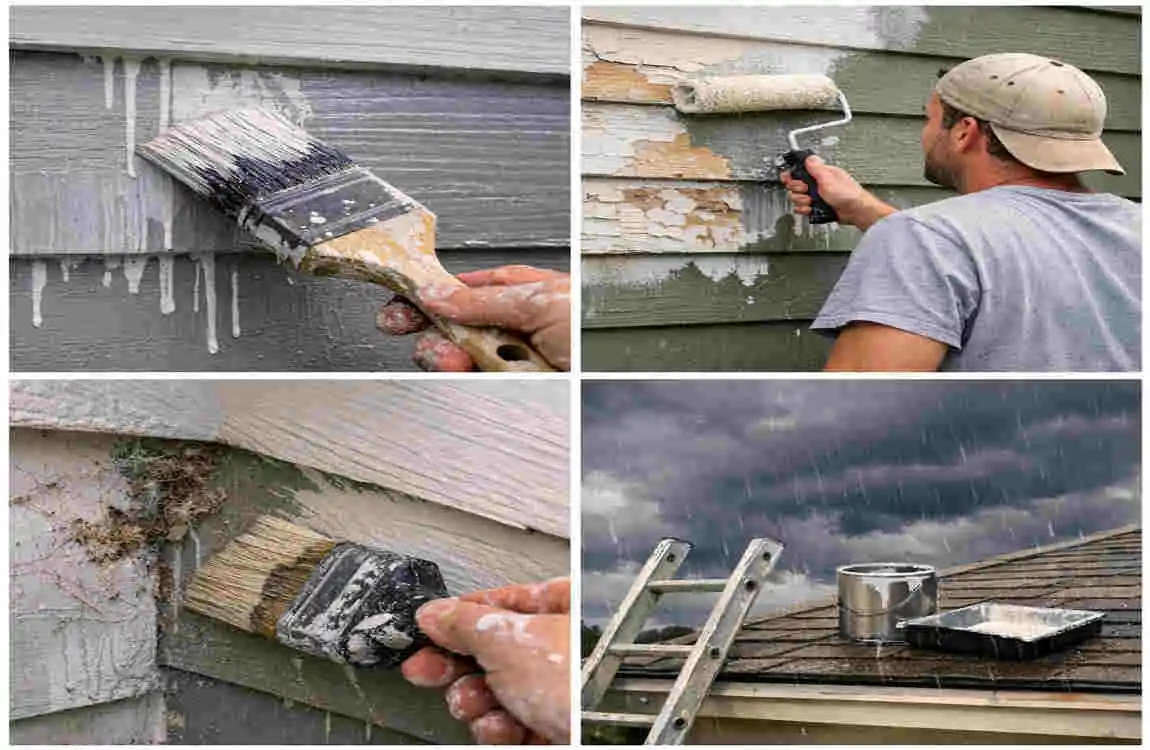
Many DIY painters run into the same problems. Try to avoid these:
- Skipping surface preparation
- Painting in direct sunlight
- Ignoring weather conditions
- Using the wrong roller nap
- Applying thick coats
- Not allowing drying time
These mistakes can lead to poor adhesion, uneven colour, and a shorter-lasting paint job.
Safety Tips When Painting Outside
Ladder Safety
Always place ladders on stable ground. Move slowly and avoid overreaching.
If you need to reach a high spot, climb down and reposition the ladder instead of stretching.
Weather Considerations
Choose a dry day with mild temperatures. Very hot, wet, or windy weather can affect how the paint dries.
The best range is usually between 50°F and 85°F with low humidity.
Protective Clothing
Wear gloves, long sleeves, and eye protection. This helps protect your skin and eyes from paint splatter and dust.
Exterior Paint Drying and Curing Times
Dry Time
Dry time is how long it takes before the surface feels dry to the touch. This may only take a few hours, depending on the product and weather.
Recoat Time
Recoat time is the wait before you can add another coat. Always check the label, because this varies by paint type.
Full Cure Time
Curing takes much longer than drying. Full cure can take days or even weeks. During this time, the paint becomes fully hardened and durable.
Exterior Paint Maintenance Tips
Cleaning Painted Surfaces
Wash the exterior gently when needed. A soft wash can remove dirt and keep the colour looking fresh.
Inspecting for Damage
Check for peeling, cracks, or fading once or twice a year. Catching small problems early makes touch-ups easier.
Touch-Up Painting
Keep some leftover paint for future repairs. Small touch-ups can help your home stay neat between full paint jobs.
Cost of Painting an Exterior House with a Roller
Expense Estimated Cost
Exterior Paint $40–$80 per gallon
Paint Roller Kit $15–$40
Extension Pole $20–$50
Primer $25–$50
Painter’s Tape $5–$15
Drop Cloths $10–$30
Total DIY Cost Approximately $200–$800
The final cost depends on your home size, paint quality, and how many supplies you already own.
Is Painting Your House with a Roller Worth It?
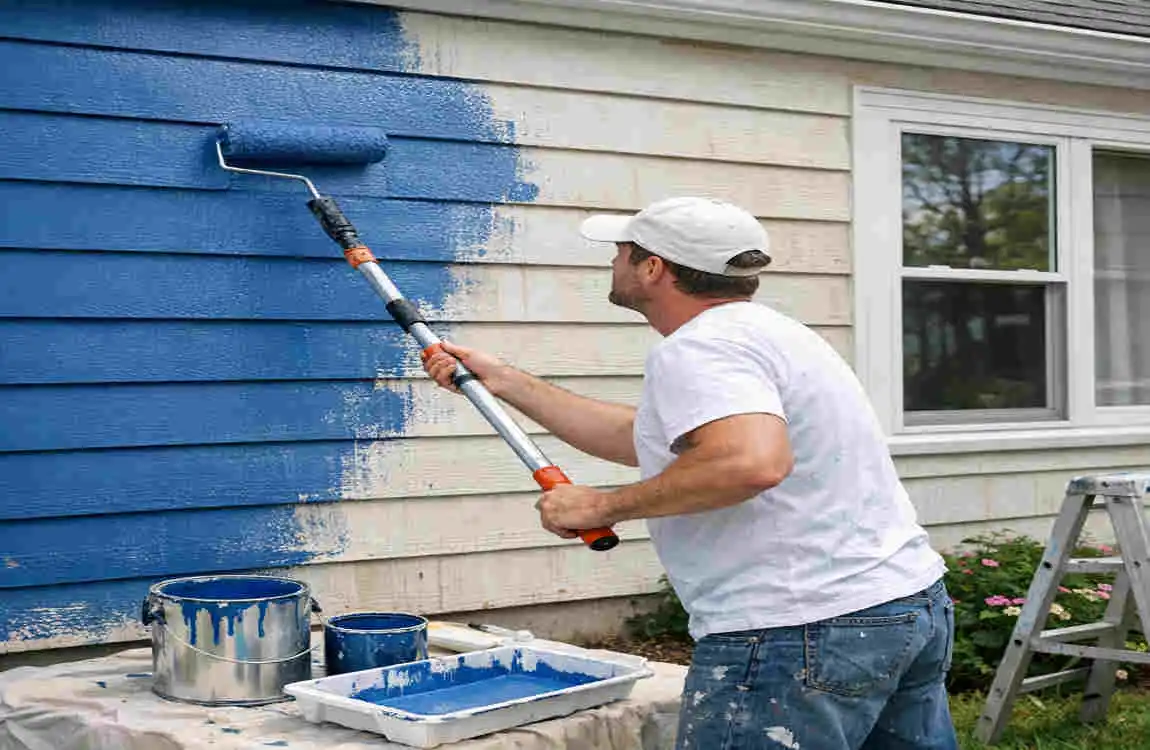
Yes, for many homes it is a smart choice. A roller is affordable, easy to use, and works well on many exterior surfaces.
It is especially useful if you want to paint siding, stucco, or masonry without buying expensive spraying equipment. If your home is very large or very detailed, a paint sprayer or professional painter may be faster. But for many DIY homeowners, a roller gives the best balance of cost and control.
Frequently Asked Questions
Can I paint the exterior of my house with a roller?
Yes, a roller works well for many exterior surfaces, especially siding, stucco, and masonry with the right roller nap.
What is the best roller nap for exterior painting?
A 3/4-inch to 1-inch nap works well for rough surfaces, while smoother siding may need a 3/8-inch to 1/2-inch nap.
Do I need primer before painting?
Primer is recommended for bare surfaces, repairs, stains, or major colour changes.
How many coats of exterior paint should I apply?
Most homes need two coats for full coverage and better durability.
What weather is best for exterior painting?
Dry days with temperatures between 50°F and 85°F and low humidity are usually best.
Can I use a roller instead of a paint sprayer?
Yes. A roller is often cheaper, easier to control, and ideal for many DIY projects.
| Topic | Details |
|---|---|
| Purpose | Refresh your home’s exterior with an even, professional-looking finish. |
| Best Surfaces | Wood siding, stucco, fiber cement, masonry, and previously painted surfaces. |
| Recommended Roller | 9-inch roller with a ¾–1-inch nap for rough surfaces; ½-inch nap for smoother siding. |
| Best Paint Type | High-quality exterior acrylic latex paint for durability and weather resistance. |
| Tools Needed | Paint roller, extension pole, roller tray, paintbrush, painter’s tape, drop cloths, ladder, and primer (if needed). |
| Surface Preparation | Clean the walls, scrape loose paint, repair cracks, sand rough spots, and let the surface dry completely. |
| Painting Technique | Roll in small sections using a “W” or “M” pattern for even paint coverage. |
| Number of Coats | Apply 2 coats for the best color, durability, and protection. |
| Ideal Weather | Paint on dry days with temperatures between 50°F–85°F (10°C–29°C) and low humidity. |