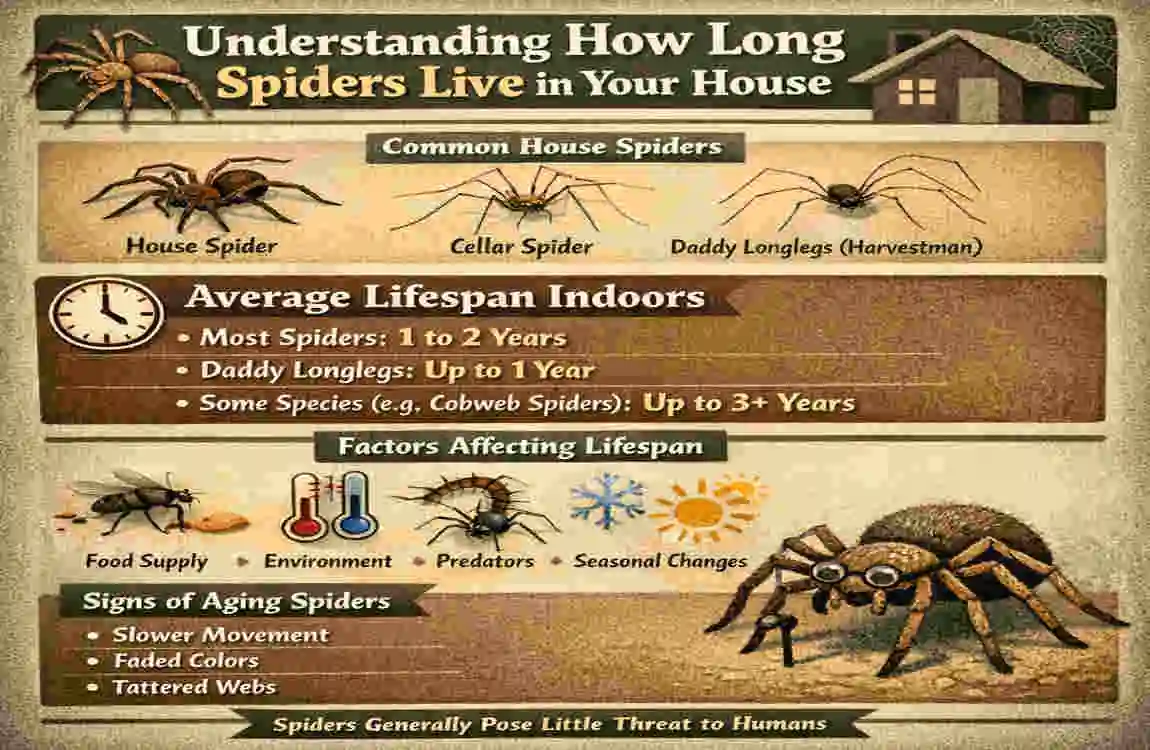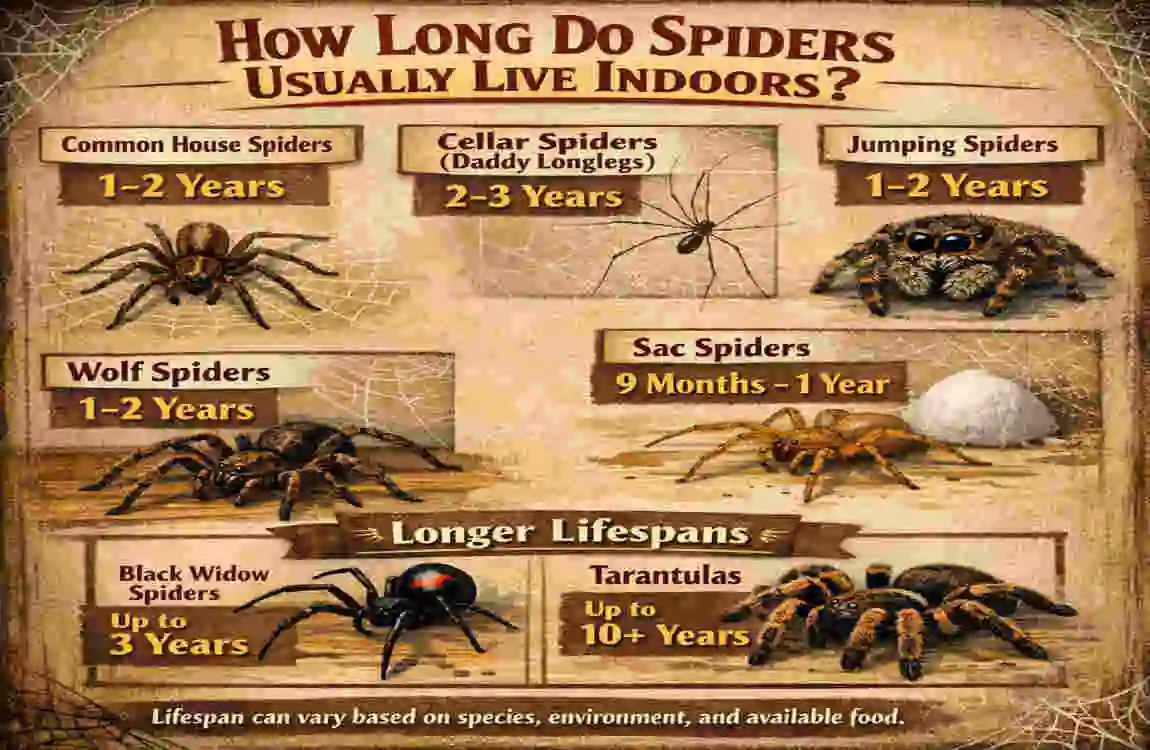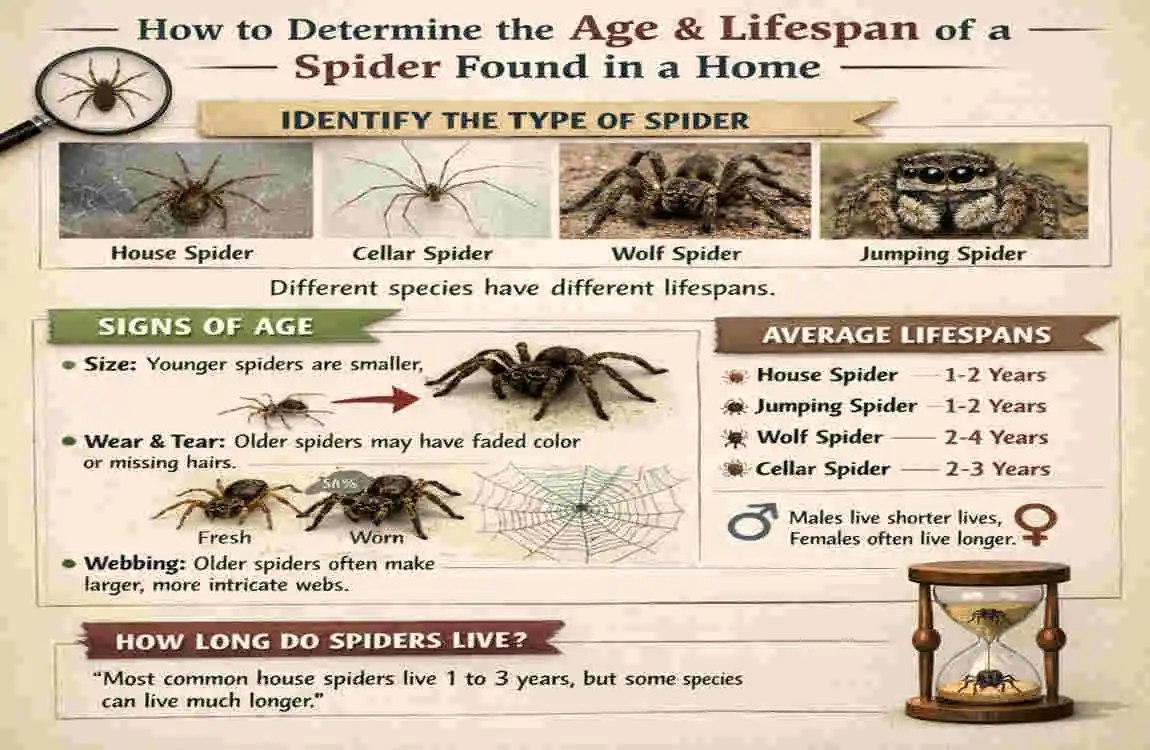
Many people assume spiders only survive for a few weeks indoors. In reality, that is often not true. Some house spiders live 1 to 2 years, while others can live 2 to 3 years or even longer if the home provides the right conditions.
That may sound unsettling at first, but it is also useful to know. Spiders do not just appear and disappear for no reason. Their lifespan indoors depends on factors such as temperature, food, moisture, clutter, and how often the space is disturbed. In other words, your home can either become a short stop or a long-term shelter.
There is also a practical side to this topic. Spiders can help control other insects, which makes them useful in a way. But if you keep noticing webs, egg sacs, or spiders in the same places, that may point to moisture, hidden insects, or cluttered corners that need attention. Understanding spider lifespan indoors helps you tell the difference between a random visitor and a longer-term indoor resident.
| Spider Type | Lifespan Indoors | Key Notes |
|---|---|---|
| Common House Spider | 1-2 years | Builds cobwebs in corners |
| Cellar Spider | 2-3 years | Thrives in humid, undisturbed spots |
| Giant House Spider | 1-3 years (females) | Prefers moderate 15-25°C |
| Brown Recluse | 2-4 years | Longer if undisturbed |
What Affects Spider Lifespan Indoors?

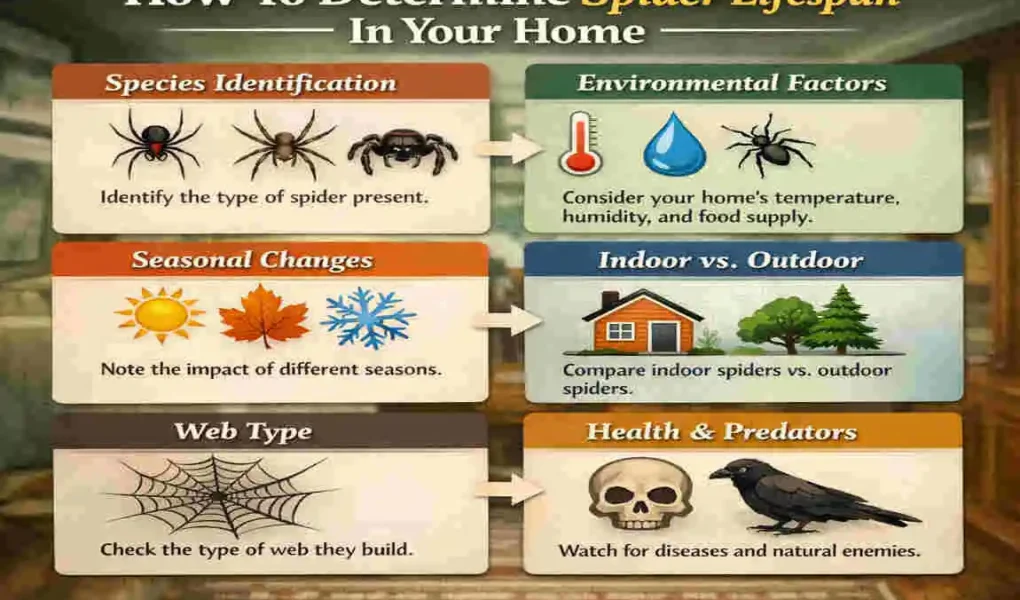
A spider’s indoor life is shaped by its environment. Your clean house may look safe and calm to you, but to a spider it is a world with food, moisture, heat, danger, and constant movement.
Temperature and Humidity
Spiders usually do better in stable indoor temperatures than they do outside. Indoors, they are not exposed to freezing nights, heat waves, or sudden storms. That alone can extend their life.
A home with steady warmth gives spiders a more predictable environment. In many houses, the temperature stays in a range that helps them stay active and survive longer. On the other hand, cold drafts, very dry rooms, or dramatic temperature changes can shorten their lifespan.
Humidity matters too. Damp spaces such as basements, crawl spaces, laundry rooms, and storage areas can be especially attractive to pests. Moist air can help some species survive longer, especially spiders that naturally prefer darker and wetter environments.
For example, cellar spiders often thrive in damp corners, garages, and basements. These spaces give them both shelter and the conditions they prefer most. In the right setting, they may live 2 to 3 years indoors.
Why this matters to you
If you keep seeing spiders in the same damp area, the room may be giving them exactly what they need. That does not mean you have a major infestation, but it does mean the environment is helping them stay.
Food Availability
Spiders do not eat crumbs, wood, or paper. They eat insects.
That means the more bugs your home has, the more likely spiders are to stay. If your house has flies, ants, gnats, moths, or small beetles, spiders have a steady food supply. In a regular environment, they can grow, reproduce, and live much longer than they would in a poor environment.
If food is limited, spiders may survive only a short time. Some can last a while without eating, but they still need prey to keep going. A spider that catches food regularly may live 1 to 3 years indoors. A spider that struggles to find prey may die much sooner.
Another important point is the difference between males and females. In many species, males tend to have shorter lives after mating. At the same time, females can live longer because they continue feeding and maintaining egg sacs. So when one spider seems to vanish quickly and another stays for months, that difference may be completely normal.
Predators and Disturbances
Outside, spiders face birds, lizards, wasps, rain, and changing weather. Indoors, many of those natural enemies disappear. That is one reason spiders can survive so well in a house.
But homes are not completely safe for them. Vacuums, sprays, shoes, brooms, pets, and even constant cleaning can cut their lives short. A spider living behind a shelf in a quiet room may survive for a long time. A spider near a busy doorway or in a place you clean every week may not last nearly as long.
This is where human activity changes the story. A spider in a low-traffic, hidden spot can remain undisturbed for months or even years. A spider in an active family room or kitchen probably has a harder time staying alive.
Table: Lifespan Influencers
Factor Shortens Lifespan Extends Lifespan
Temperature Cold drafts and sudden changes Stable warmth and sheltered areas
Humidity Very dry rooms Damp basements and humid corners
Food Few insects available Regular supply of flies, ants, or gnats
Disturbance Frequent cleaning, moving, or vacuuming Quiet, undisturbed corners
Habitat Open, exposed spaces Cracks, storage areas, and hidden spots
Common House Spiders and Their Lifespans
Not all house spiders are the same. Some are tiny and harmless. Others are larger or more noticeable. Their indoor lifespan can also vary a lot.
Common House Spider
The common house spider is one of the most familiar indoor spiders. It is often brownish, small to medium in size, and known for building messy webs in corners, along walls, or near ceilings.
Its typical indoor lifespan is around 1 to 2 years. In ideal clean homes, females may live a bit longer, sometimes approaching 3 years. These spiders are usually quiet, useful, and not aggressive.
They often stay near places where insects gather. That means you may see them in kitchens, storage rooms, basements, and around lights.
If you are wondering whether the same spider has been in your house for months, the common house spider is a likely candidate. They are excellent at finding hidden corners and staying out of sight.
Cellar Spider
Cellar spiders are often called daddy longlegs in some areas. However, that name can confuse because it’s also used for other creatures. These spiders have thin legs, delicate bodies, and a habit of hanging upside down in webs.
They often live in damp, quiet places such as basements, cellars, garages, and laundry areas. Indoors, they may survive 2 to 3 years under the right conditions.
Cellar spiders may look fragile, but they are surprisingly resilient. Their thin bodies can make them seem weak, yet they adapt well to indoor spaces where moisture and insects are available.
If you see them often in the same dim area, it is usually a sign that the space provides exactly what they need.
Brown Recluse
The brown recluse is a species people often worry about because it can be medically significant. It is not a spider to ignore, especially if you live in an area where it is common.
In indoor settings, it may live 2 to 4 years if it remains hidden and undisturbed. That makes it one of the longer-lived house spiders in the right conditions.
Brown recluses prefer quiet hiding spots such as closets, storage areas, boxes, attics, and unused spaces. They are shy and tend to avoid people, which is one reason they can go unnoticed for a long time.
Because they can be dangerous, you should be cautious if you suspect one is inside your home. Do not try to handle it bare-handed.
Black Widow
The black widow is another spider people recognize quickly because of its shiny black body and distinctive red marking. It prefers warm, dark, low-traffic places such as garages, storage areas, sheds, and corners that are not disturbed much.
Indoors, black widows may live about 1 to 3 years. Their lifespan depends on food, shelter, and how often they are disturbed.
Like the brown recluse, this is not a spider you should casually handle. It is best to keep your distance and use safe removal methods if one appears in your home.
Giant House Spider
The giant house spider is large and fast, often startling people because of its size and speed. Despite its intimidating appearance, it is usually not dangerous to humans.
Females may live around 2 to 3 years, while males often live closer to 1 year. The difference is common in many spider species.
These spiders can move quickly, which is why many people notice them right away. They often live in basements, sheds, or other hidden indoor spaces where they can build large webs and catch insects.
Table: Top 5 Indoor Spiders Lifespan Comparison
Spider Type Average Indoor Lifespan Key Traits Danger Level
Common House Spider 1 to 2 years Small, brown, web-building Low
Cellar Spider 2 to 3 years Long legs, thin body, messy webs Low
Brown Recluse 2 to 4 years Hidden, light brown, shy High
Black Widow 1 to 3 years Shiny black, red marking, dark spaces High
Giant House Spider 1 to 3 years Large, fast runner Low
What this means for you
If you keep asking how long do spiders live in your house, remember that the answer depends heavily on the species. A cellar spider in a moist basement may outlive a common house spider in a bright, active room. A brown recluse hidden in storage may survive longer than you expect. The same is true for black widows in dark, quiet corners.
Spider Life Cycle Stages Indoors

To understand house spider lifespan, it helps to know how spiders grow.
A spider does not enter your clean home as a fully formed adult. It starts small, goes through growth stages, and then eventually reaches maturity. Once mature, it focuses on feeding, mating, and surviving as long as it can.
Egg Sac to Spiderling
The life cycle usually begins in an egg sac. A single sac may hold dozens or even hundreds of tiny spiderlings.
When the eggs hatch, the spiderlings are tiny and vulnerable. They spread out, look for food, and begin growing. In a stable indoor environment, this early stage can progress quickly because the spiderlings do not experience weather changes as outdoor spiders do.
If your home has a steady insect supply and quiet corners, spiderlings may survive well. This is one reason a small spider problem can turn into a larger one over time.
Growing to Adult
As spiders grow, they shed their outer skin several times. This process is called molting. Each molt helps them get bigger and stronger.
The time it takes to go from spiderling to adult can vary, but indoors it may take only 1 to 3 months for some species under good conditions. That is relatively fast compared with the overall lifespan.
Once a spider becomes an adult, it often settles into a pattern. It hunts, waits, builds webs, hides, or mates depending on the species.
Reproduction and Lifespan
For many spiders, adulthood changes everything. Males often spend more energy searching for mates and may die not long after reproduction. Females usually live longer because they continue producing and guarding egg sacs.
This is one reason why two spiders of the same species may not live the same amount of time. Their roles in the life cycle differ, which affects how long they survive indoors.
A simple way to think about it
- Spiderlings grow quickly when food and shelter are available.
- Adults live longer if they can stay hidden and undisturbed.
- Females often outlive males.
- Harsh cleaning or lack of food shortens the cycle.
So if you are seeing spiders of different sizes in the same house, you may be seeing different stages of the same life cycle, not just random visitors.
Signs of Long-Term Spider Residents
How can you tell whether a spider has just wandered in or has actually lived in your house for a long time?
There are a few clear signs to watch for.
Persistent Webs
If webs keep appearing in the same corner, under furniture, behind curtains, or near ceilings, that is a strong sign of long-term spider activity. A spider that has been indoors for a while usually returns to familiar areas and rebuilds its web.
Fresh webs may look clean and slightly structured. Older webs may look dusty, tangled, or layered with debris. If you keep clearing webs and they return quickly, that area is likely becoming a spider home.
Molted Skins
Spiders shed their skins as they grow. These shed skins can sometimes be found near webs, in corners, or inside hidden spaces.
A molted skin is a strong clue that the spider is not just passing through. It has likely been in the area long enough to grow and change size.
Egg Sacs
Egg sacs are another major sign. If you notice round or silk-covered sacs tucked in corners, behind furniture, or near webs, a spider may be nesting nearby.
That is important because egg sacs can lead to more spiderlings. One spider can become many if the space stays undisturbed.
Repeat Sightings in the Same Area
If you keep spotting spiders in basements, attics, closets, or behind appliances, the location may be supporting long-term survival. These places are often dark, quiet, and full of hiding spots.
What a fresh web means
A fresh web alone does not always indicate a serious problem. But if fresh webs, egg sacs, and shed skins keep showing up together, the spider may have been there much longer than you thought.
Myths vs. Facts About House Spiders
There are many myths about spiders, and some of them make people more afraid than they need to be.
Myth: Spiders only live for a few weeks indoors
Fact: Many house spiders live 1 to 3 years indoors, depending on the species and the conditions.
This is one of the most common misunderstandings. People often notice a spider once, assume it is new, and then get surprised when a similar one appears months later.
Myth: All spiders are dangerous
Fact: Most clean house spiders are harmless and help control other insects.
That does not mean you should grab one with your hand or ignore risky species. It simply means that the average spider in your home is not trying to hurt you.
Myth: If you see one spider, your home is infested
Fact: One spider does not always mean a large problem.
A single spider may have wandered in by accident. But repeated sightings in the same space can point to a longer-term issue, especially if there are webs, egg sacs, or lots of insects around.
Myth: Cleaning once will permanently remove spiders
Fact: Cleaning helps a lot, but spiders may return if the conditions stay favorable.
If your home still has insects, cracks, moisture, and clutter, new spiders may keep showing up.
Prevention and Safe Removal

If your goal is not just to know how long do spiders live in your house, but to make sure they do not stay, prevention matters a lot.
The good news is that you do not need complicated steps. Simple habits can make your home less attractive to spiders.
Natural Deterrents
Many homeowners start with natural methods. These may not solve everything, but they can help reduce spider activity.
You can try:
- Sealing cracks and gaps around windows, doors, and baseboards
- Reducing other insects, since spiders follow food
- Keeping storage areas tidy
- Using mild deterrent sprays in problem spots
- Vacuuming webs regularly
- Improving airflow in damp rooms
Peppermint oil and vinegar sprays are commonly mentioned as deterrents. Some people find them helpful, especially when used with sealing and cleaning. The key is to use them as part of a larger plan, not as your only defense.
Reduce the Food Supply
This is one of the most effective ways to keep spiders away.
If spiders come for insects, then fewer insects mean fewer reasons for spiders to stay. Use window screens, keep trash sealed, clean up food messes, and repair leaks that may attract bugs.
A spider-friendly house is often also an insect-friendly house. If you lower bug activity, you naturally make the home less inviting.
Clean the Places Spiders Love
Focus on the places spiders like most:
- Corners
- Behind furniture
- Closets
- Basements
- Attics
- Garages
- Under sinks
- Around windows
You do not need to deep-clean every day, but you should stay consistent. Even a simple weekly routine can make a real difference.
When to Call Professionals
Sometimes the problem goes beyond a few harmless spiders.
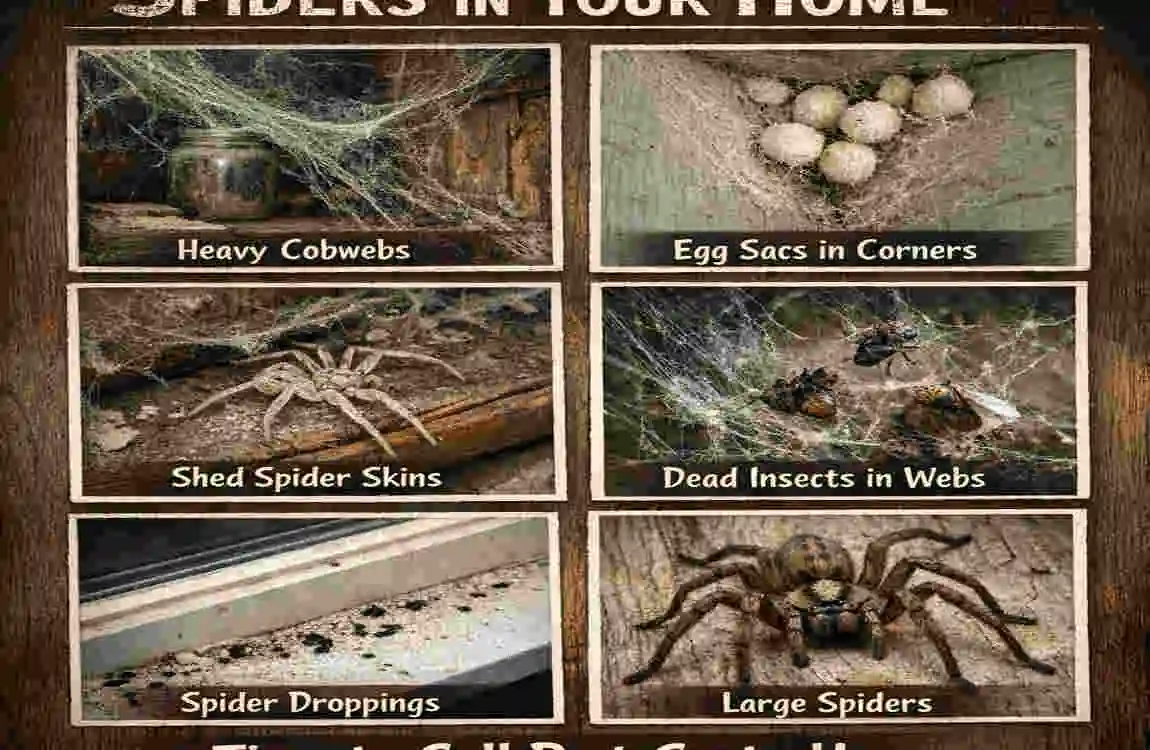
You may want professional help if:
- You keep seeing spiders in multiple rooms
- You suspect a venomous species
- You find several egg sacs
- Your basement or attic seems full of webs
- Spiders keep returning despite regular cleaning
A professional can help identify the species, find hidden entry points, and reduce the chance of repeat activity. That is especially helpful if you are dealing with a long-term issue or a species that could pose a health risk.
7-Day Cleanup Plan
If you want a simple starting point, here is a basic one-week plan.
- Day 1: Vacuum webs and egg sacs Remove obvious webs from corners, ceilings, and hidden areas.
- Day 2: Check for cracks and entry points Look at windows, baseboards, vents, and door frames.
- Day 3: Declutter storage areas Stack boxes neatly and remove unused items where spiders hide.
- Day 4: Reduce indoor insect activity. Take out the trash, clean up crumbs, and fix moisture problems.
- Day 5: Focus on damp spaces Pay special attention to basements, laundry rooms, and bathrooms.
- Day 6: Recheck hidden corners Look under furniture and behind appliances.
- Day 7: Use a light deterrent approach Apply a safe treatment where needed and monitor the area.
This kind of plan won’t eliminate every spider overnight, but it helps you regain control.
Practical Tips for Homeowners
If you want to lower indoor spider survival, keep these ideas in mind:
- Do not leave clutter in corners
- Fix leaks quickly
- Keep screens and door seals in good shape
- Vacuum regularly
- Store items in sealed containers
- Reduce insects, not just spiders
- Watch basements, garages, and attics first
The biggest mistake people make is focusing only on the spider they see. The better question is: Why is the spider comfortable here in the first place?
That mindset helps you solve the actual problem.
Frequently Asked Questions
How long do spiders live in your house on average?
Most house spiders live about 1 to 2 years indoors, though some species can live 2 to 3 years or longer in stable conditions.
Can spiders live 7 years indoors?
It is rare, but under ideal conditions some spiders may survive for a long time. For most common house spiders, that is not typical.
Do male and female spiders live the same amount of time?
Usually, no. Males often live shorter lives, especially after mating. Females often live longer when they have access to food and shelter.
Why do spiders keep showing up in my house?
They usually come because of food, moisture, shelter, or entry points. If insects are present, spiders often follow.
Are spiders in the house a sign of dirtiness?
Not always. Spiders can live in clean homes too, especially if there are insects, damp areas, or hidden spaces.