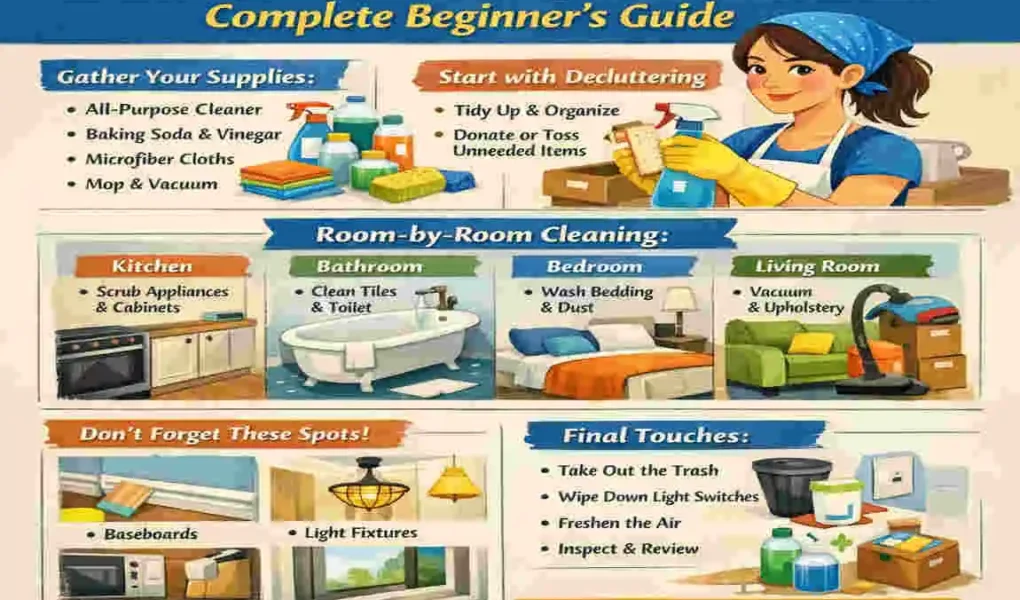
If you want to learn how to deep clean your house the easy way, you are in the right place. Deep cleaning goes beyond the usual quick tidy-up. It means cleaning the hidden spots, the built-up dirt, and the areas people often forget.
Regular cleaning keeps your home looking neat. Deep cleaning makes it truly clean. It helps improve hygiene, freshens the air, and makes your furniture and appliances last longer.
What Is Deep Cleaning a House?
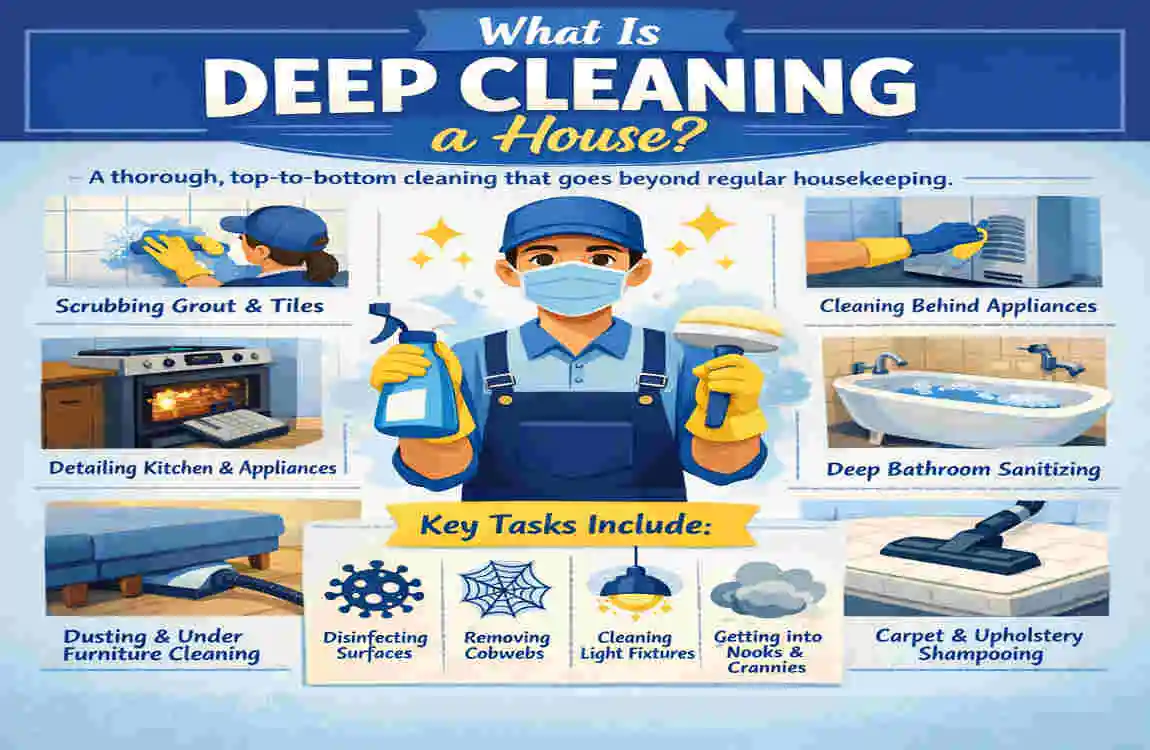
Deep Cleaning vs. Regular Cleaning
Regular cleaning covers the everyday jobs. You sweep, wipe, mop, and put things away. It keeps the home under control.
Deep cleaning goes further. It means cleaning behind furniture, under appliances, on walls, in corners, and other places that collect dust and grime over time. You do it less often, but it makes a big difference.
Why Deep Cleaning Matters
Deep cleaning is important because it helps keep your home healthier. It can reduce dust, allergens, and germs.
It also improves indoor air quality. If your home feels stuffy or dusty, deep cleaning can help a lot. Plus, clean furniture, floors, and appliances usually last longer.
How to Prepare Before You Deep Clean Your House
Gather Essential Cleaning Supplies
Before you start, get everything ready. That way, you do not waste time running around later.
You will likely need:
- Microfiber cloths
- Vacuum cleaner
- Mop and bucket
- Scrub brushes
- All-purpose cleaner
- Glass cleaner
- Baking soda
- White vinegar
- Rubber gloves
Declutter Every Room First
Cleaning is much easier when clutter is out of the way. Pick up clothes, toys, papers, and random items before you begin.
This step helps you clean faster and more thoroughly. It also makes each room feel calmer right away.
Create a Room-by-Room Cleaning Plan
Do not try to clean everything at once. Make a simple plan and work one room at a time.
This keeps you focused and helps you avoid feeling overwhelmed. A plan also makes it easier to see progress.
How to Deep Clean House Step by Step
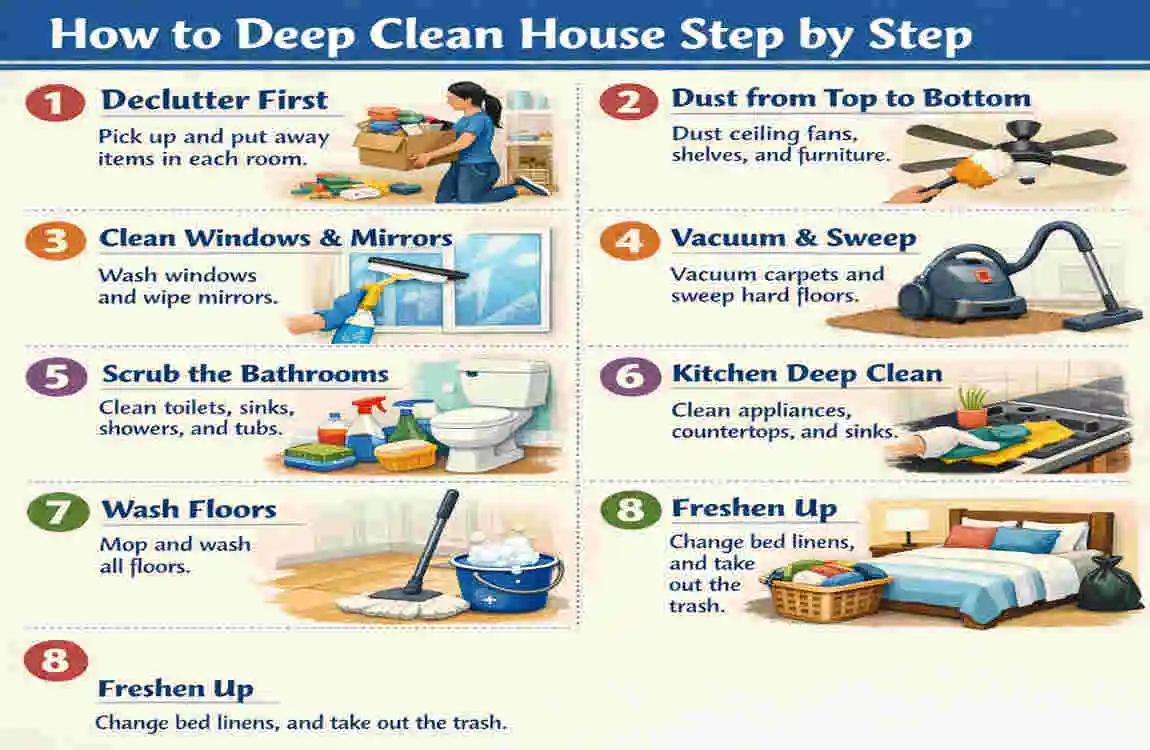
Dust from Top to Bottom
Always start high and move lower. Dust ceiling fans, light fixtures, shelves, and picture frames first.
This way, dust falls onto areas you have not cleaned yet. Then you can vacuum or wipe it up later.
Clean Windows and Mirrors
Use a glass cleaner or a vinegar-water mix. Wipe with a microfiber cloth for a streak-free finish.
Do not forget the corners and edges. Fingerprints and dust often build up there.
Vacuum Thoroughly
Vacuum carpets, rugs, furniture, and corners. Move slowly so the vacuum can pick up more dirt.
If possible, lift small furniture and vacuum under it too. That hidden dust can build up quickly.
Mop All Hard Floors
After vacuuming, mop hard floors with a cleaner that suits your floor type. Use only a small amount of water so the floor dries faster.
Try to keep foot traffic off wet floors until they are fully dry. This helps avoid streaks and slips.
Sanitize Frequently Touched Surfaces
Wipe down door handles, light switches, remote controls, and cabinet pulls. These are touched often and can pick up germs quickly.
This is a small step, but it makes your home feel much fresher and cleaner.
Room-by-Room Deep Cleaning Checklist
Living Room
Focus on:
- Dusting furniture
- Vacuuming upholstery
- Cleaning electronics
- Washing curtains if needed
This room often collects dust because people spend so much time there.
Kitchen
The kitchen needs extra attention because it deals with food and grease.
Clean:
- Cabinets
- Backsplash
- Sink
- Refrigerator
- Countertops
- Microwave
- Floors
Do not forget the handles and switches too. They get touched a lot.
Bathroom
Bathrooms need deep cleaning often because of moisture and germs.
Scrub the toilet, shower, tiles, sink, and mirrors. Pay attention to the corners, grout, and the area around the base of the toilet.
Bedroom
Bedrooms should feel calm and fresh. Wash bedding, rotate the mattress, dust furniture, and organize closets.
If you have space under the bed, clean there too. Dust often hides in that area.
Laundry Room
Clean the washing machine, wipe shelves, and remove dryer lint. This helps the room stay safe and neat.
Entryway
The entryway is the first thing people see. Clean doors, wash mats, and organize shoes so the area feels welcoming.
Deep Cleaning Checklist
AreaTasks
Kitchen Cabinets, fridge, oven, sink, counters
Bathroom Toilet, shower, tiles, mirror, sink
Living Room Dust, vacuum, electronics, furniture
Bedroom Bedding, mattress, closet, furniture
Floors Vacuum, mop, corners
Windows Glass, frames, tracks
Common Mistakes to Avoid While Deep Cleaning
Cleaning Without Decluttering
If the room is crowded, cleaning takes longer and feels harder. Always clear the space first.
Using Too Much Cleaner
More cleaner does not always mean better results. Too much can leave sticky residue or make surfaces dull.
Forgetting High-Touch Areas
People often miss items like switches, remotes, and handles. These should be cleaned regularly.
Ignoring Air Vents
Dust can collect in vents and affect air quality. Wipe them or vacuum them as part of your routine.
Cleaning Rooms Randomly
Jumping from room to room wastes time. A set order keeps you organized and saves energy.
Best Natural Cleaning Solutions
Baking Soda
Baking soda is great for scrubbing and removing odors. It works well in sinks, tubs, and even on some stained surfaces.
White Vinegar
Vinegar helps cut through grime and hard water spots. It is especially useful for glass and some kitchen areas.
Lemon
Lemon gives a fresh smell and helps with light cleaning. It works nicely on greasy surfaces and for deodorizing.
Mild Dish Soap
This is a simple and effective cleaner for many surfaces. Mix a little with water for a gentle cleaning solution.
Hydrogen Peroxide
Use this carefully and only where appropriate. It can help disinfect certain areas, but always test first.
How Often Should You Deep Clean Your House?
Weekly Tasks
Some jobs should happen every week, like vacuuming, mopping, wiping counters, and cleaning bathrooms.
Monthly Tasks
Once a month, deep-clean areas such as baseboards, vents, windows, and appliances.
Seasonal Deep Cleaning
A full seasonal clean is a good time to tackle closets, storage spaces, behind furniture, and other forgotten spots.
Annual Cleaning Tasks
Once a year, try to handle bigger jobs like washing curtains, cleaning mattresses, and going through old items.
Time-Saving Tips for Deep Cleaning
Use these tips to make the work easier:
- Follow a checklist
- Clean one room at a time
- Work from top to bottom
- Use microfiber cloths
- Keep supplies nearby
- Involve family members
- Set a timer for each room
These small habits can save a lot of time and stress.
When Should You Hire Professional Deep Cleaning Services?
Moving In or Out
If you are moving, professional cleaning can save time and help the home feel fresh and ready.
After Renovation
Dust from repairs can spread everywhere. A professional team can handle the cleanup faster.
Before Hosting Guests
If you are short on time before a big visit, outside help can make a difference.
Large Homes or Limited Time
Sometimes the house is too big, or your schedule is too full. In that case, hiring help can be the smart choice.
Frequently Asked Questions
How do you deep clean a house for beginners?
Start with one room, gather your supplies, declutter first, and clean from top to bottom.
What is the correct order to deep clean a house?
A good order is to dust, clean windows, vacuum, mop, and then sanitize surfaces.
How long does it take to deep-clean an entire house?
It depends on the size of the home, but it can take several hours or even a full day.
What supplies do I need to deep-clean a house?
You will need cloths, a vacuum, a mop, brushes, cleaners, gloves, baking soda, and vinegar.
How often should I deep clean my home?
Most homes benefit from deep cleaning every few months, plus smaller weekly and monthly tasks.
Can I deep clean my house in one day?
Yes, if the home is small and you stay organized, but larger homes may need more time.
| Topic | Details |
|---|---|
| What Is Deep Cleaning? | A thorough cleaning process that removes dirt, dust, stains, and germs from every part of the home, including hard-to-reach areas. |
| Purpose | Improves hygiene, indoor air quality, and the overall appearance of your home. |
| Best Time to Deep Clean | Every 3–6 months, during seasonal changes, before moving in/out, or after renovations. |
| Main Areas to Clean | Kitchen, bathrooms, bedrooms, living room, laundry room, windows, floors, and storage spaces. |
| Essential Cleaning Supplies | Microfiber cloths, vacuum cleaner, mop, bucket, scrub brushes, disinfectant, all-purpose cleaner, baking soda, vinegar, rubber gloves, and trash bags. |
| Key Tasks | Dust surfaces, wash windows, clean baseboards, disinfect high-touch areas, scrub bathrooms, clean kitchen appliances, vacuum upholstery, and mop floors. |
| Average Time Required | 4–12 hours for an average-sized home, depending on its size and condition. |