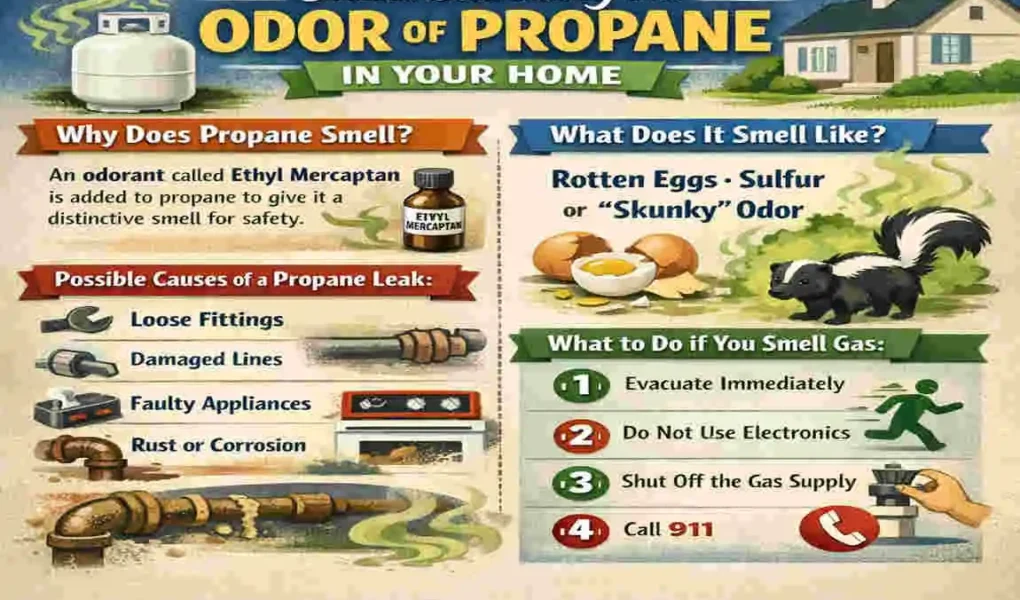
Propane is a common fuel in many homes, especially for stoves, water heaters, furnaces, and outdoor grills. It works well and is very useful, but it also needs careful handling. The most important thing to know is that propane is naturally odorless. That means the smell people notice is intentionally added to warn you about a leak.
| Aspect | Details |
|---|---|
| What propane smells like | Rotten eggs, sulfur, skunk-like, strong chemical odor |
| Why it has a smell | Odorant (ethyl mercaptan) is added for leak detection |
| Smell strength indoors | Stronger in closed spaces, weaker in ventilated areas |
| Main danger sign | Sudden or persistent gas-like odor |
| Common confusion | Sewer gas, rotten food, or electrical burning smell |
| Health symptoms | Headache, dizziness, nausea, fatigue |
| Immediate action | Leave the house and avoid using electrical devices |
| Leak sources | Stoves, heaters, gas lines, propane tanks |
| Safety risk | Highly flammable and potentially explosive |
| Prevention | Regular inspections and gas detectors |
If you have ever wondered what propane smells like in a house, the short answer is that it often smells like rotten eggs, sulfur, skunk spray, or a strong chemical odor. That smell should never be ignored.
What Does Propane Smell Like in a House?
The usual smell
Most people describe propane as a sharp, unpleasant smell that stands out right away. It may remind you of rotten food, sulfur, or even a skunk. The odor is meant to be easy to detect because it serves as a safety warning.
Why does propane have a smell
Propane itself does not smell. A special odor is added so leaks can be detected quickly. This added scent helps protect you and your family from dangerous buildup inside the home.
How the smell can change indoors
Inside a closed room, the smell may feel stronger and more intense. In a well-ventilated area, it may seem weaker or come and go. Even a faint smell should be taken seriously.
Signs You May Have a Propane Leak
Smell-based warning signs
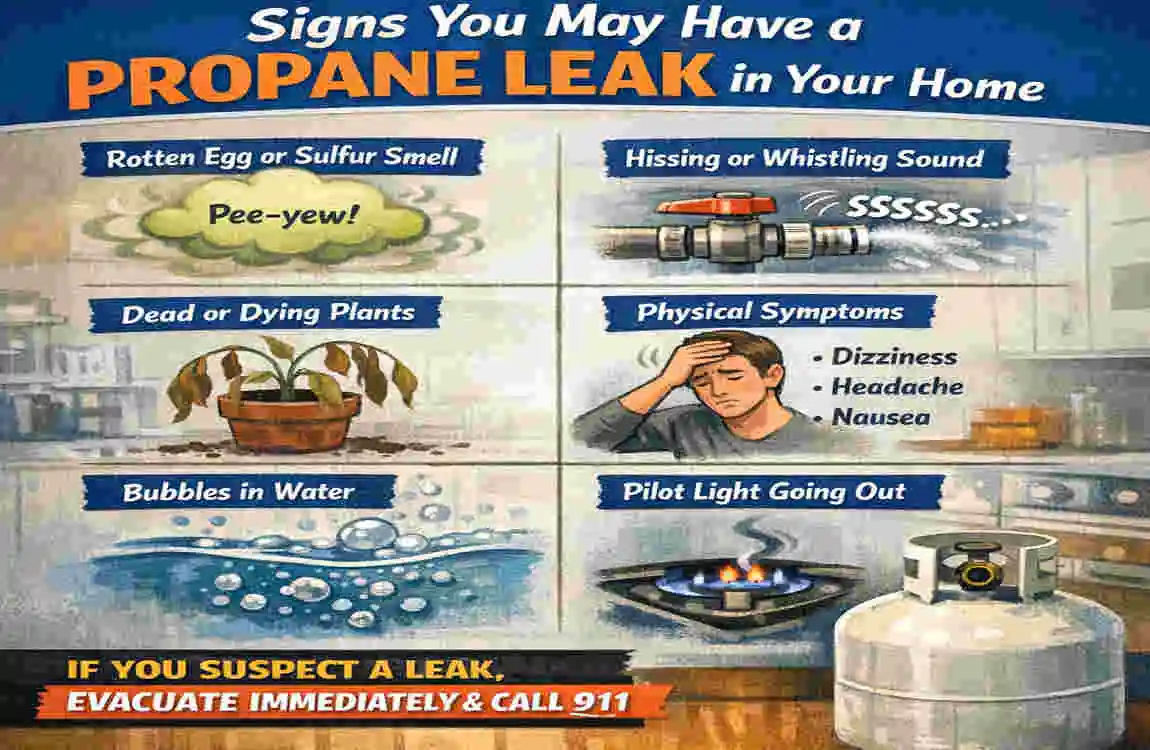
A sudden rotten egg or sulfur smell near an appliance, gas line, or tank is a clear warning sign. If the odor appears out of nowhere, treat it as a possible leak.
Other signs to notice
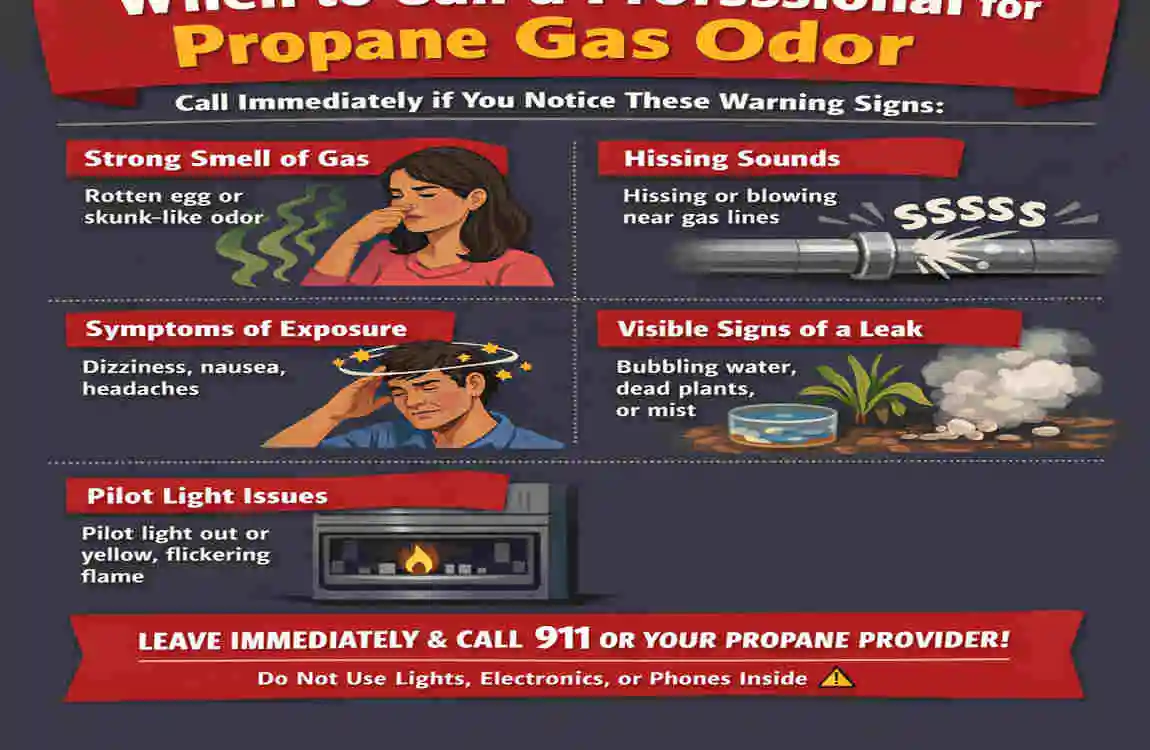
A propane issue can also show up through headaches, dizziness, nausea, tiredness, or unusual pet behavior. You may also hear a hissing sound or notice a weak flame on a stove or heater.
How Dangerous Is It?
A propane smell indoors can be dangerous because propane is highly flammable. Even a small leak can become serious if gas gathers in a closed space. A spark, switch, flame, or electrical device can trigger a fire or explosion.
What to Do If You Smell Propane
If you smell propane in your house, act fast and stay calm.
- Do not turn the lights on or off
- Do not use matches, lighters, or appliances
- Leave the house right away
- Call your propane supplier or emergency services
- Do not go back inside until a professional says it is safe
Common Odors People Confuse with Propane
Odor: What It May Mean
Rotten eggs Possible propane leak
Sewer smell Plumbing or drain issue
Burning plastic Electrical problem
Musty smell Moisture or mold
How to Prevent Problems
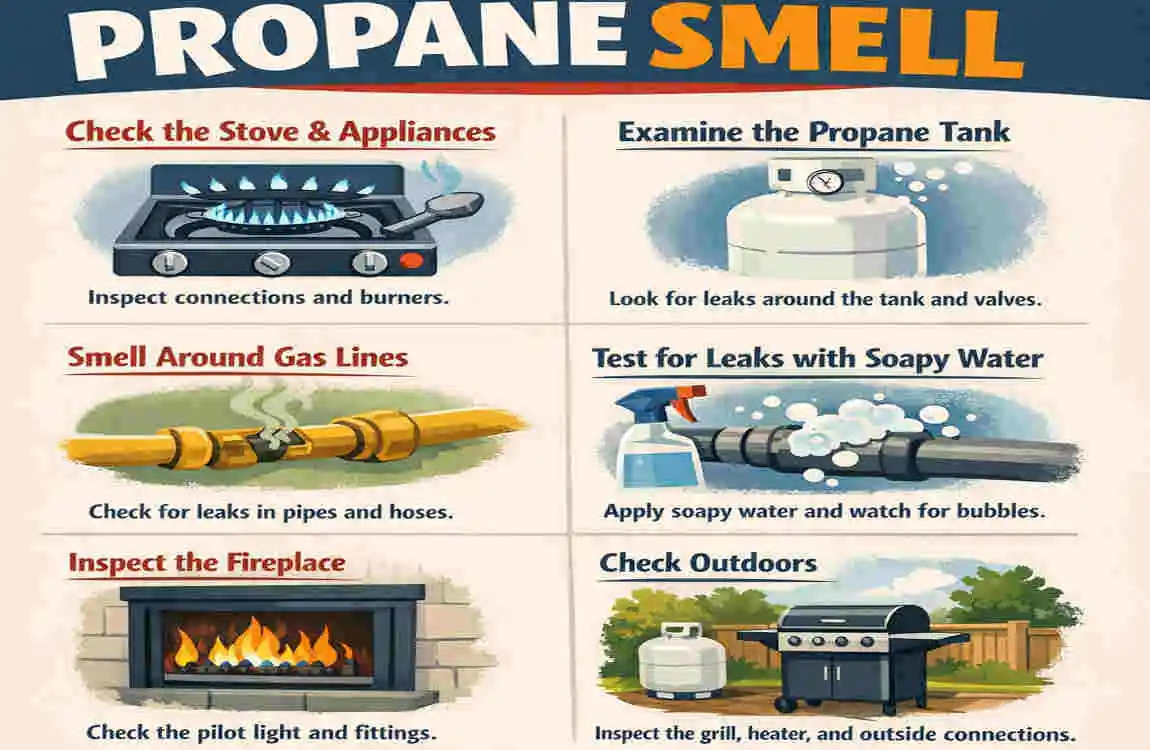
Regular maintenance can help reduce the risk of leaks. Have appliances checked, inspect hoses and fittings, and use gas detectors if possible. It is also smart to keep your home well ventilated and avoid trying to repair gas lines yourself.
What Does Propane Smell Like in a House? — FAQ
What does propane smell like in a house?
Propane smells like rotten eggs, sulfur, or a strong skunk-like odor due to an added safety chemical called ethyl mercaptan.
Why does propane have a smell?
Pure propane is odorless, but manufacturers add a strong odor so people can easily detect leaks.
Is the propane smell dangerous?
Yes. The smell usually indicates a gas leak, which can be highly flammable and potentially dangerous if not handled quickly.
Can propane smell be faint?
Yes. Small leaks or good ventilation can make the smell weaker, but it should still be taken seriously.
What should I do if I smell propane?
Leave the house immediately, avoid using electrical switches or flames, and contact your gas supplier or emergency services.
Can propane smell be mistaken for something else?
Yes. It is often confused with rotten food, sewer gas, or sulfur in water, but propane odor is usually more sharp and chemical-like.