Head lice are small insects that live on the human scalp and feed on blood. They spread mainly through direct head-to-head contact, so cleaning the house helps support treatment, but it does not replace treating the person who has lice.
| Area | Cleaning Action | Key Tip |
|---|---|---|
| Bedding | Wash recently used sheets and pillowcases | Use hot water and a suitable dryer setting |
| Clothing | Wash recently worn clothes | Focus on items used shortly before treatment |
| Combs & Brushes | Clean hair tools thoroughly | Avoid sharing them |
| Carpets & Floors | Vacuum regularly | Pay attention to commonly used areas |
| Furniture | Vacuum sofas and upholstered areas | Extensive chemical treatment is usually unnecessary |
| Personal Items | Clean or temporarily separate items that touched the head | Focus on recently used belongings |
| Whole House | Continue normal household cleaning | Treating the person with lice is the priority |
Lice do not usually live all over the home. They need a human scalp to survive long, so focus on recently used personal items rather than deep-cleaning every room.
Where Lice Can Be Found
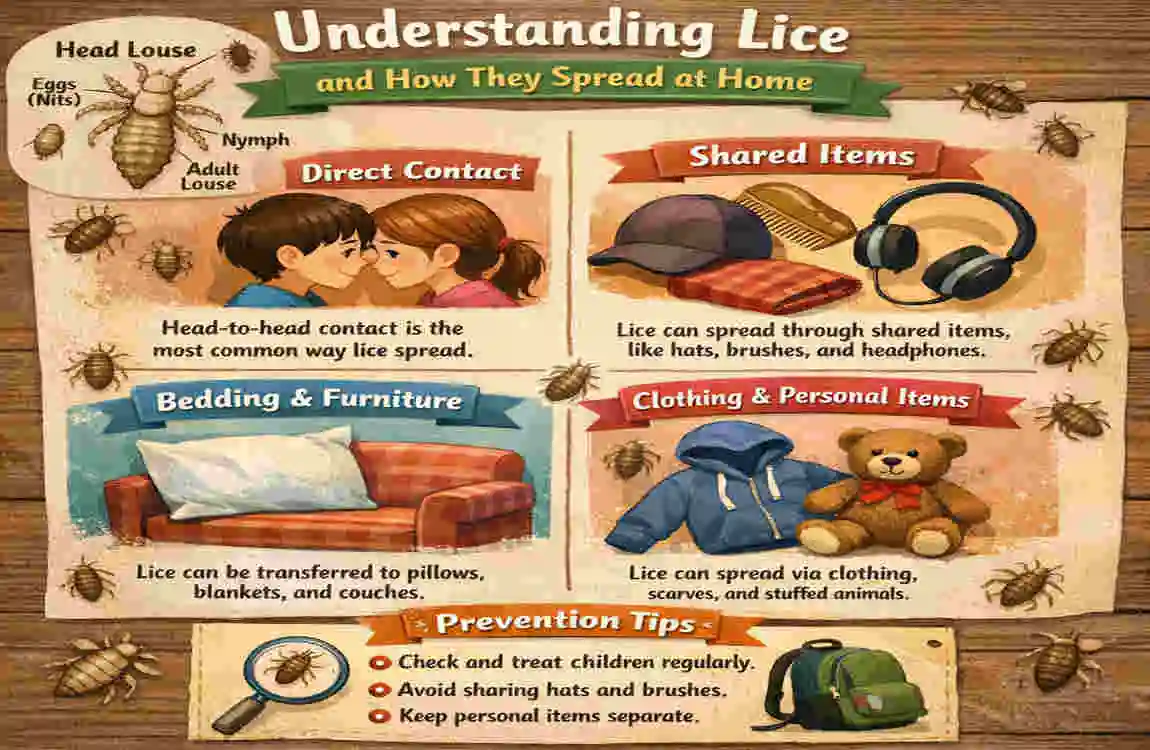
Lice may be found on items that recently touched an infested head, such as pillows, bedding, hats, brushes, combs, and clothing. These are the main things worth paying attention to after lice are discovered.
Can Lice Live on Furniture and Carpets?
Lice can survive only a short time away from the scalp. That means they may briefly be on furniture or carpets, but they usually don’t stay long enough to become a bigger problem. Because of this, full-house cleaning is usually unnecessary.
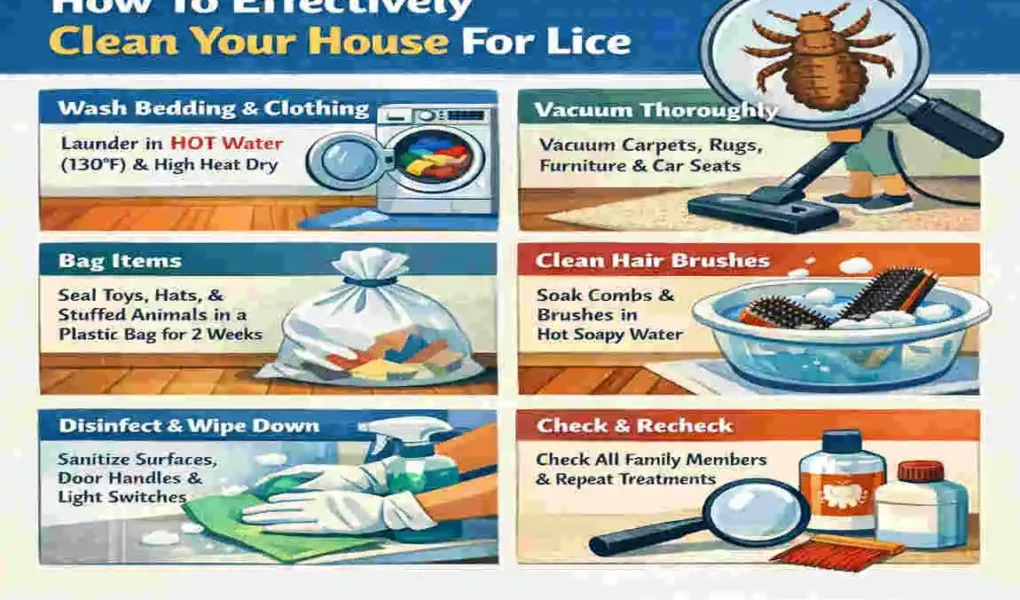
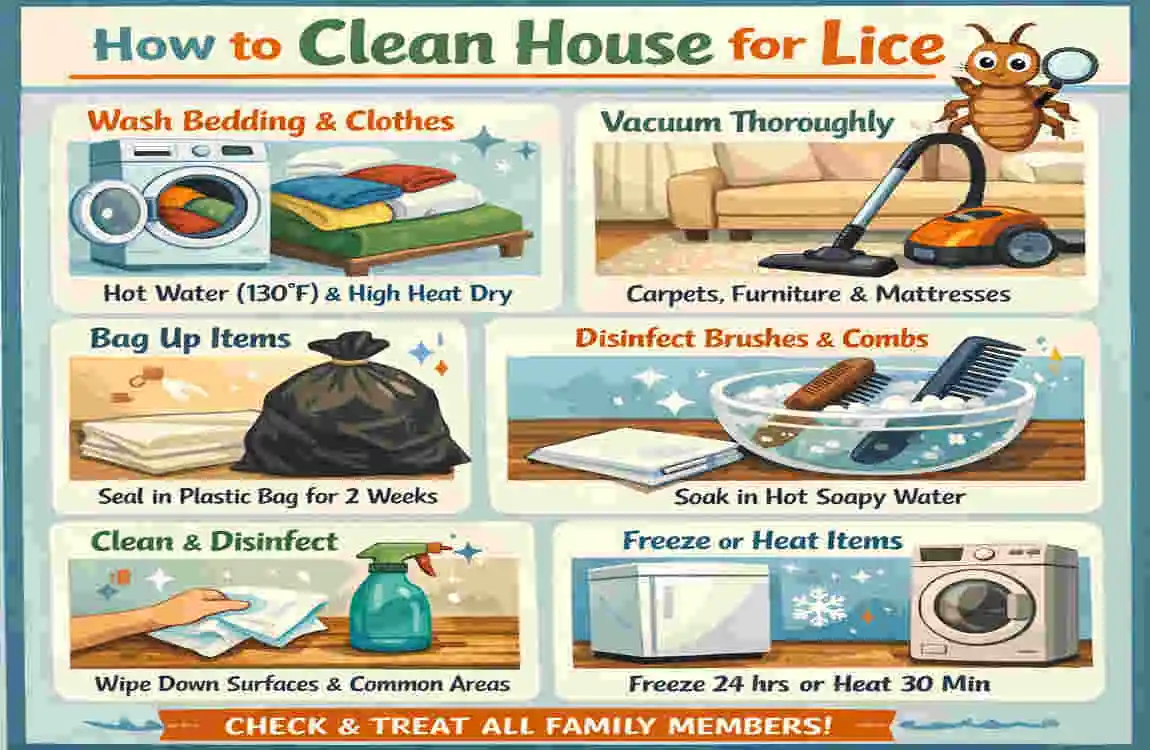
How to Clean House for Lice
The best approach is simple and practical. Focus on items the affected person used recently, and don’t try to disinfect everything in the house.
Wash Recently Used Bedding and Clothing
Wash pillowcases, sheets, towels, hats, and recently worn clothing in hot water when possible. Then dry them well on high heat. This helps remove any lice or nits that may have gotten onto the fabric.
Clean Combs, Brushes, and Hair Accessories
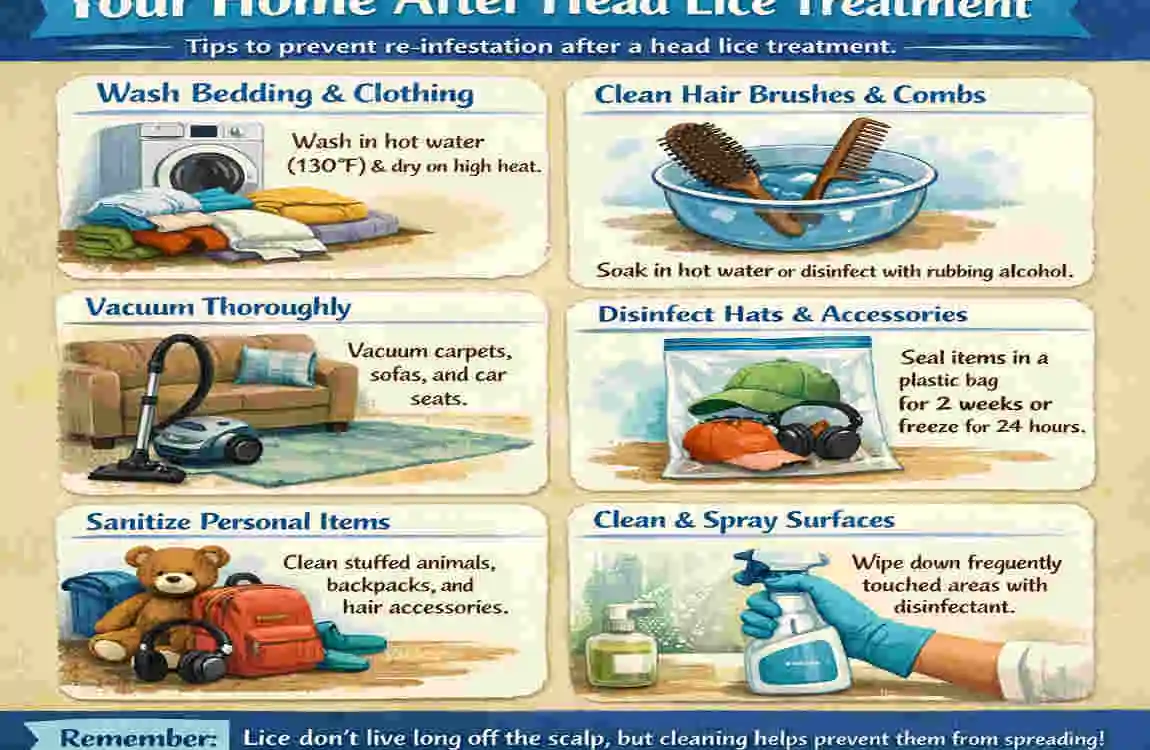
Soak combs, brushes, clips, and hair ties in hot water for a few minutes, then clean them well. This is an easy way to reduce the chance of lice staying on hair tools.
Vacuum Frequently Touched Areas
Vacuum floors, carpets, sofas, and upholstered furniture where the person with lice has recently sat or rested. This is a sensible extra step, but remember, vacuuming supports treatment rather than replacing it.
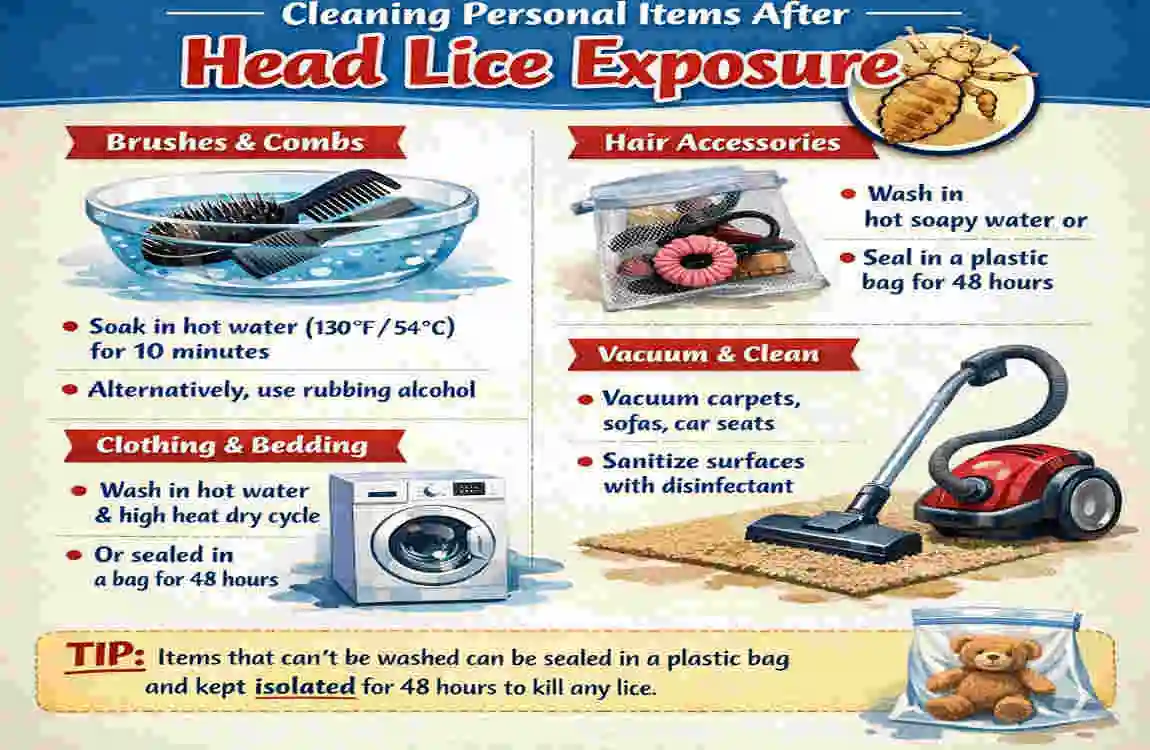
Cleaning Personal Items After Lice Exposure
Some items cannot be washed easily, so they need simple handling. A short period of separation is often enough for these belongings.
Item What to Do
Stuffed animals Seal or set aside if they cannot be washed
Helmets Wipe and clean inside surfaces
Coats and scarves Wash if possible or store separately
Hats and headphones Avoid sharing and clean gently
Hair tools Wash or soak in hot water
Items That Need Extra Attention
Pay special attention to stuffed animals, helmets, coats, scarves, and other head-contact items. If you can’t wash them, set them aside for a short time before reusing them.
Items That Usually Do Not Need Special Treatment
You usually do not need to clean walls, cabinets, floors, or the entire house specially. Head lice are not household pests in the usual sense, so you don’t need extreme cleaning.
What Not to Do When Cleaning for Lice
It is easy to overdo it when you find lice. Avoid harsh or unsafe cleaning methods that do not really solve the problem.
Avoid Excessive Chemical Sprays
Do not spray furniture, bedding, or the house with pesticides meant for other bugs. These products are not meant for lice control in the home and can create unnecessary risk.
Don’t Forget the Person With Lice
The most important step is treating the person with live lice. House cleaning matters, but it works best after the affected person gets proper treatment.
Keeping the Home Clean After Lice Treatment
Once treatment begins, normal home habits are usually enough to keep things under control. Stay calm and focus on practical steps.
Check Family Members
Check other household members for live lice and follow treatment guidance if you find any. This helps stop lice from spreading back and forth in the family.
Continue Normal Cleaning
Regular laundry, vacuuming, and basic personal-item cleaning are usually enough after treatment. You do not need to keep deep-cleaning the house.
Avoid Sharing Personal Hair Items
Do not share combs, brushes, hats, headphones, towels, or other hair items during an outbreak. This is one of the simplest ways to prevent spread.
FAQ About Cleaning a House for Lice
Do I need to deep-clean my whole house for lice?
No. A full deep clean is usually not needed. Focus on recently used bedding, clothing, hair tools, and nearby furniture.
How do I clean my house for lice effectively?
Wash recently used fabric items, clean combs and brushes, and vacuum places where the affected person has been sitting or lying.
Can lice live on couches and carpets?
They may end up there briefly, but head lice do not normally live and spread in carpets or on furniture.
Should I wash all my bedding after finding lice?
Wash recently used bedding as a precaution, especially pillowcases and sheets.
Do I need to spray my house for lice?
No. Household sprays and fumigation are usually unnecessary and may be unsafe.
How long should I keep potentially contaminated items separated?
Only for a short time, since lice need access to a human scalp to survive well.
Does vacuuming help get rid of lice?
Yes, vacuuming can help remove stray lice or hairs from surfaces, but it is not a replacement for treating the person.
What is the most important step after finding head lice?
Treat the person with live lice first, then clean the most recently used items in the home.