If you have ever turned on the kitchen light at night and seen a roach scatter across the floor, you know how unsettling it feels. Roaches are fast, stubborn, and very good at hiding. That is why so many homeowners ask the same question: How do I permanently get rid of roaches in my house?
The hard truth is that roaches are not a problem you solve with one quick spray. Temporary fixes may kill the roaches you see, but they usually do not reach the eggs, the nest, or the real source of the infestation. That is why the problem keeps coming back. You may feel like you finally won, only to spot another roach a few days later.
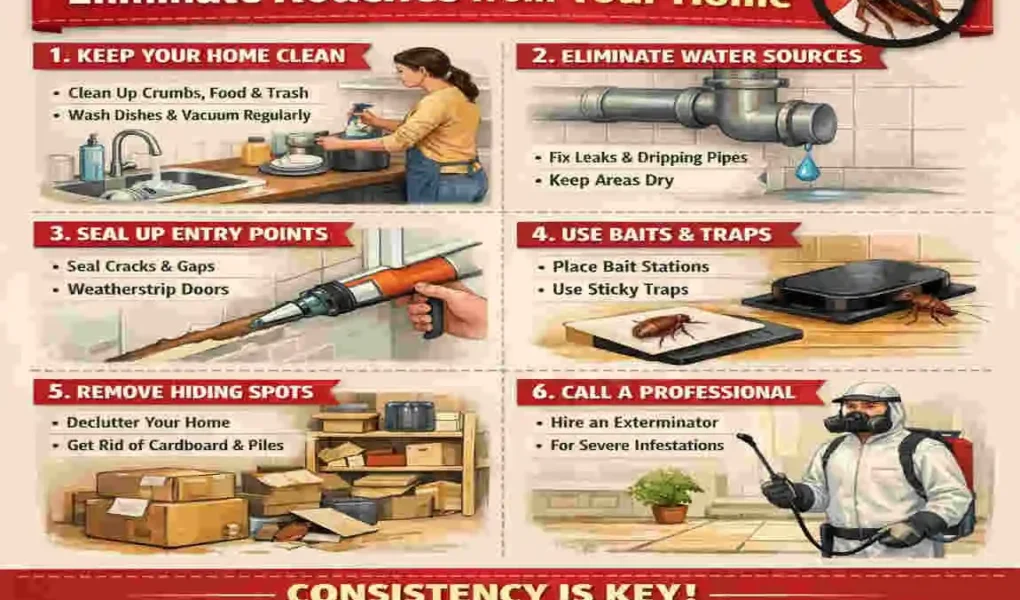
To permanently eliminate roaches, you need a full plan. That means removing the things they need to survive, using the right treatment in the right places, sealing entry points, and controlling moisture. In many homes, the best results come from integrated pest management for roaches. This long-term strategy combines cleaning, baiting, sealing, and monitoring rather than relying on a single product.
Understand Why Roaches Keep Coming Back
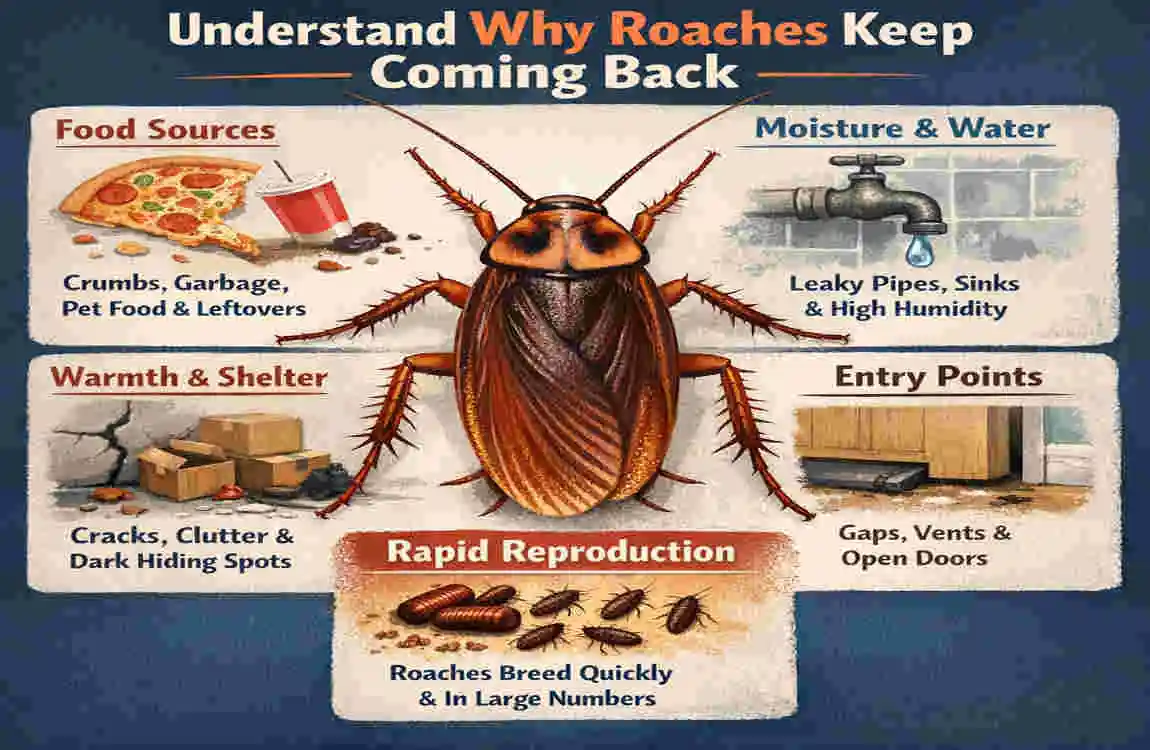
Roaches only need a few things to survive.
Roaches are not picky. They need food, water, and shelter, and homes clean give them all three. Even tiny crumbs on the floor, a drip under the sink, or a warm, hidden space behind an appliance can be enough to keep them alive.
They also reproduce quickly. A few roaches can become a larger infestation before you even realize what is happening. That is one reason roach problems can seem to appear out of nowhere. In reality, the infestation may have been growing quietly for weeks or even months.
They hide in places most people forget to check
Roaches like dark, narrow spaces. They hide behind refrigerators, under stoves, inside cabinets, around pipes, and in wall gaps. During the day, they may remain completely hidden. At night, they come out to feed and move around. So if you only treat the places you can see, you are usually missing the areas where the colony is living.
Different roach species behave differently.
Not all roaches act the same way. That matters because the best treatment depends on the species.
- German cockroaches are one of the most common indoor pests. They often live in kitchens and bathrooms and are very hard to eliminate.
- American cockroaches are larger and often enter from basements, drains, sewers, and other damp areas.
- Oriental cockroaches are drawn to moist, cool spaces and may show up in damp basements or utility areas.
If you want real roach infestation control, you have to treat the root causes, not just the visible insects. That is why a complete plan always works better than a quick spray.
Identify the Source of the Infestation First
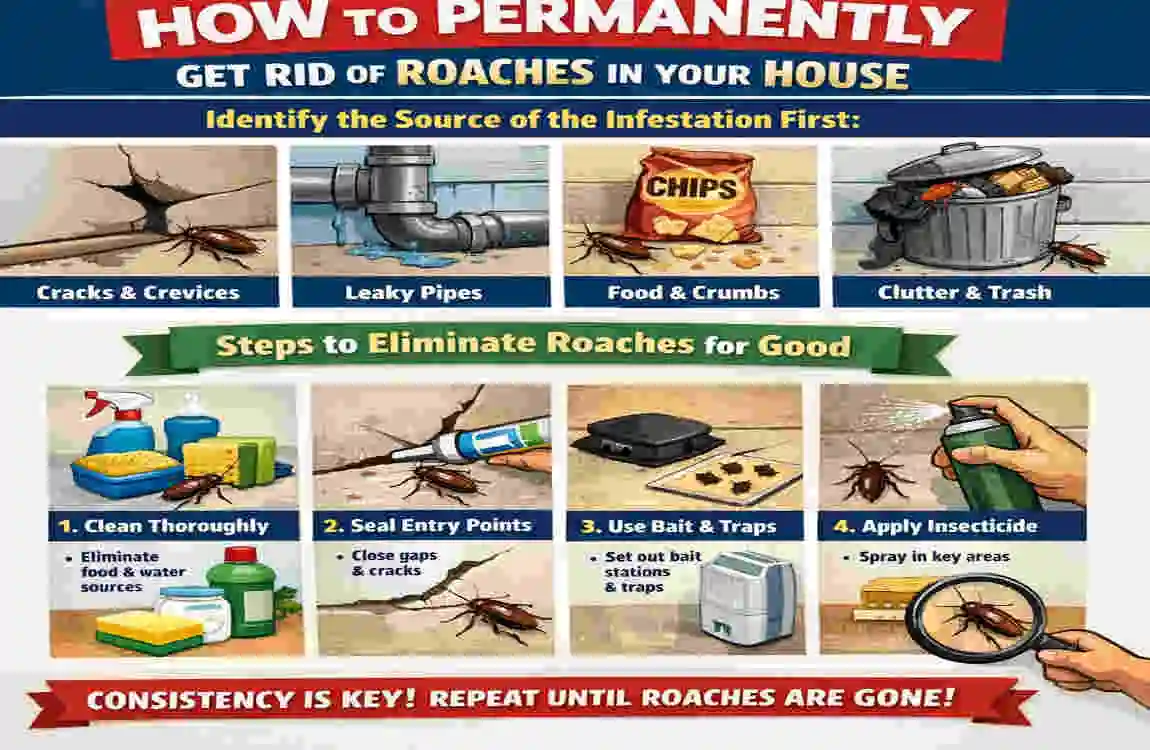
Why source identification matters
Before you treat roaches, you need to know where they are coming from. If you skip this step, you may waste time and money treating the wrong rooms. You may also miss the main nesting area, allowing the infestation to keep growing.
Think of it this way: if roaches are showing up in your kitchen, that does not always mean the kitchen is the only problem. They could be coming from a wall void, a bathroom pipe chase, a basement, or even an adjoining unit in an apartment building.
Places to inspect right away
Start with the most common hiding spots:
- Under sinks
- Behind refrigerators and stoves
- Inside pantry cabinets
- Around drains and pipes
- In basements and crawlspaces
- In laundry rooms
- Around trash storage areas
Look carefully in corners, cracks, and dark spaces. A flashlight can help you see egg cases, droppings, and shed skins.
Use sticky traps to track activity.
Sticky traps are useful because they help you see where roaches move most often. Place them near sinks, appliances, baseboards, and other suspected hot spots. Check them regularly. If one trap catches far more roaches than the others, that area is likely close to the main source.
Signs you may have an active infestation
Here are the most common warning signs:
- Small black droppings
- Egg cases
- Shed skins
- A musty odor
- Live roaches at night
- Roaches seen during the day, which often means the infestation is heavier
The goal is simple: find where the roaches live, feed, and hide. Once you know that, your treatment becomes much more effective.
Remove the Things Roaches Need to Survive
If you want to get rid of roaches in your house permanently, the first thing you must do is remove their food supply. Roaches are expert scavengers. They will eat crumbs, grease, spills, food residue, pet food, and even paper products if they have to.
Start by cleaning thoroughly every day. Focus on areas where food tends to break apart easily, such as under the dining table, behind the stove, and around the refrigerator. Wipe counters after every meal. Sweep floors often, especially in the kitchen and pantry.
Also, store dry food in sealed containers. Cardboard boxes and open bags are easy for roaches to get into. Pet food should not sit out overnight. If your pets do not finish their food, put it away before bed.
Trash matters too. Use a trash can with a tight lid and take garbage out regularly. If trash sits too long, it becomes both a food source and a hiding place.
Water control is just as important.
Roaches can survive for a surprisingly long time without food, but they need water much more often. That means leaks and moisture can keep an infestation alive.
Check under sinks for dripping pipes. Fix leaky faucets right away. Dry sinks and counters before going to bed. Do not leave standing water in pet bowls or around laundry areas if you can avoid it. If you have damp areas in a basement or bathroom, take steps to reduce the moisture.
Reduce shelter and hiding places.
Roaches love clutter because clutter gives them places to hide and breed. Paper piles, cardboard boxes, old bags, and unused items all make it easier for roaches to stay hidden.
Try to keep storage areas neat and open. Lift items off the floor when possible. Remove unnecessary clutter from corners, closets, and utility rooms. The more open your spaces are, the fewer hiding places roaches will have.
Why this step works so well
Sanitation does not always kill roaches directly, but it weakens them. It also makes bait much more effective. When roaches have fewer food choices, they are more likely to eat the bait you place. That is one of the biggest secrets to long-term roach prevention tips: make the home less attractive before you begin treatment.
Use the Right Roach Treatment Method, Not Just Spray
Many homeowners reach for a spray can first. That seems logical, but it often makes the problem worse. Many sprays only kill the roaches you see, and some even push roaches deeper into hiding. In some cases, spray use can scatter them into new areas of the home.
Sprays also usually do not reach the nest. If the eggs survive and the hidden roaches survive, the infestation comes back. That is why spray alone is not the best answer to cockroach extermination.
Better long-term tools for roach control
A smarter approach uses targeted methods that attack the infestation where it lives.
Gel baits
Gel baits are one of the most effective long-term tools for home roach treatment. You place small amounts of bait in cracks, crevices, and hidden areas where roaches travel. The roaches eat the bait and carry it back to others, which helps control the colony.
For best results, place bait where roaches are active, but not where it will be washed away or cleaned off. Small, careful placements usually work better than large amounts.
Bait stations
Bait stations are useful in kitchens, bathrooms, and under sinks. They are easy to place and can help reduce roach activity over time. Put them along travel paths, near walls, and close to entry areas.
Insect Growth Regulators, or IGRs
IGRs do not kill roaches immediately. Instead, they disrupt their growth and breeding cycle. This is very helpful because it stops young roaches from becoming adults and reproducing. For long-term control, IGRs are often a smart part of the plan.
Dusts
Dust products can be used in wall voids, gaps, and hard-to-reach spaces. They are especially helpful where liquid treatments cannot reach. But dust must be used carefully and according to the label directions.
Sticky traps
Sticky traps are mostly for monitoring. They help you see where roaches are active, but they are not enough on their own to eliminate an infestation.
The key warning about sprays and bait
Do not overuse repellent sprays near bait placements. If roaches can detect a repellent barrier, they may avoid the bait. That means your treatment becomes much less effective.
Quick comparison table
Treatment Method: Best Use, Long-Term Effectiveness, Notes
Repellent spray kills visible roaches on contact. It can scatter roaches and reduce bait success
Gel bait Nests, cracks, hidden travel paths High One of the best tools for colony control
Bait stations, kitchens, bathrooms, under sinks. Good for ongoing control
IGRs Breeding control High Helps stop future generations
Dusts Wall voids, gaps, inaccessible areas. Medium to High. Must be used correctly
Sticky traps: Monitoring activity. Low. Helpful for tracking, not full elimination
If you want to get rid of roaches for good, bait-based treatment is usually much more effective than a one-time spray.
Seal Cracks and Entry Points
One of the most frustrating things about roaches is how little space they need to get inside. Tiny cracks, gaps around pipes, loose trim, and small holes in walls can be enough for them to travel through.
That is why sealing entry points is such an important part of roach infestation control. Even if you clean and treat the home clean, roaches can return if access points remain open.
Where to seal first
Focus on these common problem spots:
- Cracks in baseboards
- Gaps around pipes
- Openings under sinks
- Spaces around windows and doors
- Holes in walls and cabinetry
- Gaps around utility lines
Materials that work well
Use the right materials for the size of the opening:
- Caulk for small cracks and gaps
- Steel wool for larger openings before sealing
- Weather stripping for doors and windows
If you live in an apartment or condo, pay close attention to shared walls and utility penetrations. Roaches can move between units through openings you may not even notice.
Why sealing is not just a finishing step
A lot of people treat sealing like an optional final touch. It is not. Sealing is one of the steps that make the control plan last. If roaches cannot easily get in, your home becomes much harder to infest again.
Think of sealing as a barrier. It supports the entire treatment process and helps protect your home over time.
Treat the Most Common Roach Hotspots
Roaches do not spread evenly through a home. They gather in places that give them warmth, moisture, darkness, and food residue. That is why treatment should focus on the areas they use most often.
Top hot spots to inspect and treat
These are the places that deserve the most attention:
- Kitchen cabinets
- Behind and under appliances
- Bathroom vanities
- Laundry rooms
- Basements and utility rooms
- Trash and recycling areas
Why are these areas so attractive
Kitchens offer food crumbs and grease. Bathrooms offer water. Basements often stay damp and dark. Laundry areas can have warm appliances and hidden plumbing spaces. Trash areas provide both food residue and shelter.
Do not forget drains and vents.
Some roaches enter through drains, especially larger species. Vent openings, appliance gaps, and pipe spaces can also serve as entry routes or hiding places. Check these locations closely during inspection and treatment.
Treat carefully and follow directions.
Always use products only where they are meant to be used. Follow the label carefully and avoid overapplying anything. More product does not always mean better results. In fact, too much treatment in the wrong place can make roaches avoid the area rather than be exposed to the control method.
The goal is focused, smart treatment, not random application.
Control Moisture to Prevent a New Infestation
If you remove one thing that roaches depend on, make it moisture. Water is one of the main reasons roaches survive indoors for long periods. Even if your home looks clean, a damp sink area, a leaking pipe, or a humid basement can keep roaches coming back.
Practical ways to reduce moisture
Start with the basics:
- Use dehumidifiers in damp basements
- Repair leaks immediately
- Ventilate bathrooms and kitchens
- Keep sinks dry overnight
- Improve airflow under sinks and in storage areas
Why dry spaces matter so much
Dry spaces are less comfortable for roaches. They do not like environments where they cannot easily find water. Once moisture is reduced, the home becomes much less attractive to them.
This is one reason permanent control takes more than killing the insects you see. You must also make the environment more hostile to their Survival. When your home is dry, clean, and sealed, roaches have a much harder time rebuilding their population.
Prevent Roaches From Returning Indoors and From Outside
Even if you handle the infestation inside, roaches can still come from outside. That is why exterior prevention matters too. If you want a real long-term solution, you need to protect both the inside and the outside of your home.
Outdoor prevention steps
Here are some practical ways to reduce outdoor pressure:
- Keep gutters and drainage areas clear
- Store firewood away from the house
- Close gaps around foundations and siding
- Reduce outdoor clutter near walls
- Keep trash bins tightly sealed
Watch for drain and sewer entry points.
Some roach species can enter through drains or sewer-related openings. If your home has recurring roach issues near bathrooms, laundry spaces, or lower levels, this could be part of the problem. It is worth checking those areas carefully.
Apartment and condo note
If you live in an apartment, roaches may move between units. That means your unit may be treated, but the problem can return from neighboring spaces if the building is not addressed as a whole. In that case, building-wide treatment may be needed for lasting results.
Long-term prevention is a defense system.
The best way to think about prevention is this: your home needs a defense system. Clean inside. Seal openings. Remove moisture. Keep the outside area tidy. When all of those steps work together, roaches have fewer places to live and fewer ways to come back.
When to Call a Professional Pest Control Company
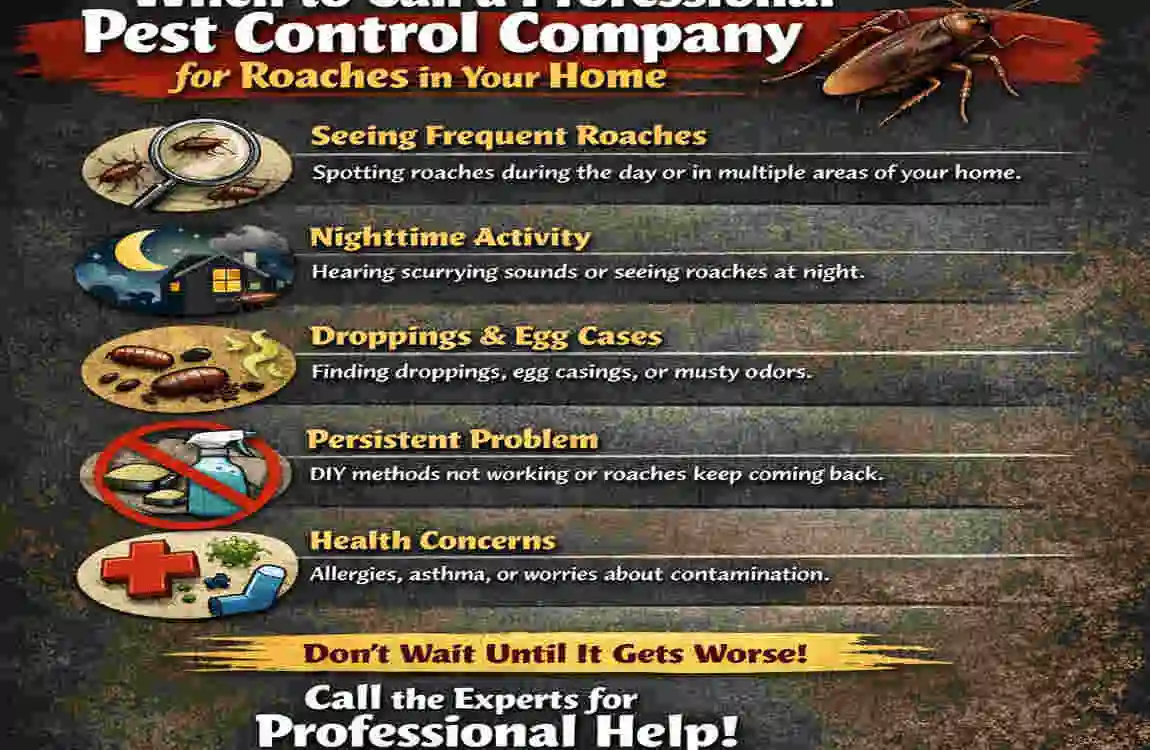
Sometimes DIY is not enough.
There are situations where home treatment does not go far enough. If you have already cleaned, baited, sealed, and monitored your home. Still, roaches keep returning; it may be time to bring in a professional.
You should consider professional help if:
- The infestation keeps coming back
- You see roaches during the day
- The home is heavily infested
- Bait and cleaning have not worked
- Roaches appear to be coming from shared walls or structural gaps
What professionals bring to the table
A pest control expert can inspect the home, identify the species, and develop a treatment plan tailored to your specific situation. That is important because German cockroach control differs from American cockroach control.
Professionals also know how to treat hidden areas more thoroughly and how to follow up over time. That follow-up matters a lot, because roach control is often a process, not a single visit.
Why can this save time and stress
If you are tired of asking, How do I permanently get rid of roaches in my house?, a professional inspection may be the fastest path to lasting results. A trained technician can find the nesting areas you may have missed and help you avoid the common mistakes that keep infestations going.
This is not just about killing bugs. It is about creating a long-term solution that protects your home cleaning and gives you peace of mind.
Common Mistakes That Make Roach Problems Worse
What not to do if you want roaches gone for good
Many well-meaning homeowners make infestations harder to control without realizing it. If you want better results, avoid these common mistakes:
- Using too many sprays
- Ignoring hidden nesting areas
- Leaving food out overnight
- Not fixing leaks
- Stopping treatment too soon
- Using bait incorrectly
- Forgetting to seal entry points
Why these mistakes matter
Too many sprays can scatter roaches rather than control them. Ignoring hidden areas leaves the nest untouched. Food left out overnight gives roaches a reason to stay. Leaks and moisture help them survive. If treatment stops too early, the survivors can rebuild the infestation.
Using bait the wrong way is another big issue. Bait works best when roaches can find it easily and when other food sources are reduced. If the bait is placed poorly or if repellent sprays are used nearby, the roaches may avoid it.
The big lesson
Permanent control depends on consistency. If you want roach prevention tips that really work, treat the whole problem, not just the roaches you see. That means cleaning, baiting, sealing, drying, and monitoring must all happen together.
FAQ: How Do I Permanently Get Rid of Roaches in My House?
How do I permanently get rid of roaches in my house?
The best way is to use a full control plan. Remove food, water, and clutter, then use gel baits, sealing, moisture control, and monitoring. Sprays alone usually fail because they do not reach nests or eggs. Long-term results come from changing the environment, not just killing visible roaches.
What is the fastest way to eliminate roaches?
The fastest way is to combine sanitation with targeted bait placements and follow-up treatment. If you only spray, the problem may look better for a short time, but it may come back later. For heavy infestations, professional pest control can speed up the process and reach hidden areas more effectively.
Why do roaches come back after spraying?
Roaches come back after spraying because most sprays only kill the insects you see. They often do not reach eggs, nesting sites, or hidden rooks. Some sprays also repel roaches and push them into new hiding places. That is why bait and sealing are so important for long-term control.
Are roach baits better than sprays?
Yes, for most long-term control plans, roach baits are better than sprays. Baits work slowly, which allows roaches to carry the active ingredient back to others. This helps reduce the colony over time. Sprays can still be useful in some situations, but they should not be the main strategy.
How long does it take to get rid of a roach infestation?
It depends on how severe the infestation is. Small problems may improve in a few weeks with consistent treatment. Larger infestations can take longer, especially if roaches are hidden in walls or shared spaces. The key is to stay consistent and keep treating until the activity drops clearly.
What attracts roaches the most?
Roaches are attracted to food crumbs, grease, moisture, clutter, and warm hiding spaces. Pet food, trash, dirty dishes, and leaks are especially helpful to them. If you reduce those conditions, your home becomes much less appealing, making it harder for roaches to survive.
Can I get rid of roaches without a professional?
Yes, some smaller infestations can be handled without a professional if you act quickly and stay consistent. But if the infestation is large, keeps returning, or seems to be coming from walls or neighboring units, professional help is often the better choice.
Do roaches hide in walls?
Yes, roaches often hide in walls, especially near pipes, wiring, and gaps between rooms. That is one reason they are so hard to remove completely. If they are nesting in wall voids, you may need targeted dusts, baits, sealing, and possibly professional treatment.