Many homeowners ask a simple question before replacing a faucet: will a mobile home faucet work with a regular sink? It is a fair question, because not every faucet fits every sink. At first glance, many faucets look the same. But once you start measuring holes, checking water lines, and looking under the sink, the differences become clear.
The main issue is this: are mobile home faucets different from standard faucets? The short answer is yes, sometimes. Some mobile home faucets are built with lighter materials, smaller bodies, or different mounting styles. Others are close enough to standard faucets that they fit just fine.
| Check | What to verify |
|---|---|
| Hole spacing | Measure the sink’s faucet holes before buying. |
| Mount style | Match single-hole, 4-inch center, or 8-inch spread. |
| Plumbing fit | Confirm the supply lines and connections line up. |
| Best practice | Buy a faucet labeled for mobile homes or one that matches your sink layout. |
What Are Mobile Home Faucets?
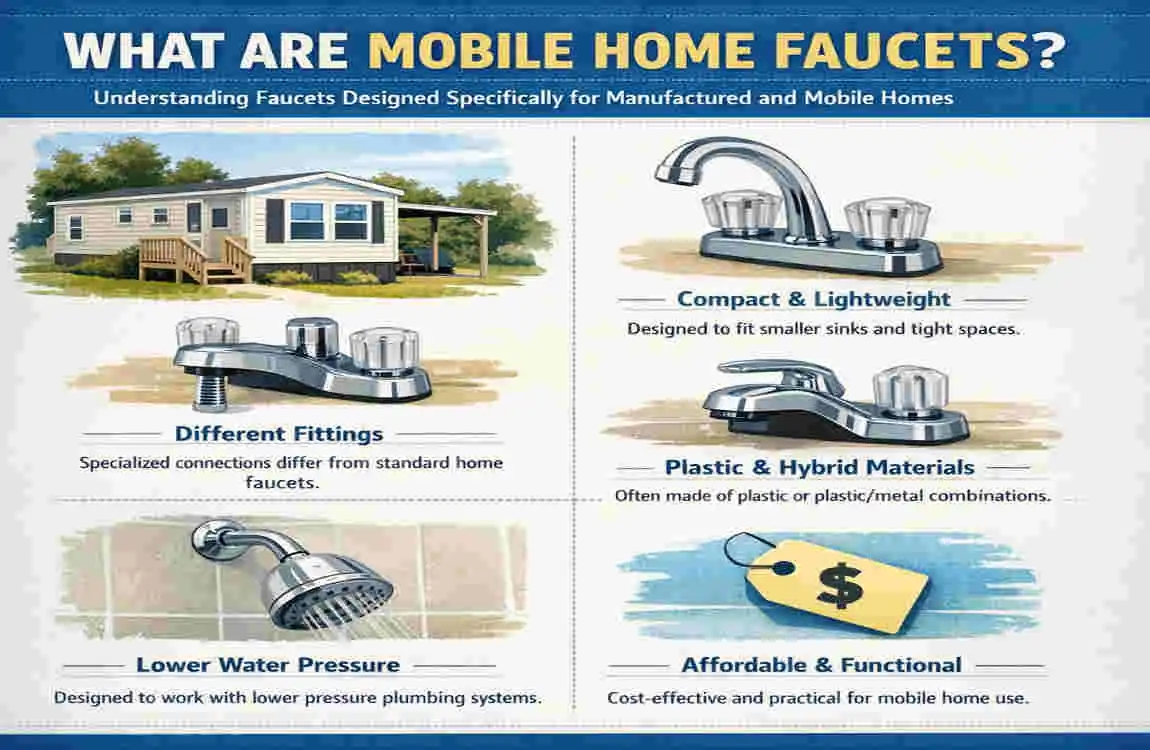
Definition of Mobile Home Faucets
Mobile home faucets are faucets made for manufactured homes, older trailers, RV-style setups, or compact plumbing systems. They are designed to work with the space limits and pipe layouts often found in these homes.
In many cases, mobile home plumbing fixtures are built to be lighter and simpler than standard home fixtures. That does not always mean they are lower quality. It just means they are made to fit a different kind of setup.
You may also hear them called manufactured home faucets or trailer home faucet types. These names often refer to the same general fixture style.
How They Differ from Traditional House Faucets
The biggest difference is usually in the way they are built and installed. Many mobile home faucets use a more compact shape. Some have a smaller base, shorter handles, or simpler water connections.
Traditional house faucets often assume there is more room under the sink and greater plumbing flexibility. Mobile home setups may not offer the same amount of space. Because of that, mobile home faucets are often designed to fit into tighter spaces.
Another common difference is material. Some mobile home faucets use more plastic parts to keep the cost low and the unit light. Standard house faucets may use more brass or stainless steel, which usually lasts longer.
Are Mobile Home Faucets Different from Standard Faucets?
Key Structural Differences
So, are mobile home faucets different from standard faucets? In many cases, yes.
One major difference is hole spacing. Some mobile home sinks use a specific spacing that does not match standard sink layouts. If the holes do not line up, the faucet will not install correctly.
Another difference is the mounting style. A faucet may be deck-mounted, sink-mounted, or wall-mounted. If the mounting style does not match the sink, you may need adapters or a different faucet entirely.
Water line connections can also vary. Some mobile home faucets use fittings that are less common in standard homes. That means you may need special connectors to make everything work.
The overall body size can be different too. A faucet that looks small on top may still have a base that does not fit the sink opening.
Material and Build Quality
Mobile home faucets are often made of plastic, lightweight metal, or a mix of materials. This helps keep them affordable and easy to install. It also makes them a good match for compact plumbing systems.
Standard faucets are more likely to use brass or stainless steel parts. These materials usually hold up better over time, especially with daily use.
That said, not every mobile home faucet is flimsy, and not every standard faucet is top quality. The real difference is usually in the design goal. Mobile home faucets are often made for fit and cost. Standard faucets are often made for durability and style.
Why Mobile Homes Often Use Specialized Faucets
Mobile homes often use specialized faucets for three simple reasons: cost, weight, and space.
First, these homes are often built with budget in mind. A simpler faucet keeps the total build cost lower.
Second, lightweight fixtures are easier to install in factory-built settings. They also put less stress on smaller plumbing supports.
Third, many manufactured homes have compact cabinet space and non-standard plumbing layouts. A specialized faucet helps solve those space problems.
Are Mobile Home Faucets Compatible with Standard Sinks?
Short Answer – Yes, Sometimes
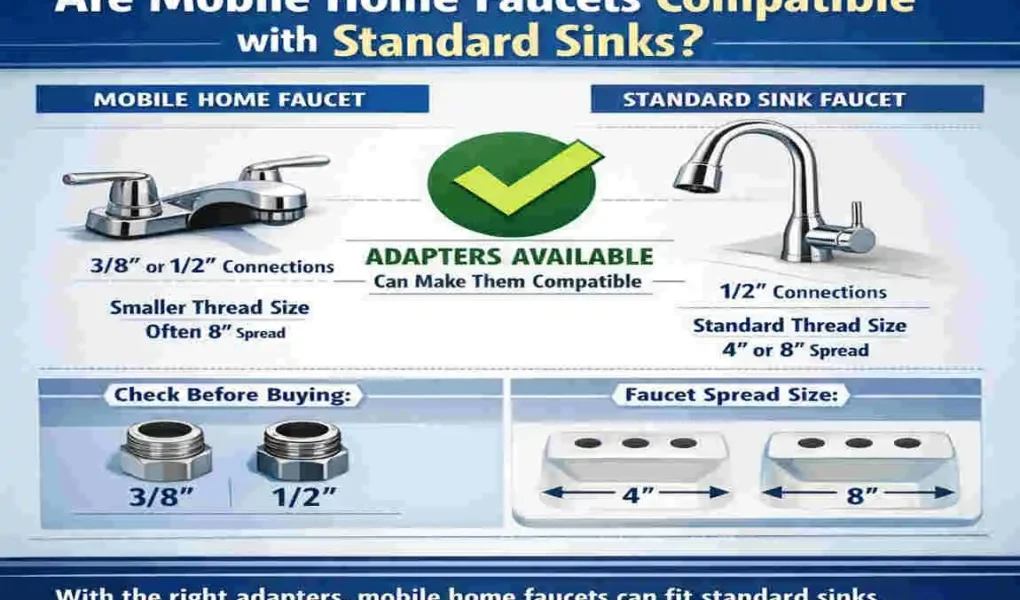
Yes, mobile home faucets can be compatible with standard sinks, but only when the hole pattern, mounting type, and plumbing connections match those of the sink.
That means compatibility is not about the label alone. A faucet labeled a “mobile home faucet” does not automatically mean it will not fit a standard sink. It just means you need to check the details first.
Some mobile home faucets fit perfectly on regular sinks. Others do not fit without changes. The best approach is to measure first and buy second.
Factors That Determine Compatibility
Sink Hole Configuration
The sink holes matter a lot. A faucet may be built for a single-hole sink, a 3-hole sink, or a center-set layout.
If the hole spacing is wrong, the faucet will not sit correctly. In some cases, you can cover unused holes with a deck plate. In other cases, the faucet simply will not match the sink design.
Faucet Mounting Type
Mounting style is another big factor. Some faucets are made to sit on the sink deck. Others are made for wall installation.
A deck mount faucet is common in many kitchens and bathrooms. A wall-mount faucet is more common in older homes or in special layouts. If your sink and faucet use different mounting styles, installation may become difficult.
Water Supply Line Size
Most homes use common supply line sizes, but not all connections are the same. A faucet may need a different thread type or a different hose connector.
Sometimes a simple adapter solves the problem. Other times, you may need to replace the supply line itself.
Countertop Thickness and Clearance
Even if the faucet holes match, there still has to be enough room under the sink. Thick countertops, tight cabinets, or low-clearance backsplashes can make installation more difficult.
This is one of the most overlooked issues. A faucet can look like a perfect match on paper and still fail to fit physically in the space.
Compatibility Quick View
Compatibility Factor Standard Sink Mobile Home Faucet Notes
Hole spacing Often 4″ or 8″ May vary by model Must match or use adapter
Mounting style Deck or wall Often compact deck mount Check sink design first
Water line connections Common standard sizes May need adapter Always verify thread type
Clearance under sink Usually more space Often tighter space Measure before buying
Material Brass/stainless steel common Plastic or mixed materials common Affects durability and fit
How to Check If Your Mobile Home Faucet Fits a Standard Sink
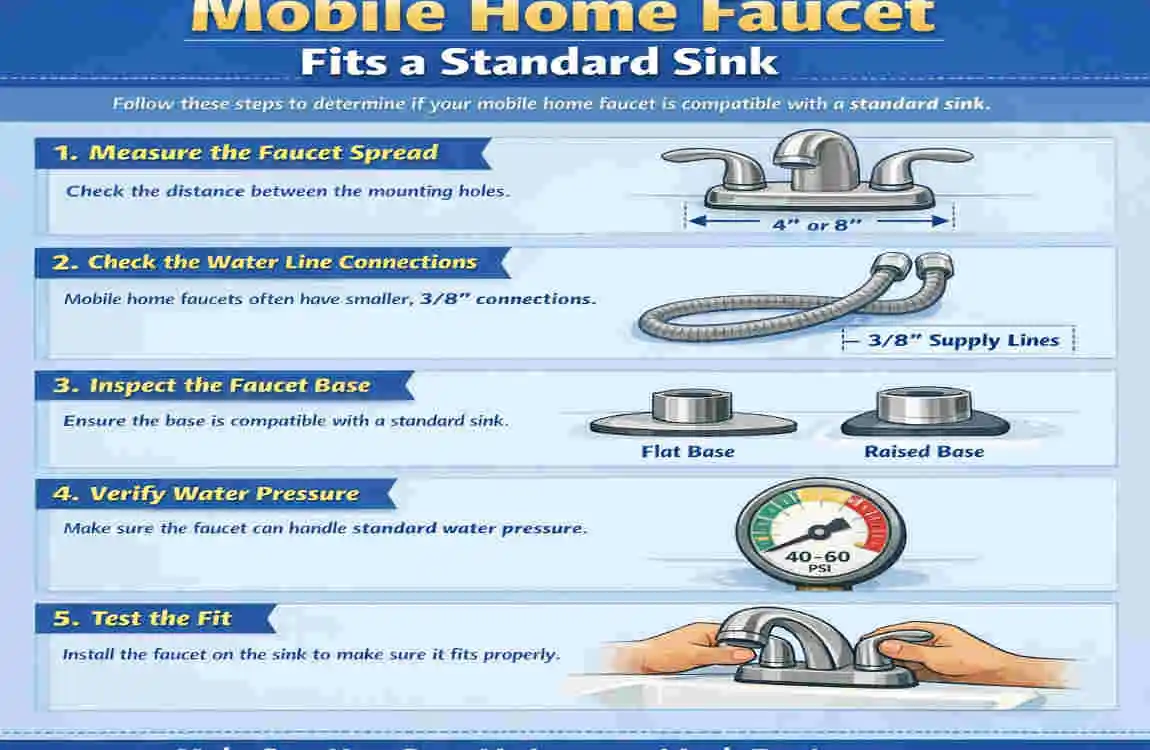
Measure Faucet Hole Distance
Start by measuring the distance between sink holes. The most common spacing is 4-inch or 8-inch center-to-center.
If you already have a faucet installed, remove it carefully and measure the opening. If the sink is new, check the product specs before buying the faucet.
Check Plumbing Connections
Look at the supply lines and fittings under the sink. Some faucets use compression fittings, while others use flexible hoses.
If the connector type does not match, you may still be able to use an adapter. But it is better to know that before installation day.
Inspect Sink Mounting Surface
The sink area must be stable and flat enough for the faucet base. If the surface is uneven or too thin, the faucet may wobble or leak.
Take a close look at the underside too. Sometimes the sink looks fine from above, but the cabinet space below creates problems.
Review Manufacturer Specifications
This step matters more than many people think. The product label or model guide can tell you whether the faucet is meant for a specific hole pattern or water line size.
If you are researching how to replace mobile home faucet parts, the product details will save you guesswork. A simple faucet compatibility guide from the maker can prevent a bad purchase.
Common Faucet Types Used in Mobile Homes
Single Handle Faucets
Single-handle faucets are popular because they are simple and compact. You can control both water flow and temperature with one lever.
They work well in small spaces and are easy to use. This makes them a common choice for modern mobile homes.
Two-Handle Faucets
Two-handle faucets have separate controls for hot and cold water. They offer a more traditional look and feel.
These are still common in many manufactured homes, especially older ones. They may be easier to match with older sink designs too.
Wall-Mounted Faucets
Wall-mounted faucets are often found in older mobile homes or special bathroom setups. The plumbing comes through the wall instead of the sink deck.
These can be harder to replace because they depend on the location of the wall pipe. If the spacing is off, conversion can be more involved.
RV or Compact Faucets
Some mobile home faucets are similar to RV or compact faucets. They are made for tight spaces and lightweight plumbing.
The main difference is usually where they are used. RV faucets are often even more compact, while mobile home faucets may be built for slightly larger fixtures.
Can You Replace a Mobile Home Faucet with a Standard Faucet?
When Replacement Is Easy
Replacement is usually easy when the sink hole pattern matches, the mounting style is similar, and the supply line connections are common.
If your old faucet and new faucet use the same style, the swap may be straightforward. In many cases, this becomes a simple DIY job.
When Adapters or Modifications Are Needed
Sometimes the new faucet is close, but not quite right. That is where adapters come in.
You may need a pipe fitting conversion, a different supply line, or a deck plate to cover unused holes. In some cases, sinkholes may need to be enlarged, but this should be done carefully.
Cases Where Replacement May Not Work
Some setups make replacement difficult or not worth the trouble.
A thin sink material can crack if the faucet does not sit properly. An integrated molded sink may not allow flexible mounting. Tight cabinet spaces can also make the job harder than expected.
In these cases, choosing a direct mobile home replacement may be the smarter move.
Benefits of Upgrading to Standard Faucets
Better Durability
Standard faucets are often made of brass or stainless steel, which usually last longer than lightweight options. That can mean fewer repairs over time.
More Style Choices
If you want a modern look, standard faucets offer more design options. You can choose from sleek, classic, matte, polished, or high-arc styles.
Easier Maintenance
Replacement parts for standard faucets are usually easier to find. That makes maintenance simpler when something wears out.
Improved Water Efficiency
Many modern standard faucets are built to save water. That can help lower utility use while still giving you good performance.
Challenges Homeowners Face During Installation
Limited Access Under Small Cabinets
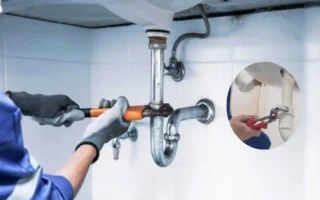
One of the biggest problems is simply getting your hands under the sink. Mobile home cabinets are often tight, so wrench access can be tricky.
Non-Standard Plumbing Layouts
Older mobile homes may have plumbing layouts that do not match newer sink and faucet designs. That can make direct replacement harder.
Leaks from Improper Adapters
If an adapter is the wrong size or is tightened poorly, leaks can appear quickly. Even a small drip can become a bigger issue later.
Compatibility Issues with Older Mobile Homes
Older homes often have more wear, older pipe materials, and less predictable measurements. That means even a “standard” faucet may need extra work.
Practical troubleshooting tips:
- Check all connections before turning the water fully back on.
- Use the right sealant for the fitting type.
- Re-measure if anything feels forced or misaligned.
Cost Comparison: Mobile Home Faucet vs Standard Faucet Replacement
Mobile Home Faucet Cost Range
Mobile home faucets are often the budget-friendly choice. Basic models may cost less because they use simpler materials and designs.
Standard Faucet Cost Range
Standard faucets usually cost more, especially if they are made from stronger materials or have a modern finish. Mid-range and premium styles can be much higher.
Installation Costs
A DIY replacement can save money if the fit is simple. A plumber will cost more, but may be the better choice if the plumbing is old or the space is tight.
Hidden Costs
Hidden expenses can include adapters, new pipe sections, sealants, and labor. These extra items can quickly raise the final cost.
Simple Cost Overview
Cost Area Mobile Home Faucet Standard Faucet
Faucet price Usually lower Usually higher
Repair parts Often basic Widely available
Adapters Sometimes needed Sometimes needed
Installation Can be simple May require more work
Long-term value Good for budget use Better for durability and style
DIY Installation Tips for Safe Faucet Replacement
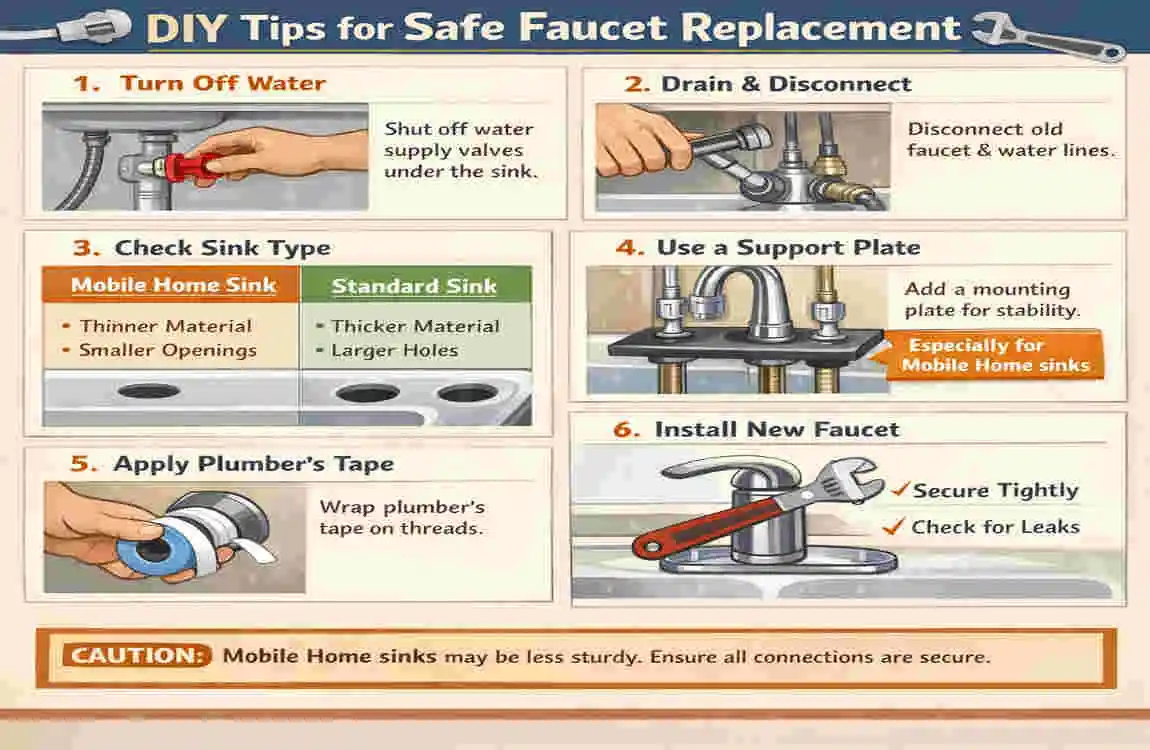
Turn Off Water Supply
Always shut off the water before starting. Then open the faucet to release any pressure left in the lines.
Measure Before Buying
Do not buy based on looks alone. Measure the sink holes, faucet base, and under-sink clearance first.
Use Compatible Adapters
If the fittings do not line up exactly, use the correct adapter instead of forcing the connection.
Test for Leaks
After installation, slowly turn the water back on. Check every connection for drips.
Avoid Overtightening Connections
Tight does not always mean better. Over-tightening can damage threads or crack small parts.
Beginner checklist:
- Water supply turned off
- Faucet hole spacing measured
- Supply line type checked
- Correct tools ready
- Leak test completed
Mistakes to Avoid When Replacing Mobile Home Faucets
A few common mistakes can make the job harder than it should be.
Some people buy a faucet based only on appearance. Others ignore sink hole spacing or assume all plumbing sizes are universal. That can lead to returns or extra repairs.
It is also easy to forget cabinet clearance. Even if the faucet fits on top, the body may not fit below. Low-quality adapters can also create leaks and frustration.
Expert Advice: When to Call a Plumber
Sometimes the safest choice is to bring in a professional. If you have persistent leaks, corroded pipes, wall-mounted conversions, or structural sink issues, a plumber can save time and prevent damage.
This is especially true in older homes. A small problem can turn into a larger repair if the pipes are fragile or the setup is unusual.
FAQ: Are Mobile Home Faucets Different?
Are mobile home faucets different from regular faucets?
Yes, they can be. Mobile home faucets often use lighter materials, smaller bodies, and different mounting or plumbing setups. Standard faucets usually have a more universal style and stronger construction materials.
Can I install a regular faucet in a mobile home sink?
Sometimes you can. The sink hole spacing, faucet base size, and supply line connections must match. If not, you may need adapters or small modifications.
What size faucet holes are standard in mobile homes?
There is no single universal size. Many use 4-inch or 8-inch spacing, but older homes and special setups may use different spacing. Always measure before buying.
Do mobile home faucets use different water lines?
They can. Some use standard fittings, while others need adapters or different connector types. Checking the thread size and line type is important.
Are mobile home sinks standard size?
Not always. Mobile home sinks may be smaller, thinner, or mounted differently than standard sinks. That can affect the choice of faucet and its installation.
Is replacing a mobile home faucet a DIY project?
Yes, often it is. If the measurements match and the plumbing is simple, a beginner can usually handle it. But if the pipes are old or the space is tight, calling a plumber is a smart choice.Final note: