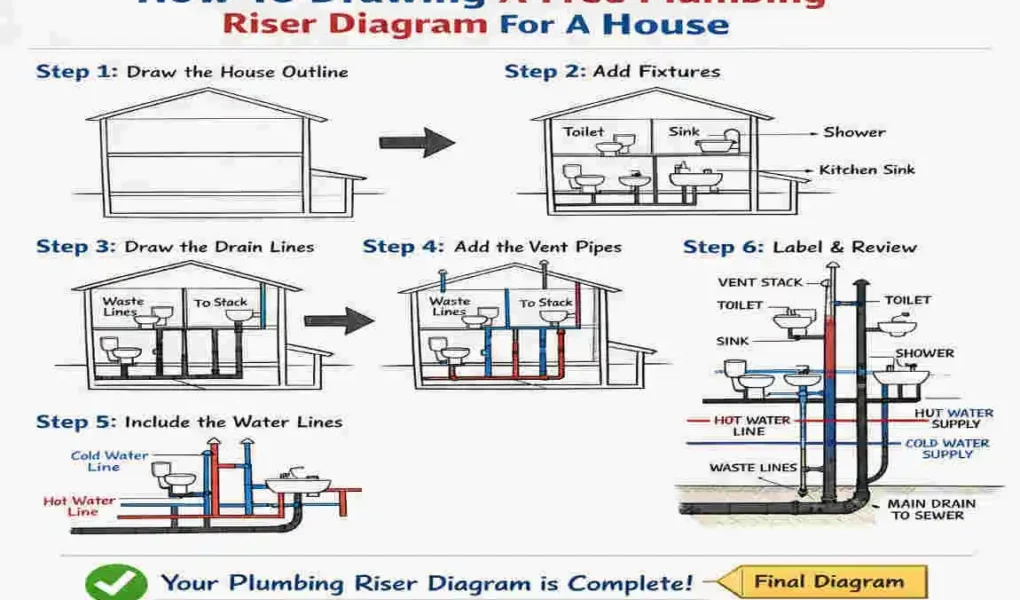
A house plumbing riser diagram is a simple drawing that shows how water moves into a home and how wastewater leaves it. It helps homeowners, plumbers, builders, and students understand the full plumbing layout clearly.
| Section | What to Include | Key Details |
|---|---|---|
| Plumbing Riser Diagram | Basic overview | Shows the house plumbing system vertically |
| Main Water Supply | Incoming water line | Show main pipe, shutoff valve, and water direction |
| Cold Water Lines | Cold-water distribution | Connect the main supply to sinks, toilets, showers, and appliances |
| Hot Water Lines | Hot-water distribution | Show the water heater and hot-water branches |
| Water Heater | Heating system | Mark the cold-water inlet and hot-water outlet |
| Plumbing Fixtures | Fixtures in the house | Include toilets, sinks, showers, bathtubs, kitchen sinks, and washing machines |
| Drainage Pipes | Wastewater system | Show fixture drains leading to branch and main drains |
| Vent Pipes | Plumbing ventilation | Show vent connections and the route toward the roof |
If you are learning how to draw a house plumbing riser diagram, the goal is not to make the drawing fancy. The goal is to make it easy to read, accurate, and useful for planning, repair, or remodeling work.
What Is a House Plumbing Riser Diagram?
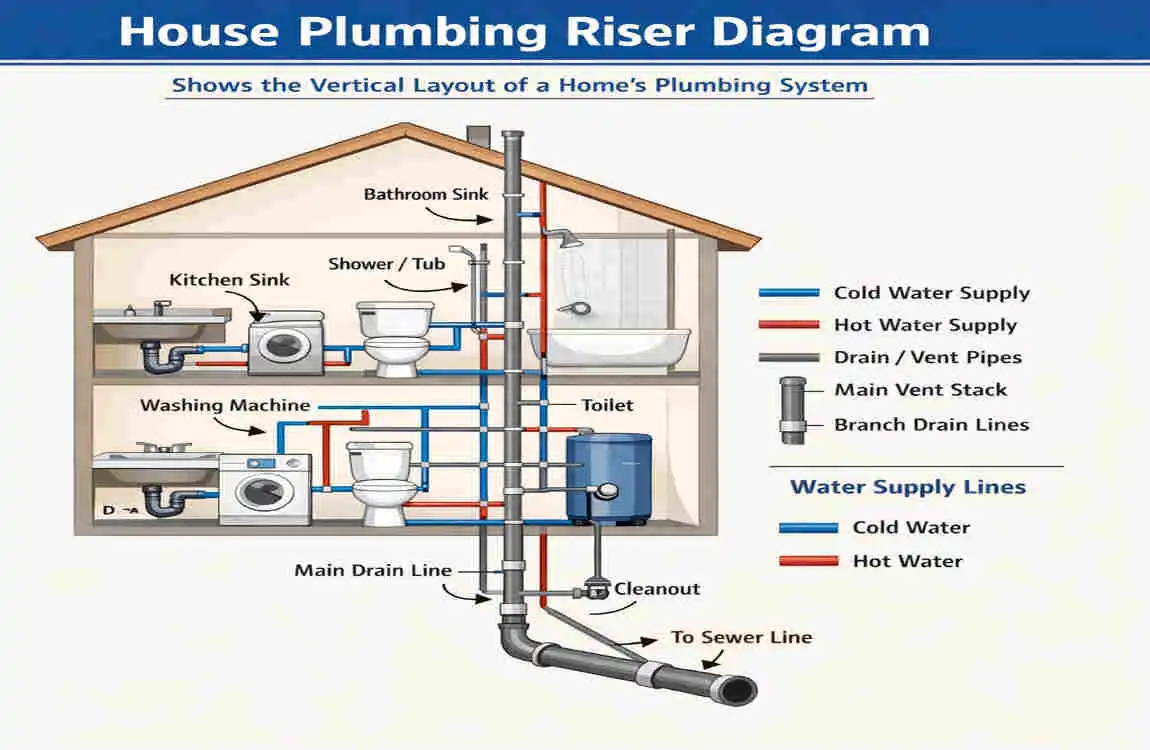
A plumbing riser diagram is a vertical drawing that shows plumbing systems clearly and in an organized way. Unlike a floor plan, which shows rooms from above, a riser diagram shows how pipes connect between fixtures, drains, vents, and water supply lines.
It is useful because it helps you see the full plumbing path in one view. That makes construction, repairs, and upgrades much easier to understand.
Why Do You Need a Plumbing Riser Diagram?
A good riser diagram helps you:
- Understand the full plumbing layout
- Plan repairs or renovations more easily
- Show where fixtures connect
- Communicate clearly with contractors
It also reduces mistakes because it shows the water supply, drainage, and vent lines in one simple drawing.
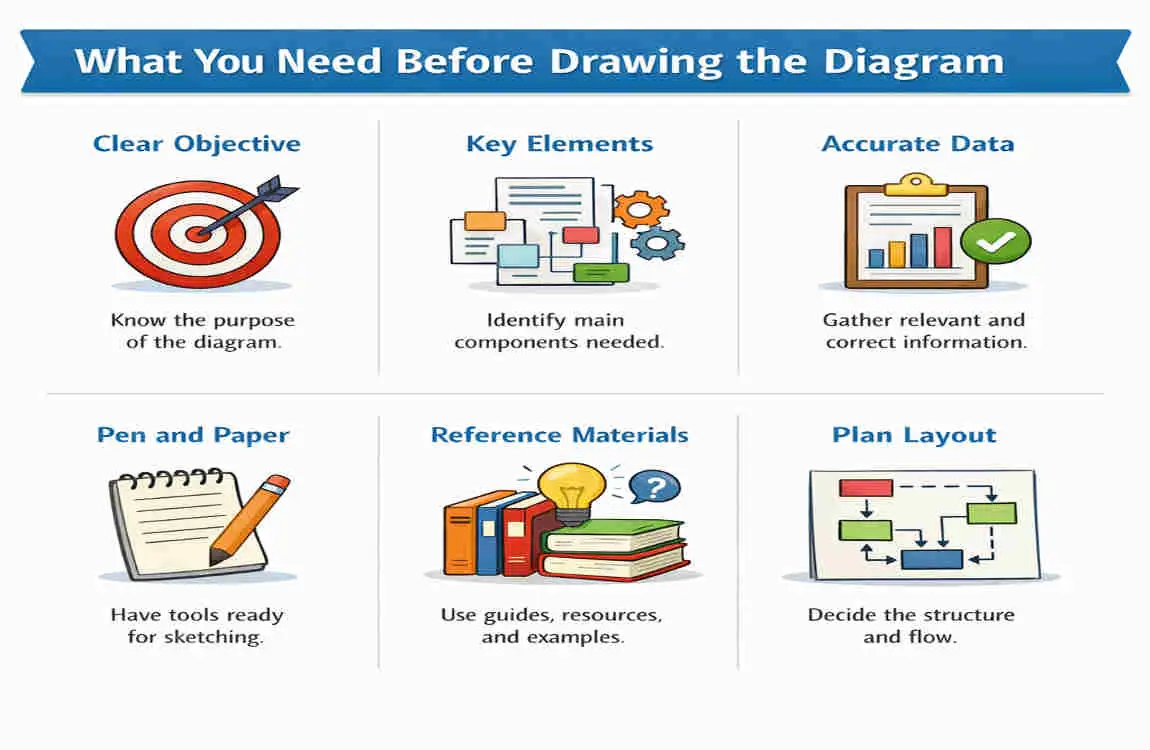
What You Need Before Drawing the Diagram
Before you begin, gather basic information such as the house layout, fixture locations, water entry point, and main drain connection. If you know pipe sizes and materials, keep those details ready too.
A simple sketch, paper, pencil, or drawing software can work well for a basic diagram.
Free Tools for Drawing a Plumbing Riser Diagram
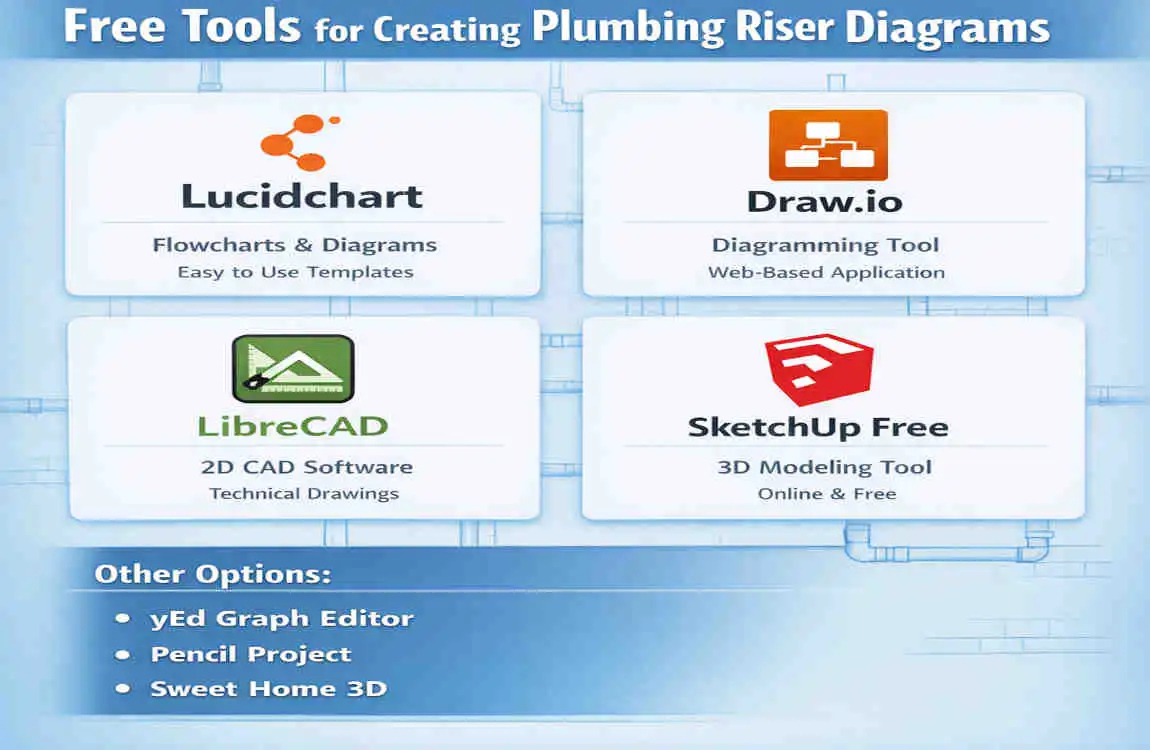
Start With the Main Water Supply
Begin by marking the incoming water line and the main shutoff valve. This gives the diagram a clear starting point and shows where water enters the home.
Add Water Supply Branches
Draw cold-water lines to the fixtures and hot-water lines from the water heater. Keep the branches neat so it is easy to see which fixtures each line serves.
Add Plumbing Fixtures
Include the main fixtures such as toilets, sinks, showers, bathtubs, kitchen sinks, washing machines, and the water heater. Place them clearly so the layout makes sense.
Draw Drain and Waste Pipes
Next, connect each fixture to its drain line. Show how smaller branch drains join larger pipes and lead toward the main sewer or septic connection.
Include Vent Pipes
Vent pipes are important because they help air move through the system. They also support proper drainage and help control bad smells.
Common Plumbing Riser Diagram Symbols
Here is a simple guide to common symbols and their meaning:
Symbol Type What It Shows
Solid line Water supply line
Dashed line Drain or waste line
Vertical line upward Vent pipe
Small valve mark Shutoff valve
Box or tank shape Water heater
Fixture icon Sink, toilet, shower, or tub
Tips for Making an Accurate Diagram
Keep the drawing simple and clean. Use the same symbols throughout the diagram and label anything that may be unclear.
Also, try to separate supply lines, drain lines, and vent lines so the system is easy to follow at a glance.
Common Mistakes to Avoid
One common mistake is forgetting vent pipes. Another is mixing hot and cold water lines, which can confuse the whole drawing.
Also avoid leaving fixtures disconnected or using unclear symbols. A neat, labeled diagram is always easier to use.
Final Checklist Before Using Your Diagram
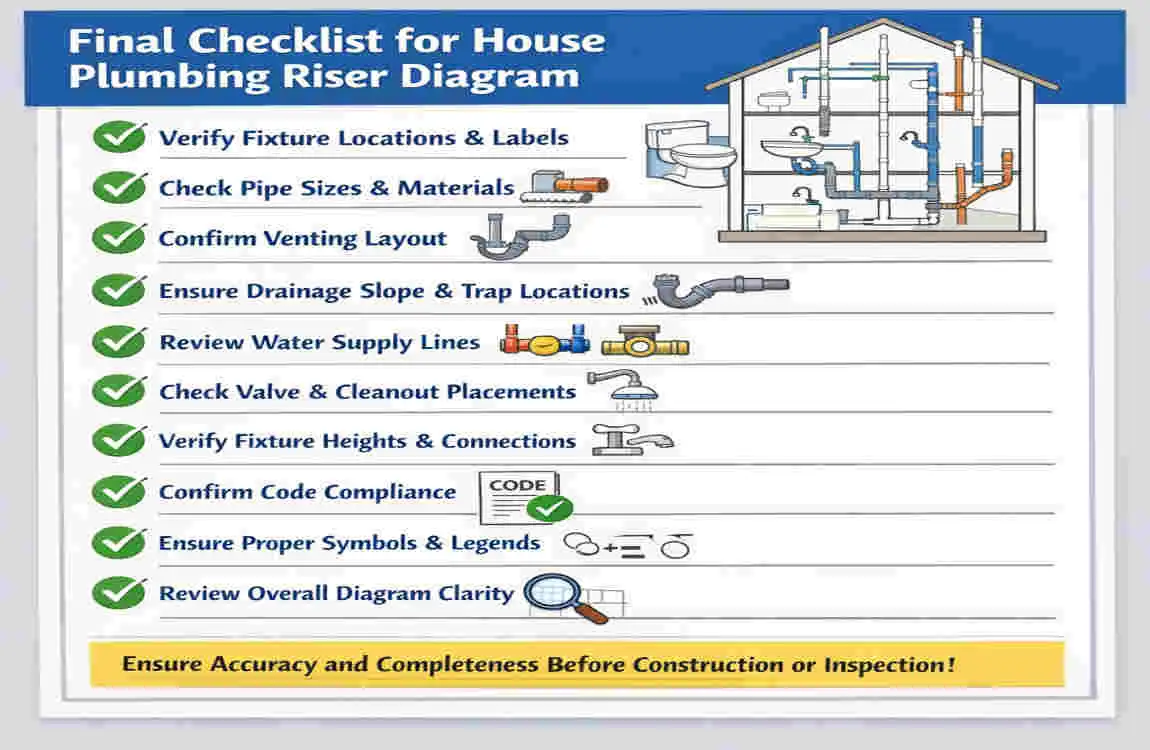
Before you finish, make sure the diagram includes:
- All main fixtures
- Supply lines
- Drain lines
- Vent lines
- Main valves
- Pipe labels where available
The diagram should match the home as closely as possible and follow local plumbing rules.
FAQ: How to Draw a House Plumbing Riser Diagram
What is a plumbing riser diagram?
A plumbing riser diagram is a simplified vertical schematic that shows how water and waste pipes rise through a house and where they branch to fixtures. It is not drawn to scale like a floor plan.
How do you draw one?
Start by gathering the plumbing information, sketch a quick top-down view, then add the vertical riser details, pipe sizes, and connections. After that, check the drawing for accuracy and completeness.
What should it include?
A residential riser diagram usually shows drain, waste, and vent (DWV) lines, how they connect, and the actual pipe sizes.
Do I need vent pipes in the diagram?
Yes. The diagram should show how fixtures are vented, because proper venting is part of the DWV system. Drawing a riser diagram also requires a strong understanding of waste and vent systems.
Can I draw it by hand?
Yes, you can sketch it by hand for a simple project, but it still needs to be clear and accurate. For many projects, building departments require a plumbing riser diagram for permits.
Do I need to follow local plumbing rules?
Yes. Local rulebooks and plumbing requirements matter, especially for permits and inspections.