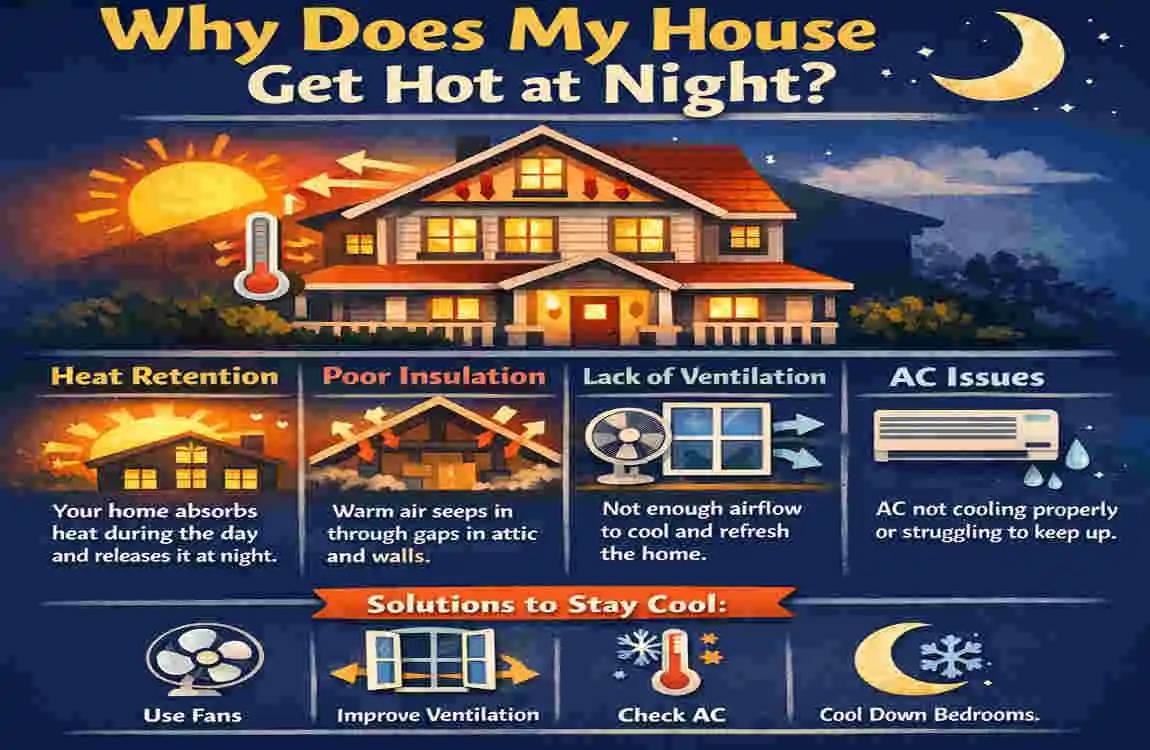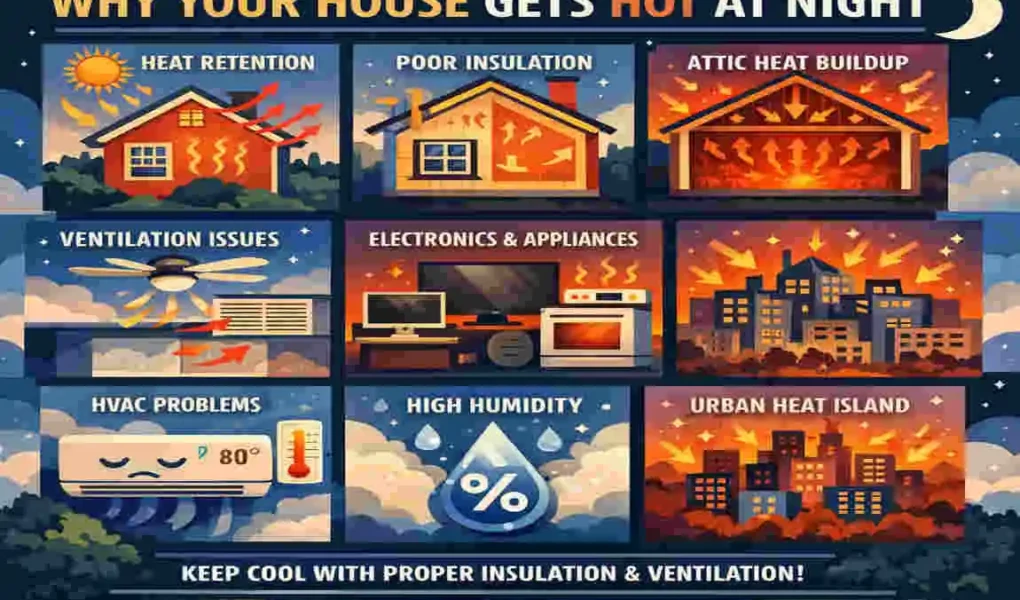
If you have ever climbed into bed after a long day and felt like your bedroom had turned into a sauna, you are not alone. That heavy, sticky, sweat-soaked feeling can make it hard to relax, hard to fall asleep, and even harder to stay asleep. A room that felt fine earlier in the day can suddenly feel much hotter at night, and that can leave you asking the same frustrating question: why does my house get hot at night?
| Tip | How to Implement | Benefit |
|---|---|---|
| Close daytime curtains | Draw blackout curtains or blinds on sun-facing windows during the day. | Blocks heat buildup, keeping interiors 5-10°C cooler. |
| Open windows at night | Ventilate by opening opposite windows when outdoor air cools (post-sunset). | Creates natural airflow to flush out trapped warm air. |
| Use fans strategically | Place a fan near an open window; pair with a second fan to exhaust hot air. | Circulates cooler night air effectively without AC. |
| Block external heat | Install awnings, shutters, or shade plants over south-facing areas. | Reduces solar gain by up to 30% long-term. |
| Opt for breathable bedding | Choose cotton sheets and light pajamas. | Allows skin to breathe, lowering body temperature. |
Understanding nighttime heat in your home

The role of sun exposure and solar gain
Sunlight is one of the biggest reasons a home heats up during the day. Windows, in particular, let sunlight in very easily. Once that light enters, it turns into heat. That is why a room can feel like an oven by late afternoon if the sun has been hitting the glass for hours.
This is known as solar gain, and it can be a major problem in bedrooms, living rooms, and upstairs spaces. Rooms that face west often suffer the most because they receive strong afternoon sun. By the time evening arrives, those rooms have already absorbed a lot of warmth.
The roof can also play a big role. Since it gets direct sun for most of the day, it may heat the attic and upper floors. If the attic is poorly vented or under-insulated, that heat can drift down into the rest of the home, making nighttime cooling much harder.
Internal heat adds up more than people realize
It is easy to blame the weather when a home feels warm at night, but the truth is that the inside of your house may be generating much of the heat itself.
Common heat sources inside the home include:
- Ovens and stoves
- Dishwashers
- Dryers
- Computers and gaming systems
- TVs and streaming devices
- Lights, especially older bulbs
- Chargers and electronics left plugged in
- People and pets
That last one surprises many homeowners. Every person in a room gives off body heat. In a small bedroom, two people plus a pet can raise the temperature more than you might expect. Add blankets, poor airflow, and a closed door, and the room can feel warmer very quickly.
The point is not to panic about everyday life. It is to notice how many small heat sources can pile up. When you reduce those sources during the hottest part of the day, your house is more likely to stay cooler at night.
Air movement matters as much as temperature
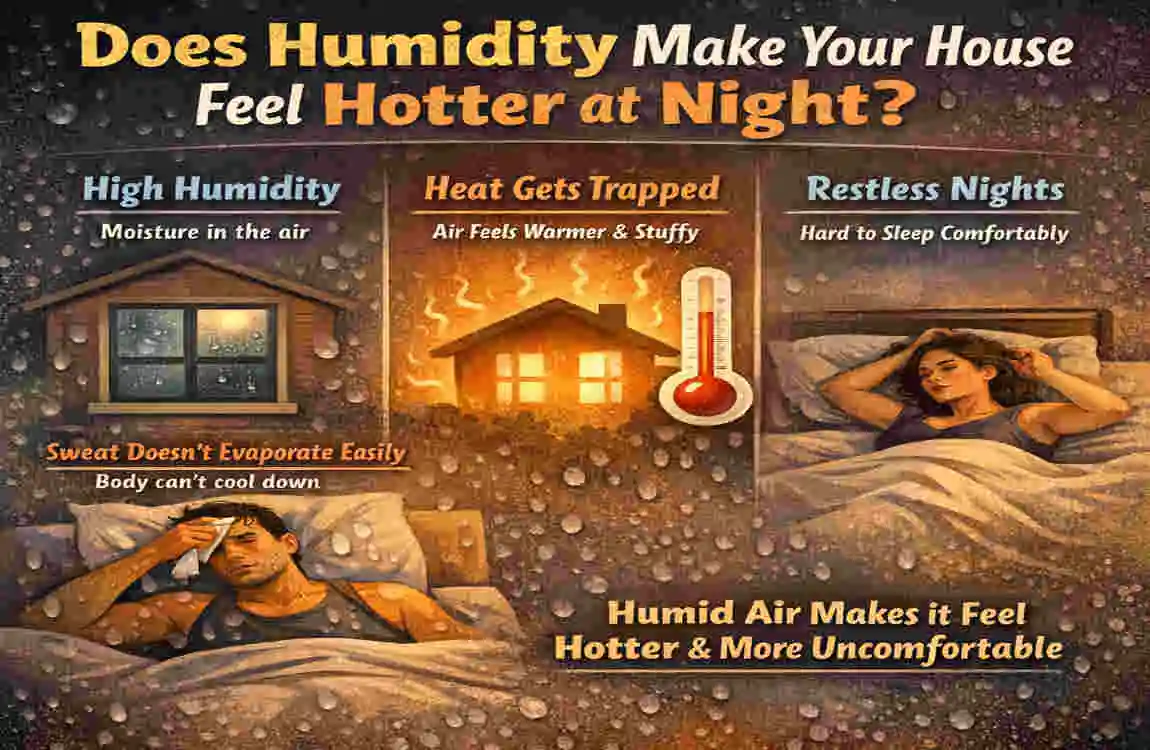
A room does not only feel hot because of the actual temperature. It also feels hot when the air is still. Stale air holds onto warmth and moisture, which makes the room feel heavier and less comfortable.
That is why two bedrooms with the same temperature can feel very different. The one with better airflow usually feels cooler. The one with trapped air often feels muggy and hot.
So if you want a better night’s sleep, do not focus only on the number on the thermostat. Also think about how air moves through the room. Good airflow can make a big difference even before you make bigger changes.
Daytime habits for nighttime comfort

The “closed window” rule
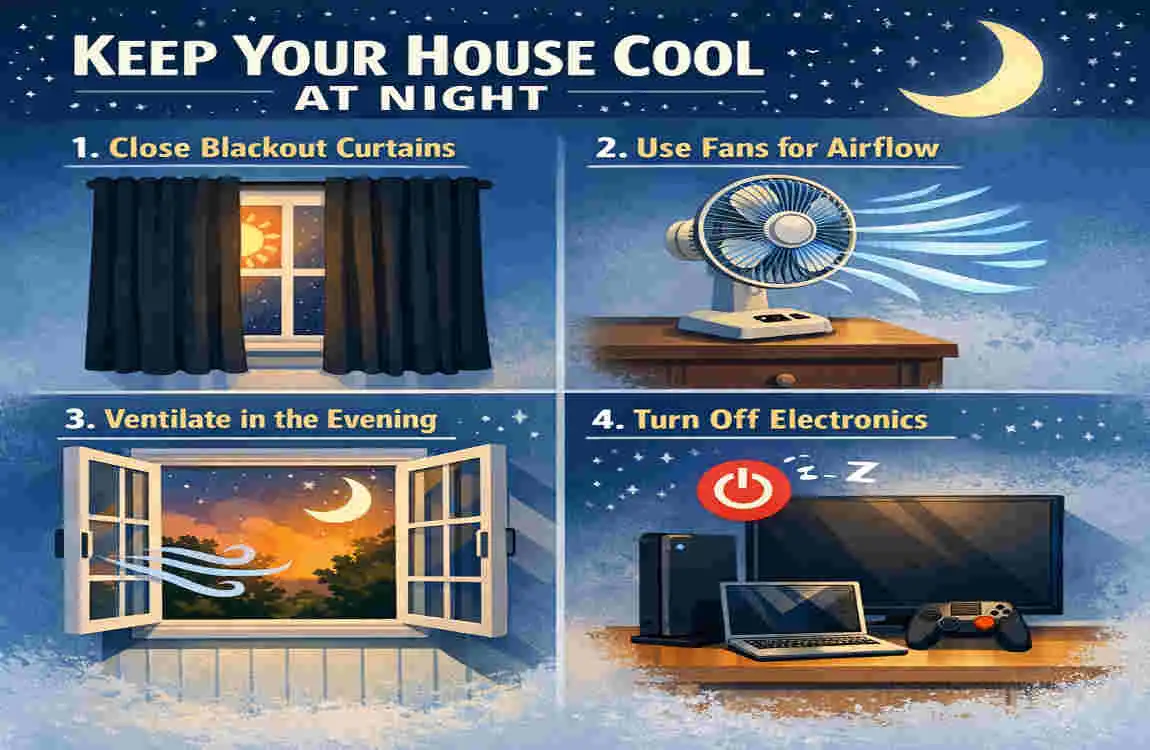
One of the simplest ways to keep your home cooler at night is to keep heat out during the day. That means keeping windows closed when the outdoor air is hotter than the air inside.
This may sound basic, but it is one of the most effective habits you can build. If you open windows during the heat of the day, you may let hot air in and have it settle throughout the house. Then, when night comes, your home has more stored heat to release.
A good rule is this: keep windows closed during the hottest hours of the day. Then, when the outdoor temperature drops in the evening or overnight, open them strategically to let in cooler air.
This is a simple shift, but it matters. Instead of inviting heat in during the day, you hold the cooler indoor air you already have.
Block sunlight before it becomes heat
Sunlight is welcome in many parts of the home, but during hot weather it can work against you. The earlier you block it, the less heat your house will absorb.
You can do this with:
- Blackout shades
- Reflective blinds
- Light-colored curtains
- Thermal window coverings
- External awnings or shade screens
The key is to stop the sun before it warms the room. Once heat penetrates carpets, walls, and furniture, it becomes much harder to remove.
This is especially important for south-facing and west-facing windows. Those areas can gather the strongest sun and create hot spots that linger into the night. If you only make one change during the day, window shading is one of the best places to start.
Keep heat-producing chores for later
Some tasks seem harmless, but they can raise your home’s temperature more than you realise. Cooking a big meal with the oven on, running the dryer, or doing a heat-heavy chore during the afternoon can make your house work harder to cool down later.
Whenever possible, try to shift these tasks to cooler times of day. If you can cook early in the morning or later in the evening, your home will have less excess heat to fight off before bed. If you can air-dry clothes instead of using the dryer, that helps too.
You do not need to stop living your normal life. You just need to be more aware of when your home is most vulnerable to heat buildup.
Reduce internal heat from electronics
Electronics emit heat, even when they do not feel warm to the touch. Computers, game consoles, televisions, routers, and chargers can all add up.
Try this simple habit during hot days:
- Turn off devices you are not using.
- Unplug chargers that do not need to stay connected.
- Avoid leaving big electronics running in small rooms.
- Give hot devices room to breathe so heat does not build around them.
These changes may feel small, but they reduce the background warmth that builds up throughout the day. And when bedtime comes, your room will already feel less heavy.
Effective nighttime cooling strategies
Open windows at the right time
When the outside air finally becomes cooler than the indoor air, that is your cue to open the windows. This gives your home a chance to flush out trapped heat and bring in fresh air.
Timing matters here. If you open windows too early, you may bring in more warm air. If you wait until the evening or late night, when the air cools, you can use the natural temperature drop to your advantage.
This works best when the air outside is dry and comfortably cooler than inside. In that case, even a small breeze can help pull warm indoor air out and replace it with fresher air.
You do not need every window in the house open. Start with the rooms that feel the hottest, especially bedrooms and upper floors. Even a little cross-breeze can improve comfort.
Use the stack effect to move hot air out
Warm air rises. That simple fact can help you cool your house more effectively.
This is called the stack effect. When you open the lower and upper windows simultaneously, warm air can rise and escape through the top, while cooler air enters from below. This creates a natural airflow pattern that helps push out trapped heat.
If you live in a two-story home, this is especially useful. Open an upstairs window to let hot air out, and an downstairs window to pull in cooler air. If there is a breeze, position the openings so air can move through the house instead of getting stuck in one spot.
The goal is not just to open windows. The goal is to create a path for the air to move.
Use fans with purpose, not just placement
Fans do not lower the temperature of a room, but they do make you feel cooler by moving air across your skin. That moving air helps sweat evaporate more quickly, improving comfort.
Here is how to use fans better:
- Place a fan near a window to help pull in cooler air or push out warm air.
- Use a ceiling fan to keep air moving throughout the room.
- Try an oscillating fan to spread airflow more evenly.
- Position a box fan in a window facing out to vent hot air.
- Put a fan across the room from where you sleep so the airflow reaches you without blowing directly in your face all night.
The best fan setup depends on your room layout. A little experimenting can help you find the most effective position.
When to use a portable AC or evaporative cooler
Sometimes fans and windows are not enough. If you live in a very hot climate, sleep on the upper floor, or have a room that stubbornly holds heat, a portable cooling option may be worth considering.
A portable AC unit can cool a specific room more directly than a fan. That makes it useful for bedrooms or home offices where you spend a lot of time. It can be a good choice when you only need to cool one area instead of the whole house.
An evaporative cooler may also help in dry climates. It uses water evaporation to create a cooling effect. It is not a good fit everywhere, but under the right conditions it can be an energy-friendly option.
Before choosing one, think about:
- Room size
- Climate
- Noise level
- Energy use
- How often you will actually use it
If you only need it on the hottest nights, a portable unit can be a practical backup without requiring a full HVAC upgrade.
A simple nighttime cooling routine
If you want a step-by-step habit, try this basic routine:
- Keep the house closed and shaded during the day.
- Turn off unused electronics before dinner.
- Wait until outside air cools down.
- Open windows on opposite sides of the house.
- Use fans to guide airflow.
- Close the windows again in the early morning if the air starts to warm up.
This routine is easy to remember and works well for many homes. It gives you a repeatable system rather than random trial-and-error.
Structural and long-term solutions

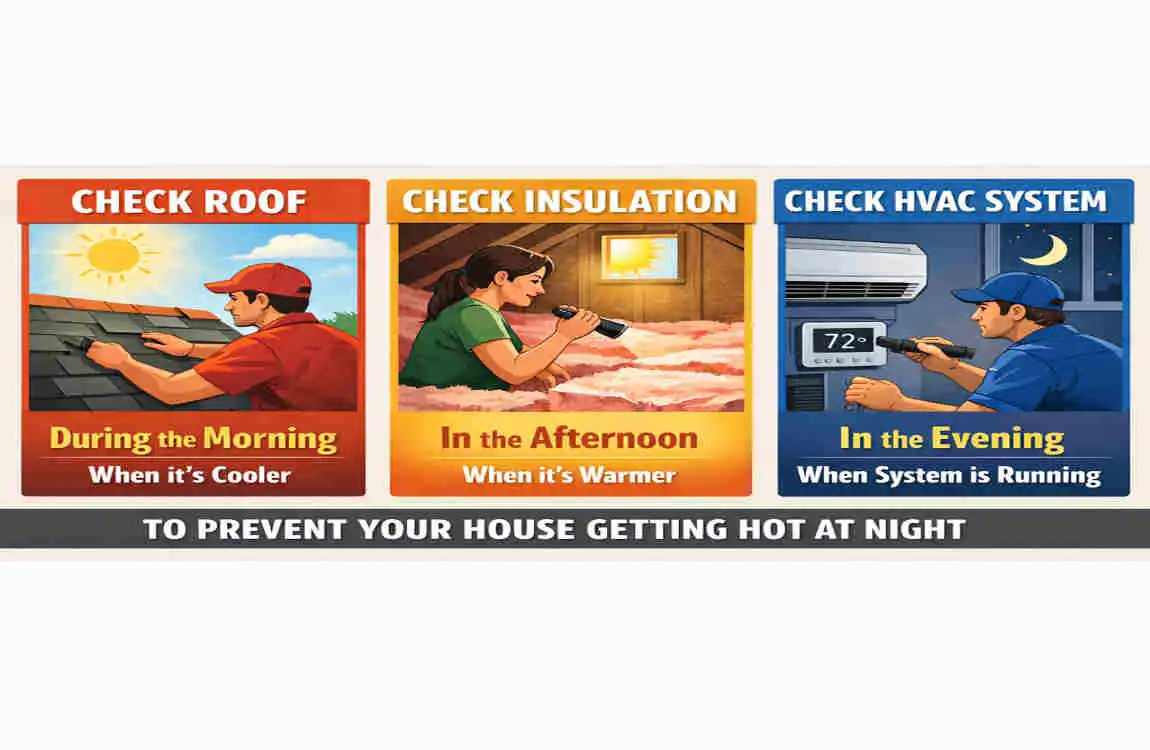
Check the insulation in your attic and ceiling
If your home stays hot at night no matter what you do, the issue may be structural. One of the first places to look is the attic.
The attic often acts like a giant heat collector. If it is poorly insulated or poorly ventilated, that heat can spread into the rooms below. That means your upper floors may stay uncomfortable even after sunset.
Good insulation slows heat transfer and helps keep the indoor temperature more stable. If your current insulation is thin, uneven, or outdated, upgrading it may make a big difference.
This is one of the best long-term improvements because it helps both cooling and heating. In summer, it keeps heat out. In winter, it keeps warmth in.
Look for under-cooled rooms and weak airflow
Sometimes the problem is not the entire house. It is one room that always feels hotter than the rest. That room may be getting less airflow from your HVAC system, or it may be sitting in a hotter part of the house.
If one bedroom is always warmer, check for:
- Blocked vents
- Closed or partially closed registers
- Dirty filters
- Leaky ductwork
- Poor window coverage
- Direct sun exposure
- Furniture blocking airflow
A room that does not get enough conditioned air can feel sticky and uneven, even if the rest of the house is fine. A professional HVAC technician can help determine whether the system is properly balanced or if one zone needs attention.
Smart thermostats can make cooling easier
A smart thermostat can help you manage temperature more intentionally through the day and night. Instead of guessing when to cool the house, you can set a schedule that matches how your home actually behaves.
For example, you might:
- Pre-cool the house before sunset
- Reduce cooling when nobody is home
- Lower the temperature at bedtime
- Avoid running the system harder than needed in the early morning
That kind of automation can make your home feel more stable. It also helps reduce waste because the system operates with a plan rather than reacting late.
Smart thermostats are not magic, but they do make it easier to form good habits. If your schedule changes often, they can be especially helpful.
Compare quick fixes and longer-term upgrades
Here is a simple way to think about your options:
SolutionCost LevelCooling ImpactBest ForMain Benefit
Closed-window daytime rule Low Medium Any home Stops hot air from entering
Blackout shades / curtains Low to Medium High Sunny rooms Reduces solar gain
Nighttime window ventilation Low Medium to High Cooler climates Flushes out trapped heat
Fans Low Medium Bedrooms and living spaces Improves airflow and comfort
Portable AC Medium High One hot room Direct localized cooling
Attic insulation upgrade Medium to High High Warm homes with heat buildup Reduces stored heat
HVAC balancing Medium High Uneven homes Improves airflow to hot rooms
Smart thermostat Medium Medium Busy households Automates better cooling habits
This table shows an important truth: you do not always need a massive project to get relief. Often, the best results come from combining a few low-cost habits with one or two stronger upgrades.
Building a better cooling routine for your home
Start with the easiest changes
When people feel miserable in a hot bedroom, they often want the fastest fix possible. That makes sense. But the smartest strategy is to begin with the easiest changes first.
Start with the basics:
- Close the windows during the day.
- Block direct sunlight.
- Turn off heat-producing devices.
- Open the house only when the outdoor air is cooler.
- Use fans to move air in the right direction.
These steps cost very little, and they often produce quick improvement. If your home still feels too warm after that, then move on to bigger upgrades.
Pay attention to patterns
A hot house is not always a mystery. Usually, there is a pattern behind it.
Ask yourself:
- Which rooms heat up fastest?
- What time of day does the heat start building?
- Does the upstairs always feel worse?
- Are certain windows getting direct sun?
- Does the house cool down after midnight, or does it stay warm all night?
Once you notice the pattern, you can solve the real problem instead of just treating the symptom. For example, if your west-facing bedroom gets the afternoon sun, your biggest win may come from better shade, not a stronger fan.
Make comfort a habit, not a one-time fix
A lot of homeowners try one cooling trick, don’t see instant results, and give up. But home comfort usually improves through habits, not one single change.
If you keep using daytime shading, nighttime ventilation, fan placement, and smart appliance use together, your house will slowly become easier to live in. The goal is not perfection. The goal is steady improvement.
That matters because better sleep is often the real prize. When your bedroom stays cooler, you fall asleep faster, wake up less often, and feel better the next day. The comfort you create at home pays you back every night.
Practical cooling checklist you can use tonight
A quick action plan for better sleep
If you want a simple starting point, try this checklist tonight:
- Close blinds or curtains before the sun gets strong.
- Keep windows shut while the outdoor air is hotter.
- Turn off unused electronics in the bedroom.
- Avoid cooking with heat-heavy appliances late in the day.
- Open windows after sunset if the outdoor air feels cooler.
- Use a fan to move air across the room.
- Keep bedroom doors open to improve whole-house airflow.
- Adjust bedding so it feels lighter and more breathable.
You do not need to do everything perfectly. Even a few of these steps can make your room noticeably more comfortable.
Small habits that add up
Sometimes the smallest changes have the biggest effect over time. A lighter curtain, a better fan setup, or a habit of closing windows at the right time can improve your nights more than you expect.
And once you build those habits, they become easy to repeat. That is the real win. You are not just cooling one room for one night. You are creating a home that stays more stable all summer long.
Why Does My House Get Hot at Night? — FAQ
Q: Why does my house feel hot at night even when it’s cooler outside?
A: During the day, your house absorbs heat into walls, floors, furniture, and especially the roof. This stored heat slowly releases back into your rooms after sunset, making the house feel warmer even though the outside air is cooler .
Q: How does the roof affect nighttime heat?
A: Roof materials like tiles or metal sheets soak up solar heat all day. This heat transfers into the attic and then radiates down into your living spaces at night, keeping your home warm .
Q: Does insulation matter?
A: Yes! Poor or missing insulation traps heat inside your walls and ceilings, preventing it from escaping quickly. This causes rooms, especially upstairs bedrooms, to stay hot longer at night .
Q: Can sunlight during the day cause nighttime heat?
A: Absolutely. Rooms with windows facing the sun, especially south or west, absorb more heat during the day. That heat lingers and makes those rooms hotter at night .
Q: Why does heat feel worse inside than outside at night?
A: The outside air is vast and cools quickly, but inside your home, the air volume is smaller and mixed with heat radiating from warm surfaces. This trapped heat makes indoor air feel stuffy and warmer .
Q: Do fans or ventilation help?
A: Yes! Fans don’t lower temperature but improve comfort by moving air. Opening windows at night when it’s cooler outside helps flush out stored heat and bring in fresh air .