The move itself gets all the attention, but the days after are what decide how quickly a new house starts to feel like home. Boxes everywhere, nothing where you expect it, and a strange quiet where your routine used to be.
Settling in well is not about unpacking fast for its own sake. It is about restoring comfort and order in a sensible sequence, so the space works for you within days rather than weeks.
This guide covers how to move from a house full of boxes to a home you can relax in, with as little stress as possible.
Prepare comfort before the boxes arrive
The smoothest arrivals start before the truck does. If you can, clean the new home while it is still empty, because it is far easier without furniture in the way.
Check that heating, hot water, and power are working the day you take the keys. Arriving to a cold house with no hot shower sets a tone that is hard to shake after a long day of lifting.
Have a simple first-night bag ready with bedding, toiletries, phone chargers, and a change of clothes. Knowing you can wash and sleep comfortably makes everything else feel manageable.
Unpack in the right order
Resist the urge to open boxes at random. A clear order turns chaos into progress and gets the essentials working first.
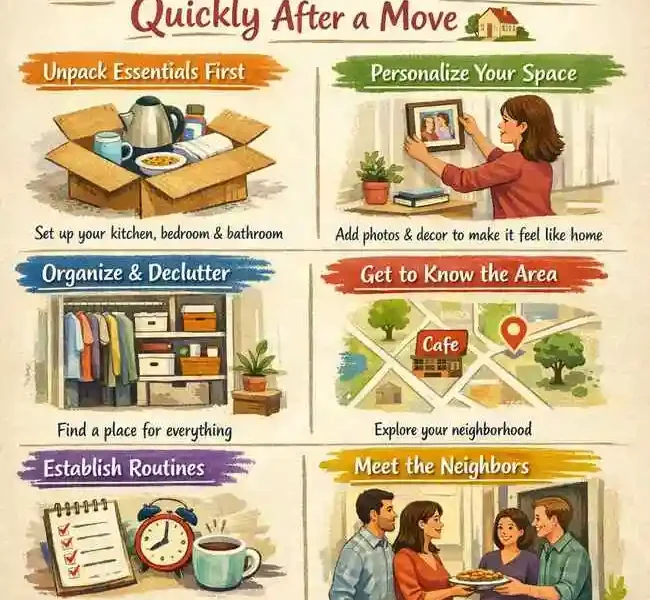
Start with the bedrooms so everyone has somewhere restful to sleep from night one. Make the beds early, before tiredness sets in, so you are not assembling a frame at midnight.
Move next to the bathroom and kitchen, the two rooms that restore daily function fastest. Once you can shower, cook, and sleep, the pressure lifts and the rest can happen at a calmer pace.
Get the kitchen working first
A functioning kitchen does more for morale than almost anything else. It ends the run of takeaway meals and gives the household a place to gather.
Unpack the basics before the extras: a few plates, cups, pots, and the appliances you use daily. The specialist gadgets can wait in their boxes until the essentials are in place.
Give cupboards a quick wipe before filling them, and take a moment to decide where things should live. Setting up the kitchen thoughtfully now saves years of reaching into the wrong drawer.
Check the essentials work on day one
Before you disappear into a wall of boxes, walk through the house and test the things you rely on. Confirm the heating, hot water, oven, and any air conditioning all switch on as they should.
Locate the meter box, the water shut-off, and the smoke alarms while you are at it. Knowing where these are from the first day saves a frantic search later and gives you peace of mind on night one.
If anything is faulty, report it early. Issues raised in the first days of a tenancy or purchase are far easier to resolve than ones you flag weeks after moving in.
Recreate small comforts early
A home is more than working utilities. The details that made your old place feel like yours are what turn a new house from a shell into somewhere you belong.
Hang a few familiar pictures, put out a favourite lamp, and set up a comfortable corner to sit in. These small touches have an outsized effect on how quickly a place feels settled.
Unpacking a few books, a plant, or the coffee machine you love can shift the whole mood of a place. Comfort is often built from these ordinary objects rather than the large pieces of furniture.
Children and pets especially benefit from familiar things appearing fast. A known blanket, toy, or bed helps them adjust to surroundings that otherwise feel strange and new.
Sort the practical admin without delay
Comfort is not only physical. A few practical jobs, done early, prevent nagging stress later.
Update your address with the essentials: bank, employer, insurer, and any subscriptions. Redirect your mail so nothing important slips through during the change.
Find your local basics too: the nearest supermarket, pharmacy, and medical clinic. Knowing where to go for everyday needs helps a new area feel less like unfamiliar territory.
If you are renting, complete the incoming condition report carefully and take dated photos of every room. It protects your deposit and settles any dispute long before it has a chance to start.
Plan simple meals for the first few days
Cooking a full meal in an unfamiliar kitchen surrounded by boxes is rarely realistic. Plan a few easy options so you are not relying on takeaway every single night.
Keep a small supply of basics: bread, coffee, snacks, and a couple of one-pot meals you can throw together quickly. A well-fed household copes far better with the disruption of a move.
Paper plates and cups for the first day or two are a small mercy while the kitchen finds its feet. There is no shame in keeping things simple until you are ready.
Give yourself permission to go slowly
Not everything has to be perfect in the first week. Once the essentials are in place, the remaining boxes can be worked through at a human pace.
Trying to finish it all in a single push usually ends in exhaustion and mistakes. A room a day, or even a box a day, keeps the task steady and lets you actually enjoy the new space.
Be kind to yourself during the adjustment. Feeling slightly unsettled in a new home is normal, and it fades as your routines take root.
When the packing itself is the hurdle
For many people, the hardest part is not settling in but the packing that comes first. A full home, a busy schedule, or a lot of fragile belongings can make the lead-up to a move genuinely daunting.
This is where handing the heavy lifting to a professional packing service can change the whole experience. When your belongings are packed properly and labelled clearly, unpacking at the other end becomes faster and far less stressful.
However you get there, the aim is the same: restore comfort in a sensible order, recreate the small touches that matter, and give yourself time. Do that, and a new house becomes a home sooner than you would think.