why does my house feel damp with ac on
Appliances Home Improvement

How to Fix Dampness in Your Home with AC On

It is a sweltering summer day in Lahore. Your AC is running. The room is cool enough, yet something still feels off. The air feels sticky. Your skin feels clammy. The sofa feels slightly wet to the touch. You start wondering, why does my house feel damp with AC on when the unit is already working so hard?

Many homeowners face this exact problem, especially in humid climates where the air already carries a lot of moisture. An air conditioner does two jobs at once. It cools the air and removes moisture from it. When everything works properly, the home feels cooler and drier at the same time. But when something goes wrong, the cooling may still occur while the dampness remains.

That is why a house can feel uncomfortable even when the AC is on. The issue is often not one single thing. It can be a dirty filter, poor airflow, an oversized unit, weak insulation, hidden air leaks, or even the way you use the AC every day. Sometimes the machine itself is fine, but the home around it is letting humid air sneak in.

The good news is that this problem is usually fixable. In many cases, you can improve comfort with simple changes such as cleaning filters, adjusting the fan setting, sealing gaps, and improving ventilation. In other cases, a professional tune-up or a full system check can make a huge difference.

Issue / Cause What to Do Why It Helps
AC fan set to “On” instead of “Auto” Switch thermostat fan to Auto mode. Stops constant air circulation that can blow damp air when AC isn’t actively cooling.
Dirty or clogged air filters Clean or replace filters every 30–90 days. Improves airflow over coils so AC removes moisture more efficiently.
Oversized or poorly sized AC unit Get an HVAC pro to check system sizing / load calculation. Prevents short‑cycling that cools without removing enough humidity.
Frozen evaporator coils Call a technician; check refrigerant, airflow, and coil cleanliness. Coils need to stay cold but not frozen to condense and drain moisture.
Blocked condensate drain line / pan Inspect and clean drain line and pan; clear algae or blockages. Lets condensed water drain out instead of leaking back into the house.
Leaky ducts or uninsulated ducts Seal and insulate ducts, especially in attics or crawl spaces. Stops humid outside air being drawn in and damp air leaking into rooms.
Poor home sealing (windows/doors) Seal gaps and cracks; improve insulation around windows and doors. Reduces humid outdoor air entering when AC is running.

Why Does My House Feel Damp with AC On?

why does my house feel damp with ac on

How an AC is supposed to control moisture

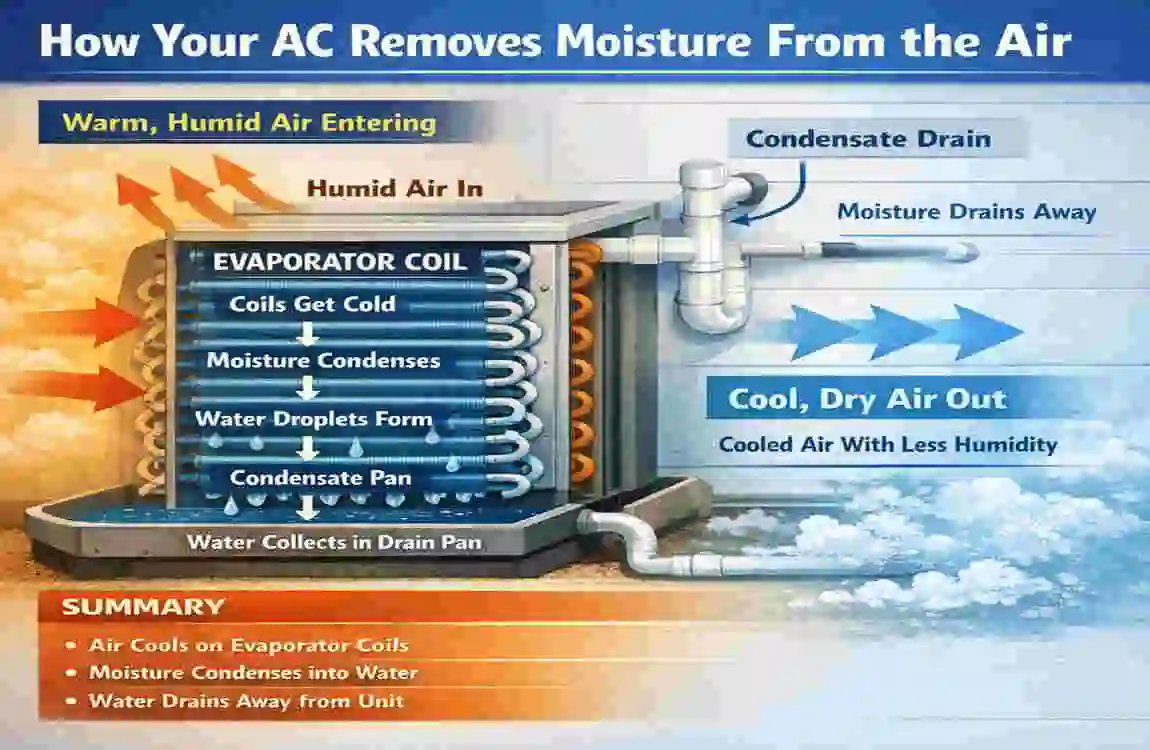
A healthy AC system does more than blow cold air. It pulls warm air from the room, passes it over cold evaporator coils, and removes moisture through condensation. That moisture drips away through a drain line. In simple terms, the AC acts as both a cooling machine and a dehumidifier.

When the system is the right size and working properly, the indoor air should feel cooler and less sticky. You should notice better comfort even if the temperature is not set extremely low. That is the balance most homeowners want.

But if the balance is broken, the AC may lower the temperature without lowering the humidity enough. That is when people start asking, “Why does my house feel damp with the AC on, even though the unit seems to be running normally?”

The most common causes of dampness despite AC

There are several reasons a home can still feel damp even with the AC on. Some are mechanical. Some are related to home structure. Some come from everyday habits.

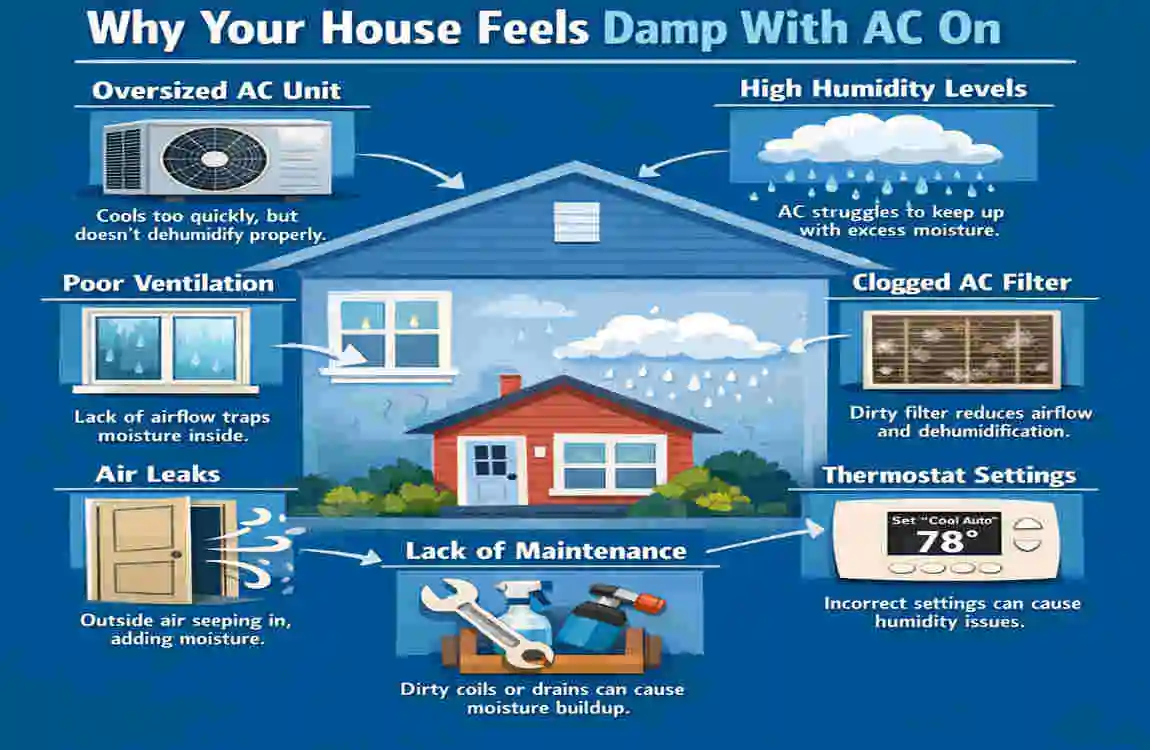
Here are the biggest causes:

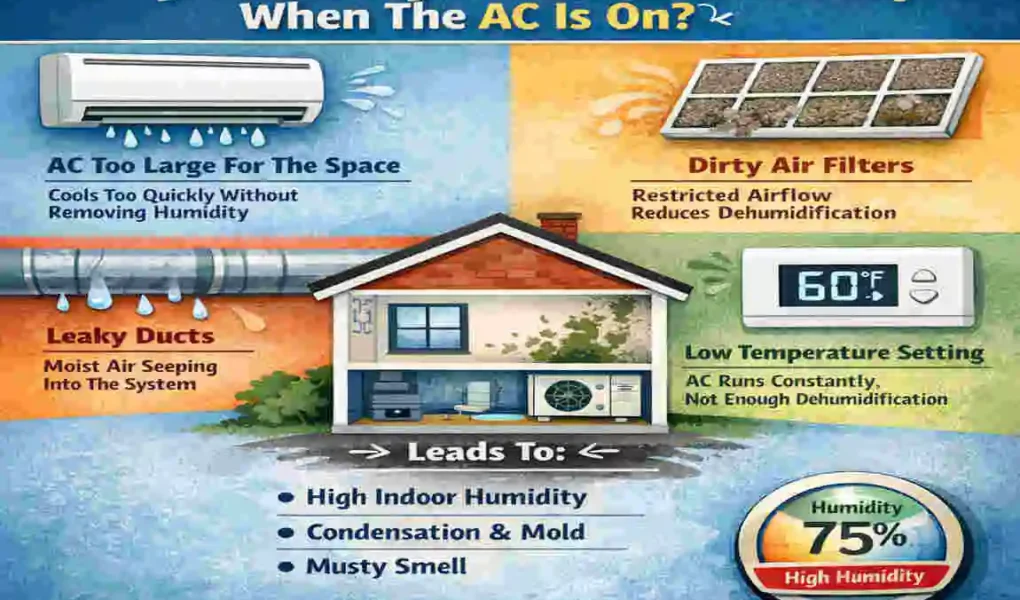
  • Oversized AC unit: A unit that is too powerful cools the room too quickly and shuts off before it has time to remove enough moisture. This is one of the most common reasons for an AC running problem in a humid house.
  • Dirty or clogged air filters: A dirty filter blocks airflow. Less air moving across the coils means less moisture removed from the room.
  • Frozen or dirty evaporator coils: If the coils are covered in dirt or ice, they cannot effectively pull moisture from the air.
  • Low refrigerant levels: Low refrigerant levels can weaken cooling and reduce the system’s dehumidification capacity.
  • Poor insulation or air leaks: Gaps around windows, doors, and walls let humid outdoor air reenter the home repeatedly.
  • High outdoor humidity: In places like during monsoon season, the air outside can be extremely moist. If the AC is not strong enough or not tuned properly, it can struggle to keep up.
  • Fan set to “On” instead of “Auto”: When the fan runs continuously, moisture on the coils can be blown back into the room.
  • Duct leaks or blockages: In ducted systems, leaks can pull in hot, damp air from ceilings, attics, or service spaces.

These issues often overlap. For example, a dirty filter can worsen airflow, which can make the coils cold enough to freeze, further reducing dehumidification. So when people ask why their house feels damp with the AC on, the answer is often a chain reaction rather than a single fault.

Common symptoms you may notice

You may not always see water dripping or feel a major problem right away. Dampness often shows up in small but annoying ways.

You may notice:

  • A sticky feeling on your skin
  • Condensation on windows or glass
  • Musty smells in bedrooms or closets
  • Clothes feeling slightly damp
  • Walls or floors feeling cool but not dry
  • AC running for long periods without comfort improving

If these signs sound familiar, your AC may be cooling the air but not controlling humidity well enough.

Why homes often struggle more

Homes in humid regions face additional pressure. summers can feel heavy, especially before and during the monsoon season. When outdoor humidity climbs, the AC must work harder to keep indoor air comfortable. If the house has leaks, poor insulation, or poor maintenance, the humidity problem worsens very quickly.

That is why home AC issues related to humidity are so common in this climate. The machine is not always broken. Sometimes it is simply being asked to do too much in tough weather.

Quick reference table: common causes and easy checks

CauseTypical SymptomQuick Check

Dirty filter Weak airflow, musty smell Look for dust buildup

Frozen coils Warm or weak cooling Check for ice on indoor unit

Air leaks Damp corners, drafts Feel around windows and doors

Fan on “On” Sticky air even when cool Check thermostat fan mode

Low refrigerant Poor cooling, long runtime Call a technician

Duct leaks Uneven cooling, hidden moisture Listen for airflow loss or whistling

This table is useful because it provides a quick starting point. If you want to fix AC humidity quickly, begin with the simplest checks first.

Indoor habits that can make dampness worse

Sometimes the AC is not the only problem. Daily habits can add extra moisture into the air faster than the system can remove it.

Common moisture sources include:

  • Long cooking sessions without exhaust fans
  • Hot showers with no bathroom ventilation
  • Drying clothes indoors
  • Too many people in one room
  • Keeping windows open during very humid weather

A home can feel damp simply because it keeps making more moisture than the AC can remove. If that happens, the space will feel uncomfortable even when the temperature is low.

Book our AC maintenance service to get a full comfort check before the next humid spell.

Diagnosing the Problem the Right Way

Check your thermostat settings

Start with the thermostat. This is the easiest place to spot a problem.

Make sure the fan is set to Auto, not On. In Auto mode, the fan runs only when the system is actively cooling. That helps moisture drain away properly. When the fan stays on continuously, it can recirculate humidity back into the room.

Also check the temperature setting. Many homes stay comfortable around 24°C to 26°C when the system is healthy. If you keep setting the temperature very low but the house still feels damp, the issue may be humidity control rather than temperature control.

 Inspect the filter and visible coils

Turn off the unit safely, then check the air filter. If it is grey, dusty, or clogged, replace or clean it right away. A filter that looks only slightly dirty may still be blocking airflow more than you think.

If you can see the indoor coils, check for dirt, dust, or ice. A dirty coil cannot effectively pull heat and moisture out of the air. A frozen coil is even worse. It means the system is not moving heat the way it should.

If you see heavy buildup or ice, do not ignore it. That usually points to a deeper airflow or refrigerant issue.

Measure humidity with a hygrometer

A small hygrometer can tell you how much moisture is in the air. This is one of the smartest tools for figuring out why my house feels damp with the AC on.

A comfortable indoor humidity level is usually below 50% to 60% RH. If your home sits above that for long periods, the air will often feel sticky even if the temperature is fine.

You do not need a professional lab tool. A basic home hygrometer is enough to show you whether the problem is real humidity or just a comfort feeling.

Watch how long the AC runs

Pay attention to the cycle time. If the AC turns on, cools quickly, and shuts off after only a few minutes, it may be oversized or short cycling. That means it does not stay on long enough to remove moisture.

A system that runs in short bursts often leaves the room cool but clammy. A healthier system usually runs long enough to steady both temperature and humidity. In many homes, a good cycle lasts long enough to do real dehumidification without overworking the unit.

Think about timing and weather

Does the dampness happen only in the evening? Only after cooking? Only during monsoon weather? Timing matters.

If the problem worsens during humid weather, your AC may need help handling the extra moisture. If it gets worse after showers or heavy cooking, the source may be your daily routine. If it happens all the time, the system itself may need service.

A simple diagnosis checklist

Use this quick order:

  1. Set the fan to Auto
  2. Check and clean the filter
  3. Look for ice or dust on coils
  4. Measure indoor humidity
  5. Watch AC runtime
  6. Inspect windows, doors, and vents

This simple process can help you narrow down the problem without wasting money on guesswork.

When it is time to call a pro

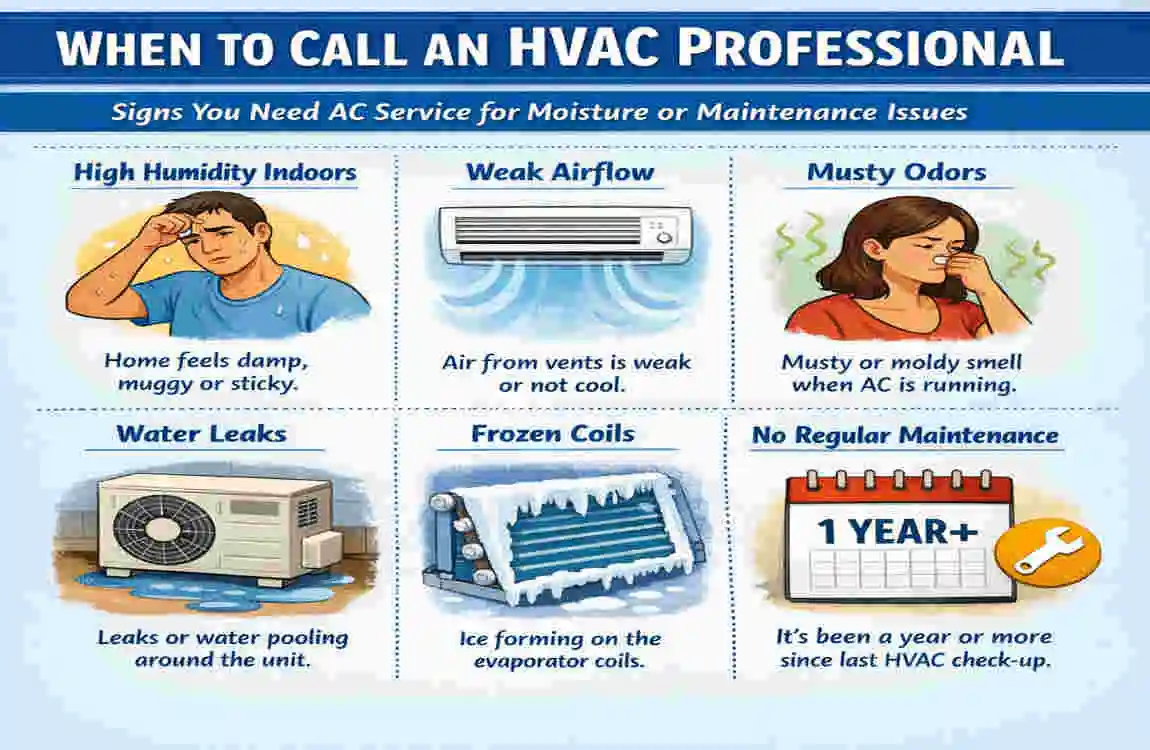
Call a technician if you notice any of these signs:

  • Ice on the coils keeps coming back
  • Cooling feels weak even after cleaning
  • The AC makes odd noises
  • The system runs constantly but never feels dry
  • You suspect refrigerant loss or duct leaks

A trained professional can spot issues that are hard to see from the outside.

How to Fix Dampness with AC On: DIY Solutions

Quick fixes you can do today

If you want to fix dampness with AC on right away, start with the easy things.

First, switch the fan to Auto if it is set to On. This small change can help the AC remove moisture rather than recirculate it.

Second, fully close windows and doors. Even tiny gaps can invite humid air inside. Use weatherstripping if you feel air moving around frames or edges.

Third, run exhaust fans during cooking and showering. This keeps extra moisture from spreading through the house. It is a simple habit, but it makes a noticeable difference.

Fourth, keep interior doors open when needed so air can move more evenly. Poor circulation can create pockets of damp air in bedrooms, corners, and hallways.

These changes may seem small, but they often make the room feel better within hours.

Maintenance hacks that improve humidity control

A few simple maintenance habits can help the AC breathe and work better.

Clean or replace the filter regularly

A dirty filter is one of the easiest problems to fix. In many homes, the filter should be checked monthly and cleaned or replaced as needed. In dusty areas, you may need to do it more often.

Here is a simple approach:

  • Turn the system off
  • Remove the filter
  • Check it against the light
  • Clean it if it is reusable, or replace it if it is disposable
  • Put it back correctly before restarting the AC

A clean filter supports better airflow, better cooling, and better moisture removal.

Defrost a frozen coil safely

If you see ice on the indoor unit, turn the AC off and let the ice melt naturally. You can run the fan only to speed up the drying process. Do not chip at the ice with sharp tools. That can damage the coil.

Once the ice is gone, watch the unit again. If it freezes a second time, the root cause may be low refrigerant, weak airflow, or a blocked return path. That is usually a job for a pro.

Improve bathroom and kitchen ventilation

Bathrooms and kitchens create a lot of moisture. Use an exhaust fan if you have one. If you do not, open a window only when outdoor air is drier. If the outside air is already very humid, an open window can make the issue worse.

Better ventilation means the AC does not have to fight as hard to keep the home dry.

Home upgrades that help long term

If the damp feeling keeps coming back, a few upgrades may be worth the cost.

Consider a dehumidifier

A dehumidifier can help when the AC alone cannot manage the moisture load. This is especially useful in rooms that stay damp even when the main AC is running. It can be a smart choice for bedrooms, storage rooms, or lower floors.

Seal drafts and small gaps

Use caulk, weatherstripping, or door sweeps to reduce air leaks. When humid outdoor air keeps slipping inside, your AC must remove that moisture again and again. Sealing leaks is one of the most affordable ways to improve comfort.

Improve insulation in problem areas

Rooms that heat up fast or feel damp near walls and windows may have weak insulation. Better insulation helps the AC hold a more stable indoor climate. That means less dampness and less strain on the system.

Upgrade to a variable-speed system

If your current AC is older or poorly matched to the home, a variable-speed model may perform better. These systems can run longer at lower speeds, which helps remove humidity more steadily. That makes them a strong option for home AC units in hot, sticky climates with humidity issues.

DIY fix comparison table

DIY FixTime NeededApprox. CostEffectiveness

Change or clean filter 5 to 10 min Low High

Seal window leaks 30 to 60 min Low to medium Medium

Run exhaust fans Immediate None to low Medium

Use a dehumidifier Ongoing Medium to high Very high

Defrost coils 30 to 90 min None Medium

This table shows an important point: some of the cheapest fixes can have the biggest impact. If you are trying to fix AC humidity without spending much, start with the filter, fan settings, and air leaks.

Book our AC maintenance service for help with cleaning, leak checks, and humidity testing.

Professional Fixes for Persistent Dampness

why does my house feel damp with ac on

When DIY is not enough

Some problems need expert attention. If your AC still leaves the house damp after the basic checks, there may be a deeper issue inside the system.

Call a technician if you suspect:

  • Refrigerant leaks
  • Damaged coils
  • Poor duct design
  • Hidden duct leaks
  • Incorrect AC sizing
  • Serious drainage problems

These are not the kinds of issues you want to guess at. A trained technician can test them properly and avoid unnecessary damage.

What a professional service usually includes

A full AC service for dampness may include:

  • Coil cleaning
  • Filter inspection
  • Refrigerant pressure check
  • Drain line inspection
  • Duct sealing
  • Airflow testing
  • Thermostat review
  • Unit sizing assessment

This kind of service considers the entire system, not just indoor temperature. That matters because why does my house feel damp with AC on is often a full-system question, not a single-part question.

Why sizing matters so much

An oversized AC is a common cause of sticky indoor air. It cools the room too quickly and shuts off early. That sounds good on paper, but it hurts humidity control.

An undersized system can also struggle because it runs too long and still cannot properly stabilize the room. Either way, the wrong size creates comfort problems.

That is why a sizing audit can be so valuable. It helps you understand whether the unit matches the room size, insulation level, and local climate.

Estimated service costs 

Prices vary by city, unit size, and system condition. Still, a general guide can help you plan.

ServiceEstimated Cost in PKRExpected Humidity Improvement

AC tune-up 5,000 to 10,000 15% to 25%

Coil cleaning 3,000 to 8,000 Moderate

Duct sealing 10,000 to 25,000 Moderate to high

Dehumidifier installation 50,000+ 30% to 50%

Insulation improvement About 20,000 per room Around 20%

If you have tried the basics and the house still feels damp, a professional visit may save you money in the long run. Fixing the root cause is often cheaper than living with repeated discomfort.

Why professional work can pay off

A good technician does more than make the AC cold. They help it work the way it should. That means better airflow, lower humidity, fewer repairs, and a more comfortable home.

This is especially useful before monsoon season. In humid weather, the system has less room for error. Even a small defect can turn into a big comfort problem.

Internal service idea for your readers

For related help, you can also check your plumbing guidance on drainage and moisture control, your electrical safety notes for fans and AC circuits, and your home improvement tips for sealing drafts and improving insulation. These all support the same goal: a drier, more comfortable home.

Prevention Tips for Year-Round Dry Comfort

why does my house feel damp with ac on

Build a simple seasonal maintenance routine

The best way to avoid dampness is to stay ahead of it.

Plan for:

  • Monthly filter checks
  • Pre-summer AC servicing
  • Pre-monsoon coil and drain inspections
  • Window and door seal checks
  • Regular humidity monitoring

A little routine care goes a long way. It keeps small problems from turning into expensive repairs.

Track humidity, not just temperature

Many people only look at temperature. But humidity matters just as much for comfort.

A small hygrometer can help you spot trouble before the house feels sticky. If you notice indoor humidity creeping above your comfort range, take action early. That may mean cleaning the filter, improving ventilation, or using a dehumidifier in a problem room.

Prepare for monsoon season early

Monsoon weather can push your AC to its limits. If you wait until the house already feels damp, you are reacting too late.

Instead, prepare early by:

  • Servicing the AC before the rainy season
  • Checking for air leaks
  • Testing exhaust fans
  • Clearing drains
  • Making sure all windows and seals are tight

This simple prep can reduce the strain on your system and lower the chance of a sticky indoor environment.

Keep moisture sources under control

You cannot stop cooking or showering, but you can better manage the moisture.

Try to:

  • Use lids while cooking
  • Run fans during showers
  • Avoid drying large amounts of laundry indoors
  • Keep interior doors open for airflow when possible

These habits reduce the amount of moisture the AC must remove. That means better comfort and lower energy waste.

Prevention is cheaper than repair

This is the simplest truth. A clean filter costs far less than a frozen coil repair. A sealed window gap costs far less than months of discomfort. A routine service costs far less than a major breakdown.

If you want to avoid asking, “Why does my house feel damp with the AC on every summer?” prevention is the smartest path.

FAQs

Why does my house feel damp even with the AC on at a low temperature?

This usually happens because the AC is cooling too fast, shutting off early, or not removing enough moisture. An oversized unit is a common reason. So is a dirty filter or poor airflow.

How long does it take to fix AC humidity?

Some fixes work the same day. Cleaning the filter, adjusting the fan setting, and sealing obvious gaps can quickly improve comfort. Bigger problems, such as refrigerant leaks or duct issues, may take a few days to resolve.

What fan setting is best for humidity control?

Auto is usually the best choice. It allows the system to stop and start in a way that supports proper moisture removal. The On setting can recirculate damp air.

Can a dehumidifier help if the AC is already on?

Yes. A dehumidifier can help a lot in rooms with stubborn moisture problems. It is especially useful when the AC alone cannot keep up with the humidity load.

Why does my house smell musty when the AC runs?

A musty smell often points to moisture buildup, mold growth, a dirty filter, or drain problems. It can also happen if humid air is leaking into the house.

Should I lower the temperature more to remove humidity?

Not always. Lowering the temperature may make the room colder, but it does not always solve the humidity issue. The better fix is to improve airflow, maintenance, and system performance.

When should I call a technician?

Call a technician if you see ice on the coils, weak airflow, strange noises, repeated short cycling, or no improvement after basic cleaning and setting changes.

You may also like...

Leave a Reply

Your email address will not be published. Required fields are marked *