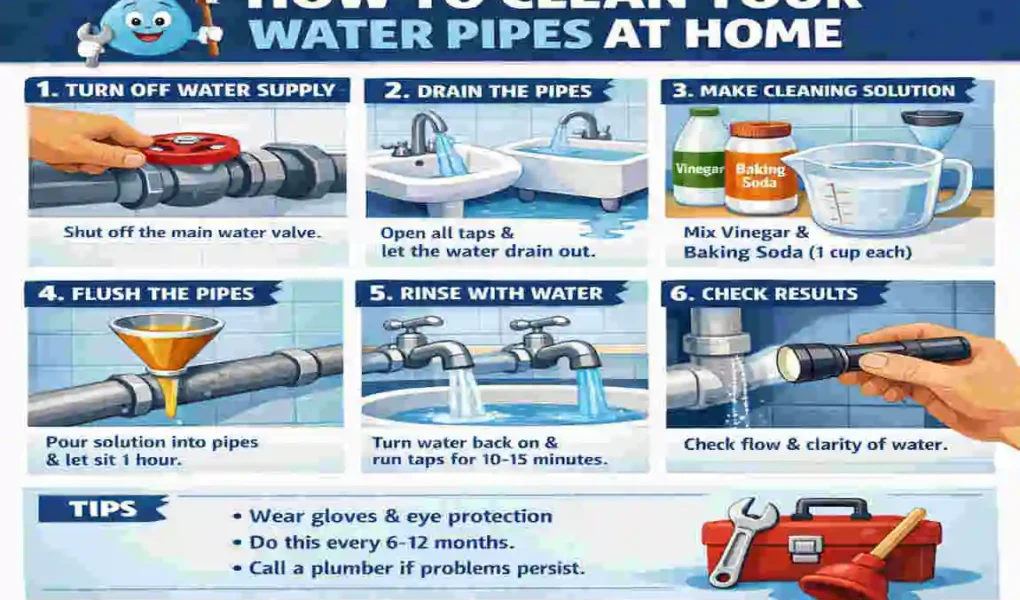
Clean plumbing pipes matter more than most people realize. When pipes stay clear, water flows better, bad smells are less likely to build up, and small problems are easier to control before they turn into bigger ones.
| Cleaning Method | How It Works | Best For | Important Note |
|---|---|---|---|
| Hot Water Flush | Run hot water through the pipe or drain to loosen light residue. | Minor buildup and odors | Avoid very hot/boiling water if the plumbing system may be heat-sensitive. |
| Baking Soda & Vinegar | Add baking soda followed by vinegar and allow the reaction to work before flushing. | Light drain buildup and odors | Best suited to drains, not as a complete cleaning method for an entire water-supply system. |
| Physical Cleaning | Remove accessible debris from strainers, traps, or fittings. | Hair, dirt, and visible debris | Turn off water where necessary and clean removable parts carefully. |
| Pipe Flushing | Allow plenty of clean water to flow through the plumbing. | Loose sediment and minor residue | Useful for routine maintenance where appropriate. |
If you have been wondering how to clean plumbing pipes at home, the answer depends on what you are dealing with. A little residue, an odor, or a small clog all need different care. The good news is that many simple pipe-cleaning tasks you can handle with basic household methods.
How to Clean Plumbing Pipes at Home
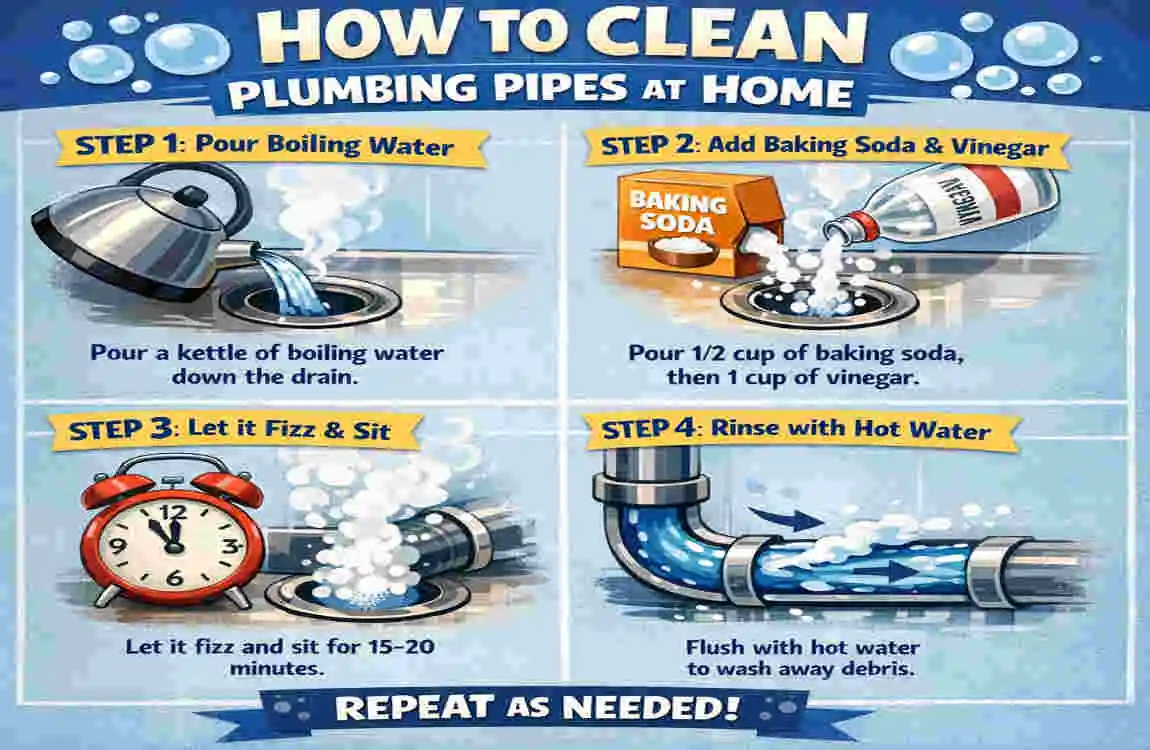
Start With the Right Preparation
Before you begin, make sure you know which pipe or drain is giving you trouble. If needed, turn off the water in that area to work safely. It also helps to keep a bucket, gloves, a sponge, baking soda, vinegar, and a flashlight nearby.
A little preparation makes the job easier and helps you avoid creating a mess.
Flush Pipes With Hot Water
For light buildup, hot water can help loosen residue inside drains. It works best for minor issues, such as soap film or soft grime.
This method is simple. Slowly pour hot water down the drain and let it move through the pipe. It can help clear fresh buildup and improve flow.
Be careful, though. Boiling water can damage some pipes, fittings, or seals. If you are not sure about your plumbing material, use warm to hot water instead.
Use Baking Soda and Vinegar for Drain Pipes
Baking soda and vinegar are often used to control odors and do light cleaning in drain pipes. They can help break up small amounts of buildup and freshen the drain.
Pour baking soda into the drain, then add vinegar. Let the mixture sit briefly, then flush with warm water.
This method helps with drains, but it is not a full cleaning solution for your entire plumbing system. It is best for minor odor and surface buildup, not deep blockages.
Clean Accessible Pipe Parts
If you can reach parts like drain traps, strainers, or fittings, clean them by hand. These spots often collect hair, soap, grease, and other debris.
Remove visible buildup with a cloth or brush. Check for anything stuck in the trap or around the edges. Cleaning these parts directly is often more effective than using chemicals repeatedly.
How to Remove Common Plumbing Pipe Buildup
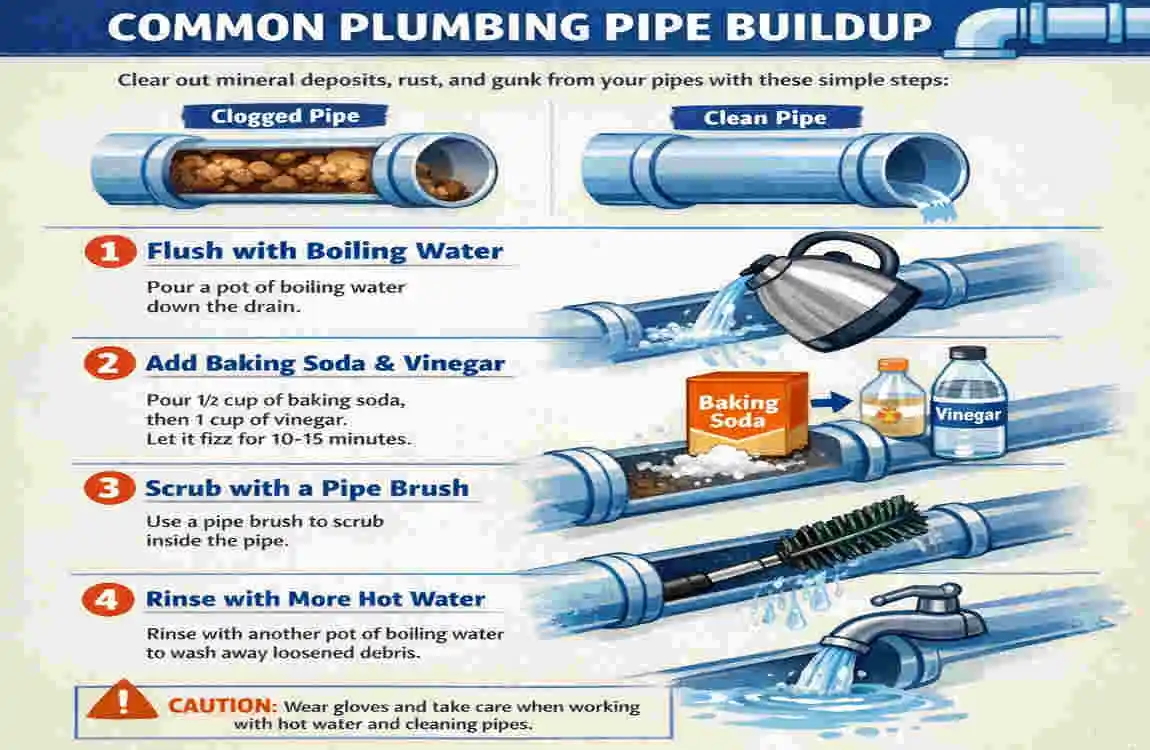
Mineral Deposits and Hard Water
Hard water can leave mineral deposits inside pipes and on visible fittings. You may notice white or chalky buildup, slower water flow, or dull-looking fixtures.
For accessible parts, use mild cleaning methods and wipe away buildup regularly. If the deposits are deep inside the pipe, you may need a plumber to handle it safely.
Grease, Soap, and Organic Residue
Grease and soap can cling to pipe walls over time. In kitchens, this buildup often comes from cooking oils and food residue. In bathrooms, soap film and skin oils can cause the same problem.
The best way to reduce buildup is to avoid sending grease down the drain and to flush drains with safe cleaning methods from time to time. Small habits make a big difference.
Hair and Debris
Hair, lint, and small bits of debris are common causes of drain trouble, especially in showers and bathroom sinks. These materials can form clogs quickly.
Here, physical removal usually works better than chemical cleaners. A drain cover or simple cleaning tool can help stop the problem before it grows.
Type of BuildupCommon SignsBest Basic Approach
Mineral deposits White residue, slow flow Clean accessible parts, call a plumber if severe
Grease and soap Sticky drain, odor, buildup Hot water and regular maintenance
Hair and debris Slow draining, visible blockage Remove by hand or with a drain tool.
What Should You Avoid When Cleaning Water Pipes?
There are a few things you should not do when cleaning pipes at home.
- Do not mix household chemicals. This can create dangerous fumes or reactions.
- Avoid strong drain cleaners when possible. Some products can damage pipes, seals, or older plumbing materials.
- Do not pour boiling water into vulnerable fixtures. Heat can harm certain pipe types.
- Follow plumbing guidance for your system. Different pipe materials need different care.
Being careful is just as important as cleaning.
When Should You Call a Professional Plumber?

Some problems are too serious to handle with home cleaning. A plumber should take over if you notice:
- Persistent low water pressure
- Repeated clogs
- Severe leaks or corrosion
- Discolored or foul-smelling water
- Problems inside walls or underground
- Unknown pipe material or unclear damage
If the issue keeps coming back, it usually means the problem is deeper than surface buildup.
How to Keep Plumbing Pipes Clean
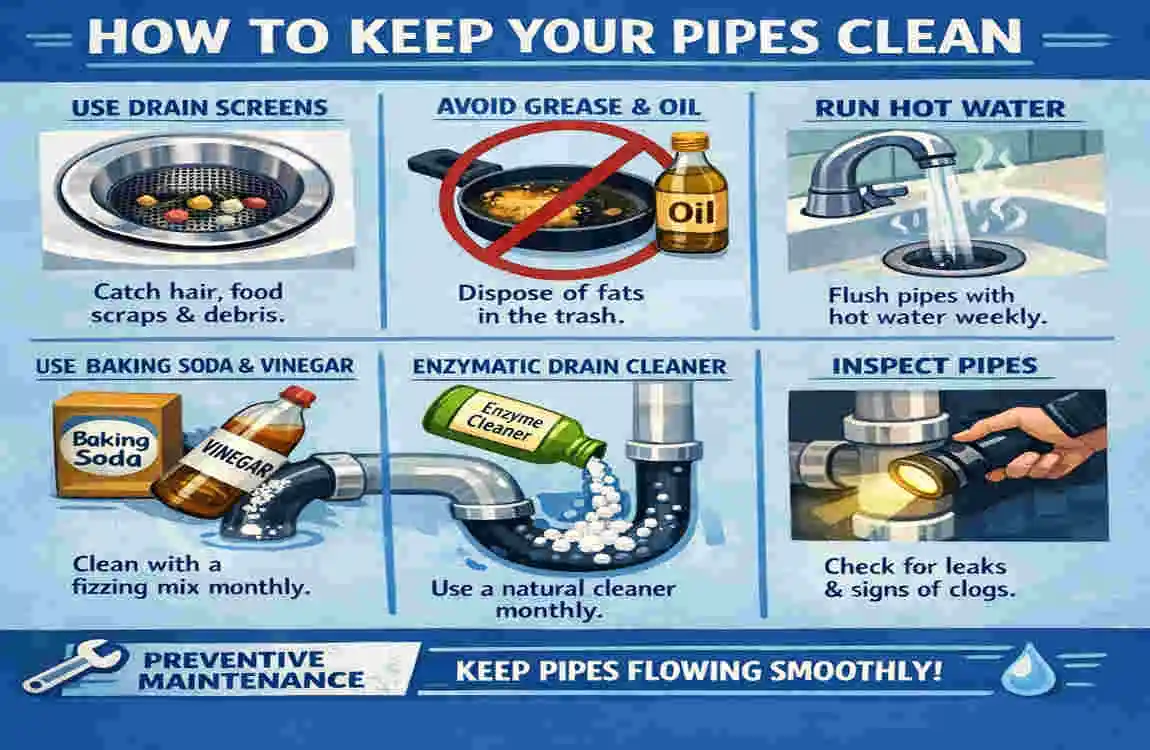
The best way to keep pipes in good shape is to prevent buildup before it starts. A few simple habits can help a lot.
- Flush suitable drains with warm water now and then
- Use strainers to catch hair and debris
- Avoid pouring grease into sinks
- Fix small clogs early
- Arrange plumbing inspections when needed
These small steps can help keep your pipes cleaner longer and reduce the chance of major problems later.
Frequently Asked Questions
Can I clean plumbing pipes myself?
Yes, you can handle many light cleaning tasks at home. Simple issues like odors, soft buildup, and small drain clogs are often manageable with basic methods.
What is the easiest way to clean pipes at home?
For many people, the easiest method is to flush drains with warm water and keep strainers clean. For light odor control, baking soda and vinegar can also help.
Do baking soda and vinegar clean plumbing pipes?
They can help with light buildup and drain odors. They help with simple maintenance, but they don’t replace deep cleaning for serious pipe problems.
How often should household pipes be cleaned?
It depends on how often you use them and what goes down the drain. Regular light maintenance is better than waiting for a full clog.
Can hot water remove buildup from pipes?
Yes, hot water can loosen minor residue and help with fresh buildup. It works best for light cleaning, not heavy blockages.
When does a dirty pipe need professional cleaning?
If buildup keeps returning, water pressure drops, water smells bad, or the pipe may be damaged, it is time to call a professional.