Full-frame window replacement in a brick house is a careful job that needs planning, the right tools, and a good eye for detail. Unlike a house with siding, brick homes can be harder to work on because the window opening is often tighter, and the brick around it can crack if the work is rushed.
If your old windows are drafty, damaged, or hard to open, a full-frame replacement can be a smart upgrade. It removes the entire old window system, not just the glass or sash, and gives you a fresh start with better sealing, better insulation, and a cleaner fit.
What Is a Full-Frame Window Replacement?
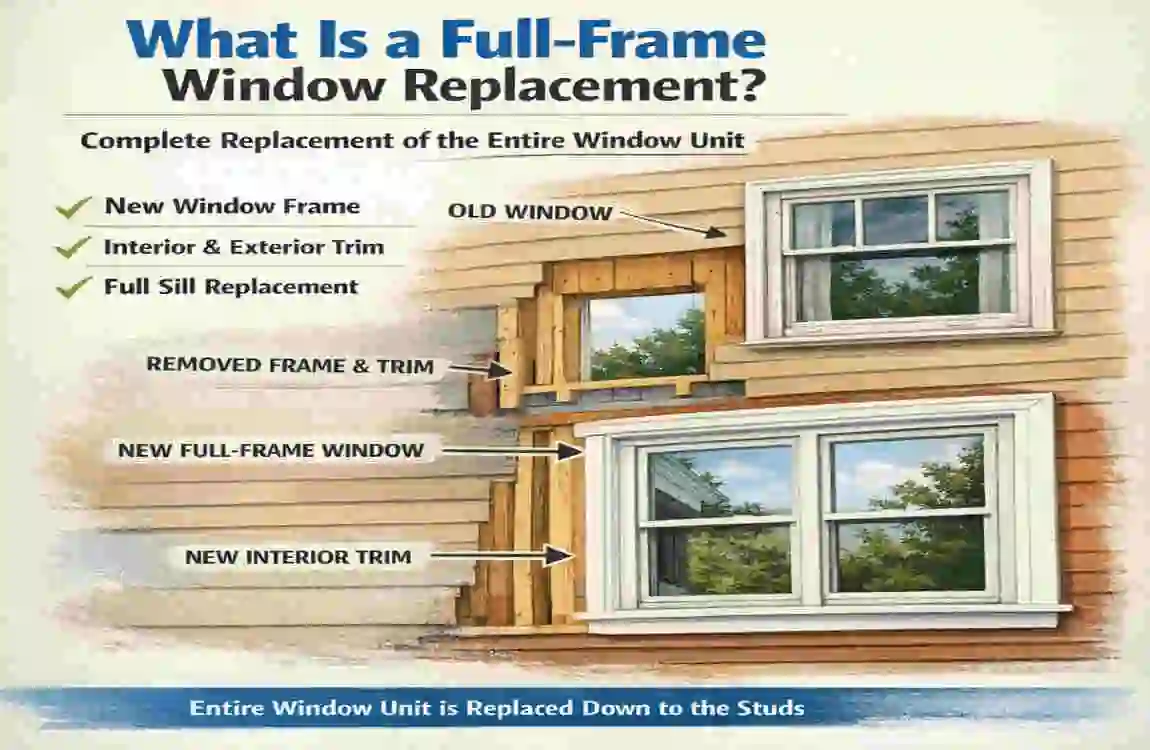
A full-frame window replacement involves removing the old window, its frame, and, sometimes, the trim. A brand-new window unit is then installed in the opening.
This is different from an insert replacement, where the new window is fitted into the old frame. A full-frame job is more complete, which is why it is often used when the old frame is damaged or when hidden problems may exist.
When Is It Needed?
You usually need this type of replacement when:
- The old frame is rotting, warped, or damaged
- You see water leaks or moisture stains
- You want a better, energy-efficient window
- You are changing the size or style of the window
In a brick house, this option is often the safest choice when the old window system is severely worn.
Why Brick Houses Need Special Care
Brick homes are sturdy, but the area around the window still needs careful handling. The biggest challenge is that the brick itself can chip or crack if the old window is removed too aggressively.
Also, the space around the opening may be limited, making access more difficult. That is why proper flashing, sealing, and levelling matter so much. If these steps are done badly, water can get in and cause long-term damage.
Professional installation is often the better choice here because it helps protect both the window and the brickwork.
Step-by-Step Process
Here is a simple look at how the replacement usually works.
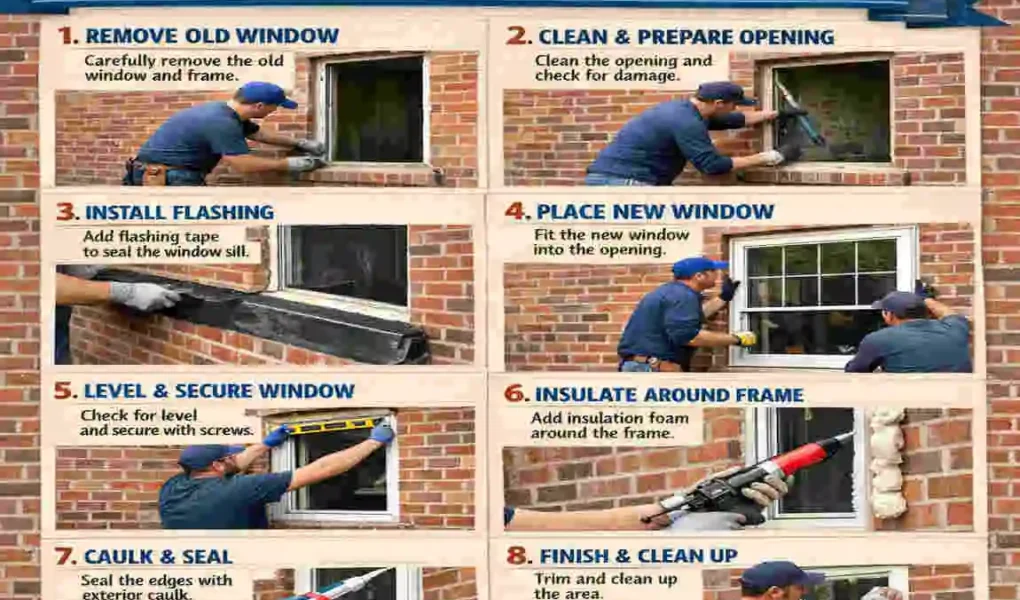
Inspect the Existing Window
The installer checks the frame, surrounding wall, and moisture levels. They also take exact measurements so the new window fits properly.
Remove Interior Trim
Any trim or moulding around the inside of the window is carefully removed first. This helps protect the wall and makes the frame easier to access.
Remove the Old Window Frame
The old frame is cut loose and taken out. The goal is to remove it without harming the nearby brick or wall structure.
Prepare the Opening
The opening is cleaned out, and any damaged wood or material is repaired. Flashing is added to help stop water from entering later.
Install the New Window
The new unit is placed, levelled, and securely fastened. This step is important because a window that is not level may not open or close correctly.
Seal and Insulate
Gaps around the window are filled with insulation, and weatherproof sealant is applied. This helps reduce air leaks and keeps moisture out.
Finish the Trim
Finally, the trim is replaced inside and out, and the area is checked one last time to ensure everything works as it should.
Benefits of Full-Frame Window Replacement in a Brick House
This type of replacement gives you more than just a new look. It can improve comfort, safety, and long-term value.
Benefit: Why It Matters
Better energy efficiency helps reduce drafts and lower heating and cooling costs.
Improved home value makes the home look newer and more appealing
Stronger moisture protection. New flashing and sealing help prevent water damage
Long-term durability: A new system usually lasts longer and needs less maintenance
Common Mistakes to Avoid
A few simple mistakes can create bigger problems later.
- Wrong measurements can lead to a poor fit
- Brute force removal can damage the brick veneer
- Skipping flashing may cause leaks
- Low-quality sealants may fail too soon
- Ignoring hidden damage can lead to future repairs
Taking the time to do each step carefully saves money and stress later.
Cost of Full-Frame Window Replacement in Brick House
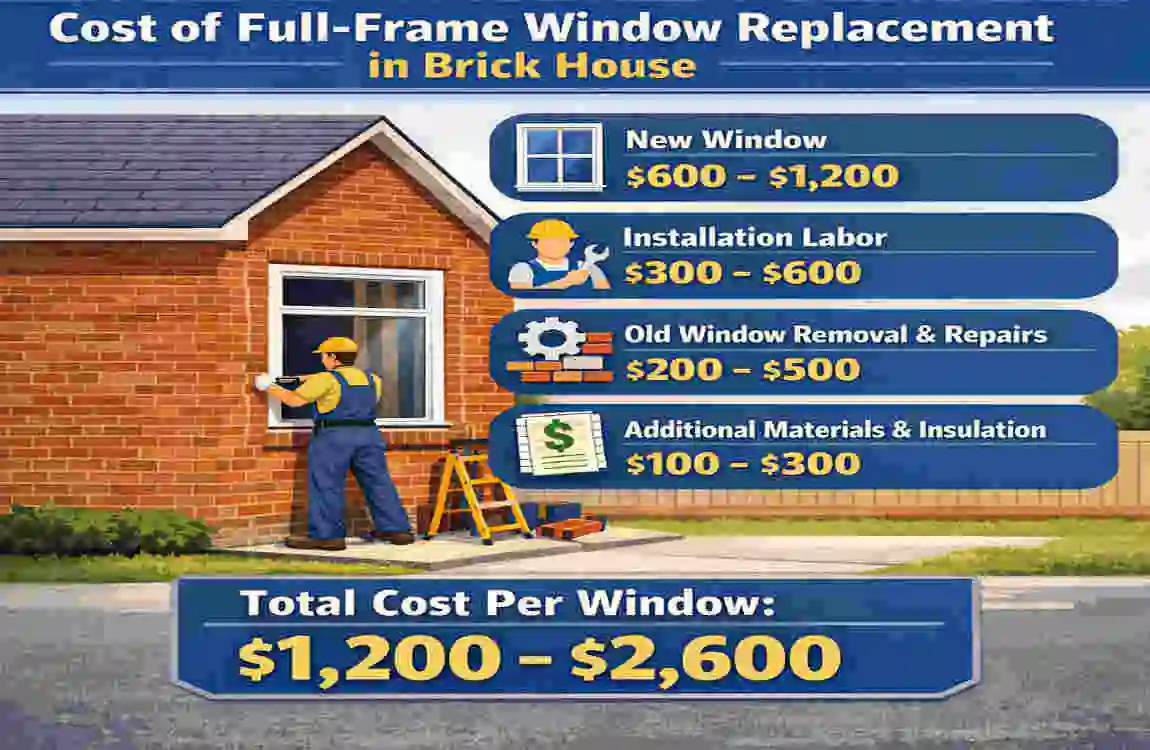
The cost of full-frame window replacement in a brick house depends on several things:
- The size of the window
- The material of the new frame
- The amount of labour needed
- Any brick or wood repairs
- Extra energy-saving features
In general, this type of project costs more than a simple insert replacement because it takes more time and skill. Still, the extra expense often makes sense because you get a better, longer-lasting result.
DIY vs Professional Help
Some homeowners think about doing the work themselves to save money. While that can sound appealing, brick homes are not the easiest place to practice.
DIY Pros
- Possible labour savings
- More control over the project
DIY Cons
- Higher risk of brick damage
- Greater chance of air or water leaks
- Possible warranty issues
- Need for special tools and experience
For most people, a professional installer is the safer choice. They know how to work with masonry openings and can help avoid costly mistakes.
FAQs
How long does the job take?
A single window may take only a few hours, but a full home project can take several days.
Is a full-frame replacement better than an insert replacement?
Yes, when the old frame has damage or hidden issues. It gives you a more complete upgrade.
Can the brick get damaged during replacement?
Yes, if the removal is done carelessly. That is why careful technique matters so much.
Do new windows help with energy savings?
Yes, modern windows can reduce drafts and help keep indoor temperatures more stable.
| Step | What to Do | Key Tip |
|---|---|---|
| Inspect the Existing Window | Check the condition of the frame, brickwork, and surrounding sealant. | Look for water damage or cracks. |
| Measure the Opening | Measure width, height, and depth accurately. | Double-check measurements before ordering. |
| Choose the Replacement Type | Select between insert replacement or full-frame window replacement in a brick house. | Full-frame replacement is best for damaged frames. |
| Remove the Old Window | Carefully remove sashes, trim, and the old frame without damaging the brick. | Use pry bars gently around masonry. |
| Prepare the Opening | Clean debris and repair any damaged areas. | Ensure the opening is level and square. |
| Install the New Window | Position and secure the new window according to manufacturer instructions. | Use shims to maintain proper alignment. |
| Seal and Insulate | Apply insulation and exterior-grade caulk around the frame. | Proper sealing improves energy efficiency. |
| Finish the Interior and Exterior | Install trim and perform final touch-ups. | Check that the window opens and closes smoothly. |