Replacing all the plumbing in your home is a major project, but it can prevent costly water damage, improve water quality, and increase your home’s value. If you’re wondering how much it costs to replace all the plumbing in a house, the answer depends on your home’s size, pipe material, labor costs, and the condition of the existing plumbing.
What Does It Mean to Replace All Plumbing in a House?
Complete Plumbing Replacement Explained
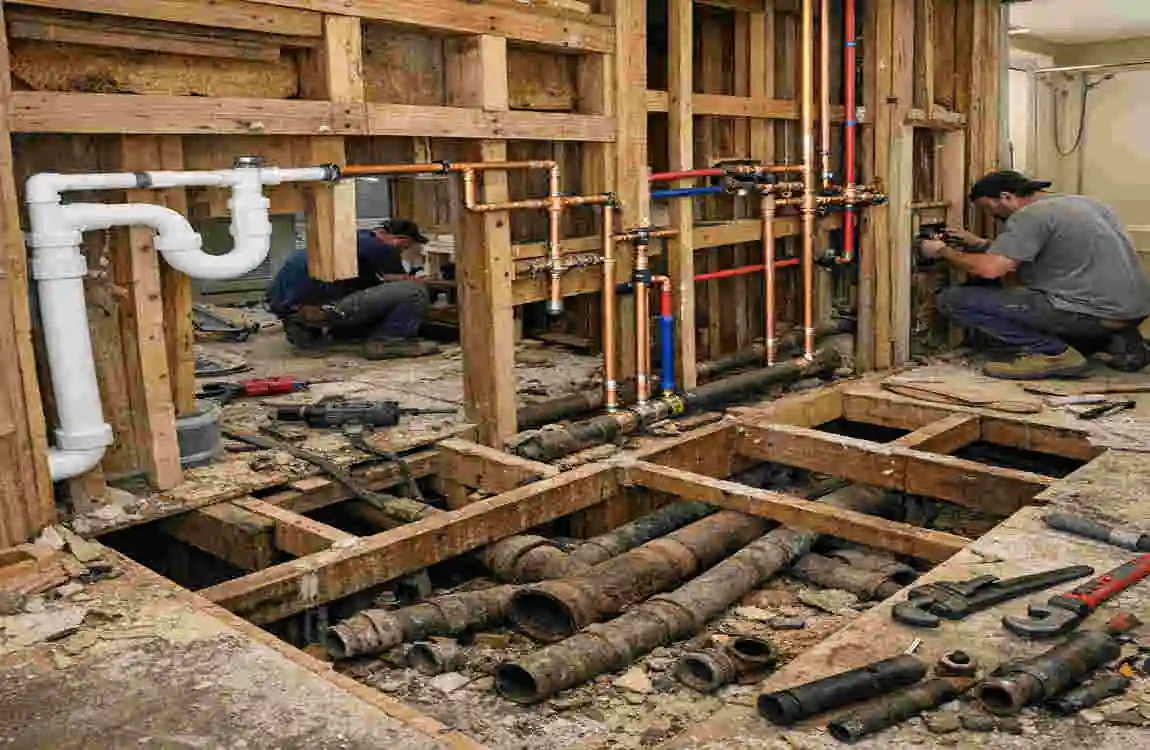
A whole-house plumbing replacement involves removing and replacing most or all of the plumbing system, including:
- Water supply lines
- Drain and waste pipes
- Vent pipes
- Main water line (if needed)
This ensures your entire plumbing system works safely and efficiently.
When Is Full Plumbing Replacement Necessary?
You may need complete repiping if your home has:
- Old galvanized steel pipes
- Frequent leaks
- Rust-colored water
- Low water pressure
- A major home renovation planned
How Much to Replace All Plumbing in a House?
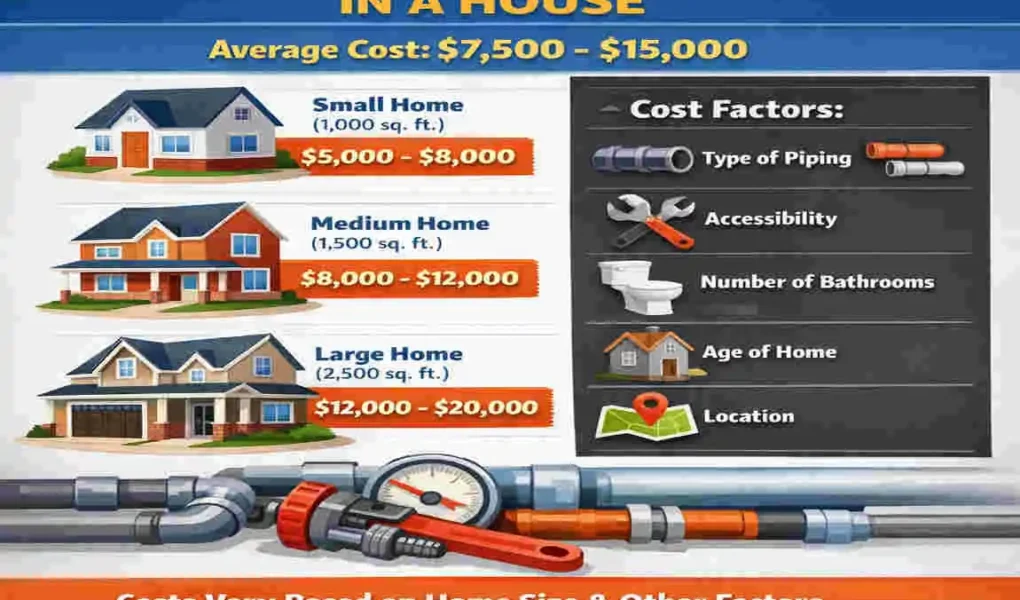
Average Cost by Home Size
Home Size Estimated Cost
1,000 sq. ft. $4,000–$8,000
1,500 sq. ft. $5,500–$10,000
2,000 sq. ft. $6,500–$15,000
2,500+ sq. ft. $8,000–$20,000+
National Average Cost
Cost Type Price
Low-End $4,000
Average $8,500–$12,000
High-End $20,000+
Factors That Affect Plumbing Replacement Cost
House Size
Larger homes require more piping, fittings, and labor, increasing the overall cost.
Number of Bathrooms
Homes with multiple bathrooms have more plumbing fixtures, making installation more expensive.
Pipe Material
The material you choose significantly impacts the total project cost.
Labor Costs
Professional plumbers generally charge based on experience, location, and project complexity.
Accessibility
Pipes hidden behind walls, ceilings, or concrete slabs require additional labor to access.
Permit Fees
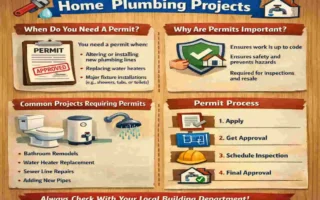
Many cities require permits and inspections, adding to the overall expense.
Wall and Floor Repairs
After repiping, drywall, flooring, or paint may need repairs or replacement.
Cost by Pipe Material
MaterialAverage CostLifespanBest For
PEX $$ 40–50 Years Budget-Friendly
Copper $$$ 50+ Years Premium Homes
CPVC $$ 40–50 Years Hot & Cold Water
PVC $ 50+ Years Drain Lines
PEX Pipes
PEX is affordable, flexible, and easy to install, making it the most popular choice for residential repiping.
Copper Pipes
Copper offers outstanding durability and longevity but comes with higher material and labor costs.
CPVC Pipes
CPVC works well for hot and cold water systems and costs less than copper.
PVC Drain Pipes
PVC is commonly used for drain, waste, and vent systems due to its affordability and corrosion resistance.
Labor Costs for Whole-House Repiping
Hourly Plumbing Rates
Licensed plumbers typically charge $75–$200 per hour, depending on location and expertise.
Installation Time
Most whole-house repiping projects take 3–7 days, while larger homes may require additional time.
Additional Contractor Charges
You may also pay for:
- Drywall repairs
- Painting
- Inspections
- Permit fees
Signs Your Home Needs New Plumbing
Frequent Pipe Leaks
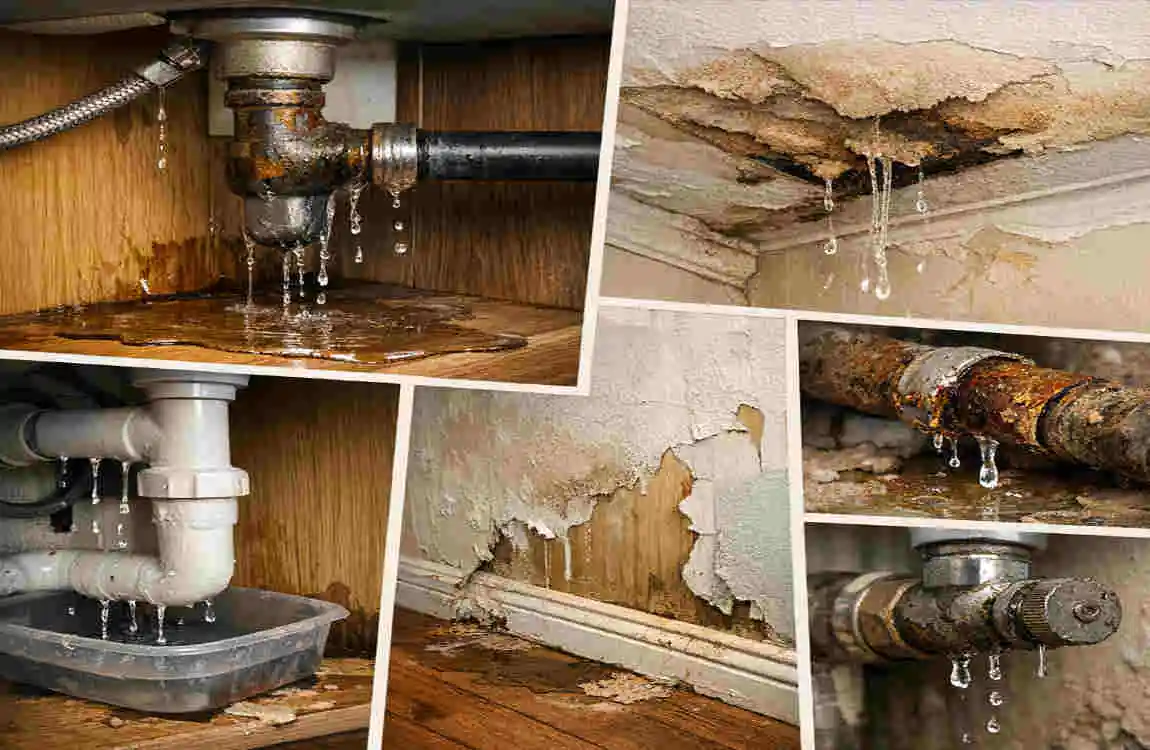
Repeated leaks often indicate aging pipes nearing the end of their lifespan.
Rusty Water
Brown or rusty water may signal corrosion inside older metal pipes.
Low Water Pressure
Mineral buildup and pipe corrosion can reduce water flow throughout your home.
Water Damage
Water stains, mold, or damp walls often point to hidden plumbing issues.
Corroded Pipes
Visible corrosion is a strong indication that replacement is more cost-effective than repeated repairs.
Can You Replace Plumbing Without Opening Every Wall?
Modern Repiping Methods
Professional plumbers often use modern repiping techniques that reduce unnecessary wall openings.
Minimizing Wall Damage
Strategic pipe routing allows contractors to limit demolition and lower restoration costs.
Restoration Costs
Some drywall or paint repairs may still be needed after installation.
Ways to Save Money on Plumbing Replacement
You can reduce costs by:
- Comparing multiple contractor quotes
- Choosing PEX when appropriate
- Scheduling repiping during renovations
- Fixing plumbing problems early
- Hiring licensed professionals with good reviews
Should You Replace Plumbing or Repair It?
Repairs Full Replacement
Lower upfront cost Higher initial investment
Best for isolated issues Best for aging systems
Short-term solution Long-term value
If your home experiences frequent plumbing issues, replacing the entire system is often the better long-term investment.
Benefits of Replacing All Plumbing
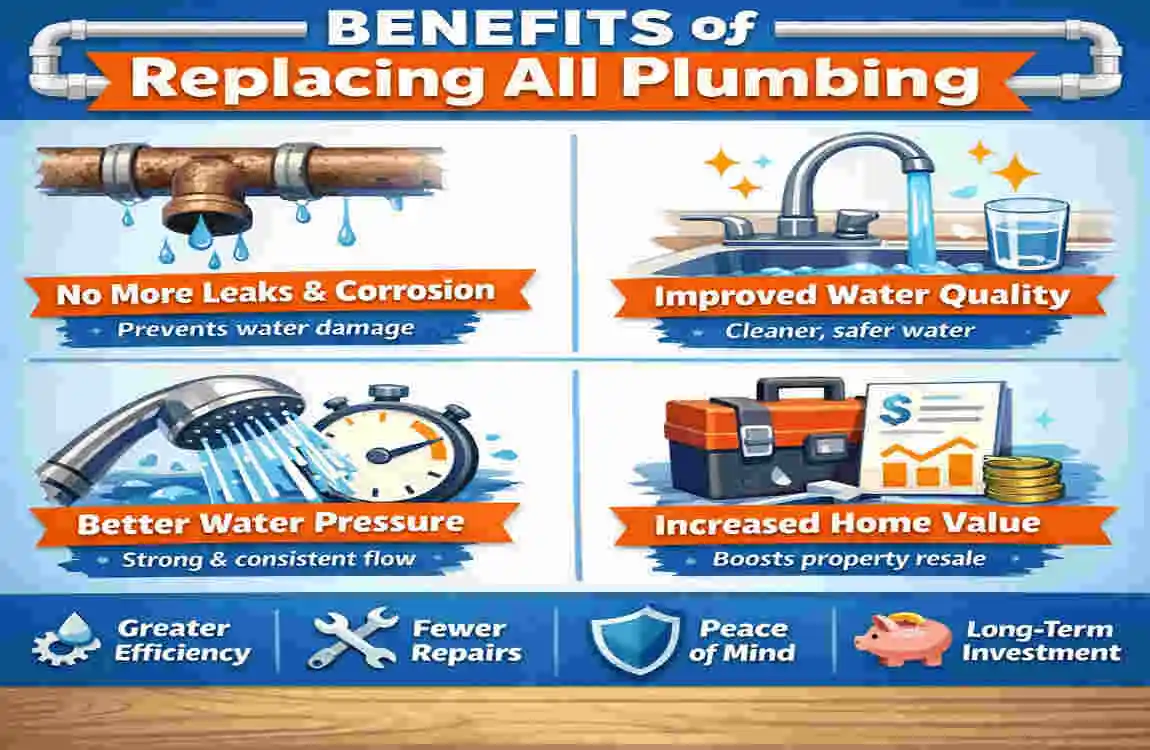
Better Water Pressure
New pipes improve water flow throughout the house.
Cleaner Water
Replacing corroded pipes provides cleaner, better-tasting water.
Fewer Repairs
A new plumbing system significantly reduces future repair costs.
Higher Home Value
Modern plumbing can make your property more attractive to buyers.
Improved Safety
New pipes reduce the risk of leaks, water damage, and contamination.
Common Mistakes to Avoid
Avoid these costly mistakes:
- Choosing the cheapest contractor without checking credentials
- Ignoring permit requirements
- Using low-quality materials
- Skipping final inspections
- Forgetting to budget for wall and floor repairs
Frequently Asked Questions (FAQ)
How much does it cost to replace all plumbing in a house?
Most homeowners spend between $4,000 and $15,000, depending on home size, pipe material, and labor costs.
Is repiping a house worth the cost?
Yes. It improves water pressure, reduces leaks, and increases your home’s value.
What is the cheapest pipe material for repiping?
PEX is generally the most affordable and widely used option.
How long does it take to replace all plumbing in a house?
Most projects take 3–7 days, though larger homes may require more time.
Does homeowners insurance cover whole-house repiping?
Usually not for normal wear and tear, but it may cover damage caused by a covered event.
Can you live in a house while it is being repiped?
Yes, in many cases. However, expect temporary water shutoffs and limited access to some areas.
How often should a home’s plumbing be replaced?
Most plumbing systems last 40 to 100 years, depending on the pipe material and maintenance.
| Aspect | Details |
|---|---|
| Average Cost | $4,000–$15,000 for a typical single-family home. |
| Small Home (1,000–1,500 sq. ft.) | Around $4,000–$8,000. |
| Medium Home (1,500–2,500 sq. ft.) | Approximately $6,000–$12,000. |
| Large Home (2,500+ sq. ft.) | Typically $10,000–$20,000+. |
| Pipe Material | PEX is the most affordable, CPVC is mid-range, and Copper is the most expensive. |
| Labor Cost | Usually 50%–70% of the total project cost. |
| Main Cost Factors | Home size, number of bathrooms, pipe material, accessibility, local labor rates, and permit fees. |
| Additional Expenses | Drywall repair, painting, permits, and water damage restoration if needed. |
| Project Duration | Most whole-house replumbing projects take 3–10 days, depending on complexity. |
| Best Time to Repipe | When dealing with frequent leaks, low water pressure, rusty water, or aging galvanized pipes. |