Most homeowners don’t think about their deed until someone asks for it. A refinance, a sale, an estate matter or a home equity application can all send you looking for it. Then you open the filing cabinet and find nothing.
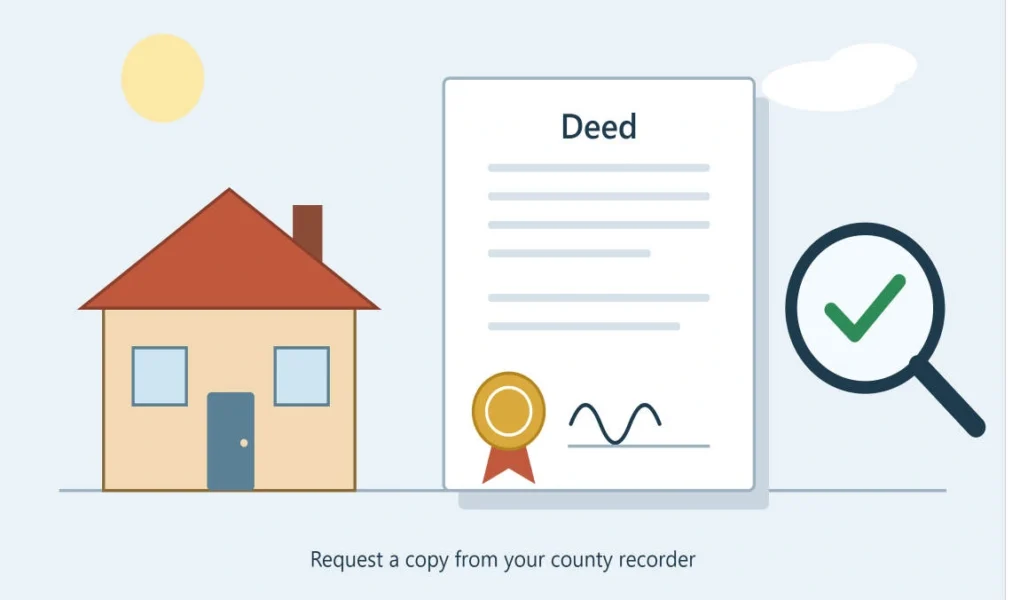
The good news is that a missing deed rarely means a missing home. Losing your copy of a deed doesn’t change your title, but you should get a certified copy from your county recorder or land records office. The process is usually simple, cheap and often possible online. This guide covers where your deed is kept, how to request it, what it costs, and how to avoid the pricey mailers that prey on homeowners who don’t know better.
What a Deed Is (and Why You Need a Copy)
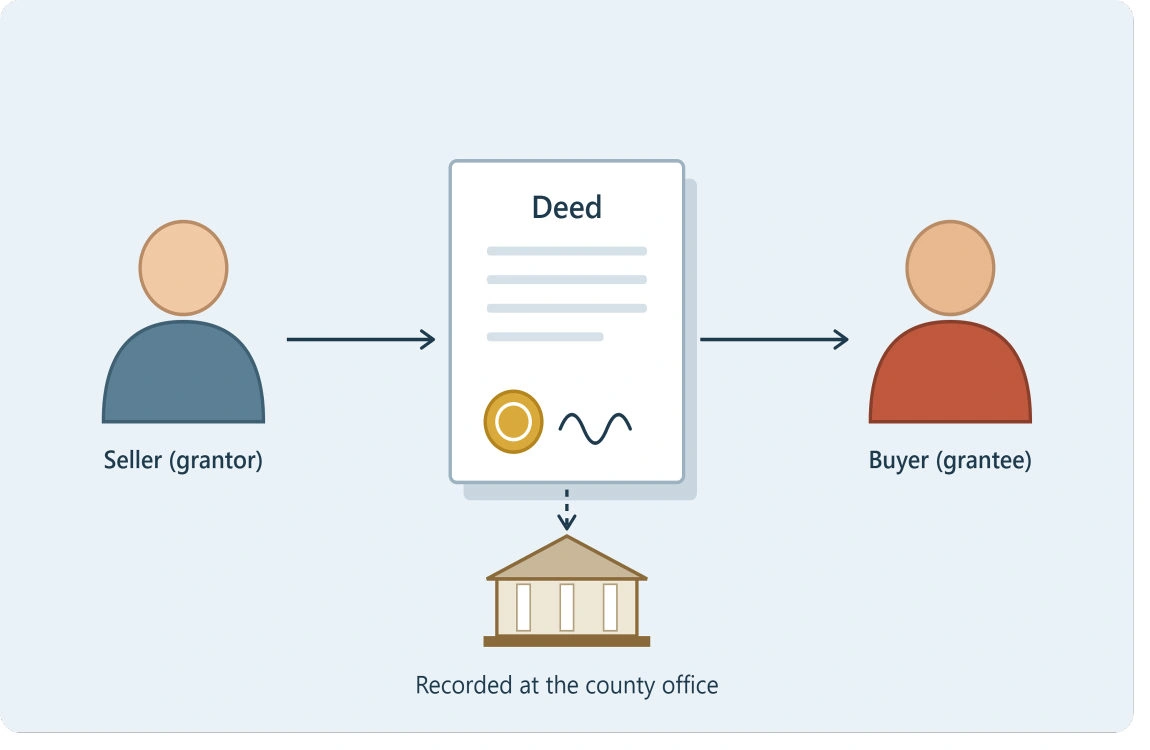
A deed is the legal document that transfers ownership of real estate from one party to another. The seller is the grantor and the buyer is the grantee.
Deed vs. Title: A Quick Distinction
People use “deed” and “title” interchangeably, but they aren’t the same thing. The deed is the document, and the title is the legal ownership that the deed passes to you. There’s typically no single “title” paper for a house the way there is a title certificate for a car. A recorded deed property is one piece of the ownership record, but reading one deed alone doesn’t necessarily show everything about the title, since later deeds, mortgages, liens, easements or court orders can also affect it.
When You’ll Need a Copy
Common situations include buying or selling a house, refinancing a mortgage, or transferring title. Other common triggers include:
- Adding or removing a spouse or relative from ownership
- Moving the home into a living trust
- Settling an real estate after a death
- Resolving a boundary or easement question
- Proving ownership for a home equity loan or insurance claim
Where Your Deed Actually Lives
When a home sale closes, the deed is recorded in the county where the property sits. The office that keeps it goes by different names depending on where you live. It might be called the county recorder, county clerk, register of deeds or land records office. In some areas it’s the court system itself. For example, in Maryland, every county and Baltimore City keeps land records in a Land Records Department inside the circuit court, and those records are open to the public.
That’s the key insight for a lost deed: the official record is held by the government, not by you. You’re requesting a copy of something that already exists in public records.
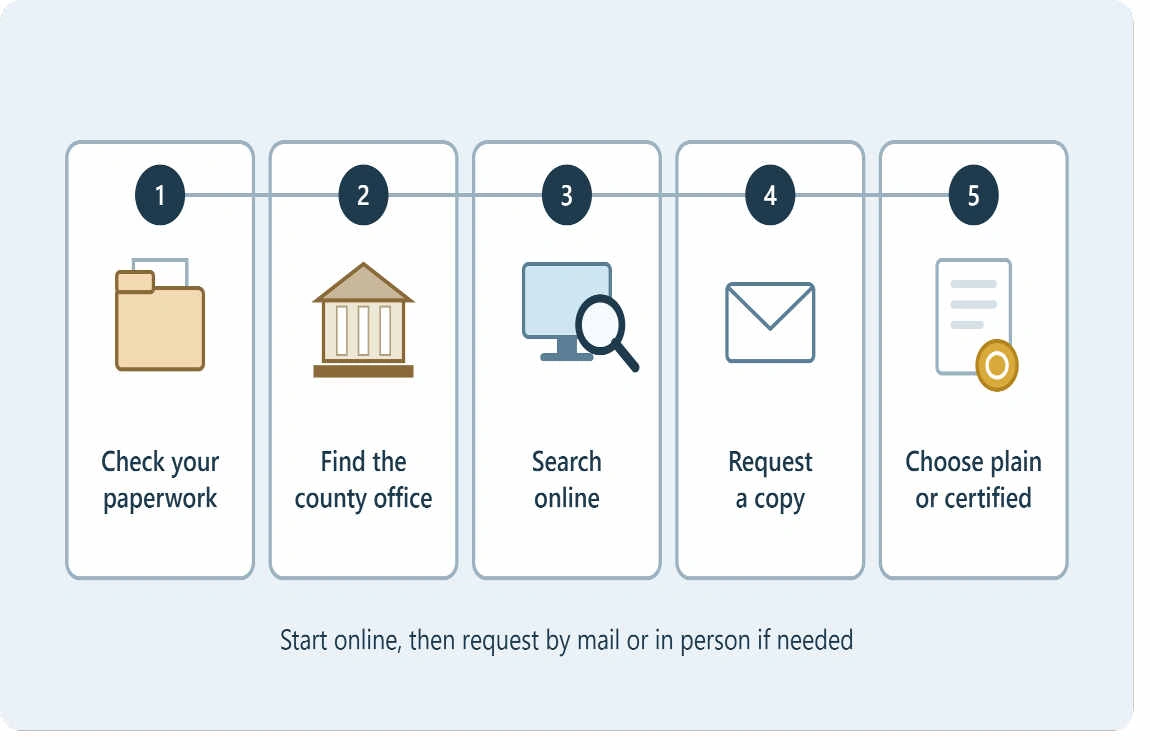
Step-by-Step: How to Get a Copy of Your House Deed
Check the Paperwork You Already Have
Before contacting anyone, look through your closing documents. Sometimes you receive a copy with your closing paperwork. In a typical purchase, the title company or attorney records the deed and later mails the recorded original to you. If you bought recently, that original may still be on its way, so check with whoever handled your closing.
Also look in:
- A safe deposit box or home safe
- Files from your mortgage lender or your attorney
- Estate planning documents, if the home was placed in a trust
Identify the Right County Office
Start with your county’s official website and look for “recorder,” “register of deeds,” “land records,” or “clerk of court.” Experian suggests searching your county website for terms like “services” or “citizen services” if the right office isn’t obvious. Make sure you’re searching the county where the property is located, not where you live now.
Search Online First
Many counties offer free or low-cost online search tools. Maryland’s system is a good example. It’s free but requires an account with your name and email. You pick the county, run an individual search by name, and open the deed as a PDF. Sorting by date can help you find the right one, and the same tool will also show liens and other recorded documents.
Practical tips for searching:
- Try both spellings and name orders (first/last, last/first).
- Search under all owners’ names, including previous owners if you need the original sale deed.
- Note the book and page number or document/instrument number once you find it, because that makes a later request faster.
- Remember that your property may be recorded under a trust or LLC name rather than yours.
Request It in Person, by Mail or by Phone
If your county doesn’t offer online access, or you need an official version, contact the office directly. In Montgomery County, Maryland, the process works this way: the clerk’s Land Records Department provides the book and page reference, and the Duplications Department makes the copies. Counties differ, so call or check the website for how they take requests.
For mail requests, include:
- The property address and owners’ names
- The approximate date of purchase
- Any book/page or document number you have
- Whether you need a plain or certified copy
- A check or payment method, per the office’s instructions
- A return address (and a self-addressed stamped envelope if requested)
Decide Between a Plain Copy and a Certified Copy
This choice matters more than most people realize.
- Plain (uncertified) copy: Good for your own records, general reference and checking what’s recorded.
- Certified copy: Carries the office’s stamp or seal as a true copy of the official record. A certified copy of your deed has the same weight and effect as the original deed.
Ask whoever is requesting the document which one they need. If you need it for a legal proceeding, real estate matter or other official purpose, find out whether a certified copy is required rather than assuming an online printout will do. Lenders, courts and title companies are usually the ones who care.
How Much Does a Copy of a Deed Cost?
Fees are set locally, so there’s no single national price. The examples below show the typical range. Always confirm current fees with your own county.
| Location | Example fee | Source |
|---|---|---|
| Minnesota (general guidance) | About $1 per page for a copy; certified copies often around $10 per document | Minnesota Attorney General |
| Montgomery County, MD | 50 cents per page, plus $5 per certified copy | Montgomery County government |
| Miami County, OH | Free through the online records search; $2 per page if staff print it | Miami County Recorder |
| Strafford County area, NH | 50 cents per page at the town assessing office | City of Somersworth |
In Montgomery County, most deeds run about five pages, so a full copy often costs only a few dollars. Fees can change, so check your county’s current fee schedule.
Other Ways to Get Your Deed
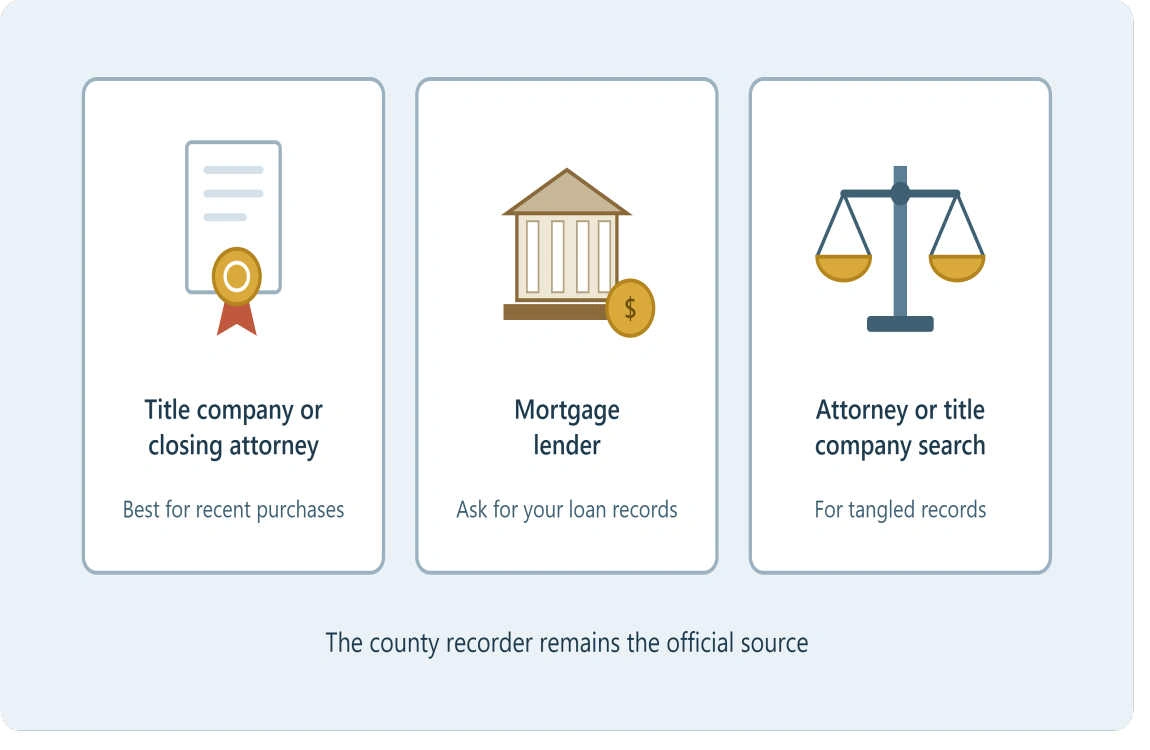
Ask Your Title Company or Closing Attorney
If you bought the home within the last few years, the company or attorney that handled your closing likely has the recorded deed on file or can point you to the recording details. This is often the quickest route for recent purchases.
Ask Your Mortgage Lender
Lenders usually keep a copy of the recorded documents tied to your loan. It’s worth a call, though the county remains the most reliable source for an official copy.
Hire a Title Company or Local Attorney for Complicated Cases
Some situations are messy: a deed recorded decades ago, a property inherited through multiple generations, a name change, or unclear chain of ownership. A title company or real estate attorney can run a full search and sort out the records. It costs more than a county request, but it can save time when the paper trail is tangled.
| Option | Pros | Cons |
|---|---|---|
| County recorder (online) | Fast, usually cheapest | Search tools vary; may not offer certified copies online |
| County recorder (mail/in person) | Official, certified copies available | Takes more time; small fees |
| Title company/attorney | Handles complex histories | Highest cost |
| Third-party mailer service | Convenient on paper | Usually far overpriced (see below) |
Beware of “Deed Copy” Mailers
If you’ve recently bought or refinanced, you may receive an official-looking letter offering to send you a copy of your deed for a fee. These are common enough that multiple government offices have issued warnings.
What officials say:
- The Minnesota Attorney General notes that these mailings may ask homeowners to pay $90 or more for a deed copy or property profile, while the county can provide a copy for just a few dollars.
- The Miami County, Ohio recorder warns that such companies have no affiliation with the county or state, and the records are available free through its own online search.
- A Massachusetts register of deeds said people should never pay for a copy of their deed, because it’s public and downloadable from the registry’s website.
- Montgomery County, Maryland’s consumer office advises checking how easy it is to get your deed yourself before paying a private company to do it.
Why these letters work: Deeds are recorded in public land records, and some companies mine those records for new property transfers to use for marketing. The letter often looks like it came from a government agency, and it may use urgent language.
How to protect yourself:
- Don’t pay anything until you’ve checked your county recorder’s website.
- Look up the sender’s address and company name independently.
- Never provide bank details or personal information in response to a mailer.
- Report suspicious letters to your county recorder and your state attorney general’s consumer protection office.
Some companies that send these letters describe themselves as legitimate businesses selling a convenience service. Even so, you can usually get the same document from the county for far less.
What to Do Once You Have Your Deed
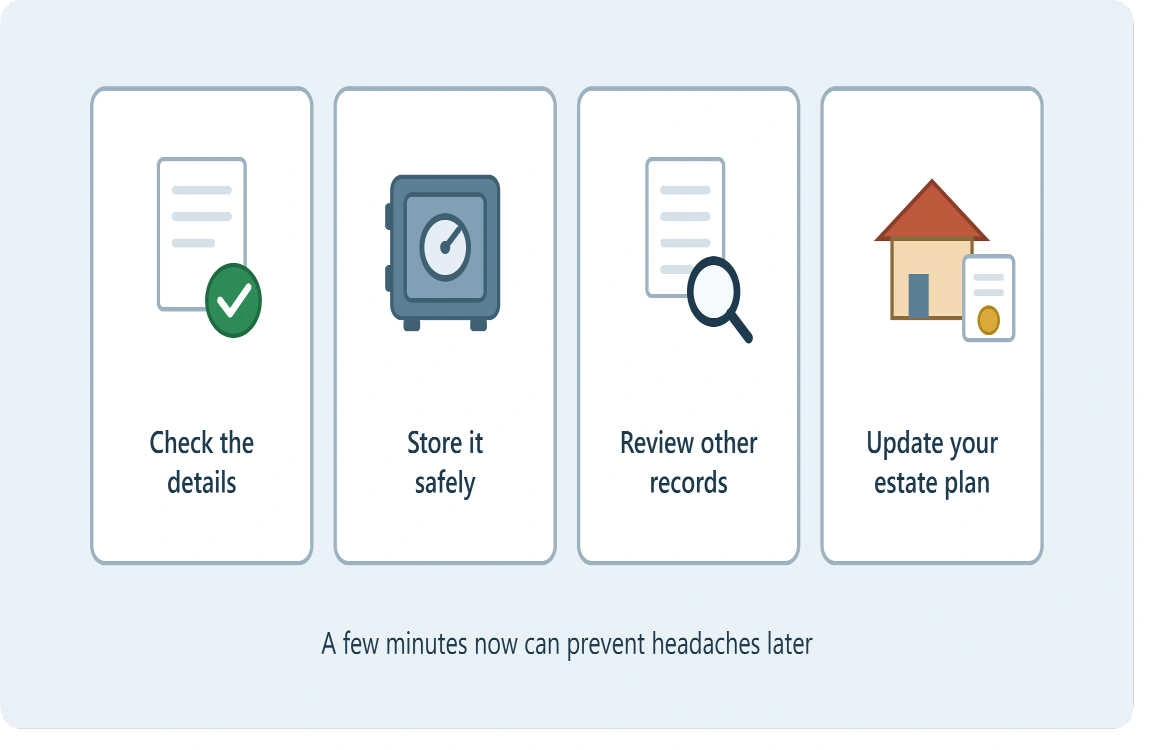
A few minutes of review now can prevent headaches later.
Check the details. Confirm that names are spelled correctly, the legal description matches your property, and the recording information (date and book/page or document number) appears on the document. Mistakes should be raised with your attorney or title company promptly.
Store it safely. Keep your original deed with your other important documents. A fireproof safe or a bank safe deposit box works well. Keep a scanned digital copy in a secure, encrypted location too, since a digital backup helps if the paper is damaged.
Look at your other recorded documents. While you’re in the records, look for unfamiliar entries. Montgomery County’s guidance suggests checking your property record from time to time and watching for unfamiliar deeds, liens or court filings. Some counties also offer free property fraud alert notifications, so ask yours whether it does.
Update your estate plan. If you plan to transfer the home to a trust or heir, you’ll need a properly prepared and recorded deed. That’s a job for an attorney, not a DIY form.
Pros and Cons of Handling It Yourself
Pros
- Lowest cost, often just a few dollars
- You deal directly with the official record-keeper
- Many counties offer online access
- You can request a certified copy
Cons
- Websites and search tools vary widely by county
- Older deeds may be scanned poorly or indexed under old spellings
- Complicated ownership histories property may need professional help
- Some counties require in-person or mailed requests for certified copies
Frequently Asked Questions
Can I get a copy of my deed for free?
Sometimes. Some counties let you view and print deeds online at no charge, while others charge per page. For instance, Miami County, Ohio offers free online records search and charges only if staff print the pages. Certified copies usually carry an added fee.
How long does it take to get a copy of a deed?
Online searches can give you a copy within minutes. Mail requests depend on the office’s workload and postal time, and in-person requests can often be completed the same day. Because timing varies by county, check with your recorder’s office.
Do I need to be the owner to request a deed?
Generally no. Recorded deeds are public records. One Massachusetts register of deeds noted that anyone can view a deed, yours or someone else’s. Some states and counties handle online access or redaction differently, so check local rules.
What if I can’t find my deed online?
Try different name spellings, search by address or parcel number if the system allows, and look for earlier owners’ names. If that fails, call the recorder’s office. Staff can often point you to the right index or book and page.
What if my deed was never recorded?
An unrecorded deed can cause serious problems. Without recording, your ownership claim could be challenged, and someone with a recorded deed might prevail. If you suspect this, contact a real estate attorney or the title company that handled your closing right away.
Is a deed the same as a title?
No. The deed is the document, and the title is the legal ownership right it conveys. See the deed vs. title section above.
Can I use an online printout as proof of ownership?
For informal purposes, usually yes. For legal, estate or lender purposes, the other party may require a certified copy, so ask first.
Conclusion
Getting a copy of your house deed is usually easier and cheaper than people expect. Start with your closing documents, then search your county recorder’s or land records website, and request a plain or certified copy depending on what you need. Call your title company or a local real estate attorney if the paper trail is tangled, and don’t pay a private company dozens of dollars for what the county provides for a few.