
A roommate agreement is one of the simplest ways to make roomies’ housing work smoothly. When people share a home, small misunderstandings can turn into big problems fast. One person may think rent is due on the first, while another assumes there is a grace period. One roommate may expect quiet nights, while another often invites friends over. These issues are common but avoidable.
That is why a written roommate agreement matters. It gives everyone clear expectations from the start. It covers money, chores, guests, and how to solve problems before they grow. If you are moving in with roommates, taking time to agree on the basics can save stress later.
What Is a Roommate Agreement?
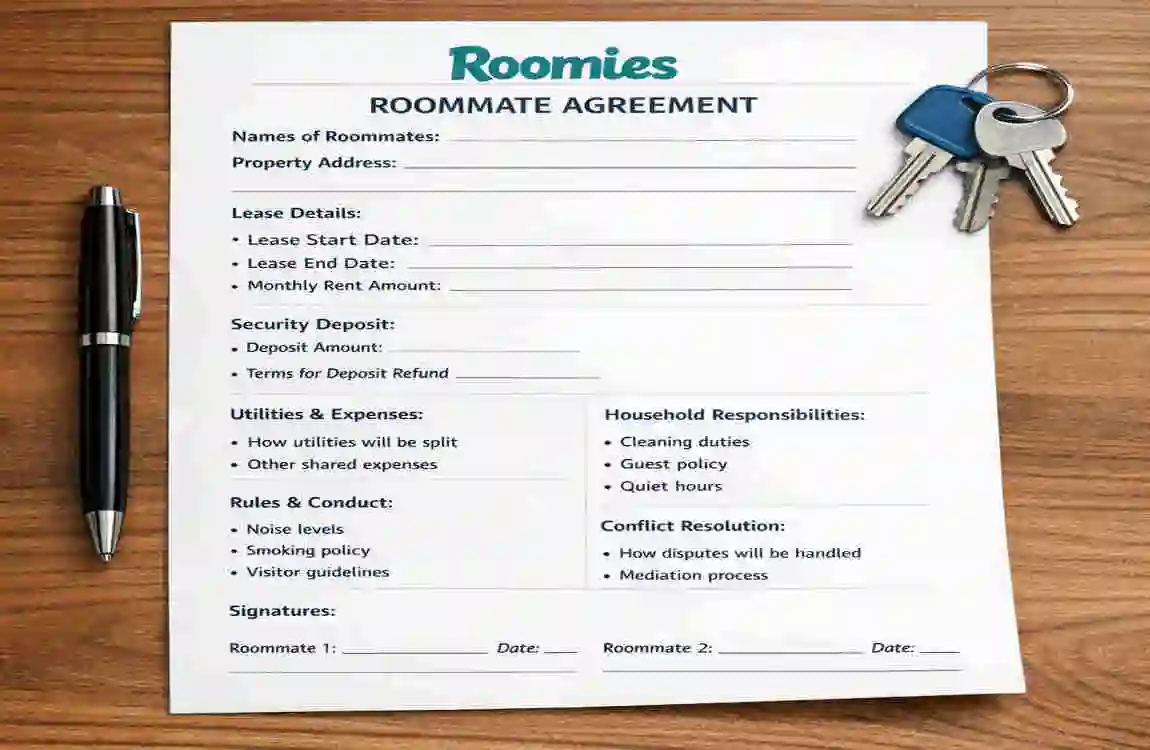
Definition and Purpose
A roommate agreement is a written set of rules that all roommates agree to follow. It is not the same as a lease. A lease is the legal contract with the landlord or property manager, while a roommate agreement is usually between the people living in the home.
Its main purpose is simple: make expectations clear. It helps everyone understand who pays what, who does which chores, and what kind of behaviour is acceptable in the home.
Why Roomies Housing Residents Need One
In a roomies’ housing, people often have different habits, schedules, and budgets. Without clear rules, misunderstandings can happen quickly.
A roommate agreement helps you:
- Prevent confusion about money and responsibilities
- Build accountability for shared chores and expenses
- Protect friendships by reducing tension over small issues
When everyone knows the rules, daily life becomes easier and more predictable.
Essential Components of a Good Roommate Agreement
Rent Payment Responsibilities
Rent should always be one of the first topics in the agreement. Each person should know exactly how much they owe, when it is due, and what happens if a payment is late.
Be clear about:
- Monthly rent amount for each roommate
- Due date for payment
- Late fee rules, if any
- Who collects or sends the rent
If one roommate pays the full amount to the landlord, that should also be written down clearly so there is no confusion.
Utility and Shared Expense Distribution
Shared bills can cause problems if they are not discussed early. Utilities may include electricity, water, gas, internet, and even household supplies like soap or trash bags.
Here is a simple breakdown:
Expense Type Common Way to Share Notes
Rent Split evenly or by room size Should be agreed on before move-in
Electricity Even split or usage-based Depends on the home setup
Internet: Usually split a shared household cost evenly
Water and gas Even split Can vary by season
Household supplies Rotating or shared fund Keeps things fair
This part of the agreement helps avoid awkward money talks later.
Security Deposit Arrangements
The security deposit should also be discussed in detail. If everyone contributes, write down how much each person pays and how the money will be handled.
You should include:
- Each roommate’s deposit contribution
- What counts as damage
- How will refunds be divided when moving out
- Who is responsible for repairs caused by their actions
This protects everyone and makes move-out much easier.
House Rules Every Agreement Should Include
Cleaning and Chore Responsibilities
Cleaning is one of the most common sources of roommate conflict. Some people are neat by nature, while others need reminders. A chore system solves that problem before it starts.
You can agree on:
- Weekly cleaning tasks
- Rotation for shared chores
- Standards for common areas like the kitchen and bathroom
A simple schedule works best. The goal is not perfection. The goal is to keep the home clean enough for everyone to feel comfortable.
Guest and Visitor Policies
Guests can be a problem when the rules are unclear. One roommate may be fine with overnight visitors, while another may not.
Your agreement should cover:
- Whether overnight guests are allowed
- How often guests can stay
- Whether roommates need to ask before inviting people over
- Rules for parties or larger gatherings
Clear guest rules help everyone feel respected in their own home.
Noise and Quiet Hours
Noise is another issue that can affect daily comfort. This matters even more if one person works from home, studies at night, or goes to bed early.
Agree on:
- Quiet hours during the week
- Weekend noise expectations
- Rules for music, TV, and phone calls
- Respect for work or sleep schedules
A little consideration goes a long way here.
Shared Space Usage
Shared spaces should be used fairly. This includes the kitchen, bathroom, living room, and storage areas.
It helps to decide:
- How long can food or personal items stay in shared areas
- How kitchen space is divided
- Bathroom schedules if mornings are busy
- Where each roommate can store their things
When everyone knows what space belongs to whom, frustration drops fast.
Conflict Resolution Guidelines
Communication Expectations
Good communication is the heart of a strong roommate agreement. Problems are easier to solve when people speak early and calmly.
You might agree to:
- Talk about issues within a day or two
- Hold a short roommate check-in once a month
- Use respectful language even during disagreements
This keeps small issues from turning into big ones.
Handling Disputes
Even the best roommates will disagree at some point. What matters is how those disagreements are handled.
A good agreement should explain:
- How concerns should be raised
- Whether roommates should meet privately first
- When to ask a neutral third person for help
The goal is not to “win” an argument. The goal is to keep the home peaceful and fair.
Pet Policies and Special Considerations
Pet Ownership Rules
If one or more roommates have pets, the rules should be clear from the start. Pets can bring joy, but they also bring responsibility.
Your agreement should cover:
- Who takes care of the pet
- Who pays for pet-related damage
- Rules for cleaning up after animals
- Whether new pets can be brought in later
This avoids conflict and protects everyone in the luxury home.
Smoking and Lifestyle Preferences
Lifestyle choices can affect shared comfort too. Smoking, vaping, and other habits should be discussed openly before moving in.
The agreement should state:
- Whether smoking is allowed indoors
- Where smoking is permitted, if at all
- Rules about strong smells or substances that affect others
Being honest here helps everyone stay comfortable and respected.
Move-In and Move-Out Procedures
Notice Requirements
Life changes, and roommates may need to move out before the lease ends. That is why notice rules matter.
Decide:
- How much notice is required before moving out
- How transfer or replacement plans will work
- What happens if someone leaves early
This gives everyone time to prepare and adjust.
Property Condition Documentation
It is smart to document the luxury home‘s condition when moving in and moving out. This protects everyone from unfair blame later.
Do a simple checklist for:
- Walls, floors, and furniture condition
- Appliance condition
- Existing damage before move-in
- Final cleanup tasks before move-out
A few photos and notes can prevent a lot of disagreement later.
Benefits of a Strong Roommate Agreement

A good roommate agreement makes daily life easier. It creates structure without making the home feel stiff or formal.
The biggest benefits are:
- Fewer conflicts because expectations are clear
- Better financial accountability for rent and bills
- A more comfortable home with fewer surprises
- Long-term housing stability for everyone involved
If you want a smoother living experience, this is one of the best tools you can use.
Common Mistakes to Avoid
Many roommate problems start because people assume things rather than write them down.
Try to avoid these mistakes:
- Relying on verbal promises
- Ignoring shared expenses
- Skipping guest rules
- Not updating the agreement when things change
A simple written agreement is much better than memory alone.
FAQ
What is a roommate agreement?
A roommate agreement is a written document that explains responsibilities, expectations, and house rules for people sharing a home.
Why is a roommate agreement important in roomies housing?
It helps prevent misunderstandings, reduces conflict, and makes shared living more organised.
What should be included in a roommate agreement?
It should cover rent, utilities, cleaning, guests, pets, noise, and conflict resolution.
Can a roommate agreement be changed later?
Yes, it can be updated whenever all roommates agree to the changes.
How often should roommates review their agreement?
Review it every 6 to 12 months, or sooner if the living situation changes.
| Design Element | Description |
|---|---|
| Bold Shapes | Use geometric forms, curves, arches, and asymmetrical layouts. |
| Mixed Materials | Combine glass, brick, stone, metal, and wood for visual contrast. |
| Vibrant Colors | Incorporate bold accent colors alongside neutral tones. |
| Decorative Features | Add columns, unique rooflines, and artistic architectural details. |
| Playful Design | Blend traditional and modern elements in unexpected ways. |
| Large Windows | Install oversized windows to maximize natural light. |
| Statement Entry | Create an eye-catching front door or entrance area. |
| Open Interior Layout | Design flexible living spaces with fewer barriers between rooms. |
| Artistic Touches | Include sculptures, murals, or custom-built features. |
| Personalized Style | Prioritize individuality over strict architectural rules. |