If you are wondering how many square feet a home has, the simple answer is this: it depends on the type of home, the number of rooms, and the needs of the people living in it. Square feet is just a way to measure the total usable space inside a house. It helps buyers, builders, and homeowners understand whether a home feels small, average, or large.
What Does Square Feet Mean?
Definition of Square Foot
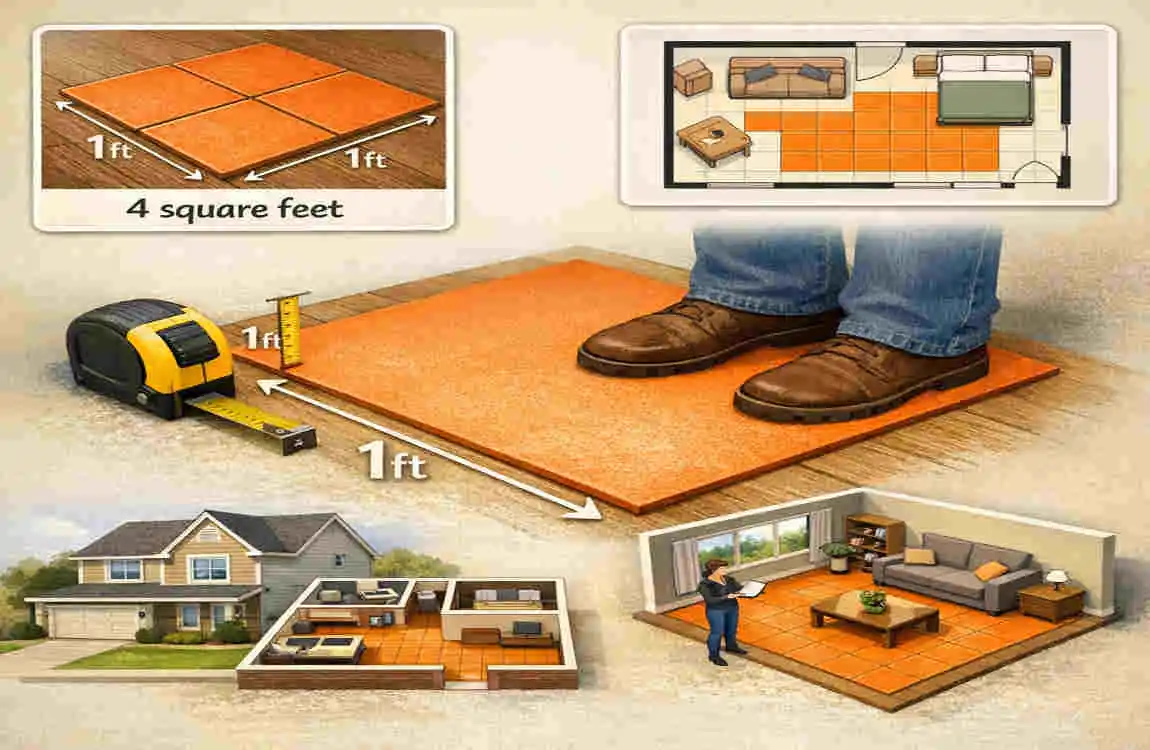
A square foot is a unit of area. It means a space that is 1 foot long and 1 foot wide. When people say a house is 1,500 square feet, they mean the total floor space inside the home is 1,500 square feet.
How Square Footage Is Measured
Square footage is usually measured by multiplying length × width. For example, a room that is 10 feet by 12 feet has an area of 120 square feet.
To find the total size of a house, you add the square footage of all rooms and usable living spaces together.
Why Square Footage Is Important
Square footage helps you:
- Compare homes more easily
- Decide if a house fits your family
- Understand pricing and value
- Plan furniture and storage
It is one of the most useful numbers in real estate.
How Big Is a Square Feet House?
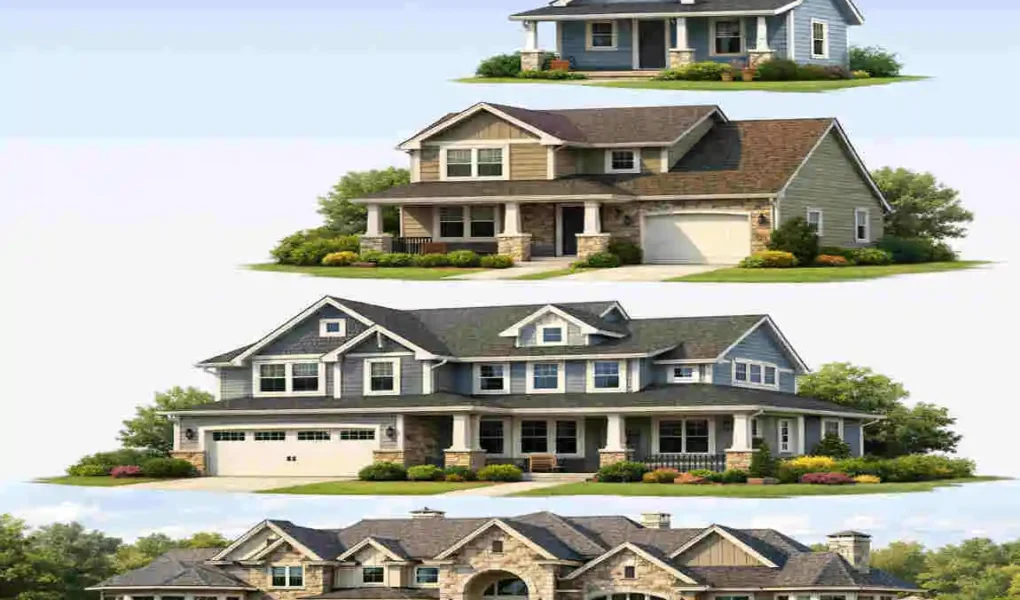
Small Houses (500–1,000 sq ft)
Small homes are often cozy and simple. They work well for single people, couples, or very small families. These homes may have 1–2 bedrooms and limited storage, but they can feel warm and efficient.
Medium Houses (1,000–2,000 sq ft)
This is a very common home size. It usually provides enough space for small to medium-sized families. A house in this range often includes 2–3 bedrooms, a living room, kitchen, and a couple of bathrooms.
Large Houses (2,000–3,500 sq ft)
Large homes give more comfort, more privacy, and more space for family activities. They often have 4 or more bedrooms, extra bathrooms, and larger common areas.
Luxury Homes (3,500+ sq ft)
These homes are very spacious and often include extra features such as guest rooms, home offices, large kitchens, media rooms, and larger garages. They are best for larger families or people who want plenty of open space.
Average House Size by Number of Bedrooms
1-Bedroom Home
A 1-bedroom home is usually 500–900 square feet. It is ideal for one person or a couple.
2-Bedroom Home
A 2-bedroom home is often 800–1,200 square feet. It gives a little more flexibility for guests, children, or a home office.
3-Bedroom Home
A 3-bedroom home is commonly 1,200–2,000 square feet. This is a popular choice for families.
4-Bedroom Home
A 4-bedroom home typically ranges from 1,800 to 3,000 square feet. It works well for growing families or households needing extra space.
5+ Bedroom Home
A home with 5 or more bedrooms is often 3,000 square feet and above. These homes are best for large families or people who need guest space.
Average House Sizes Around the World
House sizes vary from country to country. Here is a simple look:
Country Common House Size General Idea
United States 1,500–2,500 sq ft Often larger homes
United Kingdom 800–1,200 sq ft Usually smaller homes
Canada 1,200–2,000 sq ft Similar to U.S. in many areas
Australia 1,300–2,200 sq ft Fairly spacious homes
Europe 700–1,500 sq ft Often compact living spaces
Average Room Sizes in a House
Living Room
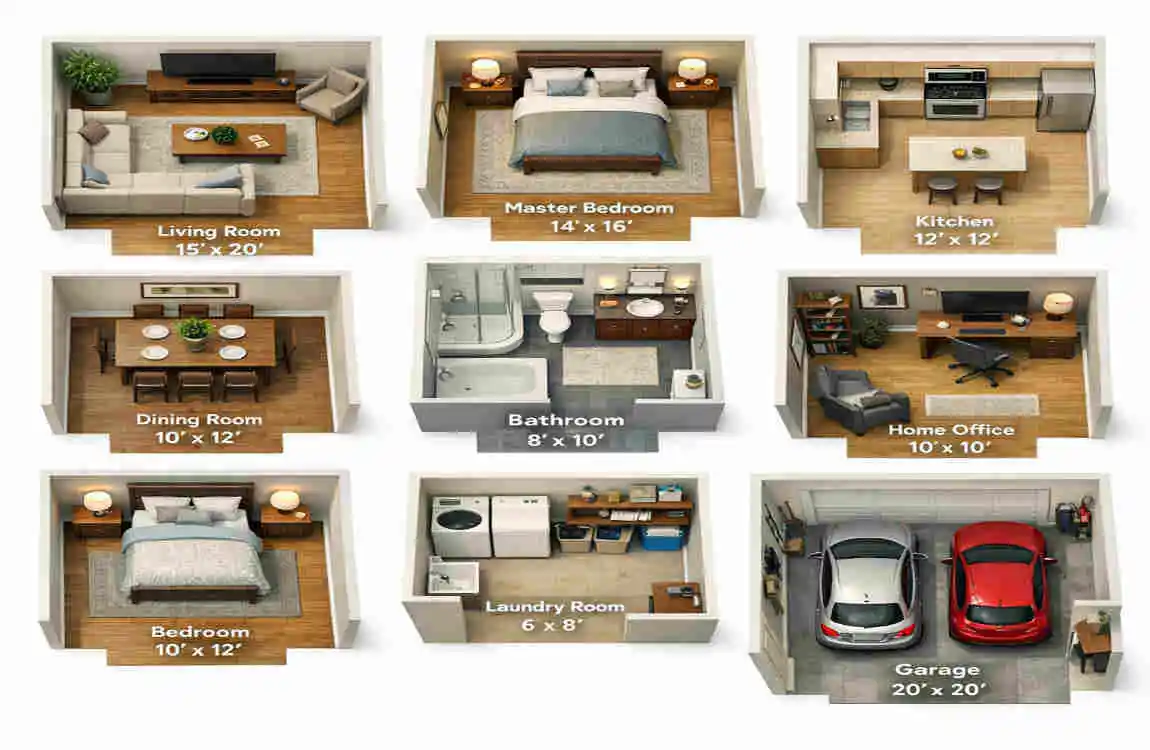
A living room is often around 150–300 square feet. This depends on whether the home is small or large.
Kitchen
Kitchens can range from 70–200 square feet. Bigger homes usually have larger kitchens with more workspace.
Bedrooms
A standard bedroom is often 100–150 square feet. Primary bedrooms are usually bigger.
Bathrooms
A bathroom may be around 25–80 square feet. Full bathrooms are larger than half-baths.
Garage
A garage is often 200–500 square feet depending on whether it fits one, two, or more cars. Keep in mind that garages are usually not counted in finished living square footage.
How to Calculate a House’s Square Footage
Simple Formula
The basic formula is:
length × width = square feet
Measuring Each Room
Measure every room that counts as living space. Use the same unit of measurement throughout.
Adding the Total Area
Add all the room sizes to get the home’s total square footage.
Common Mistakes to Avoid
- Forgetting hallways or closets when they should be included
- Including unfinished areas by mistake
- Mixing up feet and inches
- Counting garages as living space
How Much Space Does Your Family Need?
Single Occupants
A single person may be happy in 500–1,000 square feet, especially with a smart layout.
Couples
Couples often feel comfortable in 800–1,500 square feet.
Families with Children
Families usually need 1,200–2,500 square feet or more, depending on the number of kids and daily needs.
Multi-Generational Households
These households often need 2,500+ square feet so everyone has enough privacy and shared space.
Factors That Affect House Size
Several things influence the right home size:
- Budget
- Lot size
- Lifestyle
- Future family needs
- Storage requirements
- Local building rules
A house should fit your life, not just your wish list.
Tips for Choosing the Right House Size
- Consider your budget
- Think about future needs
- Avoid paying for unused space
- Focus on layout as well as size
- Compare homes before buying
A smaller home with a smart layout can often feel better than a larger home with wasted space.
Common Myths About Square Footage
Bigger Always Means Better
Not always. A bigger home can also mean more cleaning, more cost, and more stress.
More Square Feet Means Higher Value
Not always. Location, condition, and layout also matter a lot.
Smaller Homes Are Less Comfortable
Not true. A well-designed small home can feel very comfortable and practical.
Frequently Asked Questions
What is considered a good house size?
Most families find 1,500–2,500 square feet comfortable.
Is a 1,200-square-foot house big enough?
Yes, it can be a great size for a small family or couple.
How do I calculate square footage?
Multiply length × width for each room and add the totals.
What is the average size of a house?
It usually ranges from 1,500 to 2,500 square feet, depending on the country.
Does square footage include the garage?
Usually, no. Garages are generally not included in finished living space.
| House Type | Average Size (Square Feet) | Description |
|---|---|---|
| Tiny House | 100–400 sq ft | Compact living with essential rooms only. |
| Small House | 600–1,200 sq ft | Suitable for singles, couples, or small families. |
| Average U.S. House | 2,000–2,500 sq ft | Typical size for a 3–4 bedroom home. |
| Large House | 3,000–5,000 sq ft | Offers multiple bedrooms, bathrooms, and extra living areas. |
| Luxury House | 5,000+ sq ft | Spacious homes with premium amenities such as home theaters, gyms, and guest suites. |