If you are planning to build a home, one of the first questions that comes to mind is simple: how long does it take to build a house? The honest answer is that it depends. A lot. In a standard house often takes 8 to 18 months to complete, and the exact timeline changes based on plot size, design style, labor availability, weather, approvals, and material supply.
For a 5 Marla house, the build time is usually shorter. A 10 Marla house needs more time because the structure is larger and the finishing work is more detailed. A 1 Kanal house can take even longer because custom design choices, extra rooms, and higher-end finishes add more steps to the process.
| Step | Description | Typical Duration |
|---|---|---|
| Planning & Permits | Secure designs, approvals, and site prep | 1-6 months |
| Foundation | Excavation, pouring, and curing | 1-2 months |
| Framing & Structure | Walls, roof, and basic enclosure | 2-4 months |
| Systems Install | Plumbing, electrical, HVAC | 1-2 months |
| Finishing | Interior, exterior, landscaping | 2-4 months |
| Total Average | Varies by size (e.g., 3,500 sq ft home) | 7-12 months construction |
Average House Construction Timelines by Plot Size
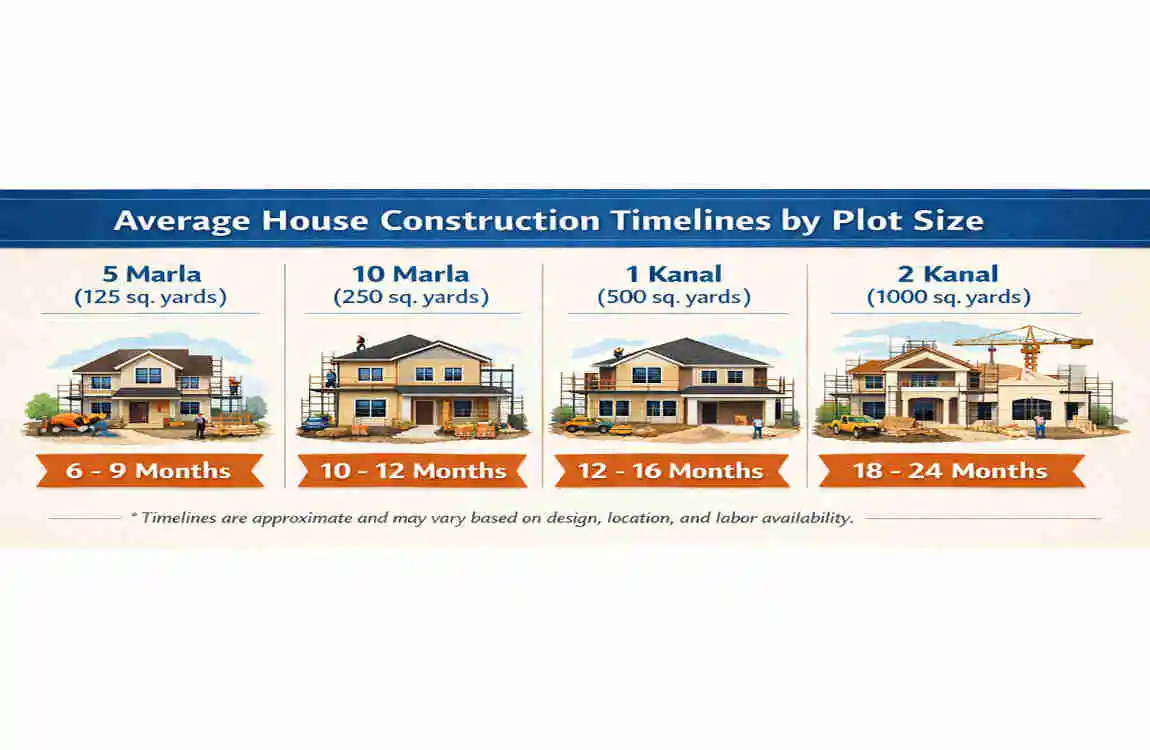
When people ask how long does it take to build a house, the first thing I check is the plot size. A home does not follow a fixed schedule unless the design is fixed as well. The larger the house, the more time you should expect for structure, services, and finishing.
In the usual range for a standard residential build looks like this:
Plot Size Storeys Typical Time Key Notes
5 Marla Double 8–12 months Best for simple layouts and basic finishes
10 Marla Double 10–14 months More rooms, more finish work, more coordination
1 Kanal Double 12–18 months Often includes custom design features and premium materials
5 Marla House Timeline
A 5 Marla house is often the fastest to complete because the footprint is smaller and the work is more manageable. If the design is simple and the team stays active, you may finish in 8 to 12 months.
This timeline usually works best when:
- The design is approved early
- Material is available on time
- The weather stays mostly dry
- The contractor keeps the site moving steadily
A 5 Marla home can still take longer if you make design changes during construction. Even small changes, such as shifting a staircase, adding a false ceiling, or upgrading the kitchen, can delay the entire project.
This timeline often includes:
- More foundation work
- A wider structure
- More wiring and plumbing points
- More finishing detail in bathrooms, kitchen, and front elevation
If you want a polished home with good finishing, plan for the upper side of the range. A simple build may finish sooner, but premium tiles, imported fixtures, or custom woodwork usually add time.
1 Kanal House Timeline
A 1 Kanal house often takes 12 to 18 months, and sometimes more if the design is highly custom. Larger homes naturally take longer because the work is spread across a larger area. There are more rooms, more bathrooms, larger drawing and dining spaces, and often more decorative features.
A 1 Kanal project also tends to involve:
- More design coordination
- Longer material delivery cycles
- More labor hours
- More finishing inspections
Step-by-Step House Building Timeline Breakdown
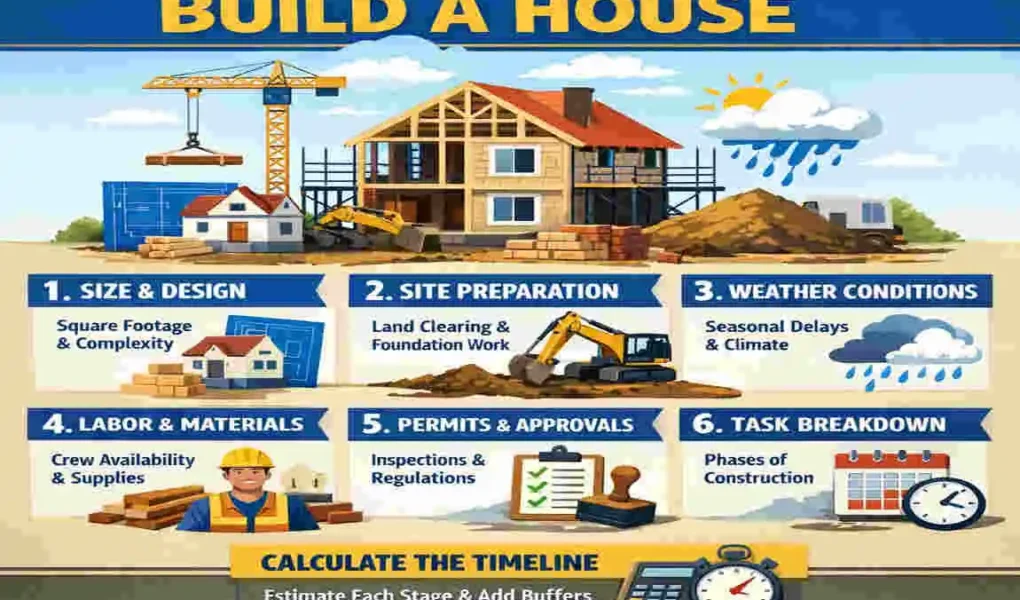
To truly understand how long does it take to build a house, you need to break the process into phases. A house is not built in one block of time. It moves through planning, foundation, structure, services, and finishing. Each step has its own pace.
Below is a practical breakdown of the full house building timeline.
Planning and Approvals: 1 to 3 Weeks
This is the stage where your dream starts to become a real plan. Many people ignore this part because it does not involve visible construction. Still, it is one of the most important steps in the whole project.
During planning, you usually work on:
- House design
- Room layout
- Front elevation
- Structural drawings
- Bill of quantities
- Budget planning
- Local approvals or permit paperwork
If you already know what you want, this phase can move quickly. If you keep changing your mind, it can stretch out fast. That is why clear decisions at the beginning save time later.
You should also check whether your contractor, architect, and engineer are all aligned. If they are not, the site may move in circles before a single brick is laid.
Site Preparation and Foundation: 1 to 2 Months
Once the plan is ready, the site work begins. The land gets cleaned, marked, and prepared for excavation. Then the team handles the foundation.
Foundation work usually includes:
- Soil checking
- Excavation
- Footing layout
- Steel fixing
- Concrete pouring
- Base filling
- Waterproofing where needed
This stage is not always fast, and it should not be rushed. A strong foundation supports the whole house. If the team skips proper soil checks or uses weak materials here, the problems show up later in cracks, settlement, and uneven floors.
Weather can also affect this stage. If the ground is too wet, excavation becomes difficult. That is why timing and soil condition matter so much.
Structural Work: 2 to 4 Months
This is the stage at which the house begins to rise above the ground. Many people find this part exciting because the home’s shape becomes visible.
Structural work usually includes:
- Columns
- Beams
- Slabs
- Roof casting
- Staircase frame
- Block masonry
This phase is often the backbone of the entire build. If the structural team works well, everything after that becomes easier. If the structure is delayed, the rest of the project gets pushed back too.
You may notice that larger homes spend more time here. A 1 Kanal structure usually takes longer than a 5 Marla structure simply because there is more area to cover and more load to manage.
Masonry and Partition Work: 1 to 2 Months
Once the main structure is up, the team starts building walls, partitions, and room divisions. This is the stage where the floor plan becomes tangible.
Typical tasks include:
- Brick wall construction
- Inner partitions
- Openings for doors and windows
- Boundary adjustments
- Stair wall finishing
This stage can move steadily if the material supply is smooth. But if bricks, sand, or cement arrive late, work slows down quickly.
Electrical and Plumbing Rough-In: 1 to 2 Months
At this point, the house begins to take shape on the inside. The team installs the hidden systems that make daily life possible.
This includes:
- Water pipes
- Drainage lines
- Electrical wiring
- Switch points
- AC piping
- Geyser lines
- Internet or TV conduits
This stage needs careful planning because changes later are expensive. If the plumbing layout or wiring plan is wrong, you may need to break walls or floors after finishing has already started. That creates delays and extra cost.
Plastering and Surface Preparation: 1 to 2 Months
Plastering smooths the walls and gets the house ready for finishing. It is a major factor in the final home’s visual quality.
This stage includes:
- Wall plaster
- Ceiling preparation
- Floor leveling
- Surface smoothing
- Waterproof treatment in wet areas
Plaster work depends heavily on weather. Too much humidity or rain can affect drying time. If the surface does not dry properly, later paint and finishing work may suffer.
Flooring, Tiling, and Tile Work: 1 to 2 Months
Now your house starts to look finished. Flooring and tiles add beauty and also improve usability.
This stage includes:
- Tile setting
- Floor leveling
- Bathroom and kitchen tiles
- Stair finishing
- Skirting
- Marble or ceramic installation
The more detailed the design, the longer this phase takes. A basic layout can move quickly. A high-end finish with special patterns, imported tiles, or custom designs takes more time.
Woodwork, Doors, Windows, and Cabinets: 1 to 2 Months
Woodwork plays a major role in how the house feels. This stage usually includes:
- Main doors
- Room doors
- Cupboards
- Kitchen cabinets
- Window frames
- Wardrobes
Good woodwork takes patience. It often involves measurements, cutting, fitting, polishing, and installation. If the carpentry team is overloaded, this stage can become a bottleneck.
Paint, Ceiling, and Final Finishing: 1 to 2 Months
This is where the home gets its final personality. The paint color, ceiling style, and decorative details decide how modern, warm, or elegant your home looks.
This stage can include:
- Primer and paint coats
- Putty work
- False ceiling
- Decorative lighting
- Final polish
- Touch-up work
Finishing work is where delays become visible. If one trade is late, the next trade has to wait. That is why the final stretch often feels slower than expected, even though most of the structure is already in place.
Final Checks and Handover: 1 to 2 Weeks
The home is almost ready, but not quite. Final checks help catch issues before you move in.
You should review:
- Plumbing leaks
- Electrical faults
- Door alignment
- Window fittings
- Paint touch-ups
- Tile gaps
- Drainage flow
This final stage may feel small, but it matters a lot. A careful handover saves you from repairs right after occupancy.
Key Factors Affecting How Long It Takes to Build a House
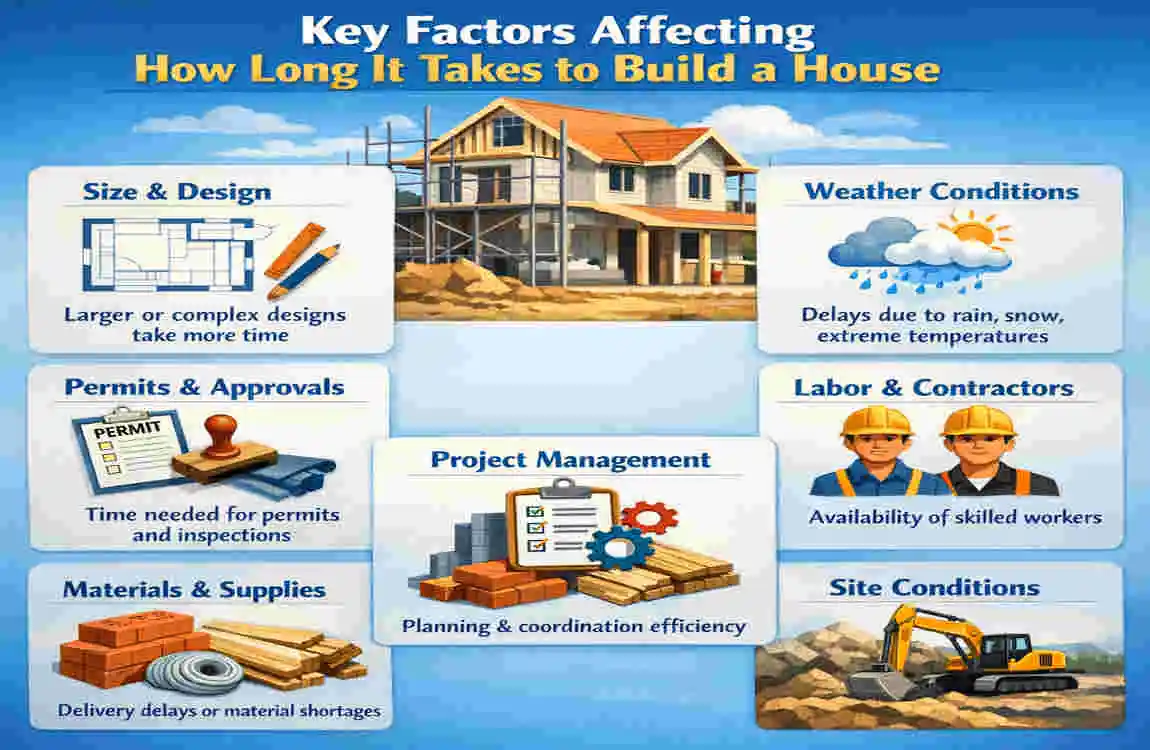
When people search for how long it takes to build a house, they often expect a single fixed number. In real life, many factors can change the time it takes to build a house. Some are under your control. Others are not.
Weather Conditions
Weather is one of the biggest reasons construction slows down. Rain can stop excavation, affect material storage, and delay plaster drying.
Hot weather can also create problems. If the heat is too strong, workers may slow down or shorten their work hours. That affects overall progress too.
Design Complexity
A simple home is faster to build than a custom home. If your design has unusual shapes, large double-height spaces, heavy facade work, or imported finishes, expect the timeline to stretch.
Complex design often means:
- More planning
- More skilled labor
- More inspections
- More material coordination
In short, the more custom your vision, the longer it takes to build a home.
Permit and Approval Delays
Approvals can take longer than many homeowners expect. In some areas, paperwork moves smoothly. In others, it can slow everything down.
This is especially true if:
- Documents are incomplete
- Drawings are not approved on time
- Local rules change
- You depend on outside agents who delay submissions
In cities under greater administrative pressure, permit delays can stretch for several weeks or even months.
Labor Availability
A strong labor team can keep the site moving. A weak team can turn a normal project into a slow one. Labor shortages, strikes, or frequent worker turnover can severely disrupt the schedule.
If the carpenter, mason, plumber, and electrician are not available at the right time, the house cannot move from one phase to the next.
Material Supply Issues
Construction depends on a steady supply of cement, steel, bricks, sand, tiles, and fixtures. If even one important item is late, work can stop.
Common supply problems include:
- Price increases
- Out-of-stock materials
- Transport delays
- Imported item delays
- Quality mismatch between batches
Planning your purchases early can reduce these risks. Many builders also prefer to buy key materials in bulk when prices are stable.
Scope Changes During Construction
This is one of the most common causes of delay. A homeowner may decide to change the kitchen layout, enlarge a bedroom, add a washroom, or upgrade the front elevation halfway through the project.
Every change adds time. Some changes only need small adjustments. Others force the team to redo work that has already been completed.
If you want a smooth build, try to lock your design before construction begins.
Table: Common Delay Factors and Their Impact
FactorPotential DelayBest Way to Reduce the Delay
Weather 1–3 months Plan major work during dry months
Permits 2–4 months Prepare documents early and use local experts
Materials 1–2 months Order important items in advance
Labor shortage 2–6 weeks Hire a reliable contractor with steady teams
Design changes 2–8 weeks Finalize drawings before site work starts
Custom finishes 1–3 months Select products before finishing begins
Costs and How They Influence Build Time
Many homeowners think cost and time are separate. In reality, they are closely connected. If you want a faster build, you often need to spend more. If you want to save money, the project may take longer.
Faster Builds Usually Cost More
When the schedule becomes tight, the builder may need to:
- Increase labor hours
- Pay for faster transport
- Buy materials in a hurry
- Bring in extra workers
- Use premium items that are easier to source
This is why a rushed build can cost significantly more than a carefully paced project.
Slower Builds Can Save Money, But Not Always
A slower build may help you manage cash flow better. You can buy materials in phases and spread payments over time. That can feel easier on your budget.
But if the project drags on too long, you may face rising material prices, repeated mobilization charges for labor, and additional supervision costs. So, a slow build is not always the cheapest.
Cost-Time Tradeoff Table
Build Style Estimated Time Estimated Cost Impact Best For
Basic standard build 8–12 months Lower Budget-conscious families
Mid-range custom build 10–14 months Moderate Families wanting balance
Premium custom build 12–18 months Higher Homeowners seeking luxury and detail
Prefab or modular elements Faster than usual Can reduce waste and time Projects needing quicker completion
If you want both speed and control, try to plan the budget before construction starts. That gives you more room to move without having to stop halfway.
7 Tips to Shorten Your House Construction Timeline
If you are serious about reducing house building time, there are practical steps you can take. You do not need to rush blindly. You just need to plan smartly.
Choose an Experienced Contractor
This is one of the most important decisions you will make. A skilled contractor understands scheduling, labor flow, and material planning. They also know how to solve problems before they become delays.
Finalize the Design Before Work Starts
Do not start construction with an unfinished idea. If you keep changing the layout during construction, the timeline will stretch.
Make sure you approve:
- Floor plan
- Elevation
- Room sizes
- Bathroom placement
- Kitchen layout
- Stair design
The earlier you decide, the better your construction timeline will be.
Buy Key Materials Early
Some items take time to source. Tiles, fixtures, steel, sanitary fittings, and custom woodwork should be planned in advance.
If you order too late, your team may finish one stage and then sit idle while waiting for material.
Avoid the Peak Rainy Season
A smart schedule can save weeks of lost time.
Keep the Labor Team Stable
A changing labor team confuses. Workers need time to understand the site, the design, and your expectations. A stable team works faster because they already know the plan.
Use Modular or Standardized Elements
Not every part of a home needs to be custom-built. In some cases, standardized doors, cabinets, fittings, and layouts can save time.
This does not mean your home must look plain. It just means you make smart choices when custom work isn’t necessary.
Track Progress Weekly
You do not need to visit the site every hour, but you should check progress regularly. A weekly review helps you catch delays early.
Ask simple questions:
- Did the scheduled phase finish on time?
- Is the next phase ready to start?
- Are materials already on site?
- Are there any problems with labor or design?
A small delay caught early is easier to fix than a delay discovered too late.
Common Delays and How to Avoid Them
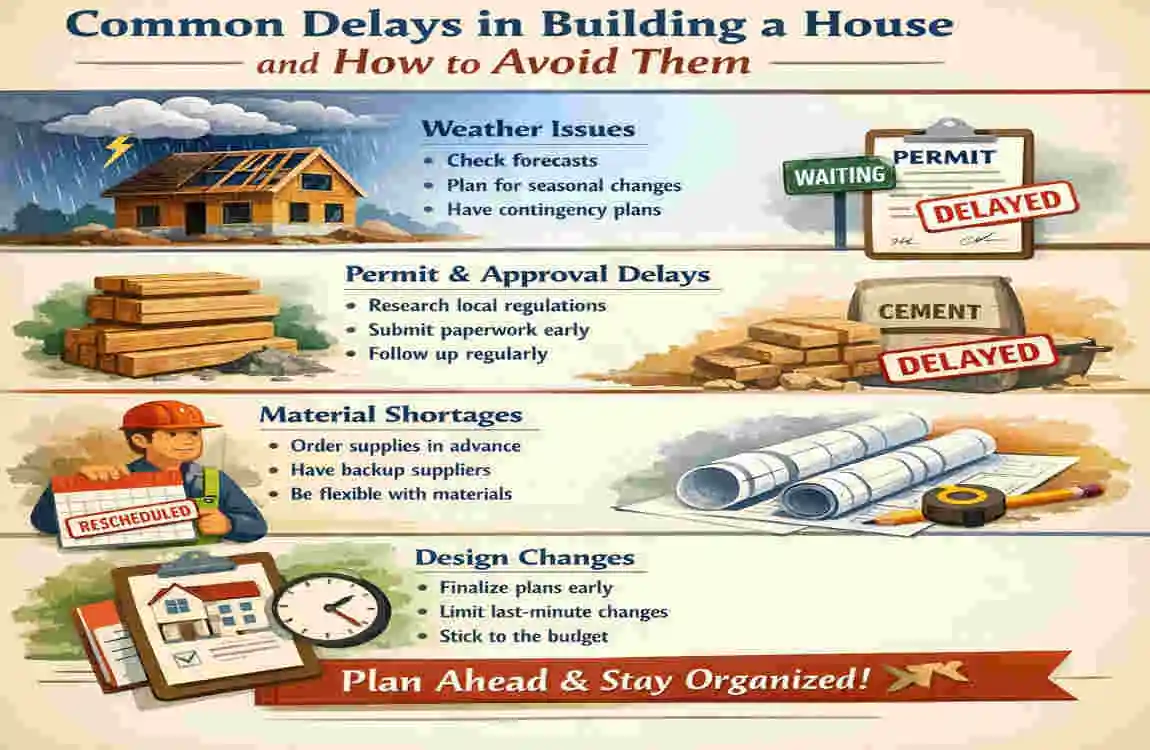
Even when you plan well, delays can still happen. The key is to expect them, not panic about them.
Labor Strikes and Worker Gaps
Sometimes the workforce is unavailable. It may be due to holidays, local work shortages, transport issues, or strike-related delays.
How to avoid major trouble:
- Work with a contractor who has backup labor
- Keep the schedule flexible
- Do not stack too many critical tasks on one day
Import Delays for Fixtures and Finishes
If you want imported faucets, lights, tiles, or hardware, delivery may take longer than expected. Customs and shipping issues can slow things down.
Best approach:
- Order early
- Keep backup options ready
- Avoid depending on a single item for a major phase
Design Changes from the Owner
This happens very often. You see the structure on-site, then change your mind about the kitchen, staircase, or front elevation.
That is normal. But every change affects the schedule.
Simple rule: make all major design decisions before the structure begins.
Poor Weather and Site Conditions
Waterlogged soil, strong winds, and humidity can all affect the site. Even when workers are ready, the land may not be.
Best practice: keep a 10% to 20% time buffer in your plan. That way, delays feel manageable instead of shocking.
How Long Does It Take to Build a House in Different Scenarios?
Let us make this even more practical. The answer changes depending on the kind of home you want.
Standard Family Home
If you are building a normal family house with common finishes and a simple layout, you can often expect the lower part of the timeline range.
For example:
- 5 Marla: 8 to 10 months
- 10 Marla: 10 to 12 months
- 1 Kanal: 12 to 15 months
Custom Home with Premium Features
If your home includes custom woodwork, luxury bathrooms, imported tiles, false ceilings, or a unique elevation, the timeline gets longer.
For example:
- 5 Marla: 10 to 12 months
- 10 Marla: 12 to 14 months
- 1 Kanal: 14 to 18 months
Fast-Track Build
A fast-track build can finish sooner, but only if planning is tight and the budget is flexible. This is not always the best option for every family, but it works when speed is the top priority.
Fast-track work usually requires:
- Early design approval
- More labor
- Better site supervision
- Larger material purchases
- Fewer scope changes
Slow-Paced Build
Some homeowners build in stages because of budget limits. That can stretch the timeline beyond the usual range. If you pause work between phases, the total time can easily exceed 18 months.
This is not a failure. It is simply a different way of managing the project.
What Should You Expect in a Good Construction Timeline?
A realistic construction timeline is not just about speed. It is about steady progress.
A good timeline should include:
- Clear phase dates
- Backup time for weather delays
- Material ordering dates
- Labor coordination
- Approval checkpoints
- Quality checks
If your plan has none of these, you may face constant surprises.
A practical timeline also leaves room for inspection. You want each phase done properly before the next one starts. That may feel slower at times, but it saves you from major rework later.
Frequently Asked Questions About How Long It Takes to Build a House
How long does it take to build a 5 Marla house?
A 5 Marla house usually takes 8 to 12 months to complete. The exact time depends on the design, labor, weather, and material availability.
How long does it take to build a 10 Marla house?
A 10 Marla house often takes 10 to 14 months to build. If you choose custom finishes or face delays, the timeline can extend a bit more.
How long does it take to build a 1 Kanal house?
A 1 Kanal house usually takes 12 to 18 months. Larger homes need more structure, more finishing, and more coordination.
What is the biggest reason house construction gets delayed?
The biggest reasons are usually weather, design changes, labor shortages, and material delays. In many cases, more than one of these happens at the same time.
Can a house be built faster without losing quality?
Yes, but only if you plan well. Finalizing the design early, ordering materials in advance, and hiring an experienced contractor can speed things up without harming quality.
Is it cheaper to build slowly or quickly?
A slow build can help with cash flow, but it may also expose you to rising prices and repeated overhead costs. A very fast build can cost more because it needs extra labor and quicker material movement.
What is the best time of year to build a house?
Many people prefer drier months, often between October and March, because weather conditions are usually easier for site work.