how tall is a 2 story house
Blog CONSTRUCTION

How Tall Is a 2-Story House? Standard Heights Explained

Have you ever stood outside a house and wondered just how tall a 2-story house is? It’s a question that pops up more often than you might think, especially if you’re buying a home, planning a build, or even just curious about architecture. Knowing the height of a two-story house isn’t just trivia—it’s practical knowledge that can help with everything from zoning permits to estimating renovation costs.

Think about it: if you’re a first-time homebuyer, understanding modern house heights can guide your search. Builders rely on these measurements to stay within regulations, and city planners use them to keep neighborhoods looking balanced.

You’ll learn about average ranges, influencing factors, how to measure accurately, and even some FAQs. By the end, you’ll have a clear picture of what makes a two-story home tick in terms of height. Let’s get started—imagine you’re walking through your dream home as we explore this together.

Understanding a 2-Story House

A two-story house might seem straightforward, but there’s more to it than meets the eye. Let’s break it down so you can picture it clearly.

What Defines a 2-Story House?

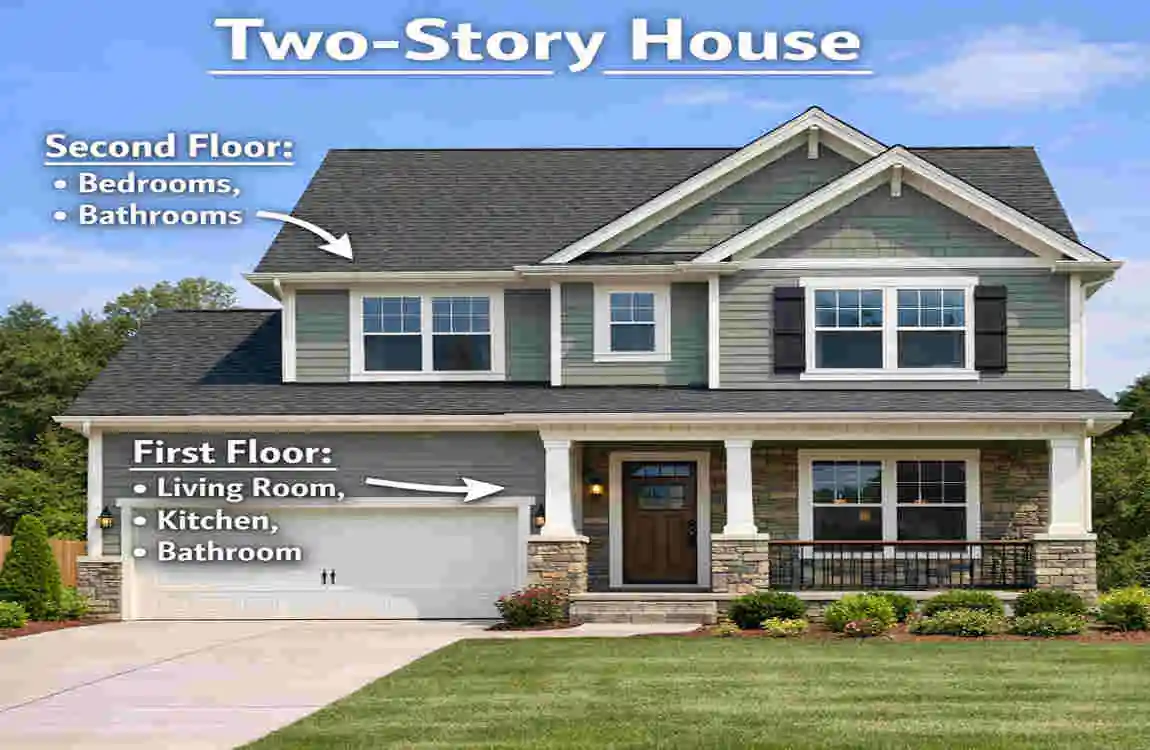
At its core, a 2-story house is a home with two levels of living space stacked on top of each other. The ground floor handles daily activities like cooking and relaxing, while the upper floor often houses bedrooms for privacy. Unlike a one-story ranch, it uses vertical space to pack in more rooms without spreading out horizontally.

Does a basement count as a story? Typically, no basements are below ground and don’t factor into the “story” count. So, if you’re eyeing a home listed as two stories, expect two complete above-ground levels.

Popular Architectural Styles for 2-Story Houses

Two-story houses shine in various styles that add character and height variations. For instance, Colonial homes often feature symmetrical designs with pitched roofs, which make them appear taller and more stately. Victorian styles amp up the drama with turrets and steep gables, raising the overall height.

Modern farmhouses are another hit, blending rustic charm with two stories for that cozy yet spacious feel. And don’t forget Craftsman homes—they emphasize natural materials and often include dormers that subtly increase perceived height. Which style appeals to you? Picturing your ideal house can make these details more relatable.

How 2-Story Houses Differ from Other Types

Compare a two-story house to a single-story ranch, and the differences jump out. A ranch sprawls across one level, ideal for accessibility but requiring more land. In contrast, a two-story setup saves yard space but adds stairs, which might not suit everyone.

Then there are multi-story homes, like three- or four-story townhouses, which tower even higher for urban living. A two-story strikes a balance—tall enough for family growth but not overwhelmingly vertical. Ever climbed stairs in a high-rise? That’s why two stories feel just right for many.

Why Height Matters in Home Design

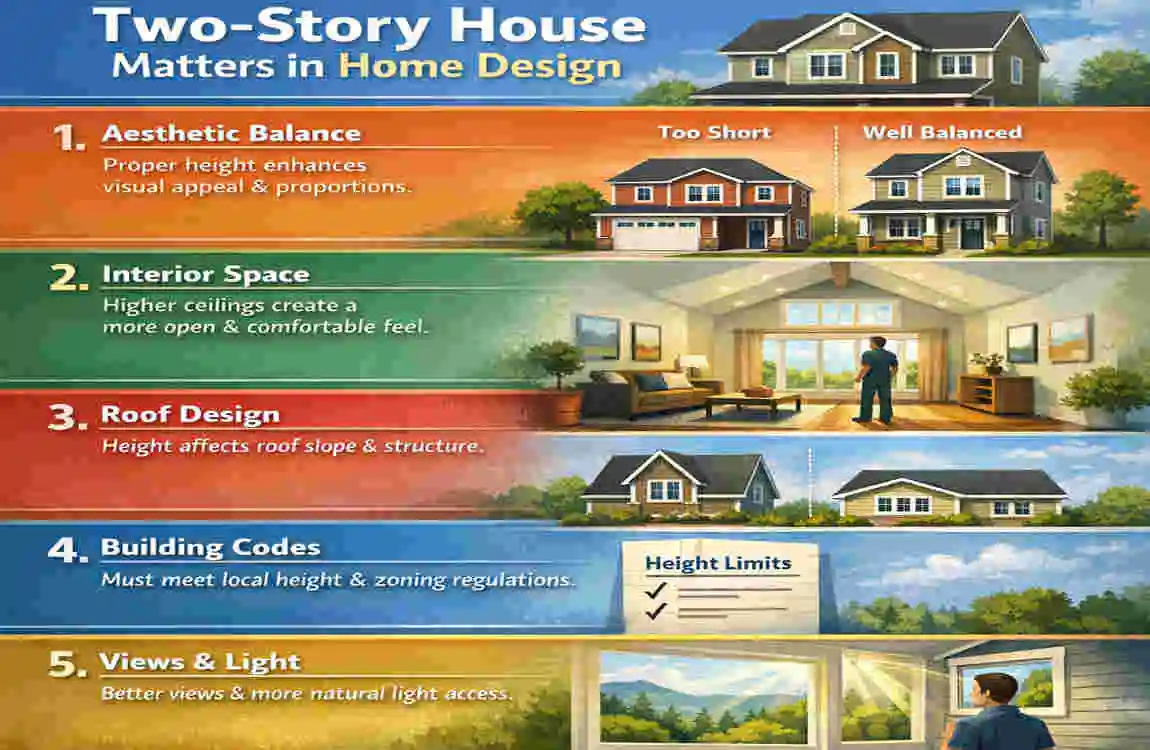
Height isn’t just about looks; it plays a significant role in practical matters. Zoning laws often cap building heights to maintain neighborhood harmony, so knowing how tall a 2-story house is helps avoid permit headaches.

From a design perspective, taller homes can feel more grand, but they cost more to heat. Builders consider height for structural integrity, too—think wind resistance in stormy areas. If you’re planning a home, ask yourself: How does height fit into my lifestyle and budget? It’s a key piece of the puzzle.

Standard Height of a 2-Story House

how tall is a 2 story house

Now that we’ve got the basics, let’s talk numbers. What’s the typical height range? We’ll keep it simple and relatable.

Average Height Range for a Typical 2-Story Home

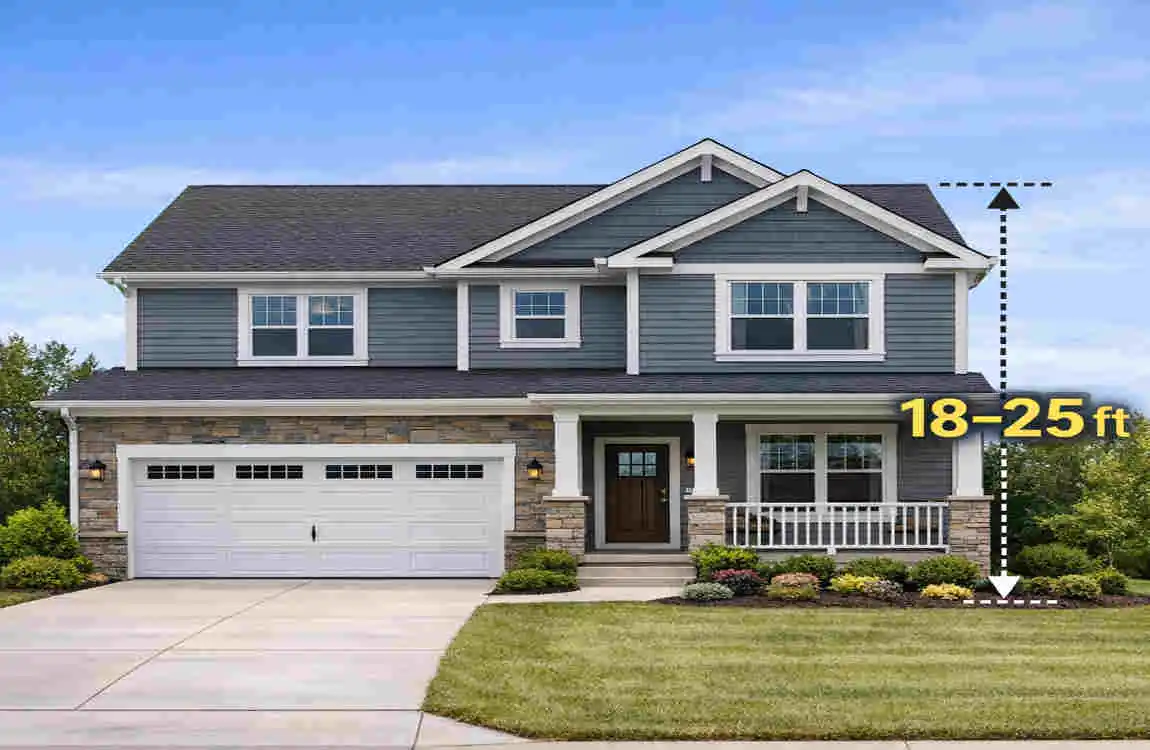
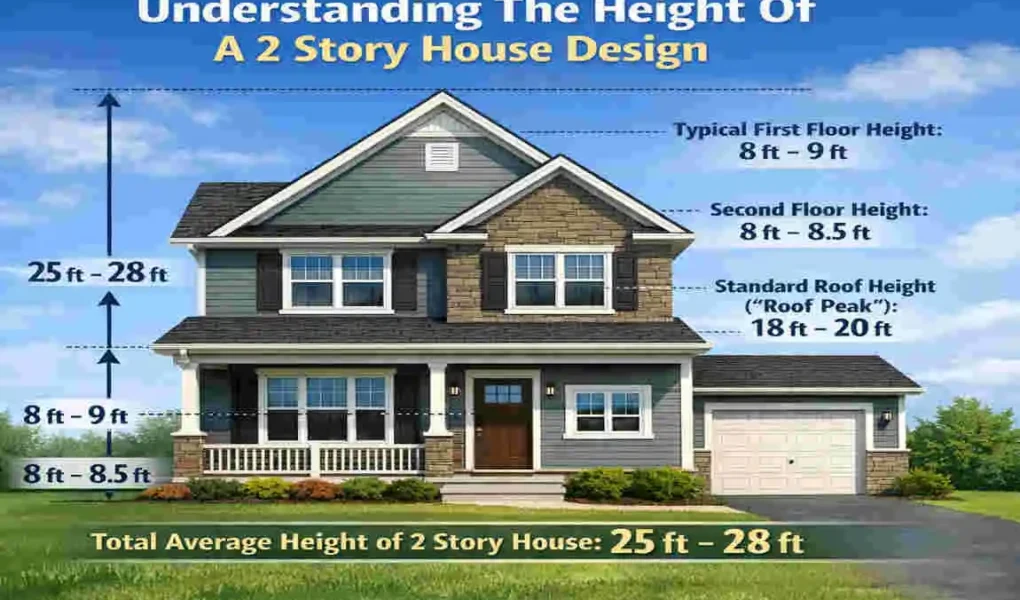
Most two-story houses fall between 18 and 30 feet tall, measured from the ground to the roof’s peak. Why such a range? It depends on ceilings, roofs, and foundations. In everyday terms, that’s like stacking two shipping containers with some extra room on top.

If you’re visualizing this, picture a standard suburban home—it’s not scraping the sky like a skyscraper, but it’s tall enough to stand out. Curious about your own house? Grab a tape measure next time you’re outside.

Typical Floor-to-Ceiling Heights Per Story

Each story usually has a floor-to-ceiling height of 8 to 10 feet. That’s the space from the floor to the ceiling inside a room. Eight feet is the bare minimum in many building codes, but 9 feet feels more open and is common in newer builds.

Why does this matter? Taller ceilings make rooms feel airy, like you’re breathing easier. In older homes, you might find 8-foot ceilings, while luxury builds push to 10 or 12 feet. Ever been in a room that felt cramped? That’s often due to low ceilings—something to watch for when house hunting.

Accounting for Floor Thickness and Structural Elements

Between stories, there’s more than just air. Floors add about 1 to 2 feet of thickness for joists, insulation, and wiring. This “hidden” space ensures the house stays sturdy and quiet—no creaky footsteps from upstairs.

Add it up: Two stories at 9 feet each, plus floor thickness, and you’re looking at around 20 feet before the roof. It’s like the house’s skeleton—essential but out of sight. Builders love this detail because it affects everything from plumbing to electrical work.

Architectural Standards in Feet and Meters

In the U.S., standards hover around 25 feet for a basic two-story house (about 7.6 meters). Internationally, it’s similar—Europe often uses 2.5 to 3 meters per story, totaling around 7 to 9 meters overall.

For example, a simple gable-roof home might measure 22 feet (6.7 meters) to the eaves, plus roof height. These standards come from organizations like the International Residential Code, which help keep things safe and consistent. If you’re converting measurements, remember: 1 meter equals about 3.28 feet—handy for global readers.

Real-World Examples from Residential Construction

Take a classic Colonial: With 9-foot ceilings and a moderate roof pitch, it hits 26 feet. A modern two-story with vaulted entryways? That could stretch to 28 feet. In suburban developments, builders stick to these to match the neighborhood vibe.

I’ve seen Texas homes where taller ceilings combat heat, pushing heights to 30 feet. What about your area? Local examples can vary, so check out nearby builds for a sense of “normal.”

Factors That Affect the Height of a 2-Story House

how tall is a 2 story house

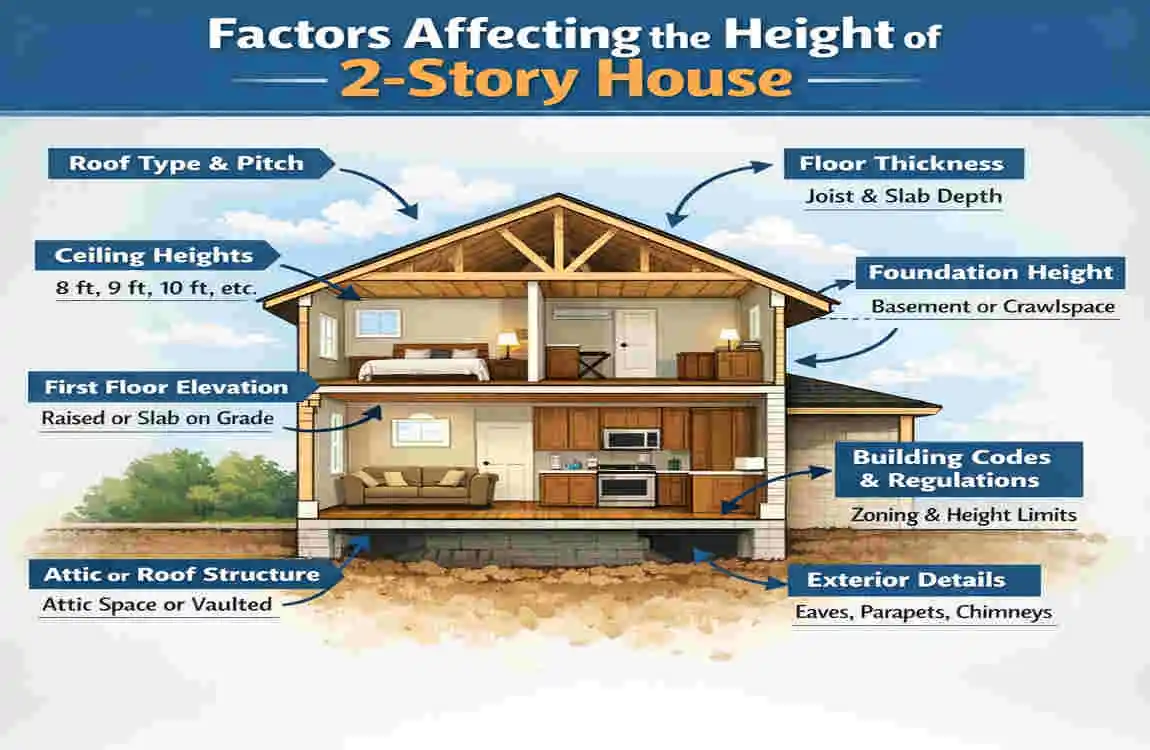
Heights aren’t set in stone—several elements can tweak them. Let’s explore what influences the height of a 2-story house.

Variations in Ceiling Heights

Standard ceilings are 8-9 feet, but options like cathedral ceilings soar to 12-15 feet, adding drama to living rooms. Vaulted ceilings slope upward, creating a sense of outdoor space without fully committing to extra height.

These choices boost the total height by 2-5 feet. Imagine hosting friends in a vaulted great room—it feels luxurious, right? But remember, taller means more volume to heat or cool.

Foundation Types and Their Impact

Your foundation sets the base. A slab foundation keeps things low, adding minimal height. Crawl spaces lift the house by 1-3 feet for ventilation, while full basements can add 8-10 feet underground—but remember, they don’t count toward story height.

Choosing a basement? It indirectly affects perceived tallness by elevating the whole structure. If you’re in a flood-prone area, a raised foundation might be your best bet—think about your location.

Roof Styles and Pitch Influences

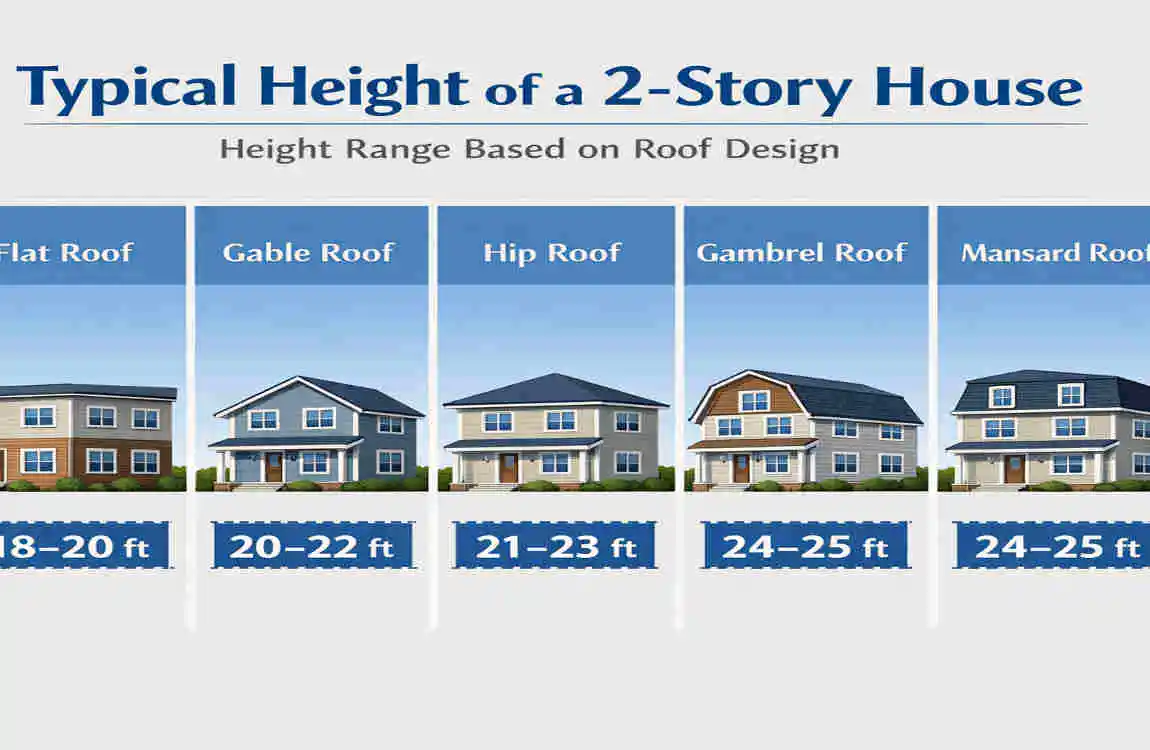
Roofs aren’t flat; their style matters. A steep gable roof can add 5-10 feet to the peak, while a low-slung hip roof keeps things shorter by 3-5 feet.

Pitch—the roof’s slope—also affects this. Steeper pitches handle snow better in cold climates, allowing for greater height. Ever admired a chalet-style roof? That’s pitch at work, making the house look taller and more charming.

Attic or Bonus Rooms and Height Additions

An attic might add 2-4 feet if it’s habitable, turning it into a “bonus” story. Some designs include half-stories, like a loft, which nudge the total height up without a whole third level.

This is great for storage or extra space, but it impacts the roofline. Ask yourself: Do I need that attic playroom? It could change your home’s silhouette.

Building Codes and Zoning Regulations

Local rules dictate minimums (often 7 feet per story) and maximums (35 feet in many suburbs). These prevent overshadowing neighbors or safety issues.

  • Zoning perks: Some areas allow variances for taller roofs if you prove it’s aesthetically fitting.
  • Regional twists: Coastal zones limit heights for wind resistance, while urban spots cap them for density.
  • Code musts: Always check for seismic or fire-safety rules that affect design.

Navigating this? Consult your local building department—it’s easier than you think.

Measuring the Height of a 2-Story House

how tall is a 2 story house

Ready to get hands-on? Measuring isn’t rocket science, but doing it right matters.

Correct Methods and Tools for Measurement

Use a laser measurer for accuracy—point it from the ground to the roof ridge. Or go old-school with a tape measure and a ladder —safety first!

For pros, drones or surveying tools provide precise reads. If you’re a homeowner, apps on your phone can estimate with surprising accuracy. Give it a try on your own house—it’s a fun weekend project.

Ground to Roof Ridge vs. Ceiling Heights

Total height measures from the ground to the highest roof point, including the foundation. Ceiling height is interior-only, from floor to ceiling per story.

Confused? The ridge is the peak, so a steep roof adds more than a flat ceiling does. This distinction helps when smart homes.

Structural vs. Finished Height Differences

Structural height includes beams and unfinished elements, often 1-2 feet more than finished ceilings. Finished height is what you experience daily—smooth and painted.

Builders focus on structural stability, while you care about the finished product’s livability. Ever renovated? This gap explains why ceilings drop during updates.

Tips for Verifying House Height

  1. Check the blueprints: They list the exact dimensions—request them from the sellers.
  2. Use online tools: Google Earth can give rough estimates from satellite views.
  3. Hire a surveyor: For precision, especially before buying or house building.
  4. Account for add-ons: Don’t forget chimneys or antennas that poke above the roof.

These steps empower you to verify claims. Feeling prepared? Next time you’re house shopping, measure up!

Typical Height Comparisons for 2-Story Houses

how tall is a 2 story house

Let’s put numbers side by side for clarity. Comparisons make the standard heights of a 2-story house easier to grasp.

Height Comparison Table

Here’s a handy table showing how different factors affect total height. (ALT text suggestion for an image: “2-story house height diagram illustrating various ceiling and roof combinations.”)

Ceiling Height per Story, Roof Type, Foundation, Total Height (Feet), Total Height (Meters), Example Home Style

8 feet Low Pitch Hip Slab 18-22 5.5-6.7 Ranch-Style Two-Story

9 feet Moderate Gable Crawl Space 22-26 6.7-7.9 Colonial

10 feet Steep Pitch Basement 26-30 7.9-9.1 Modern Farmhouse

12 feet (Vaulted) Cathedral Slab 28-32 8.5-9.8 Contemporary

This table highlights variations—notice how a basement boosts height without adding stories.

Comparing to Other Home Types

A one-story home tops out at 10-15 feet, feeling compact next to a two-story home’s 25 feet. Three-story townhomes? They reach 35-45 feet, towering over both.

Perspective matters: A two-story offers more space than a single without the maintenance of a three. If curb appeal is your thing, taller homes often win—think grand entrances.

Height’s Effect on Value and Appeal

Taller houses can increase property values by 5-10% due to perceived luxury. But shorter ones appeal for ease of access, especially for aging in place.

Curb appeal? A balanced height draws eyes without overwhelming. Ever driven by a neighborhood where one house sticks out? Height harmony keeps values steady.

Frequently Asked Questions (FAQs)

Got questions? We’ve got answers on how tall a 2-story house is.

How Tall Is a 2-Story House with a Basement?

Adding a basement doesn’t change the “two-story” label, but it elevates the total by 8-10 feet if entirely above ground. Overall, expect 28-35 feet. Basements are great for extra space—think home gym or theater.

Is There a Legal Maximum Height for a 2-Story Home?

Yes, most areas cap at 35 feet to prevent overshadowing. Check your local zoning—variances are possible but require approval. It’s all about community balance.

Can I Increase the Height of My 2-Story Home Legally?

Absolutely, via additions like dormers or roof raises, but get permits first. Consult an architect to ensure it meets the code requirements. Many homeowners do this for attics—worth it for the space?

How Does Ceiling Height Affect Heating and Cooling Costs?

Taller ceilings mean more air to condition, hiking bills by 10-20%. Insulation helps, but consider ceiling fans for home efficiency. In hot climates, high ceilings let heat rise, keeping you cooler.

You may also like...

Leave a Reply

Your email address will not be published. Required fields are marked *