Understanding the construction timeline is crucial when embarking on a project of this scale. It helps you plan your finances, set realistic expectations, and ensure a smooth building experience. By the end of this post, you’ll have a solid grasp of the factors that influence construction time in Florida and the step-by-step process of bringing your dream home to life.
Weather and Climate Impact
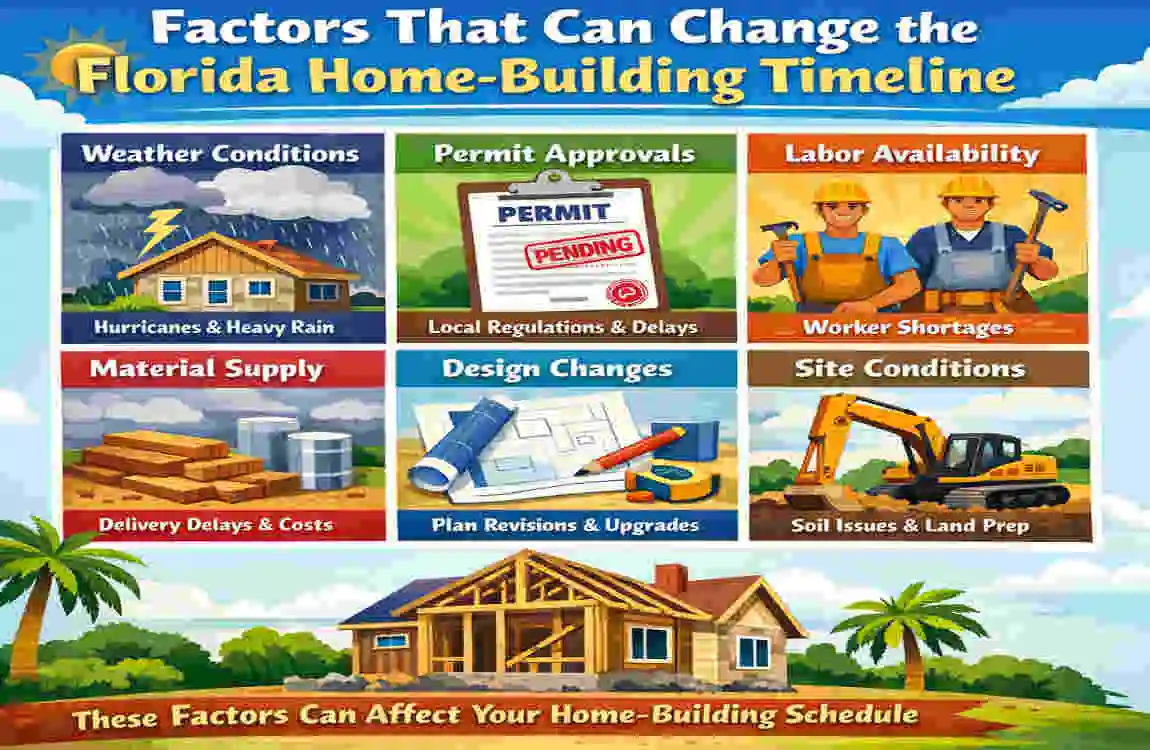
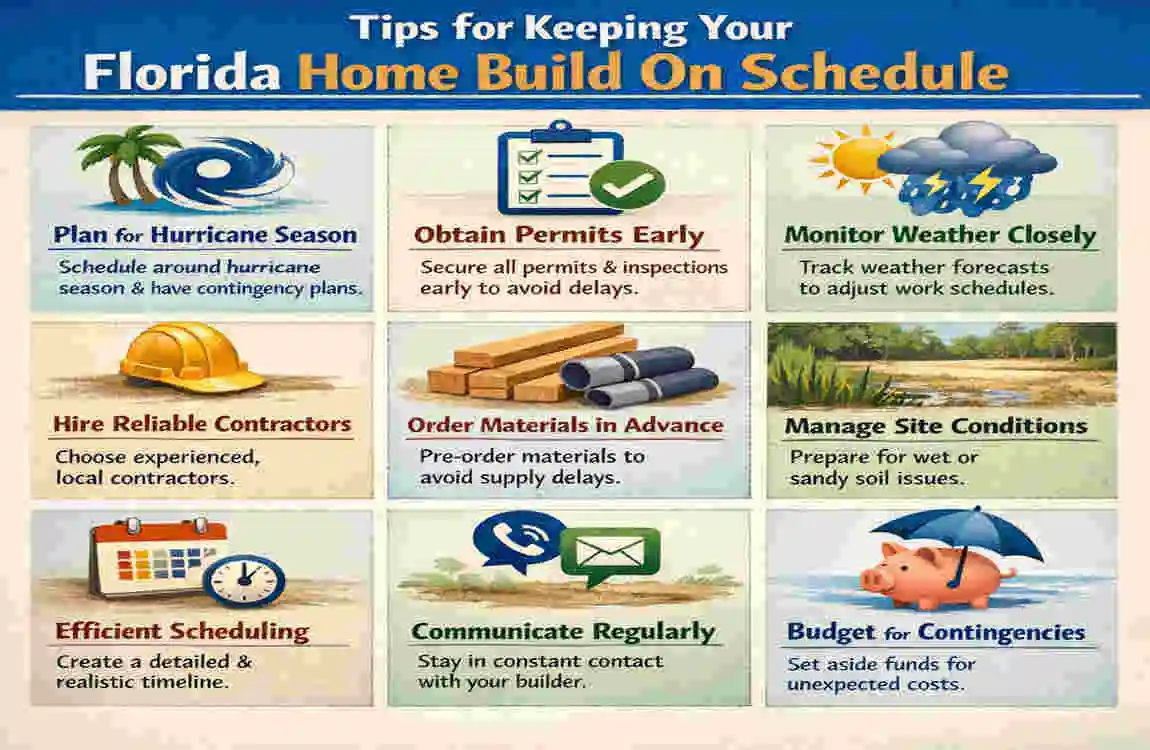
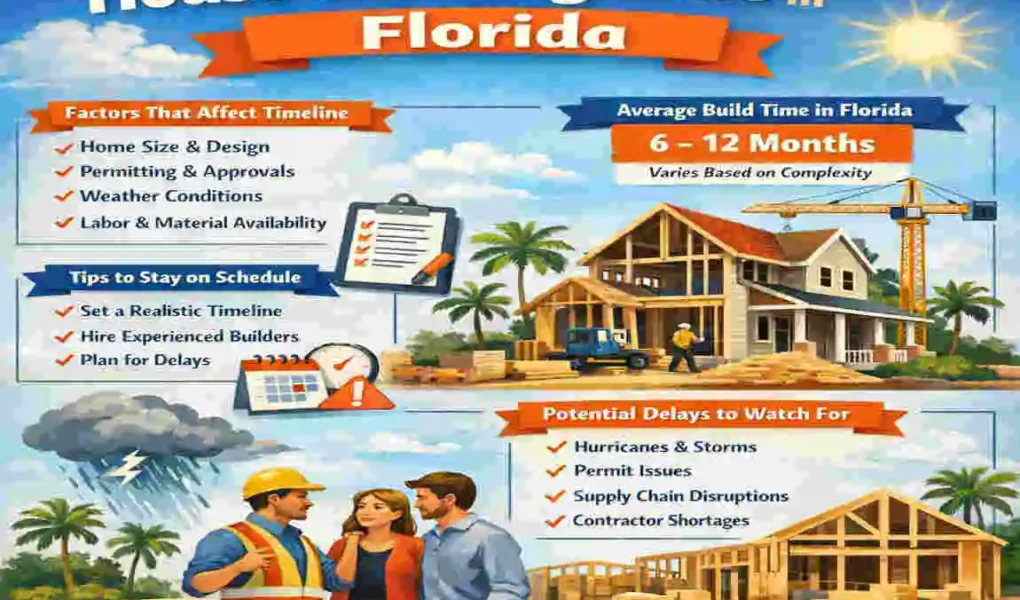
Florida’s weather can be both a blessing and a curse for construction. The state’s hurricane season, which runs from June to November, can cause significant delays. Heavy rains and high winds may force builders to halt work, pushing your home project timeline back.
Permits and Approvals Timeline in Florida
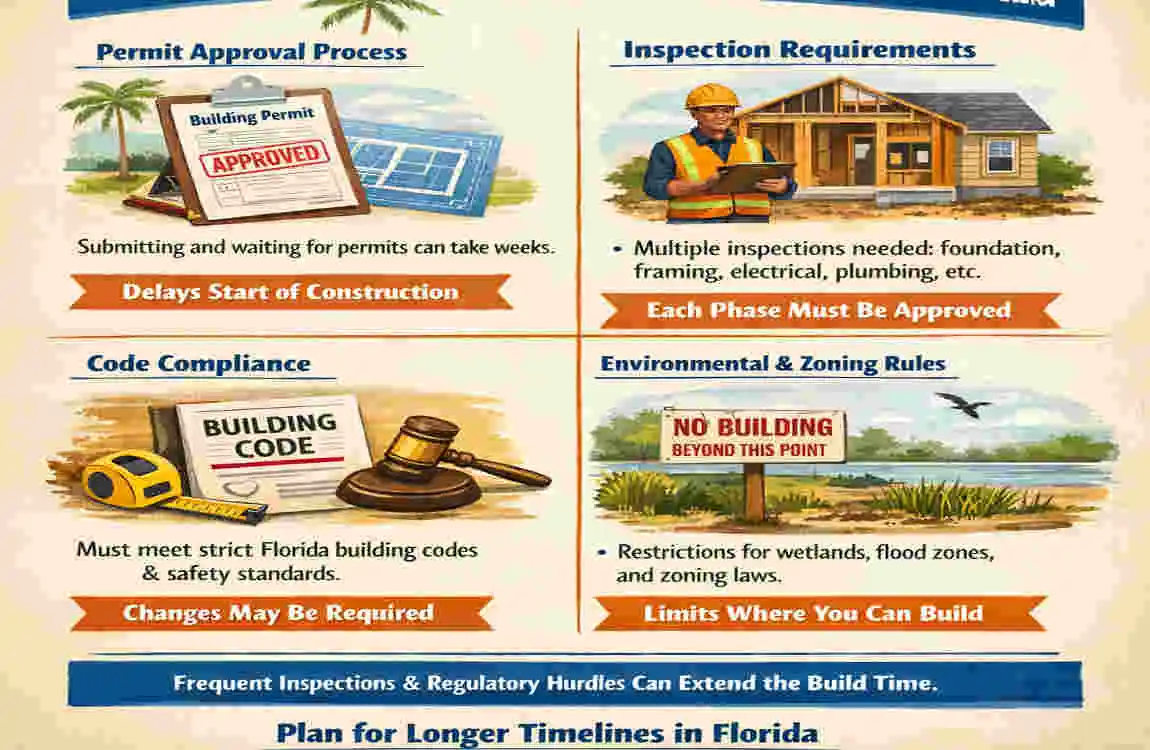
Navigating the permit and approval process in Florida can be time-consuming. Depending on the location and complexity of your project, it may take several weeks or even months to secure all the necessary permits. Being proactive and working with experienced professionals can help streamline this process.
Size and Complexity of the House Design
The size and complexity of your house design will directly impact the construction timeline. A larger or more intricate home will naturally take longer to build than a smaller, simpler one. Keep in mind that custom designs and special features can add time to the overall process.
Availability of Materials and Labor in Florida’s Market
Florida’s construction market can be competitive, especially during peak building seasons. The availability of materials and skilled labor can affect your project timeline. It’s essential to work with your builder to plan for potential delays and ensure a steady supply of resources.
Step-by-Step Timeline Breakdown of Building a House in Florida

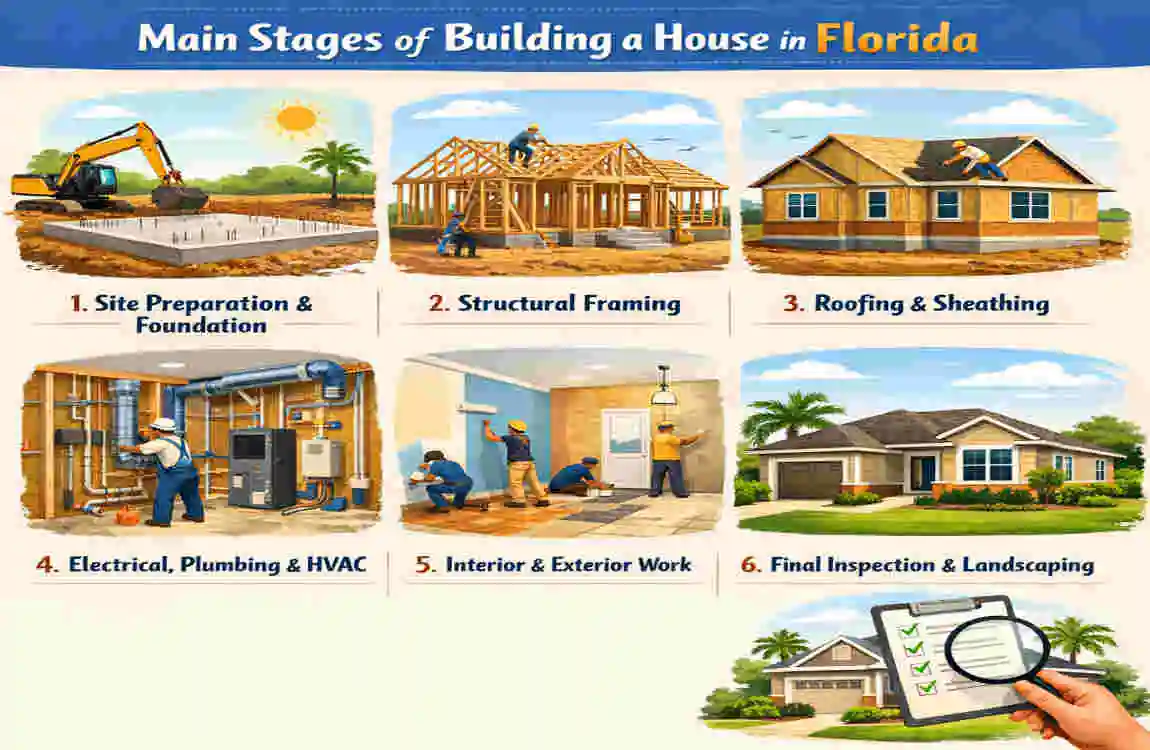
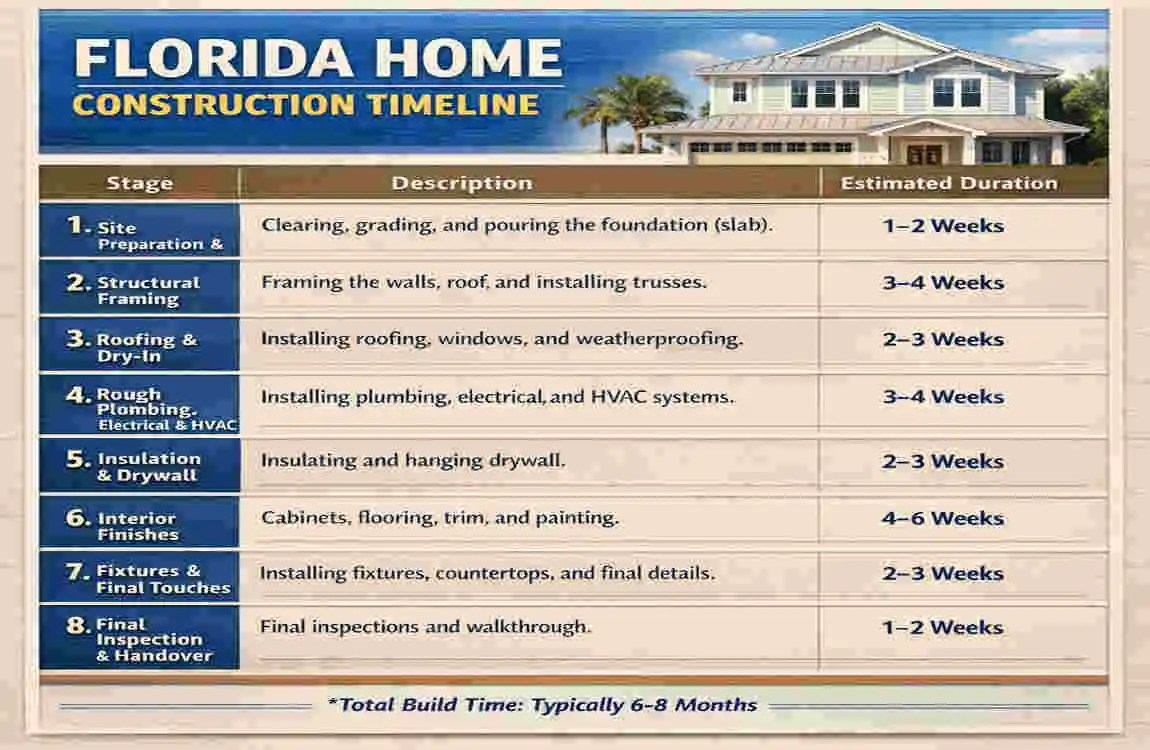
Now that we’ve covered the key factors influencing construction time, let’s break down the step-by-step process of building a house in Florida and the estimated duration for each phase.
Pre-Construction Phase
The pre-construction phase sets the foundation for your entire project. This phase typically takes between 4 and 8 weeks and involves several crucial steps.
Land Acquisition and Site Evaluation
The first step is to acquire the land and conduct a thorough site evaluation. This process involves assessing the property’s suitability for construction, taking into account factors such as soil quality, drainage, and zoning regulations.
Designing and Architect Plans
Once you have secured the land, it’s time to work with an architect or designer to create the blueprints for your dream home. This step can take several weeks, depending on the complexity of your design and the number of revisions needed.
Zoning and Local Permit Applications
Applying for the necessary zoning and local permits is a critical part of the pre-construction phase. This process can vary in duration depending on your project’s location and specific requirements. Working with an experienced builder can help streamline this process.
Soil Testing and Site Preparation Approvals
Before construction can begin, the soil on your property must be tested to ensure it is suitable for construction. Once the soil testing is complete and approved, site preparation can commence, including clearing the land and preparing it for construction.
Foundation and Framing
With the pre-construction phase complete, it’s time to start building! The foundation and framing phase typically takes between 4 and 6 weeks.
Excavation and Foundation Pouring
The first step in this phase is to excavate the site and pour the foundation. This process involves digging trenches, setting up formwork, and pouring concrete to create a solid base for your modern home.
Framing the Structure Above the Foundation
Once the foundation is set, the framing process begins. This involves constructing the skeletal structure of your home, including walls, floors, and the roof. Framing is a crucial step that sets the stage for the rest of the construction process.
Inspections During Framing Phase
During the framing phase, several inspections will be conducted to ensure the structure is built in accordance with code. These inspections may include checks for proper framing, electrical and plumbing rough-ins, and structural integrity.
Exterior Work and Roofing
With the framing complete, it’s time to focus on your home’s exterior. This phase typically takes between 3 and 5 weeks.
Installing Roofing Materials and Waterproofing
One of the first steps in the exterior work phase is to Install the roofing materials and ensure proper waterproofing. In Florida, it’s essential to choose durable, weather-resistant materials that can withstand the state’s climate.
Exterior Walls, Windows, and Doors Installation
Next, the exterior walls, windows, and doors are installed. This process involves carefully sealing and weatherproofing these elements to protect your luxury home.
Weatherproofing Considerations in the Florida Climate
Given Florida’s hot and humid climate, weatherproofing is a crucial aspect of the exterior work phase. Proper weatherproofing helps prevent moisture damage, mold growth, and other issues that can arise in the state’s environment.
Interior Installations
With the exterior of your home complete, it’s time to focus on the interior. This phase typically takes between 6 and 10 weeks.
Electrical, Plumbing, HVAC Rough-Ins
The first step in the interior installations phase is to complete the rough-ins for electrical, plumbing, and HVAC systems. This involves running wires, pipes, and ducts throughout the stylish home to prepare for the installation of fixtures and appliances.
Insulation and Drywall Installation
Once the rough-ins are complete, insulation is installed to help regulate temperature and reduce energy costs. After the insulation is in place, drywall is installed to create the walls and ceilings of your home.
Interior Wall Finishes and Painting
With the drywall in place, it’s time to finish and paint the interior walls. This step involves applying joint compound, sanding, and home painting to create a smooth, attractive finish.
Flooring, Cabinetry, and Fixtures

As your home’s interior takes shape, it’s time to focus on the finishing touches. This phase typically takes between 3 and 6 weeks.
Flooring Installation (Tile, Hardwood, Carpet)
One of the first steps in this phase is to Install the flooring. Depending on your chosen materials, this may involve laying tile, hardwood, or carpet throughout your home.
Kitchen and Bathroom Cabinetry and Countertops
Next, the kitchen and bathroom cabinetry and countertops are installed. This step involves carefully measuring, cutting, and assembling these essential elements of your home’s interior.
Fixtures, Lighting, and Appliance Installations
With the cabinetry and countertops in place, it’s time to Install the fixtures, lighting, and appliances. This includes everything from faucets and light fixtures to refrigerators and ovens.
Final Inspections and Finishing Touches
As your home nears completion, it’s time for the final inspections and finishing touches. This phase typically takes between 2 and 4 weeks.
Final Electrical, Plumbing, and Safety Inspections
Before you can move into your new home, it must pass a series of final inspections. These inspections ensure that all electrical, plumbing, and safety systems are functioning correctly and comply with local building codes.
Landscaping and Exterior Finishes
With the interior complete, it’s time to focus on your home’s interior. This may involve landscaping, installing a driveway, and adding any final exterior finishes, such as paint or siding.
Walkthrough and Punch List Completion
Once the final inspections are complete and the exterior finishes are in place, you’ll have the opportunity to walk through your new home with your builder. During this walkthrough, you’ll identify any remaining issues or “punch list” items that need to be addressed before you can move in.
Obtaining Certificate of Occupancy
The final step in the construction process is to obtain a certificate of occupancy. This document certifies that your home meets all local building codes and is safe for habitation. Once you have your certificate of occupancy, you’re ready to move into your new Florida home!
Typical Total Build Time for Different Types of Houses in Florida

Now that we’ve broken down the step-by-step process of building a home in Florida, let’s take a look at the typical total build time for different types of houses.
Average Timeline for a Standard Single-Family Home
For a standard single-family home in Florida, the average construction timeline is between 6 and 9 months. This timeline assumes a relatively straightforward design and no significant delays.
Timeline for Custom Luxury Homes
Custom luxury homes can take significantly longer to build, with timelines ranging from 9 to 14 months or even longer. The increased complexity and customization of these homes require more time and attention to detail.
Timelines for Smaller or Modular Homes
Smaller homes or those built using modular construction methods can be completed more quickly, with timelines ranging from 4 to 7 months. These homes typically have simpler designs and can benefit from the efficiency of modular construction.
Type of Home Average Build Time
Standard Single-Family Home 6-9 months
Custom Luxury Home 9-14 months or longer
Smaller or Modular Home 4-7 months
Common Delays and How to Avoid Them
While the timelines we’ve discussed are typical, delays can and do happen. Let’s explore common delays and how to avoid them.
Permit Processing Delays and Tips for Faster Approval
Permit processing delays are a common issue in Florida construction. To minimize these delays, work with an experienced builder who understands the local permitting process. Additionally, ensure that all your paperwork is in order and submitted promptly.
Weather-Related Delays: Best Seasons to Build in Florida
As we mentioned earlier, Florida’s weather can cause significant delays, particularly during hurricane season. To minimize weather-related delays, consider starting your project during the drier months, typically from December to May.
Supply Chain Issues Specific to Florida Construction
Supply chain issues can also impact your construction timeline. To mitigate these issues, work with your builder to plan for home material procurement well in advance. Consider choosing readily available materials and working with local suppliers when possible.
Labor Shortages and How to Choose Reliable Contractors
Labor shortages can cause delays and affect the quality of your project’s work. To avoid these issues, choose reliable contractors with a proven track record of completing projects on time. Ask for references and check reviews to ensure you’re working with a reputable team.
How Good Project Management Shortens Time
Effective project management is key to keeping your construction project on track. A skilled project manager can anticipate potential delays, coordinate with subcontractors, and ensure that the work progresses smoothly. When choosing a builder, look for one with a strong project management team.
Tips to Speed Up the House Building Process in Florida

If you’re looking to speed up your home-building process in Florida, consider these helpful tips:
- Choose pre-approved house plans and designs: Pre-approved plans can save time during the home design and permitting phases of your project.
- Hire experienced, local Florida builders: Working with builders who are familiar with the local market and regulations can help streamline the process.
Other Important Considerations When Building in Florida
When home building in Florida, there are several other essential factors to keep in mind:
Hurricane-Resistant Building Codes and Their Impact on the Timeline
Florida has strict building codes designed to protect homes from hurricane damage. These codes can impact your construction timeline, as they may require additional materials or construction techniques. Working with a builder experienced in hurricane-resistant construction can help ensure compliance and minimize delays.
Environmental Regulations Affecting Construction Duration
Florida’s unique environment may require additional regulations when building your unique home. These regulations can affect your construction timeline, especially if your property is in a sensitive ecological area. Be sure to work with your builder to understand and comply with any applicable environmental regulations.