If you are planning a new home, one of the first questions you will probably ask is how long it will take to build. That is a smart question, because the answer helps you plan your budget, your move, and your daily life.
The short answer is that most homes take about 6 to 12 months to build. But the actual timeline can be shorter or longer depending on the house’s size, design, permits, weather, and the contractor’s schedule. A simple home may move quickly, while a custom home with special features can take much longer.
Average Time to Build a House
National Average Construction Timeline
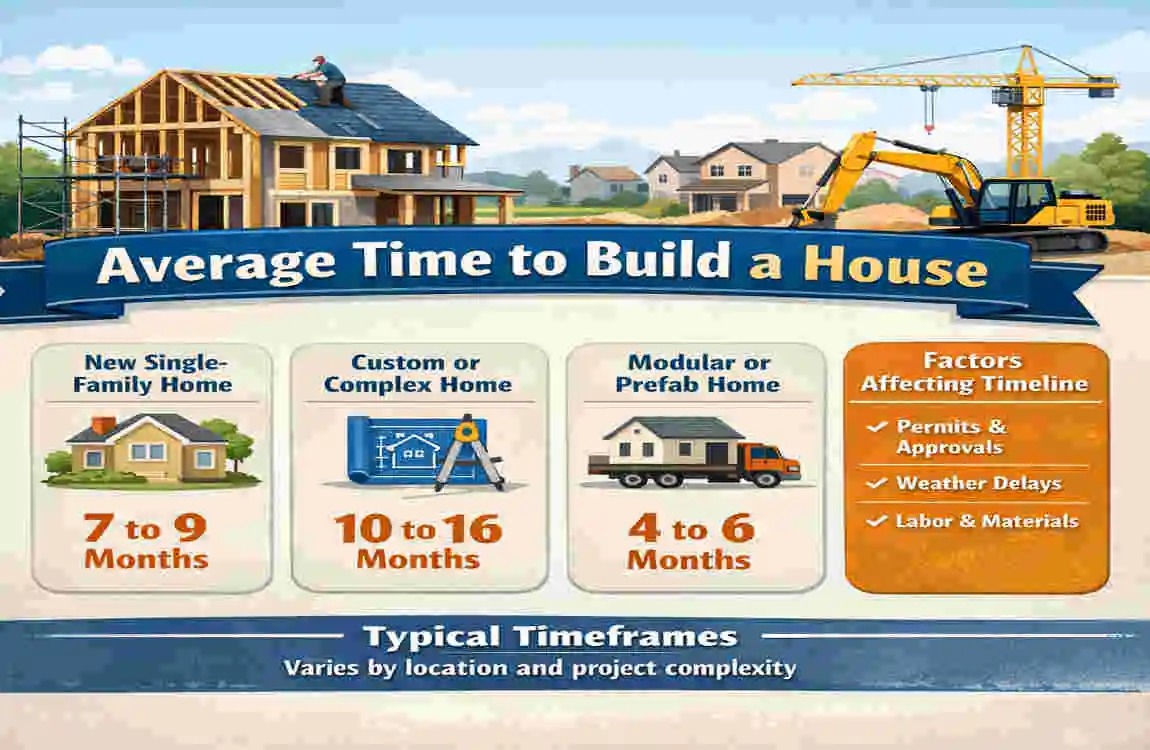
When people ask how long it takes to build a house, the most common answer is 6 to 12 months. That timeline usually applies to a standard home built with a fairly normal design and a smooth approval process.
A production home often takes less time because the builder uses a set plan and repeats the same process many times. A custom home usually takes longer because the layout, materials, and finishes are chosen specially for the owner.
So, while some homes finish in under a year, others may take 10 to 18 months or more. The exact time depends on how simple or complex the project is.
Quick Timeline Overview
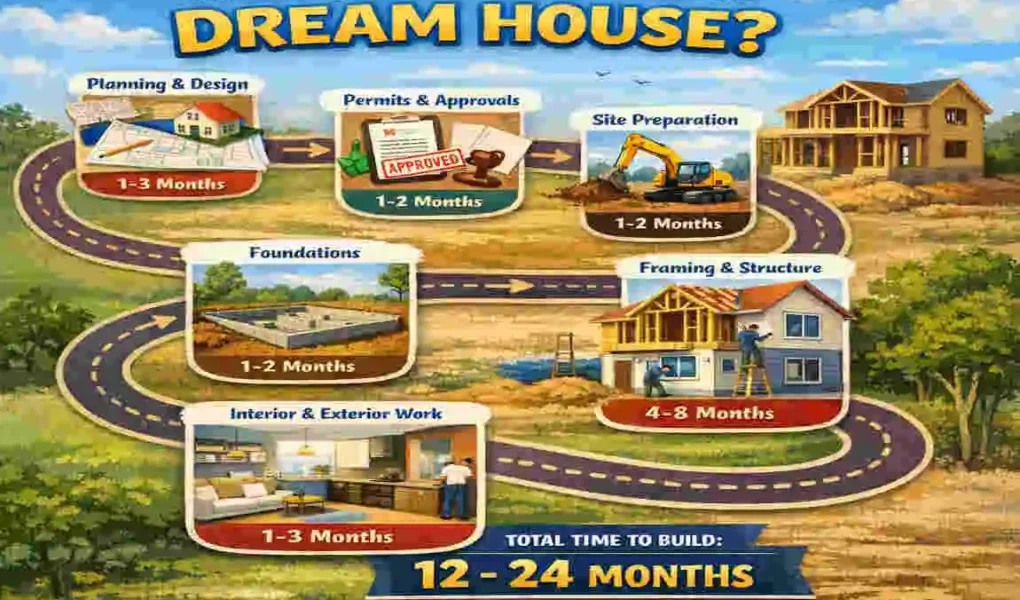
Construction Stage Average Time
Planning & Design 1–3 Months
Permits & Approvals 1–2 Months
Foundation 2–4 Weeks
Framing 1–2 Months
Roofing & Exterior 2–4 Weeks
Plumbing, Electrical & HVAC 1–2 Months
Interior Finishes 2–3 Months
Final Inspection & Handover 2–4 Weeks
This table gives you a broad picture, but keep in mind that several stages can overlap. That means a builder may work on different parts of the house at the same time.
Step-by-Step House Construction Timeline
Planning Your Dream Home
The first stage starts before any tools touch the ground. This is the planning phase, and it matters a lot. You need to choose the land, set your budget, and decide what kind of house you want.
This is also the time to think about size, number of rooms, layout, and future needs. If you rush this stage, you may face delays later. Careful planning helps answer how long it takes to build a house more realistically.
You should also hire the right professionals early. That may include a builder, architect, designer, and sometimes a land surveyor. A strong team can save you time and stress.
Designing the House
After planning, you move into design. This is where your ideas become real drawings. You and your designer or architect will create floor plans, room layouts, and exterior details.
This stage may also include engineering review. The engineer checks that the structure is safe and practical. If the design changes several times, the schedule can stretch out quickly.
A simple design moves faster than a detailed custom plan. So if you are trying to keep the answer to how long it takes to build a house closer to the shorter side, it helps to finalize the design early.
Obtaining Building Permits
Before construction can begin, you usually need permits from your local building office. This step may take a few weeks or even a couple of months.
Permits are important because they ensure the home complies with local rules and safety codes. During this stage, the city or county may also schedule inspections for key parts of the project.
Permit delays are common, especially if paperwork is missing or if the design needs changes. Many homeowners underestimate this phase, but it is a major part of how long it takes to build a house.
Preparing the Site
Once the permits are approved, the builder prepares the land. This can include clearing trees, leveling the ground, digging the foundation area, and setting up utility lines.
If the land is flat and easy to work on, this stage may move quickly. If the land has rocks, slopes, or drainage issues, it may take longer.
Site work is often hidden from view, but it plays a big role in the total timeline. A clean and ready site helps the rest of the project move smoothly.
Pouring the Foundation
The foundation is the base of the house. It may be a slab, crawl space, or basement, depending on the design and location.
Concrete has to be poured carefully, and then it needs time to cure. This is not a stage you can rush. If the foundation is not done right, the whole house can have problems later.
A simple foundation may take a few weeks. A basement or more complex structure may take a bit longer. When people ask how long it takes to build a house, this stage is one of the first major construction milestones.
Framing the Structure
Framing is when the house starts to look like a real home. The walls go up, the roof structure is built, and openings for windows and doors are created.
This stage is exciting because the house’s shape becomes visible. It is also one of the fastest parts of the project compared to interior work.
Framing usually takes one to two months, depending on house size and design. Larger homes naturally need more time. Bad weather can also slow it down.
Installing Major Systems
Next come the main systems inside the house. These include:
- Plumbing
- Electrical wiring
- Heating and cooling systems
This stage is often called the “rough-in” phase. The work happens before walls are closed up, so the inside of the home still looks unfinished.
The trade workers must coordinate well because each system depends on the others. If one team is delayed, the others may have to wait. This phase is a major reason the question “of how long it takes to build a house” does not have a single fixed answer.
Interior Work
Interior work is usually the longest part of the process. This is where the house starts to feel complete.
It includes:
- Drywall
- Flooring
- Cabinets
- Countertops
- Painting
- Light fixtures
- Bathroom and kitchen finishes
Many tasks happen in order, so one delay can affect the next step. For example, painting often comes after drywall and trim, and cabinets may need to be installed before countertops.
This stage can take several months. It often determines whether the project stays on schedule or falls behind.
Exterior Finishing
At the same time as interior work, the outside of the house is also being completed. This can include siding, roofing, driveway work, and landscaping.
The outside must protect the home from weather, so roofing and siding are especially important. Once the house is sealed properly, the interior work can continue more comfortably.
Exterior finishing may seem simple, but it still needs good timing and coordination. Weather can affect this stage more than many people expect.
Final Inspection
Before you move in, the house must pass final inspections. The inspector checks if the home meets safety and building standards.
If something is not correct, the builder may need to fix it before approval. This is often called the punch list stage, where small issues are documented and addressed.
Once everything is in order, the home receives a certificate of occupancy. That means the house is ready for you to move in.
Factors That Affect How Long It Takes to Build a House
House Size
A bigger house usually takes longer to build. More rooms mean more materials, more labor, and more finishing work.
A small home may move faster, but a large home with special features will take longer at nearly every stage.
Custom vs. Production Homes
A custom home takes longer because it is designed from scratch. A production home is usually based on a repeatable design to enable faster construction.
If you want full control over the layout and finishes, expect a longer timeline. If speed matters more, a production home may be a better fit.
Weather Conditions
Bad weather can slow down digging, framing, roofing, and exterior work. Heavy rain, snow, or extreme heat can all interrupt progress.
This is one reason why the time it takes to build a house can change from one season to another.
Material Availability
If the builder cannot obtain windows, lumber, cabinets, or other materials on time, the schedule may be delayed. Even a short supply delay can affect the full project.
Contractor Experience
An experienced contractor usually works more efficiently. They know how to plan tasks, manage workers, and avoid common mistakes.
A less experienced builder may need more time to solve problems, which can slow the project down.
Labor Shortages
If there are not enough skilled workers available, the work may take longer. This can happen in busy markets or during periods of high demand.
Permit Delays
Permit approvals can be slow if the paperwork is incomplete or local offices are backed up. This is one of the most frustrating delays for homeowners.
Change Orders During Construction
A change order means you changed something after work already started. This could be a new floor plan idea, a different cabinet style, or a change in room layout.
Small changes may not seem like a big deal, but they often add time and cost.
Custom Home vs. Spec Home Timeline
FeatureCustom HomeSpec Home
Design Time Longer Minimal
Construction 10–18 Months 4–8 Months
Flexibility High Limited
Cost Higher Lower
A spec home is built with a plan already in mind, so it usually moves faster. A custom home gives you more choice, but it takes longer because every detail must be planned and approved.
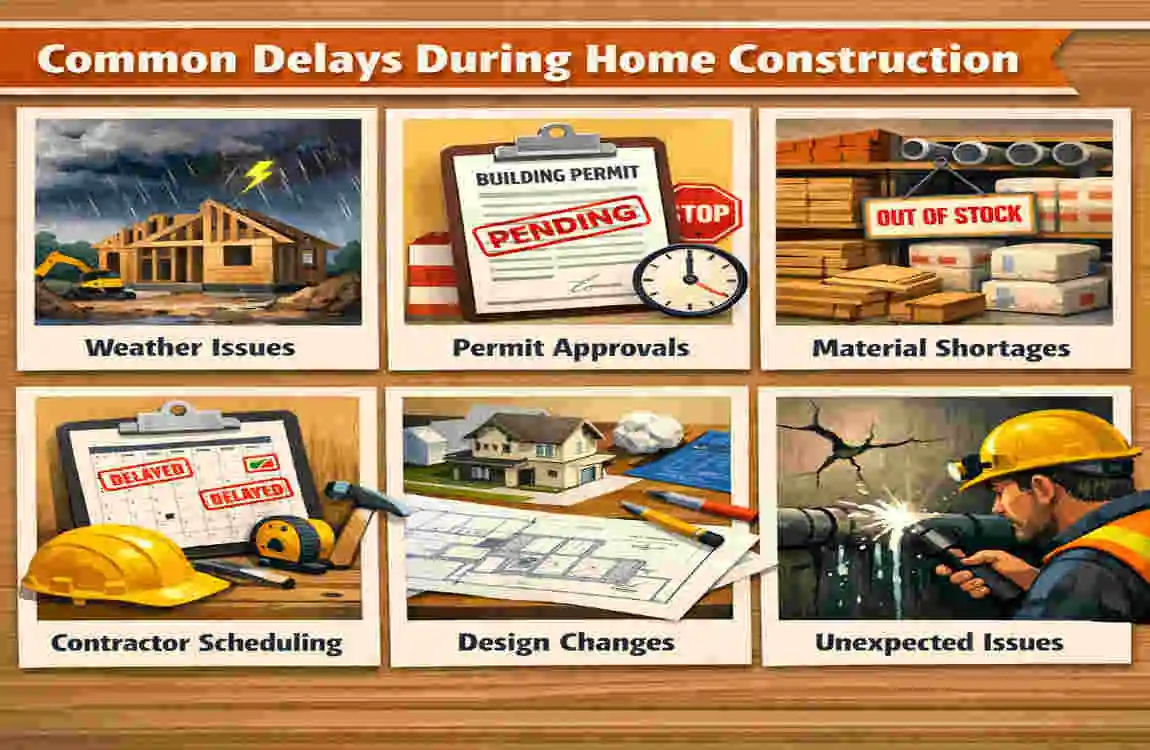
Common Delays During Home Construction
Bad Weather
Rain, storms, snow, and freezing temperatures can slow outdoor work. This is one of the most common delays.
Permit Issues
If approvals take longer than expected, construction may not begin on time.
Supply Chain Delays
When materials arrive late, crews may need to pause and return later.
Budget Problems
If funds run low, the project may pause until the issue is resolved.
Design Changes
Changing your mind in the middle of construction often adds time.
Inspection Failures
If a stage fails inspection, the builder must correct it before proceeding.
Tips to Speed Up the Home Building Process
If you want a smoother project, these simple steps can help:
- Hire an experienced builder
- Finalize the design before construction starts
- Approve selections early
- Order materials in advance
- Keep communication open
- Avoid unnecessary changes
- Schedule inspections promptly
These habits can make a big difference when you are trying to manage how long it takes to build a house.
Signs Your Home Construction Is on Schedule
A project is usually moving well when you see these signs:
- Milestones are completed on time
- The contractor gives regular updates
- Materials arrive when expected
- Inspections pass without major issues
If these things are happening, your home is probably staying close to the original plan.
Is Building a House Faster Than Buying One?
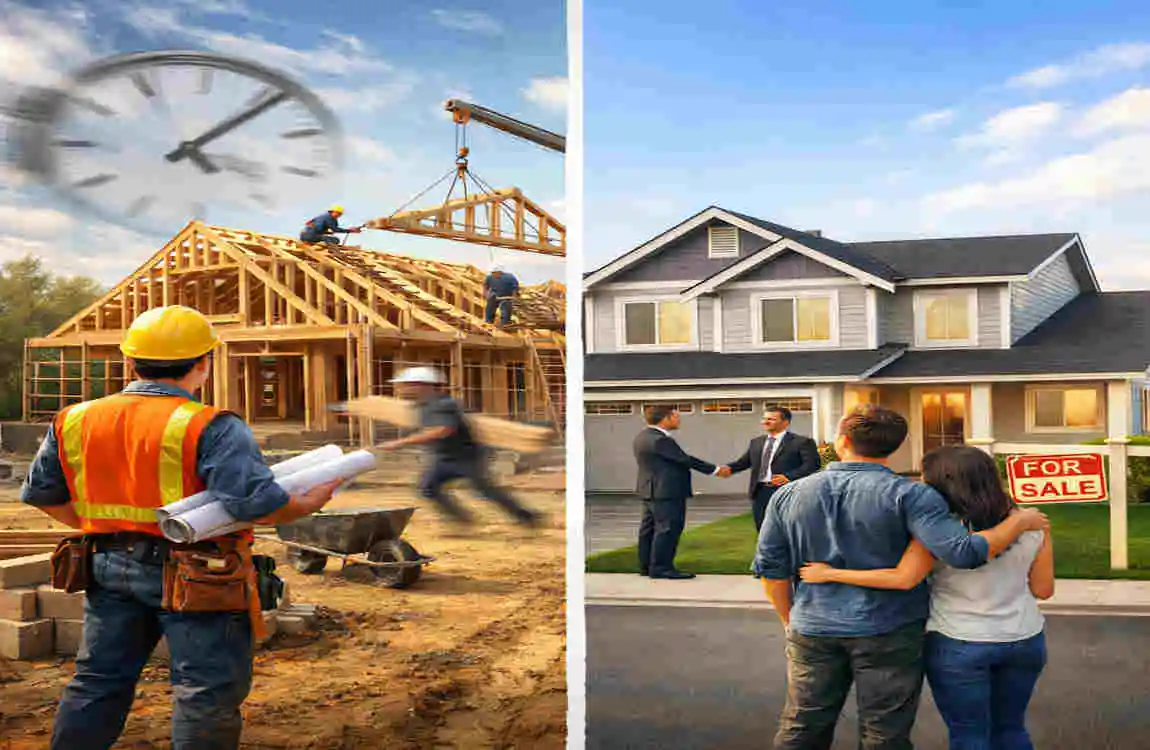
Usually, buying an existing home is faster. You can often move in after closing. Building a house takes longer because many steps must happen first.
Still, building has benefits that buying does not. You get more control over layout, features, and style. That can make the extra time worth it.
When comparing the two, think about:
- Time required
- Cost
- Customization
- Convenience
- Long-term value
If time is your top concern, buying may be easier. If you want a home made for your needs, building may be the better choice.
Mistakes That Can Delay House Construction
Choosing the Wrong Contractor
A weak contractor can cause poor scheduling, mistakes, and avoidable delays.
Poor Budgeting
If the budget is too tight, work may stop mid-project.
Late Design Decisions
Waiting too long to choose finishes or layouts can slow everything down.
Ignoring Permit Requirements
Skipping or rushing permits often creates bigger problems later.
Changing Floor Plans Frequently
Frequent changes can confuse the schedule and increase the time needed to finish the home.
Frequently Asked Questions
How long does it take to build a house from start to finish?
Most homes take 6–12 months, while custom homes may require 10–18 months depending on complexity.
What is the longest stage of building a house?
Interior finishing is often the longest stage because it includes drywall, flooring, cabinets, painting, and fixtures.
Can a house be built in 3 months?
Some prefabricated or production homes can be completed in around three months, but most traditional homes take longer.
What causes the biggest construction delays?
Weather, permit approvals, labor shortages, material availability, and design changes are the most common causes.
Does a bigger house take longer to build?
Yes. Larger and more complex homes usually need more time for framing, systems, and finishing work.
How can I reduce construction delays?
Choose a reputable builder, finalize your design early, order materials in advance, and avoid changes after construction begins.
| Aspect | Details |
|---|---|
| Average Build Time | 7–12 months for a standard single-family home. |
| Small House | Typically takes 5–8 months to complete. |
| Custom Luxury Home | Usually requires 12–24 months, depending on complexity. |
| Planning & Design | 1–3 months for design, budgeting, and approvals. |
| Permits & Approvals | 2–8 weeks, depending on local regulations. |
| Foundation | Around 2–4 weeks, including excavation and curing. |
| Framing | Approximately 1–2 months. |
| Roofing & Exterior | Usually completed within 2–6 weeks. |
| Electrical, Plumbing & HVAC | Around 1–2 months for installation and inspections. |