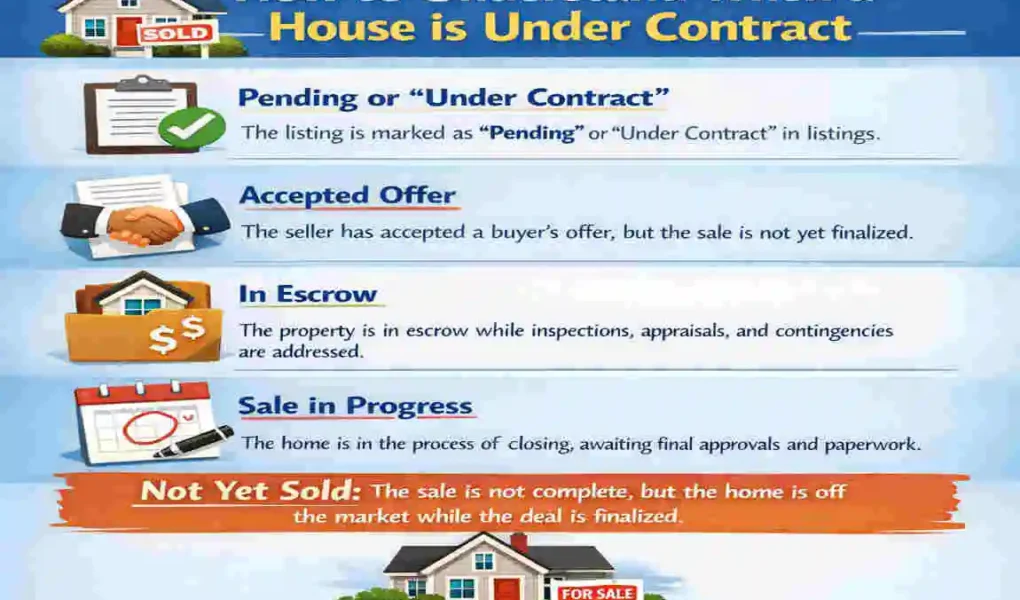
If you have ever seen a listing marked under contract, you probably felt a mix of hope and confusion. The home is still showing up online. The sign may still be in the yard. Yet the words make it sound like someone else already got it.
That is exactly why this phrase causes so much stress for buyers. Many people assume that “under contract” means the house is sold for sure. In reality, that is not always true. A home can be under contract and still need inspections, loan approval, appraisal checks, and final paperwork before the sale is complete.
In simple terms, it means the seller has accepted an offer, but the deal is still moving through the final steps. The sale has started, but it is not finished yet.
| Status | Meaning | Can You Make an Offer? |
|---|---|---|
| Under Contract | An offer has been accepted and signed by both parties . | Yes, backup offers are often still accepted . |
| Contingent | Contract is active but depends on specific conditions (e.g., inspection) . | Possible, though depends on the seller’s preference . |
| Pending | The sale is in the final stages, usually with all contingencies cleared . | Unlikely, as the deal is near completion . |
What Does It Mean When a House Is Under Contract?
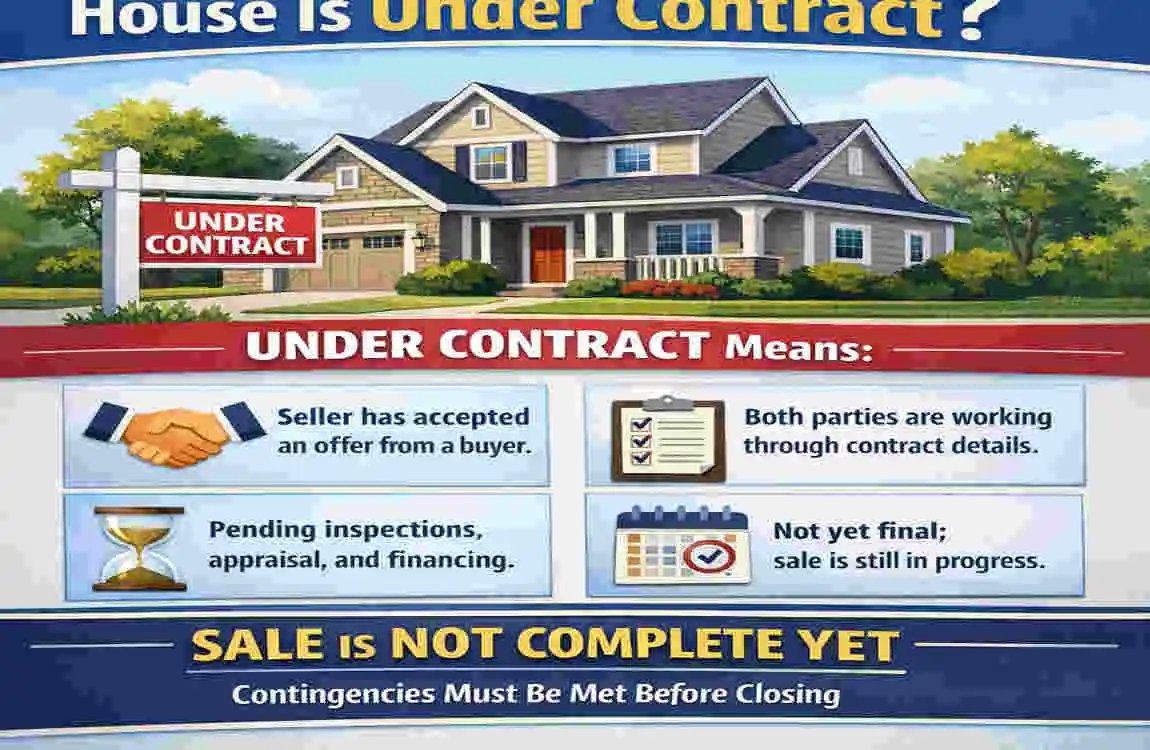
A house is under contract when the buyer and seller have agreed on a deal and signed a purchase contract. That means there is a legal agreement in place, but the ownership has not yet changed hands.
Think of it as the first big yes in the homebuying process. The seller has accepted the offer. The buyer is committed to moving forward. But there are still steps left before the home officially closes.
Those steps often include financing, inspection, appraisal, title review, and final approval of the paperwork. Until those are complete, the sale is not final. That is why under contract does not mean the same thing as sold.
This stage is important because it gives both sides time to confirm that everything checks out. The buyer still has a chance to review the property. The lender still has to approve the loan. The seller still has to prepare for closing.
In some cases, the home may still accept backup offers. That depends on the contract terms and the seller’s strategy. So even though the home is under contract, it may not be completely off the table yet.
The simple meaning in everyday language
If you want the plain-English version, here it is:
- The seller accepted an offer.
- The buyer and seller signed an agreement.
- The sale is moving forward.
- The deal is not closed yet.
That is the heart of the house-under-contract meaning. It is the middle of the process, not the finish line.
Why this stage matters
This stage matters because it protects both sides. The buyer can still inspect the home and confirm the loan. The seller can still make sure the buyer follows through. If something serious comes up, the contract may allow the deal to be changed or even ended.
That is why, under contract, is best thought of as a promise, not a final commitment.
How the Under Contract Stage Works
To understand what happens when a house is under contract, it helps to look at the basic home sale timeline. The process usually starts with an offer and ends with closing, but several steps sit in between.
From offer to signed contract
First, the buyer makes an offer. That offer includes the price, the proposed closing date, and any conditions the buyer wants to include. Those conditions are usually called contingencies.
Then the seller reviews the offer. The seller may accept it, reject it, or send back a counteroffer. If both sides agree, they sign the contract. At that point, the home becomes under contract.
The contract usually covers:
- Purchase price
- Closing date
- Earnest money
- Contingencies
- Special terms or repairs
- Who pays for what
That signed agreement is what moves the home from active listing status to under contract.
What happens during this stage
Once the contract is signed, the next phase begins. The buyer usually schedules inspections. The lender starts processing the mortgage. The appraiser may visit the home. The title company or closing attorney reviews the ownership history and paperwork.
This is the part of the sale where details matter. A lot can happen here, and not all of it is visible from the outside. The listing may still appear active on some sites, even though the contract is already in motion.
A simple real-world example
Let’s say a buyer sees a home on Monday and makes an offer that same day. The seller accepts on Tuesday. The home is now under contract.
From there, the buyer schedules the inspection on Thursday. The lender orders the appraisal the following week. If everything goes smoothly, the home might close within 30 to 60 days.
That time frame can be shorter or longer depending on the loan type, contract terms, repairs, and how quickly both sides handle paperwork.
Why the home does not close right away
Many first-time buyers wonder why the home does not become theirs immediately after the offer is accepted. The reason is simple: a home sale involves a lot more than agreeing on a price.
The lender must verify the buyer’s finances. The inspection must confirm the property’s condition. The appraisal must support the loan value. The title must be clear. And both sides must complete the closing documents correctly.
Until all that happens, the sale is still in progress.
Common Contingencies in a Home Sale
A contingency is a condition that must be met for the sale to move forward. Contingencies are a major reason why a house can be under contract without being fully sold.
They protect the buyer, the seller, or both. They also create a clear path for solving problems before closing.
Financing contingency
A financing contingency gives the buyer time to secure a mortgage. If the loan is denied for a reason covered by the contract, the buyer may be able to back out without losing the protections in the agreement.
This contingency matters because even a well-qualified buyer can run into problems. Changes in income, debt issues, and lender rules can affect approval.
Home inspection contingency
A home inspection contingency allows the buyer to hire a professional inspector to review the condition of the house. If the inspection finds major problems, the buyer may ask for repairs, request a credit, or walk away if the contract allows it.
This is one of the most common and important contingencies in residential real estate.
Appraisal contingency
An appraisal contingency helps protect the buyer if the home appraises for less than the agreed purchase price. Lenders do not usually want to lend more than the property is worth, so a low appraisal can create a problem.
If that happens, the buyer and seller may need to renegotiate the price or find another solution.
Title and sale-of-home contingencies
Some contracts also include a title contingency. This means the buyer wants to ensure the property has clear title, with no major legal claims or ownership issues.
A sale-of-home contingency may also appear in some deals. That means the buyer must sell their current home before moving forward with the new one. This contingency can complicate the process, but it may be necessary for certain buyers.
Why contingencies matter so much
Contingencies are not just technical language in a contract. They are safety tools. They help both sides move through the sale with fewer surprises.
If you remember only one thing, remember this: contingencies are the reason a house under contract is not yet fully closed.
Under Contract vs Pending
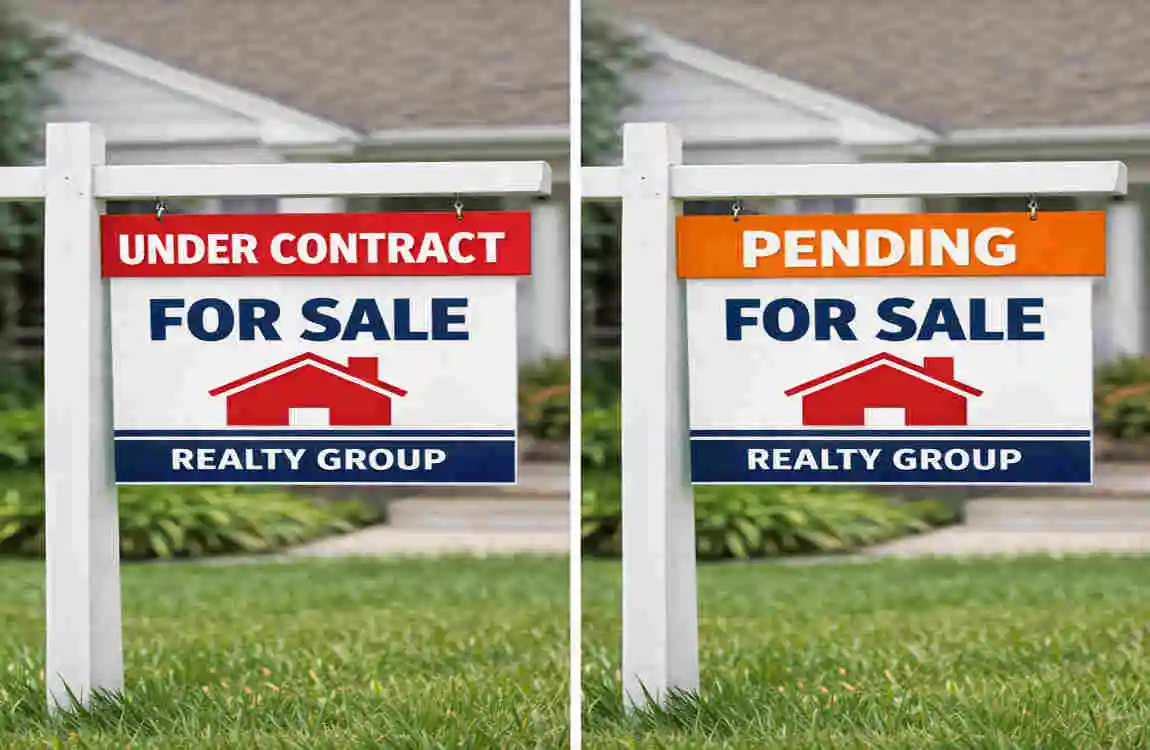
A lot of buyers get stuck on the difference between ‘under contract’ and ‘pending‘. The terms sound similar, and different listing platforms may use them slightly differently.
In general, under contract means the seller has accepted an offer, but the deal still has important conditions to clear. Pending usually means the deal is much farther along and close to final closing.
A simple way to think about it
- Under contract = the deal has started
- Pending = the deal is nearly done
That is the easiest way to remember it.
Comparison table: under contract, pending, and contingent
StatusSimple MeaningHow Far Along Is It?Can It Still Fall Through?Can Backup Offers Happen?
Contingent Offer accepted, but conditions still need to be met Early to middle stage Yes Sometimes
Under Contract Buyer and seller have signed, but the sale is not final Middle stage Yes Sometimes
Pending Most conditions are cleared and the sale is close to closing Late stage Less likely, but still possible Usually less common
Why listing labels can vary
Different real estate systems do not always use the same words in the same way. One site may call a property under contract, while another may label it pending. That is why you should never rely solely on the listing status.
If you are serious about a home, ask the agent what the label means in that local market. The wording can vary slightly from one MLS or platform to another.
The practical difference for buyers
For a buyer, the main takeaway is simple. A pending home is usually farther along than a house under contract. But neither status guarantees the sale will be completed until closing actually occurs.
So if you are wondering whether a home is still worth watching, the answer is yes. Until the keys are handed over and the deal records are finalized, there is still some risk on both sides.
Can You Still Make an Offer on a House Under Contract?
This is one of the most common questions buyers ask: can you buy a house under contract?
The short answer is sometimes, yes.
What is a backup offer?
A backup offer is an offer submitted after another buyer has already gone under contract. If the first deal falls apart, the backup buyer may step in next.
This can be a smart move if you really like the house. It keeps you in the running without waiting in the dark.
Backup offer tip: If the property is still under contract but you love it, ask your agent whether the seller is accepting backups. In some cases, the seller wants a safety net in case the first deal fails.
Why backup offers make sense
A backup offer can make sense when:
- The property is in high demand
- The first buyer has a weak financing position
- The inspection could uncover problems
- The home has already been on the market for a while
- You do not want to lose your place entirely
If the first contract falls through, the seller may be happy to move straight to the next buyer rather than relist the home.
When it may not help
A backup offer may not be useful if the seller is fully committed to the current buyer and does not want to continue showing the property. Some sellers prefer to stop marketing the home once it is under contract.
That is why your agent should always check the exact situation before you decide what to do.
The truth
A house under contract is not always available, but it is not always untouchable either. If you are serious, it can still be worth asking. A backup offer may not win the home today, but it could put you in line if something changes.
What Happens After a House Goes Under Contract?
Once a house goes under contract, the real work begins. This stage often feels quiet from the outside, but it is usually packed with activity behind the scenes.
Earnest money is submitted
The buyer usually sends earnest money soon after the contract is signed. This is a good-faith deposit that shows the buyer is serious about the purchase.
The money is usually held in escrow until closing. If the deal closes, the deposit is typically applied to the buyer’s closing costs or down payment. If the contract falls through, the money depends on the contract terms.
The inspection is scheduled
The buyer usually schedules the home inspection early in the under contract period. This gives enough time to review the results and negotiate if needed.
If the inspector finds problems, the buyer may request repairs, credits, or a price reduction. Sometimes the issue is small. Sometimes it becomes a bigger conversation. Either way, the inspection can shape the rest of the deal.
The lender moves forward
The mortgage lender begins the underwriting process. This includes checking the buyer’s income, assets, debts, credit, and employment. The lender wants to make sure the buyer can actually close.
The buyer may need to submit extra documents during this stage. Speed matters here. Delays can push back closing or create unnecessary stress.
The appraisal happens
If the buyer is using a mortgage, the lender usually orders an appraisal. The appraiser compares the home to recent sales of similar homes and estimates its value.
If the appraisal supports the price, the deal can move ahead smoothly. If it comes in low, both sides may need to make changes.
Title review begins
A title company or closing attorney checks the property records. They want to confirm that the seller has the legal right to sell the house and that there are no major claims, liens, or ownership issues.
This step helps protect the buyer from future legal problems.
The final walk-through happens
Right before closing, the buyer usually does a final walk-through. This is the buyer’s chance to confirm that the home is in the agreed condition and that any promised repairs were completed.
If something is wrong, it can still delay closing. That is why this step matters even though it happens late in the process.
A realistic timeline
A typical under-contract period may last several weeks, often 30 to 60 days, depending on the mortgage, contract terms, and how quickly both sides respond.
That said, every sale is different. Some close faster. Some take longer. Repairs, documents, and appraisal issues can all slow things down.
What Buyers Should Do During This Stage
If you are the buyer, the under contract stage is your time to stay organized, responsive, and careful. This is not the moment to relax too much. It is the moment to stay engaged.
Stay in close contact
Keep in touch with your real estate agent and lender. Ask questions early instead of waiting until the last minute. The more clearly everyone communicates, the smoother the process tends to be.
Submit paperwork quickly
If your lender asks for documents, send them fast. Delays in paperwork are one of the easiest ways to slow a closing.
You may need to provide:
- Pay stubs
- Bank statements
- Tax forms
- Employment verification
- Gift letter documents, if applicable
Schedule inspections early
Do not wait too long to schedule the inspection. If the report reveals problems, you need time to negotiate before contingency deadlines pass.
A quick inspection also gives you more breathing room if follow-up work is needed.
Avoid major financial changes
This is a big one. Do not open new credit cards, buy a car, quit your job, or make large purchases before closing unless your lender approves.
Big financial changes can affect loan approval. Even small moves can create extra checks and delays.
Be ready to negotiate
If the inspection reveals issues, you may need to negotiate repairs or credits. That is normal. Very few homes are perfect, and the under contract stage is exactly where these conversations happen.
The key is to stay calm and focused on the bigger picture.
What Sellers Should Do During This Stage
Sellers also have an important job after the home goes under contract. This phase is not just about waiting. It is about helping the sale cross the finish line safely.
Keep the property accessible
The buyer may need access for inspections, appraisals, and sometimes contractors or specialists. Sellers should be ready to provide that access as required by the contract.
Respond quickly to requests
If the inspection report leads to repair requests or a contract update, try to respond promptly. Slow replies can create tension or delay closing.
Watch deadlines closely
Real estate contracts usually come with deadlines. These may include dates for inspections, financing approval, appraisal review, and closing.
Missing a deadline can create problems, so it helps to keep everything organized.
Prepare for closing
Sellers should also get ready for the final steps. That may include gathering ID, reviewing closing statements, arranging utility shutoffs, and making sure the house is ready to hand over.
Remember that the sale is not complete yet
Even if everything looks good, the home sale is not done until the closing documents are signed and recorded. Until then, the deal is still moving.
That is why sellers should continue treating the contract seriously all the way to the finish line.
Signs a House May Not Be Fully Safe Yet
A house under contract can still fall apart. That does not mean it will. It just means the sale still has some risk.
Financing can fail
If the buyer cannot get the loan approved, the deal may collapse. This is one of the most common reasons contracts fail.
Inspection problems can create conflict
A major inspection issue can lead to renegotiation or cancellation. Mold, roof damage, electrical issues, or foundation concerns can change the entire deal.
Appraisal issues can slow things down
If the appraised value is lower than the sale price, the buyer and seller may need to adjust the terms. Sometimes they can bridge the gap. Sometimes they cannot.
Title issues can delay closing
A title problem, lien, or ownership dispute can create legal delays. These are less common than financing or inspection issues, but they can be serious when they happen.
The buyer can still back out if the contract allows it
If the contract includes a contingency or exit path, the buyer may be able to walk away under certain conditions. That can reopen the listing or send the seller back to the market.
So yes, under contract is a strong step forward. But it is not the same as fully safe.
Real Estate Terms Related to Under Contract
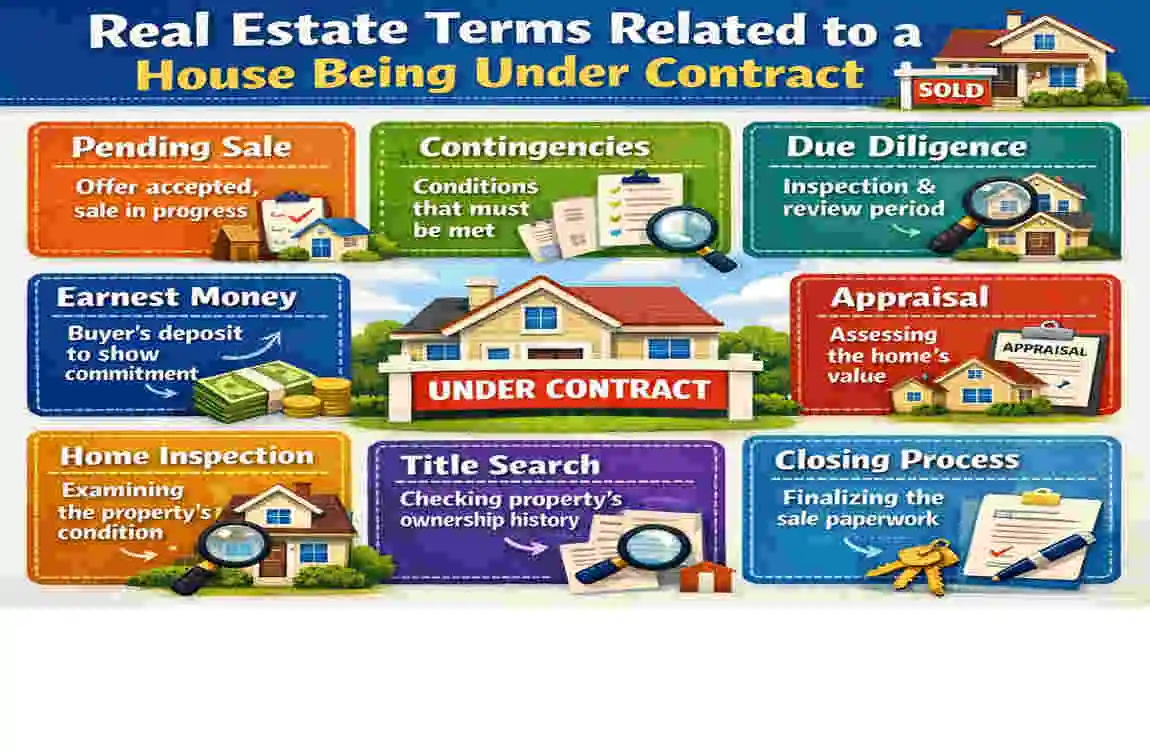
A lot of confusion comes from the language itself. Here are a few terms you are likely to see.
Contingent
This means the sale depends on one or more conditions being met. Common examples include financing, inspection, and appraisal contingencies.
Pending
This usually means the sale is much farther along and fewer issues remain before closing.
Active under contract
This often means the home is under contract. However, the seller is still allowing showings or accepting backup offers. Not every market uses this label the same way.
Backup offer
This is an offer submitted after another buyer already has the home under contract. If the first deal fails, the backup offer may become the next active one.
Closing
This is the final step where the sale becomes official. At closing, the buyer signs final documents, funds are transferred, and ownership is recorded.
Escrow
Escrow is a neutral holding place for money and documents until the deal closes. It helps protect both sides during the transaction.
Once you understand these words, listing statuses become much easier to read.
Common Mistakes Buyers Make
It is easy to make mistakes during the under contract stage, especially if you are buying a home for the first time.
Assuming under contract means sold
This is the biggest misunderstanding. A home can be under contract and still fall through.
Waiting too long to schedule inspections
If you delay, you may lose the chance to negotiate important issues before the deadline.
Ignoring contingency dates
Every contract has dates that matter. Missing them can weaken your position or cause the deal to stall.
Making large credit purchases
A new car, a big furniture order, or a fresh credit card balance can affect your mortgage approval.
Not asking enough questions
If you do not understand the contract, ask. Do not guess. Real estate deals move fast, and small misunderstandings can become big problems.
Relaxing too early
Even after the offer is accepted, the deal still needs to make it through loan approval, appraisal, and closing. Stay alert until the end.
Frequently Asked Questions
What does it mean when a house is under contract?
It means the seller accepted an offer and both sides signed an agreement, but the sale is not finished yet. The deal still has to go through inspections, financing, appraisal, and closing.
Is a house under contract still for sale?
Usually, it is no longer actively for sale in the normal sense. However, it may still accept backup offers depending on the seller and contract terms.
Can you make an offer on a house under contract?
Yes, sometimes you can. That offer would usually be a backup offer in case the first deal falls through.
How long does a house stay under contract?
It varies. Many homes stay under contract for 30 to 60 days, though the exact time depends on the loan and contract, and on how quickly the process moves.
What is the difference between under contract and pending?
Under contract usually means the deal is in progress and still has important conditions to clear. Pending usually means the sale is much closer to closing.