If you have ever wondered whether real estate taxes and property taxes are the same, you are not alone. These terms are often used like they mean the same thing, and in many cases, they do.
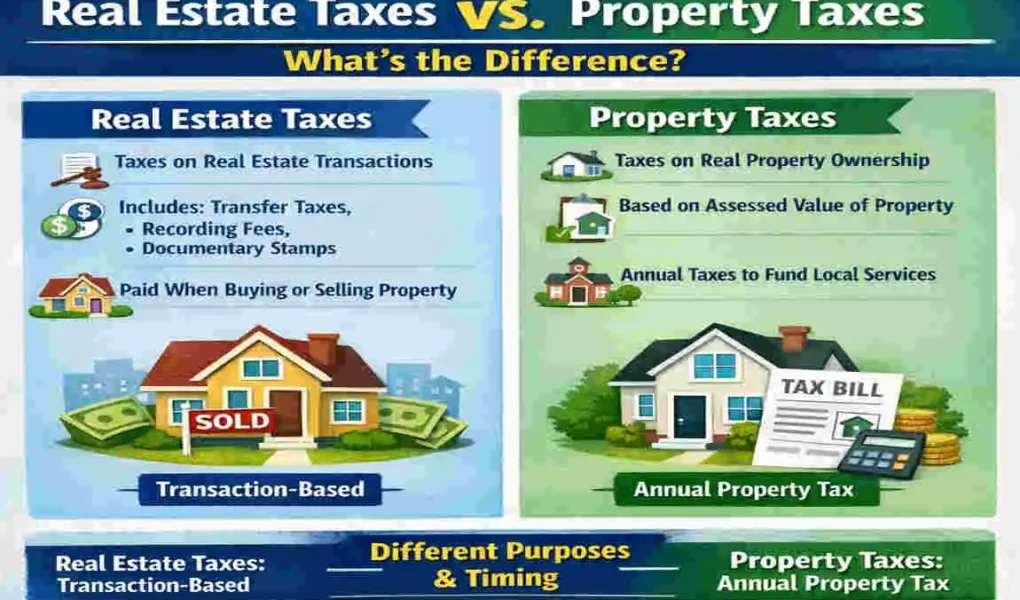
But there is a small catch. Property tax is usually the broader term, while real estate tax is often used specifically for the tax on land and buildings.
That difference may seem tiny, but it matters when you are buying a home, budgeting for ownership costs, or comparing tax bills. If you understand how these taxes work, you can make better decisions and avoid surprises later.
Let’s break it all down in simple language so you can see what each term means and how they affect you.
Are Real Estate Taxes and Property Taxes the Same?
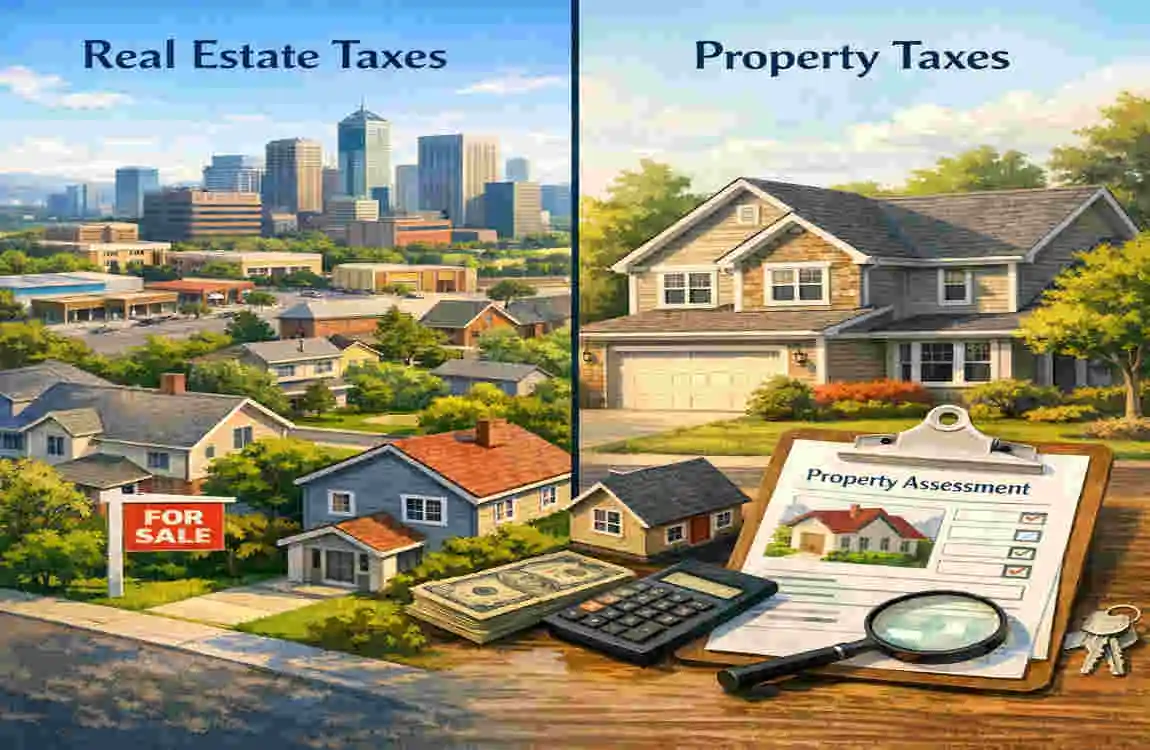
The Short Answer
In most cases, yes.
People often use real estate taxes and property taxes interchangeably, especially when talking about homes, land, and buildings. In everyday conversation, they usually mean the same thing.
Still, property tax can sometimes include more than just real estate. In some places, it may also cover certain kinds of personal or business property.
Why the Confusion Exists
The confusion happens for a few simple reasons.
First, the terms sound similar. Second, different states and countries may use them in slightly different ways. Third, tax bills, websites, and local government forms do not always use the same wording.
So when you see one term or the other, it is usually best to look at the context. Are they talking about a home, land, or a building? If yes, they are likely talking about the same tax people often call property tax.
What Are Real Estate Taxes?
Definition
Real estate taxes are taxes charged on land and buildings. Local governments usually collect them once a year, although the payment schedule may vary.
If you own a house, apartment building, office space, or vacant lot, you may owe real estate taxes on that property.
What Real Estate Taxes Fund
These taxes help pay for many local services that people use every day. That includes:
- Public schools
- Police and fire departments
- Roads and street repairs
- Parks and community spaces
- Local services and public programs
So even though paying taxes is not fun, these funds support the places where you live and work.
Who Pays Real Estate Taxes?
Real estate taxes are usually paid by:
- Homeowners
- Commercial property owners
- Landowners
If you own the property, you are usually responsible for the tax bill. If you are a renter, your landlord usually pays it directly, though the cost may be built into your rent.
What Are Property Taxes?
Definition
Property taxes are taxes on property you own. This is a broader term than real estate taxes.
In many places, when people say property taxes, they mean taxes on homes, land, and buildings. But in some areas, property taxes may also include other items, such as business equipment or certain personal property.
Types of Property That May Be Taxed
Depending on where you live, property tax can apply to:
- Residential homes
- Commercial buildings
- Vacant land
- Business property
- Personal property in some states
That is why the term is broader. It can cover more than just real estate.
Why Property Taxes Matter
Property taxes fund local government. That money helps support:
- Community development
- Public infrastructure
- Schools and services
- Safety and local operations
If you own property, this tax is part of the total cost of ownership. That is why it should always be part of your budget.
Real Estate Taxes vs. Property Taxes: Key Differences
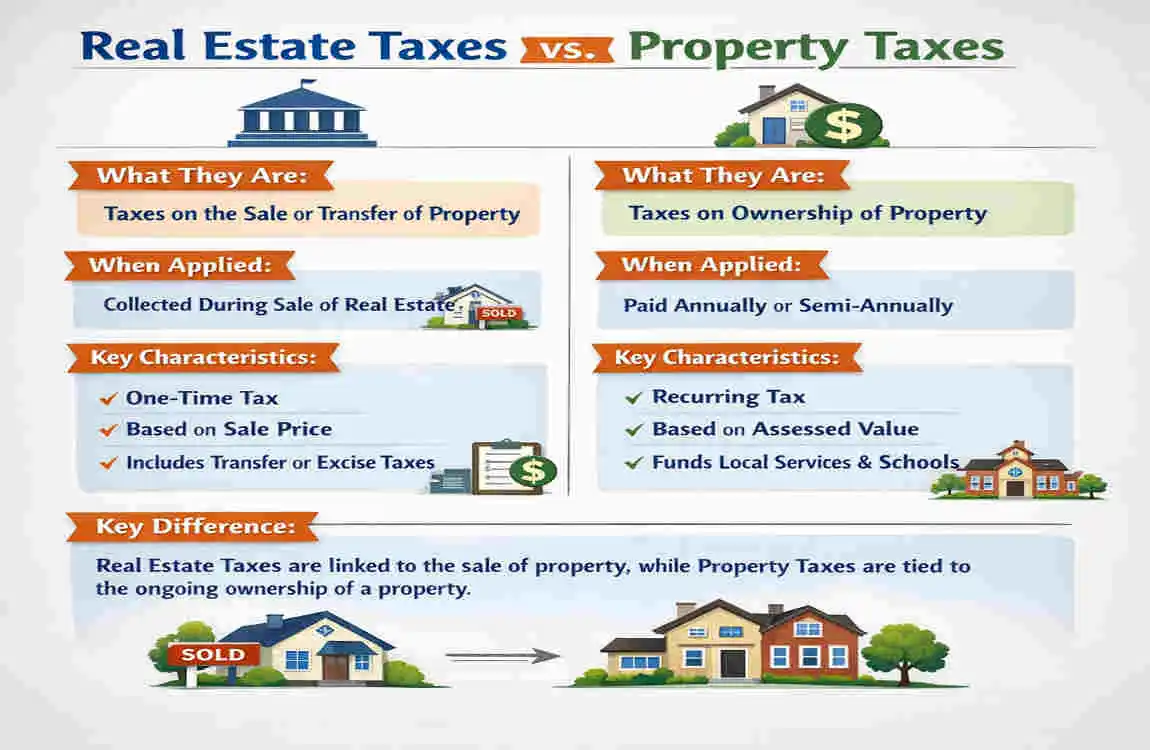
Here is a simple comparison to make the idea clearer.
Table: Real Estate Taxes vs. Property Taxes
Feature Real Estate Taxes Property Taxes
Applies To Land and buildings Real estate and sometimes personal property
Scope More specific Broader category
Paid By Property owners Property owners and business owners
Collected By Local government Local government
Frequency Usually yearly Usually yearly
The Main Point
The easiest way to remember it is this:
- Real estate taxes are usually taxes on real property, such as land and buildings.
- Property taxes are the more general term and may include other types of owned property in some places.
For most homeowners, the difference is small. But for business owners or people dealing with tax documents, the wording can matter.
How Property Taxes Are Calculated
Property Assessment
The first step is the assessment. Local officials estimate the value of your property. They may look at:
- The size of the home
- The condition of the property
- The land value
- Recent sales in the area
This gives them an assessed value, which is the number used to calculate your tax bill.
Local Tax Rate (Mill Rate)
Next comes the tax rate, sometimes called the mill rate. This rate tells you how much tax you owe for every dollar of assessed value.
For example, if your home is assessed at a certain amount and the local tax rate is higher, your tax bill will also be higher.
Factors Affecting Your Tax Bill
Your property tax bill can change for several reasons:
- Home improvements
- Property location
- Local budget needs
- Property value changes
If your home increases in value or your area raises tax rates, your bill may go up.
How Often Are These Taxes Paid?
Annual Payments
In some places, you pay the full bill once a year. This is common for many property owners.
Semi-Annual Payments
Other areas split the bill into two payments each year. This can make it easier to manage.
Monthly Through Mortgage Escrow
If you have a mortgage, your lender may collect property tax money each month through an escrow account. Then the lender pays the tax bill for you when it is due.
This helps spread the cost rather than requiring a single large payment.
What Happens If You Don’t Pay Property Taxes?
Late Fees
If you miss the deadline, you may face late fees. These charges can add up quickly.
Interest Charges
Unpaid taxes often grow because interest is added over time. That means the longer you wait, the more you owe.
Tax Liens
A local government may place a tax lien on your property. This is a legal claim that protects the government’s right to collect the unpaid tax.
Property Foreclosure
If taxes stay unpaid for too long, the government may eventually move toward foreclosure. That is a serious step and can put your property at risk.
So if you get a tax notice, do not ignore it. It is always better to act early.
Can You Reduce Your Property Taxes?
Appeal Your Assessment
If you think your property was valued too high, you may be able to appeal the assessment. This is one of the most common ways to lower a bill that seems unfair.
Apply for Tax Exemptions
Many areas offer tax breaks for certain homeowners. These may include:
- Homestead exemption
- Senior exemptions
- Veteran exemptions
- Disability exemptions
These exemptions can reduce the amount of tax you owe, but the rules depend on where you live.
Check Assessment Errors
Sometimes the tax office makes simple mistakes. They may list the wrong square footage, the wrong number of rooms, or incorrect property details.
Review your record carefully. A small error could mean a bigger tax bill than you should pay.
Real Estate Taxes for Home Buyers
Taxes During Closing
When you buy a house, taxes can show up during closing. You may need to pay part of the annual tax bill based on the day you take ownership.
This is why home buyers should always ask about the current tax amount before making an offer.
Escrow Accounts
If your loan uses escrow, part of your monthly mortgage payment may go toward property taxes. That makes budgeting easier, but it also means your monthly payment can change if taxes go up.
Budgeting for Annual Taxes
Do not focus only on the purchase price. You should also plan for the yearly tax bill.
A home that seems affordable at first can become expensive if property taxes are high.
Real Estate Taxes for Property Investors
Rental Properties
If you own rental property, taxes become part of your operating costs. They can affect your profit, rent pricing, and long-term return.
Commercial Properties
Commercial buildings often have different tax rules, but the basic idea is the same. The owner pays taxes based on property value and local rates.
Tax Planning Tips
If you are an investor, keep these points in mind:
- Check tax rates before buying
- Review annual assessment notices
- Estimate future increases
- Include taxes in your cash flow planning
Smart tax planning can help protect your profits.
Real Estate Taxes in Different States
Why Tax Rates Differ
Property tax rates are not the same everywhere. They change based on local budgets, school funding needs, and state rules.
That means two similar homes in different locations can have very different tax bills.
States with Higher Property Taxes
Some states and local areas have higher property taxes because they rely more heavily on local tax revenue.
States with Lower Property Taxes
Other places may have lower tax rates, but that does not always mean the total cost of living is lower. You still need to look at the full picture.
Common Myths About Real Estate Taxes
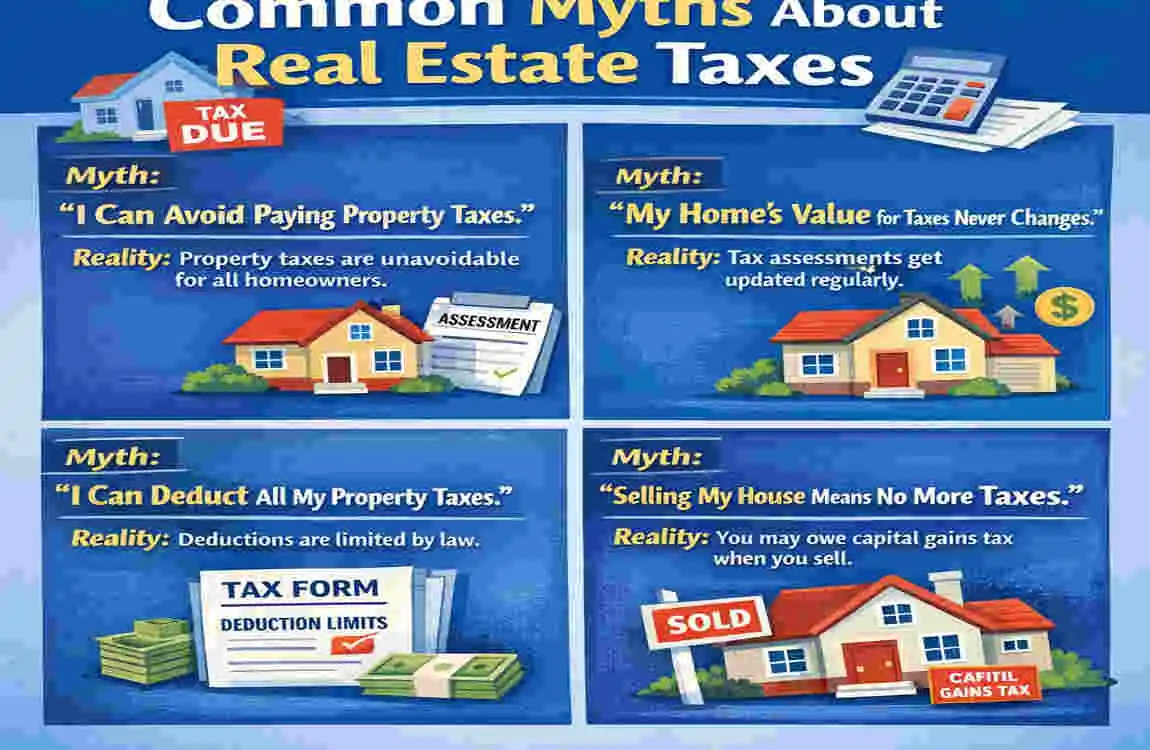
Real Estate Taxes and Property Taxes Are Completely Different
This is not true in most everyday situations. They are often used to mean the same thing, especially for homes.
Taxes Never Change
Taxes can change every year. Property values, local budgets, and tax rates can all affect your bill.
New Homes Have Lower Taxes
Not always. A new home may be assessed differently, but that does not guarantee a lower tax bill.
Tax Assessments Are Always Accurate
Assessments can be wrong. That is why it is important to review your notice and, if needed, appeal.
Tips for Managing Your Property Tax Bill
Here are a few simple ways to stay on top of your taxes:
- Review your annual assessment
- Understand local tax rates
- Budget for yearly increases
- Keep records of improvements
- Check exemption eligibility
- Pay taxes before the due date
These steps can help you avoid surprises and keep your finances in order.
Frequently Asked Questions
Are real estate taxes and property taxes the same?
Yes, in most cases they are used interchangeably. But property tax can sometimes include other kinds of owned property depending on where you live.
Who collects real estate taxes?
Usually local governments such as counties, cities, or municipalities.
Are property taxes deductible?
In many places, tax deductions depend on current tax laws. It is best to check with a qualified tax professional.
How are property taxes calculated?
They are generally based on the property’s assessed value and the local tax rate.
Can I appeal my property tax assessment?
Yes, most local governments allow an appeal if you believe the assessed value is too high.
Do renters pay property taxes?
Renters usually do not pay them directly. However, landlords may include those costs in the rent they charge.
What happens if I miss a property tax payment?
You may face penalties, interest, tax liens, and possibly foreclosure if the taxes stay unpaid for too long.
Do property taxes increase every year?
Not always, but they can go up or down depending on changes in property value and local tax rates.
| Feature | Real Estate Taxes | Property Taxes |
|---|---|---|
| Definition | Taxes charged on real property such as land and buildings. | A broader term that can include taxes on both real estate and personal property. |
| What It Covers | Land, homes, condos, commercial buildings. | Real estate plus taxable personal property (vehicles, business equipment in some areas). |
| Who Pays | Homeowners and real estate owners. | Property owners, including homeowners and some businesses. |
| Tax Authority | Local governments (city, county, municipality). | Local or state governments, depending on the property type. |
| How It’s Calculated | Based on the assessed value of the real estate. | Based on the assessed value of the taxable property. |
| Purpose | Funds schools, roads, police, fire departments, and local services. | Supports public services through taxes on different types of property. |