
Texas is one of the most popular places for homebuyers who want more space, a lower cost of living in many areas, and a wide range of housing choices. Many people look at home prices here and ask the same question: why are houses in Texas so cheap compared with other states?
| Factor | Explanation |
|---|---|
| Affordable Land | Texas has abundant land for housing development in many areas. |
| New Construction | Builders construct new homes to meet growing housing demand. |
| Location Differences | Smaller towns and some suburbs offer lower prices than major cities. |
| Property Taxes | Texas has no state personal income tax, but property taxes can be relatively high. |
| Housing Supply | New developments can increase supply and help moderate prices in some markets. |
| Weather Risks | Flooding, hail, and storms can increase insurance and maintenance costs. |
| Cost of Living | Everyday expenses vary by city and can affect overall homeownership affordability. |
| Buyer Demand | Local job growth, population changes, and housing demand influence home prices. |
Housing Supply and Land Availability in Texas
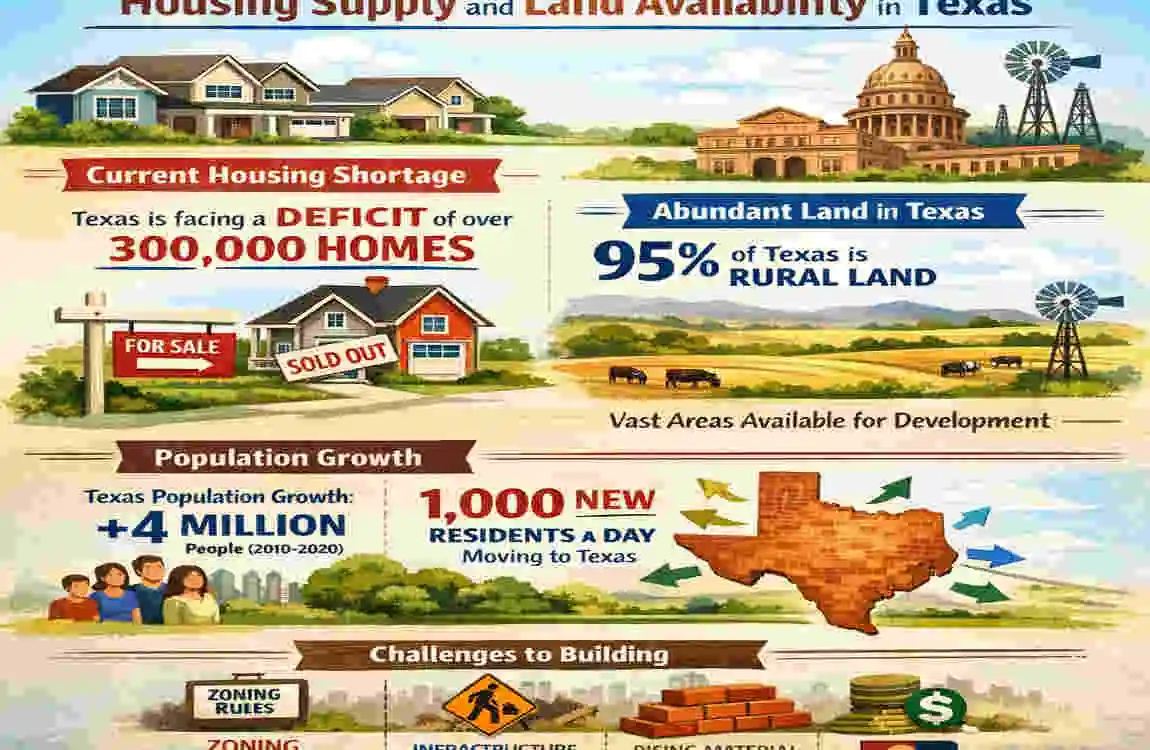
Abundant land and new housing developments
Texas is a very large state, and in many areas, there is still room to build. When more land is available for homes, builders can keep prices more competitive. This often helps new buyers find houses that feel more affordable than in states where land is scarce.
Lower-density suburbs and expanding communities
Many Texas neighbourhoods are built with more spread-out housing. That lower-density style can make it easier to add more homes over time. As communities expand outward, buyers often find newer neighbourhoods with lower starting prices than older, crowded city centres.
New construction and competition among builders
Texas also has a strong new-home market. When many builders compete in the same area, buyers may benefit from better pricing, promotions, and more choices. That competition can help keep costs from rising too quickly.
Differences between rural areas and major cities
Not every part of Texas is cheap. Homes in small towns or rural areas are often much more affordable than homes in major cities. In places like Houston or Austin, strong demand can push prices much higher.
Lower Property Taxes, Insurance, and the True Cost of Owning a Home

Property taxes and local tax rates
Texas does not charge a state personal income tax, which sounds like a major savings. But there is a tradeoff. Property taxes can be relatively high, and local governments rely on them for funding schools and services.
Here is a simple comparison of common cost factors:
Cost Factor Texas Often Means What Buyers Should Know
Home price Lower in many areas Good for entry-level buyers
State income tax None Can help with take-home pay
Property taxes Often higher Monthly cost can still be large
Insurance Can vary a lot Weather risk may raise premiums
Homeowners insurance and severe-weather risks
Texas weather can take a toll on homes. Hail, wind, floods, and heavy storms can all affect insurance costs. So even if the purchase price looks low, insurance may make the monthly bill higher than expected.
Maintenance, utilities, and repair costs
Some Texas homes, especially older ones, may need more upkeep. Heat can also increase electricity costs during long summers. A home may look affordable at first, but the real cost includes repairs, utility bills, and regular maintenance.
How monthly housing expenses affect affordability
A low sale price does not always mean a low monthly payment. When you add taxes, insurance, utilities, and maintenance, the true cost may feel very different. That is why smart buyers look beyond the listing price.
Location, Jobs, and Differences in Texas Housing Markets
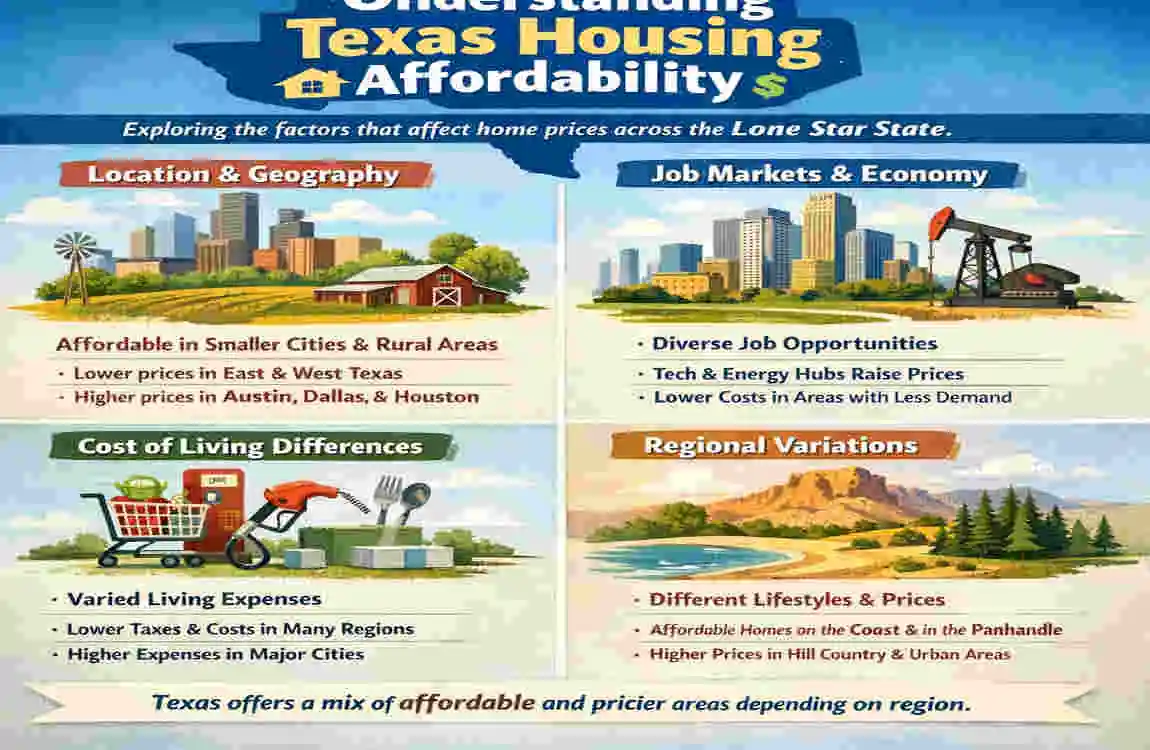
Houston, Dallas–Fort Worth, Austin, and San Antonio
Each of Texas’s biggest cities has its own housing market. Houston and San Antonio often offer more affordable options than Austin. At the same time, Dallas–Fort Worth has a wide mix of prices depending on the neighbourhood. Austin has seen especially strong price growth because of high demand and limited supply in some areas.
Smaller towns and rural housing markets
Smaller communities often offer lower prices because there is less competition for homes. Buyers who do not need to live near a major job centre may find much better value in these areas.
Employment growth and population changes
Texas continues to grow, and jobs attract new residents. When more people move in, demand rises. That can push prices up in some cities, even while other areas stay affordable. This is why one part of Texas may feel cheap, while another feels expensive.
Transportation, schools, and neighbourhood development
Good schools, short commutes, and nearby services usually raise home prices. Less-developed areas may be cheaper, but they may also require longer drives and fewer nearby conveniences. That balance matters a lot when you are choosing a home.
Potential Drawbacks of Buying an Affordable Texas House
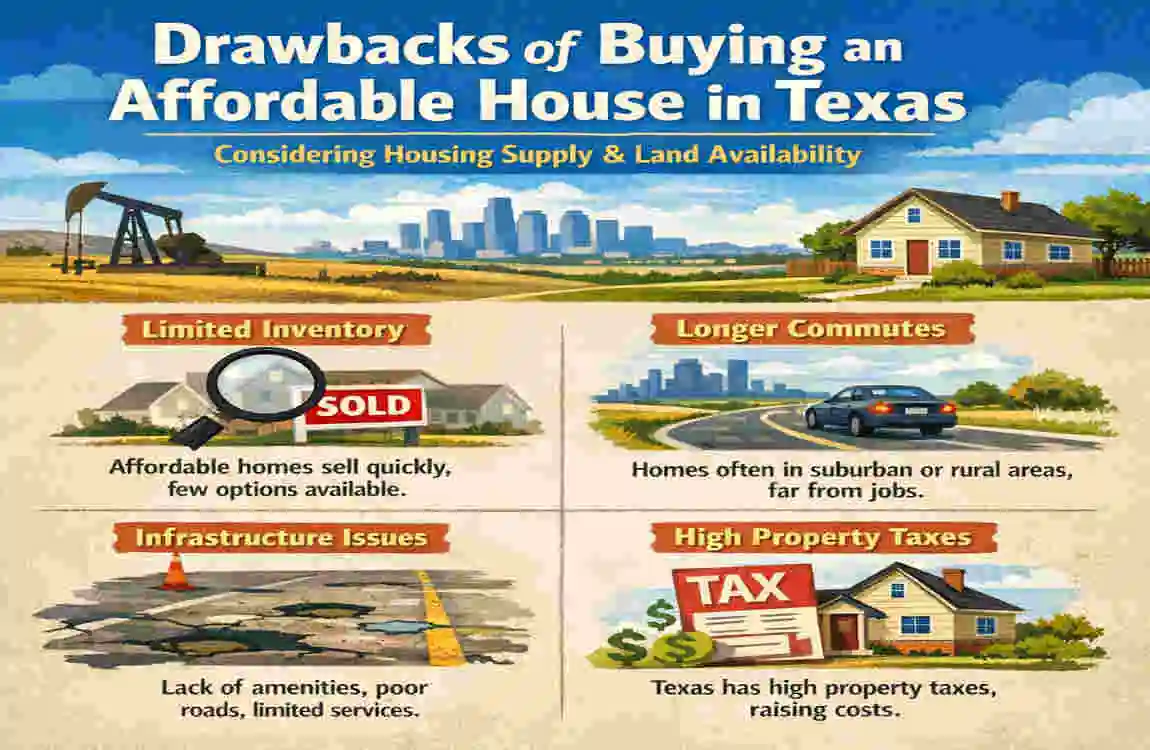
Flooding, hail, heat, and storm damage
Texas weather can create hidden risks. Flood zones, hail storms, and extreme heat can damage a home over time. A house may look like a bargain, but if it needs frequent weather-related repairs, the savings can disappear quickly.
Foundation problems caused by shifting soil
In some parts of Texas, soil movement can cause foundation issues. This is a common concern for buyers. A cheap home with foundation trouble may become expensive fast if repairs are needed.
HOA fees, commuting expenses, and utility costs
Some affordable homes are located far from business centres. That may mean a longer commute, more gas, and more time on the road. In other neighbourhoods, HOA fees can add another monthly expense.
New-build quality, neighbourhood growth, and resale value
A newly built home can seem like a smart deal, but quality can vary. Also consider how the neighbourhood is growing. A low price today does not always mean strong resale value later.
Smart Tips for Buying an Affordable House in Texas
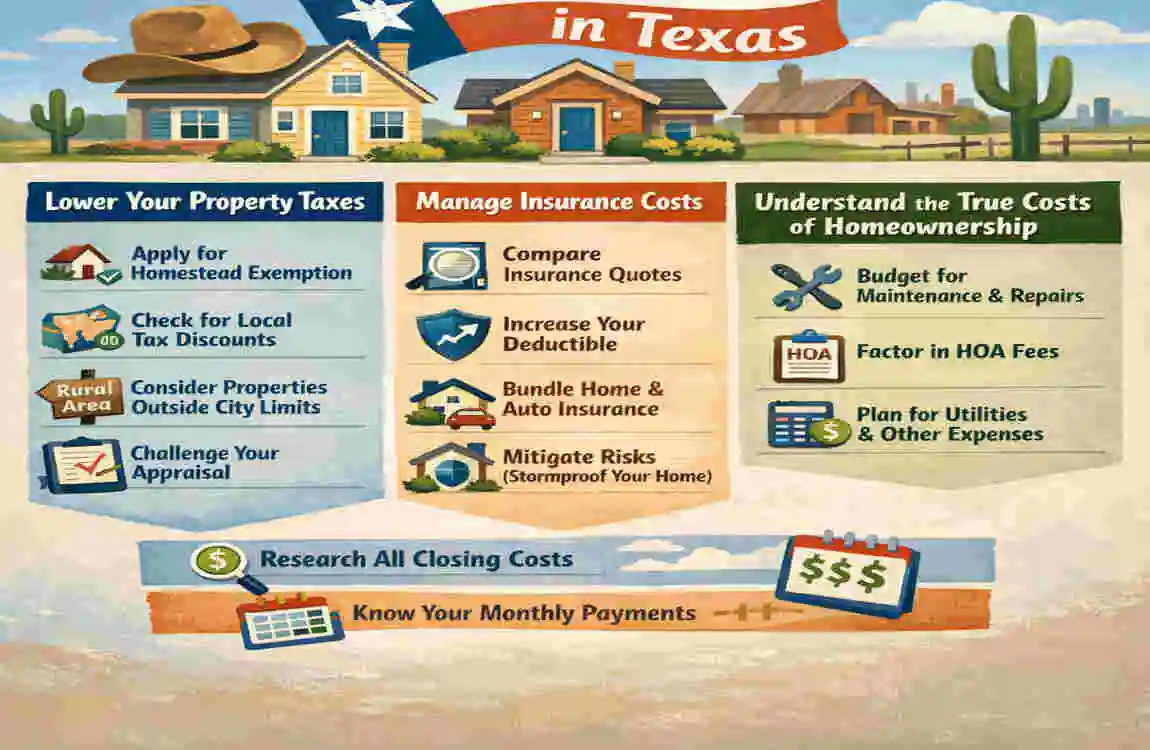
Compare prices across different neighbourhoods.
Do not look at just one area. Compare several neighbourhoods and nearby cities. You may find a location that offers much better value for the same budget.
Review property tax rates and insurance quotes.
Always check the total monthly cost before deciding. A home with a low price tag may still be expensive once taxes and insurance are added.
Arrange professional inspections
A home inspection can uncover hidden problems before you buy. This is especially important in Texas, where foundation, roof, and weather-related issues can affect long-term cost.
Check flood risk, foundation condition, and building permits.
These details matter a lot. They can help you avoid surprise repairs and choose with more confidence.
Calculate total monthly ownership costs.
Think about mortgage, taxes, insurance, utilities, HOA fees, and travel costs. This gives you a more honest picture of affordability.
Research schools, transport, and future resale potential
A cheap home is only a good deal if it fits your life. Look at the neighbourhood, commute, schools, and whether the area is likely to hold value over time.
Frequently Asked Questions (FAQ)
Why are houses in Texas so cheap?
Texas often has more available land, strong new construction, and very different housing markets from city to city. In some places, those factors help keep prices lower.
Is it cheaper to buy a house in Texas than in California?
In many cases, yes. Texas usually offers lower home prices than California, but it depends on the city, neighbourhood, and property type.
Are property taxes high in Texas?
They can be. Texas has no state income tax, so local property taxes often play a bigger role in funding public services.
Which Texas cities have more affordable homes?
Smaller cities, suburbs, and rural areas often cost less than homes in major metro areas. Affordability can vary widely from one neighbourhood to another.
Are cheap houses in Texas worth buying?
They can be, but only if you check the location, condition, taxes, insurance, and long-term costs. A low price alone is not enough.
What are the disadvantages of buying a house in Texas?
Common concerns include severe weather, high property taxes, insurance costs, foundation issues, and long commutes in some areas.
Is Texas a good place for first-time homebuyers?
Yes, it can be. First-time buyers often like the variety of homes and price ranges, but they should carefully review all monthly costs before deciding.