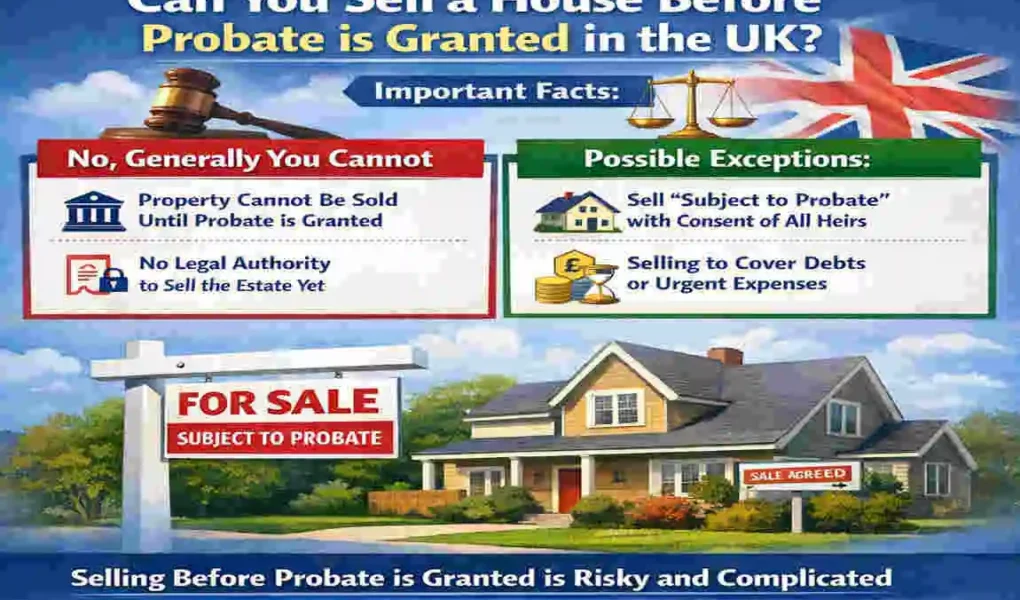
Losing someone you love is hard enough. Then, almost immediately, practical questions start piling up. One of the biggest is this: can a house be sold before probate is granted in the UK?
The short answer is usually no, not to complete the sale.In many cases, you can put the house on the market, accept interest, and even get the process moving before probate is granted. What you usually cannot do is exchange contracts or transfer ownership until the Grant of Probate has been issued.
That distinction matters a lot. It can save you time, reduce stress, and help you avoid mistakes that delay the sale. It also matters for executors, beneficiaries, and family members who want to handle the estate properly while still moving things forward.
What Probate Means in the UK
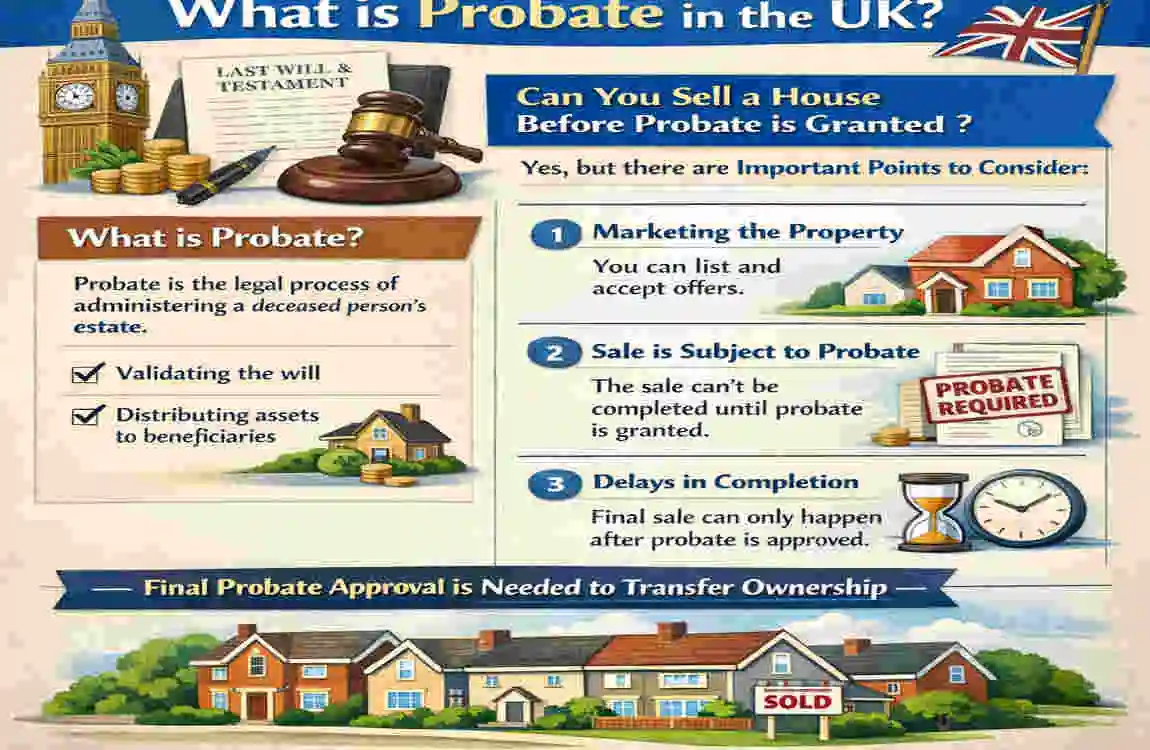
Probate is the legal process that gives someone the authority to deal with a person’s estate after they die. In plain English, it is the formal permission needed to handle matters such as money, possessions, and property left behind.
If there is a will, the executor usually applies for a Grant of Probate. If there is no will, the person handling the estate may need Letters of Administration instead. These documents are what prove who has the legal right to deal with the estate.
Why probate matters so much for property
A house is not just another item in the estate. It is often the most valuable asset, and the Land Registry needs proof that the person selling it has the legal authority to do so. That is why, in most cases, the property cannot be fully transferred to a buyer without probate first.
If you are still wondering whether a house can be sold before probate is granted in the UK, the key point is this: you can usually prepare for sale, but not legally complete it until the authority has been confirmed.
The main documents involved
When probate is being sorted out, a few documents often come into play:
- Death certificate
- The will, if one exists
- Inheritance Tax forms, where needed
- Details of assets and debts
- Property ownership records
- Valuations for the estate
These papers help establish what the estate contains and who has the legal right to act. If the paperwork is incomplete, the whole process can slow down.
The role of the executor
The executor is the person named in the will to carry out the deceased person’s wishes. Their job is to gather information, deal with debts, apply for probate, and distribute what remains.
If you are the executor, you may feel pressure to act quickly. That is normal. But you still need to work within the legal process. So when people ask, ‘Can a house be sold before probate is granted in the UK?’ the better question is often: ‘What can I do now, and what must wait?‘
Can a house be sold before probate is granted in the UK? The Short Answer
The short answer is:
Usually, no, the sale cannot be completed before probate is granted.
Yes, the property can often be marketed before probate is granted.
That is the important difference.
What you can usually do before probate
Before the Grant of Probate arrives, you can often:
- Get the house valued
- Choose an estate agent
- Advertise the property
- Hold viewings
- Accept offers subject to probate
- Prepare paperwork for the solicitor
- Start gathering information for the sale
What usually must wait
These things generally need probate first:
- Exchanging contracts
- Completing the sale
- Signing transfer documents as executor
- Registering the new ownership at the Land Registry
So, if your question is: can a house be sold before probate is granted in the UK, the practical answer is: it can be marketed and prepared, but the legal completion usually waits for probate.
Why buyers still sometimes proceed
A buyer may still be willing to make an early offer if they understand the timing. This is especially true when the property is priced well or the market is competitive. But buyers do not like uncertainty. If probate takes longer than expected, some may walk away or ask for changes.
That is why clear communication matters so much.
Key Exceptions to the Rule
Not every probate property follows the same path. Sometimes the legal setup means probate is not required in the same way, or the sale can happen more smoothly.
Joint tenants and survivorship
If the property was owned as joint tenants, the surviving owner automatically becomes the sole owner upon the other owner’s death. In that case, probate may not be needed to sell the home, because the property does not pass through the deceased’s share in the same way.
This is one of the biggest exceptions people overlook. If you are asking whether a house can be sold before probate is granted in the UK, the ownership structure is one of the first things to check.
Tenants in common
If the owners held the property as tenants in common, each person owns a separate share. That share becomes part of the deceased’s estate, so probate is usually needed to deal with it.
This is a common source of confusion because many couples assume all joint ownership works the same way. It does not. The exact legal structure matters.
Property held in trust
If the property is held in a trust, the trustees may be able to deal with it without the same probate process. That depends on the trust terms and how ownership is set up.
This is less common in everyday family homes. However, it is still worth checking whether the estate seems unusual or whether the ownership documents are outdated.
Where the executor can begin the early steps
Even where probate is needed, the executor may still be able to take early action such as listing the property, arranging inspections, or gathering documents. But again, the final legal transfer usually takes its time.
Here is the rule of thumb: the more complex the ownership, the more important it is to check the title deeds and legal advice before assuming the answer.
Comparison Table: Common Scenarios and Whether Probate Is Needed
Scenario: What Usually Happens. Can the House Be Sold Before Probate Is Granted in the UK?
Sole ownership in the deceased’s name. Probate is usually needed to sell. No, not fully completed
Joint tenants. Ownership passes to the surviving owner. Often, yes, probate may not be needed.
Tenants in common. The deceased’s share forms part of the estate. Usually, no probate is needed.
Property in trust, Trustees may have the power to sell. Sometimes yes, it depends on the trust terms.
The executor has authority, but no Grant yet. Can prepare and market, but not complete. Market, yes; complete, usually no.
This table makes the core issue much easier to see. When someone asks, “Can a house be sold before probate is granted in the UK?” the answer depends on how the property is owned and what stage the estate is at.
The Step-by-Step Probate Sale Process in the UK
If you are dealing with a probate property, it helps to understand the process from start to finish. That way, you can plan instead of feeling stuck at every stage.
Check the property ownership.
Start by confirming exactly how the property was owned.
Was it:
- Sole ownership?
- Joint tenants?
- Tenants in common?
- Held in trust?
This is one of the most important early questions. It affects everything that follows.
If you are unsure, check the title deeds or ask the solicitor handling the estate. Before worrying too much about whether a house can be sold before probate is granted in the UK, make sure you know the ownership structure first.
Value the estate
Next, work out what the estate is worth. This usually includes:
- The house
- Bank accounts
- Investments
- Personal belongings
- Any debts owed
A proper valuation matters for probate and tax purposes. It also helps set realistic expectations for beneficiaries.
If the house is the biggest asset, getting the valuation right is especially important. An overestimate can create tax problems, while an underestimate can cause issues later.
Deal with inheritance tax where needed.
Some estates must pay Inheritance Tax before probate can move ahead. In others, tax may not be due, but paperwork still has to be completed.
This stage can be stressful because the estate may not have enough cash on hand to pay the tax bill. In that case, the executor may need to review estate funds, bank release procedures, or seek professional advice.
This is one reason the answer to the question “Can a house be sold before probate is granted?” in the UK is usually “not fully yet.” The tax and probate steps often move together.
Apply for probate
Once the paperwork is ready, the executor applies for the Grant of Probate. If there is no will, the application is for Letters of Administration instead.
This stage can take time. In many cases, the application is straightforward. In others, delays occur due to missing documents, valuation issues, or tax questions.
Market the property
While waiting, you can often start marketing the home. This may include:
- Taking photographs
- Writing the listing
- Booking viewings
- Talking to agents
- Explaining the probate situation to interested buyers
Being honest from the start is important. Buyers need to know the sale is subject to probate so that expectations are clear.
Accept an offer subject to probate.
An offer can often be accepted before the Grant is issued, but it is usually subject to probate. That means the buyer is showing intent, but the sale is not yet legally complete.
This can work well if the buyer understands the process. It is less likely to work if the buyer wants a quick move-in date.
Exchange contracts after probate
Once probate has been granted, the solicitor can usually move to exchange contracts. This is a major legal step because both sides become committed.
At this stage, the property sale becomes much more secure. If you had been asking, “Can a house be sold before probate is granted in the UK?” this is the point where the legal answer changes from “not yet” to “yes, now it can move forward properly.”
Complete the sale
Completion happens when the property legally changes hands, and the money is transferred. After that, the proceeds are paid into the estate and later distributed according to the will or the rules of intestacy.
Distribute the estate
Finally, once debts, taxes, and expenses are settled, the remaining funds are distributed to beneficiaries.
That may sound simple, but many estates take longer due to disagreements, missing paperwork, or financial complications.
Typical Timeline for a Probate Property Sale
Probate sales often take longer than ordinary property sales. That does not mean they are doomed to drag on forever, but it does mean patience is needed.
StageTypical TimeframeNotes
Gathering paperwork and valuations takes 2 to 6 weeks. It can be quicker if the records are easy to find
Probate application preparation takes 2 to 8 weeks. Tax forms and valuations may take time.
Probate waiting period: Several weeks to several months. Delays are common if the estate is complex.
Marketing the property can begin before probate. The sale can be prepared early.
Exchange and completion often occur 6 to 12 weeks after probate. It depends on the buyer, solicitor, and chain.
This table is only a guide. Some estates move faster. Others take much longer.
If you are thinking can a house be sold before probate is granted in the UK, it helps to think in two separate timelines:
- The probate timeline
- The property sale timeline
These can overlap, but they are not the same thing.
Risks and Challenges of Selling Too Early
There is nothing wrong with wanting to move fast. In fact, many executors feel strong pressure to keep the estate moving. But there are risks if the sale is handled badly.
Buyers may lose patience.
A buyer may make an offer in good faith, then withdraw if probate takes longer than expected. This is especially likely if they are in a chain or on a strict deadline.
That is one reason the phrase ‘can a house be sold before probate is granted?’ is asked so often in the UK. People want to know how early they can lock in a buyer without causing trouble later.
You cannot always exchange early.
If someone pressures you to exchange contracts before probate is granted, that can create legal risk. The executor may not yet have the authority to bind the estate to the sale.
That is why solicitors usually advise caution.
Beneficiaries may disagree
Family members may not agree on the price, timing, or whether the house should be sold at all. These disputes can slow the process down or even lead to legal problems.
The property must be sold at a fair value.
The executor has a duty to act in the best interests of the estate and the beneficiaries. Selling too cheaply can create conflict and raise questions later.
That is why early marketing is helpful, but only if it is done properly and transparently.
How to Reduce Delays and Sell More Smoothly
The good news is that many delays can be reduced with planning.
Use a probate-experienced solicitor.
A solicitor who understands probate sales can help you avoid common mistakes. They will know what documents are needed, how to structure the sale, and how to keep the process moving.
Get valuations early
Do not wait until the Grant of Probate arrives before starting valuations. A realistic price helps with both tax reporting and marketing.
Keep communication open
Buyers, estate agents, solicitors, and beneficiaries all need updates. Delays feel smaller when everyone knows what is happening.
Be honest in the listing.
If the sale is subject to probate, say so. Buyers usually handle the truth better than uncertainty later.
Prepare the property early.
Even if the legal side is still moving, you can make the home more attractive by:
- Clearing clutter
- Tidying the garden
- Fixing minor issues
- Cleaning thoroughly
- Taking better photos
A well-presented home can attract stronger interest, even during probate.
Costs Involved in a Probate House Sale
A probate sale can involve several different costs. Some are one-off probate expenses, while others are normal property sale costs.
Common costs to expect
- Probate application fee
- Valuation fees
- Solicitor or conveyancing fees
- Estate agent fees
- Property maintenance costs
- Possible inheritance tax
- Empty home insurance
- Cleaning, repairs, or clearance costs
Why these costs matter
The estate usually pays many of these costs before beneficiaries receive anything. That means executors must keep good records and avoid unnecessary spending.
A simple house sale can still become expensive if the property is empty for a long time, especially if heating, insurance, or repairs are needed.
Tax considerations
The probate sale itself is not automatically taxed in the same way as income. However, the estate may still be subject to tax obligations depending on the estate’s value and circumstances.
If you are unsure about tax, the safest route is to get proper advice. Probate and tax often overlap, and mistakes can be costly.
Tips for Faster Probate Property Sales
If you want the sale to move faster, focus on actions that remove delays rather than rushing the legal process itself.
Start early
Do not wait until every piece of paperwork is perfect before doing anything. Start with the basics:
- Ownership check
- Property valuation
- Estate agent discussions
- Document gathering
Choose the right type of sales route.
For some homes, a normal market sale is best. For others, especially if speed matters, an auction may be worth considering after probate is in place.
Work with probate-aware professionals.
A team that understands probate can reduce back-and-forth and spot issues earlier.
Keep the property market-ready
The better the condition, the more likely you are to attract serious buyers quickly.
Make the buyer aware of the timeline.
A buyer who understands probate from day one is less likely to panic later.
This is where the practical meaning of ‘can a house be sold before probate is granted’ in the UK becomes useful. You may not be able to complete the deal right away, but you can still build momentum.
Probate Sale vs Regular Sale: What Is Different?
A probate sale is not the same as selling your own home while you are alive. The legal process is more layered, and the timeline is usually longer.
Feature Probate Sale Regular Sale
Legal authority needs a Grant of Probate or Administration. The owner can usually act directly.
Timeline: Often longer, usually quicker
Buyer uncertainty: Higher, Lower
Paperwork, More detailed Standard
Emotional complexity: Often high, usually lower
Risk of delay Greater Lower
The main difference is authority. In a normal sale, the owner signs and sells. In a probate sale, the executor must first prove they have the right to act.
So, if you are asking whether a house can be sold before probate is granted in the UK, the answer is still tied to legal authority. Without it, the sale is not fully ready to complete.
Common Myths About Selling Before Probate
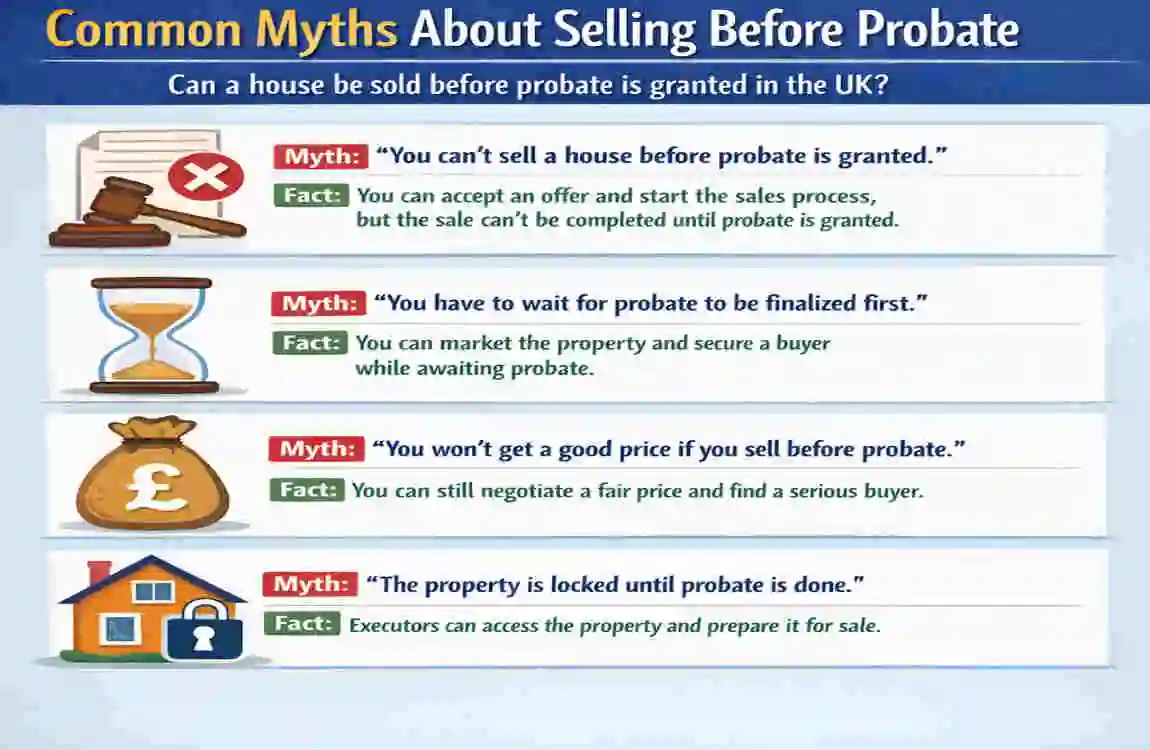
There is a lot of confusion around probate property sales. Let’s clear up some of the biggest myths.
You can never do anything until probate arrives.
That is not true. You can often market the home, get valuations, and prepare the sale in advance.
Joint ownership always means no probate.
Not always. It depends on whether the property was owned as joint tenants or tenants in common. The ownership type matters.
The executor can sell whenever they want
Not quite. The executor needs legal authority, and that usually comes with the Grant of Probate.
Probate sales are always slow.
Not necessarily. Some go through fairly smoothly, especially when the estate is simple and the paperwork is organized.
A buyer will never wait.
Some buyers will wait if they understand the situation and want the property badly enough. Good communication makes a big difference.
These myths are part of why people keep asking, ‘Can a house be sold before probate is granted in the UK?’ The process is often misunderstood, and that creates avoidable stress.
What Executors Should Focus On First
If you have been named executor, your first job is not to sell the house immediately. Your first job is to understand the estate and protect it properly.
Your priorities should be:
- Secure the property
- Find the will
- Check ownership details
- Locate key documents
- Arrange valuations
- Confirm debts and assets
- Speak to a solicitor if needed
That gives you a much stronger base to work from.
Why this matters
When an executor acts too fast without the right information, problems can build up later. A well-managed estate sale is almost always smoother than a rushed one.
So when someone asks, “Can a house be sold before probate is granted in the UK?” the most useful answer is not just yes or no. It is: you can prepare early, but you should not jump past the legal steps.
A Simple Checklist for Probate House Sales
Here is a straightforward checklist to keep you on track.
Before probate is granted
- Confirm property ownership
- Find the will
- Identify the executor
- Get the property valued
- Gather estate documents
- Speak to a solicitor
- Start marketing if appropriate
- Tell buyers the sale depends on probate
After probate is granted
- Instruct the conveyancer
- Exchange contracts
- Complete the sale
- Pay estate debts and costs
- Distribute the remaining funds
This checklist keeps the process easy to follow and reduces the chance of missing something important.
FAQs: Can a House Be Sold Before Probate Is Granted in the UK?
Can a house be sold before probate is granted in the UK?
Usually, no, not fully completed. But it can often be marketed and prepared before probate is granted.
Can you accept an offer before probate?
Yes, in many cases, you can accept an offer subject to probate. The sale normally completes later.
How long does probate take in the UK?
It varies. Some estates move relatively quickly, while others take several months or longer, depending on complexity.
What happens if the property is jointly owned?
If it were owned as joint tenants, the surviving owner may be able to deal with the property without probate in the same way. If it were a tenancy in common, probate is usually required.
Do you pay tax on the proceeds from a probate sale?
The estate may have tax responsibilities depending on the overall value and the circumstances. It is best to get advice specific to the estate.
Can an executor sell before getting probate?
The executor may be able to prepare and market the property. Still, the formal sale usually occurs after probate is granted.
Is it better to wait until probate before marketing the house?
Not always. In many cases, early marketing can save time. The key is to be clear that the sale is subject to probate.