Selling a home to an real estate investor can be a smart move when you need speed and simplicity. Many homeowners choose investors instead of traditional buyers because the process is often faster, requires fewer repairs, and involves less paperwork.
| Topic | Details |
|---|---|
| Selling Method | Sell directly to a real estate investor |
| Main Benefits | Faster sale, fewer repairs, convenient process |
| Property Condition | Many investors buy homes as-is |
| Offer Price | Depends on market value, condition, and repair costs |
| Required Documents | Ownership papers, mortgage details, and disclosures |
| Selling Process | Find investors, compare offers, negotiate, and close |
| Potential Risks | Low offers, hidden fees, and unverified buyers |
| Best Advice | Verify the investor and review the contract before signing |
Understanding How Real Estate Investors Buy Houses

What Is a Real Estate Investor?
A real estate investor buys properties to earn a profit, either by flipping, renting, or holding for long‑term appreciation. Investors assess a home’s condition, location, market value, and potential return before deciding how much to offer.
Different Types of Real Estate Investors
- Cash buyers – use their own funds for quick closings.
- House flippers – renovate and resell for profit.
- Rental property investors – look for real estate homes that generate steady rent.
- Real estate investment companies – purchase multiple properties for various strategies.
Why Investors Buy Homes in Different Conditions
Investors often target outdated, damaged, vacant, inherited, or tenant‑occupied houses because they can negotiate lower prices and add value through repairs or improvements. Not every investor will buy every type of property; each has its own criteria.
Why Sell Your House to a Real Estate Investor?

The Benefits of Selling Directly to an Investor
- Skip staging, open houses, and repeated showings.
- Sell as‑is without making major repairs.
- Enjoy flexible closing dates that fit your schedule.
- Ideal for owners who prioritize speed and convenience.
Selling to an Investor vs. Selling Through a Real Estate Agent
Aspect Investor Sale Traditional Agent Sale
Time to Close Often 1–4 weeks 30–60+ days
Repair Costs Usually none May need fixes or credits
Commission None or minimal 5–6 % of sale price
Offer Price Lower, reflects investor profit Potentially higher market price.
Complexity Simpler paperwork More marketing, negotiations
Situations Where an Investor Sale May Make Sense
- You’re relocating quickly.
- You’ve inherited a property needing major work.
- Rental property has costly maintenance issues.
- The house sits vacant and begins to deteriorate.
- Your finances demand a fast, cash‑based sale.
How to Prepare Your House for an Investor Offer

Understand Your Home’s Current Market Value
Research recent comparable sales, consider size, age, and condition, and, if needed, obtain a professional appraisal. Remember, an investor’s offer will factor in repair and profit margins.
Gather Important Property Documents
- Ownership deed and title records
- Mortgage statements, lien details, tax documents
- Renovation receipts, warranties, utility bills
- Any existing inspection reports
Decide Whether to Make Repairs or Sell As‑Is
Focus on safety issues first. Ask investors which repairs, if any, could improve their offer, and be transparent about known problems.
Set Your Selling Goals
Identify your ideal timeline, minimum net proceeds after debts, moving plans, and preferred closing date.
How to Sell Your House to a Real Estate Investor: Step‑by‑Step Process
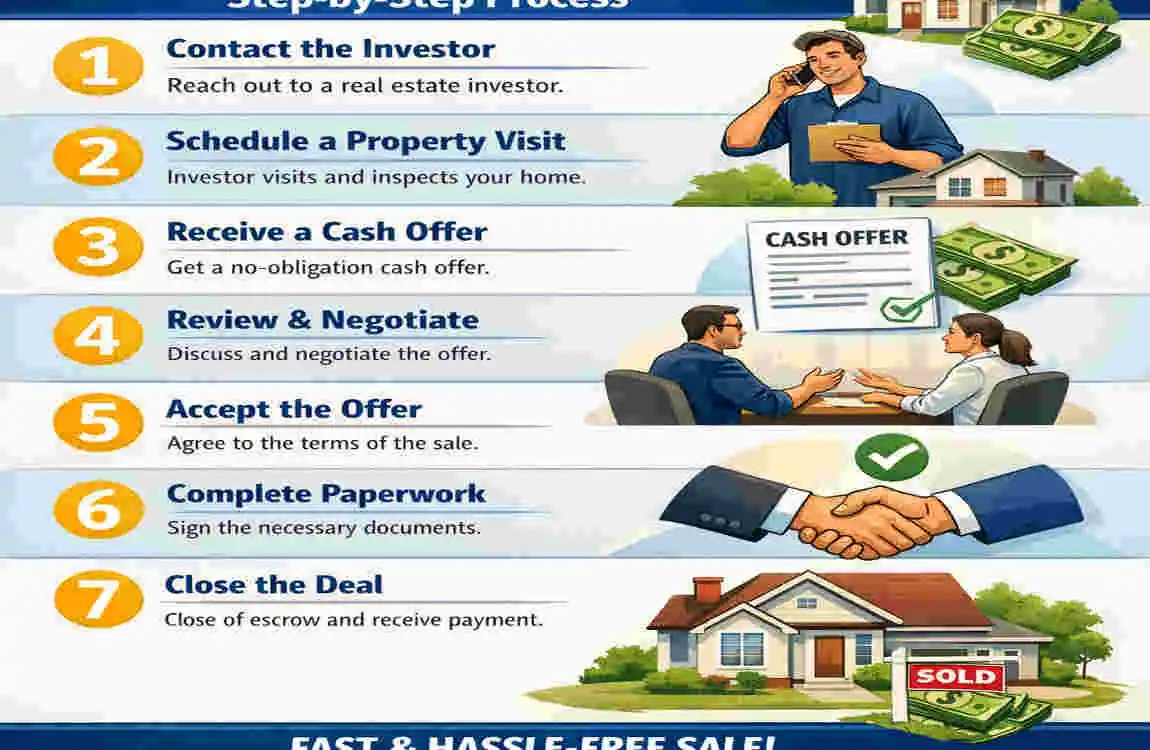
Find Reputable Real Estate Investors
Search local investors, ask for referrals, and review business records, client feedback, and transaction history.
Contact Investors and Share Property Information
Provide basic details—address, size, age, condition—along with photos or a property walkthrough. Inquire about their buying process and funding.
Request and Compare Multiple Offers
Solicit offers from several investors, then compare purchase price, closing costs, contingencies, and proof of funds.
Evaluate the Offer and Calculate Your Net Proceeds
Subtract mortgage balances, liens, closing fees, and taxes from the proposed price to see what you’ll actually walk away with.
Negotiate the Terms of the Sale
Discuss price, who pays fees, inspection periods, financing conditions, and closing timeline. Get all agreements in writing.
Complete the Paperwork and Close the Sale
Conduct a title search, resolve any issues, property review the purchase agreement, and sign through a trusted closing professional. Confirm payment before transferring ownership.
Common Mistakes to Avoid When Selling to an Investor
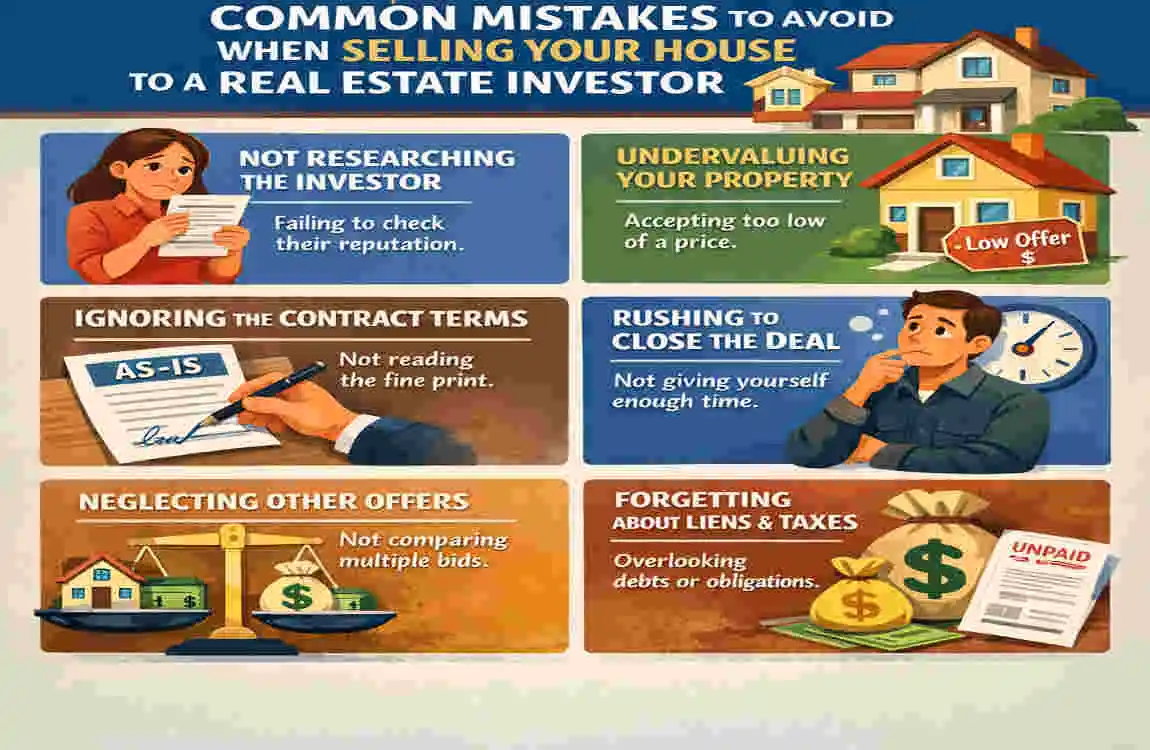
Accepting the First Offer Without Comparing Options
A quick offer isn’t always the best financially. Take time to gather several proposals.
Falling for Unverified Cash‑Buyer Claims
Be wary of property pressure tactics, vague funding explanations, and requests for upfront payment. Verify identity and proof of funds.
Ignoring Contract Details and Hidden Costs
Read contingencies, cancellation clauses, and fee allocations carefully. Consider consulting an attorney.
Overlooking Legal and Financial Obligations
Address mortgages, liens, co‑owner permissions, and potential tax impacts before closing.
Failing to Compare Other Selling Methods
Weigh investor sales against traditional property listings, auctions, or brokered sales to choose the best route.
Frequently Asked Questions (FAQs)
How do I sell my house to a real estate investor?
Research investors, obtain multiple offers, compare net proceeds, negotiate terms, review contracts, and close with a trusted professional.
Can I sell my house to an investor without making repairs?
Yes—many investors purchase as‑is, but the offer may reflect repair costs and required disclosures.
Do real estate investors usually pay cash for houses?
Some use their own cash; others rely on financing or partners. Always verify the buyer can close.
Will I get less money selling to an investor?
Offers are typically lower than retail market prices because investors factor in repair, holding, and profit costs. However, you save on repair expenses and agent commissions.
How long does it take to sell a house to an investor?
Timelines vary, but they can be as short as a few days or as long as a few weeks, depending on title issues, inspections, and funding.
Are real estate investors legitimate buyers?
Legitimacy depends on due diligence—check credentials, references, proof of funds, and reviews before proceeding.
Do I need a real estate agent to sell to an investor?
Not required, but an agent can assist with pricing, negotiation, and contract review if you prefer professional guidance.
What documents do I need to sell a house to an investor?
Ownership deed, ID, mortgage statements, lien information, tax records, disclosure forms, and any renovation or warranty paperwork.