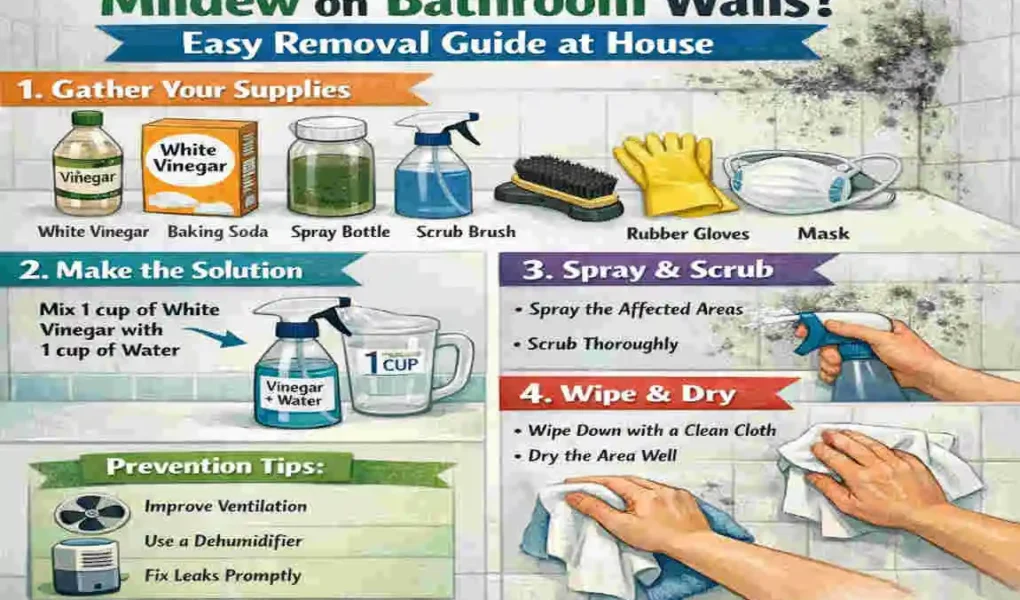
Bathroom mildew is a very common problem. It often shows up as small gray, white, or dark patches on painted walls, near the shower, around the sink, or on ceilings close to moisture. In many homes, it appears because bathrooms hold onto heat, steam, and damp air for too long.
If you are looking for how to get mildew off bathroom walls, the good news is that you can often handle small spots yourself. The important part is not just cleaning what you can see. You also need to deal with the moisture source so the mildew does not come right back.
Bathrooms are one of the easiest places for mildew to grow because they stay warm and wet. Steam from showers, poor airflow, condensation on cool walls, and even slow leaks can all create the perfect setting for growth. That is why a good cleaning plan should always include removal and prevention.
What Causes Mildew on Bathroom Walls?
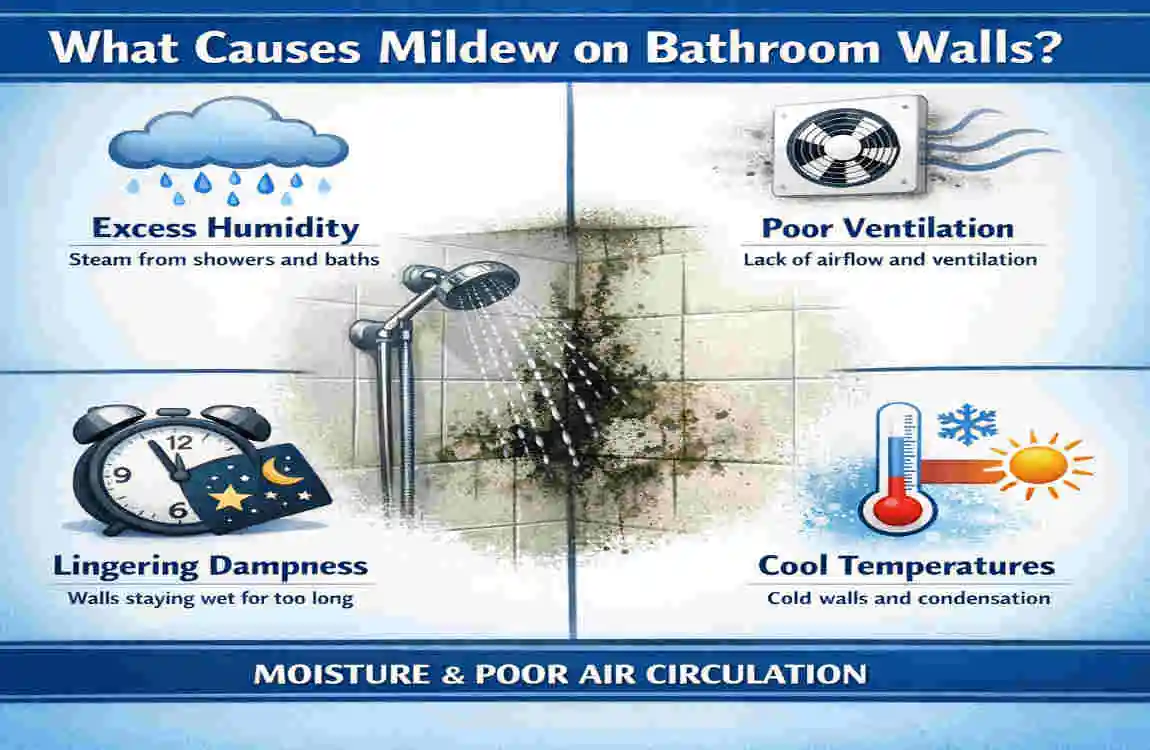
High Bathroom Humidity
Humidity is one of the biggest factors in mildew growth in bathrooms. Every hot shower sends steam into the air. When that steam lingers, it settles on the walls, ceiling, mirror, and other surfaces.
If the room stays humid every day, mildew has a steady supply of moisture. Over time, even clean walls can start to show spots. This is why bathrooms with no fan or poor airflow often have the most trouble.
You may notice that mildew appears more often after long showers, especially in smaller bathrooms. In these spaces, the air has fewer chances to move out and dry properly.
Poor Ventilation
A bathroom needs airflow to stay healthy and dry. When there is insufficient ventilation, damp air remains trapped in the room. That trapped moisture gives mildew an easy place to grow.
An exhaust fan is meant to pull wet air outside. If the fan is weak, noisy, broken, or not used at all, the room keeps holding moisture long after the shower is over.
Signs of poor ventilation often include:
- Foggy mirrors that stay cloudy for a long time
- Damp walls after showers
- A musty smell
- Repeated mildew in the same spot
If you notice these signs, the bathroom likely needs better airflow, not just cleaning.
Water Leaks and Condensation
Sometimes mildew is a sign of a hidden moisture issue. A small leak in a pipe, faucet, shower wall, or toilet area can feed mildew behind the scenes.
Cold walls can also create condensation. When warm, moist air touches a cooler surface, water droplets form. Those droplets may look harmless at first, but repeated condensation can keep a wall damp enough for mildew to spread.
This is why recurring mildew should never be ignored. If the spots keep coming back, the problem may be more than surface-level dirt.
Damp Towels and Wet Surfaces
Everyday habits can also add to the problem. Wet towels left in piles, bath mats that never fully dry, and splashed water on the wall all create more moisture than you might think.
Even small amounts of trapped dampness can matter if they happen every day. Over time, the bathroom never gets a full chance to dry out.
If your bathroom feels humid for hours after use, mildew is more likely to return. That is why cleaning alone is not enough. Dryness matters as much as cleanliness.
How to Get Mildew Off Walls in Bathroom
Gather the Right Cleaning Supplies
Before you start, put together everything you need. Having the right tools makes the job easier and safer.
You will usually want:
- Rubber gloves
- Protective eyewear
- Cleaning cloths or a sponge
- A soft scrub brush
- Mild detergent
- A mildew-cleaning solution
- A bucket of water
If the wall is painted, choose gentle tools. Rough pads or hard brushes can damage the finish.
You should also wear clothes you do not mind getting wet or dirty. Even a simple cleaning job can splash more than expected.
Improve Ventilation Before Cleaning
Never clean mildew in a sealed, stuffy bathroom if you can avoid it. Good airflow helps you breathe easier and helps the wall dry faster.
Before you begin:
- Open a window if possible
- Turn on the exhaust fan
- Open the bathroom door for better air movement
This step is especially important if you are using a store-bought cleaner. Some products emit strong fumes, and proper ventilation helps keep the space safer.
Remove Surface Mildew
For light mildew, start with the gentlest method that works. A mild detergent and water may be enough for small areas.
Apply the solution to the mildew spot and let it sit for a short time, following the product instructions if you are using a commercial cleaner. Then gently scrub the area with a sponge or soft brush.
Do not attack the wall with force. The goal is to remove the mildew without damaging the paint or drywall. After scrubbing, wipe the area clean and let it dry fully.
Clean Painted Bathroom Walls Carefully
Painted walls need extra care. Too much water can stain the finish, and too much scrubbing can wear the paint down.
If you are not sure how the paint will react, test the cleaning solution on a small hidden area first. That way, you can see whether it affects the color or sheen.
Use a light touch and work slowly. If the mildew is only on the surface, gentle cleaning is often enough.
Deal With Stubborn Mildew
Sometimes one cleaning round is not enough. More severe mildew may require repeated treatment, especially if it has been sitting there for a while.
If the wall material is porous, such as damaged drywall, the mildew may extend beyond the surface. In that case, cleaning may not fully solve the problem. You might need a professional opinion or even replacement of part of the wall material.
If you see discoloration that returns quickly, do not keep scrubbing forever. That usually means moisture is still present somewhere nearby.
Best Ways to Remove Bathroom Wall Mildew
MethodBest ForImportant Consideration
Mild detergent and water Light surface mildew Gentle option for suitable painted surfaces
Commercial mildew cleaner Stubborn surface growth Follow the product label carefully.
Soft scrubbing Small affected areas Avoid damaging paint
Professional treatment Extensive or recurring growth Useful when the moisture problem is unresolved
Each method has a place. The right choice depends on how bad the mildew is and what kind of wall you are cleaning.
If the mildew is small and fresh, a mild cleaner may be enough. If it keeps coming back, you may need to look beyond cleaning and focus on moisture control.
How to Clean Mildew Without Damaging Bathroom Walls
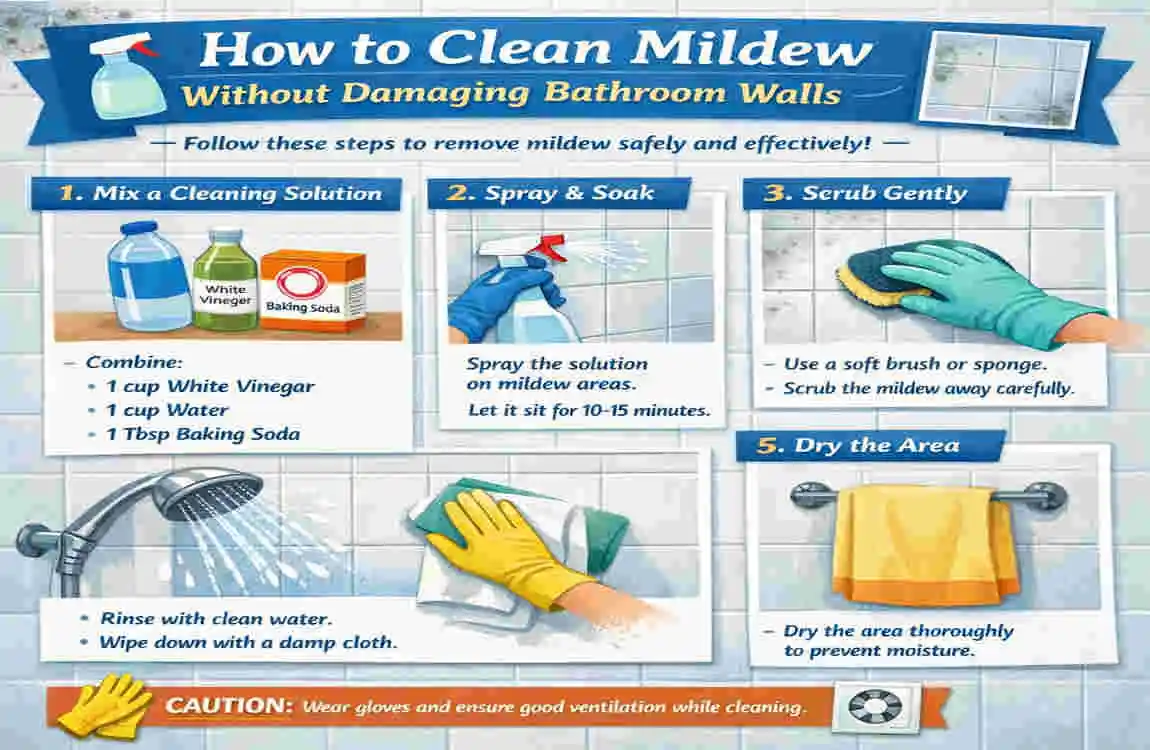
Check the Wall Material
Not all bathroom walls are the same. Some are painted drywall, while others may be tile, cement board, or another moisture-resistant surface.
That matters because each material handles cleaning differently. Painted drywall is more delicate than tile. A strong cleaner that works on tile may be too harsh for paint.
Before you begin, ask yourself what the wall is made of. That simple step can save you from causing further damage while cleaning.
Avoid Aggressive Scrubbing
It can be tempting to scrub hard when mildew looks stubborn. But strong scrubbing can strip paint, scratch the surface, or weaken the wall finish.
Instead, use a gentle but steady approach. Let the cleaner do part of the work. Give it time to sit, then wipe or scrub lightly.
If a spot does not come off right away, do not assume more force is the answer. Sometimes it means the mildew has soaked deeper into the wall.
Dry the Wall Thoroughly
Cleaning is only half the job. The wall must also dry completely afterward.
If moisture stays on the wall, mildew can return very quickly. Use a dry cloth, open the window, or run the fan longer than usual.
A wall that looks clean but stays damp is still a problem. Drying is one of the most important steps in the whole process.
How to Prevent Mildew From Coming Back
Use the Bathroom Exhaust Fan
Your exhaust fan is one of the best tools for mildew prevention. Run it during showers and keep it on afterward to let moisture leave the room.
If the fan is weak or noisy, it may not be doing its job well. In that case, please have it checked or replaced.
A good fan helps move damp air out before it settles on the walls.
Improve Air Circulation
Fresh air makes a big difference. When possible, open a window or keep the bathroom door open after showers.
Do not leave wet towels piled up in the corner. Hang them so they can dry faster. Also, avoid leaving damp rugs on the floor for long periods.
The more air that moves through the room, the less chance mildew has to return.
Control Humidity
Bathrooms should not stay humid for long periods. If yours does, you may need more than a fan.
A humidity monitor can help you see whether the room stays too damp. In some homes, a small dehumidifier may also help, especially in bathrooms without strong ventilation.
If the air feels heavy and sticky every day, moisture is probably building up.
Repair Leaks Quickly
Leaks are one of the biggest hidden causes of mildew. Check around:
- Sinks
- Toilets
- Showers
- Tubs
- Pipe connections
Even a slow drip can keep a wall damp enough for mildew to grow. If you suspect a hidden leak, do not keep cleaning the same spot over and over. Fix the leak first.
That is the real long-term solution.
Keep Bathroom Surfaces Dry
Wipe down wet walls, counters, and shower areas after use. A towel or squeegee can remove much of the leftover moisture.
Wash shower curtains and bath mats regularly, and let them dry fully before using them again.
These are small habits, but they can make a big difference over time. Dry surfaces are much less inviting to mildew.
Common Mistakes When Removing Mildew
A lot of people try to clean mildew quickly and accidentally make the problem worse. Here are some common mistakes to avoid:
- Painting directly over mildew
- Ignoring a leaking pipe
- Using too much cleaner
- Scrubbing painted walls too hard
- Mixing different cleaning chemicals
- Forgetting to ventilate the room
- Cleaning the stain but not the moisture source
The biggest mistake is treating mildew like a surface-only issue. In many bathrooms, it is really a moisture problem in disguise.
When Should You Call a Professional?
Mildew Keeps Returning
If mildew comes back soon after cleaning, the cause is probably still active. That may mean poor ventilation, a leak, or moisture trapped inside the wall.
Large Areas Are Affected
If the mildew covers a large section of a wall, ceiling, or corner, the issue may be too extensive for simple DIY cleaning. A professional can help assess the damage.
Walls Feel Soft or Damaged
If the wall feels swollen, soft, or crumbling, there may be moisture damage behind the surface. In that case, cleaning alone will not solve the problem.
You Suspect Hidden Moisture
Sometimes the source is inside the wall, under the floor, or around plumbing. If you suspect that, it is best to get it checked before the damage spreads.
A professional can identify the root cause more quickly and help prevent larger repairs later.
Can You Paint Over Bathroom Mildew?
No, you should not paint over mildew without cleaning it first.
If you paint over the growth, you trap the problem underneath. The mildew can keep growing and may even affect the new paint later.
Before repainting, make sure you:
- Clean the mildew fully
- Let the wall dry completely
- Fix the moisture source
- Use a suitable bathroom paint
Bathroom paint can help resist moisture, but it is not a substitute for proper cleaning and repair. If the wall is still damp, the mildew will likely return.
How Long Does It Take to Remove Mildew from a Bathroom Wall?
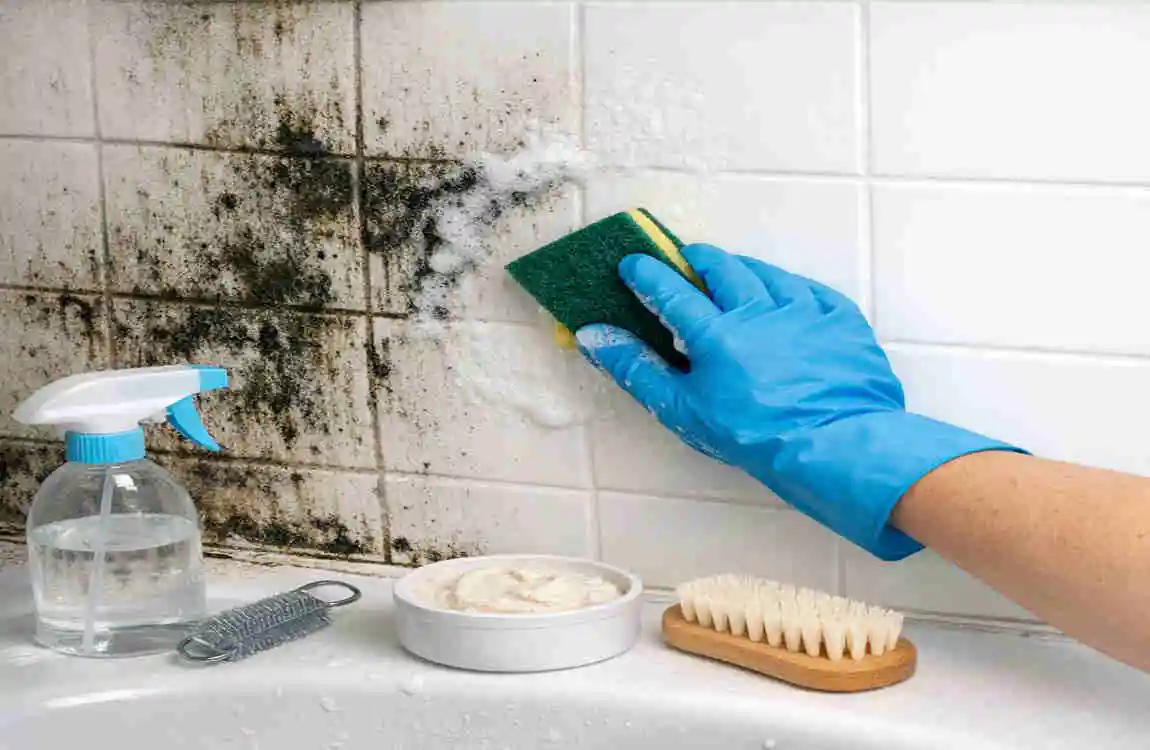
The time needed depends on how bad the mildew is and what kind of wall you have.
Light Surface Mildew
Small spots can often be cleaned in a short DIY session. If the area is easy to reach and the wall is in good shape, the job may not take long.
Heavier or Recurring Mildew
If the mildew has built up over time, you may need more than one cleaning round. Some areas may need extra drying time too.
Hidden Moisture Problems
If there is a leak or trapped moisture inside the wall, cleaning will not be enough until the source is repaired. That can make the full process take much longer.
Drying time also depends on the wall material and how well the bathroom is ventilated. A well-aired room will dry faster than one with still, humid air.
How to Keep Bathroom Walls Mildew-Free
A simple routine can help you stay ahead of the problem.
- Run the exhaust fan during showers
- Keep it running afterward
- Open a window or door when possible
- Dry wet walls and surfaces
- Wash towels and bath mats often
- Check for leaks regularly
- Watch corners and ceiling edges for early spots
- Keep humidity under control
If you do these things consistently, the bathroom will stay cleaner and drier.
You do not need a complicated system. You need a regular habit of drying, airing, and checking the room.
Frequently Asked Questions
How to quickly get mildew off bathroom walls?
Start with a safe cleaning solution, follow the product directions, scrub gently, wipe the wall clean, and dry it completely. Quick cleaning works best on small surface spots.
What is the easiest way to remove mildew from bathroom walls?
The easiest method depends on the wall material and the severity of the mildew. For light surface mildew, a mild household cleaner or approved mildew cleaner often works well.
Why does mildew keep coming back on my bathroom walls?
It usually means the bathroom still has too much humidity, poor ventilation, condensation, or a leak. If you do not fix the source, the mildew will likely return.
Can I remove bathroom mildew myself?
Yes, small surface areas are often safe for DIY cleaning. If the mildew is large, deep, or recurring, professional help may be the better choice.
Should I paint over mildew on bathroom walls?
No. Clean it first and fix the moisture issue before repainting. Painting over mildew hides the problem but does not solve it.
How can I prevent mildew from growing on bathroom walls?
Use the exhaust fan, improve airflow, dry surfaces, fix leaks, and keep humidity under control. Regular maintenance makes a big difference.
Is bathroom mildew a sign of a moisture problem?
Often, yes. Recurring mildew usually points to excess moisture, poor ventilation, or a hidden leak that needs attention.
| Step | What to Do | Quick Tip |
|---|---|---|
| Ventilate | Open windows and run the exhaust fan. | Improve airflow before cleaning. |
| Protect Yourself | Wear gloves and avoid breathing in mold particles. | Keep children and pets away. |
| Clean the Wall | Apply a suitable mildew cleaner and gently scrub the affected area. | Follow the product label directions. |
| Rinse & Dry | Wipe away residue and dry the wall completely. | Moisture encourages mildew to return. |
| Prevent Growth | Use the bathroom fan during and after showers. | Keep humidity under control. |
| Check for Leaks | Inspect pipes, grout, ceilings, and fixtures for water leaks. | Fix moisture problems at the source. |