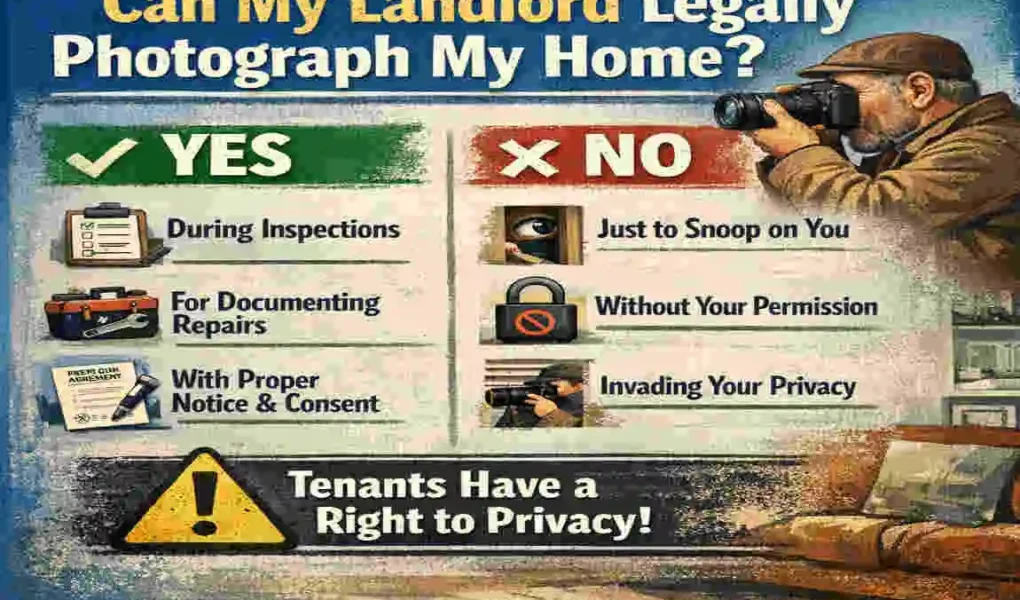
If you have ever wondered, “can my landlord take pictures of my house to sell?”, you are not alone. Many tenants feel uneasy when a landlord asks for photos for a listing, a sale, or a walk-through. It can feel personal because your home is also your private space, even if you rent it.
The short answer is this: sometimes yes, but not without limits. A landlord may have the right to enter a rental unit in certain situations and to photograph the property when selling it. But that does not mean they can ignore your privacy, take pictures of your personal items, or enter whenever they want.
The real answer depends on local tenant laws, the lease, and privacy rules. In many places, landlords must give notice before entering. In some places, you may need to give your consent for certain photos. And even when photography is allowed, it should usually focus on the property itself, not your belongings, private documents, or anything that identifies you.
| Purpose of Photography | Legal Context | Typical Requirement |
|---|---|---|
| Maintenance & Repairs | Generally permitted to document existing damage or completed work . | Notify tenant in advance . |
| Marketing for Sale/Rent | Often considered a privacy breach if personal items are visible . | Explicit written consent required . |
| Routine Inspections | Debated; some regions allow, others prohibit without specific cause . | Prior notice; minimize personal data . |
What the Question Really Means
Photographing the property is not the same as photographing your life
When people ask whether a landlord can take pictures of a house to sell, they are usually asking two different questions at once:
- Can the landlord photograph the rental unit itself?
- Can the landlord photograph my personal belongings inside it?
Those are not the same thing.
A landlord may want photos for several reasons. They might be trying to sell the property, advertise it to buyers, document the home’s condition, or prepare for repairs. In some cases, photos are also used for insurance records or inspections. From the landlord’s perspective, photography may seem like a normal part of property management.
But from the tenant’s perspective, those photos can feel invasive. Your furniture, photos, mail, medicine bottles, computer screens, and private papers may all be visible in a shot, even if the landlord did not mean to capture them.
That is why tenant privacy rights matter so much. A landlord may own the building, but that does not mean they have unlimited access to your private life.
The purpose of the photos matters
The reason behind the photos can change what is allowed.
For example:
- Marketing photos for a sale may be allowed with proper notice.
- Condition photos for a move-out inspection may be allowed if the landlord has the right to enter.
- Repair photos may be allowed when they are needed to document damage.
- Secret photos taken without notice or used in a way that exposes your personal information may cross the line.
So, when you ask, can my landlord take pictures of my house to sell, the best answer is: it depends on where you live, what your lease says, and how the landlord handles your privacy.
Can My Landlord Take Pictures of My House to Sell?
In many places, landlords can take listing photos
In many rental situations, the landlord can take pictures of the property if they are preparing to sell it. This is especially common when the home is being marketed to buyers. Real estate photos often help convey the property’s layout, size, and condition.
However, the right to take photos is usually not unlimited. The landlord generally still has to comply with the rules on lawful entry and tenant privacy. That means they may need to give proper notice before entering. It also means they should avoid taking pictures that expose your private belongings or personal information.
Ownership does not cancel your right to privacy
A common mistake is to assume that if the landlord owns the house, they can do anything they want inside it. That is not true.
Once a tenant is living in a rental home, they usually have a legal right to quiet enjoyment and a reasonable level of privacy. In plain language, that means you should be able to live in your home without unexpected intrusions.
So yes, a landlord may be able to take pictures to sell the property. But they usually cannot treat your occupied home like an empty showroom. The rental is still your home while your lease is active.
A simple real-life example
Imagine your landlord wants to list your apartment for sale. They schedule a photo session and give you advance notice. You tidy up and remove your sensitive mail from the counter. The photographer takes wide shots of the rooms, avoiding your personal documents and family photos. In this case, the photos may be lawful and respectful.
Now imagine a different situation. The landlord enters without warning while you are away, opens drawers, moves your things around, and takes close-up shots of your bedroom, prescription bottles, and private letters. That would likely raise serious privacy concerns.
The difference is not just the camera. The difference is notice, purpose, and respect for your personal space.
When a Landlord May Legally Photograph a Rental Home
Preparing the property for sale
One of the most common lawful reasons for photography is selling the property. If the landlord is listing the home, they may need photos for real estate marketing. Buyers usually want to see the rooms, layout, and condition before they visit in person.
In many areas, that is considered a reasonable business purpose. Still, the landlord should usually:
- Give proper notice before entering
- Photograph only what is needed
- Avoid private items and personal information
- Respect any local limits on entry or photo use
Marketing the home to buyers
If the home is being shown to potential buyers, the landlord may want photos that help the listing look accurate and appealing. This can include pictures of kitchens, living rooms, bathrooms, yards, and exterior features.
But even during marketing, the landlord should not treat your home as vacant if you are still living there. Given that your belongings may be visible, the landlord should take steps to reduce the risk of privacy issues.
Documenting the condition of the unit
Landlords may also take photos before a move-out inspection, after a repair, or to document damage. This can help show the condition of the property and prevent disputes later.
For example, if there was water damage, broken flooring, or a maintenance issue, photos can be useful evidence. In many cases, that kind of photography is lawful if the landlord entered properly and the photos were limited to the issue being documented.
Inspecting or repairing the home
Sometimes a landlord needs to photograph a unit as part of an inspection or repair process. For example, they might need pictures for a contractor, a maintenance record, or an insurance claim. This is often allowed if the landlord follows the entry rules in your area.
The key point: lawful entry comes first
A landlord usually cannot photograph the inside of your home unless they have the legal right to be there in the first place. That is why landlord entry notice matters so much. If the entry is unlawful, the photos may also be problematic.
When Photography May Cross the Line
Personal belongings should not become the subject
The biggest privacy issue is usually not the room itself. It is the personal stuff inside the room.
Photos may cross the line when they show:
- Mail with your name and address
- Prescription bottles or medical items
- Family photos
- School records
- Computer screens or tablets
- Private papers
- Credit card statements
- Jewelry, cash, or valuables
- Identifying details about children or guests
Even if the landlord is allowed to photograph the apartment, they should not capture things that reveal your private life.
Secret photography is a problem
If a landlord takes pictures without proper notice or without a valid reason, that can create legal trouble. A secret entry is often a more serious issue than the photos themselves, as it can amount to an unlawful intrusion.
If your landlord entered without permission and took photos, that could raise concerns about:
- Privacy violations
- Trespass
- Breach of the lease
- Harassment
- Unlawful entry
Reusing photos for a different purpose can be risky
Another issue is how the photos are used later. A landlord may take pictures for maintenance or inspection, but then reuse them in a sales listing or online ad that exposes more than it should.
That can be a problem if the original purpose did not justify public use. In some situations, the way the photos are shared matters just as much as how they were taken.
Quick comparison table
Here is a simple way to think about the difference between normal, questionable, and possibly unlawful photography.
SituationUsually Reasonable?Why It Matters
Wide photos of a living room for a sale listing, with notice Yes Focuses on the property, not private items
Photos of damage after a repair visit Yes Helps document the unit’s condition
Close-up photos of mail, medicine, or personal papers No Captures private information
Entry and photos without notice, while tenant is away Often not allowed Raises entry and privacy concerns
Reusing maintenance photos in public marketing without care Depends May expose tenant details in the wrong context
This table is not a substitute for local law. Still, it shows the basic idea: the more a photo reveals your personal life, the more likely it is to become a problem.
Notice, Consent, and Entry Rules
Advance notice is often required
In many places, a landlord cannot simply walk in and start taking photos. They must give advance notice before entering an occupied rental unit. The exact notice period depends on local law. Still, the idea is the same: tenants should not be surprised by an unexpected visit.
Notice gives you time to:
- Tidy personal items
- Remove sensitive documents
- Decide whether you want to be home
- Ask questions about what areas will be photographed
If your landlord is serious about selling the property, giving notice is one of the most important steps they should take.
Consent may matter in some situations
In some places, the law goes beyond mere notice and requires consent in specific situations. This is especially true when photography could capture private details or when the landlord wants access beyond what the lease normally allows.
Even where consent is not strictly required by law, asking for it is often the respectful choice. A tenant should not feel pressured or rushed into allowing a photo session that makes them uncomfortable.
Lease language can change the situation
Your lease may contain a clause about:
- Inspections
- Repairs
- Showings
- Sale-related visits
- Photography
- Staging
Some leases give the landlord broader access than tenants expect. Others are much more limited.
Still, lease terms do not always override local law. If a lease says one thing but the law says another, the law usually wins. That is why it is important to read both the lease and your local tenant rules.
Notice and entry are not just formalities
Some landlords think notice is just a courtesy. In reality, it is often a legal requirement. Without proper notice, even a routine property visit can turn into a dispute.
So, if you are asking, “Can a landlord take pictures inside my house?” the first question is not just about the camera. It is about whether they were allowed to enter at all.
Tenant Privacy Rights During Photos
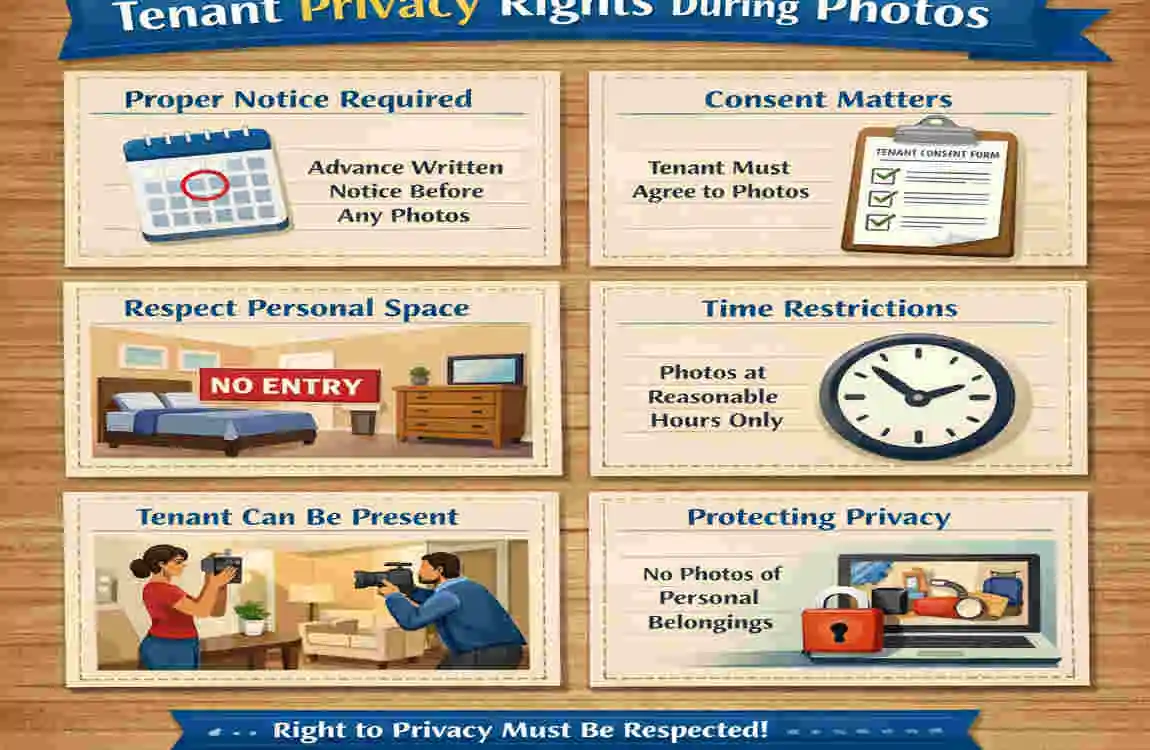
What you can reasonably expect
If your landlord wants to photograph the rental home, you can reasonably expect them to act with care. That means they should try to avoid capturing anything private, embarrassing, or identifying.
You may be able to ask for things like:
- Blurring personal items in the final images
- Moving private belongings out of view before the session
- Scheduling the photos at a time that works for you
- Limiting photography to certain rooms
- Avoiding close-up shots of personal spaces
These requests are often simple and practical. Many landlords will agree if you explain your concerns calmly.
Respectful communication often solves the problem
Most tenant-landlord disputes about photos get worse when people stop communicating. If the landlord wants to sell, and you want privacy, the best approach is often to talk early and clearly.
You can say something like:
“I understand that you need photos for the sale, but I would like personal items, mail, and documents kept out of the pictures. Please let me know when the session will happen so I can prepare.”
That kind of message is polite, direct, and helpful. It also creates a written record if the issue later becomes a dispute.
You do not have to give up all privacy
Some tenants worry they must accept anything because the landlord owns the building. That is not true. A rental home is still your private space during the lease term.
Even when a landlord has legal access, you still have rights. Those rights may not stop every photo, but they can shape how the photos are taken and used.
What to Check in Your Lease Agreement
Look for the key clauses
Your lease is one of the first places you should check. It may mention:
- Entry notice
- Inspections
- Repairs
- Showings to buyers or renters
- Photography permissions
- Staging or cleaning requirements
If the lease talks about these things, it may tell you a lot about what the landlord thinks they can do.
Some leases are broader than tenants realize
Many tenants sign a lease without noticing the fine print. Some agreements allow the landlord to enter for specific purposes with notice. Others go further and permit visits related to sales or marketing.
That does not automatically make every photo acceptable. But it may explain why the landlord believes they have the right to ask.
The lease is important, but not final
A lease cannot always override tenant protection laws. If the lease grants the landlord too much power, local law may limit it. So even if the lease seems broad, it is still smart to compare it with your local rules.
If your lease is unclear, that is often a sign that you should request the landlord’s written confirmation.
What Tenants Can Do If They Feel Uncomfortable
Practical steps you can take
If you are not comfortable with your landlord taking photos, there are several options. Here is a simple step-by-step approach:
- Ask why the photos are needed.
- Find out whether they are for a sale, inspection, repair, or something else.
- Request written notice.
- Ask for the date, time, and reason for the visit in writing.
- Ask what will be photographed.
- Clarify which rooms or areas the landlord wants to capture.
- Request privacy protections.
- Ask that personal items, documents, and family photos be removed from view.
- Be present if allowed.
- If you can be home during the session, you may feel more comfortable.
- Document your concerns.
- Save texts, emails, or letters in case the issue becomes a dispute.
- Report serious violations.
- If the landlord enters without notice or repeatedly ignores your privacy, you may need help from a tenant group or local housing office.
Keep your communication calm and in writing
Written communication is useful because it creates a record. If there is ever a disagreement, it helps show that you tried to cooperate and protect your privacy at the same time.
A calm message often works better than a confrontation. You can be firm without being hostile.
For example:
“I understand you want to photograph the unit for sale. Please avoid pictures that show my mail, documents, medicine, or personal items. I would also appreciate advance notice before entry.”
That kind of note is clear, respectful, and practical.
What If the Landlord Refuses Your Request?
A request is not always the same as a legal right
This is an important point. You can ask for privacy protections, but the landlord may not agree to every request if the law allows them to proceed.
For example, if the lease and local law allow entry with proper notice, the landlord may still be able to take photos even if you would prefer not to have them taken. The question then becomes how the photos are taken, not whether any photography is possible at all.
Try to negotiate a reasonable compromise
If the landlord says no, the best next step is usually to look for a middle ground.
Possible compromises include:
- Taking photos only in certain rooms
- Using wide shots instead of close-ups
- Waiting until you can remove sensitive items
- Scheduling the session when you are available
- Asking for edits that remove personal details
Most landlords do not want a privacy fight if a simple compromise will solve the issue.
When the landlord is being unreasonable
If the landlord refuses to respect basic privacy concerns, especially after proper notice and polite requests, that may be a sign of a bigger problem. In that case, keep records and consider whether the behavior is becoming a pattern.
State and Country Law Differences
There is no one-size-fits-all answer
One of the most important things to understand is that rental property photography rules vary by location. Some places have very clear laws about entry notice, showings, and privacy. Others rely on general landlord-tenant rules, trespass laws, or privacy principles.
That means two tenants in two different places can have very different rights, even if their situations look similar.
Local rules may be stricter than you think
Some places give tenants strong privacy protections. Others allow landlords to enter more freely as long as they give notice. In some areas, the law may say very little about photography itself, leaving the issue handled through broader entry or privacy rules.
If you are unsure, it is worth checking:
- Local housing rules
- Tenant rights standards
- Lease terms
- State or country privacy laws
- Any rules about notice before entry
Why local law matters so much
The question can landlord take pictures without permission can only be answered properly when you know where the property is located. What is legal in one place may be a violation in another.
So if your landlord says, “I can do this because I own the property,” do not assume that is the full story. Local law may say otherwise.
Common Misconceptions About Landlord Photos
Myths that tenants hear all the time
Here are some common misunderstandings:
- “If they own the house, they can photograph anything inside.”
- “If the house is for sale, the landlord can ignore privacy rules.”
- “Photos are always allowed if a landlord gives any kind of notice.”
- “Tenants have no say once the property is being marketed.”
These ideas sound convincing, but they are often wrong or incomplete.
The truth is more balanced
Ownership does matter, but it does not remove tenant rights. A landlord may have a legitimate reason to photograph a rented home. However, they still need to respect entry rules, privacy limits, and the lease.
In other words, lawful access is not the same as unlimited access.
How to Protect Your Privacy Before a Photo Visit
Small steps can make a big difference
If you know your landlord or a photographer will be visiting, you can take a few simple steps to protect your privacy and reduce stress.
- Remove sensitive documents like bills, medical records, and bank statements
- Put away valuables such as jewelry, cash, and small electronics
- Cover or move personal photos if you do not want them visible
- Close laptop screens and tablets
- Stack mail and papers out of sight
- Store prescription bottles securely
- Check mirrors and reflective surfaces that might reveal private items
These are small actions, but they can greatly reduce the chance that private details end up in a photo.
Ask for a quick walkthrough if possible
If you are allowed to be present, ask for a short walkthrough before photos are taken. That gives you a chance to point out items you would like kept out of view.
You can say:
“Before the photos start, can I quickly check that my personal mail and documents are out of frame?”
This is a simple, practical request that many landlords can accommodate.
Keep sensitive concerns in writing
If you are worried about certain images, write down your concern. A simple message is enough. You do not need to be dramatic. You just need to be clear.
That way, if the landlord ignores your concerns, you will have a record of what you asked for and how they responded.
When to Seek Legal Help
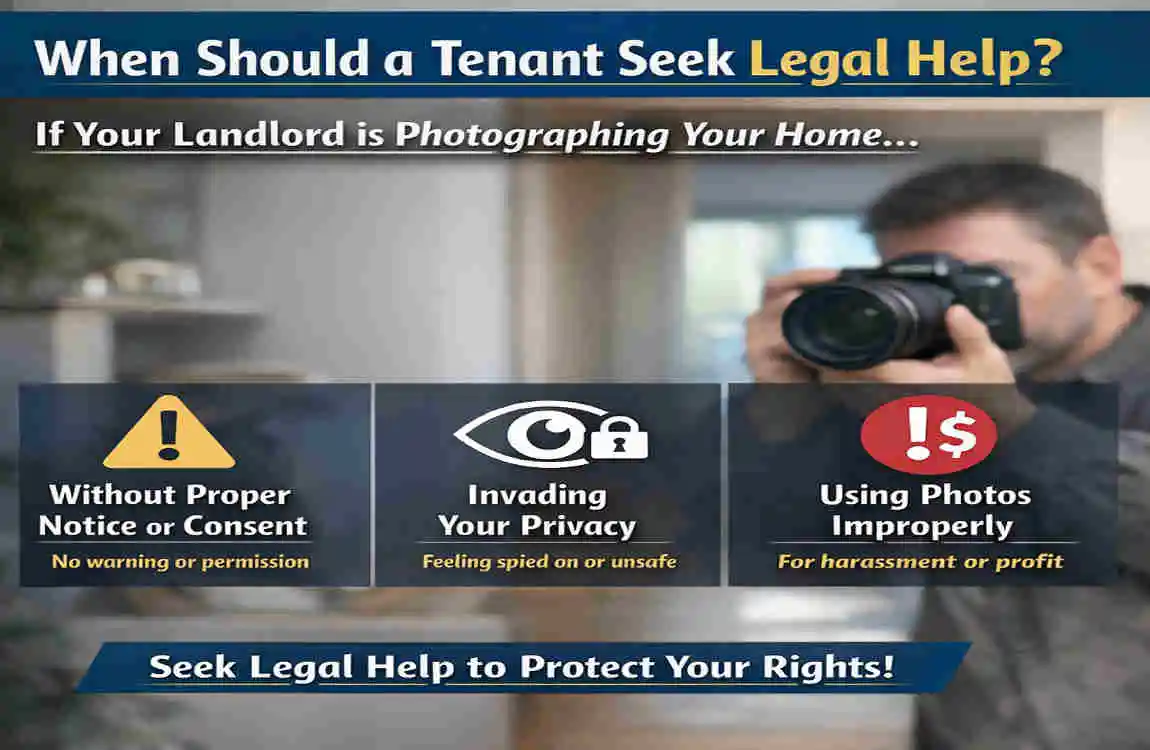
Know the warning signs
Sometimes a photo request is more than just inconvenient. You may want legal help if the landlord:
- Enters without notice
- Repeatedly ignores your privacy concerns
- Takes intrusive photos of your personal belongings
- Posts images that reveal private information
- Uses photos in ways that seem harassing or unfair
- Creates a pattern of unwanted entry or surveillance
Where to turn
If the problem is serious, you can contact:
- A local tenant advocacy group
- A housing agency
- A legal aid office
- A landlord-tenant attorney
Quick action can matter, especially if the property is being sold and the landlord is making repeated visits. The sooner you respond, the easier it may be to protect your privacy.
FAQ
Can my landlord take pictures of my house to sell if I’m still living there?
Often, yes, but usually only if they follow the proper rules. That normally means giving notice, entering legally, and avoiding private items in the photos. Local law and your lease may add more limits.
Can a landlord take pictures inside my rental without permission?
In many places, not freely. They may need notice, lawful entry rights, or consent depending on the situation and local law. Secret photography can create privacy and entry problems.
Can I refuse to let the landlord take photos of my home?
You can certainly ask not to have photos taken, or ask for limits on what gets photographed. Whether you can fully refuse depends on local law, the lease, and the reason for the photos.
Can my landlord post pictures of my personal belongings online?
They should not post photos that expose your private information, especially things like mail, prescription bottles, documents, or other identifying items. If they do, that may be a serious privacy concern.
Do landlords need notice before taking listing photos?
In many places, yes. A notice of entry is often required, and it is usually the fair and expected way to handle a photo session in an occupied rental.
What can I do if my landlord took photos without asking?
Start by documenting what happened. Save messages, take notes, and ask for an explanation in writing. If the situation is serious, consider contacting a tenant advocacy group, housing agency, or attorney.