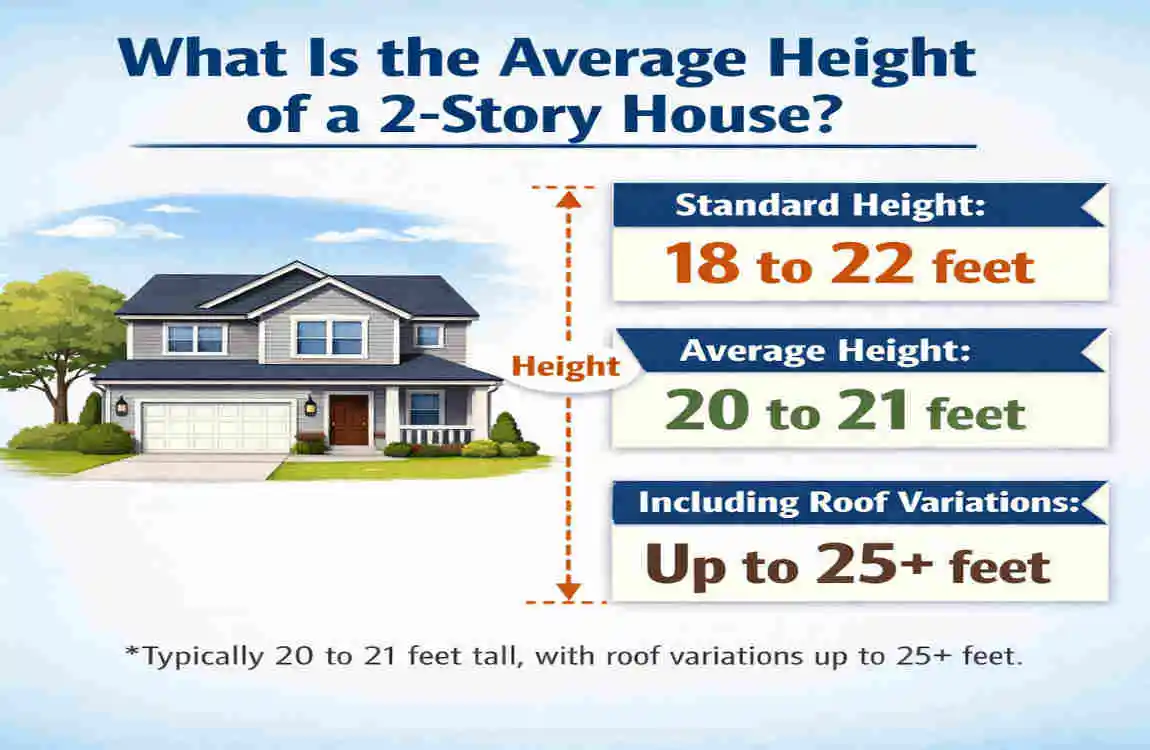
Wondering how high is a 2 story house construction? Most two-story homes land in the 20 to 25 feet range, but the final height depends on ceiling size, roof shape, foundation elevation, and even local building rules. If you are planning a home, this is not just a small detail. It affects your budget, design, permits, and construction timeline.
A two-story home gives you more living space without spreading too far across the land. That is one reason it stays popular in busy cities, suburban neighborhoods, and places where lot size matters. It also gives you more design freedom. You can go for a compact family layout, a modern open-plan style, or even a more traditional house with a pitched roof.
| House Type | Typical Height |
|---|---|
| Standard 2-Story House | 18–25 feet tall |
| With Flat Roof | Around 18–20 feet |
| With Pitched Roof | Around 20–25 feet |
| Luxury 2-Story Home | 25–30 feet |
| Ceiling Height Per Floor | 8–10 feet |
| Roof Height | 4–8 feet additional |
| Common Building Material | Wood, brick, concrete |
| Average Total Stories | 2 floors |
| Height in Meters | Approximately 5.5–7.5 meters |
| Factors Affecting Height | Roof design, ceiling size, foundation, attic space |
But here is the part many people miss: how high a 2-story house is built is not a single fixed number. The answer changes based on how tall you want the rooms, how steep the roof is, whether you include an attic, and how the foundation sits on the site. A house with standard ceilings will feel very different from one with vaulted ceilings or a raised base for flood protection.
How High Is a 2 Story House Construction? Key Dimensions

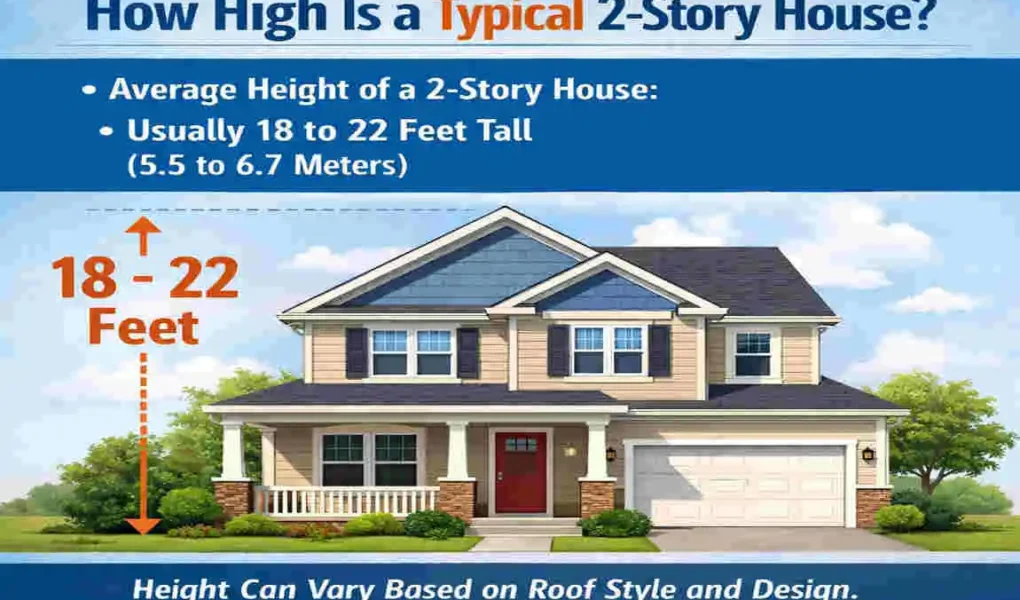
The simplest answer to how tall a 2-story house is: a typical two-story house is usually 20 to 25 feet tall from ground level to the roof peak. In some cases, it can be a little shorter or a little taller. The exact number depends on the house’s structure and the design choices made during planning.
Most two-story homes are built with 8 to 10 feet per floor. That means the first floor may be slightly taller, the second floor may be a little shorter, and the roof adds the final lift to the total height. When you add these parts together, you get the full house height.
Standard 2 Story House Height
A standard two-story home usually follows this pattern:
- First floor: about 9 to 10 feet total, including the ceiling and slab thickness
- Second floor: about 8 to 9 feet
- Roof height: about 3 to 6 feet, depending on the pitch
That is why the final number often falls between 20 and 25 feet. A simple gable roof may stay closer to the lower end of that range. A steeper or more decorative roof can raise the height.
Some homeowners assume that two floors automatically mean a very tall building. In reality, that is not always true. A well-planned two-story home can look balanced and compact while still offering plenty of interior space.
Here is a simple breakdown of the main components:
Height Component Standard Range (ft)Notes
Ground to First Floor Ceiling 8–10 Includes slab thickness
Second Story 8–9 Often slightly shorter for structure
Roof Peak 3–6 Changes with roof style
Total Height 20–25 Excludes chimney
This table gives you a useful starting point, but it is not the full story. If your home includes a raised foundation, attic space, or special roof features, the number will change.
A very practical point to remember is this: how high a 2-story house is built also matters for visual balance. A home can be tall enough to feel elegant, but not so tall that it feels oversized for the plot. That balance is often what makes a design look polished.
Height Variations by Region and Style
Two-story house height is not the same everywhere. It varies by region, climate, local rules, and design preferences.
- Modern homes may use flatter rooflines and cleaner proportions
- Traditional homes may use steeper roofs and more vertical emphasis
- Homes with attics often rise higher than standard two-story houses
- Raised houses in flood-prone areas may sit higher above the ground
In some regions, roof shapes are more decorative. In others, builders prefer a simple and practical form. That choice affects the final result.
Climate also plays a role. In hotter areas, taller ceilings can improve airflow and comfort. In colder places, builders may use different roof shapes to support insulation and snow runoff. The design you choose should match both the environment and your budget.
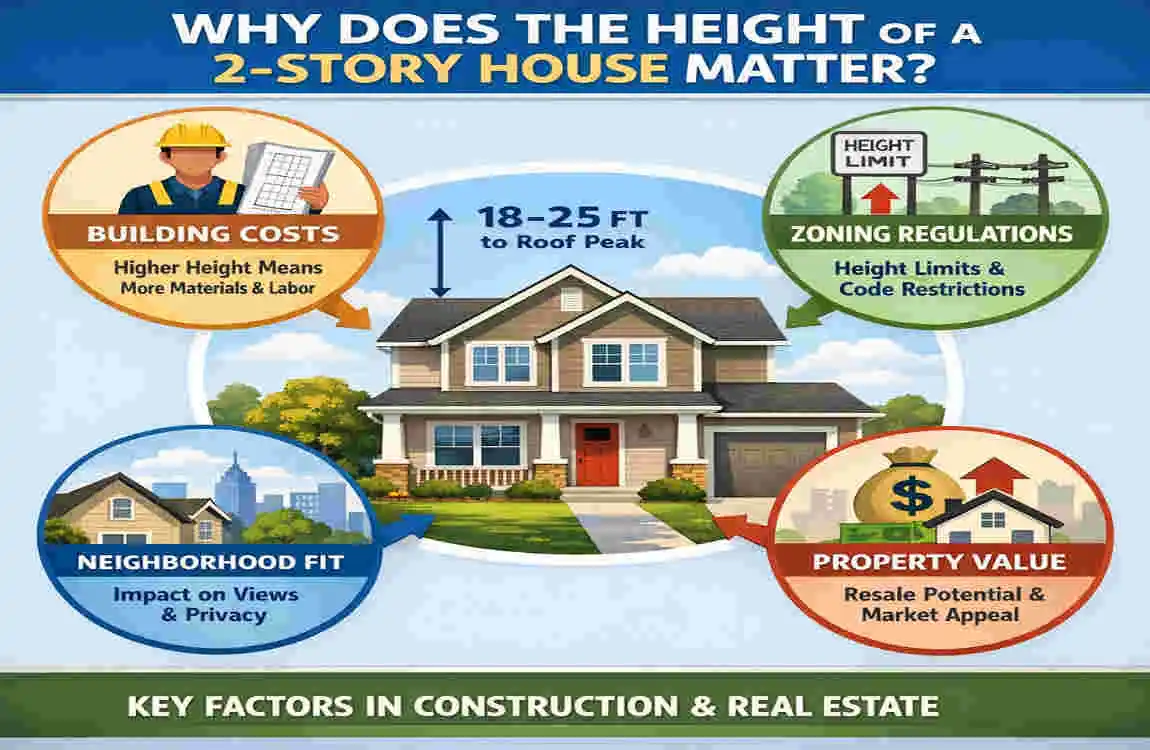
Local zoning rules also matter. Some areas limit the height of houses. That means you may need to adjust ceiling heights, roof pitch, or foundation size to stay within the allowed limit.
So, when you ask how much construction costs for a 2-story house, the honest answer is: it depends on the design, region, and building code. The average still sits around 20 to 25 feet, but smart planning keeps the final height practical and legal.
If you want more help planning the layout, this is also the right time to think about your room sizes, staircase position, and roof style. These details work together, not separately.
Complete Step-by-Step Guide to 2 Story House Construction

Building a two-story house is not just about stacking one floor on top of another. It is a carefully planned process. Each stage affects the next one. If the foundation is not right, the framing will suffer. If the framing is off, the roof and interiors will become harder to complete.
A typical two-story house build can take 6 to 12 months, depending on the size of the house, labor availability, weather, and permit approvals. Some modular builds can move faster. Custom homes often take longer.
This is where the project begins. It may not look exciting, but it is one of the most important stages.
During planning, the builder and homeowner define:
- the house size
- the room layout
- the roof style
- the ceiling height
- the total building height
- the budget
- the timeline
A site survey usually comes first. This helps the team understand the site’s slope, soil conditions, drainage, and access. Then the blueprint is prepared.
At this stage, the cost of a 2-story house matters because the design must comply with zoning and height limits. Some areas have a maximum height limit, so the house may need to remain below it.
Permit work can take time. It may involve approval from the local authority, review of structural drawings, and checks for height compliance. Depending on the location and complexity, this can cost between $5,000 and $15,000 in planning and permit-related expenses.
This is also the best time to think about future use. Will you need a home office? Will the top floor need extra privacy? Do you want larger windows or a balcony? These questions matter now because changing them later costs more.
Foundation and Framing
Once permits are approved, construction moves into the physical build.
The foundation supports everything above it. In many homes, the base may rise around 1 to 2 feet, though some projects require more. In flood-prone areas or sloped lots, the foundation can be higher.
This stage is very important for the height of a 2-story house, as the foundation contributes to the total vertical height. Even a small raise can change the final number.
After the foundation cures, the framing begins. This is the stage where the shape of the house becomes visible. The frame must match the planned story heights exactly. Builders measure carefully so the first-floor, second-floor, and roof lines stay aligned.
Framing is usually made from wood or steel, depending on the project and local practice. The framing crew sets the wall height, floor joists, staircase opening, and roof support system.
At this point, the house starts to feel real. You can stand on the site and finally get a sense of the building’s size. You will also see why ceiling height decisions matter so much. A few inches here and there can change the feel of the whole home.
Exterior and Roofing
Once the frame is up, the exterior shell begins to take shape.
Exterior wall work brings the building close to its eave height, often around 16 to 20 feet before the roof peak is added. Then roof trusses or roof framing are installed.
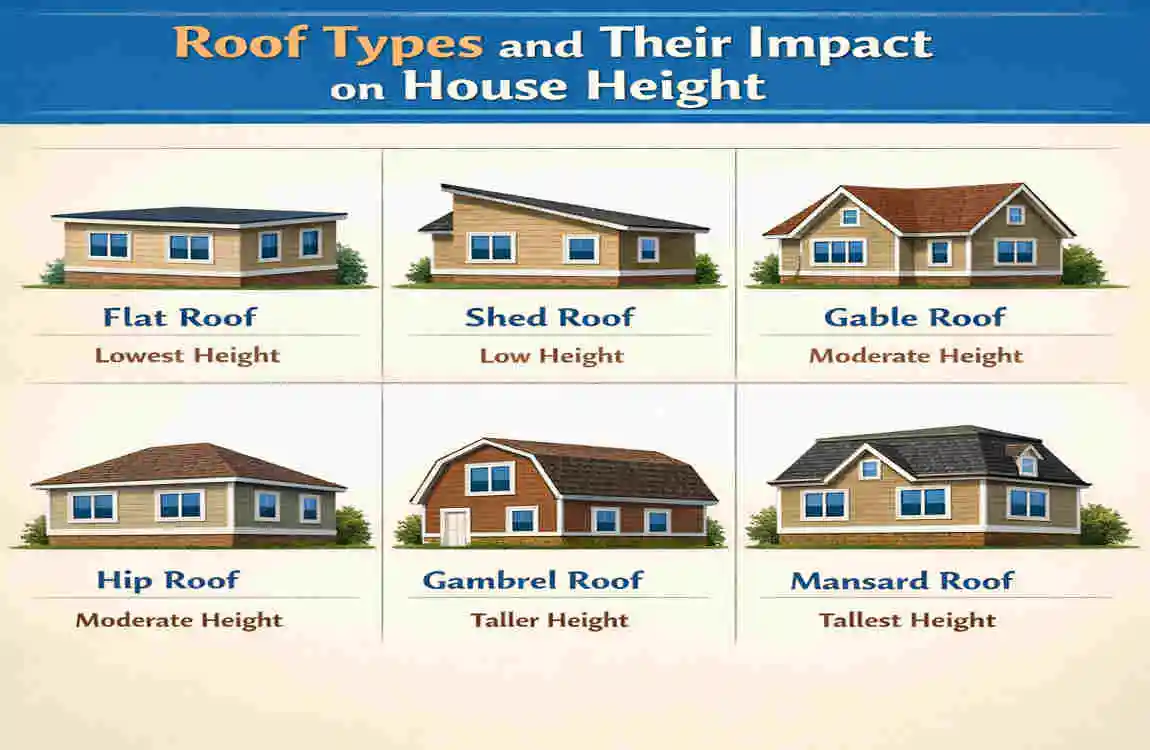
Roofing directly affects the height of a 2-story house. A steep roof adds more height. A flatter roof keeps the overall structure lower. The roof design is not just about looks. It also affects drainage, heat performance, and attic space.
This stage usually includes:
- wall sheathing
- house wrap or weather barrier
- window and door openings
- roof trusses
- underlayment
- roof covering
A taller roof may need more scaffolding and safety support. That increases labor and equipment costs. It also takes more time.
If you want a more dramatic exterior, this is where design choices start to show. A gable roof gives a classic appearance. A hip roof looks more compact and sturdy. A mixed roof adds interest but may also introduce complexity.
At this stage, the house is finally protected from weather, which means interior work can begin soon.
Interior, Plumbing, Electrical
The exterior shell is now in place, and the project moves inside.
This is one of the most technical stages of a build because it includes the systems that make the home usable. Plumbing lines, drainage pipes, wires, switches, outlets, HVAC ducts, and insulation all come together here.
For a two-story house, vertical movement matters a lot. Water lines, drainage pipes, and electrical runs need to move between floors cleanly and safely. That is why the layout should be planned early.
If you are curious about the utility side of the project, this is a good time to review our guides on plumbing in multi-story homes and electrical wiring for 2-story houses. These systems are much easier to plan before the walls are closed up.
Climate also matters. In a hot place, the upper floor may need extra cooling. In a cooler region, insulation and air sealing become more important. Both choices affect how comfortable the home feels in the long run.
This stage also includes:
- insulation
- drywall
- interior piping
- electrical rough-in
- staircase finishing
- ventilation planning
The building’s height affects the amount of material and labor the team needs. Taller ceilings, longer vertical pipe runs, and larger stairwells can all add to the work.
Finishing and Inspection
This is the final stage, when the house begins to look complete.
The walls are painted. Floors are installed. Cabinets go in. Lights are fitted. Bathrooms are finished. The kitchen takes shape. Trim and hardware add the final detail.
Before the handover, the home undergoes an inspection. The team checks whether the structure meets code, whether the systems work properly, and whether the actual construction matches the approved plans.
This is also the moment when builders verify the final height. That matters because the finished roofline, foundation rise, and external features must stay within local rules.
If there is any issue, it is usually easier to solve it here than later.
A polished finish does more than improve appearance. It helps the house function properly and protects your long-term investment.
Phase Duration Key Height Focus
Foundation 4–6 weeks Base elevation
Framing 6–8 weeks Story alignment
Roofing 2–4 weeks Peak height
The best two-story projects treat height as a home design choice, not just a technical detail. When every stage supports the next, the home looks better, works better, and feels more comfortable.
CTA: If you want help planning the right height, layout, and roof style for your own project, contact us for custom 2-story plans.
2 Story House Construction Costs in 2026

Now let us talk about money, because height and cost are closely connected.
In 2026, a two-story house typically costs between $200 and $400 per square foot, depending on design quality, materials, the labor market, and location. For a 2,000-square-foot home, that can mean a total project range of roughly $400,000 to $800,000.
That is a wide range, and there is a reason for that. A simple structure costs less than a custom one. A standard roof costs less than a steep or complex roof. A house with tall ceilings costs more than one with modest heights.
So when you ask how much a 2-story house construction costs, you are also asking how expensive it is to build and finish.
What Drives the Budget
Several things push the cost up or down.
Foundation and Site Work
If the land is flat and easy to prepare, foundation work stays simpler. If the site needs grading, drainage adjustments, or a raised base, the cost goes up.
Framing and Structure
Taller walls need more material. A two-story structure also requires more robust load planning than a single-story home. The framing must safely carry the upper floor and roof.
Roof Design
A steeper roof or a custom roof shape usually costs more. It may require extra trusses, more labor, and more safety support. A simple roof can save money.
Interior Finish Level
Luxury finishes, imported fixtures, custom stairs, and premium flooring can quickly raise the total cost. Basic finishes help keep the budget under control.
Height-Related Labor
When the structure is taller, workers may need more scaffolding, ladders, and safety gear. That adds time and expense. Height can increase construction effort by 5% to 15% in some cases.
Local Labor and Material Costs
Cost Breakdown Table
Cost Category Per Sq Ft Total for 2000 Sq Ft Height-Related Notes
Foundation $10–20 $20K–40K May rise in flood zones
Framing/Materials $30–50 $60K–100K More wall height means more material
Roofing $5–10 $10K–20K Steeper pitch can cost more
Interior Systems $40–80 $80K–160K Plumbing and wiring run between floors
Finishes $60–140 $120K–280K Strongly depends on design level
Total $200–400 $400K–800K Taller ceilings may add 5% or more
This table shows why budgeting is so important before you begin. A small change in height can ripple through the entire build.
Labor often costs less, but that does not mean the project is cheap. Good construction still needs proper planning, quality materials, and skilled supervision. Imported fittings, premium finishes, and structural steel can still drive costs higher.
Inflation is another thing to watch. Even if your plan starts in one season, material costs may change before the build is finished. That is why many homeowners add a buffer to the budget.
A smart rule is to set aside a contingency fund of around 10% to 15%. This helps cover surprises like small design changes, price increases, or site-related issues.
If you are planning a budget-sensitive build, keep your roof simple, your ceiling heights practical, and your finish choices focused. Those decisions can save a surprising amount.
2026 Design Innovations for 2 Story Houses

The way we build two-story homes is changing. In 2026, homeowners want more comfort, more efficiency, and more flexibility. That has pushed builders to rethink height, layout, and materials.
The good news is that modern design is not only about style. It is also about making homes easier to build, easier to live in, and better suited for future needs.
Sustainable Heights
One of the biggest trends is the move toward sustainable construction. Builders are using smarter materials, better insulation, and prefabricated systems to reduce waste and speed up assembly.
Modular and prefabricated homes are becoming more common. These homes can be built in controlled settings and assembled on-site. That often reduces delays and improves quality control.
In some designs, the height can be adjusted within a range, such as 22 to 28 feet, depending on the model and roof shape. This gives homeowners more control over the final look and performance.
Solar-ready roofs are also part of this shift. A roof designed to support solar panels can affect the overall slope and height of the roof. The benefit is long-term energy savings and a cleaner building profile.
Sustainability is no longer a niche idea. It is becoming a normal part of home planning.
Smart Height Optimization
A modern two-story home does not have to feel small or cramped. Even if the actual height stays within standard limits, the interior can feel bigger and brighter with the right choices.
Here are a few popular techniques:
- Vaulted ceilings to create a more open feeling
- Tall windows to bring in more light
- Open risers on stairs for a lighter visual effect
- Smarter room proportions to reduce wasted space
- Glass railings to make the upper floor feel less heavy
These design moves do not always increase the physical height a lot, but they make the house feel taller and more spacious.
This is where the question of how high a 2-story house is constructed becomes more interesting. The physical height may be 22 feet, but the feeling inside may be much larger if the layout is smart.
That is why designers pay close attention to ceiling lines, stair placement, window placement, and sight lines. The goal is not just to build a box. The goal is to create a home that feels open, bright, and comfortable.
Zoning and Future-Proofing
Zoning rules remain a major part of design, but in 2026 many homeowners are also thinking ahead.
A future-proof home can handle changes in family size, work habits, and energy needs. That may include:
- extra storage
- a home office
- flexible guest rooms
- EV-ready garages
- better roof drainage
- space for solar upgrades
Some designs also use green roofs or roof layers that add depth and environmental value. These features may add 1 to 2 feet to certain roof profiles, depending on the system.
The best modern houses are those that balance style with practicality. You want a house that looks fresh now, but also still makes sense ten or fifteen years later.
If you are deciding between style options, ask yourself a simple question: will this design still serve my family if my needs change? If the answer is yes, you are likely making a good long-term choice.
Modular 2 Story Homes
Modular housing deserves special attention because it can reduce build time and improve consistency.
A modular two-story house is often made from prebuilt sections. These sections are transported to the site and assembled there. Because much of the work is done in a controlled environment, there is less exposure to weather-related delays.
This approach can be especially useful if you want a faster schedule without giving up a modern look. It may also help control height more precisely because the modules are built to exact dimensions.
For people who care about speed, predictability, and cost management, this is one of the most promising directions in residential construction.
A Quick Design Checklist
Before choosing a design, ask yourself:
- Do I want a compact profile or a more dramatic height?
- Will tall ceilings improve comfort in my climate?
- Does the roof style fit my budget?
- Will the design stay within zoning limits?
- Can the home support future upgrades, such as solar or smart systems?
If you can answer those questions clearly, your project will be much easier to manage.
Useful Planning Tips Before You Build

Planning a two-story house is easier when you think about the full experience, not just the outside shape. A beautiful home still needs practical systems, good circulation, and simple maintenance.
A few things deserve special attention.
Think About Water and Drainage Early
Water movement becomes more important in a multi-story home. Bathrooms, kitchens, and laundry spaces are often stacked to keep plumbing efficient. That is why our plumbing guide for multi-story homes can help you avoid costly changes later.
Plan Wiring With the Layout
Electrical planning should happen before the walls are closed. Switch placement, outlet counts, lighting zones, and internet cabling all matter. A two-story house has more vertical routing, so the wiring plan needs to be clean and logical.
Choose the Right Flooring for Both Floors
Flooring affects comfort, sound, and long-term maintenance. Some materials work better on upper floors because they reduce noise or feel lighter underfoot. If you are deciding between tile, wood, laminate, or vinyl, our post on flooring options for two-story builds can help.
Keep Maintenance in Mind
A taller house may require more attention to gutters, exterior painting, and roof access. That does not mean it is a bad choice. It just means you should think like a long-term owner, not only like a first-time builder.
The more clearly you plan now, the smoother the build will feel later.
FAQs: How High Is a 2 Story House Construction?
| Question | Answer |
|---|---|
| How high is a typical 2-story house? | Most 2-story houses are around 18–25 feet tall. |
| How tall is each floor in a 2-story house? | Each floor is usually 8–10 feet high. |
| Does roof style affect house height? | Yes, pitched roofs make houses taller than flat roofs. |
| What is the height of a 2-story house in meters? | Typically about 5.5–7.5 meters tall. |
| Are luxury 2-story homes taller? | Yes, luxury homes can exceed 25–30 feet. |
| Do building codes limit house height? | Yes, local zoning and building rules may set maximum heights. |
| How tall is a 2-story house with an attic? | It can reach 25–35 feet depending on attic size and roof shape. |
| Can ceiling height change total house height? | Yes, higher ceilings increase overall construction height. |