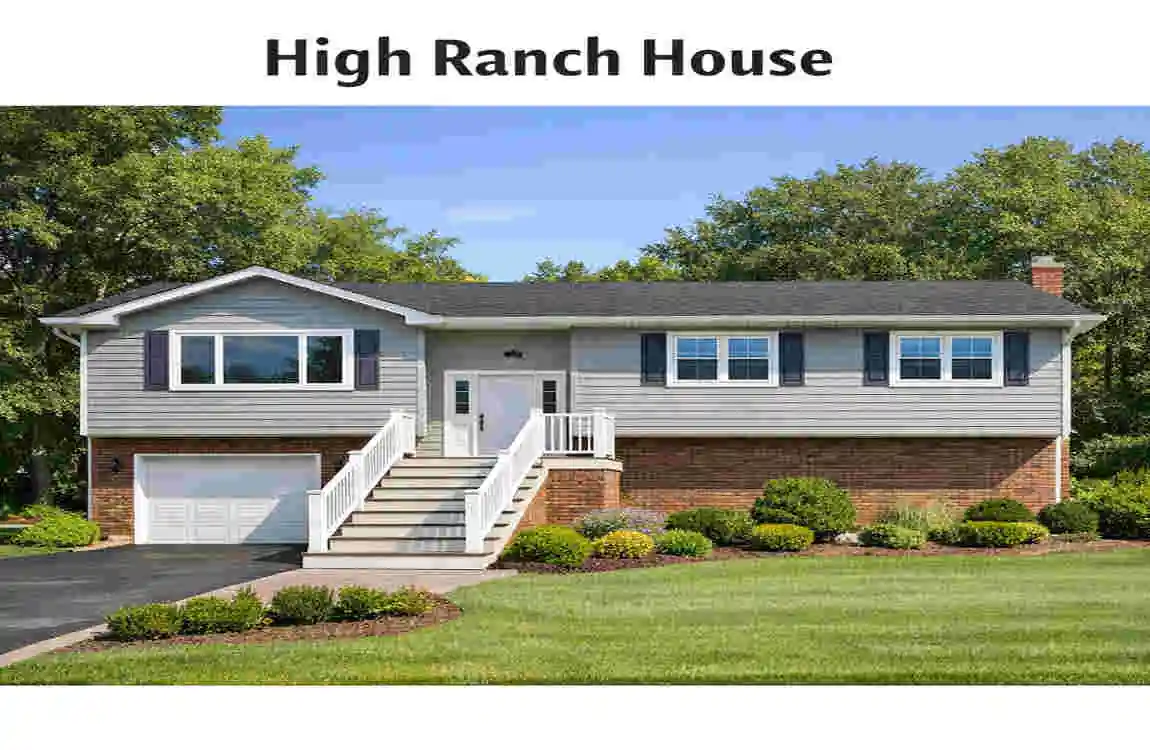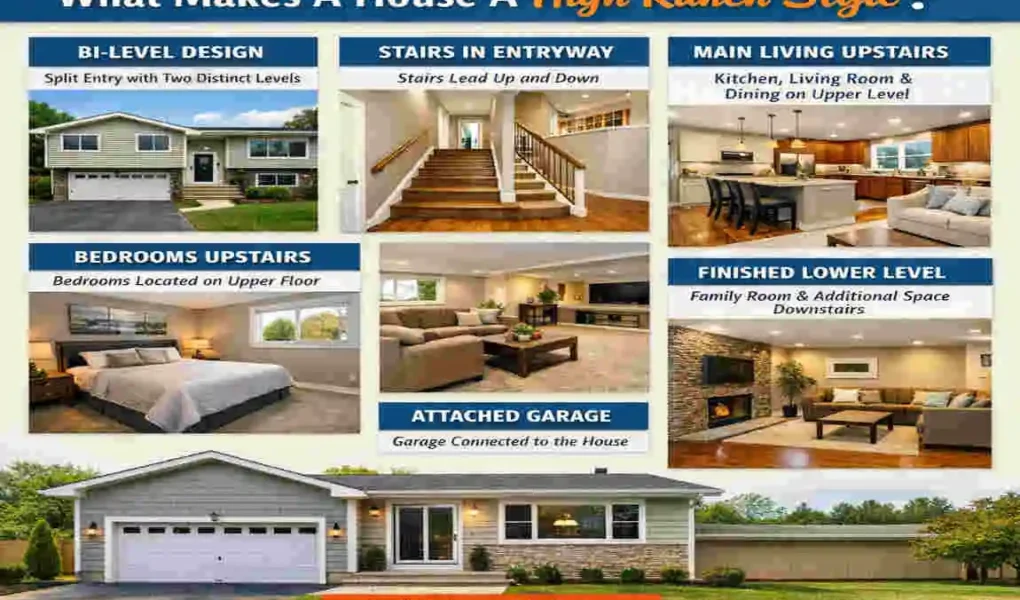
If you have ever wondered what is a high ranch house, you are not alone. This home style has stayed popular for decades because it offers a practical layout, a comfortable flow, and a design that works well for many families. It also gives homeowners a good mix of privacy, space, and flexibility.
| Aspect | Explanation |
|---|---|
| Basic definition | A high ranch (also called raised ranch, bi-level, or split-entry) is a ranch-style home with two levels instead of one. |
| Entry layout | Front door opens to a small landing between floors, with a short staircase going up and another going down. |
| Upper/main level | Contains main living spaces: living room, dining area, kitchen, most bedrooms, and full bath(s). |
| Lower level | Partially or fully above ground; often finished with a family room, extra bedroom, bathroom, laundry, and access to garage or backyard. |
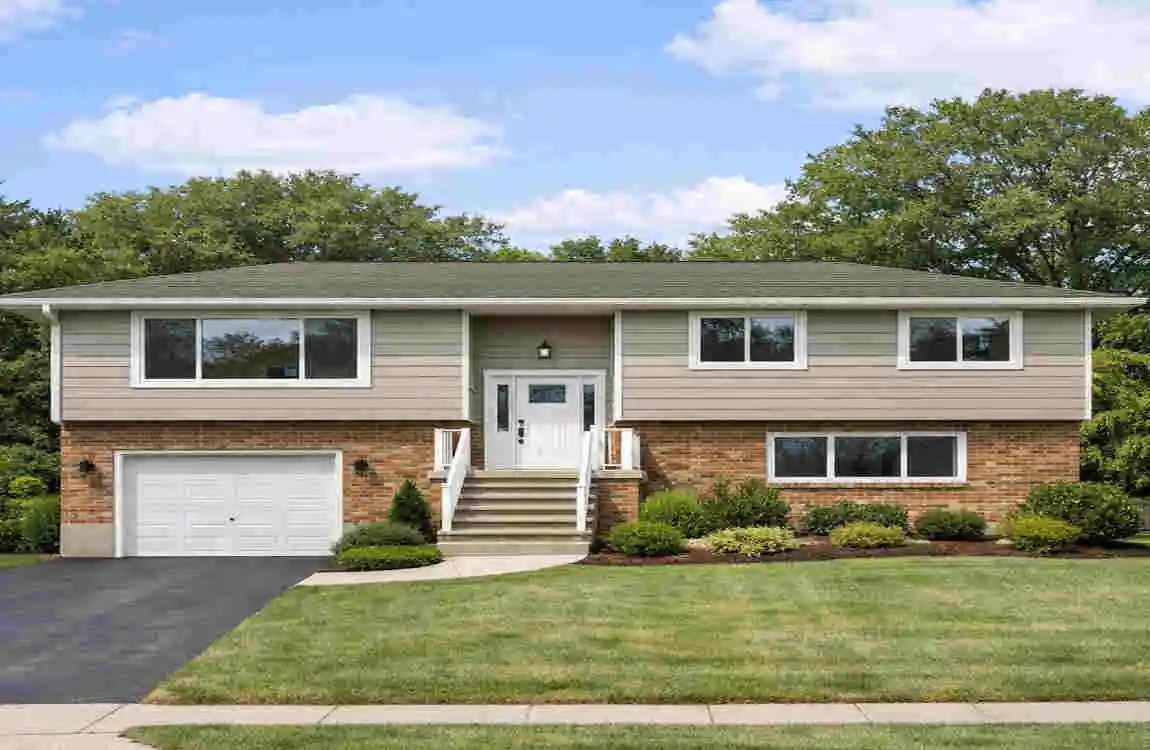
| Exterior look | Low-pitched roof, simple rectangular shape, attached garage, and large windows; looks like a two-story but with the entry halfway between levels. |
A high ranch house is often seen as a smart choice for people who want a home that feels simple on the outside but useful on the inside. Many buyers like it because the layout makes everyday life easier. You usually get a raised main floor, a lower level with extra space, and a split-entry design that helps separate living areas.
What Is a High Ranch House?

Definition of a High Ranch House
A high ranch house is a two-level home with a raised main floor and a lower level that sits partly below ground. The entrance usually opens to a short staircase going up to the main living area and another staircase going down to the lower level.
This style is often called a split-entry home because the front door opens into a small landing, and then the stairs split in two directions. The upper floor usually houses the main living spaces, while the lower floor provides extra rooms or utility space.
Origin and History
High ranch homes became popular during the 1950s through the 1970s, especially as suburbs expanded across North America. Builders liked the design because it was simple, affordable, and quick to construct.
The style grew from ranch homes and split-level homes. It kept the practical feel of a ranch house but added a raised structure that improved land use and space. That is one reason the style still shows up in many older neighborhoods today.
Why It’s Called a “High Ranch”
The name comes from the fact that the main living floor sits higher than a standard ranch house. Instead of being built close to the ground, the living area is elevated.
This layout also creates a useful lower level. That space can hold a garage, a family room, a bedroom, a laundry area, or storage. So the “high” in high ranch house refers to the raised main floor, while “ranch” points to the long, practical home design.
Key Features of a High Ranch House
Split-Level Entryway
One of the first things you notice is the entryway. The front door usually opens onto a landing with stairs going up and down.
This layout helps divide the home into zones. It gives the house a clear structure and makes it easier to separate quiet spaces from busy ones.
Raised Main Living Area
The main floor usually includes the living room, kitchen, dining room, and bedrooms. Because this floor is raised, it often feels more private and a little more removed from street level.
Many homeowners like this because it can make the home feel safer and more peaceful. It also helps improve the view from inside the house.
Lower-Level Living Space
The lower floor is one of the biggest strengths of a high ranch house. It can be used in many ways, such as a family room, guest space, home office, or playroom.
In some homes, the lower level also includes a bathroom, laundry area, or access to the garage. This makes the house more flexible for changing family needs.
Attached Garage
Many high ranch homes include an attached garage built under or beside the main floor. This is a major convenience, especially in cold or rainy weather.
It also creates extra storage space. For many buyers, this practical feature adds real value.
Large Windows and Natural Light
Even though the lower level sits partly below ground, high ranch homes often use large windows to bring in more light. This helps the interior feel open and bright.
Good window placement can make a big difference in how the home feels. It can reduce the dark, closed-in feeling that some split-entry homes may have.
Rectangular Exterior Shape
A typical high ranch house has a simple, boxy shape, a rectangular outline, and a straightforward roofline. This makes the house easier and often more affordable to build.
It may not be the most dramatic style, but it is efficient and practical. That is part of its long-lasting appeal.
Difference Between a High Ranch and a Raised Ranch
Are They the Same?
In many places, people use the terms “high ranch” and “raised ranch” to mean the same thing. Still, local real estate terms can vary.
Some agents and homeowners use one phrase more often than the other, even when the home layout is very similar. So the meaning often depends on the region.
Structural Similarities
Both styles usually have:
- A split-entry design
- A raised main living floor
- A lower level that adds usable space
Because of these shared features, the two styles are often grouped.
Minor Design Differences
Sometimes a raised ranch has a more open lower level or a different basement proportion. A high ranch may feel slightly taller or more elevated from the street.
These differences are usually small. In real estate, the terms are often used interchangeably.
Which Style Is More Popular?
Popularity depends on the local market. In some regions, buyers search for raised ranch house more often. In others, the term “high ranch home layout” is the one they know best.
What matters most is how the home fits the buyer’s needs. A good layout, useful basement space, and solid structure often matter more than the label.
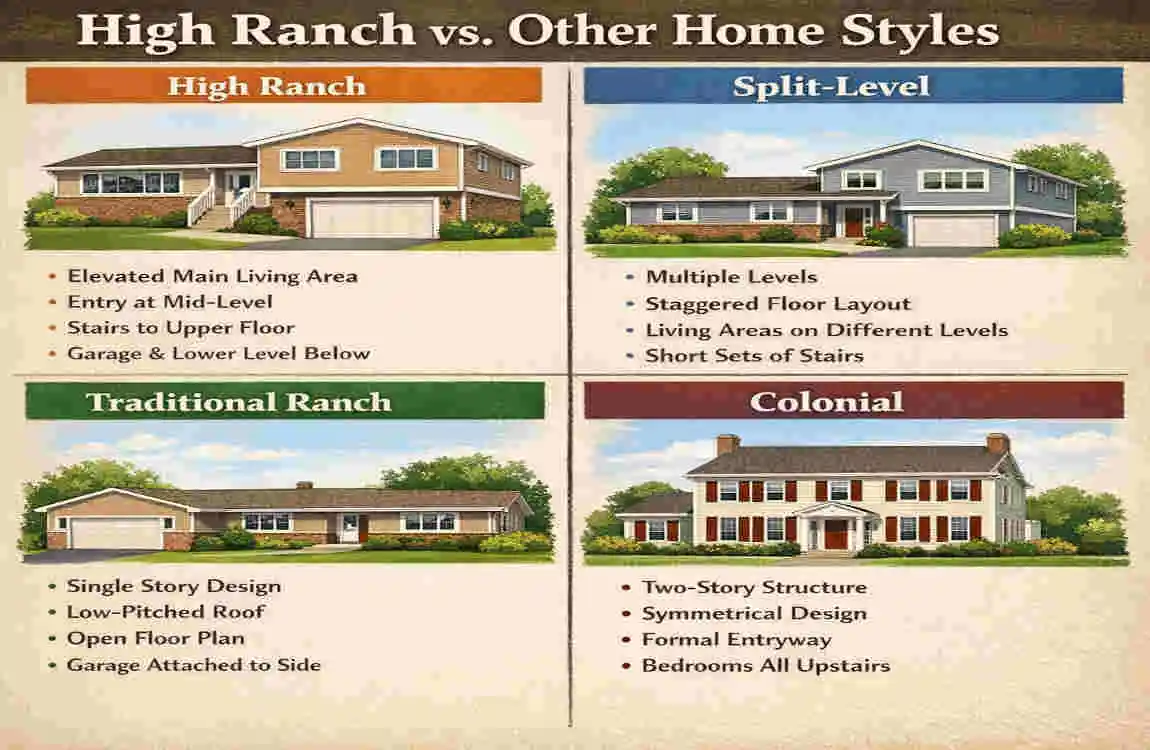
High Ranch House vs Split-Level House
Main Layout Differences
A high ranch house usually has two main levels. A split-level house often features multiple staggered levels, creating a more layered floor plan.
That means a split-level home may feel more divided, while a high ranch usually feels a little simpler and easier to follow.
Stair Placement Comparison
In a high ranch, the stairs usually meet at the front entry landing and go up or down from there. In a split-level home, stairs may be placed in different parts of the house and lead to several separate sections.
This affects how people move through the home every day. Some buyers prefer the cleaner structure of a high ranch.
Living Space Arrangement
High-ranch homes tend to keep the main living areas on one floor. Split-level homes often spread rooms across different levels, creating greater separation.
That separation can be useful for privacy, but it can also make the layout feel less open.
Pros and Cons of Each Style
A high ranch can be easier to heat, maintain, and organize. A split-level may offer more visual variety and a more distinct room arrangement.
Here is a quick comparison:
Feature High Ranch House Split-Level House
Floors Two main levels Multiple staggered levels
Entry Style Split-entry Multi-level entry
Garage Placement Under main floor Side/bottom
Layout Simple More segmented
Popular Era 1960s–1970s 1950s–1980s
Advantages of a High Ranch House
More Usable Living Space
A high ranch makes good use of square footage. It gives you a lower level that can serve many different purposes without needing a much larger footprint.
That means you can get more function from the same amount of land.
Ideal for Growing Families
Families often like this style because it creates a natural split between active spaces and private spaces. The main floor can accommodate the shared rooms, while the lower level can serve as a playroom or media room.
This helps reduce clutter and gives everyone more room to spread out.
Flexible Basement Options
The lower level can become a home office, gym, hobby room, guest suite, or rental space. That flexibility is a major reason buyers still like this style.
If your needs change later, the house can often change with you.
Better Privacy
Since the bedrooms and main rooms sit above the street, the home often feels more private. You are not looking directly into the main living space from outside.
For many homeowners, that creates a more comfortable feel.
Affordable Construction Costs
High ranch homes are usually simpler to build than more complex styles. Their rooflines and structure are straightforward, which can help keep costs lower.
This also makes repairs and upgrades easier in many cases.
Energy Efficiency Potential
Because the design is compact, heating and cooling can be efficient when the home is well insulated. If the windows and basement are updated, the home can perform well over time.
Disadvantages of a High Ranch House
Stairs Can Be Inconvenient
The split-entry layout means you must use stairs every time you enter the home. That can be difficult for older adults, small children, or anyone with mobility issues.
This is one of the biggest concerns buyers have.
Lower-Level Lighting Issues
The lower level can sometimes feel darker if the windows are small. Without good lighting and good window placement, the space may feel less inviting.
That is why many homeowners choose to improve basement windows during renovation.
Limited Open-Concept Design
Older high ranch houses were not always built with open layouts. Some rooms may feel separated or closed off.
If you want a very modern open-plan feel, you may need to remodel.
Exterior Appearance Criticism
Some people do not love the boxy look of a high ranch home. The front can feel plain compared to more decorative styles.
Still, simple upgrades can significantly improve curb appeal.
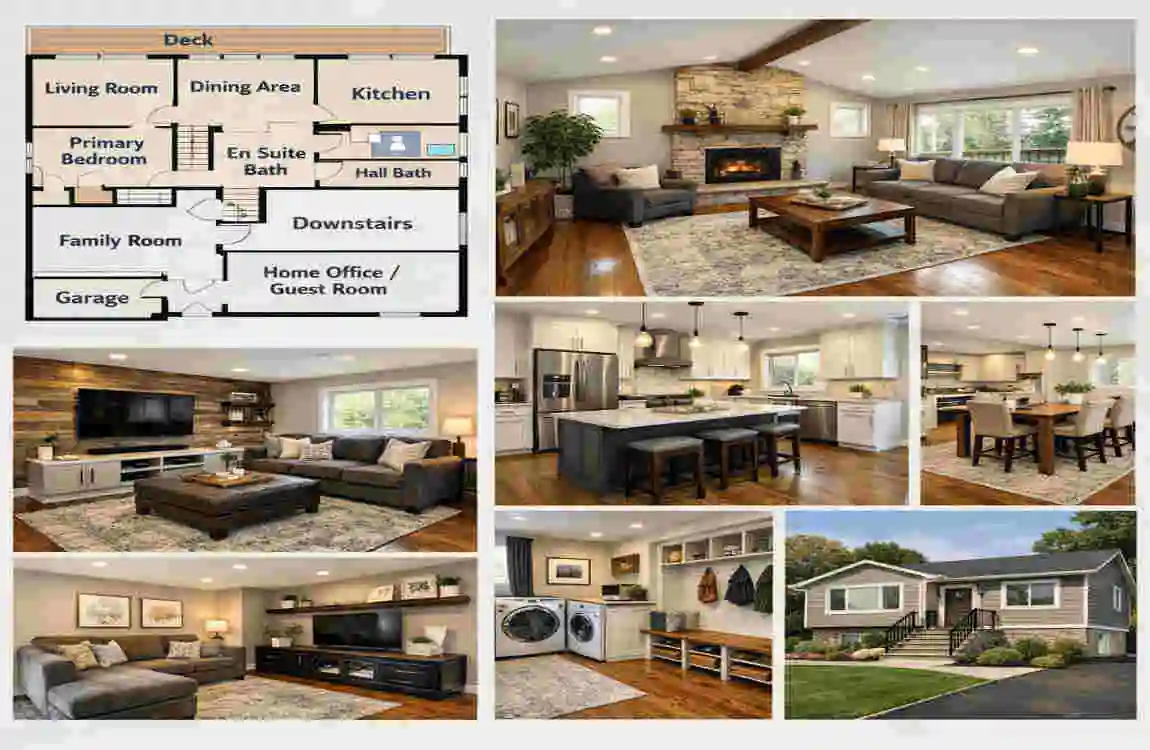
Typical Floor Plan of a High Ranch House

Upper Floor Layout
The upper level usually includes the living room, kitchen, dining room, bedrooms, and a bathroom or two. This is the main family zone.
Because it sits above ground level, it often gets better light and a more open feel.
Lower Floor Layout
The lower level commonly includes a recreation room, laundry area, storage, garage access, or an extra bedroom. Some homes also add a bathroom or office here.
This level provides the house with more flexibility without altering the overall footprint.
Common Square Footage
High-ranch homes vary in size, but many fall within a moderate range that works well for small to medium families. The layout is often compact but efficient.
That is one reason they remain practical in many neighborhoods.
Popular Renovation Ideas
Many owners update high-ranch homes by opening the kitchen, finishing the basement, or adding larger windows. These changes can make the house feel brighter and more modern.
Exterior Design and Architectural Style
Roof Styles
Most high ranch houses use gable roofs or low-pitched rooflines. These designs are simple and help keep building costs manageable.
Common Exterior Materials
You will often see brick, vinyl siding, or stone accents on the outside. These materials are durable and easy to maintain.
Landscaping Trends
Raised steps, wider driveways, and clean front walkways are common. Since the entrance is elevated, the front yard and stairs often shape the first impression.
Modernized High Ranch Exteriors
Many homeowners update the look with new siding, fresh paint, modern railings, and better front doors. These changes can help a dated home feel fresh and more appealing.
Is a High Ranch House a Good Investment?
Real Estate Market Appeal
A high ranch house can be a strong option for buyers who want space, value, and flexibility. Families often like the layout because it supports everyday living.
Renovation ROI Potential
Upgrades like a finished basement, better kitchen, or improved entryway can add value. The home often responds well to smart updates.
Rental Income Opportunities
Some owners use the lower level for a guest suite or rental setup. This can work especially well for multi-generational living.
Resale Considerations
Resale value depends on location, condition, and buyer demand. In many areas, this home style still attracts steady interest.
Buying Tips for a High Ranch House
Before you buy, keep these points in mind:
- Check the foundation and drainage
- Inspect stair safety and railings
- Look for moisture in the lower level
- Make sure the layout fits your lifestyle
- Review heating and cooling needs
These steps can help you avoid surprises later.
Remodeling Ideas for High Ranch Homes

Creating an Open Floor Plan
You may be able to remove some non-load-bearing walls to open up the main floor. This can make the home feel larger and brighter.
Updating the Exterior
New siding, a modern front door, and better lighting can dramatically improve curb appeal.
Converting Lower Levels
The lower level can become a guest suite, entertainment room, home theater, or office. This is one of the best ways to add value.
Energy-Efficient Improvements
New insulation, upgraded windows, and smart thermostats can help lower energy use and improve comfort.
Frequently Asked Questions About High Ranch Houses
What is a high ranch house?
A high ranch house is a raised, two-level home with a split-entry design, with the main floor above ground level.
Is a high ranch the same as a raised ranch?
Most of the time, yes. The terms are often used for the same kind of home, though wording can vary by region.
Are high ranch houses outdated?
Not at all. Some older versions may look dated, but the layout is still very useful and easy to modernize.
Why were high ranch homes popular?
They were affordable, practical, and simple to build. Families also liked the extra living space.
Can you modernize a high ranch house?
Yes. New flooring, open layouts, updated lighting, and exterior improvements can make a big difference.
Are high ranch homes energy efficient?
They can be. A compact layout and good insulation help, especially after upgrades.
Do high ranch houses have basements?
Many do. The lower level often acts like a basement, but it is usually more usable than a standard dark basement.