how to use pex home plumbing
Home Improvement Plumbing

How to Use PEX Home Plumbing for Fast and Easy Residential Pipe Installation

Are you absolutely tired of dealing with rigid copper pipes that inevitably crack, corrode, and leak all over your basement floor? If you are a homeowner, you already know that traditional plumbing repairs can quickly turn into a massive headache. But what if there was a better way? Discover how to use PEX home plumbing for fast, highly flexible residential installations that can literally save you 30% to 50% on material and labor costs.

For decades, getting fresh water to flow through a house meant sweating copper pipes with a dangerous blowtorch. Today, the modern DIYer has a secret weapon. PEX tubing is completely revolutionising how we think about residential water systems. It is basically a highly durable, bendable plastic hose that snakes through your walls like a simple extension cord.

The statistics speak for themselves. This amazing material boasts a lifespan of over 50 years. It actively resists the stubborn corrosion that ruins metal pipes, and it handles freezing temperatures much better than rigid alternatives.

Tool Purpose Common Type
PEX Cutter Makes clean, square cuts without crushing pipe Ratchet or guillotine style
Crimp/Clamp Tool Secures rings around fittings Ratcheting crimper for 1/2″–1″ sizes
Expansion Tool Expands PEX-A pipe end for fitting insertion Manual or battery-powered
Deburring Tool Smooths cut edges to prevent leaks Plastic or metal reamer
Pipe Hangers/Supports Secures pipe; every 32″ horizontal, 10′ vertical Plastic clips or metal straps

What Is PEX Plumbing?

how to use pex home plumbing

Before you start cutting into your walls, let us explain the basics. PEX stands for cross-linked polyethylene. That is just a highly technical term for a specially engineered plastic that is incredibly strong yet totally bendable. It is exclusively used for delivering hot and cold drinking water throughout modern houses.

In residential PEX systems, you mostly see red and blue tubes. The red tubing carries your hot water, while the blue tubing carries your cold water. White and clear options are also available if you prefer a neutral look. Still, the color coding makes DIY PEX plumbing amazingly simple to track.

The Three Main Types of PEX

Not all flexible pipes are created equal. When learning how to use PEX home plumbing, you need to know the three different manufacturing styles:

  • PEX-A: This is the premium choice. It is highly expandable and represents the most flexible option on the market. Because it has a “thermal memory,” it will shrink back to its original size after you stretch it, creating a rock-solid, watertight seal around fittings.
  • PEX-B: This type is a bit stiffer and incredibly popular in big-box hardware stores. You cannot expand it; instead, you must use copper crimp rings or stainless steel clamps to secure your connections. It is highly affordable and great for straightforward projects.
  • PEX-C: This variation is much rarer and generally not used in modern home repairs. It is manufactured differently and tends to be a bit more brittle over time, so we will focus primarily on types A and B.

Incredible Benefits for Your Home

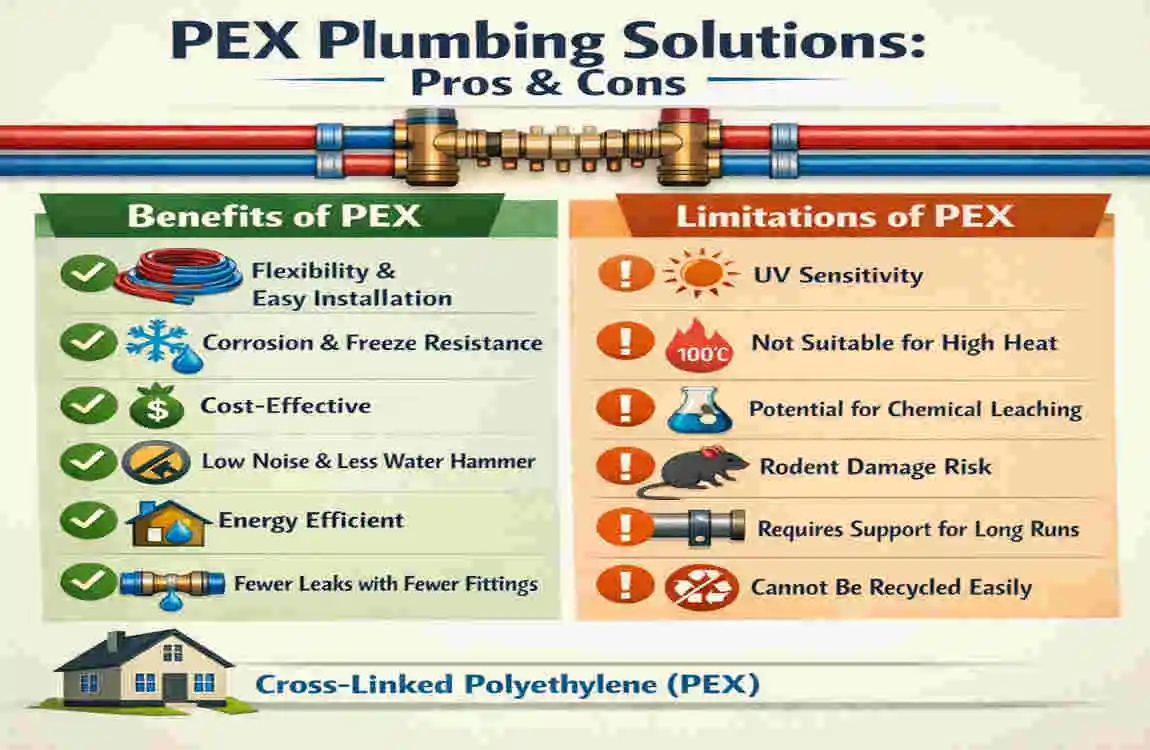
Why should you bother switching? First, PEX offers incredibly easy bends. You can sweep the pipe around corners at a radius up to 8 times the tube’s diameter. This means you need far fewer elbow fittings than you would with copper or PVC.

Second, it is famously freeze-resistant. While no pipe is completely freeze-proof, PEX will stretch slightly if the water inside turns to ice, drastically reducing the chances of a catastrophic burst. Finally, it provides a much quieter flow. You will no longer hear that annoying “water hammer” clanking sound every time your washing machine turns off!

Tools and Materials Needed for the Job

To ensure a smooth and frustration-free project, you need to gather the right gear. Learning to use PEX home plumbing is quite affordable, but having the right specialised tools is absolutely non-negotiable.

Here is a simple breakdown of the essential items you will need before you shut off your main water valve.

Essential Plumbing Materials

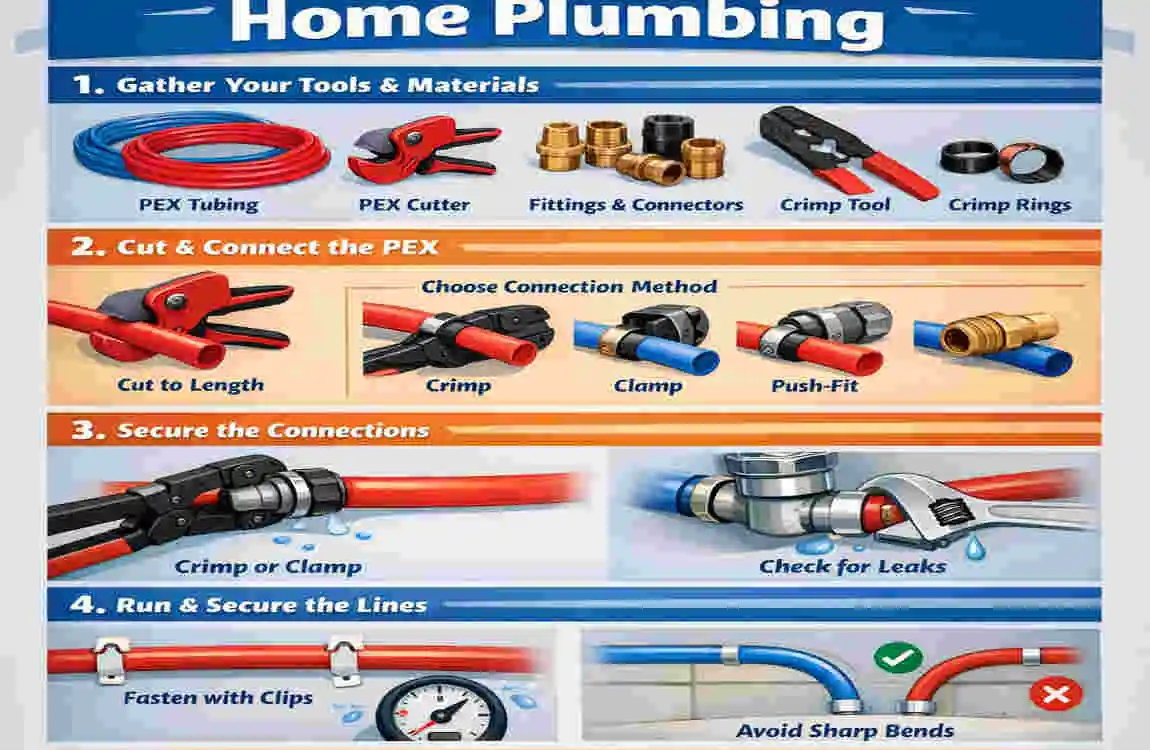
  • PEX Tubing: You will primarily use 1/2-inch or 3/4-inch coils. Most homeowners buy large rolls (usually 100 to 300 feet) because it is cheaper to buy in bulk.
  • Specialized Fittings: You cannot just glue these pipes together. You will need crimp rings (for PEX-B), expansion rings (for PEX-A), elbows, tees, and brass or plastic connectors.
  • Push-to-Connect Fittings: Brands like SharkBite offer push-to-connect fittings. These let you simply push the pipe into the fitting to create an instant seal. They are slightly more expensive but perfect for quick emergency patches.

Must-Have Installation Tools

  • PEX Pipe Cutter: Never use a hacksaw or a pocket knife! You need a specialized cutter that slices through the plastic like a cigar cutter, leaving a perfectly flat, clean edge.
  • Crimp or Expansion Tool: Depending on your pipe type, you need a heavy-duty tool to crush the copper rings or a battery-powered tool to expand the pipe ends.
  • Deburring Tool: This tool smooths the inside of the pipe after a cut, ensuring water flows smoothly without catching on rough plastic edges.
  • Go/No-Go Gauge: A small, inexpensive metal measuring tool. It slips over your finished crimps to verify that they are squeezed tightly enough to prevent leaks.

Budget Estimation Table

ItemCost EstimatePurpose

PEX Coil (100 ft) $30 – $50 Used for the main water lines running through your house.

Crimp Tool Kit $100 – $200 Crucial to safely and permanently secure your pipe connections.

Fittings Pack $20 – $40 Essential for branching lines to sinks, toilets, and showers.

Preparing for Installation Like a Pro

how to use pex home plumbing

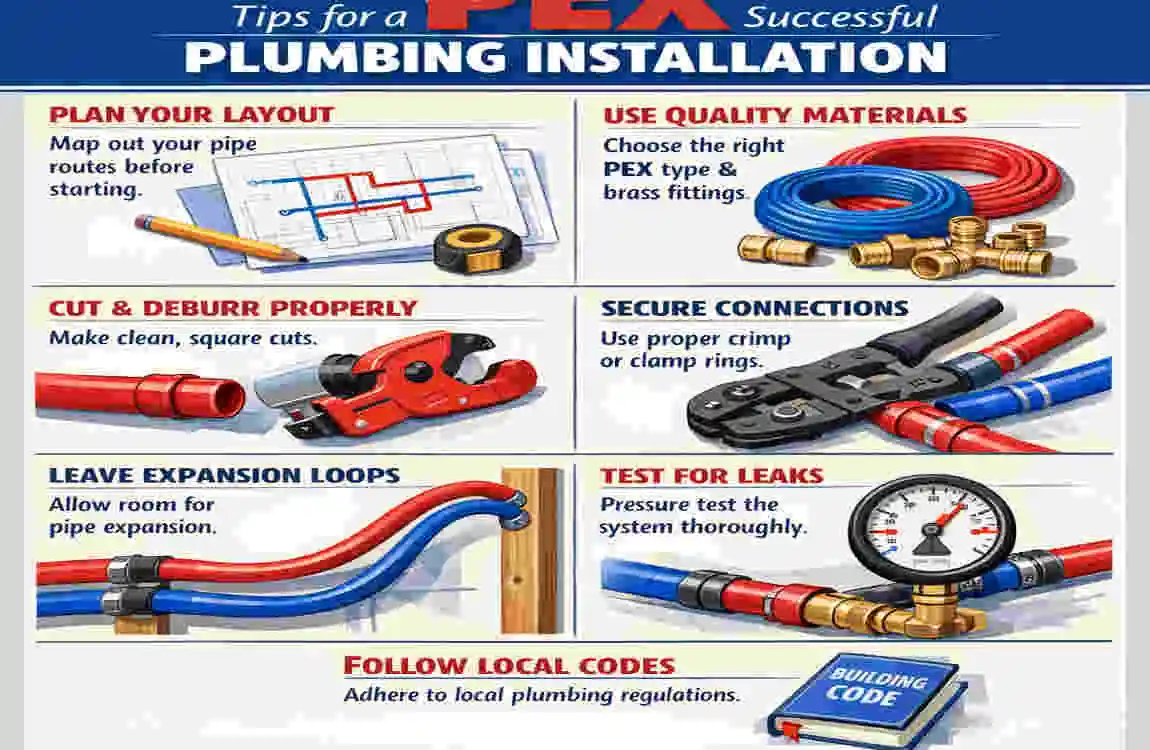
The absolute secret to a successful plumbing project is what you do before you even make the first cut. Planning your layout is essential. You do not want to realize you are five feet short of pipe while crouching in a dark, dusty crawlspace.

Start by physically measuring your planned pipe runs. Grab a tape measure and map out exactly where the water needs to travel.

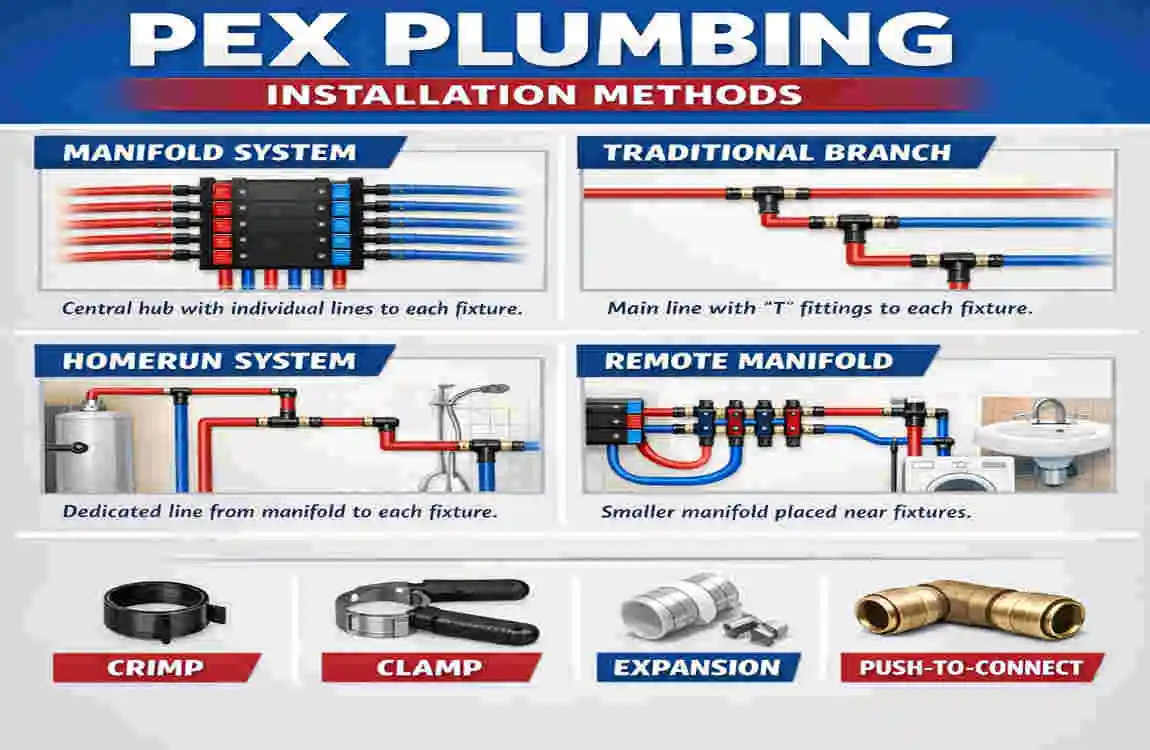
During this planning phase, you must choose between two main water delivery systems. The traditional method is the trunk-and-branch system. This uses a single main pipe (the trunk) that runs the length of the house, with smaller pipes (the branches) branching off to individual sinks and toilets.

The alternative is the manifold system. Think of a manifold like an electrical breaker box, but for water. Every single fixture in your house gets its own dedicated, unbroken PEX line running straight from this central hub. This means if you need to fix a bathroom faucet, you can turn off the water just for that specific sink at the manifold, without shutting down the whole house!

Shutting Down and Checking Codes

Before you touch any existing pipes, you must shut off the main water supply to your house. Once the valve is off, go to the lowest faucet in your home (usually a basement sink or an outside hose bib) and turn it on to drain the remaining water out of the lines.

Next, please verify your local building codes. You want to make sure your town allows the specific type of plastic pipe you plan to use. Fortunately, almost all modern residential codes confidently permit both PEX-A and PEX-B for indoor water distribution.

Finally, prepare your working surfaces. If you are routing pipes to a new showerhead, install sturdy wood blocking between your wall studs. You will need this solid wood to anchor your new pipe fittings securely so your showerhead does not wobble when you touch it.

Step-by-Step Installation Guide

Now we arrive at the main event. If you want to master PEX home plumbing, this is the core process you will follow. We have broken down the PEX pipe installation process into easily digestible segments. Take a deep breath, trust your tools, and follow these detailed instructions.

Cutting and Measuring PEX Tubing

Your very first physical step is cutting the tubing to the proper length. Unlike rigid metal, flexible plastic requires a bit of slack. When measuring your run, always add an extra two inches to your final measurement. This extra length prevents the pipe from pulling your fittings too tightly as it naturally expands and contracts with hot and cold water.

When cutting, you must use a dedicated PEX cutter. Open the cutter’s jaws, place the tube inside, and squeeze the handles firmly. You want a perfectly square, 90-degree cut. If your cut is angled, jagged, or crushed, the fitting will not seat properly, and you will absolutely experience a leak.

Take your time here. Avoid bending the pipe too sharply near the end you just cut. If you force the plastic at a severe angle, you risk kinking it, instantly compromising the strength of the water line.

Crimping PEX Connections (The PEX-B Method)

If you chose PEX-B tubing, you will likely use the traditional copper crimp ring method. This is a very common technique in DIY PEX plumbing.

First, take a copper crimp ring and slide it roughly two inches down the end of your freshly cut pipe. Next, insert your brass or plastic ribbed fitting firmly into the open mouth of the pipe.

Now, slide that copper ring back up toward the end of the pipe. You want it to sit exactly 1/8 to 1/4 inch from the absolute edge of the tubing. If it is too close to the edge, it will leak. If it is too far down, it will miss the barbs on the fitting and leak.

Open your heavy-duty crimping tool. Place the jaws directly over the copper ring. Squeeze the handles together with forceful, steady pressure until the tool clicks and naturally releases. If you are working in a tight cabinet, professional plumbers often use a specialized 90-degree angled crimping tool to get enough leverage.

Crucial Step: Test your work immediately. Grab your go/no-go gauge. Slip the “GO” slot over the crushed copper ring. It should slide on easily. Then, try to slip the “NO-GO” slot over the ring. It should firmly refuse to slide on. If it passes this simple test, you have created a perfect, waterproof seal!

The Expansion (ProPEX) Method (The PEX-A Method)

If you spent the extra money on PEX-A tubing, you will use the expansion method. This is widely considered the most foolproof way to join pipes, as it practically eliminates human error.

First, slide a small plastic expansion ring over the end of your pipe until it stops at the ring’s internal shoulder.

Next, grab your expansion tool. This tool has a specialized segmented metal head. Insert the tool head directly into the pipe. Pull the trigger (if using a battery-powered tool) or pump the handles (if using a manual tool). The head will briefly expand, stretching the plastic pipe and the ring wider. The tool will rotate slightly and expand again.

Once the pipe is stretched wide enough, quickly remove the tool. Immediately shove your fitting into the widened pipe. You only have a few seconds! Because PEX-A has “thermal memory,” the stretched plastic will immediately begin shrinking back to its original factory size. Within 30 seconds, it will forcefully squeeze down onto the fitting, creating a permanent seal that actually gets stronger over time.

Running and Securing the Pipes

Now that you know how to join the pipes, you have to run them through your house. Think of this process like running a thick electrical cable.

You will typically route the tubing alongside your wooden floor joists or right through holes drilled into the center of your wall studs. Because the pipe is flexible, you can simply pull it through these spaces in one long, continuous sweep.

However, you must secure the line. You cannot just let it flop around inside the walls. Use specialized plastic suspension clips to secure the pipe to the wood every 32 inches. Do not pull the mounting clips too tight! The pipe needs a tiny bit of room to slide back and forth as it heats and cools.

When you need to turn a sharp corner, you have two options. You can cut the pipe and install a 90-degree elbow fitting. Or, to maintain higher water pressure, you can use a “bend support.” This is a curved plastic or metal bracket that forces the pipe to make a smooth 90-degree turn without kinking. Always use a bend support when pushing the pipe to its maximum bending radius!

Finally, if you are running pipes through an unheated basement, an attic, or a drafty crawlspace, you must insulate them. Wrap the exposed lines in thick foam pipe insulation to prevent winter freezes and to keep your hot water hot as it travels to your shower.

Connecting to Fixtures and Testing

You have successfully routed the water lines right up to your bathroom or kitchen. Now you need to connect them to your actual fixtures.

For showerheads and tub spouts, you must use something called a “drop-ear elbow.” This is a specialised brass elbow fitting with flat wings and screw holes. You screw this fitting directly into the sturdy wood blocking you installed earlier. This guarantees that your shower arm remains completely rigid when you attach it.

If you are tying your new plastic lines into existing old copper pipes, push-to-connect fittings (like SharkBites) are an absolute lifesaver. You simply push the cleaned copper pipe into one side of the fitting and push your new plastic tubing into the other. Internal stainless steel teeth grab both pipes, creating an instant seal.

The Final Test: You are almost done! Before you even think about installing new drywall, you must pressure-test the system.

Close all open valves and attach a pressure test gauge to your manifold or main line. Pump the system to roughly 80 PSI (pounds per square inch). Leave it alone for at least 30 minutes. If the needle drops even a single millimeter, you leak.

Listen closely for a hissing sound, or spray soapy water on all your fittings to look for bubbling air. If the gauge holds steady at 80 PSI for half an hour, congratulations! Your PEX pipe installation is watertight and ready for daily use.

Common Mistakes to Avoid During Installation

how to use pex home plumbing

Even with an excellent PEX plumbing guide, enthusiastic homeowners can easily trip up. Understanding how to use PEX home plumbing means knowing exactly what pitfalls to aggressively avoid. Let us examine the top five errors and how you can prevent them.

Kinking the Pipes

Because the material is highly flexible, people tend to get overconfident and bend it too sharply around tight corners. If the tubing suddenly turns white at a bend and flattens out, you have kinked it. A kink permanently damages the structural integrity of the plastic. The Fix: If you kink PEX-B, you must cut that section out completely and replace it. If you kink PEX-A, you can sometimes carefully heat it with a heat gun to restore its shape, but replacing it is generally safer. Always use proper bend supports!

Improper Crimp Placements

We mentioned this earlier, but it bears repeating. If your copper crimp ring is placed at an angle or sits right on the very edge of the pipe, water will escape. The Fix: Always ensure you cut the pipe totally straight. Take a deep breath, visually double-check the ring’s position, and never forget to test every single joint with your go/no-go gauge.

Ignoring Destructive UV Exposure

This is a massive hidden danger! PEX tubing is extremely sensitive to ultraviolet light. If you leave your coils sitting in the sunny bed of your pickup truck for a few weeks, or if you install them outside in direct sunlight, the UV rays will rapidly break down the chemical bonds of the plastic. It will become brittle and shatter under pressure. The Fix: Always store your materials indoors or in a dark garage. Never use this type of pipe for above-ground outdoor sprinkler systems.

Poor Tool Calibration

Crimping tools take a lot of abuse. Over time, the heavy jaws can loosen. If you are using an old, uncalibrated tool, it will not squeeze the copper rings tightly enough. The Fix: Most quality tools come with a simple calibration key. Check your tool’s tension before starting a large project to ensure maximum squeezing force.

Skipping the Pressure Test

Turning on the main water supply without first performing an air pressure test is a gamble you do not want to take. If you missed a fitting deep inside a ceiling cavity, turning on the water will flood your home in seconds. The Fix: Always perform a 30-minute air test at 80 PSI. Patience here saves thousands of dollars in water damage.

Quick Reference: Mistakes and Preventative Measures

MistakeConsequencePrevention

Kinks in Tubing Reduced water flow and high risk of burst leaks. Use proper plastic bend supports for sharp 90-degree corners.

Loose Crimps Massive pressure loss and slow wall leaks. Routinely check every connection with a go/no-go gauge.

UV Exposure Plastic becomes brittle and eventually shatters. Store tubing in dark places; never use exposed outside.

PEX vs. Other Materials: Why Make the Switch?

You might still be wondering if this flexible plastic is truly better than the materials your grandfather used. When you compare PEX vs copper or traditional PVC, the advantages for the everyday homeowner become incredibly obvious.

Copper Piping has been the gold standard for a century. It is naturally antimicrobial and can confidently handle outdoor UV exposure. However, copper is absurdly expensive. Furthermore, installing it requires sweating joints with a blowtorch, handling toxic flux, and melting lead-free solder. One tiny mistake with a torch inside a dry wall cavity can easily burn a house down. Copper also takes hours to install, whereas flexible tubing takes mere minutes.

CPVC (Chlorinated Polyvinyl Chloride) is a rigid yellowish plastic. It is cheap, and you glue the joints together with strong chemical cement. While it is easier to install than copper, it remains highly rigid. This means you have to cut the pipe and glue on an elbow fitting every single time you want to turn a corner. Furthermore, CPVC becomes notoriously brittle with age, often cracking if you accidentally bump it hard during future renovations.

Learning how to use PEX home plumbing gives you the ultimate sweet spot. It is drastically cheaper than copper, installs faster than any other material, requires absolutely zero dangerous open flames, and snakes around obstacles with ease.

Quick Comparison Table

FeaturePEX PlumbingCopper PipesCPVC Pipes

Cost to Buy Very Low Very High Medium

Install Speed Lightning Fast Very Slow Medium

Flexibility Extremely High Totally Rigid Totally Rigid

Freezing Resistance Excellent Poor Poor

Maintenance and Longevity Secrets

Once you have completed your project, you will be thrilled to know that flexible plastic piping is essentially a “set it and forget it” system. There is very little ongoing maintenance required to keep your water flowing perfectly.

However, performing an annual visual check is always a smart homeowner move. Once a year, grab a flashlight and inspect any exposed fittings in your basement or utility room. Look for tiny green or white crusty buildups around brass connections, which can indicate a microscopic, slow leak.

Additionally, as winter approaches, double-check that your foam pipe insulation is completely intact in unheated areas. While this plastic handles freezing better than copper, you still want to prevent the water inside from freezing!

When installed away from direct sunlight and protected from sharp rodents, your new plumbing system can last 50 to 100 years. It will likely outlast the appliances it connects to!

If you are feeling inspired to begin your renovation journey and need professional-grade tools to ensure perfection, be sure to shop our online store for the best DIY equipment on the market!

Frequently Asked Questions (FAQs)

Should I choose PEX-A or PEX-B for my house?

For the absolute highest quality and maximum flexibility, choose PEX-A. The expansion method creates a virtually foolproof joint that expands and contracts flawlessly. However, if you are on a strict budget or just fixing a small leak under a sink, PEX-B with copper crimp rings is perfectly acceptable, highly reliable, and much cheaper to source locally.

Is this plastic pipe actually code-approved?

Yes! In almost all residential areas across the United States and Canada, types A and B are fully approved by local building codes for indoor hot- and cold-water distribution. However, always make a quick phone call to your local municipal permitting office just to verify their specific rules before starting a massive whole-house repipe.

Can I connect new plastic lines to my old metal pipes?

Yes, very easily. You can transition from old copper or galvanised steel to modern flexible tubing using specialised threaded adapter fittings or reliable push-to-connect fittings for a rapid, watertight transition.

What does it cost to replumb a whole house?

If you do the labour yourself, the material cost is shockingly low. Depending on the size of your home, expect to pay roughly $1 to $2 per foot of pipe, plus the cost of your central manifold and tool investments. A complete DIY whole-house material package can often be purchased for under $1,500, whereas hiring a professional to run copper could cost you upwards of $10,000!

Does PEX make the drinking water taste funny?

When initially installed, some homeowners report a very faint plastic taste for the first week or two. This is harmless and completely normal. Flushing your water lines thoroughly after installation will quickly clear this up, leaving you with fresh, clean, tasteless drinking water for decades.

You may also like...

Leave a Reply

Your email address will not be published. Required fields are marked *