Mold on house siding is one of those problems that starts small and quietly gets worse. At first, you may only notice a few dark streaks or a green patch near the shaded side of your home. Then, before you know it, the stain spreads, the siding looks old and dirty, and the whole house seems less cared for.
If you live in a humid climate, this issue can appear even more quickly. In places with long rainy seasons, high moisture levels, or poor airflow around the home, mold and mildew can grow on siding surprisingly quickly. That is why so many homeowners search for how to remove mold from house siding. The good news is that in many cases, you can clean it yourself without spending a lot of money.
Still, this is not a job you should rush. Different siding materials react differently to cleaning. A method that works well on vinyl may damage wood. A strong cleaner that removes stains quickly may also harm nearby plants or fade the finish if used improperly. So the real goal is not just to clean the mold. The real goal is to remove mold safely without damaging your siding.
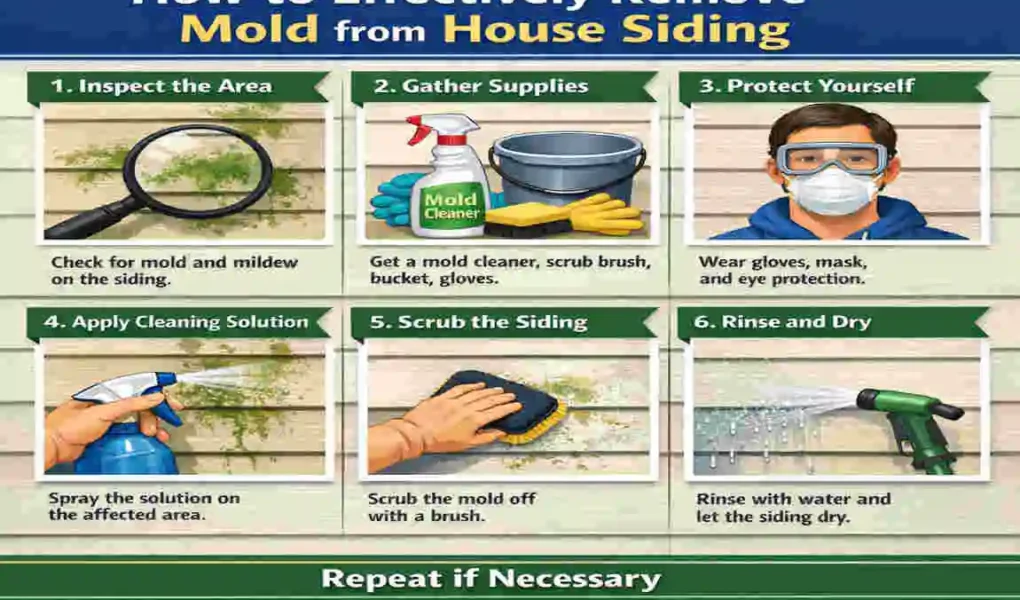
| Step | Action | Key Tips |
|---|---|---|
| Prepare Area | Cover plants with plastic sheeting; close nearby windows/doors . | Wear gloves, goggles, and protective clothing for safety . |
| Mix Solution | Use 1:1 vinegar-water, 1 cup bleach per gallon water, or commercial cleaner like 30 Seconds Outdoor Cleaner . | Vinegar prevents regrowth; bleach kills mold fast but rinse well . |
| Apply Solution | Spray or brush on affected areas; let sit 10-15 minutes . | Work bottom-up to avoid streaking; cloudy day is best . |
| Scrub Gently | Use soft-bristle brush on small sections . | Avoid harsh scrubbing to prevent siding damage . |
Why Mold Grows on House Siding
Moisture Is the Main Problem
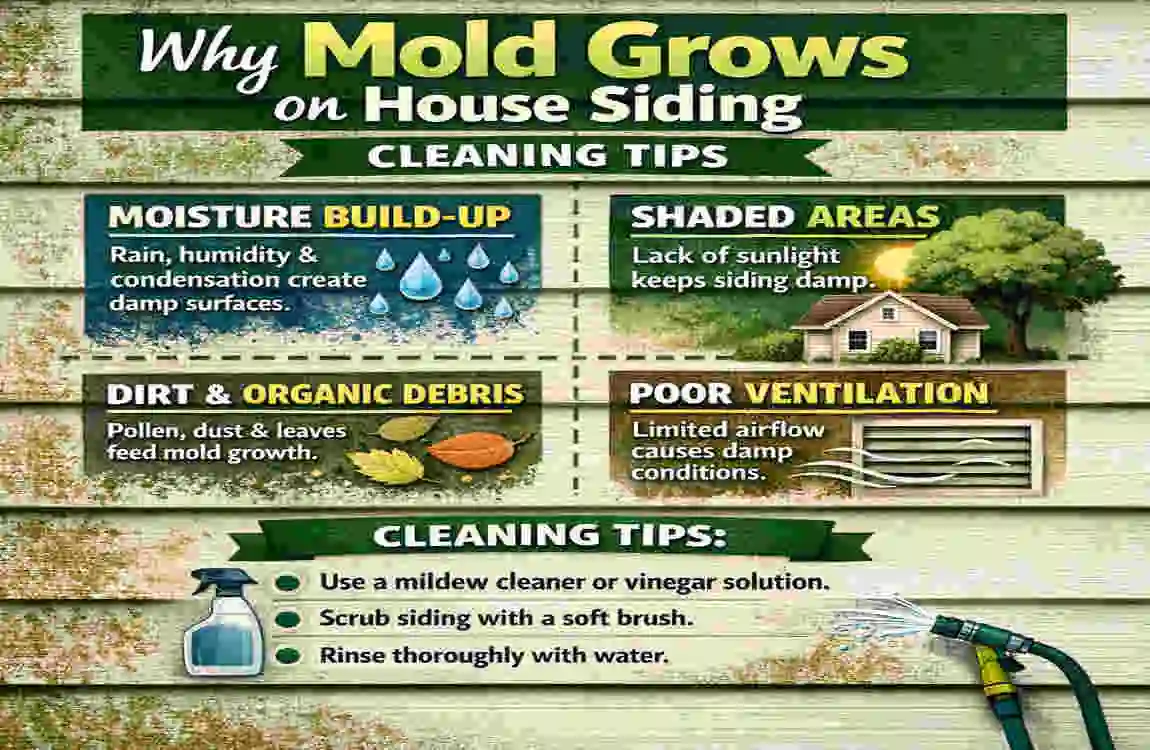
Mold does not appear by magic. It grows when moisture, shade, and organic dirt stay on the siding long enough to feed mold spores. These spores are everywhere in the air. They only need the right conditions to settle in and grow.
Rain is one major cause. So is humidity. So is a home design that prevents the siding from drying properly after wet weather. If the outside walls stay damp for too long, mold gets the perfect environment to spread.
Poor drainage also plays a big role. When water flows down from the roof, collects near the foundation, or sits in clogged gutters, the lower parts of the siding often take the hit. That is why many homeowners first notice mold near the bottom of the walls, around windows, or under roof edges.
Shade can make things worse. The side of the house that gets less direct sunlight stays damp longer. Mold loves those cooler, darker areas. Add a few trees, bushes, or vines close to the wall, and the problem can grow even faster because airflow is limited.
How Different Siding Types React
Not all siding behaves the same way. Some materials resist moisture better than others, but even the stronger ones can still collect mold on the surface.
Vinyl siding is a common example. It does not absorb water like wood, so it is less likely to rot. But vinyl can still collect dirt, pollen, and moisture on the surface, and that buildup becomes a food source for mold. That is why vinyl often shows black, green, or gray streaks in shaded areas.
Wood siding is more vulnerable. It can absorb moisture, and once it does, mold can penetrate deeper into the material. If wood siding stays wet too long, it may soften, discolor, or even start to rot. Cleaning wood siding requires more care because harsh cleaners can strip the finish or weaken the surface.
Fiber cement is usually more durable, but it is not mold-proof. Cracks, gaps, or worn paint can let moisture settle in. Once the surface finish begins to fail, mold may show up around joints, seams, and edges.
Common Causes Around the Home
A few everyday issues often create the conditions mold needs:
- Overgrown shrubs touching the wall
- Clogged gutters that overflow during rain
- Leaky downspouts that keep one area constantly wet
- Poor grading that sends water toward the house
- Shady walls that do not dry out well
- Dust and grime that sit on the siding for months
The important thing to remember is this: mold on siding is usually a moisture problem first and a cleaning problem second. If you only wash it away without fixing the cause, it usually comes back.
Health and Structural Risks of Moldy Siding
Why You Should Not Ignore It
Mold on the outside of your home may look like a cosmetic issue, but it can cause bigger problems over time. Mold spores can spread through the air and enter the home through small gaps, open windows, vents, and cracks around doors and frames. Once they get inside, they may affect indoor air quality.
That matters because mold can trigger allergies, coughing, sneezing, headaches, and breathing irritation. People with asthma or other respiratory issues may feel the effects even more. Children, older adults, and anyone with a sensitive immune system may also be more affected.
How It Can Damage the House
Mold also creates structural concerns. If the siding stays damp for too long, the finish can break down. Paint may peel. Wood may soften. Seams may open. In severe cases, water damage can reach the layer underneath the siding.
That can lead to repairs that cost far more than a simple cleaning job. What starts as a small mold stain can turn into a problem involving trim replacement, repainting, resealing, or even partial siding repair. Depending on the damage, the cost can range from a few hundred dollars to several thousand.
Why Fast Action Helps
The longer mold sits, the harder it can be to remove. Fresh mold is usually much easier to clean than old buildup that has sat through months of weather. If you act early, you can often fix the issue with basic tools and a gentle cleaner.
So if you see mold on your siding, do not wait until it spreads. Clean it early, then fix the moisture problem that caused it. That simple habit can save money, reduce health concerns, and keep your home looking well cared for.
Tools and Materials You Will Need
Basic Cleaning Supplies
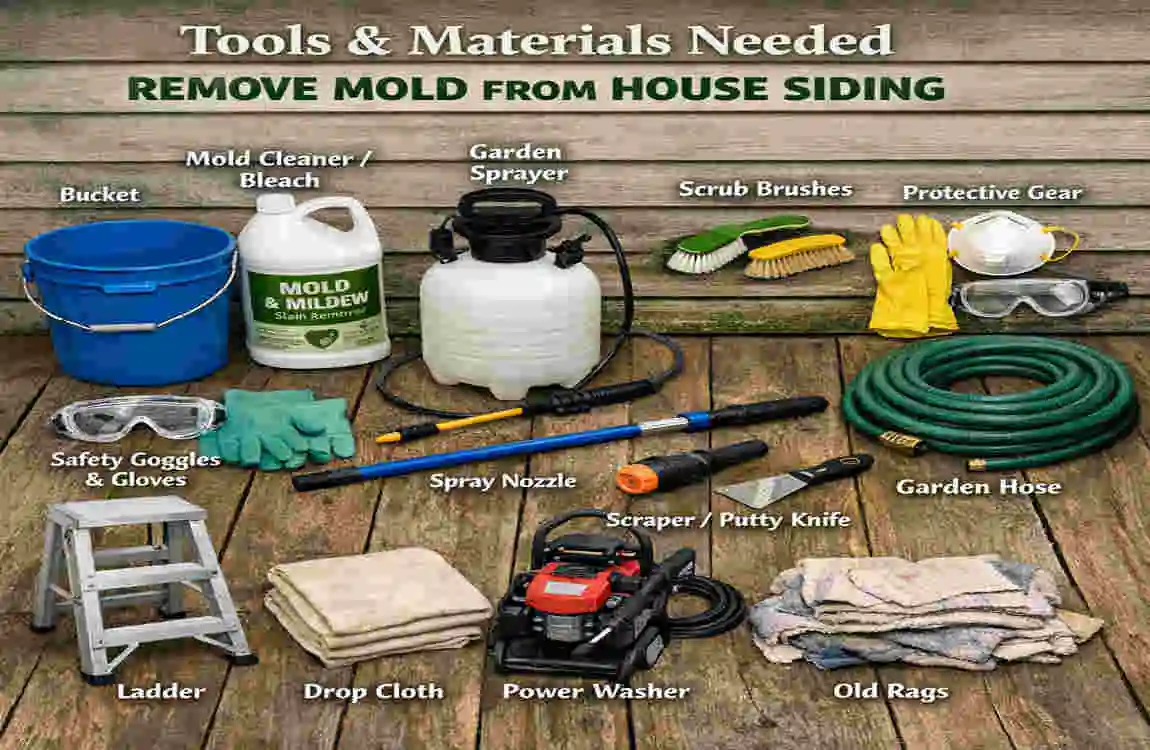
Before you start, gather everything you need. Working with the right tools makes the job easier, safer, and faster.
Here is a simple checklist:
- Soft-bristle brush
- Garden hose
- Spray bottle or pump sprayer
- Bucket
- Microfiber cloths or sponge
- Protective gloves
- Safety goggles
- Face mask
- Drop cloths or plastic sheets for plants
Cleaning Solutions to Consider
You can choose from a few solutions depending on how stubborn the mold is and the type of siding you have.
- White vinegar and water: A gentle, natural option for light mold
- Bleach and water: Stronger and better for stubborn stains
- Commercial outdoor cleaner: Useful when you want a ready-made product
- Baking soda paste: Good for spot cleaning and small patches
Safety First
No matter which cleaner you use, protect yourself. Wear gloves so your skin does not come in contact with the cleaner. Wear goggles to keep splashes out of your eyes. Use a mask if you are working in a dusty area or if the mold is widespread.
Also protect nearby plants and surfaces. Some cleaning solutions can damage landscaping, discolor metal, or leave marks on windows if they are left to sit too long.
DIY Cost vs. Professional Help
OptionTypical CostBest ForNotes
DIY cleaning Under $50 Small to medium mold spots Best for routine maintenance
DIY with commercial cleaner $25–$75 Stubborn stains Requires careful use
Professional service $500–$3,000+ Heavy buildup, rot, or large homes Better for severe cases
If the mold is limited and the siding is in decent shape, DIY is often enough. If the problem is large, difficult to reach, or tied to water damage, professional help may be the safer choice.
Step-by-Step Guide: How to Remove Mold from House Siding
Start With Prep Work
Before you clean anything, take a few minutes to prepare the area. This step matters more than many homeowners think.
First, inspect the siding closely. Look for loose boards, cracked panels, peeling paint, open seams, or soft spots. If the siding is damaged, clean it carefully. In some cases, damage should be repaired before or after washing.
Next, move or cover anything that could be affected by the cleaner. This includes potted plants, outdoor furniture, garden tools, and decorative items near the wall. Use a tarp or plastic sheet to protect shrubs and flowers.
It also helps to choose the right day. A cloudy, mild day is often best because the cleaner will not dry too fast in direct sunlight. If it dries too quickly, it may leave residue or reduce the cleaning effect.
Finally, apply the solution from the bottom up, and rinse from the top down. This helps you avoid streaks and keeps dirty water from running over already cleaned areas.
Vinegar Solution for a Safe Natural Clean
If you want a gentle method, vinegar is often the first place to start. It works well for light mold and mildew, especially on vinyl siding or small stained areas.
How to Use It
- Mix equal parts white vinegar and water in a spray bottle.
- Spray the moldy area generously.
- Let it sit for 10 to 15 minutes.
- Use a soft-bristle brush to gently scrub the area.
- Rinse the siding with a garden hose.
Do not use a stiff brush. You want to lift the mold, not scratch the siding. Gentle pressure works better than force.
Why People Like This Method
Vinegar is popular because it is simple, affordable, and easy to find. It also has a milder scent than stronger cleaners, and many homeowners prefer it when cleaning areas near plants or pets.
When It Works Best
This method is best for:
- Light surface mold
- Fresh stains
- Small sections of siding
- Regular seasonal maintenance
Pros and Cons
ProsCons
Safe and simple May not remove heavy buildup
Low cost May need repeated application
Good for light stains Not always strong enough for deep discoloration
Easy to mix at home Works slowly on stubborn spots
If the mold comes off after one round, great. If the stain remains dark, you may need a stronger method.
Bleach Mix for Stubborn Mold
When mold has been sitting for a while, bleach can be more effective. It is often used for stubborn surface stains, especially on siding that can handle stronger treatment.
How to Use It
- Mix 1 quart of bleach with 1 gallon of water.
- Put the solution into a spray bottle or garden sprayer.
- Apply it to the moldy area.
- Let it sit for about 10 minutes.
- Scrub gently with a soft brush.
- Rinse thoroughly with clean water.
Important Warnings
Bleach should be used carefully. It can discolor some materials and harm nearby plants if it is not rinsed off properly. It is also not a good choice for every siding type, especially if the surface is old, fragile, or unfinished wood.
Always test a small hidden area first. That way, you can see how the siding reacts before treating the full wall.
Best Uses
This method is usually best for:
- Heavy surface mold
- Dark streaks that do not respond to vinegar
- Vinyl and fiber cement siding
- Large but manageable outdoor cleaning jobs
What Not to Do
- Do not mix bleach with vinegar or ammonia
- Do not let it dry on the siding
- Do not use it on damaged wood without checking first
- Do not skip rinsing
Bleach can be very effective, but it should be treated as a stronger tool, not a first reaction for every job.
Commercial Cleaners and Low-Pressure Washing
If you want a faster solution, a commercial outdoor cleaner can save time. Many of these products are designed specifically to remove mold, mildew, algae, and dirt from siding.
How to Use Commercial Cleaners
Follow the label instructions carefully, because different products have different mixing ratios and waiting times. In most cases, the process looks like this:
- Apply the cleaner to the affected area.
- Let it soak for the recommended time.
- Scrub lightly if needed.
- Rinse well with a garden hose or low-pressure washer.
What About Power Washing?
A pressure washer can help, but only when used correctly. Too much pressure can force water behind the siding, damage seals, or strip paint. For most homes, low pressure is the safest choice. A gentle wash is usually enough when paired with a proper cleaning solution.
If you do use a pressure washer, keep the pressure low and the nozzle at a safe distance. Never aim directly into seams, gaps, or upward under siding edges.
When This Method Makes Sense
Commercial cleaners and low-pressure washing are useful when:
- The mold covers a larger area
- You want faster results
- The surface has a lot of grime and mildew
- DIY natural methods did not work well enough
This method is efficient, but it works best when you use it carefully and avoid rushing.
Baking Soda Paste for Spot Treatment
Baking soda is a simple solution for smaller mold spots or stubborn dark patches that need a little extra help.
How to Make the Paste
Mix baking soda with a small amount of water until it forms a thick paste. It should be spreadable, not runny.
How to Apply It
- Put the paste directly on the moldy spot.
- Let it sit for several minutes.
- Scrub gently with a soft brush or sponge.
- Rinse the area clean.
Why It Works
Baking soda is mildly abrasive, helping loosen the stain without being overly harsh. It is a good choice when you want extra scrubbing power but do not want to use a strong chemical.
Best For
- Small spots
- Light discoloration
- Touch-up cleaning
- Extra treatment after vinegar or mild soap
This method is not usually enough for wide mold coverage, but it works well as a detail cleaner.
Which Method Should You Choose?
The best method depends on how much mold you have, the type of siding you have, and how sensitive the surface is. If the mold is light, start with vinegar. If it is stubborn, move to a stronger cleaner. If the area is large, consider a commercial product or professional help.
The safest path is always to begin gently and increase strength only if needed.
Can I Pressure Wash Vinyl Siding?
Yes, but carefully. Vinyl siding can often handle low-pressure washing, not high-pressure blasting. Too much force can push water behind the panels or cause damage. If you use a pressure washer, keep the pressure low and the nozzle at a safe distance.
A garden hose with a cleaning solution is often enough for regular maintenance. For many homeowners, that is the safer choice.
Siding-Specific Tips You Should Know
Vinyl Siding
Vinyl siding is one of the easiest surfaces to clean, but it still needs gentle care. Because it does not absorb water like wood, most mold stays on the surface. That is good news, because surface mold is usually easier to remove.
Use a soft brush and mild cleaner first. Vinegar or a gentle commercial product often works well. If you need to rinse, use a hose or low-pressure setting. Avoid high pressure, because it can force water behind the panels or warp certain areas if the siding is old.
Vinyl also tends to show stains clearly, especially in shaded areas. So even if the mold is not deep, it can still look bad. Regular cleaning is important if you want your home to stay bright and fresh-looking.
Wood Siding
Wood needs extra care because it is more likely to absorb moisture. If mold has reached the surface for a long time, it may not just be sitting on top. It may also be affecting the finish or the wood itself.
Start with a gentle cleaner. If the stain persists, you may need to lightly sand the area after it dries. But only sand when needed, and only if the surface is stable. Once cleaned, wood siding should be sealed or repainted to help protect it from future moisture.
Do not use harsh scrubbing or strong bleach without testing first. Wood can react badly, especially if it is old, soft, or already damaged.
Fiber Cement Siding
Fiber cement is durable, but it still needs proper care. It usually handles mold cleanup well, including stronger cleaning solutions when used correctly. The biggest concern is not the board itself but the seams, cracks, and paint finish.
If you notice cracked caulk, worn paint, or openings around joints, fix those areas after cleaning. That will reduce the chance of moisture getting in again.
Fiber cement is often one of the more forgiving siding types, but that does not mean you can be rough with it. Gentle cleaning still gives the best long-term result.
Comparison Table: Best Cleaning Approach by Siding Type
Siding TypeBest Cleaning MethodSpecial CautionExtra Tip
Vinyl Vinegar, mild cleaner, low-pressure rinse Avoid high pressure Clean in shaded areas more often
Wood Gentle cleaner, light scrubbing, sealing after Test cleaners first Repair damage before mold spreads
Fiber Cement Vinegar, bleach mix, or commercial cleaner Watch for cracks and seal failure Repaint or reseal when needed
The more you understand your siding type, the easier it becomes to choose the safest cleaning method.
Prevention Strategies After Removal
Keep the Area Dry and Breathing
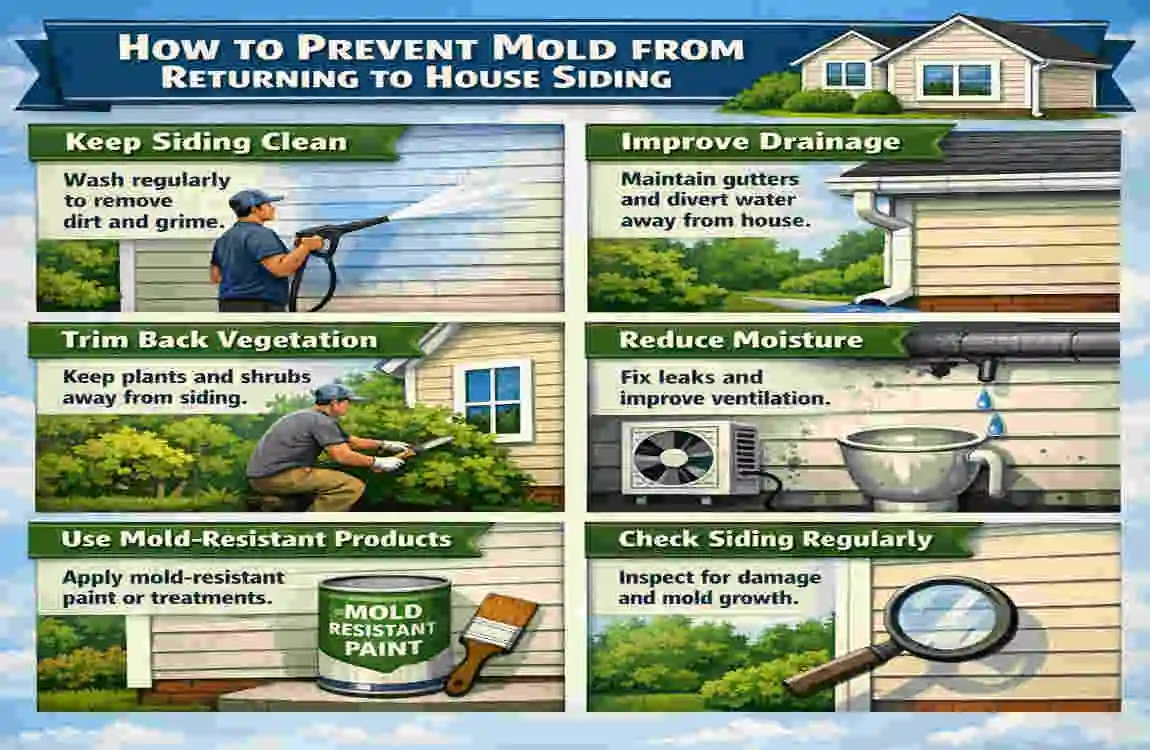
Cleaning mold is only half the job. Prevention is what saves you time later. If you do not address moisture and airflow, mold can return quickly.
Start by trimming trees, shrubs, and plants so they stay at least 18 inches away from the house. This improves airflow and helps the siding dry faster after rain. It also makes it harder for leaves and dirt to collect against the wall.
Improve Drainage
Check your gutters and downspouts. If they are clogged, overflowing, or leaking, they can keep one section of siding damp for long periods. Clean them regularly and make sure they direct water away from the house.
Also check the ground around your home. If water pools near the foundation, the lower siding may stay wet too long. Better grading can make a big difference.
Clean the Exterior Regularly
A once-a-year cleaning can prevent mold from settling in. In wetter or more humid areas, you may need to clean more often. A quick wash helps remove dust, pollen, and grime before they turn into mold food.
You do not need to deep-clean the whole house every few months. Even a light rinse and spot treatment can help keep problems under control.
Seasonal Checklist for Rainy Climates
If you live in a place with strong monsoon seasons or long stretches of humidity, use this simple checklist:
- Clear gutters before heavy rain
- Trim bushes away from siding
- Check for leaks around windows and doors
- Wash off dirt before mold settles
- Look for damp spots after storms
- Inspect shaded walls more often
These small habits can stop a big problem before it starts.
Consider Surface Protection
For some siding types, a protective finish or sealant can help reduce future moisture problems. Wood especially benefits from this. In some homes, zinc strips or similar treatments may help reduce algae and mildew growth on exterior surfaces.
Prevention does not have to be complicated. Often, the best defense is simply good airflow, regular inspection, and quick action when you see the first sign of mold.
When to Call Professionals
Signs the Job Is Bigger Than DIY
Sometimes, cleaning mold yourself isn’t the smartest move. If the mold covers a large area, keeps coming back quickly, or seems tied to rot or leaks, a professional can help you find the real cause.
You should also consider calling a pro if:
- The mold is spreading under or behind the siding
- The siding feels soft, warped, or damaged
- You notice a strong musty smell near the wall
- Family members are getting respiratory symptoms
- The home is tall or hard to reach safely
Why Professional Help Can Be Worth It
A professional team can inspect the siding, identify the moisture source, and clean the exterior with the right tools. They may also spot hidden damage that is easy to miss from the ground.
For widespread mold or repair-related work, professional service can be a smart investment. It may cost more upfront, but it can also prevent larger repairs later.
If you feel unsure about safety, the siding material, or the size of the problem, that is usually a good sign that you should bring in an expert.
FAQs
Is vinegar better than bleach for mold on siding?
For many light cleaning jobs, yes. Vinegar is gentler, safer around plants, and easier to maintain. Bleach is stronger and may work better on stubborn stains, but it should be used more carefully.
How often should I clean mold from siding?
A good rule is once a year, but homes in humid or rainy areas may need more frequent cleaning. If you notice staining, address it early rather than waiting until the next season.
Can I use a pressure washer on siding?
You can, but use only low pressure. High pressure can damage siding, force water behind panels, or strip paint. In many cases, a garden hose and scrub brush are safer.
What if the mold keeps coming back?
That usually means the moisture problem has not been fixed. Check gutters, drainage, shade, leaks, and airflow around the house. If the mold returns fast, there may be a deeper issue.
Should I clean mold on wood siding myself?
You can, but be careful. Wood is more delicate than vinyl and can absorb moisture. Use gentle cleaners, test first, and reseal the surface after cleaning if needed.