Blocked water lines can turn a normal day into a frustrating one very fast. You may notice low water pressure, slow water flow, odd sounds in the pipes, or even no water coming from the faucet at all. These signs usually mean that something is preventing water from moving as it should.
The good news is that not every blockage needs a big repair. In many homes, you can fix the issue with a few simple steps and basic tools. If you learn how to unclog water lines in a house, you can often solve minor problems before they become expensive ones.
Understanding Blocked Water Lines
What Causes Water Lines to Become Clogged?
Water lines do not usually clog overnight. In most cases, buildup happens slowly over time. That is why the problem often shows up only when water flow becomes weak.
Some of the most common causes include:
- Mineral buildup from hard water
- Rust inside older pipes
- Dirt and sediment in the plumbing
- Frozen pipes during cold weather
- Pipe corrosion
- Debris that enters the system
Hard water is one of the biggest causes. It leaves behind mineral deposits that slowly narrow the pipe opening. Older metal pipes can also rust from the inside, which makes the problem worse.
How Blocked Water Lines Affect Your Home
A clogged water line does more than reduce pressure. It can affect your entire routine. You may notice a weak shower, slow-filling sinks, or uneven water flow from room to room.
If the problem continues, it can damage plumbing fixtures and increase repair costs. A small blockage today can become a bigger issue later, so it is best to act early.
Signs You Need to Unclog Water Lines in Your House
Low Water Pressure Throughout the Home
Low pressure is one of the first warning signs. If just one faucet is weak, the issue may be local. But if the whole house has poor pressure, the blockage may be deeper in the system.
This is an important clue because it helps you tell the difference between a single clogged fixture and a larger plumbing problem.
Discolored or Dirty Water
If the water looks brown, yellow, or cloudy, do not ignore it. This can point to rust, sediment, or mineral buildup inside the pipes.
Dirty-looking water does not always mean serious damage, but it does mean something is not right. It is a sign that your plumbing needs attention.
No Water Flow From Multiple Fixtures
When several faucets stop working at the same time, the blockage may be in the main water line. That is more serious than a simple faucet clog.
At that point, you should check the main supply and see whether the whole system is affected. If yes, you may need deeper cleaning or professional help.
Tools Needed to Clear Blocked Water Lines
Before you start, gather the right tools. Having them ready makes the job smoother and safer.
ToolPurpose
Adjustable wrench Remove pipe fittings
Bucket Collect water
Pipe cleaner/brush Remove buildup
Plumbing snake Break stubborn blockages
Vinegar solution Remove mineral deposits
Water pressure gauge Check pressure problems
You do not always need every tool on the list. For small problems, a wrench, bucket, and vinegar may be enough. For tougher blockages, a plumbing snake can help.
How to Unclog Water Lines in House Step-by-Step
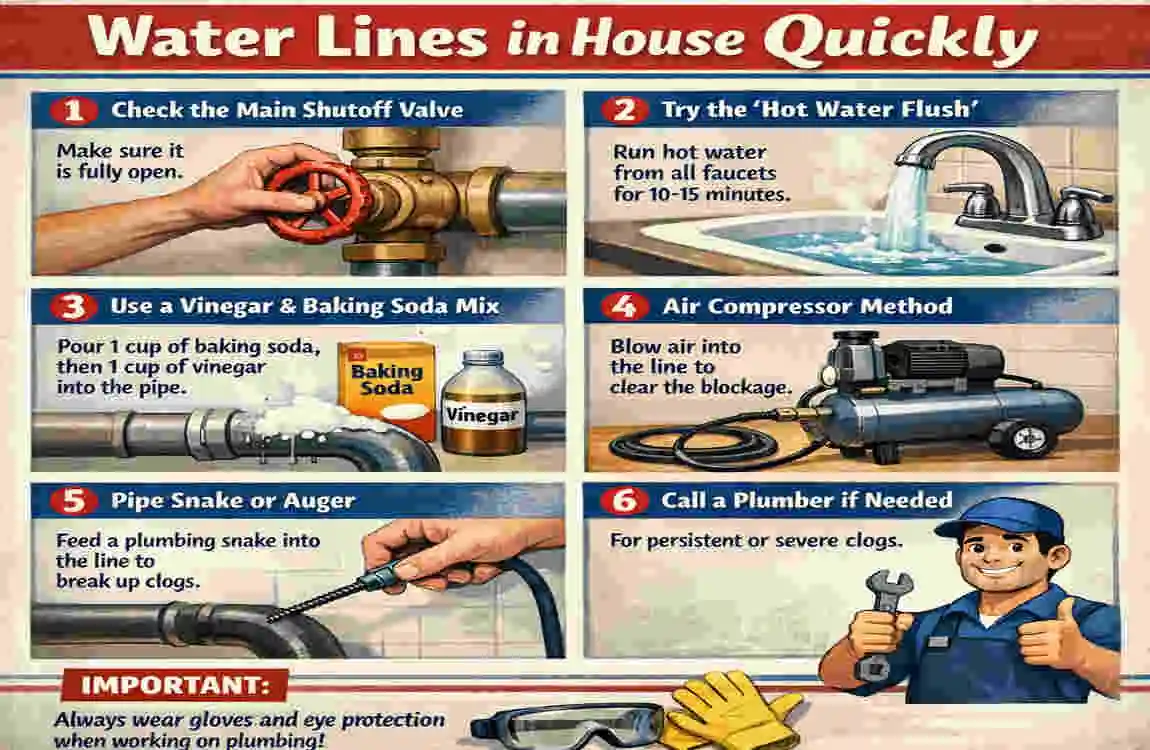
Turn Off the Main Water Supply
Always start by shutting off the main water valve. This helps prevent leaks, spills, and possible flooding while you work.
If you do not know where the valve is, look near the water meter, in the basement, in the garage, or on the outside wall. Once the water is off, you can work more safely.
Check Individual Faucets and Fixtures
Sometimes the problem is not in the whole house. It may be in one faucet, showerhead, or sink aerator.
Remove the small screen or aerator from the faucet. Clean out any dirt, rust, or mineral bits. Then turn the water back on briefly to test the flow.
If the water improves, you may have found the issue. If not, move to the next step.
Flush the Water Lines
Flushing helps remove loose debris from the pipes. Open the faucets after turning off the water heater if needed, and let trapped material flow out.
Once the lines are ready, restore water slowly. This helps push out buildup without creating extra stress on the pipes.
Remove Mineral Deposits
If hard water is the problem, vinegar can help. It works well on calcium and other light mineral deposits.
Soak removable parts in vinegar, then scrub them gently. Avoid harsh chemicals, because they can damage plumbing parts and do more harm than good.
Use a Plumbing Snake for Tough Blockages
A plumbing snake is useful when buildup or debris is harder to reach. Carefully insert it into the pipe and move it slowly to break up the clog.
Do not force it. Too much pressure can damage the pipe, especially if it is older. The goal is to loosen the blockage, not push it deeper.
How to Clear a Main Water Line Blockage
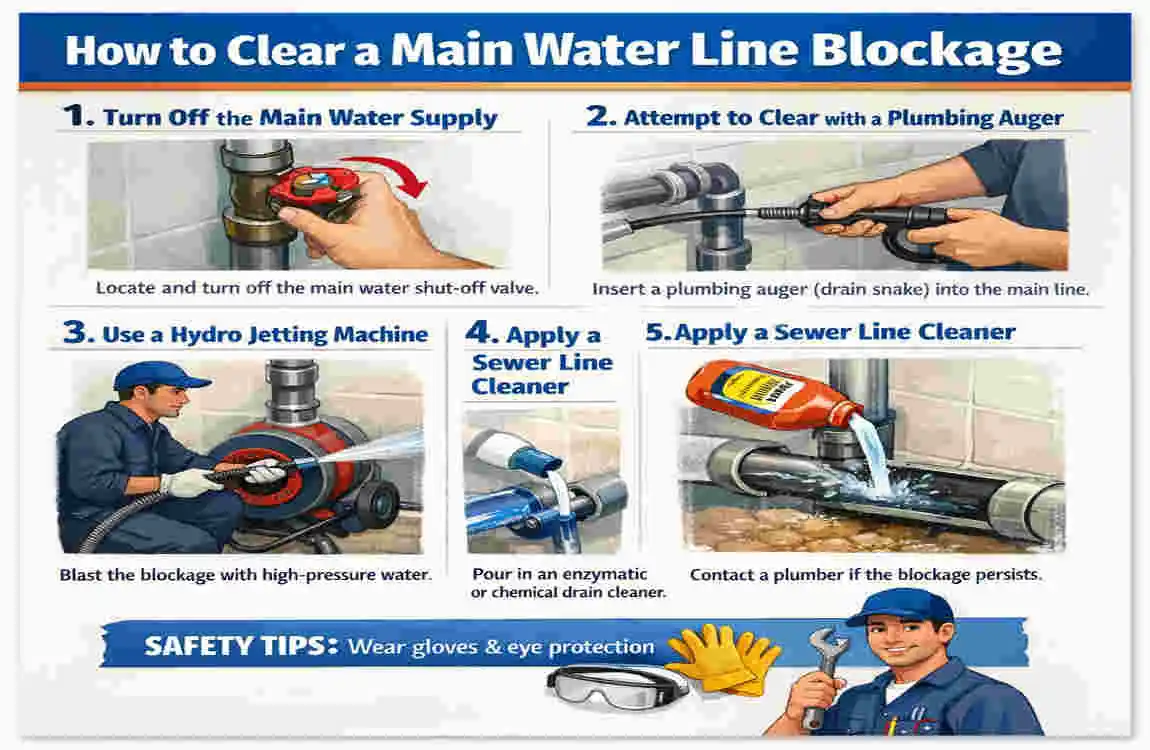
When the whole home has weak water flow, the main line may be clogged. This is more serious than a single fixture problem.
Here is a simple approach:
- Shut off the main valve
- Inspect any visible or accessible pipes
- Flush the system carefully
- Call a plumber if the blockage stays
Main line problems can involve sediment, corrosion, or even pipe damage. If basic flushing does not help, do not keep forcing it. That can make things worse.
How to Unclog Water Pipes Naturally
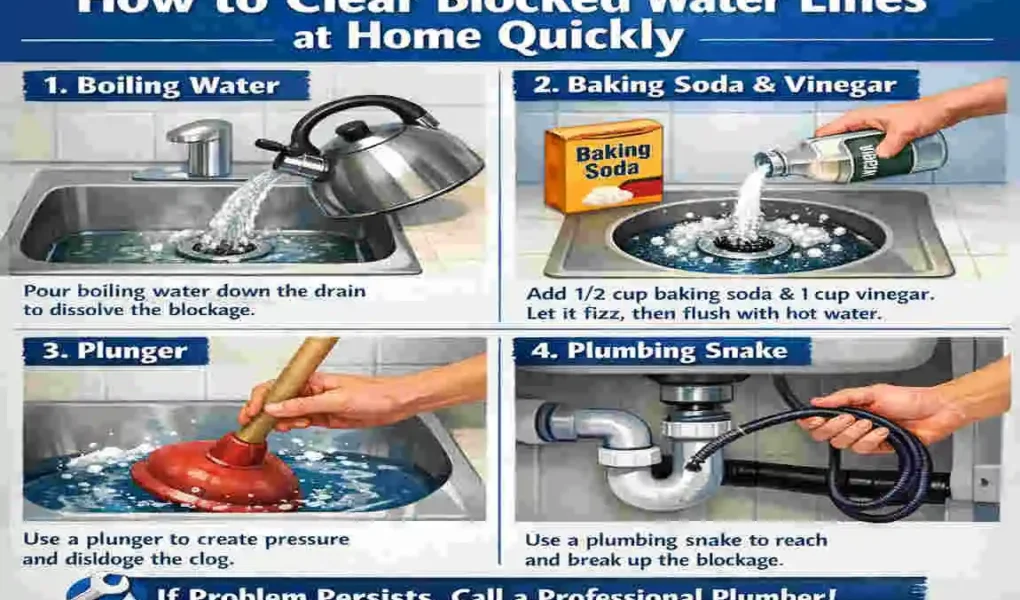
Using Vinegar and Baking Soda
For light buildup, natural cleaners can be helpful. Vinegar helps break down mineral deposits, while baking soda can help loosen residue.
This works best for small clogs or slow flow caused by hard water. It is a simple and safer option for routine cleaning.
Flushing Pipes With Clean Water
Regular flushing is one of the easiest ways to keep pipes clear. Clean water helps move sediment before it settles and causes bigger problems.
If your home has older pipes or hard water, periodic flushing can save you a lot of trouble later.
Common Mistakes to Avoid When Unclogging Water Lines
Some mistakes can make the problem worse. Try to avoid these:
- Using too much chemical cleaner
- Applying strong water pressure too fast
- Ignoring leaks or cracks
- Trying complex plumbing repairs without experience
Chemical drain cleaners are especially risky. They are made for drains, not water supply lines. They can damage parts of your plumbing system and may not solve the real issue.
Preventing Future Water Line Blockages
Regular Pipe Maintenance Tips
A little maintenance goes a long way. If you want fewer clogs in the future, keep these habits in mind:
- Clean faucet aerators regularly
- Flush plumbing systems once a year
- Install water filters if needed
- Watch for changes in water pressure
These small steps can help keep your water lines clear and working well.
Protect Pipes From Freezing
Cold weather can freeze water inside pipes. When water freezes, it expands and can block or damage the line.
To protect your home, insulate exposed pipes and keep indoor temperatures steady during winter. This is especially important in garages, basements, and crawl spaces.
When Should You Call a Professional Plumber?
Some problems are too big for DIY repair. Call a plumber if you notice:
- Complete loss of water
- Burst or leaking pipes
- Repeated blockages
- Old, corroded plumbing
- Main water line trouble
If your first few attempts do not help, do not keep guessing. A plumber has the tools and experience to quickly find the real cause.
Cost of Clearing Blocked Water Lines
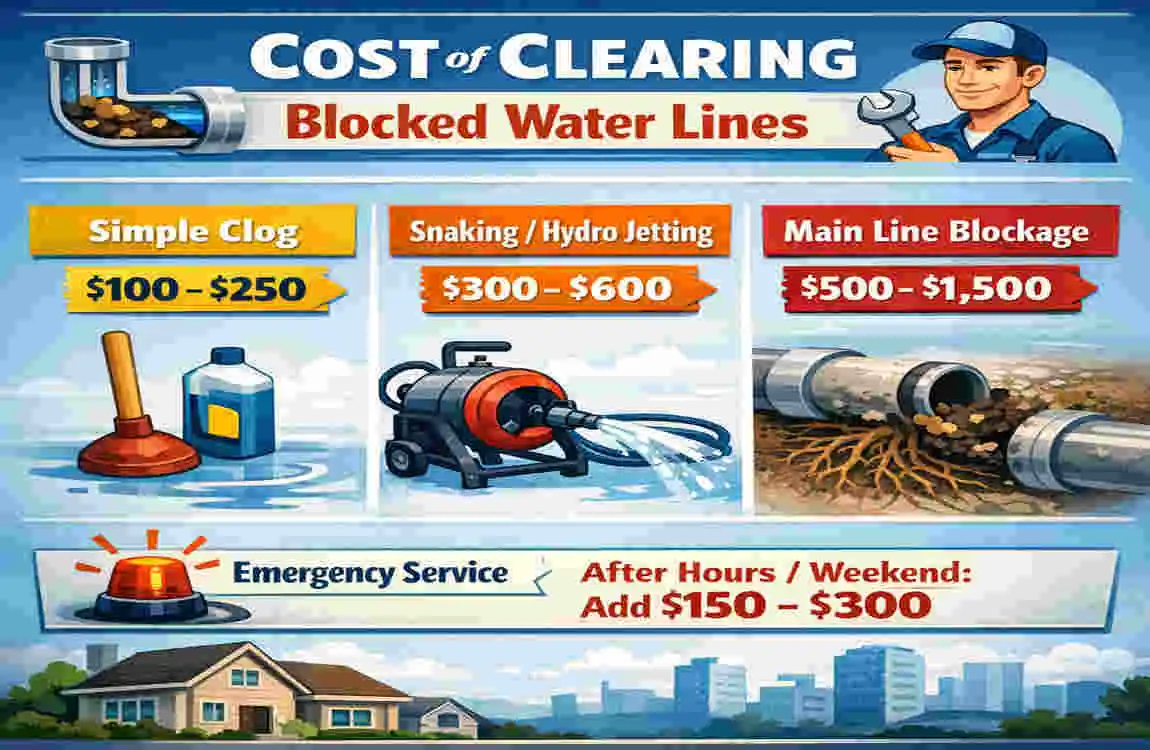
The cost depends on the problem and the severity of the blockage.
Service Average Cost Range
Faucet cleaning Low cost DIY
Pipe flushing $100–$300
Professional pipe cleaning $200–$600
Main water line repair Higher depending on damage
Note: Costs vary by location and plumbing condition.
DIY cleaning is cheaper, but it works best for light problems. Bigger issues often cost more because they need professional tools and more time.
DIY vs Professional Water Line Cleaning
Here is a simple comparison:
DIY Method Professional Service
Good for minor clogs Handles major blockages
Lower cost Higher cost
Requires basic tools Uses specialized equipment
May not solve deep issues Provides long-term solutions
If you are dealing with a small clog, DIY can be enough. If the blockage keeps coming back, professional cleaning is usually the better choice.
Frequently Asked Questions
How do I know if my water line is clogged?
Signs include low water pressure, slow water flow, strange pipe noises, and reduced water supply from multiple fixtures.
How do you unclog a water line in a house?
You can unclog water lines by flushing the pipes, cleaning faucet filters, removing mineral buildup, or using plumbing tools to clear stubborn blockages.
Can vinegar unclog water pipes?
Yes, vinegar can help dissolve mineral deposits and calcium buildup, but it may not remove serious blockages.
Why is the water pressure in my whole house low?
Low pressure throughout the home may be caused by clogged pipes, mineral buildup, damaged plumbing, or issues with the main water supply.
Can I use drain cleaner in water supply pipes?
No. Drain cleaners are designed for drains, not for drinking water supply lines, and they may damage plumbing components.
| Method | How It Works | Best For |
|---|---|---|
| Check the Main Valve | Ensure the main water valve is fully open and not restricting flow | Low water pressure issues |
| Flush the Water Lines | Turn on faucets to remove trapped air, dirt, or sediment buildup | Minor blockages |
| Clean Faucet Aerators | Remove and wash faucet screens to clear debris | Slow faucet flow |
| Use a Plumbing Snake | Push through pipes to break up stubborn clogs | Localized pipe blockages |
| Apply Water Pressure | Use controlled pressure to loosen buildup inside pipes | Partial blockages |
| Flush the Water Heater | Drain and clean the heater to remove sediment | Hot water flow problems |
| Use a Safe Pipe Cleaner | Apply suitable cleaners to dissolve mineral buildup | Hard water deposits |
| Inspect for Pipe Damage | Check for leaks, corrosion, or collapsed pipes | Recurring blockages |
| Call a Professional Plumber | Experts can inspect and repair hidden pipe problems | Severe or repeated clogs |