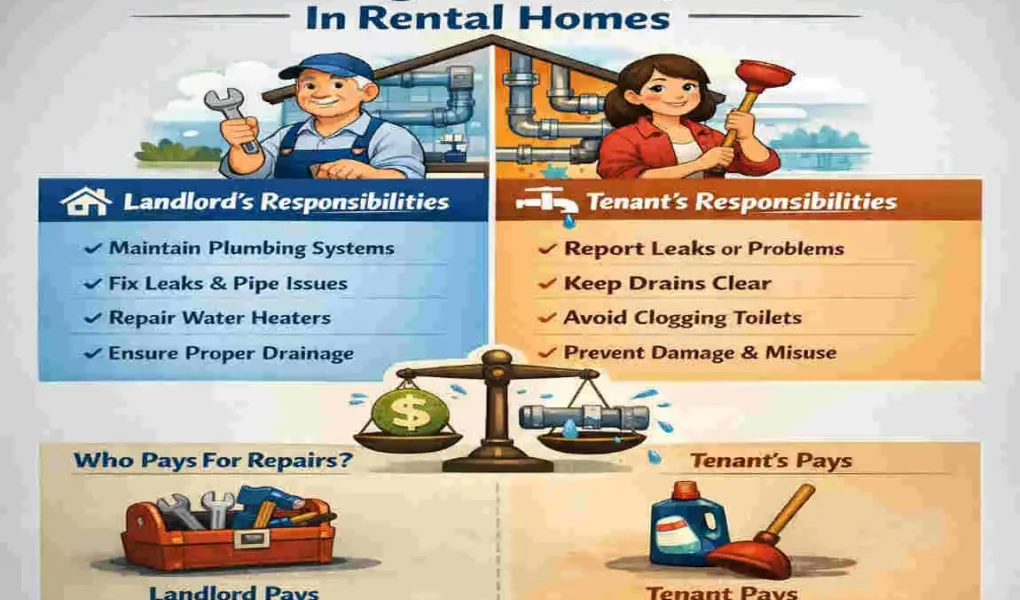
Plumbing problems can happen in any rental home, and they can quickly create confusion. A leak, clogged drain, or broken toilet can stress both the tenant and the landlord.
| Plumbing Issue | Usually Responsible | Who May Pay? |
|---|---|---|
| Leaking or burst pipe from age | Landlord | Landlord |
| Broken water heater | Landlord | Landlord |
| Blocked drain from normal use | Depends on lease/local law | Landlord or tenant |
| Toilet clogged by improper items | Tenant | Tenant |
| Major sewer-line problem | Landlord | Landlord |
| Damaged faucet or fixture | Depends on cause | Landlord or tenant |
| Plumbing emergency | Landlord, unless tenant caused it | Usually landlord |
| Damage caused by tenant negligence | Tenant | Tenant |
| Routine plumbing maintenance | Depends on lease/local law | Landlord or tenant |
| Plumbing failure from normal wear and tear | Landlord | Landlord |
In many cases, the landlord handles major plumbing repairs because the plumbing system is part of the home itself. But if the renter caused the damage, the tenant may have to pay. That is why it helps to understand the basic rules before a problem happens.
Who Is Usually Responsible for Plumbing Repairs in a Rental Home?
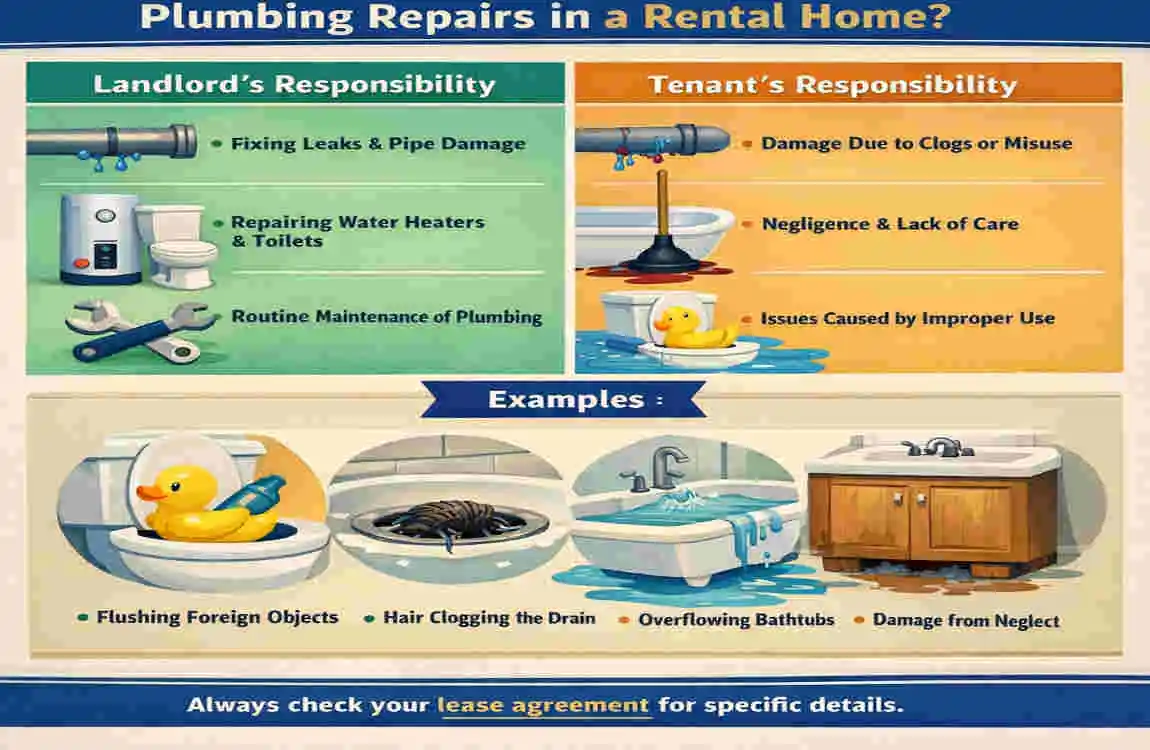
Landlord Responsibility
In most rental homes, the landlord is usually responsible for keeping the main plumbing system in working order. This includes the pipes, drains, water heater, toilet fixtures, and sewer lines.
The landlord often pays for problems like:
- Broken or leaking pipes
- Major drain blockages
- Water heater failures
- Faulty toilets or fixtures
- Sewer or main-line issues
- Repairs caused by normal ageing
These are usually considered part of the home’s basic structure, so the landlord handles them.
Lease and Law Matter
The lease can change who is responsible for some repair costs. Local rental laws can also affect what the landlord must fix and how fast repairs must happen. So even if a problem seems simple, the lease and local rules still matter.
In many rentals, major plumbing repairs are usually the landlord’s job unless the tenant caused the damage.
When Does the Tenant Have to Pay for Plumbing Problems?
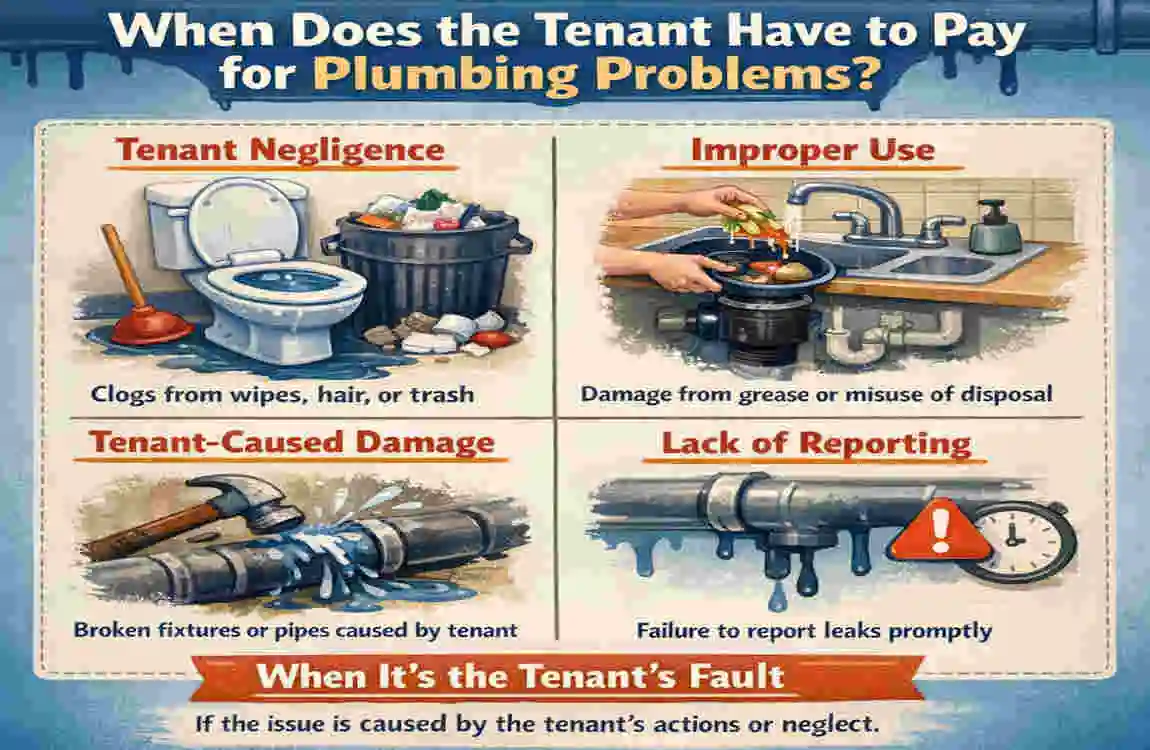
A tenant may have to pay when the plumbing damage was caused by misuse or negligence. This is where many disputes happen.
Common Tenant-Caused Problems
Examples include:
- Flushing wipes, toys, or other unsuitable items
- Pouring grease or food scraps down the drain
- Breaking fixtures through rough use
- Ignoring a leak until it becomes worse
- Causing clogs through careless behaviour
Why Proof Matters
Photos, messages, inspection notes, and repair records can help show what really happened. A landlord may use this information to decide whether the tenant caused the damage or if it resulted from normal wear and tear.
Before accepting a plumbing bill, a renter should check:
- What caused the problem
- Whether the issue was reported early
- If the lease mentions that type of repair
- Whether there is any proof of misuse
What Plumbing Repairs Are Considered Normal Wear and Tear?
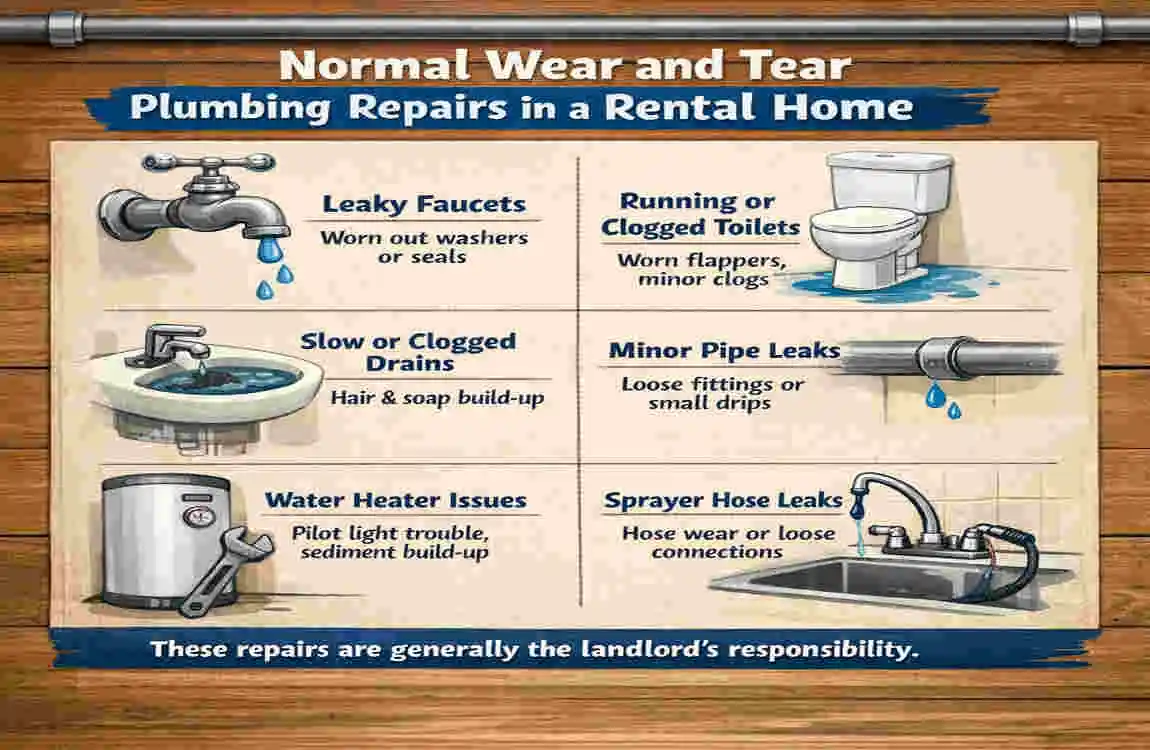
Normal wear and tear means damage that happens naturally over time, even when someone uses the home carefully.
Common Examples
- Old pipes starting to leak
- Worn washers or seals
- Ageing water heaters
- Loose or tired plumbing connections
- Fixtures reaching the end of their life
This kind of damage is different from careless use. If a system is simply old, the repair is usually not the tenant’s fault.
Here is a quick look at the difference:
Normal Wear and Tear vs Tenant Damage
Old pipe starts leaking Pipe breaks from misuse
Water heater fails from age Damage from tampering
Seal wears out naturally Clog caused by flushing items
Regular maintenance also helps prevent arguments later.
What Should You Do When a Plumbing Problem Happens?
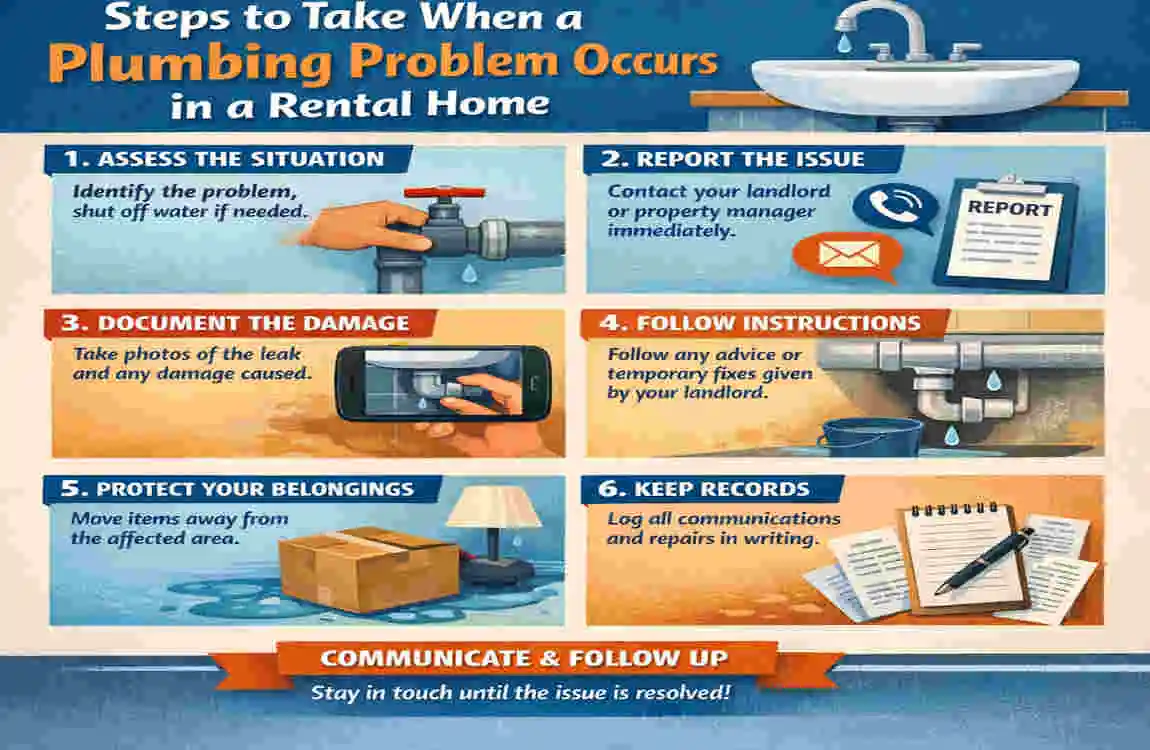
First, stay calm and act quickly. A fast response can prevent more damage.
What Tenants Should Do
- Turn off the water if needed
- Contact the landlord or property manager right away
- Describe the problem clearly
- Take photos if there is visible damage
- Keep copies of texts, emails, or notes
What to Include in the Report
Be sure to mention:
- What the plumbing issue is
- Where it is happening
- When it started
- Whether water is leaking or backing up
- What steps you already took
If it is an emergency, such as a burst pipe or overflowing toilet, report it immediately and do what you can to reduce damage. In most cases, tenants should avoid hiring a plumber on their own unless the lease allows it or local law says otherwise.
How the Lease and Local Laws Determine Plumbing Responsibility
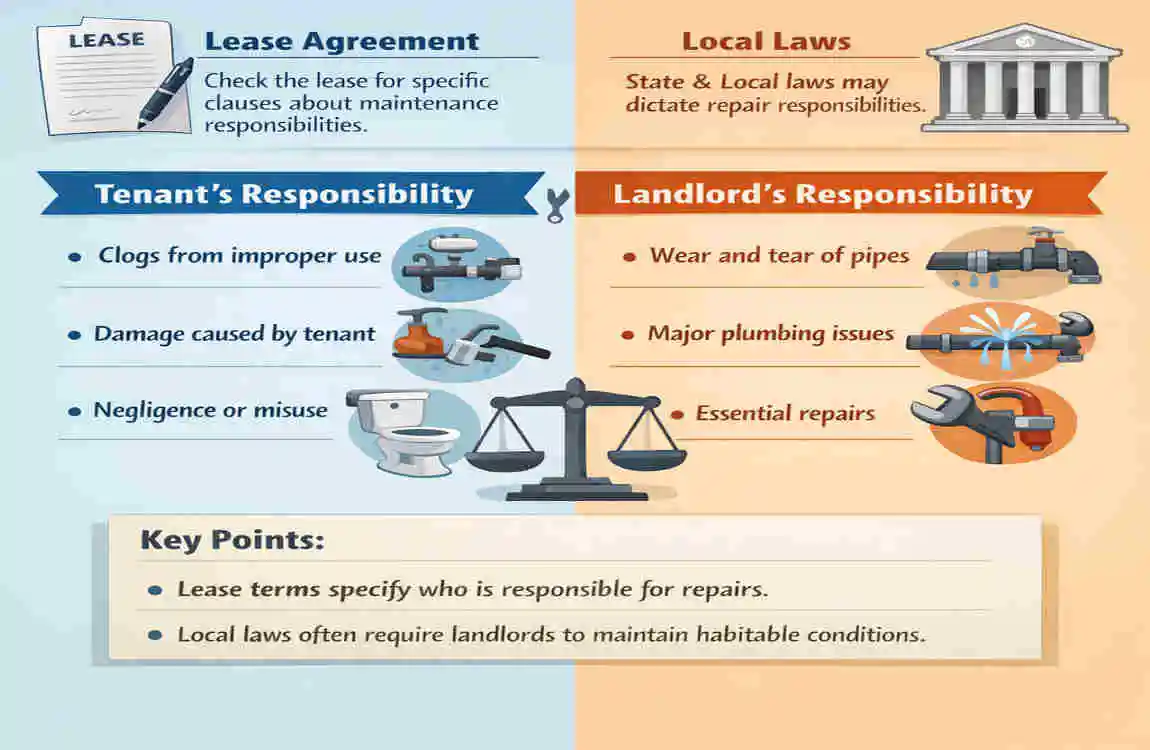
The lease is one of the most important documents in any rental. It often explains who handles repairs, what counts as tenant damage, and whether the renter must pay for certain problems.
Common Lease Terms
A lease may cover:
- Routine maintenance
- Emergency repairs
- Drain cleaning
- Water damage
- Tenant-caused damage
- Repair reimbursement
Local housing laws also matter because they may limit what a lease can require. If the lease is unclear, both sides should get the agreement in writing instead of relying on a verbal conversation.
If a dispute arises, it may be handled through property management, written notices, mediation, or the proper local process.
FAQ: Understanding Plumbing Responsibilities in Rental Homes
Q: Who usually pays for plumbing repairs in a rental home?
A: In most cases, the landlord pays for major plumbing repairs, especially when the issue is caused by age, normal wear, or a system failure.
Q: When does the tenant have to pay for plumbing problems?
A: A tenant may have to pay if the damage was caused by misuse, negligence, or careless behavior, such as flushing the wrong items or causing a clog.
Q: What counts as normal wear and tear?
A: Normal wear and tear includes problems like old pipes leaking, worn-out seals, or fixtures breaking from age rather than misuse.
Q: What should I do if I find a plumbing leak?
A: Report it right away to the landlord or property manager, and turn off the water if needed to prevent more damage.
Q: Can a landlord make me pay for a plumbing bill without proof?
A: Usually, they should have evidence that the damage was caused by the tenant before charging the renter.
Q: Should I fix the plumbing myself?
A: Not unless the lease says so or the landlord approves it. In most cases, it is better to report the issue first and wait for instructions.