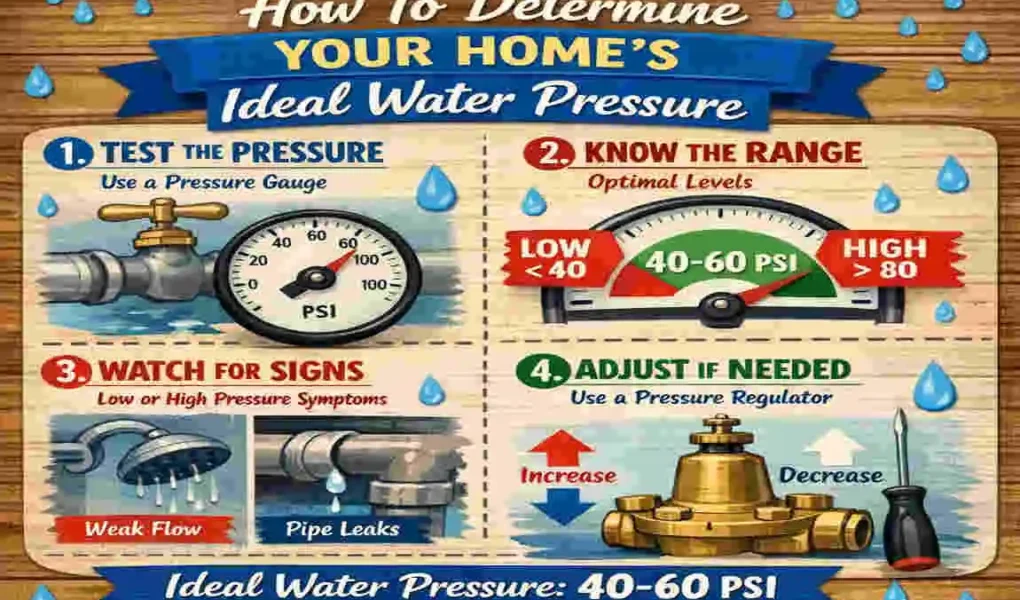
If you have ever wondered what your home’s ideal shower pressure should be, the simple answer is that most homes work best at around 40 to 60 psi. That range usually gives you strong showers, steady faucet flow, and safe pressure for pipes and appliances.
| Item | Recommended / Key Information |
|---|---|
| Typical Home Water Pressure | Around 40–60 PSI |
| Low Water Pressure | Below 40 PSI |
| High Water Pressure | Above 60 PSI |
| How to Measure | Use a water-pressure gauge |
| Common Pressure Problem | Leaks, weak flow, or noisy pipes |
| Pressure Adjustment | Check the pressure-reducing valve or contact a plumber |
| Best Goal | Maintain steady pressure suitable for your home’s plumbing |
Getting the ideal home water pressure matters more than many homeowners realise. High water pressure can wear out fixtures, cause leaks, and stress plumbing lines. Low water pressure can make daily tasks frustrating and can point to hidden issues in the system.
How to Check Your Home’s Water Pressure
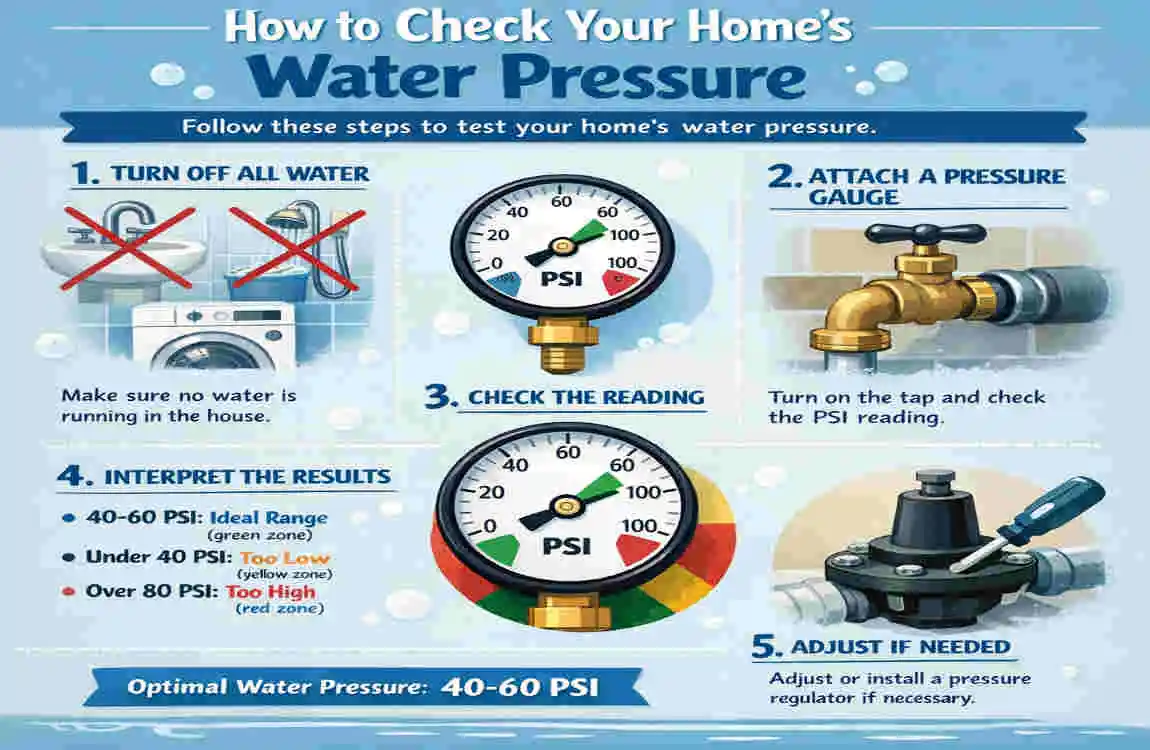
Using a water-pressure gauge
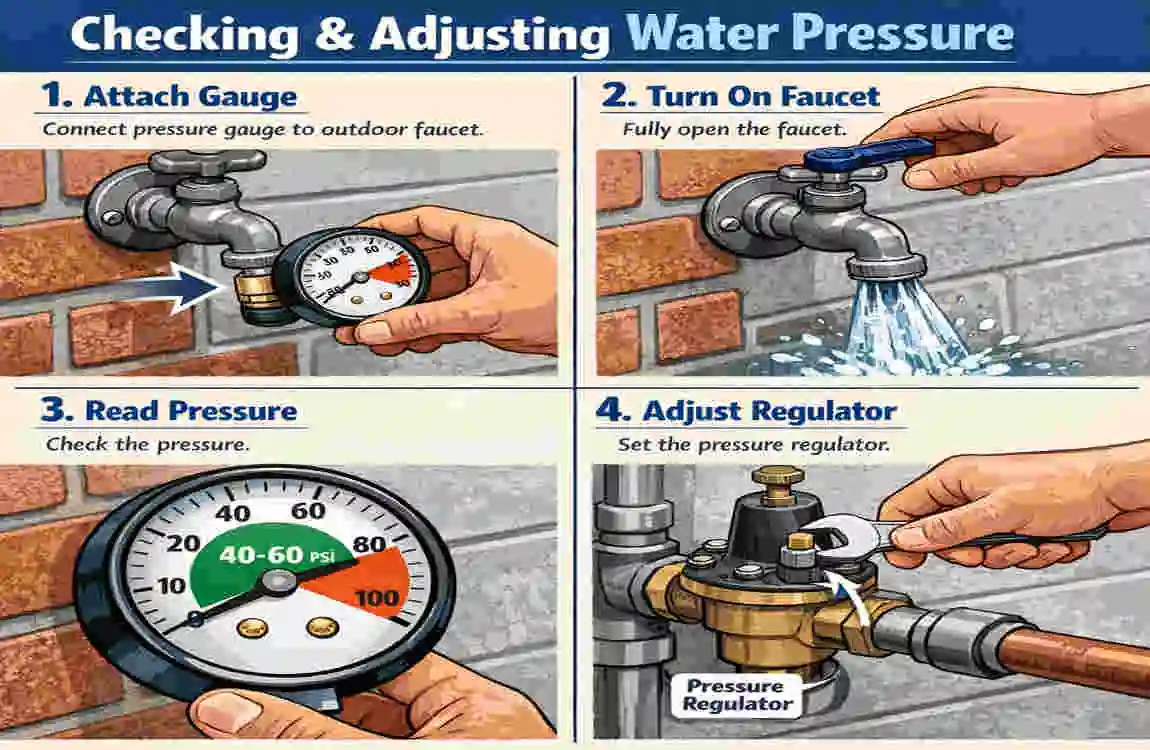
A water pressure gauge is the easiest way to check your home’s pressure. It is a small tool that screws onto a hose bib, laundry faucet, or other outdoor water connection.
How to get a clear reading
Turn off all water inside and outside the home before testing. Then attach the gauge and open the faucet all the way. This gives you the static pressure, which shows the pressure in the system when water is not moving.
If you want a fuller picture, test again while another fixture is running. That gives you the flowing pressure, which shows how pressure behaves during normal use.
When to test
Check pressure at different times of day. Morning and evening use can be different from midday readings, especially if your home depends on a municipal supply.
Understanding residential water pressure
Water pressure is the force that pushes water through your home’s pipes. If the pressure is balanced, water moves smoothly to sinks, showers, toilets, and appliances.
The normal household range
For most homes, 40 to 60 psi is considered a healthy range. Some homes may sit slightly above or below that and still function well, but pressure outside that range can cause plumbing problems.
Why the right pressure matters
When pressure is too high, you may notice dripping faucets, noisy pipes, or worn-out valves. When it is too low, showers feel weak, and faucets take longer to fill. The goal is a comfortable flow that protects your plumbing.
Water Pressure Level: What It Usually Means
Below 40 psi Often feels weak or slow
40–60 psi Best range for most homes
Above 60 psi May put extra stress on plumbing
Signs Your Home Water Pressure Is Too High or Too Low
Signs of excessive water pressure
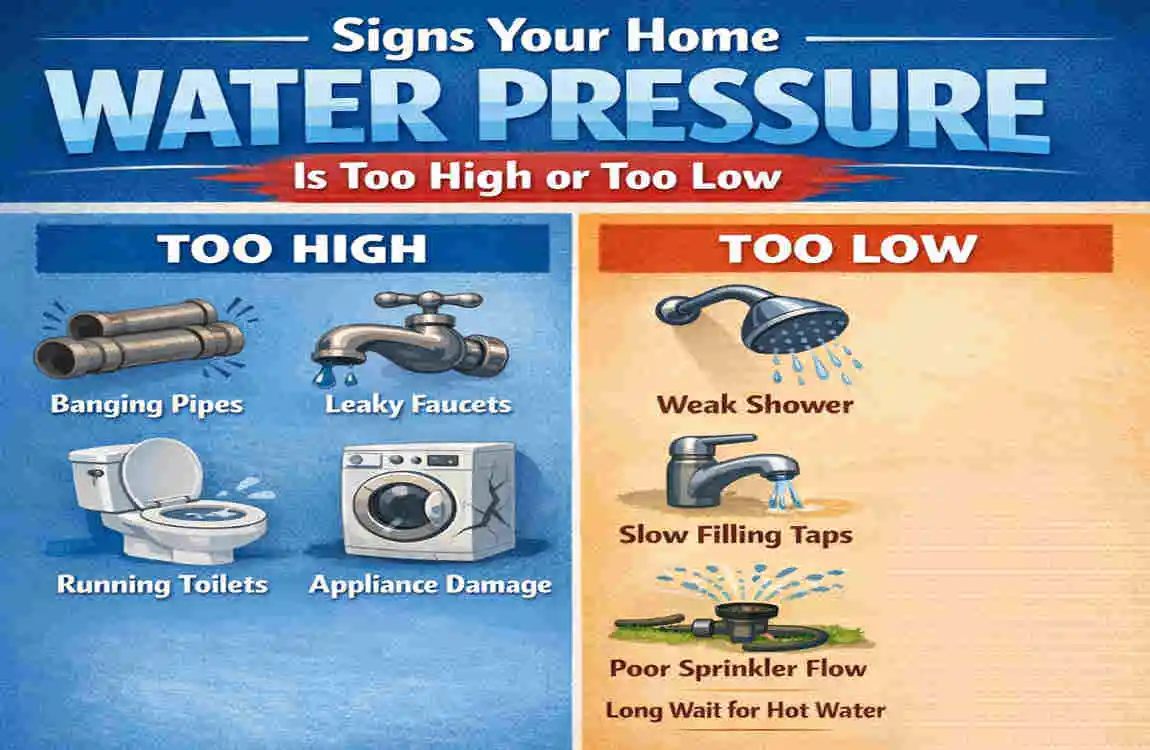
High pressure often shows up in small but clear ways. You may hear banging pipes, notice leaking joints, or see faucets that drip even after being turned off tightly.
Signs of low water pressure
Low pressure usually feels obvious. Showers seem weak, faucets fill slowly, and water flow may drop sharply when more than one fixture is used at the same time.
When pressure changes need attention
If pressure keeps changing from one moment to the next, it could point to a deeper plumbing issue. That is usually a good time to call a licensed plumber.
What Causes High or Low Water Pressure?
Inside the home
Several things can affect pressure inside your plumbing system:
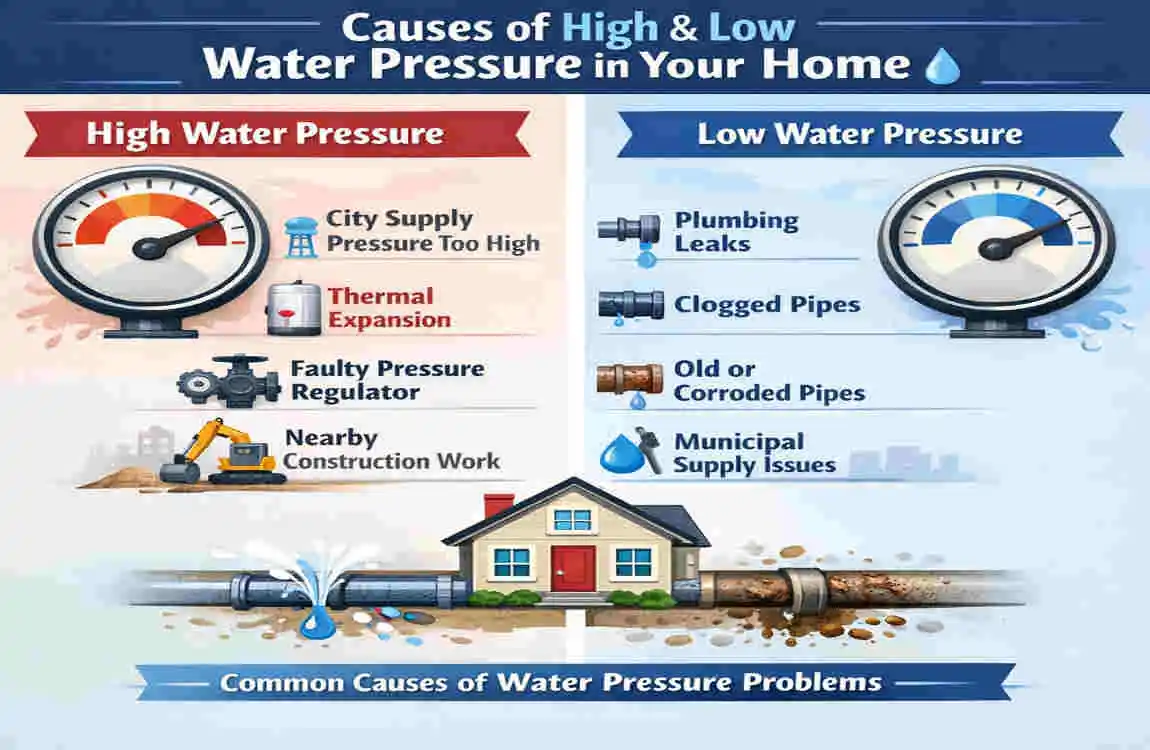
- A failing pressure-reducing valve
- Clogged aerators or showerheads
- Dirty filters
- Corrosion inside old pipes
- Small leaks that reduce flow
Outside the home
The incoming water supply can also be the cause. City water pressure may rise and fall depending on neighbourhood demand. Homes with private wells may have pressure changes caused by a pump or pressure tank issue.
Ageing plumbing and buildup
Older pipes can collect rust or mineral buildup over time. That can narrow the opening inside the pipe and reduce water flow even if the incoming supply is fine.
How to Adjust and Maintain the Ideal Water Pressure
Simple maintenance steps
A few small checks can help keep pressure steady and safe:
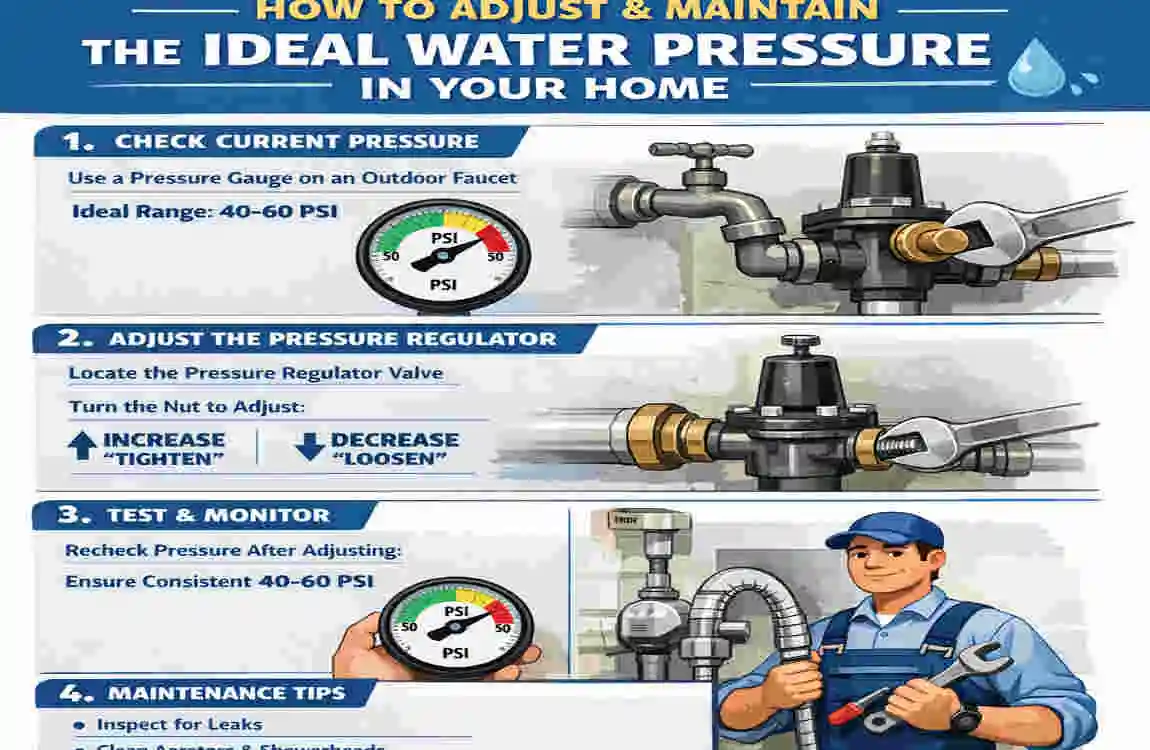
- Clean faucet aerators and showerheads
- Inspect visible pipes for leaks
- Check filters and shutoff valves
- Test the pressure-reducing valve
- Watch for signs of changing well system performance
Why high pressure should not be ignored
Even if strong pressure feels nice in the shower, it can shorten the life of fixtures and appliances. Over time, it may cause more expensive plumbing repairs.
When to call a plumber
If the pressure stays too high or too low after basic checks, a plumber can find the real cause. That is especially important if you suspect hidden leaks, valve problems, or pipe damage.
Finding the Right Water Pressure for Your Home
Practical pressure for everyday use
For most homes, 40 to 60 psi gives the best balance of comfort and safety. It supports steady showers, reliable appliances, and less wear on plumbing parts.
What to do next
If your pressure is too high, start by checking the pressure-reducing valve. If it is too low, look for clogs, leaks, or supply issues. If the problem keeps coming back, professional help is the smartest move.
FAQ: Finding the Right Water Pressure for Your Home
Q: What is the ideal water pressure for most homes?
Most homes work best at 40 to 60 psi, and many experts point to about 50 to 60 psi as a comfortable target. Residential pressure above 80 psi is generally considered too high without proper regulation .
Q: How do I check my home’s water pressure?
You can use a water pressure gauge, which is an easy tool to attach to a faucet or hose connection. It is simple to measure and does not require fancy equipment .
Q: What are the signs of high water pressure?
High pressure can put extra stress on fixtures, valves, supply lines, water heaters, and appliances, which may lead to plumbing problems over time .
Q: What are the signs of low water pressure?
If pressure drops when multiple faucets run or a faucet weakens when fully opened, that can point to a low-pressure or low-flow issue .
Q: How often should I check water pressure?
A good rule is to test your water pressure once or twice a year so you can catch plumbing issues early .
If you want, I can also turn this into a super short 3-question FAQ or a more polished FAQ section for your article.